
Review · KATHMANDU
Everest Base Camp Trek
Everest Base Camp is the headline, but the real reward is the changing world on the way there: prayer stones, suspension bridges, Sherpa villages, monasteries, and huge peaks that grow closer each day. I especially like the careful acclimatization days in Namche and Pheriche, plus the sunrise climb to Kala Patthar at 5,545 meters. The plan also includes porters, meals, permits, and guide support, which removes much of the planning burden.
I like that this is a private trip, so your group can move at its own pace within the fixed route. Past groups have been led by guides including Vision Tamang and Biru, with special praise for their patience, support, and ability to bring people of mixed ages and hiking backgrounds to Base Camp safely. The main caution is altitude: this is not a casual sightseeing tour, and flight delays, cold, fatigue, and altitude sickness can all affect the schedule.
Key points before you book
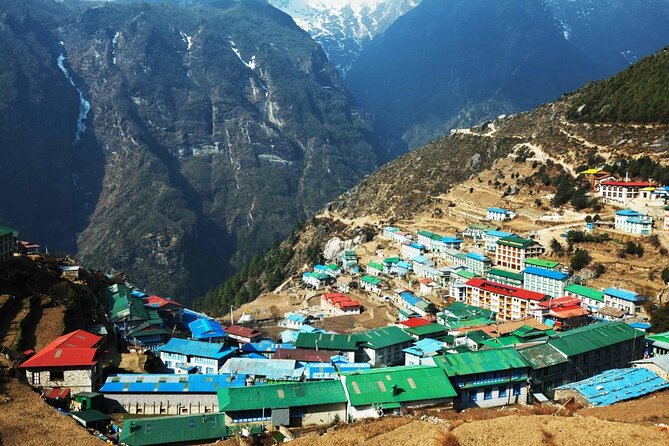
- Kala Patthar is the visual high point: At 5,545 meters, it offers the early-morning mountain views many people remember most.
- Two acclimatization stops matter: You spend extra time around Namche and Pheriche, with higher daytime walks and lower sleeping elevations.
- The price covers major trek costs: At $2,051.48 per person, the package includes trekking accommodation, meals on the trail, porters, guides, permits, insurance for the guide and porters, and domestic flights.
- Sherpa culture is part of the route: You visit Khumjung, Tengboche Monastery, Pangboche, and villages along the Dudh Kosi valley.
- The return flight uses Manthali: The arrangements include private road transport between Kathmandu and Manthali, not simply an airport transfer inside Kathmandu.
- The trek is private: Only your own group participates, which is useful when fitness levels or walking speeds differ.
What the 17-day Everest route really feels like
This is a long, demanding mountain journey with a clear rhythm. You begin with Kathmandu sightseeing and preparation, fly toward Lukla, walk gradually higher through the Khumbu region, reach Everest Base Camp, climb Kala Patthar, and return by the same general route.
The itinerary is designed around altitude rather than speed. That is important. The walking distances are not extreme every day, but the air gets thin quickly after Namche, and the high point comes above 5,500 meters. The extra nights in Namche and Pheriche are not wasted time. They give your body a better chance to adjust.
Accommodation is included throughout the trek, along with breakfast, lunch, and dinner on the mountain portion. You can choose your food and tea at those meals, while lunch and dinner in Kathmandu are your responsibility. Personal costs such as bottled water, soft drinks, laundry, phone calls, and bar bills are also separate.
More Everest Base Camp Treks in Kathmandu:
- Everest Base Camp Trek – 14 Days
★ 5.0 · 1,499 reviews - Everest Base Camp Trek
★ 5.0 · 842 reviews - Everest Base Camp Helicopter Tour landing at Everest View Hotel
★ 5.0 · 668 reviews
Kathmandu preparation, stupas, and the first night
Your arrival day begins with airport pickup and a private transfer to your hotel. The plan allows time for a shower, tea, and a first look at Kathmandu before dinner. That small pause matters after a flight, especially before the early start ahead.
The next day visits Swayambhunath, the hilltop Buddhist stupa often called the Monkey Temple. It is described as more than 2,000 years old and gives you a broad view across the Kathmandu Valley. You also have time to prepare your trekking kit and shop in Thamel, where you can sort out last-minute supplies.
At the end of the trek, Kathmandu gets a second look. You return from the mountains for clean clothes, a shower, lunch, and free time in Thamel. The final sightseeing day visits Boudhanath Stupa, a major Buddhist site and UNESCO World Heritage location, followed by a group dinner.
This city time is useful rather than decorative. Kathmandu gives you a cultural beginning and ending, while the middle of the trip is almost entirely devoted to walking.
Lukla to Phakding, the short opening walk
The flight toward Lukla takes about 40 minutes and is one of the most memorable parts of the approach. After landing, porters are arranged to carry luggage, giving you time for tea before the walk begins.
Lukla sits at about 2,800 meters. Your first walking day is short, around three hours, and finishes in Phakding at about 2,653 meters. The route passes local villages and follows a river, offering a gentle introduction before the serious climbing begins.
Do not mistake the short day for a guaranteed easy day. You are arriving after an early flight, and the combination of travel, nerves, and altitude can make even a simple walk feel unfamiliar. Keep your daypack light and save energy.
Namche Bazaar and the first Everest view
The walk from Phakding toward Namche follows the river and passes through Monjo, where you stop around lunchtime. From there, the route enters Sagarmatha National Park, crosses the Dudh Kosi, and reaches Jorsale.
The climb to Namche is the first major effort. At a rest point on the ascent, you get an early view of Everest. It is not yet the close-up mountain scene many people imagine, but it gives the day a clear purpose.
Namche sits at about 3,440 meters and has shops, cafés, and places to rest. It is also where altitude may begin to affect you. Headaches, tiredness, and a slower pace are possible, so this is not the time to prove anything. Drink what you need, walk steadily, and tell your guide if you feel unwell.
The following day is set aside for acclimatization. You walk toward Khumjung, an interesting Sherpa village, reaching about 3,780 meters before returning to sleep lower. That pattern, walking higher and sleeping lower, is a sensible part of the plan.
A few more treks around Kathmandu worth a look
- Everest Base Camp Trekking
★ 5.0 · 485 reviews - Annapurna Circuit Trek with Tilicho Lake
★ 5.0 · 368 reviews - Everest Base Camp Trekking – 13 Day
★ 5.0 · 365 reviews - Everest Base Camp Trek
★ 5.0 · 350 reviews
Tengboche and the Sherpa heart of the route
After Namche, the route continues toward Tengboche and then Devuche. You see more of Everest and Ama Dablam as the trail passes villages and forested sections. Tengboche is described as the religious center of the Sherpa area, and its monastery is the largest in Nepal.
A visit here adds meaning to the mountain route. You are not simply moving from one altitude marker to the next. Mani stones, prayer flags, monasteries, and village life show how local communities relate to the mountains.
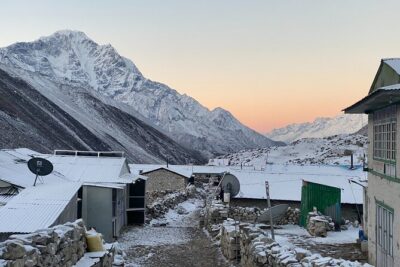
The night is spent about 20 minutes beyond Tengboche in Devuche, at roughly 3,750 meters. The walking day is about five hours. This is a good point to keep warm layers close, since the temperature can shift quickly once the sun fades.
Pheriche, the second acclimatization pause
The trail continues through Pangboche, described as the highest all-year settlement in the area, at around 3,800 meters. You pass forests, mani stones, and one of the route’s suspension bridges before moving beyond the tree line.
Above 4,000 meters, the setting changes noticeably. Alpine meadows replace the lower forest, and Pheriche, at approximately 4,240 meters, can be windy. Warm clothing is essential here, not just for the evening but for rest stops during the day.
You spend a second night in Pheriche. The daytime walk goes higher before returning to the village, helping prepare you for the elevations ahead. I consider this one of the strongest parts of the itinerary. A rushed trek often treats acclimatization as an inconvenience. This plan gives it real space.
The guide’s role becomes especially important at this stage. Biru and Vision Tamang are names associated with this operator, and both have been singled out for patience, kindness, and steady support. The available information does not guarantee which guide you will receive, so confirm that directly when booking.
Lobuche and the memorial stones
From Pheriche, you gain around 700 meters and walk farther up the valley toward Lobuche, at about 4,930 meters. The trail feels harder now because the air is thinner, not because every section is steep.
Near Chukpilhara, stone memorials honor climbers and Sherpas who died in the mountains. This is a serious stop. The monuments bring home the risks behind the Everest story and give you a reason to pause before continuing toward Base Camp.
Lobuche is high, cold, and basic compared with Kathmandu. Keep your sleeping gear and warm clothes organized, and do not expect the comforts of a city hotel. The included accommodation and meals make the logistics simpler, but they do not change the conditions.
Gorak Shep and Everest Base Camp
The next day reaches Gorak Shep at about 5,160 meters. It was an early base camp used during Everest expeditions in the 1950s. After lunch and a rest, you continue to the current Everest Base Camp.
The full day is listed at about seven hours. In May, the climbing season is at its busiest, so Base Camp can be active with expedition activity. You should understand the distinction: reaching Everest Base Camp does not mean climbing Everest, and you do not summit the mountain from here. It is the destination of the trek and a major milestone in its own right.
You return to Gorak Shep for the night. At this altitude, the return walk can feel surprisingly demanding. Keep the pace controlled, use your poles if you carry them, and save enough energy for the following morning.
Kala Patthar at sunrise
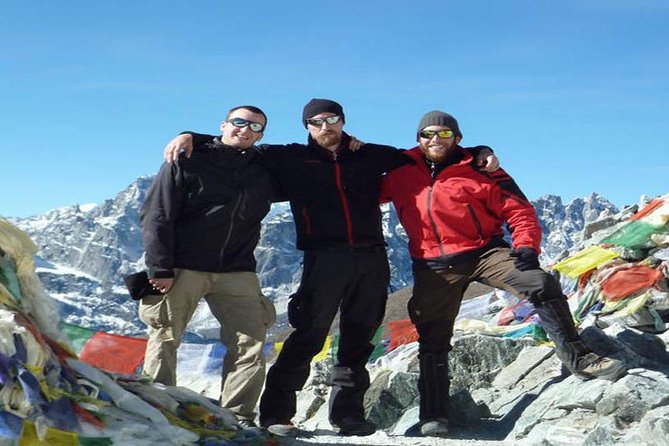
The next day begins around 5 a.m. with tea and the climb to Kala Patthar. At 5,545 meters, this is the highest point of the route and usually the most demanding physical section.
The early start is worth understanding. The plan aims to reach the viewpoint in the morning, when Everest and the neighboring peaks are presented in changing light. You have time at the top for photographs and quiet observation before descending to Gorak Shep for lunch.
After lunch, you walk down to Pheriche. The day is listed at about nine hours, making it long even though much of it is downhill. This is where patience matters. The descent can relieve altitude pressure, but tired legs still need care.
The views include Everest, Lhotse, Ama Dablam, Makalu, and Gyachung Kang. Exact visibility depends on weather, but the route is built around repeated mountain views rather than one single lookout.
The return through Tengboche, Namche, and Lukla
Once you leave Pheriche, the air gradually feels easier. You spend a night at Tengboche before continuing to Namche. The return route is not merely a repeat. Descending gives you more energy, and familiar villages look different when you are no longer climbing toward a deadline.
Namche is a useful final stop for supplies and souvenirs. There may also be time for another slice of apple pie, a small but welcome pleasure after the high route. The next day continues through Monjo and Phakding before the final climb and descent into Lukla.
The walk to Lukla takes about four hours, with a steep descent at the beginning and smaller ups and downs afterward. An arrival around 4 p.m. leaves time to look around the village. The itinerary even notes a Starbucks, a funny reminder that modern comforts reach surprisingly far into the Himalayas.
The flight back is weather dependent. The package describes flights to and from Lukla, with private transport between Kathmandu and Manthali included in the arrangements. Because mountain flights can shift, keep your wider travel plans flexible if possible.
What the $2,051.48 price covers
At $2,051.48 per person, the cost is not just a guiding fee. It includes accommodation during the trek, three meals a day on the trekking section, guide and porter wages, porter and guide accommodation and food, permits, national park fees, the Pasang Lhamu Municipality fee, a TIMS card, domestic airport taxes, and a first-aid kit.
It also includes private transport in Kathmandu, airport transfers, sightseeing transfers, and the Kathmandu to Manthali road connection. Guide and porter insurance is included, along with government taxes and office service charges.
That is a solid package for someone who wants one company to handle the moving parts. You still need to budget for Kathmandu lunches and dinners, drinks, bottled water, laundry, phone calls, personal purchases, tips, and your own travel insurance.
The package does not promise a refund if you return early for any reason, and Kathmandu hotel or meals may not be covered if an early return changes the plan. Read those terms carefully before paying. Free cancellation is available up to 24 hours before the start time, but changes or cancellations inside that window are not refunded.
Who should book this trek
This trek suits you if you have moderate physical fitness, enjoy walking for several hours a day, and want a structured route with local support. It is also a good choice if you prefer a private group rather than joining strangers, especially when your own group includes different ages or hiking experience.
It is less suitable if you want a relaxed holiday, dislike basic mountain accommodation, or need a fixed return schedule with no room for weather disruption. The route reaches 5,545 meters, so you should take altitude seriously and carry suitable personal insurance.
Should you book it?
Book this trek if Everest is a long-held goal and you want the major practical pieces arranged for you. The strongest features are the two acclimatization periods, the high viewpoint at Kala Patthar, the inclusion of guides and porters, and the chance to see Sherpa culture beyond a single Base Camp photograph.
Before booking, confirm the guide assigned to your group, the current flight arrangements through Manthali, what accommodation is planned, and which personal equipment you must bring. If you accept the altitude, long days, and changing mountain schedule, this is a well-supported way to reach Everest Base Camp without having to organize every permit, meal, porter, and transfer yourself.
FAQ
How long does the Everest Base Camp trek last?
The full experience lasts approximately 17 days, including arrival and departure days, Kathmandu sightseeing, the trek, and the return to Kathmandu.
What is the price per person?
The listed price is $2,051.48 per person.
Are flights to Lukla included?
Yes. Flights to Lukla and the return flight arrangements are included for clients and the guide. The package also includes private transport between Kathmandu and Manthali.
Are meals included?
Breakfast, lunch, and dinner are included during the trekking portion, with food and tea choices available. Lunch and dinner in Kathmandu are not included.
Is this a private tour?
Yes. Only your own group participates in the activity.
What fitness level is required?
The stated requirement is a moderate physical fitness level. You should also be prepared for walking days of roughly three to nine hours and elevations reaching 5,545 meters at Kala Patthar.
Just added around Kathmandu
- Everest Base Camp Trek★ 5.0 · 3 reviews
- Everest Base Camp Trek★ 5.0 · 7 reviews
- 15 Days Private Everest Base Camp Trek★ 5.0 · 30 reviews
- 14-Day Everest Base Camp Trek★ 5.0 · 20 reviews
- Everest Base Camp Trek★ 5.0 · 57 reviews
- 14 Days of Adventure Trekking to Everest Base Camp★ 5.0 · 2 reviews
- From Kathmandu: Private 14-Day Everest Base Camp Trek★ 5.0 · 20 reviews
- 14 Days Everest Base Camp Trek★ 5.0 · 4 reviews
Everest Base Camp Treks, compared.
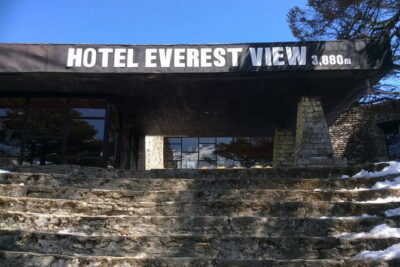
Everest Base Camp Helicopter Tour landing at Everest View Hotel
Read our review →
Tibet Tour 8 Days Lhasa to Everest Base Camp Small Group Tour
Read our review →
Dubai: Private Luxury Everest Yacht Cruise from Dubai Marina
Read our review →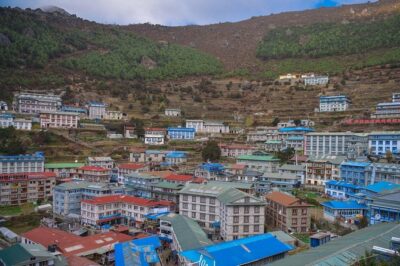
Browse the lists this trek appears in