
Review · KATHMANDU
Everest Base Camp Trek
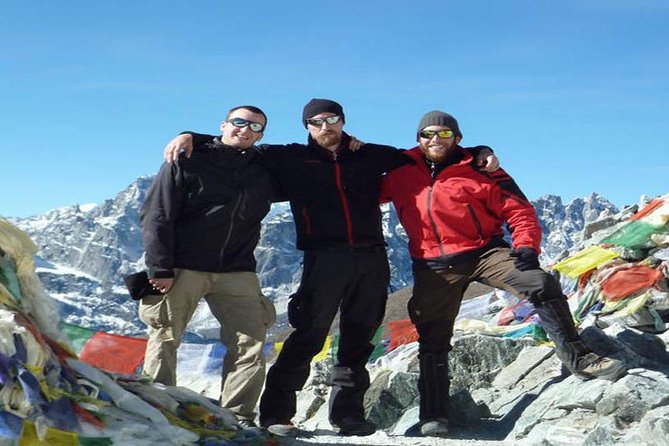
The real prize here is not simply reaching Everest Base Camp. It is the slow change from Kathmandu streets to Lukla’s mountain air, then from Sherpa villages to the high, rocky world around Gorak Shep. Along the way, you get Namche Bazaar, Tengboche Monastery, two acclimatization days, and a sunrise climb to Kala Patthar.
I like the careful pacing, especially the rest days at Namche Bazaar and Dingboche. I also like the practical setup: porters carry the main bags, meals and tea-house lodging are covered, and airport transfers are arranged. The main caution is altitude. This is a serious trek, with long walking days and a high point of 5,545 meters at Kala Patthar.
Key points
- Two built-in acclimatization days: Rest and short walks at Namche Bazaar and Dingboche give your body time to adjust.
- A classic Khumbu route: Walk through Phakding, Namche, Tengboche, Dingboche, Lobuche, Gorak Shep, and Pheriche.
- Kala Patthar reaches 5,545 meters: This is the trek’s highest point and one of its best viewpoints for the Everest Range.
- Porter support is included: One porter is provided for every two people, so you carry only a day pack.
- Local guiding is a major strength: Guides named in the feedback include Pradip, sometimes called Master Zi or Big Z, along with Laxman and Pradam.
- Lukla flights need flexibility: Delays and cancellations can happen, and a helicopter backup costs at least $500 per person.
From Kathmandu to Lukla in one morning
This 14-day program begins at Tribhuvan International Airport in Kathmandu. A representative meets you after customs and transfers you to a standard three-star hotel. The first day is intentionally light, which is useful after an international flight and before the early start required for Lukla.
Day two begins with a flight from Kathmandu to Lukla, at about 2,886 meters. The flight is part of the adventure, but it is also the first point where flexibility matters. Mountain weather can delay or cancel flights. If that happens, the operator plans to reschedule for the next day, subject to availability.
A helicopter may be arranged for a group that needs to keep the original schedule, but the cost is your responsibility. The stated minimum is $500 per person, depending on group size. Travel insurance that covers at least $500 per day for flight disruption is a sensible safeguard.
From Lukla, you walk roughly four hours to Phakding at 2,640 meters. This is a gentle opening stage compared with the days ahead. You will already be on foot among mountain villages, suspension bridges, and the first sections of the Khumbu trail, but you are not yet dealing with the hardest altitude.
More Everest Base Camp Treks in Kathmandu:
- Everest Base Camp Trek – 14 Days
★ 5.0 · 1,499 reviews - Everest Base Camp Trek
★ 5.0 · 842 reviews - Everest Base Camp Helicopter Tour landing at Everest View Hotel
★ 5.0 · 668 reviews
Phakding to Namche Bazaar, the first real test
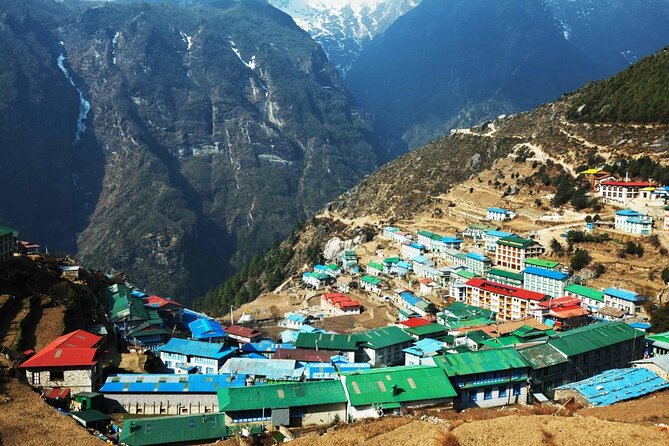
The walk from Phakding to Namche Bazaar takes about six hours. Namche sits at 3,440 meters and is the main Sherpa center on this route. It is more than an overnight stop. It is where the trip begins to feel like a high-altitude expedition rather than a village walk.
The route gains height and includes a steady rhythm of climbs and descents. You will need to settle into a measured pace. The best approach is simple: walk slowly, drink often, and do not try to prove anything on the first major day.
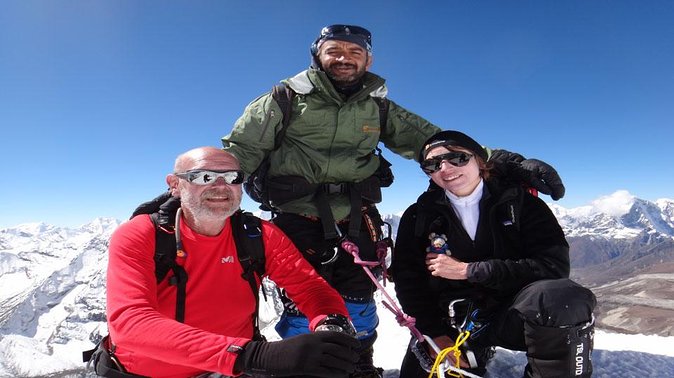
Namche is also where the guiding team becomes especially useful. Pradip is repeatedly singled out for his mountain experience, humor, wildlife spotting, and ability to help people feel safe on difficult ground. Laxman and Pradam are also named as experienced support on similar trips. Guide quality matters here because the days are long, the terrain is uneven, and small changes in how you feel can become important at altitude.
Two acclimatization days that earn their place
Day four is set aside for acclimatization in Namche. You do not simply lose a day. You gain time for your body to adjust before the route climbs higher toward Tengboche and Dingboche.
The schedule allows about six hours for the acclimatization program, though the exact walking plan can vary. This is one of the strongest parts of the itinerary. A rushed trek might look efficient on paper, but the mountain does not care about the calendar. A rest day makes the later sections more manageable.
After Namche, you walk to Tengboche at 3,867 meters. The climb takes around six hours. Tengboche is known for its monastery and for broad views toward the Everest region. The monastery gives this part of the route a different mood. The trek is still physical, but there is also time to pause and take in the spiritual side of Sherpa life.
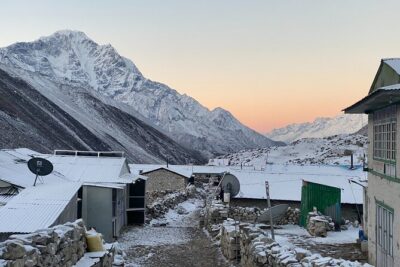
The route then continues to Dingboche at 4,260 meters, another six-hour walking day. The air is thinner here, and you may notice that ordinary hills now require patience. Dingboche is a practical place for another acclimatization day, not a spare day added for decoration.
Dingboche and the move into high country
Day seven is the second acclimatization day. The program mentions the Chhukhung path and a return to Dingboche, giving you a chance to walk higher before sleeping at the same altitude. This follows the useful high-walk, lower-sleep principle without asking you to gain too much elevation overnight.
From Dingboche, the trail leads to Lobuche at 4,930 meters. The day takes about six hours and includes lunch at Dugla, at approximately 4,595 meters. This is a more demanding section because the altitude is now a daily fact, not something you merely notice when climbing a hill.
Lobuche is a staging point for the biggest walking day yet. Accommodation in this area is in local tea houses. They are described as clean and comfortable, but you should expect basic mountain lodging rather than city-hotel facilities. Twin-share rooms are standard, and a single supplement is available for an additional $200.
A few more treks around Kathmandu worth a look
- Everest Base Camp Trekking
★ 5.0 · 485 reviews - Annapurna Circuit Trek with Tilicho Lake
★ 5.0 · 368 reviews - Everest Base Camp Trekking – 13 Day
★ 5.0 · 365 reviews - Everest Base Camp Trek
★ 5.0 · 350 reviews
Lobuche to Everest Base Camp through Gorak Shep
Day nine takes you from Lobuche to Everest Base Camp via Gorak Shep, at about 5,140 meters. The full walking day is listed at roughly six hours, though pace and conditions can affect the timing.
This is the section most people picture when they think of the trek. The trail becomes rocky, the air is thin, and the route winds toward the base camp area through a stark high-altitude setting. You are walking toward the foot of the world’s highest mountain, but this is not a summit expedition. You reach the base camp area and return to a tea house for the night.
It is worth keeping expectations clear. Everest is not necessarily best viewed from Base Camp itself. The strongest mountain panorama comes on the following morning from Kala Patthar. Base Camp is valuable for the atmosphere, the route’s mountaineering connection, and the sense of reaching the far end of the trail.
Gorak Shep is also one of the most basic overnight stops. That is not a flaw in the operator’s planning. At this height, facilities are limited. Bring patience, warm layers, and a willingness to accept simple conditions.
Kala Patthar, the high point of the route
On day ten, you climb from Gorak Shep to Kala Patthar at 5,545 meters, then descend to Pheriche at 4,243 meters. This is the highest point of the trek and the place for the most dramatic Everest Range views.
The climb is short on a map but serious in practice. At this altitude, every step takes longer. Your guide’s role is important here, especially in judging pace and watching how you respond. Take it slowly. The reward is a high viewpoint over the peaks and the valleys below, followed by a major descent.
Reaching Pheriche on the same day makes this a demanding itinerary section. You gain altitude early, then lose a great deal of it before night. That descent is welcome, but your legs will feel the accumulated work from the previous days.
Returning through Pheriche, Namche, and Lukla
Day eleven brings you from Pheriche back to Namche Bazaar, with the route passing through the Tengboche area. It is another approximately six-hour day. You are now retracing familiar ground, but the experience changes as you lose altitude and regain energy.
The next day continues from Namche to Lukla. This is listed at around six hours and gives you one final walking stage before the flight back to Kathmandu. Lukla is a useful place to clean up, rest, and prepare for the transition from trail life to city life.
Day thirteen is the return flight to Kathmandu. The program includes a hotel night before your departure from Nepal on day fourteen. That extra night is practical. It gives you some room if the Lukla flight is delayed and lets you recover before your international flight.
What the $1,500 price covers
At $1,500 per person, the package includes a substantial set of trek essentials:
- Airport pickup and drop-off by private vehicle
- Two nights in a standard three-star Kathmandu hotel
- Tea-house lodging during the trek
- Guide support and one porter for every two people
- Guide and porter salaries, food, accommodation, transport, and insurance
- TIMS card fees
- A first-aid medical kit
- A duffle bag if needed
- Breakfast throughout the program
- Eleven lunches and eleven dinners
- Government taxes and service charges
The value is strongest if you want one company to handle the moving parts. Porter support alone changes the experience. You carry a day pack with water, a camera, sunscreen, a spare jacket, and similar essentials instead of hauling your full kit uphill.
The package does not include travel insurance, meals in Kathmandu, or alcoholic and nonalcoholic drinks. You should also budget for hot showers, charging batteries, snacks, bottled or boiled water, souvenirs, tips, and possible entrance fees during Kathmandu sightseeing.
The suggested personal spending amount is about $12 to $15 per day on the trek if you do not drink alcohol or shop heavily. Tips are not fixed, but the operator suggests allowing 10 to 15 percent of the tour cost if the support team serves you well.
Tea houses, food, power, and packing
Breakfast and dinner are taken where you sleep, while the guide chooses a lunch stop along the trail. Normal water is available, and purification tablets are recommended. Bottled and boiled water can also be purchased along the route.
Electricity is available in some villages, sometimes from solar power. Charging cameras and phones can cost extra, and power may not always be available. Spare batteries or a power bank are useful, though a power bank is not specifically listed as part of the package.
Domestic flights allow 15 kilograms, including hand luggage. Excess baggage costs extra, with the stated rate starting at $1 or more per kilogram. Keep your trekking load light and separate out clothing you will not need on the trail. The operator says you can leave non-trekking items in a hotel locker or safe-deposit area in Kathmandu.
Who will get the most from this trek?
This trip suits you if you want the classic Everest Base Camp route with a guide, porters, planned acclimatization, and meals arranged. You need a strong level of physical fitness. Six-hour walking days become harder when the route climbs above 4,000 meters, and the Kala Patthar day is especially demanding.
It is a good fit for someone who values local support over independent travel. Guides such as Pradip are credited with mountain experience, humor, wildlife spotting, and calm help on difficult terrain. The group size can reach 15 people, so you should not expect a private trek unless you confirm a smaller group.
It is less suitable if you want comfortable hotels, reliable electricity, flexible sleeping arrangements, or a short mountain holiday. The tea houses are described as clean and comfortable, but they remain basic. Single rooms cost extra and may not always be available at every stop.
Free cancellation is available if you cancel at least 24 hours before the local start time. After that cutoff, the payment is not refunded, and late changes are not accepted.
Should you book the Everest Base Camp Trek?
I would book this trek if you want a well-supported, classic route and understand that the real challenge is altitude, not just distance. The two acclimatization days, porter arrangement, included meals, and airport support make the $1,500 price reasonable for a first visit to the Khumbu.
Before booking, make sure your insurance covers trekking and Lukla flight disruption. Ask about the expected group size, current flight plans, and what happens if weather affects the schedule. If you are fit, patient, and ready for simple tea-house nights, this gives you the major milestones: Namche, Tengboche, Base Camp, and Kala Patthar, with an experienced support team beside you.
FAQ
How long does the Everest Base Camp Trek take?
The program lasts approximately 14 days, including arrival and departure days in Kathmandu, the trek from Lukla, and the return flight from Lukla.
What is included in the $1,500 price?
The price includes airport transfers, two Kathmandu hotel nights, tea-house accommodation during the trek, a guide, porters, trekking meals, TIMS fees, a first-aid kit, taxes, and service charges.
Are flights between Kathmandu and Lukla included?
The itinerary includes flights from Kathmandu to Lukla and back, but flight delays and cancellations are possible. A helicopter option costs at least $500 per person, depending on group size, and is an additional expense.
How much luggage can I take on the Lukla flight?
The stated domestic airline allowance is 15 kilograms, including your hand luggage. Excess baggage costs extra, starting at $1 or more per kilogram.
Are meals included during the trek?
Breakfast is included for all 14 days listed in the package. The package also includes 11 lunches and 11 dinners. Meals in Kathmandu and alcoholic or nonalcoholic drinks are not included.
Do I need strong physical fitness?
Yes. The operator states that you should have a strong level of physical fitness. The trek includes repeated six-hour walking days and reaches 5,545 meters at Kala Patthar.
Just added around Kathmandu
- Everest Base Camp Trek★ 5.0 · 3 reviews
- Everest Base Camp Trek★ 5.0 · 7 reviews
- 15 Days Private Everest Base Camp Trek★ 5.0 · 30 reviews
- Everest Base Camp Trek★ 5.0 · 57 reviews
- 14 Days of Adventure Trekking to Everest Base Camp★ 5.0 · 2 reviews
- 14-Day Everest Base Camp Trek★ 5.0 · 20 reviews
- From Kathmandu: Private 14-Day Everest Base Camp Trek★ 5.0 · 20 reviews
- 14 Days Everest Base Camp Trek★ 5.0 · 4 reviews
Everest Base Camp Treks, compared.
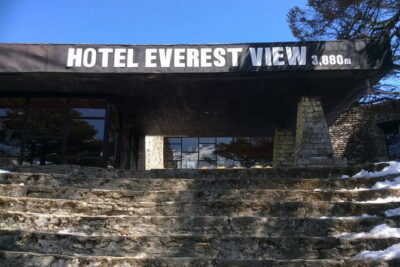
Everest Base Camp Helicopter Tour landing at Everest View Hotel
Read our review →
Tibet Tour 8 Days Lhasa to Everest Base Camp Small Group Tour
Read our review →
Dubai: Private Luxury Everest Yacht Cruise from Dubai Marina
Read our review →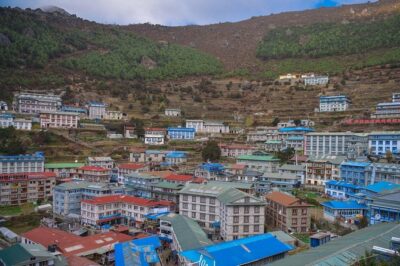
Browse the lists this trek appears in