
Review · KATHMANDU
Everest Base camp Trek-12 days
Everest Base Camp is less about reaching a single point than earning your way through a long chain of mountain villages, suspension bridges, stone steps, glaciers, and thin air. This 13-day guided trek begins with the famous flight from Kathmandu to Lukla, then follows the Khumbu Valley toward Base Camp and Kala Patthar.
I like the sensible acclimatization plan, especially the extra days around Namche and Dingboche. I also like the value: flights, teahouse lodging, meals, park fees, a sleeping bag, and down jacket are bundled into the $1,400 price. The main drawback is that this is still a demanding high-altitude walk, and the itinerary description has a few distance and duration inconsistencies, so you should confirm the final schedule before departure.
Key points to know before you book
- Lukla flight: Your Everest adventure starts with a 40 to 45 minute flight from Kathmandu to the mountain airstrip at Lukla.
- Acclimatization matters: Rest days in Namche and Dingboche include short hikes so you climb high and sleep lower.
- Sherpa country: You pass through Khumjung, Tengboche, Pangboche, Dingboche, and other villages where daily life remains closely tied to the mountains.
- Base Camp and Kala Patthar: You reach Everest Base Camp at about 5,364 meters, then hike to Kala Patthar for the best stated viewpoint of Everest.
- Group trekking: The maximum group size is 26 people, making this an economical option rather than a private trek.
- Extra costs: Personal drinks, laundry, alcoholic beverages, and a porter are not included.
Why the Lukla start sets the tone
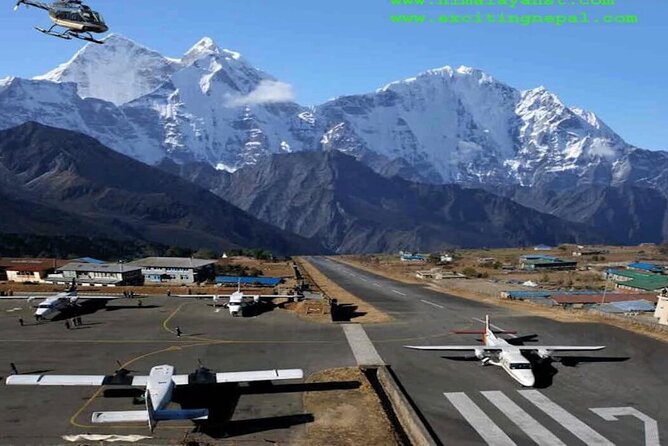
Your first real mountain moment comes before the walking begins. From Kathmandu, you take an early flight lasting roughly 40 to 45 minutes to Lukla. The airstrip is narrow and the approach is famous for feeling dramatic, so this is not a routine airport transfer.
At Lukla, you meet the porters and trekking staff before setting off. The first walking day covers about 10 kilometers and takes around five to six hours, with a maximum altitude of approximately 2,804 meters. The trail initially descends, then follows the Dudh Kosi River toward Phakding and Monjo.
The river comes from glaciers and has a pale, chalky appearance. It gives you an immediate sense that this is not a simple hill walk. The path passes through small settlements and over bridges, with a mix of river views and mountain greenery.
The timing can feel tight on this opening day, especially after an early breakfast and flight. You should be ready to walk soon after landing rather than expecting a slow arrival day.
More Everest Base Camp Treks in Kathmandu:
- Everest Base Camp Trek – 14 Days
★ 5.0 · 1,499 reviews - Everest Base Camp Trek
★ 5.0 · 842 reviews - Everest Base Camp Helicopter Tour landing at Everest View Hotel
★ 5.0 · 668 reviews
Day 1 in Kathmandu and the practical start
The first day is listed as Kathmandu Valley, but no detailed sightseeing plan is provided. Treat it as an arrival and preparation day rather than counting on a city tour.
Pickup is offered, and the meeting time is 6:00 am. That early start matters because the Lukla flight and mountain weather control much of the day. Keep your essential items in your hand luggage, including documents, medication, warm layers, and anything you cannot afford to lose if checked baggage is delayed.
The experience provider is Exciting Nepal Treks and Expedition. Communication before departure is an important part of the service, and Subash, the company owner, is repeatedly singled out for quick replies and practical help. Past groups also worked with guides including Ram Tamang, Basu, Shasi, Suman, and Tika. Your guide will depend on the departure, so ask for the assigned name before you arrive.
Monjo to Namche, the first hard climb
The next section begins around Monjo and continues through Jorsale into Sagarmatha National Park, a UNESCO World Heritage Site. You walk through rhododendron forest and catch early views of the mountains before the route reaches the Khumbu River.
Then comes the first major test: the climb to Namche Bazaar. The route gains roughly 600 meters and includes steep, rugged sections. The distance is listed as about 4 kilometers, with a maximum altitude near 3,445 meters, and the walking time is around three to four hours.
Namche is more than a place to sleep. It is the main trading town in the Khumbu and an important point for checking your pace, condition, and equipment. The climb can feel short on paper but tough in practice. At this altitude, you should walk slowly and avoid treating the route like a race.
Namche acclimatization and the Everest View Hotel
The Namche rest day is one of the trip’s smartest features. You do not simply remain in bed. Instead, you hike above the town and return to sleep lower, a standard way to help your body adjust to thinner air.
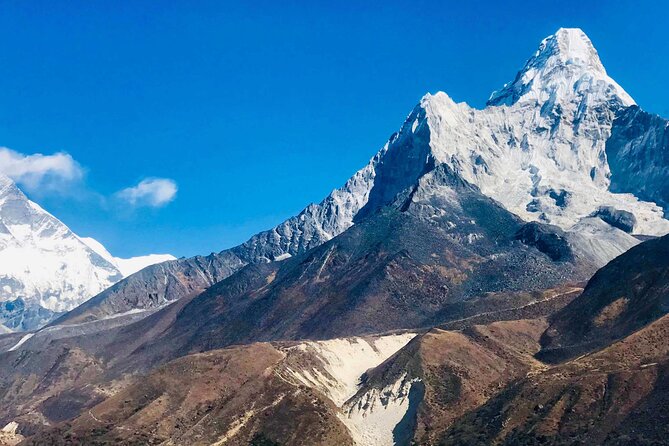
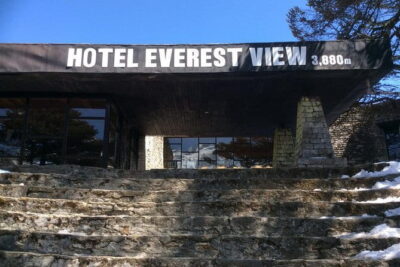
The route heads toward the Everest View Hotel, passing through Khunde and Khumjung. These are large Sherpa villages with substantial houses and a more settled feel than the smaller trail stops. From Khumjung, you get views of Ama Dablam, one of the most memorable peaks in the region.
The climb to the hotel is steep at first, then becomes easier. The hotel is used as a viewpoint, with stated views toward Everest and the surrounding peaks. Even if cloud blocks Everest, the walk remains worthwhile for the villages, mountain air, and broad outlook over the valley.
This is also a good day to discuss any headache, nausea, unusual tiredness, or breathing trouble with your guide. The itinerary includes a normal medical kit, but it does not replace proper personal preparation or medical advice.
A few more treks around Kathmandu worth a look
- Everest Base Camp Trekking
★ 5.0 · 485 reviews - Annapurna Circuit Trek with Tilicho Lake
★ 5.0 · 368 reviews - Everest Base Camp Trekking – 13 Day
★ 5.0 · 365 reviews - Everest Base Camp Trek
★ 5.0 · 350 reviews
Namche to Tengboche, Buddhist landmarks and Ama Dablam
From Namche, you follow a contouring trail toward Tengboche. The day covers about 9.5 kilometers and takes five to six hours, with the route reaching around 3,975 meters at Mongla Pass. The itinerary also describes the day as reaching roughly 3,850 meters, so the exact high point should be confirmed locally.
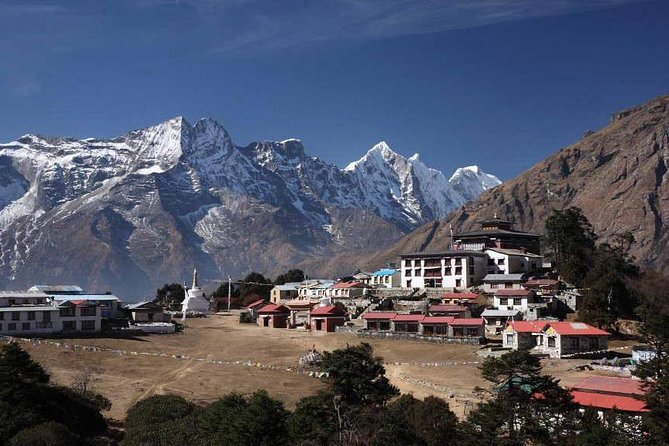
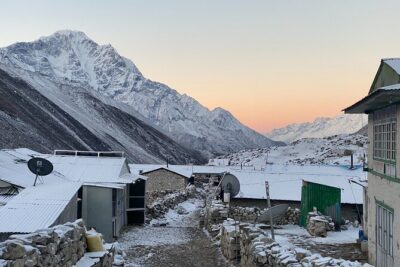
This is one of the most scenic sections. The trail passes small gompas, Buddhist stupas, stone steps, and open mountain viewpoints. Ama Dablam is a major visual reward, with its sharp, elegant shape appearing from several angles.
After Mongla Pass, you descend toward the Dudh Kosi River. Then you climb again toward Tengboche. That up and down pattern is typical of the trek and can be harder than a steady climb.
Tengboche is an important overnight stop because the setting combines forest, mountain views, and Buddhist culture. You are not just ticking off kilometers here. You are seeing how religion and local life fit into a high mountain community.
Tengboche to Dingboche through changing forests
The route from Tengboche to Dingboche takes about five to six hours and covers roughly 11 kilometers, reaching around 4,350 meters. You begin with a descent through rhododendron forest, then climb again through birch, conifer, and rhododendron trees.
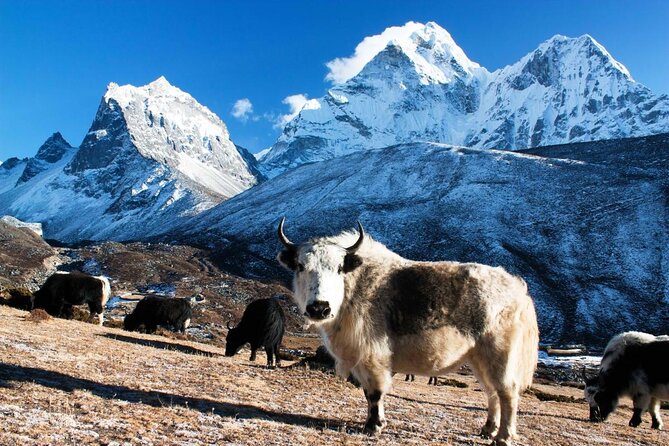
As you gain height, the scenery becomes more open and less wooded. The trail passes the Khumbila Khola valley and climbs toward a ridge with views of Taboche, Nuptse, Cholatse, and other peaks.
Small villages along the way offer a look at local life, and the itinerary emphasizes the friendly, helpful character of the communities. Still, you should not confuse hospitality with ease. The higher you go, the more every uphill section demands patience.
Dingboche is a key staging point before the hardest part of the trek. The air is noticeably thinner, and your walking speed should drop. A five-hour day at this height can feel much longer than a similar distance at home.
Dingboche acclimatization and Nangkartshang Peak
The second acclimatization day includes a hike to Nangkartshang Peak above Dingboche. This is a useful design choice because it gives you a higher daytime outing without forcing you to sleep at the same elevation.
The viewpoint is especially noted for Ama Dablam. In clear weather, you can see the mountain from its summit down to its base. The afternoon is left for a village walk or rest.
Use this day wisely. You may feel eager to push onward, but eating, drinking, organizing your layers, and sleeping well can matter more than squeezing in extra distance. The next days bring the most demanding altitude and the longest walking hours.
Dingboche to Duglha and the memorial area
From Dingboche, the route opens into wide mountain scenery. The trail narrows near Dusa, and you pass the campsite associated with the first successful Everest expedition. Mt. Pumori becomes a major presence as you continue toward Duglha.
The day is listed at about 11 kilometers and five hours, with a maximum altitude near 4,950 meters. You cross a stream before climbing to Duglha, a small settlement marked by prayer flags.
The ascent from this point can be tiring because the altitude is now serious. Keep your pace steady and listen to your guide. The itinerary specifically advises slow walking later in the route to reduce altitude sickness risk, and that advice applies here too.
Gorak Shep and Everest Base Camp
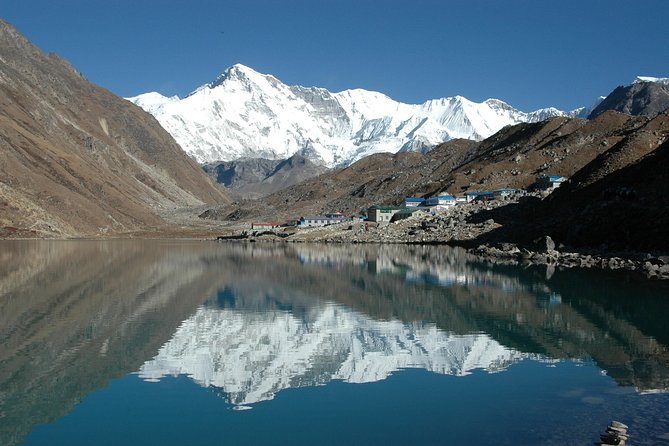
The approach to Gorak Shep brings the Khumbu Glacier into view. The trail has gradual ups and downs at first, then becomes rougher, with large rocks and uneven footing. The day is listed at 15 kilometers and seven to eight hours, reaching about 5,364 meters.
This is the toughest scheduled day for many people. You are walking high, the surface is rough, and the round trip toward Base Camp adds time after reaching Gorak Shep. The best approach is to keep expectations realistic. You may not feel energetic or triumphant every minute, and that is normal at this height.
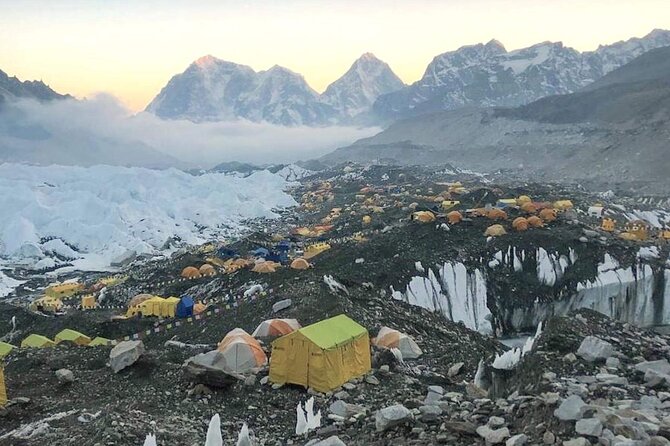
From the trail, you see the top of the Khumbu Glacier and, farther on, the Khumbu Icefall. Everest Base Camp itself is a seasonal expedition site rather than a town. Its appearance can change depending on climbing activity and season, but reaching the point is still a powerful marker of progress.
Take care on the rocks and do not rush for photographs. At 5,364 meters, a slow pace is not weakness. It is the sensible way to finish the day.
Kala Patthar sunrise and the return route
The following morning begins early with a three to four hour hike to Kala Patthar. This is presented as the best viewpoint for Everest, the Khumbu Glacier, and the Khumbu Icefall.
In clear weather, sunrise lights the snowy peaks from first glow to full morning. The viewpoint offers a 360 degree panorama, bringing the surrounding mountains close in every direction. You should carry warm layers and keep your camera ready, but remember that cloud can affect the view.
After Kala Patthar, the return begins. You descend through Pangboche and Tengboche before reaching Namche in the afternoon. This day still requires effort, but losing altitude usually makes walking and breathing easier.
The route then continues from Namche toward Lukla through Manjo, Benkar, and Phakding. You cross several suspension bridges over the Dudh Kosi and follow the river through forest and Sherpa settlements. The final 10 kilometer section takes you back to Lukla, at about 2,840 meters.
Your last night is in Lukla before the early flight to Kathmandu. Ask for a window seat if you want aerial views of the mountains, though flight operations depend on weather.
What the $1,400 price really covers
At $1,400 per person, this is an economical guided trek rather than a luxury mountain holiday. The price includes accommodation during the trek, national park fees, flights between Kathmandu and Lukla, arrival and departure transfers, meals, seasonal fruit, a normal medical kit, sleeping bags, and down jackets.
The meal allowance is listed as 11 dinners, 12 breakfasts, and 11 lunches. Teahouse accommodation is included, which means you get a basic mountain stay rather than a private hotel standard. That is the normal format for this route and keeps the cost down.
A porter is not included if you need one. Personal costs such as alcoholic drinks, soft drinks, laundry, and other items are also extra. Budget for these before you go, especially because prices can differ along the route.
The maximum group size is 26. A group that large helps explain the price, but it may also mean a slower start, more varied walking speeds, and less one-to-one attention than on a private trip.
Who should book this Everest Base Camp trek
You should consider this trip if you have moderate fitness, some hiking experience, and a real interest in mountain villages, Buddhist sites, and high-altitude walking. You do not need to be an expedition climber, but you do need to accept long days, steep sections, cold conditions, rough ground, and basic lodging.
This is a good match if you want the main logistics handled. Flights, rooms, meals, park fees, equipment, and guides are arranged for you, so you can focus on walking rather than negotiating every detail.
It is less suitable if you want a private itinerary, hotel comfort, a flexible pace, or a guaranteed flight schedule. Lukla flights depend on weather, and the tour requires good conditions. If poor weather cancels the experience, you are offered another date or a full refund.
The cancellation terms are simple: cancel at least 24 hours before the start time for a full refund. Cancellations or changes inside 24 hours are not accepted for a refund.
Should you book it?
I would book this trek if you want a fairly priced, fully guided route to Everest Base Camp and you are comfortable with teahouses and a group of up to 26 people. The acclimatization days, included equipment, and support from an operator known for fast communication are useful advantages.
Before paying, confirm the exact day by day schedule, guide assignment, porter arrangement, baggage plan, and what happens if the Lukla flight is delayed. If you understand those details and have the fitness for sustained uphill walking, this itinerary gives you the classic Everest route without making you arrange every moving part yourself.
FAQ
How long does the Everest Base Camp trek take?
The experience is listed as approximately 13 days. It is also described in places as a 12-day trek, so confirm the final schedule with Exciting Nepal Treks and Expedition before booking.
Where does the trek begin?
The trip begins in Kathmandu Valley. You then take a flight from Kathmandu to Lukla before starting the main trek.
How long is the flight from Kathmandu to Lukla?
The flight takes approximately 40 to 45 minutes.
What is the maximum group size?
The maximum group size is 26 people.
What fitness level is required?
The trek is suited to people with moderate physical fitness and hiking experience.
Are flights to and from Lukla included?
Yes. The flight to Lukla and the return flight to Kathmandu are included.
Is accommodation included?
Yes. Accommodation during the trek is included, using teahouse lodging along the route.
Are meals included?
Yes. The package lists 12 breakfasts, 11 lunches, and 11 dinners, along with seasonal fruits.
Is a porter included?
No. A porter is not included if you need one, so you should arrange and budget for that separately.
Just added around Kathmandu
- Everest Base Camp Trek★ 5.0 · 3 reviews
- Everest Base Camp Trek★ 5.0 · 7 reviews
- 15 Days Private Everest Base Camp Trek★ 5.0 · 30 reviews
- Everest Base Camp Trek★ 5.0 · 57 reviews
- 14 Days of Adventure Trekking to Everest Base Camp★ 5.0 · 2 reviews
- 14-Day Everest Base Camp Trek★ 5.0 · 20 reviews
- From Kathmandu: Private 14-Day Everest Base Camp Trek★ 5.0 · 20 reviews
- 14 Days Everest Base Camp Trek★ 5.0 · 4 reviews
Everest Base Camp Treks, compared.
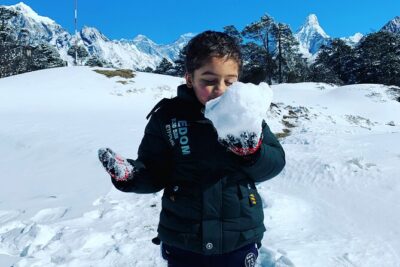
Everest Base Camp Helicopter Tour landing at Everest View Hotel
Read our review →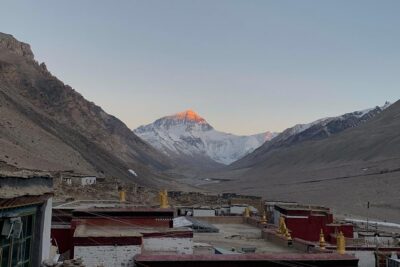
Tibet Tour 8 Days Lhasa to Everest Base Camp Small Group Tour
Read our review →
Dubai: Private Luxury Everest Yacht Cruise from Dubai Marina
Read our review →
Browse the lists this trek appears in