
Review · KATHMANDU
Everest Base Camp Kalapathar Trek 14 Days
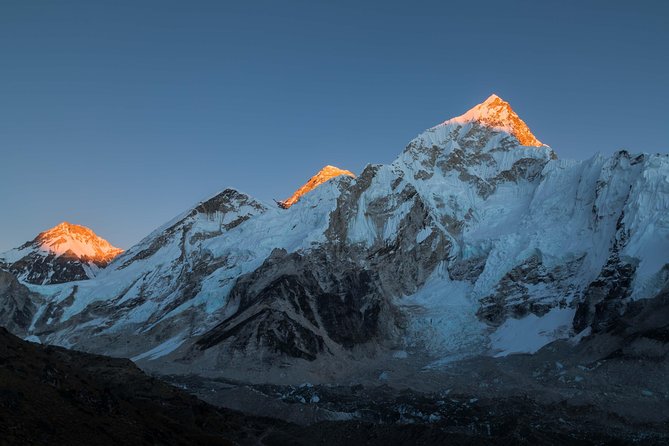
The big draw here is simple: you walk to Everest Base Camp, then climb Kala Patthar for the trip’s highest viewpoint. The route moves from Kathmandu’s temples and Thamel streets to pine woods, high valleys, glaciers, prayer flags, and the Khumbu Icefall.
I like the well-handled logistics, especially the included Kathmandu to Lukla flights, permits, tea-house rooms, and guide. I also like the human scale of the trip. Guides named in past bookings include Anup, Sagar, Balaram, and Bikram, while the company owner, Dhruba, is involved in arrangements. The main caution is altitude: Kala Patthar reaches 5,545 meters, and several walking days are listed at about eight hours.
Key points to know before booking
- Kala Patthar reaches 5,545 meters, making it the highest point on the route and the main test of the trek.
- Everest Base Camp is reached on Day 9, with a night at Gorak Shep before the early climb to Kala Patthar.
- Kathmandu to Lukla flights are included, along with the return flight, permits, private vehicle transfers, and a professional trekking guide.
- Tea-house accommodation keeps the trip local and practical, though WiFi, showers, drinks, and personal items cost extra.
- Namche Bazaar is the main acclimatization stop, with a short viewpoint walk and a park museum visit.
- A porter is not included, so you must carry your own luggage unless you arrange one separately.
From Kathmandu temples to the trailhead in Lukla
The first day is easy. You are met at Kathmandu International Airport and transferred to a hotel around Thamel, the city’s well-known base for shops, restaurants, and trekking services. This is useful after a long flight, since you can settle in without having to find your own way across Kathmandu.
Day 2 combines sightseeing with preparation. Swayambhunath Temple, often called the Monkey Temple, is the named stop, and the city tour also includes World Heritage sites. The temple gives you an early look at Kathmandu’s religious life before the mountain section begins. Admission is not included, so keep a little cash available.
The afternoon is set aside for trek preparation. That matters more than it sounds. You can check your sleeping bag and duffel bag, meet the guide, and make sure your personal kit is manageable before the walking starts.
Day 3 begins with an early flight to Lukla. The flight takes about 30 minutes, then the trek starts by descending toward the Dudh Kosi River. The first overnight stop is Phakding, reached through Sherpa farm villages.
This opening walk is a good introduction to the route. You are not yet facing the highest part of the Khumbu, but you are already moving through working villages rather than simply viewing mountains from a vehicle. The first day is also a reminder that the route is not a straight climb. You gain and lose height as the trail follows the river.
More Everest Base Camp Treks in Kathmandu:
- Everest Base Camp Trek – 14 Days
★ 5.0 · 1,499 reviews - Everest Base Camp Trek
★ 5.0 · 842 reviews - Everest Base Camp Helicopter Tour landing at Everest View Hotel
★ 5.0 · 668 reviews
Namche Bazaar gives you your first real mountain pause
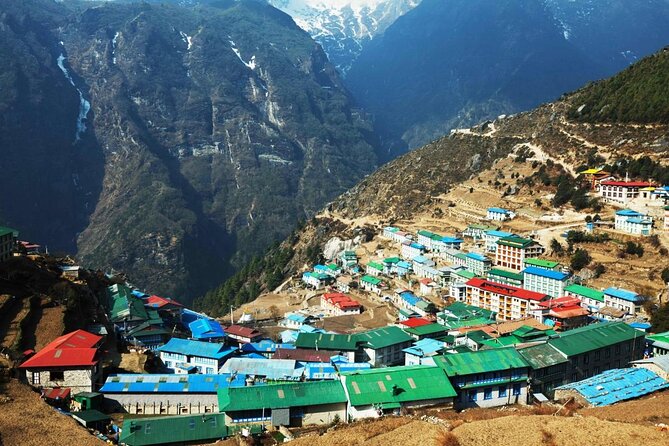
Day 4 is a long walking day, listed at about eight hours. You follow the river, cross bridges, pass Monjo, and enter Sagarmatha National Park. Views open toward Thamserku and Kongde peaks before the trail reaches Namche Bazaar at 3,440 meters.
Namche is more than a place to sleep. It is the main social and supply center on this route, with shops and restaurants along its streets. The itinerary calls for rest time there, which is important because the body needs time to adjust to the increasing height.
Day 5 is an acclimatization day in Namche. You take a short excursion to a viewpoint above town and visit the park museum, which covers the Khumbu area, Sherpa culture, and mountaineering history. The scheduled museum and viewpoint time is about two hours, leaving the rest of the day for rest.
I like this pause because it prevents the route from becoming a race. Still, the program provides only one clearly designated acclimatization day before the trail climbs much higher. You should take the guide’s advice seriously and tell the guide promptly if you feel unwell.
Tengboche brings the best early mountain views
From Namche, Day 6 leads toward Tengboche. The walking day is listed at about eight hours, and the reward is one of the route’s most memorable settings: a monastery surrounded by forest with broad views toward Everest, Ama Dablam, and the surrounding peaks.
Tengboche Gompa is both a cultural stop and a mountain viewpoint. You have time to visit the monastery, with the listed visit taking about 30 minutes. The stop gives the trek a stronger sense of place. This is not only a walk through high country; it is also a route through villages shaped by Sherpa Buddhist traditions.
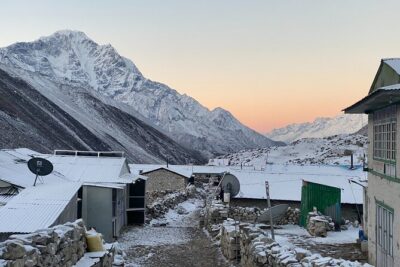
The next section passes Pangboche, described as the last permanent village on the Everest Base Camp route, then climbs toward Dingboche. The itinerary lists another long walking day of about eight hours. Dingboche is more open and exposed than the wooded sections lower down, with views of Island Peak and Ama Dablam.
This change in scenery is one of the trek’s strengths. You move from woodland into a more severe high-altitude setting, with fewer trees and wider views. It also means less shelter from wind and weather, so your clothing needs to work well in exposed conditions.
Dingboche to Lobuche follows monuments, flags, and big peaks
Day 8 continues from Dingboche through Buddhist monuments and prayer flags to Thukla. From there, the route offers views toward Ama Dablam, Cholatse, and Taboche before continuing to Lobuche for the night.
The walking time is again listed at about eight hours. At this height, distance matters less than pace, terrain, and how your body is responding. I would treat the timetable as a guide rather than a promise of an easy eight-hour stroll. The trail has already moved far beyond the lower river valleys, and the barren moraine country makes the walk feel more demanding.
Lobuche is a practical overnight stop before the final approach to Everest Base Camp. There is no claim that this is a luxury trip, and that is not the point. Tea houses provide basic lodging along the route, while meals and a guide keep the focus on walking rather than arranging each day from scratch.
A few more treks around Kathmandu worth a look
- Everest Base Camp Trekking
★ 5.0 · 485 reviews - Annapurna Circuit Trek with Tilicho Lake
★ 5.0 · 368 reviews - Everest Base Camp Trekking – 13 Day
★ 5.0 · 365 reviews - Everest Base Camp Trek
★ 5.0 · 350 reviews
Everest Base Camp is the emotional high point
Day 9 reaches the trek’s main goal. You walk from Lobuche to Gorak Shep, then continue to Everest Base Camp. The route brings you close to the Khumbu Icefall and glaciers, with Everest rising above the high valley.
The schedule lists only one hour for the Gorak Shep stop, but the full day includes the approach to Base Camp and the return to Gorak Shep for the night. You should expect a demanding day at serious altitude, not a brief sightseeing stop.
Everest Base Camp itself is not a conventional lookout or a paved attraction. It is a mountaineering staging area, and the surroundings are shaped by rock, ice, moraine, and glacier. The appeal is the setting and the meaning of reaching it on foot. You have crossed the valleys and villages below to arrive beneath the world’s highest mountain.
The route does not sleep at Base Camp. You return to Gorak Shep, which sets up the next morning’s Kala Patthar climb.
Kala Patthar is the toughest and finest morning
Day 10 starts early with the climb to Kala Patthar at 5,545 meters. This is the highest point of the trek and the place for close views of Everest and the surrounding peaks.
The early start makes sense because the itinerary aims to reach the summit before breakfast at Gorak Shep. The climb is short in distance compared with the overall trek, but height makes it serious. You should expect a slow ascent and cold conditions, though exact weather is not provided.
After breakfast, you descend to Thukla and continue down the windy valley to Pheriche. The route then continues toward Pangboche for the overnight stop. The published schedule describes this as about two hours for the listed stop, but the day itself includes the Kala Patthar climb, the return to Gorak Shep, and a long descent. Read the daily outline as a route plan, not as a precise walking-time guarantee.
This is also where the trip’s design makes practical sense. You complete the highest climb while heading down, rather than adding another high overnight stay after the summit.
The return through Thyangboche and Namche
Day 11 takes you from Pangboche back to Namche through Thyangboche. The walk is listed at about eight hours, and the route gives you another chance to enjoy the monastery area from a different direction.
Returning on foot helps you notice how much the scenery has changed since the approach. The same villages, bridges, and mountain walls now appear in reverse order, but the descent brings a different rhythm. You are still walking hard, yet the direction is generally more forgiving than the climb toward Base Camp.
Day 12 is another long day, taking you from Namche to Lukla in about eight hours. You stay near Tenzing-Hillary Airport before the flight back to Kathmandu.
The Lukla flight is included in the package, but mountain flights can be a key scheduling point on any itinerary of this type. The supplied program allows only one day in Lukla before the return flight and does not describe a spare weather day. You should ask Eco Holidays Nepal how flight disruptions are handled before you pay, especially if you have a tight international connection.
Kathmandu closes the trip with time to breathe
Day 13 brings you back to Kathmandu by air, followed by a hotel transfer and free time around Thamel. After the high valleys, the city can feel noisy and crowded, but it is a useful place to rest, eat, and sort your belongings before flying home.
Day 14 is departure day. The trip ends after your flight to your home country, so check the exact hotel and airport arrangements with the operator before booking flights.
What the $1,990 price covers
At $1,990 per person, the package includes the expensive and complicated backbone of the route: round-trip Kathmandu to Lukla flights, required permits, private vehicle transport, a professional guide, tea-house accommodation, a sleeping bag, and a duffel bag.
Meals are also included, listed as 12 breakfasts, 11 dinners, and 10 lunches. That gives the package real value, since food costs add up on a two-week trek. An Eco Holidays Nepal T-shirt and route map are included as well.
You still need to budget for personal expenses, soft and hard drinks, WiFi, showers, and other personal items. A porter is not included. That last point matters. If you do not want to carry your own main bag, arrange porter support in advance and confirm the price.
The package is private, meaning only your group participates. That can be valuable if you want a more personal pace and direct contact with your guide. It can also mean less flexibility if someone in the group is much slower or faster than the others, so discuss group size and expected walking pace before booking.
Guide support and the practical tradeoffs
The strongest pattern in the supplied feedback is praise for organization, friendliness, and guide support. Guides named in the accounts include Anup, Sagar, Balaram, and Bikram. Dhruba, the company owner, is also mentioned as being involved with arrangements.
Several accounts describe flights, hotels, permits, food, and trekking staff being organized smoothly. One account also notes that a Sherpa guide’s English was limited, though friendly service helped offset the communication gap. That is worth taking seriously. Ask which guide will lead your departure and how comfortable you both are discussing altitude, pace, meals, and changes to the route.
The trip is described as suitable for people with moderate physical fitness. That should not be confused with easy. You face multiple days listed at eight hours, steep climbs, high altitude, and a summit at 5,545 meters. You should be comfortable walking for long periods before booking.
The cancellation policy is generous if your plans change early: cancellation at least 24 hours before the experience start time qualifies for a full refund. Changes or cancellations inside that 24-hour window are not accepted for a refund.
Who should book this Everest trek?
I would choose this trip if you want the classic Everest Base Camp route with the major arrangements bundled into one price. It suits you if you value a local guide, basic tea-house lodging, included meals, and a private group more than comfort or luxury.
It is also a good fit if Base Camp alone is not enough. The Kala Patthar climb adds the highest point and the best close mountain views, although it also adds the most demanding altitude challenge.
I would hesitate if you need a soft schedule, dislike basic accommodation, want a porter included, or have little tolerance for flight changes. I would also ask detailed questions about guide language, group size, emergency procedures, and Lukla weather delays before making the final payment.
FAQ
How long is the Everest Base Camp Kala Patthar trek?
The experience lasts approximately 14 days, including arrival and departure days in Nepal.
Where does the trek begin?
The trip begins in Kathmandu. You then fly to Lukla, where the walking section starts.
Is the Kathmandu to Lukla flight included?
Yes. Round-trip flights between Kathmandu and Lukla are included in the package.
Is a guide included?
Yes. A professional trekking guide accompanies you during the trek.
Is a porter included?
No. Porter service is not included and must be arranged separately if needed.
What is the highest point on the route?
Kala Patthar is the highest point, at 5,545 meters.
When do you reach Everest Base Camp?
You reach Everest Base Camp on Day 9, then return to Gorak Shep for the night.
What accommodation is provided?
Tea-house accommodation is provided during the trek, with hotel accommodation in Kathmandu.
Are meals included?
Yes. The package lists 12 breakfasts, 11 dinners, and 10 lunches.
Can you cancel for a full refund?
Yes, if you cancel at least 24 hours before the experience start time. Cancellations or changes made less than 24 hours before the start are not refunded.
Should you book it?
Book this trek if you want a clearly organized, private Everest Base Camp route with Kala Patthar, included flights, permits, meals, basic lodging, and guide support for $1,990. The value is strongest in the logistics and the local support, not in comfort.
Before booking, confirm your guide, group size, porter needs, flight-delay plan, and the exact daily walking times. If you are fit, patient, and ready for basic tea houses and serious altitude, this is a practical way to reach Everest Base Camp and stand above 5,500 meters at Kala Patthar.
Just added around Kathmandu
- Everest Base Camp Trek★ 5.0 · 3 reviews
- Everest Base Camp Trek★ 5.0 · 7 reviews
- 15 Days Private Everest Base Camp Trek★ 5.0 · 30 reviews
- Everest Base Camp Trek★ 5.0 · 57 reviews
- 14 Days of Adventure Trekking to Everest Base Camp★ 5.0 · 2 reviews
- 14-Day Everest Base Camp Trek★ 5.0 · 20 reviews
- From Kathmandu: Private 14-Day Everest Base Camp Trek★ 5.0 · 20 reviews
- 14 Days Everest Base Camp Trek★ 5.0 · 4 reviews
Everest Base Camp Treks, compared.
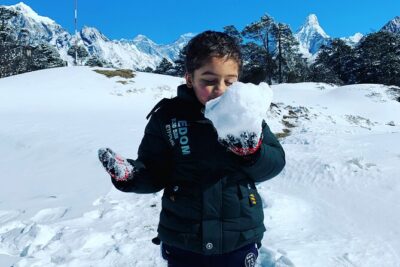
Everest Base Camp Helicopter Tour landing at Everest View Hotel
Read our review →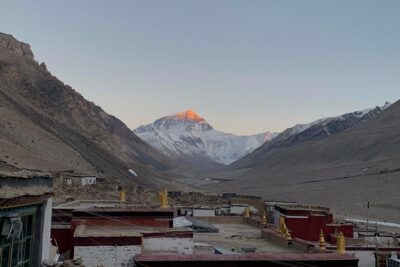
Tibet Tour 8 Days Lhasa to Everest Base Camp Small Group Tour
Read our review →
Dubai: Private Luxury Everest Yacht Cruise from Dubai Marina
Read our review →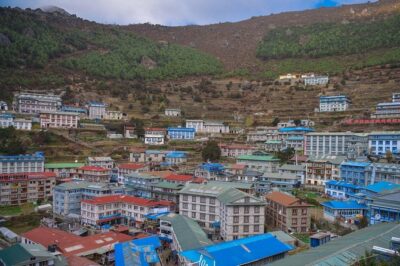
Browse the lists this trek appears in