
Review · KATHMANDU
Kathmandu: 14-Day Everest Base Camp with Kala Patthar Trek
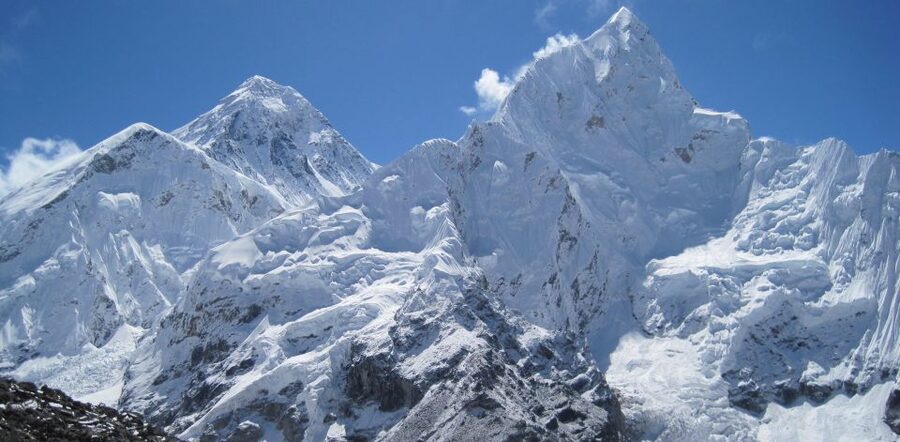
The big draw here is the classic Everest Base Camp route, not a quick mountain photo stop. You fly into Lukla, walk through Sherpa country, sleep in simple tea houses, and reach both Everest Base Camp and Kala Patthar at 5,545 meters. The views include Everest, Lhotse, Nuptse, and Ama Dablam.
I like the careful acclimatization days in Namche Bazaar and Dingboche, and I like that permits, domestic flights, a guide, lodging, and Kathmandu transfers are covered. The main catch is cost clarity: food, drinks, hot showers, insurance, and porter arrangements need careful budgeting, and Lukla flights can be delayed or canceled by weather.
Key points to know before you book
- Kala Patthar is the high point: At 5,545 meters, it gives you the trek’s best stated mountain viewpoint, but the early hike is demanding.
- Lukla is part of the adventure: The flight from Kathmandu is short and practical, yet weather can disrupt the start or return.
- Two acclimatization days help: You pause in Namche for a 2 to 3-hour outing and spend another acclimatization day in Dingboche.
- Tea-house lodging keeps the price reasonable: You stay in basic lodges rather than hotels once the trek begins.
- Sherpa culture is central to the route: Namche Bazaar and the villages beyond it offer more than mountain scenery.
- Budget beyond the advertised price: Meals, drinks, showers, insurance, and possibly porter service are extra.
Why this 14-day route works
This is the standard Everest Base Camp experience in a sensible time frame. You are not simply driven to a viewpoint, photographed, and sent home. The route builds gradually from Kathmandu at a low elevation to Gorak Shep at 5,170 meters, with rest built into the schedule.
That gradual rise matters. At altitude, walking speed becomes slow, sleep can be poor, and a short uphill stretch may take real effort. The pauses in Namche and Dingboche give you time to adjust before the hardest walking days.
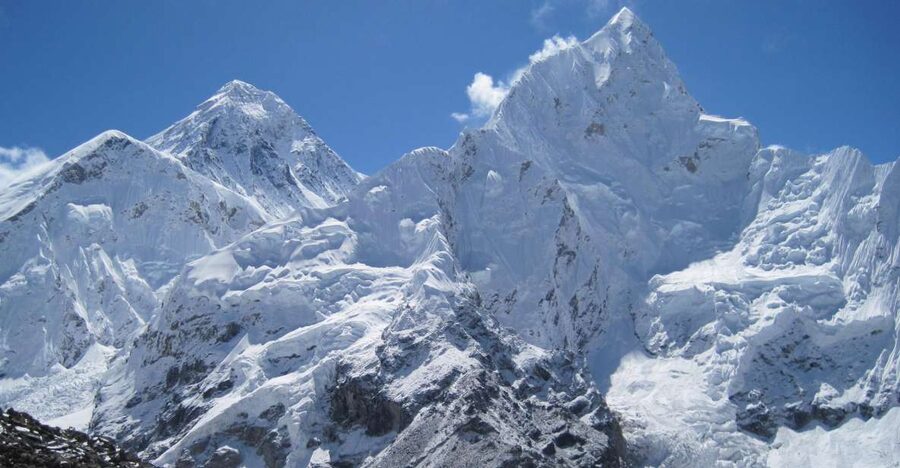
You also get two different mountain goals. Everest Base Camp is the symbolic finish, but Kala Patthar is the better viewpoint described on this route. Base Camp itself is a working mountaineering site, while Kala Patthar gives you a broad look toward Everest, Lhotse, Nuptse, and Ama Dablam.
The experience is guided in English. Guide names connected with this operation include Anjan and Padam, though your assigned guide can vary. The strongest service pattern here is practical rather than fancy: airport help, paperwork, route guidance, tea-house arrangements, and attention to safety.
More Everest Base Camp Treks in Kathmandu:
- Everest Base Camp Trek – 14 Days
★ 5.0 · 1,499 reviews - Everest Base Camp Trek
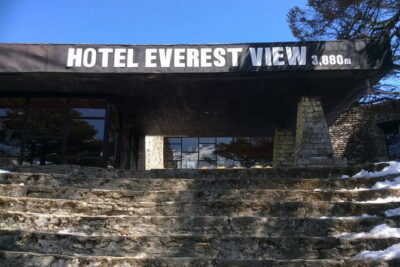
★ 5.0 · 842 reviews - Everest Base Camp Helicopter Tour landing at Everest View Hotel
★ 5.0 · 668 reviews
Kathmandu arrival and the Lukla flight
Your first day is deliberately easy. A representative meets you at Tribhuwan International Airport and takes you to your Kathmandu hotel. Two nights of standard hotel accommodation with breakfast are included, giving you a place to recover from the journey and prepare for the mountains.
The next major step is the flight from Kathmandu to Lukla, at 2,850 meters. Lukla is often described as one of the world’s most extreme airports, and that reputation is part of the route’s character. The airport is not merely a transport detail. It puts you quickly into the Khumbu region, where the trek begins.
The tradeoff is reliability. Mountain weather can prevent flights from operating. That can force a delay at the beginning or affect your return to Kathmandu. Keep your international departure plans sensible, and do not treat the final trekking day as a guaranteed connection to your flight home.
The activity includes the Kathmandu to Lukla and Lukla to Kathmandu flight tickets, along with airport transfers. Confirm the exact flight arrangements with the operator before departure, especially if your trip falls during a period of unsettled weather.
Lukla to Phakding: your first walking day
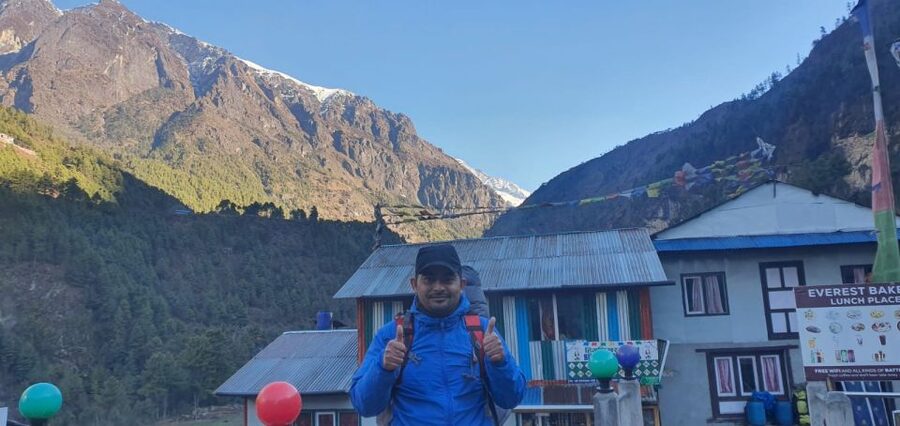
After reaching Lukla, you walk to Phakding at 2,640 meters. The stated walking time is 4 to 5 hours, making this a useful introduction to the pace of the trek.
You are already in the mountains, but this first day is not the biggest physical test. It helps you settle into walking with a pack, find a steady rhythm, and learn how the guide manages breaks and tea-house stops. Since lunch and dinner are not included in the tour price, you pay for your meals along the way.
Phakding is a stopping point rather than the main attraction. Its value is practical. You spend your first night on the trail without gaining too much altitude in a single push. That is a good start for a route where altitude management matters more than speed.
Phakding to Namche Bazaar
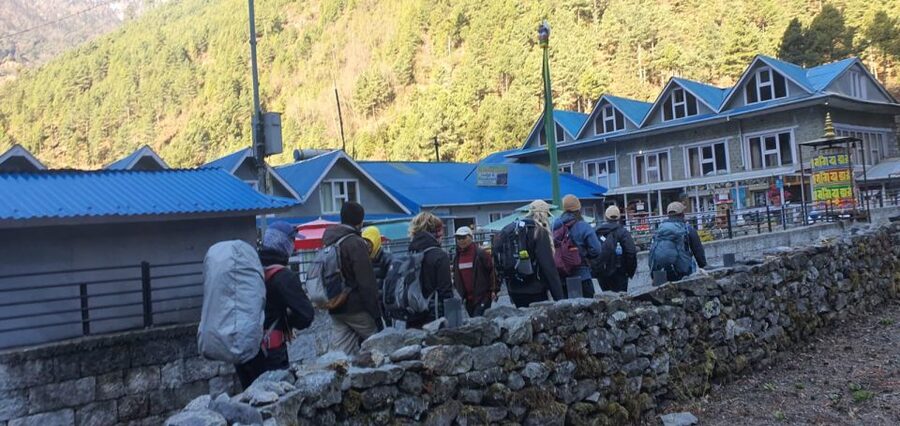
The walk from Phakding to Namche Bazaar takes about 6 to 7 hours, with Namche at 3,440 meters. This is one of the route’s important transition days. You move from a lower valley setting into the Sherpa heartland.
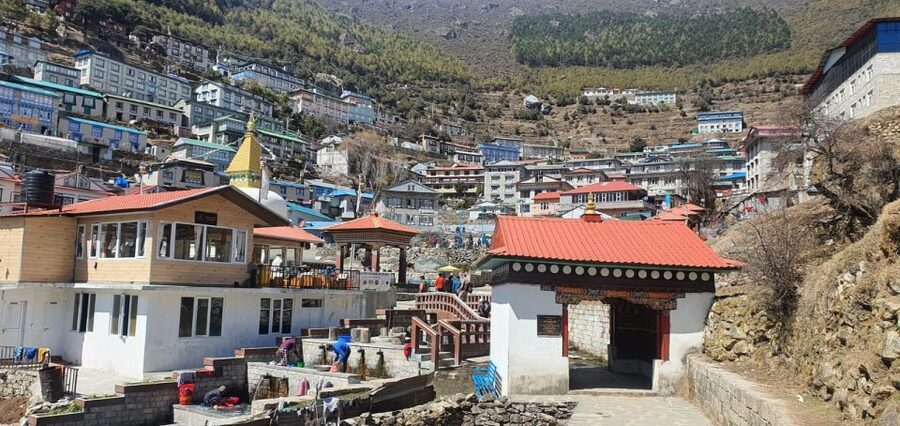
Namche Bazaar is the most distinctive settlement on the early route. It is known here as the center of Sherpa culture, and it gives you a chance to see the human side of the Khumbu rather than only looking at peaks. The town is also where the mountain journey begins to feel serious, because the elevation is now high enough to affect your breathing and energy.
You should not judge the trek by how you feel on this day. Some people arrive tired but improve after rest, while others notice headaches or poor sleep. Follow your guide’s advice, drink enough water, and report symptoms early.
A few more treks around Kathmandu worth a look
- Everest Base Camp Trekking
★ 5.0 · 485 reviews - Annapurna Circuit Trek with Tilicho Lake
★ 5.0 · 368 reviews - Everest Base Camp Trekking – 13 Day
★ 5.0 · 365 reviews - Everest Base Camp Trek
★ 5.0 · 350 reviews
Namche acclimatization and Sherpa country
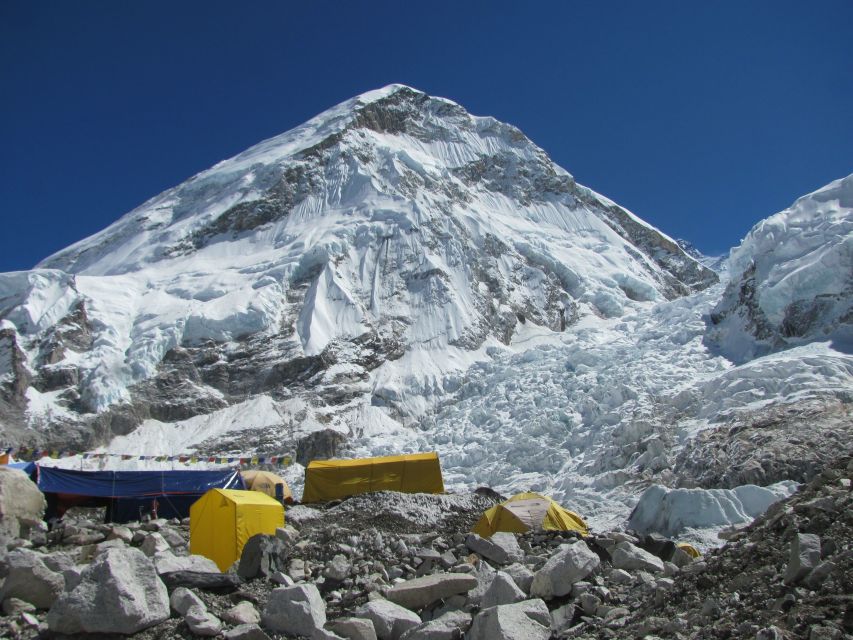
Day four is set aside for rest and acclimatization, with a 2 to 3-hour excursion. This is one of the tour’s best decisions. A full day of sitting still would be less useful than a gentle walk, because light activity helps you adjust while still protecting your energy.
Namche is also the right place to appreciate the social side of the trek. You are passing through the Sherpa heartland, not an empty wilderness. The route connects working villages, lodges, guides, porters, and visitors, and the town gives you a clear sense of that community.
I would use this day for practical preparation. Check your layers, refill what you need, and make sure your footwear is comfortable. The route ahead climbs higher, and small problems with socks, shoes, or sun protection become more irritating once you are far from Kathmandu.
Namche to Tengboche
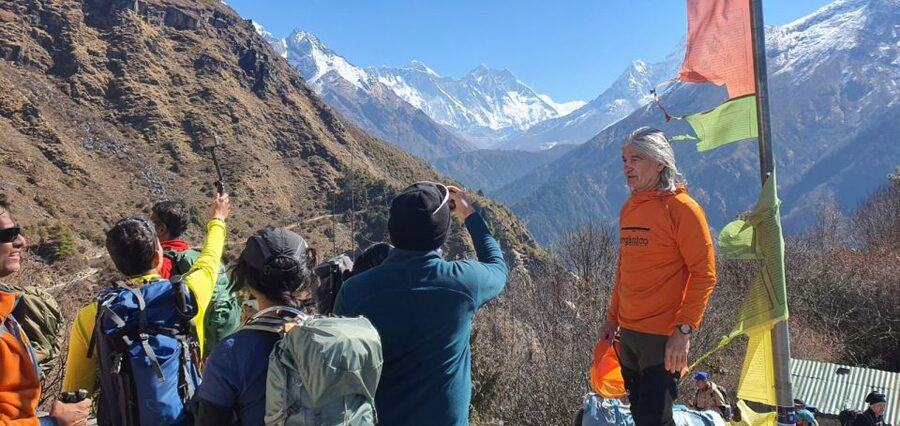
The walk to Tengboche takes 5 to 6 hours, reaching 3,870 meters. This section brings you deeper into the Khumbu and closer to the major mountain views.
Tengboche is a memorable overnight stop because the setting matters as much as the walking. The village sits in the high mountain zone, and the route is now framed by peaks such as Ama Dablam. The itinerary specifically highlights views of Ama Dablam, along with Everest, Lhotse, and Nuptse, so this is where the mountain scenery begins to feel grand rather than distant.
The altitude is also becoming more demanding. Five or six hours on paper can feel longer if you rush, carry too much, or ignore early signs of altitude trouble. A patient guide is valuable here. Past groups have particularly praised the English communication and the attentive handling of practical needs, so use your guide as a resource rather than trying to hide discomfort.
Tengboche to Dingboche
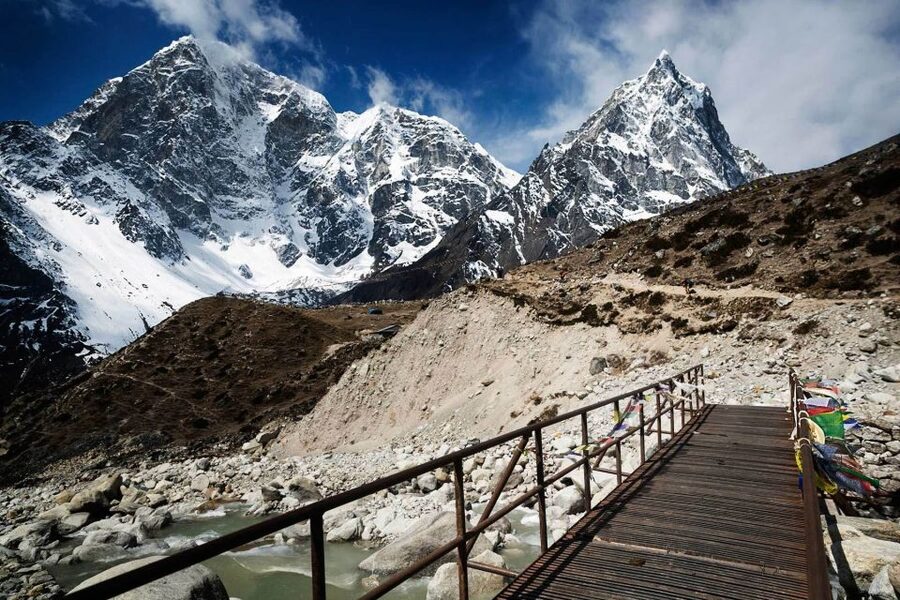
From Tengboche, you walk 5 to 6 hours to Dingboche at 4,410 meters. This is another clear gain in altitude, and the village is an important staging point before the route turns tougher.
Dingboche is less about sightseeing than preparation. You are high enough that every part of the day takes more effort. Keep your pace comfortable, eat even if your appetite is reduced, and protect yourself from strong sun with sunglasses, a hat, and sunscreen.
The tour includes another acclimatization day here. That extra pause is essential rather than decorative. It gives you a chance to make a short outing, rest, and see how your body handles the height before moving toward Lobuche and Gorak Shep.
Dingboche acclimatization day
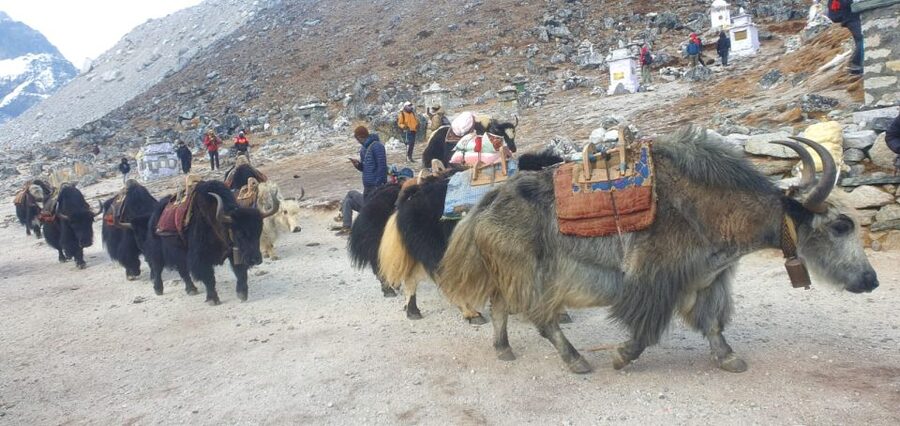
Your second acclimatization day is in Dingboche. The supplied schedule does not specify a particular excursion, so you should ask your guide what the day’s walk will involve and how long it will take.
The key point is not to turn this into a race. You are preparing for the highest part of the trek, and the best use of the day is a controlled walk followed by rest. If you feel unwell, tell the guide. A good itinerary is useful only when you respect your own limits.
The basic equipment list is sensible: trekking shoes, socks, long pants, shorts, T-shirts, sunglasses, a hat, sunscreen, toilet paper, and insect repellent. Bring two T-shirts at minimum, as requested in the practical notes. A jacket and sleeping bag can be provided for use if required, along with a duffle bag.
Dingboche to Lobuche
The route continues from Dingboche to Lobuche at 4,940 meters, taking about 5 to 6 hours. This is no longer a warm-up walk. You are approaching the high point of the trek, and the altitude will shape the day.
Lobuche is mainly a practical overnight stop before the Base Camp push. You should expect simple tea-house accommodation, not hotel comfort. Meals are available along the route, but you pay for breakfast, lunch, and dinner separately, as well as alcoholic and non-alcoholic drinks.
That extra cost is easy to underestimate. The advertised price is $1,296 per person, which is a fair package price for a 14-day guided trek with domestic flights, permits, Kathmandu lodging, tea houses, airport transfers, and guide costs. Still, it is not an all-inclusive mountain holiday. Set aside money for food, drinks, showers, insurance, and personal items.
Lobuche to Everest Base Camp
Day nine is the headline section. You walk from Lobuche to Gorak Shep at 5,170 meters, then continue to Everest Base Camp at 5,364 meters before returning to Gorak Shep.
This is a long and demanding day. The altitude is extreme, and the return to Gorak Shep means you do not simply reach Base Camp and stop. You need to keep enough energy for the way back.
Everest Base Camp is important because it is the goal mountaineers use before heading higher, but do not expect the classic postcard view of Everest from the camp itself. The route’s best stated mountain panorama comes on Kala Patthar the next morning. Base Camp is the achievement and the atmosphere. Kala Patthar is the viewpoint.
At this height, the guide’s role becomes especially important. Your guide handles the route and can help you judge how fast to move. The operation’s guides have been praised for clear English, organization, and attention to safety. That matters far more here than polished sales language.
Kala Patthar and the descent to Pheriche
On day ten, you hike to Kala Patthar at 5,545 meters, then descend to Pheriche at 4,371 meters. This is the trek’s highest point and one of its hardest mornings.
The reward is the view across the Everest range. You should expect a serious uphill effort, thin air, cold conditions, and a need for warm layers. Bring your sunglasses and sunscreen even if the air feels cold. Bright mountain light can be harsh, and the exposed setting offers little protection.
After Kala Patthar, the descent to Pheriche is welcome, but it is still a full day. Going downhill is easier for your breathing, yet tired legs can make uneven paths uncomfortable. Take care with each step and keep your daypack light.
Three days back to Kathmandu
After Pheriche, the itinerary gives you three days to descend and return to Kathmandu, arriving on day thirteen for a final evening. The schedule does not list every overnight stop on these descent days, so ask for the precise plan before departure.
The descent is usually a different kind of challenge from the climb. You may feel stronger at lower elevations, but fatigue accumulates after the Base Camp and Kala Patthar days. Your guide and porter arrangements matter here, especially if your personal bag has become heavier with damp clothing or extra supplies.
Your final Kathmandu night is included, with breakfast at the standard hotel. This buffer is useful because it separates the mountain return from your international departure on day fourteen. Even so, I would not schedule a tight onward connection if Lukla weather could affect the return flight.
What the $1,296 price really covers
The package has solid value if you want a guided, organized trek rather than arranging every part yourself. It includes:
- Two Kathmandu hotel nights with breakfast
- Kathmandu airport pickup and drop-off
- Domestic airport transfers
- Kathmandu to Lukla and Lukla to Kathmandu flights
- Tea-house accommodation during the trek
- An English-speaking guide
- Required paperwork and Sagarmatha National Park fees
- A jacket, sleeping bag, and duffle bag if needed
The price does not include trekking meals, drinks, hot showers, Kathmandu lunches or dinners, or travel insurance. You must also have insurance that covers medical evacuation in an emergency. Do not treat that as optional on a high-altitude trek.
There is also a wording issue around porters. The inclusions refer to porter support, while the exclusions say porters are not included and specify one porter for two people. Confirm exactly what you pay for, how much luggage the porter carries, and whether the porter fee is included in your quoted total.
Who should choose this trek?
This route suits you if you want the classic Everest Base Camp experience with a fixed schedule, an English-speaking guide, tea-house lodging, and the main costs organized in advance. It is especially useful if you value airport pickup, permits, flights, and a guide rather than piecing the trek together independently.
It is not a casual walking holiday. The itinerary reaches 5,545 meters and includes several 5 to 7-hour trekking days. The experience is not suitable for pregnant women, people with heart problems, or people with mobility impairments.
You should also be comfortable with basic accommodation and paying for meals as you go. Showers during the trek are not included, and drinks cost extra. Bring a flexible attitude, because Lukla weather can change the plan even when the operator is ready to help.
Should you book it?
I would book this trek if you want a classic Khumbu route with good acclimatization, a high viewpoint at Kala Patthar, and the convenience of included flights, permits, guide services, and lodging. The strongest qualities are the sensible 14-day schedule, the two acclimatization stops, and the practical support associated with guides such as Anjan and Padam.
I would pause before booking if you need guaranteed flight times, luxury lodging, or a single all-inclusive price. Confirm the porter fee, meal budget, insurance requirements, and bad-weather plan first. If those details suit you, this is a strong-value way to reach Everest Base Camp while also seeing the Sherpa heartland rather than rushing straight to the finish.
FAQ
How long is the Everest Base Camp and Kala Patthar trek?
The trek lasts 14 days, including arrival and departure arrangements in Kathmandu, the Lukla flights, the walking route, acclimatization days, and the return to Kathmandu.
What is the highest point on the itinerary?
Kala Patthar is the highest point, at 5,545 meters. Everest Base Camp is listed at 5,364 meters, and Gorak Shep is at 5,170 meters.
Are flights from Kathmandu to Lukla included?
Yes. The package includes a Kathmandu to Lukla flight and a Lukla to Kathmandu flight, along with domestic airport transfers.
Are meals included during the trek?
No. Breakfast, lunch, and dinner during the trek are not included. Alcoholic and non-alcoholic drinks are also extra.
Is travel insurance required?
You must have valid travel insurance with medical evacuation coverage in case of an emergency. The insurance is not included in the tour price.
What language does the guide speak?
The live tour guide speaks English. The operator has used guides including Anjan and Padam, but the guide assigned to your departure may be different.
Just added around Kathmandu
- Everest Base Camp Trek★ 5.0 · 3 reviews
- Everest Base Camp Trek★ 5.0 · 7 reviews
- 15 Days Private Everest Base Camp Trek★ 5.0 · 30 reviews
- Everest Base Camp Trek★ 5.0 · 57 reviews
- 14 Days of Adventure Trekking to Everest Base Camp★ 5.0 · 2 reviews
- 14-Day Everest Base Camp Trek★ 5.0 · 20 reviews
- 14 Days Everest Base Camp Trek★ 5.0 · 4 reviews
- From Kathmandu: Private 14-Day Everest Base Camp Trek★ 5.0 · 20 reviews
Everest Base Camp Treks, compared.
Everest Base Camp Helicopter Tour landing at Everest View Hotel
Read our review →
Tibet Tour 8 Days Lhasa to Everest Base Camp Small Group Tour
Read our review →
Dubai: Private Luxury Everest Yacht Cruise from Dubai Marina
Read our review →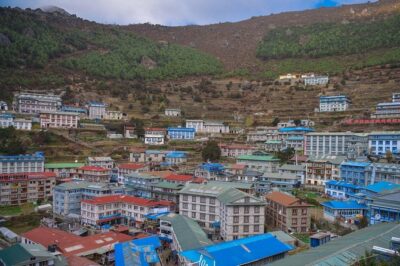
Browse the lists this trek appears in