
Review · TANZANIA
#1. Best 7 days kilimanjaro trek Machame route join group
The real draw here is the route itself: in seven days, you move from colobus-monkey rainforest to the cold volcanic slopes of Uhuru Peak, Africa’s highest point. The Machame Route gives you changing scenery almost every day, with Lava Tower and Barranco Wall providing the most memorable sections.
I like the steady acclimatization pattern, especially the climb to 4,600 meters at Lava Tower followed by a descent to Barranco Camp. I also like that transport from a Moshi hotel to the gate, meals, water, a guide, and mountain equipment are included. The big caution is price clarity: the advertised $900 does not include national park fees, and one cost breakdown puts the real total far higher once fees and tips are added.
Key points to know before booking
- Seven days on the Machame Route: You cross rainforest, moorland, alpine desert, and the summit’s arctic zone.
- Lava Tower acclimatization: The route takes you to 4,600 meters before sleeping lower at Barranco Camp.
- Barranco Wall scramble: Day four includes a hands-on climb that may feel exciting or demanding.
- Midnight summit attempt: You hike from Barafu Camp to Uhuru Peak, then descend to Mweka Camp in the same long day.
- $900 is not the full cost: National park fees are excluded, and tips may add a large amount.
- Camping details need confirmation: The information refers to hut accommodation but also includes camping equipment and a sleeping mattress.
Seven days from rainforest to Uhuru Peak
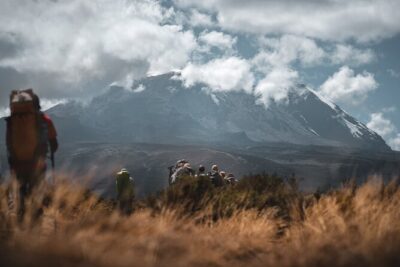
This is a serious mountain trek, not a sightseeing walk with a summit tacked on at the end. You gain altitude almost every day, sleep at high camps, and finish with a long summit push that can last 10 to 14 hours.
The route’s great strength is variety. On day one, you walk beneath dense rainforest. By day two, trees give way to moorland. Days three through five bring dry volcanic ground and wide views. At the summit, the setting is described as arctic, with the descent returning you to rainforest by the final day.
That changing scenery helps the trek feel like several journeys in one. It also gives you a useful sense of Kilimanjaro’s different ecological zones, rather than a single long climb through the same surroundings.
More Kilimanjaro Climbs in Tanzania:
- Kilimanjaro climb by Lemosho Route (7-day)
★ 5.0 · 651 reviews - Kilimanjaro climb, Machame Route (7-day)
★ 5.0 · 262 reviews - Kilimanjaro Climbing Lemosho Route 8 Days.
★ 5.0 · 186 reviews
Day one: Machame Gate to Machame Camp
You begin at Machame Gate after registration, then head into the montane rainforest. The listed starting elevation is 1,800 meters, with Machame Camp at 2,835 meters.
This first section is a good introduction to the mountain. The forest is lush, and you might see colobus monkeys and colorful birds. The trail is also likely to feel humid and muddy compared with the drier upper slopes, so a jacket, suitable socks, and trekking clothing matter from the start.
There is a data problem in the supplied distance figures: the day is listed as 1 kilometer and also as 7 miles, which are not the same distance. The stated hiking time is 5 to 7 hours. Ask Kilinge Adventures to confirm the actual distance before you pay, since the difference affects your expectations for the first day.
Day two: Machame Camp to Shira Camp
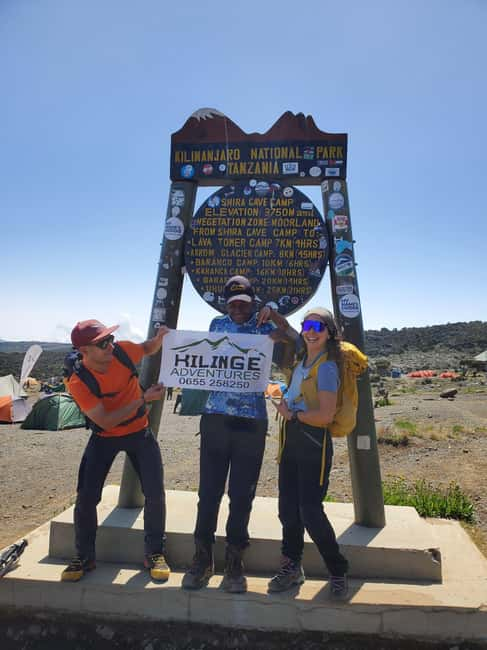
The forest falls away as you climb into the moorland zone. This is a shorter listed distance of 5 kilometers, with 4 to 6 hours of walking and a gain of roughly 915 meters.
The reward is a more open setting, with views toward the Shira Plateau and Kibo Peak. The trail becomes steeper and rockier, so this is where your walking pace and footwear begin to matter more than they did in the forest.
Shira Camp sits at 3,750 meters. You will notice the altitude more here, and the best approach is a slow pace, plenty of water, and no attempt to race ahead. Drinking water is included, but you still need a bottle or daypack to carry it during the day.
Day three: Lava Tower and the descent to Barranco
Day three is one of the most useful parts of the route for acclimatization. You climb from Shira Camp at 3,750 meters to Lava Tower at 4,600 meters, then descend to Barranco Camp at 3,900 meters.
The walking distance is listed as 10 kilometers, with 7 to 8 hours on the trail. The terrain is alpine desert, with less plant cover and a more exposed volcanic setting. The high point at Lava Tower can feel demanding, but reaching that height and then sleeping lower is a sensible pattern for adjusting to altitude.
Barranco Camp is known here for views of the valley and its giant senecio plants. This is a good day to pay attention to how your body responds. Headache, unusual tiredness, or difficulty eating should be reported to your guide rather than brushed aside.
A few more treks around Tanzania worth a look
- Climbing Kilimanjaro through 7 days Machame Route
★ 5.0 · 151 reviews - 7-Day Machame Kilimanjaro Summit Tour from Arusha
★ 5.0 · 125 reviews - 7 Days Kilimanjaro via Machame route affordable price
★ 5.0 · 110 reviews - Private Kilimanjaro Hike 7 Day Lemosho Route
★ 5.0 · 60 reviews
Day four: Climbing the Barranco Wall
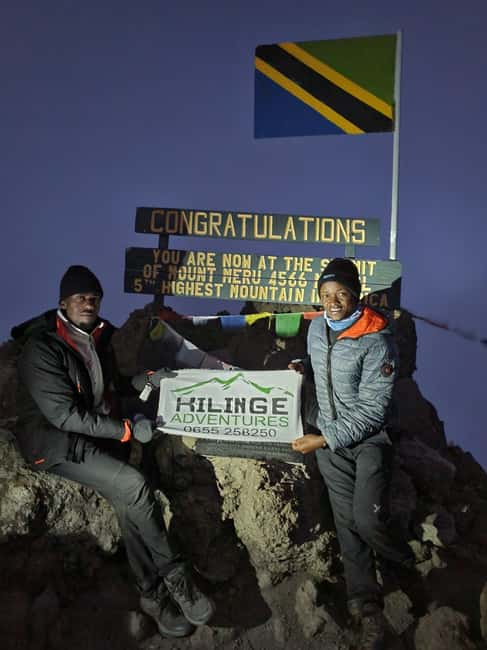
From Barranco Camp, you climb the famous Barranco Wall and continue across ridges and valleys to Karanga Camp. The day covers 5 kilometers and takes about 4 to 5 hours.
The wall is described as an exhilarating scramble. That means you should expect to use your hands in places, even though this is not presented as technical climbing. If you dislike steep, rocky sections, this may be the part of the route that makes you pause. If you enjoy a little physical challenge, it may become one of your favorite days.
Karanga Camp is at about 4,035 meters. Because this is a shorter day, you get time to rest, hydrate, and prepare for the higher camp ahead. Do not mistake the shorter distance for an easy day. Altitude can make modest climbs feel surprisingly slow.
Day five: Karanga Camp to Barafu Camp
The route climbs steadily for 4 kilometers to Barafu Camp, at approximately 4,640 meters. Hiking takes about 4 to 5 hours.
Barafu is the launch point for the summit attempt. The practical goal here is not sightseeing. You need to eat, drink, organize your clothing, and rest as much as possible before the midnight start.
Pack your daypack with only what you need for the summit push. The supplied packing advice includes a jacket, gloves, socks, hiking pants, a flashlight, snacks, climbing gear, and a power bank. A headlamp or dependable flashlight is especially important because the summit walk begins in darkness.
A sleeping bag is also listed among the items to bring. At the same time, a sleeping mattress and camping equipment are included, so ask exactly what equipment is supplied and what you must carry yourself.
Day six: the midnight climb to Uhuru Peak
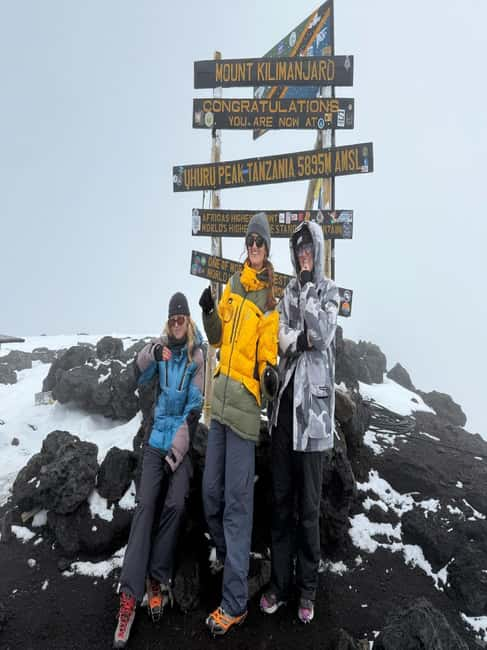
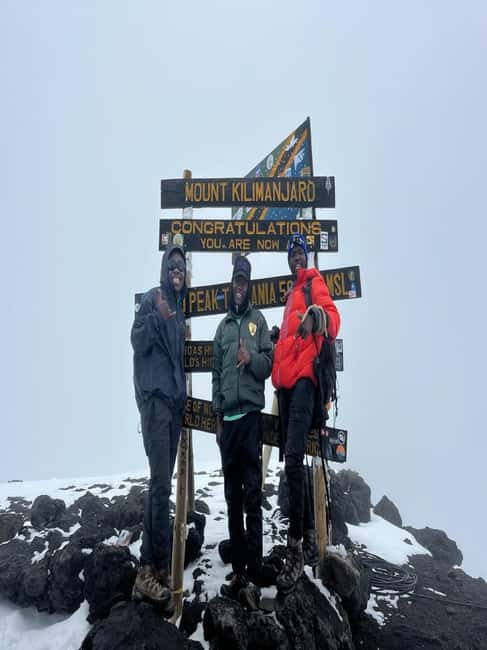
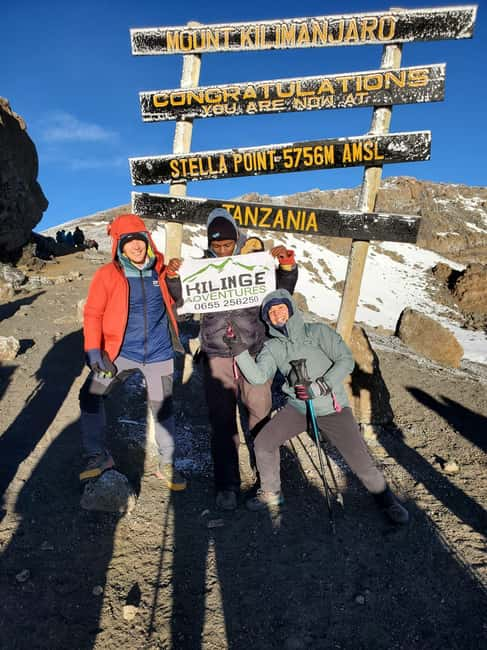
This is the longest and hardest day. You leave Barafu Camp around midnight, climb toward Stella Point, continue to Uhuru Peak at 5,895 meters, then descend to Mweka Camp.
The full distance is listed as 17 kilometers, with 10 to 14 hours of walking. That figure includes both the ascent and descent. The day begins in the cold and dark, and the high point is the physical and mental test of the whole trip.
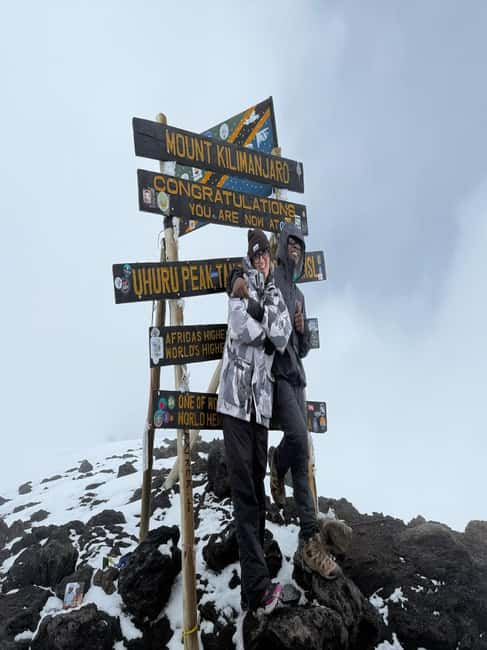
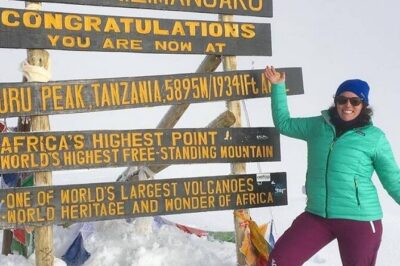
Uhuru Peak is the reward: the roof of Africa and the highest point on Kilimanjaro. You can expect a short celebration at the summit before beginning the descent. Do not linger too long. The downhill section to Mweka Camp is still substantial, and tired legs can make it feel endless.
The habitat changes again on the way down, from the summit’s arctic zone toward rainforest. Arriving at Mweka Camp at about 3,110 meters gives you a much lower sleeping elevation than Barafu, which should feel welcome after the summit.
Day seven: Mweka Camp to the gate
The final day is a 10-kilometer descent through rainforest, taking about 3 to 4 hours. You finish at Mweka Gate, collect your achievement certificate, and transfer to Moshi or Arusha.
This is not just a formality. After the long summit day, your knees and feet may appreciate a measured pace. The forest also gives you one last change of scenery before you return to roads, hotels, and ordinary meals.
The transfer is included from a hotel in Moshi to the park gate, and transportation back to Moshi or Arusha is part of the stated plan. If you are staying outside Moshi or heading directly to another destination, confirm the exact transfer arrangement before booking.
What the $900 price really tells you
At $900 per person, this looks inexpensive for a seven-day Kilimanjaro trek. The value depends almost entirely on what is included beyond the headline price.
Meals, drinking water, accommodation, a professional guide, transport, camping equipment, and a sleeping mattress are listed as included. Those are meaningful inclusions, especially on a mountain where food, water, porters, and transport add up quickly.
But national park fees are not included. One detailed cost account puts the extra entrance, porter, guide, and participant charges at about $950 for seven days. It also estimates tips at about $50 per accompanying person, with seven guides producing a possible $350 tip total. That account reaches an estimated overall cost of $2,150.
Treat those figures as a warning to request a written breakdown, not as a guaranteed final bill. The important point is clear: you should not compare this trek with a fully priced Kilimanjaro package until you know the park fees, staffing charges, and expected tips.
The number of guides is also worth clarifying. A seven-guide team may be appropriate for a larger group, but the supplied cost account refers to seven guides without explaining the group size. Ask how many people will be in your group and how many guides and porters will support it.
Camping, huts, and the questions to ask
The accommodation description needs clarification. It says you stay in hut accommodations, while the inclusions list camping equipment and a sleeping mattress. Those details do not point to exactly the same sleeping arrangement.
Before booking, ask:
- Are all nights in huts, tents, or a mixture?
- Is the sleeping bag supplied, or must you bring one?
- Is the mattress a foam pad or another type?
- Does the price include porter support for personal luggage?
- Are meals served at camp or carried as packed food?
These are not minor details. A seven-day mountain trip feels very different in a hut than under canvas, and the amount of gear you carry affects your comfort each day.
What to pack for this particular route
The supplied list is sensible but broad. You should bring a daypack, hiking pants, trekking clothing, warm layers, gloves, a jacket, socks, a flashlight, snacks, a sleeping bag, climbing gear, and a power bank.
Snacks are useful during the long day to Uhuru Peak, when you may not feel like eating a full meal. Gloves and a warm jacket matter most around Barafu, Stella Point, and the summit. Extra socks are practical because the lower sections can be wet while the upper mountain is cold and dry.
The power bank is a smart addition. There is no stated promise of charging facilities on the route, so keeping your phone or camera powered may depend on what you carry.
Because the experience is described as guided, speak with the guide about the pace and any symptoms of altitude sickness. The strongest feature of the schedule is its gradual rise and the Lava Tower high-point day, but good acclimatization also depends on walking slowly and taking instructions seriously.
Who will get the most from this trek
I would look at this trip if you want a full seven-day Kilimanjaro route with strong scenery and a clear summit goal. The Machame Route suits you if changing environments matter as much as reaching Uhuru Peak.
It is also a reasonable choice if you want a package that includes meals, water, transport, guiding, and basic mountain equipment. The seven-day schedule gives more time than a very short ascent, which is useful for acclimatization.
I would be cautious if you need a firm all-inclusive price. The excluded park fees and possible tip bill can more than double the headline rate. I would also hesitate if you want luxury accommodation, since the supplied information is unclear about huts versus tents.
The route requires long days, steep rocky sections, a Barranco Wall scramble, and a 10 to 14-hour summit day. You do not need to be an expert climber based on the information provided, but you should be ready for sustained hiking at high altitude.
Should you book the Machame Route with Kilinge Adventures?
Book it if the provider gives you a clear written total, confirms the sleeping arrangements, and explains the guide and porter team. The route itself is attractive: rainforest, Shira Plateau, Lava Tower, Barranco Wall, Barafu, Uhuru Peak, and a final descent through the forest give you a varied seven-day experience.
Do not book on the $900 figure alone. Add the national park fees, ask about the possible $950 in extra charges, and plan for tips. If Kilinge Adventures answers those questions clearly, this can be a strong value for a determined hiker who wants Kilimanjaro’s scenic Machame Route without rushing the ascent.
The experience currently has a five-out-of-five rating from three submitted ratings, including a brief positive note about the trip being very nice. That is encouraging, but the cost warning is more useful for planning. Get the complete price in writing before you commit.
FAQ
How long is the Kilimanjaro Machame trek?
The trek lasts seven days, beginning at Machame Gate and ending at Mweka Gate. The final day includes a transfer to Moshi or Arusha.
What is the highest point reached?
The route reaches Uhuru Peak at 5,895 meters, or 19,341 feet.
Is the Machame Route suitable for acclimatization?
The schedule includes a climb to Lava Tower at 4,600 meters followed by a descent to Barranco Camp at 3,900 meters. This provides a specific acclimatization section within the trek.
Are national park fees included?
No. National park fees are specifically excluded from the stated price.
What is included in the price?
The supplied inclusions are accommodation, professional guides, transport, meals, drinking water, camping equipment, and a sleeping mattress. Transport from a hotel in Moshi to the gate is also included.
Do I need to bring a sleeping bag?
Yes. A sleeping bag is included in the list of items to bring.
When does the summit attempt begin?
The summit attempt begins around midnight from Barafu Camp on day six.
Where does the trek finish?
The trek finishes at Mweka Gate. From there, you transfer to Moshi or Arusha.
Just added around Tanzania
- Mt. Kilimanjaro: Shira plateau to Cathedral point 3872m Day hike★ 5.0 · 7 reviews
- 5 days safari, hiking & culture (Serengeti & kilimanjaro)★ 5.0 · 27 reviews
- One Day Hike from Kilimanjaro to Mandara★ 5.0 · 2 reviews
- 3 Days Mount Meru trekking★ 4.5 · 7 reviews
- climb the KILIMANJARO via Lemosho route★ 5.0 · 4 reviews
- 6 Day: Hiking Kilimanjaro via Machame Route★ 5.0 · 2 reviews
- Private 8 day Northern Circuit Kilimanjaro Climb★ 5.0 · 8 reviews
- Kilimanjaro Waterfalls Hike & Moshi Hot Springs Day Trip Tour★ 5.0 · 4 reviews
Kilimanjaro Climbs, compared.
8-Day Small-group Lemosho Kilimanjaro Summit Trekking
Read our review →
Climbing Kilimanjaro through 7 days Machame Route
Read our review →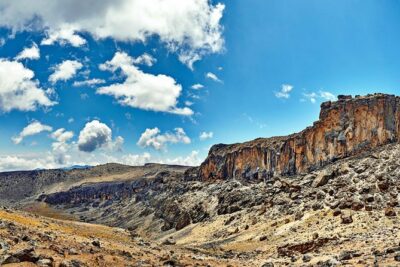
Browse the lists this trek appears in