
Review · KILIMANJARO
8 Days Kilimanjaro Hike via Lemosho Route
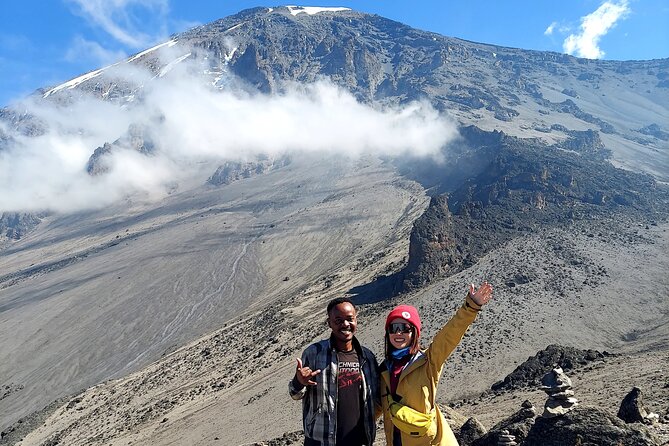
Kilimanjaro’s Lemosho Route gives you the mountain in chapters: rainforest, open moorland, volcanic rock, glaciers, alpine desert, and finally the icy summit ridge. The eight-day plan is long enough to allow useful acclimatization, while the western approach keeps the first days scenic and generally less crowded than the shorter routes.
I like two things right away. First, the route climbs high to Lava Tower at 4,640 meters, then sleeps lower at Barranco, a smart acclimatization pattern. Second, Nafika includes camping equipment, meals, treated water, private transport, emergency oxygen, and two hotel nights in Moshi, making the $2,350 price easier to understand.
The catch is simple: this is still a serious mountain climb. Summit day lasts about 13 hours, and you need moderate fitness, patience, warm clothing, and a willingness to sleep in tents for most of the week.
Key points to know before booking
- Eight days on Lemosho: A scenic western approach with time to cross the Shira Plateau and circle toward the southern slopes.
- Summit at 5,895 meters: You begin the final climb around midnight and reach Stella Point before continuing to Uhuru Peak.
- Daily health checks: Guides monitor how you are coping with altitude and carry emergency oxygen and a first-aid kit.
- Full camping setup included: Tents, sleeping pads, sleeping bags, tables, and chairs are supplied.
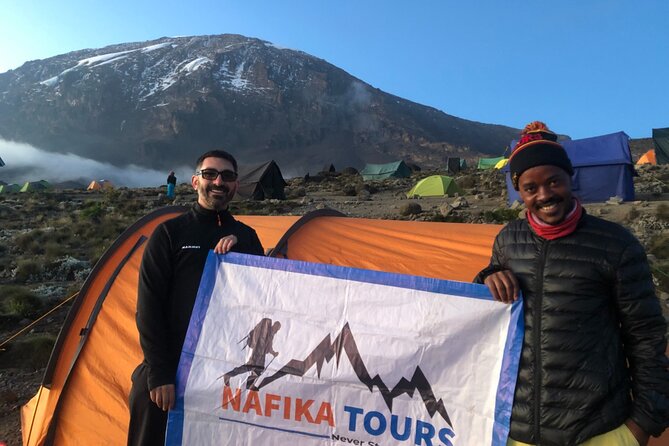
- Strong guide and crew support: Recent groups specifically praised guides including Eli, Meshakii, Alyce, Inocent, Musa, Abdala, and Diklan.
- Good package value: The price includes private transport, two Moshi hotel nights, treated water, and all listed meals.
Why the 8-day Lemosho Route is a smart choice
Kilimanjaro is not a technical climb in the mountaineering sense, but altitude makes it tough. You walk for hours, sleep at elevation, and eventually ask your body to reach nearly 5,900 meters. The extra days on Lemosho matter because they give you more gradual exposure than a rushed itinerary.
The route begins at Londorossi Gate on the western side of the mountain, at about 2,360 meters. From there, you pass through several climate zones. The change is not just scenery for scenery’s sake. It helps you understand how quickly conditions shift as you gain height.
Nafika’s stated priority is safety, with regular health checks and guides prepared to identify and treat altitude sickness. That is useful, but it is not a guarantee that you will summit. A good operator should be willing to slow down, turn around, or change plans if your condition requires it.
The group limit is listed as 20 people. That is manageable, though your actual experience will depend on the size of your booked group and the guide-to-climber ratio. Several recent groups were smaller, including groups of four, five, and six, which can make pacing and communication easier.
More Kilimanjaro Climbs in Tanzania:
- Kilimanjaro climb by Lemosho Route (7-day)
★ 5.0 · 651 reviews - Kilimanjaro climb, Machame Route (7-day)
★ 5.0 · 262 reviews - Kilimanjaro Climbing Lemosho Route 8 Days.
★ 5.0 · 186 reviews
Day 1: Rainforest from Londorossi Gate to Big Tree Camp
Your pickup is planned for around 8:00 a.m. after breakfast. The transfer takes you toward Lemosho Gate, where Nafika handles the park and pre-hike formalities before you start walking.
The first trek takes about four hours through the forest. Big Tree Camp is your first overnight stop, and the setting introduces one of the pleasures of this route: you start among trees rather than immediately on a bare, rocky slope.
This is a moderate opening day, but do not treat it as a free pass. Use it to check your boots, pack, water system, and clothing. If anything rubs or feels awkward, tell the guide early. Small equipment problems rarely improve higher on the mountain.
Day 2: Shira 1 and the first open mountain views
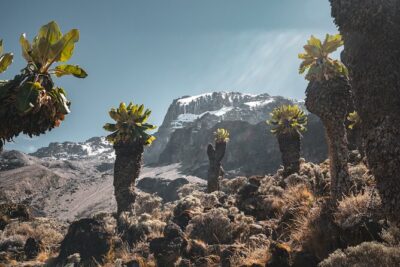
The forest gives way to grassy moorland and heather, with volcanic rock scattered along the trail. The hike to Shira 1 takes about five hours and covers roughly 8.5 kilometers.
This is where Kilimanjaro begins to feel wide and exposed. Kibo Peak may appear above the clouds, and you gain a noticeable amount of altitude. Some sections are fairly steep, though the schedule describes the day as accessible to the group.
Your task is to walk slowly. The local phrase pole pole, meaning slowly slowly, is the right approach here. If you race during the easy morning hours, you may pay for it later.
Day 3: Shira Plateau and a useful acclimatization walk
Day three covers about 8 kilometers in roughly four hours. You cross the Shira Plateau, with views toward the Northern Icefields and unusual angles of Kibo.
This is one of the route’s best walking days because the trail gives you broad views without the physical strain of summit day. The climb remains steady, helping your body adjust before the route becomes more demanding.
After reaching Shira 2 Camp, the guides plan a short acclimatization walk before dinner. That extra outing is important. You gain some height, return to camp, and give your body a chance to respond before sleeping.
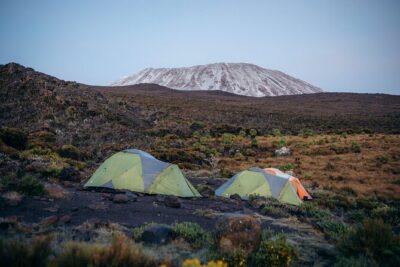
The phrase sleeping under the stars sounds romantic, but camping at altitude can also mean cold evenings and basic comfort. Bring reliable layers and keep small essentials close inside your sleeping bag or tent.
A few more treks around Tanzania worth a look
- 8-Day Small-group Lemosho Kilimanjaro Summit Trekking
★ 5.0 · 186 reviews - Climbing Kilimanjaro – Machame Route
★ 5.0 · 170 reviews - Climbing Kilimanjaro through 7 days Machame Route
★ 5.0 · 151 reviews - Kilimanjaro climb, Lemosho Route (8-day)
★ 5.0 · 148 reviews
Day 4: Lava Tower at 4,640 meters, then Barranco
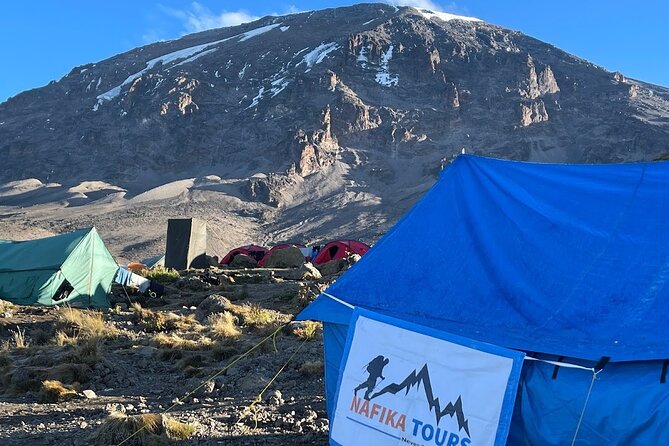
This is the most carefully designed acclimatization day. You climb from the Shira area toward Lava Tower, reaching 4,640 meters, then descend to Barranco Camp at about 3,960 meters.
The total walking time is about seven hours over roughly 10 kilometers. The route enters upland desert, with lava ridges beneath the Western Breach and views toward the glaciers. Lava Tower is the high point of the day and a natural lunch stop.
The key is the descent. You sleep lower than the highest point you reached, following the useful principle of climbing high and sleeping lower. Some hikers feel headache, nausea, or unusual tiredness here. Report symptoms promptly rather than trying to hide them.
Barranco Camp sits beneath tall cliffs with views toward the plains. It is a dramatic campsite, but the day can feel long, especially after several nights outside. Eat, drink, and rest instead of trying to prove how tough you are.
Day 5: Barranco Wall and the Karanga Valley
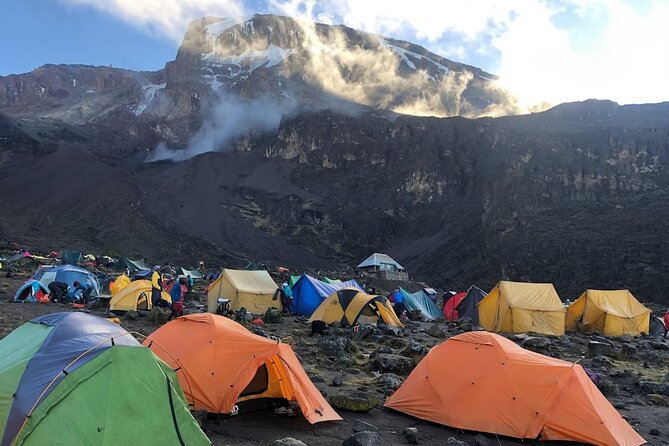
The fifth day is shorter, about five hours, but it has one of the route’s most memorable sections: the Barranco Wall. It looks imposing from camp, yet the climb is described as more manageable than it first appears.
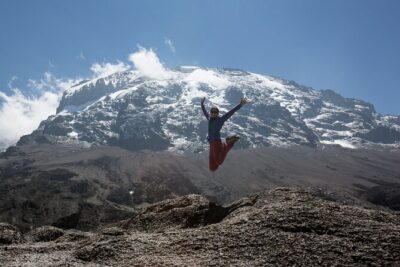
You pass beneath the Heim and Kersten glaciers before descending toward Karanga Valley. Mawenzi’s jagged peaks appear to the east, while Kibo’s glaciers rise above the route.
This is a good day to let the guides set the pace. You may need to use your hands at points on the wall, but the itinerary does not describe technical climbing. Fear of heights can still make the section stressful. Recent groups specifically valued guides who stayed close and offered help to hikers uncomfortable with exposed sections.
After lunch at camp, the afternoon is mostly for rest. Stronger hikers may take an optional acclimatization walk toward 4,200 meters, then return to camp. That walk is useful only if you feel well. Do not take it simply because someone else does.
Day 6: Barafu Camp and the long night ahead
The route to Barafu Camp covers about 4 kilometers and takes around four hours. The setting is alpine desert, with views of Kibo and Mawenzi.
Barafu is the launch point for the summit attempt. Lunch is provided, then the plan calls for a quiet afternoon and an early dinner. You are expected to sleep before waking around midnight.
In practice, sleeping before a summit push can be difficult. The tent may feel cold, excitement can keep your mind active, and the early alarm arrives quickly. Pack your summit clothing and headlamp within easy reach before you lie down.
This is also the time to be honest with the guides. Daily checks are helpful, but you should still speak up about worsening symptoms, severe fatigue, or trouble breathing.
Day 7: Stella Point, Uhuru Peak, and a very long descent
Summit day begins around midnight with light tea and breakfast. The climb to Stella Point takes about four to five hours and gains a great deal of height over a short distance.
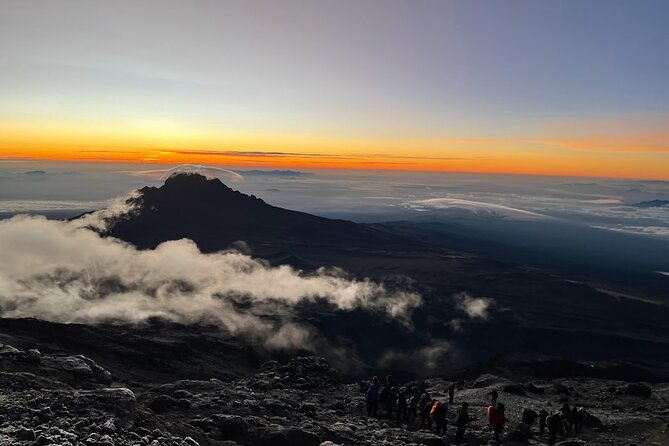
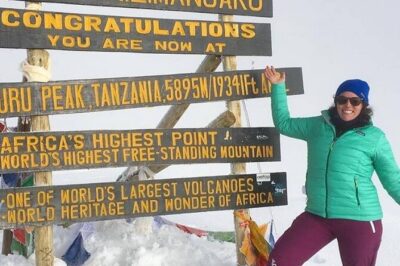
The trail reaches the crater rim at Stella Point, about 5,756 meters, around sunrise if the schedule holds. From there, the final kilometer or so to Uhuru Peak takes about one hour. At 5,895 meters, Uhuru is the highest point in Africa and the goal of the entire trek.
The summit section is slow and demanding. Cold, darkness, thin air, and fatigue all work against you. Keep your pace measured and listen carefully to the guides. Reaching Stella Point is a major achievement, but the final walk to Uhuru still requires care.
After photos and a short pause, you descend to Barafu for lunch and rest. The day is listed at about 13 hours, so the work does not end at the summit. Depending on the exact camp plan, you continue toward the Millennium area for the night. This is the toughest part of the itinerary for many people because your legs are already tired.
Day 8: Forest descent to Mweka Gate
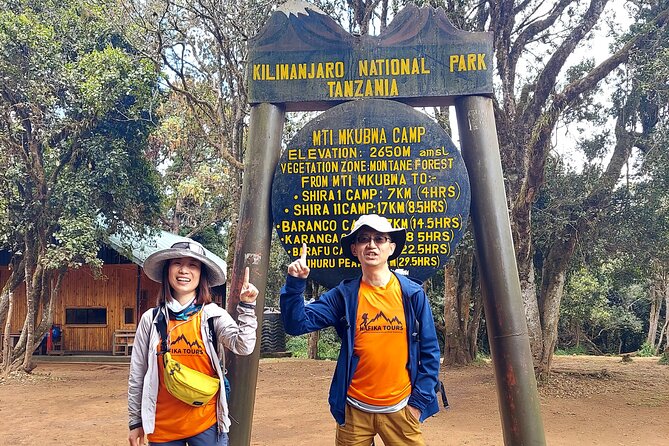
The final descent covers about 14 kilometers and takes roughly five hours. You return through montane forest toward Mweka Gate.
This section may feel surprisingly hard after the summit push. Descending can punish knees and toes, so use trekking poles if you have them and adjust your pace. The forest also brings a welcome change from the cold, bare upper mountain.
At Mweka Gate, you collect your certificates and can finally enjoy a cold drink. A private car then takes you back to your hotel for a hot shower and a proper chance to recover.
The package includes two hotel nights in Moshi, though the day-by-day description does not clearly state exactly which nights they cover. Confirm that timing before you book, especially if you are arranging international flights around the trek.
What the $2,350 price covers
At $2,350 per person, this is not a bare-bones walking package. The listed inclusions cover:
- Private transportation
- Two hotel nights in Moshi
- Camping tents and sleeping equipment
- Sleeping pads and sleeping bags
- Tables and chairs
- Professional guides and mountain crew
- Treated water during the trek
- Emergency oxygen and a first-aid kit
- Breakfast on eight occasions
- Lunch on eight occasions
- Dinner on seven occasions
- Parking fees
That list gives the price real value. A climb with full camping gear, food, transport, and support staff can otherwise become expensive through add-ons.
The camping standard also appears more comfortable than the simplest setups. Some groups had tables, chairs, food, and tea during breaks. That may sound minor, but a place to sit and eat can make a real difference after hours on your feet.
The package does not include the Tanzanian visa, listed at $50. It is wise to ask about any other personal costs before departure, especially equipment rentals or items not covered by the supplied gear.
Food, water, gear, and daily comfort
Meals are included throughout the climb, and the crew prepares breakfast, lunch, and dinner according to the schedule. Several groups singled out the chef’s cooking and small surprises as a bright spot, which matters when appetite and energy are both under pressure.
Treated water is provided through the trek. Carry a usable bottle or hydration system, and follow the guides’ advice on drinking. At altitude, dehydration can make ordinary fatigue feel much worse.
Nafika supplies tents, sleeping pads, sleeping bags, tables, and chairs. Guides also check equipment before the climb and can arrange rentals for missing items, according to the information provided by recent groups.
Still, you are responsible for bringing suitable personal clothing and footwear. The mountain moves from humid forest to cold alpine conditions in a few days. Ask Nafika for a current packing list and confirm the condition and warmth rating of any rented sleeping bag.
The human side of the climb
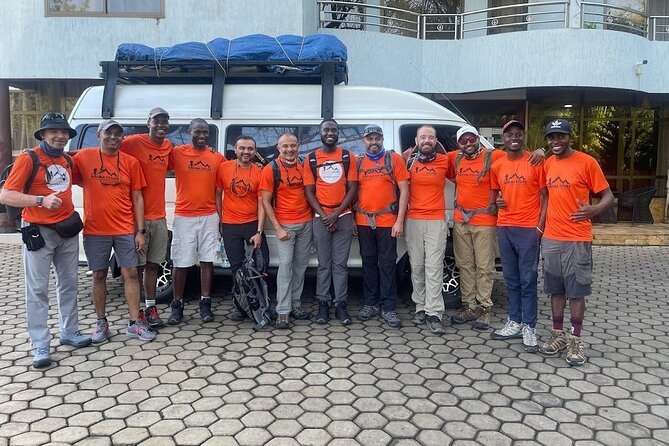
The strongest part of this operation appears to be its guide and porter team. Names connected with recent climbs include Eli, Meshakii, Alyce, Inocent, Musa, Abdala, and Diklan.
The most useful habits are practical ones: daily medical checks, careful pacing, help on difficult sections, and time for questions. One group also noted that guides took turns eating with the climbers, which suggests a more involved approach than simply leading from the front.
The crew’s pay is listed as part of the package. That is worth checking against the company’s porter policy before booking, since fair treatment of the mountain crew is an important part of responsible climbing.
Who should book this climb?
You should consider this route if you want the most scenic approach and prefer a longer itinerary for acclimatization. It suits people with moderate fitness who can walk for several hours, handle basic camping, and accept a difficult summit night.
It is also a good fit for families or mixed-age groups only when everyone understands the physical demands. A family group ranging from age 20 to 58 completed the route, and another group celebrated a 69th birthday at the summit, but those examples do not make the climb easy. Fitness and medical readiness matter more than age alone.
You may want a different plan if you dislike camping, struggle with long descents, or need a flexible schedule. The 13-hour summit day is the main warning sign. Ask about the exact group size, guide ratio, gear condition, hotel nights, and turnaround policy before paying.
Cancellation is free up to 24 hours before the experience start time. Within 24 hours, the payment is not refunded, and changes are not accepted.
Should you book the Nafika Lemosho climb?
I would book this trek if your priority is a scenic route, careful altitude management, and a package that includes most of the major costs. The combination of Shira Plateau, Lava Tower, Barranco Wall, a full summit attempt, camping gear, meals, and private transport offers solid value at $2,350.
I would not book it casually. You need to train, bring proper cold-weather gear, and accept that reaching Uhuru Peak is never guaranteed. If you are ready for that bargain with the mountain, Lemosho gives you a strong eight-day framework and a support team built around close supervision.
FAQ
How long is the Kilimanjaro Lemosho climb?
The experience lasts approximately eight days, including the climb from Lemosho Gate to the summit and the descent to Mweka Gate.
What is the highest point reached?
The summit is Uhuru Peak at 5,895 meters. On summit day, you first reach Stella Point at about 5,756 meters before continuing to Uhuru Peak.
What time does the summit climb begin?
You are scheduled to wake around midnight for light tea and breakfast. The climb to Stella Point then takes about four to five hours.
Is camping equipment included?
Yes. The package includes camping tents, sleeping pads, sleeping bags, tables, and chairs.
Are meals included?
Yes. The package lists eight breakfasts, eight lunches, and seven dinners.
Is transportation included?
Yes. Pickup and private transportation are included. The plan describes hotel pickup, transfers to the mountain, and a private car back to the hotel after the descent.
Does the price include a Tanzanian visa?
No. The visa is listed separately at $50.
How fit do I need to be?
You should have a moderate level of physical fitness. The itinerary includes several days of four to seven hours of walking, a 13-hour summit day, and a final descent of about 14 kilometers.
How large can the group be?
The activity has a maximum of 20 people. Your actual group size should be confirmed when booking.
When can I cancel for a full refund?
You can cancel up to 24 hours before the experience start time for a full refund. Cancellations or changes made within 24 hours are not accepted, and the payment is not refunded.
Just added around Tanzania
- Mt. Kilimanjaro: Shira plateau to Cathedral point 3872m Day hike★ 5.0 · 7 reviews
- 5 days safari, hiking & culture (Serengeti & kilimanjaro)★ 5.0 · 27 reviews
- One Day Hike from Kilimanjaro to Mandara★ 5.0 · 2 reviews
- 3 Days Mount Meru trekking★ 4.5 · 7 reviews
- climb the KILIMANJARO via Lemosho route★ 5.0 · 4 reviews
- 6 Day: Hiking Kilimanjaro via Machame Route★ 5.0 · 2 reviews
- Private 8 day Northern Circuit Kilimanjaro Climb★ 5.0 · 8 reviews
- Kilimanjaro Waterfalls Hike & Moshi Hot Springs Day Trip Tour★ 5.0 · 4 reviews
Kilimanjaro Climbs, compared.
8-Day Small-group Lemosho Kilimanjaro Summit Trekking
Read our review →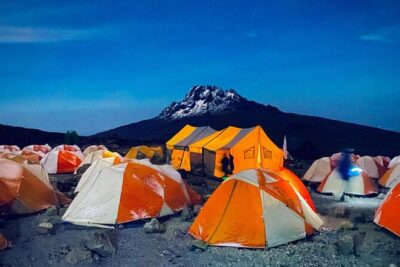
Climbing Kilimanjaro through 7 days Machame Route
Read our review →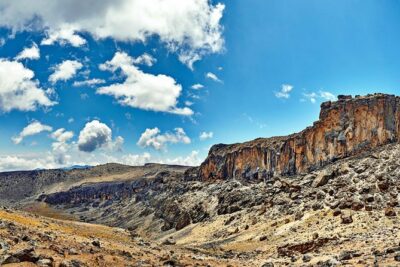
Browse the lists this trek appears in