
Review · KATHMANDU
14 Days of Adventure Trekking to Everest Base Camp
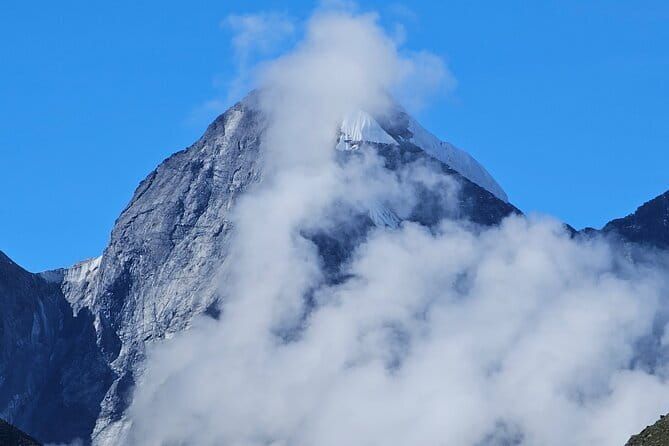
Everest Base Camp is not a quick mountain sightseeing trip. It is a demanding 14-day walk through Sherpa villages, suspension bridges, Buddhist monasteries, glaciers, and some of the world’s most famous peaks. The prize comes in stages: Namche Bazaar, Tengboche, the Khumbu Icefall, Base Camp itself, and sunrise from Kala Patthar.
I like the careful acclimatization plan, with rest time in Namche and Dingboche rather than a mad rush uphill. I also like the practical setup: local guide, porters, teahouse lodging, permits, airport transfers, and domestic flights are arranged for you.
The main consideration is altitude. You reach Gorak Shep at about 5,164 meters and Kala Patthar at roughly 5,545 meters, so moderate fitness alone does not guarantee an easy time. Weather can also delay the Lukla flights, and emergency evacuation, personal gear, tips, WiFi, laundry, and extra meals are not covered.
Key points to know before booking
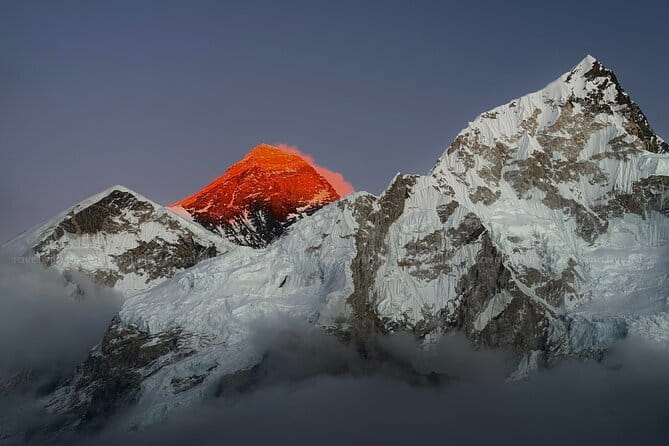
- The trek reaches Everest Base Camp on Day 9, then adds a pre-dawn Kala Patthar climb for the best close view of Everest.
- Two acclimatization stops matter: one full day around Namche Bazaar and another based in Dingboche.
- The Lukla flights are included, but the small mountain airstrip depends heavily on good weather.
- The route uses teahouses and lodges, with simple overnight stays rather than resort comfort.
- The trip is private, so only your own group participates.
- Guides named in past bookings include TN Bhatta and Rajendra, with TN Bhatta receiving especially warm praise for leading an Everest Base Camp trip with a daughter.
Kathmandu begins with Thamel and a Nepali dinner
Your arrival day is gentle by design. You are met at Tribhuvan International Airport, transferred to your hotel, and given time to explore Thamel, Kathmandu’s main base for trekking shops, restaurants, and souvenirs.
The welcome dinner gives the first day some character. You can expect a Nepali thali with rice, lentil soup, vegetables, pickles, and a choice of meat or vegetarian dishes. Local drinks such as rakshi and lassi are available, with cultural music and dance during the meal.
I like this start because it gives you time to meet the guide before the walking begins. Thamel is also useful for checking personal equipment, though personal trekking gear is not included in the $1,350 price. If you discover you need something, this is the sensible place to deal with it.
The price includes dinner, airport transfers, and the listed accommodation. International flights, visa fees, extra nights, and personal spending are separate.
More Everest Base Camp Treks in Kathmandu:
- Everest Base Camp Trek – 14 Days
★ 5.0 · 1,499 reviews - Everest Base Camp Trek
★ 5.0 · 842 reviews - Everest Base Camp Helicopter Tour landing at Everest View Hotel
★ 5.0 · 668 reviews
The Lukla flight and the first walk to Phakding
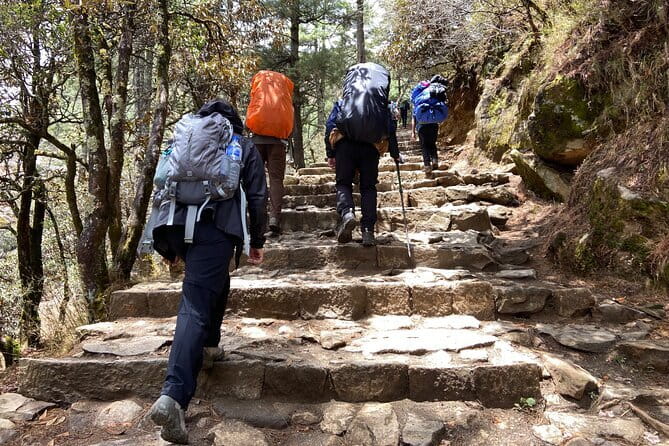
Day 2 begins with the domestic flight from Kathmandu to Lukla. The flight itself takes about 35 minutes, with airport time included in the schedule. Lukla’s Tenzing-Hillary Airport is famous for its short mountain runway and its location among steep Himalayan terrain.
After landing, you have breakfast, meet the trekking crew, and begin walking toward Phakding. The route crosses the Dudh Koshi River and ends near Phakding Monastery, with an overnight stay in a lodge or teahouse.
This first walking day is useful because it gets you moving without sending you straight to a high sleeping altitude. Still, the schedule can feel busy after the flight. Keep your day simple, carry only what you need, and use this first night to learn how your body responds.
The included porters are helpful here, since carrying a full pack at altitude makes every uphill section harder. You should still expect to carry your day bag with water, layers, medication, and personal essentials.
Entering Sagarmatha National Park on the way to Namche
On Day 3, you pass through Monjo and enter Sagarmatha National Park. The park covers 1,148 square kilometers and includes Mount Everest, with elevations ranging from about 2,845 to 8,848 meters.
The day includes lunch at Jorsalle, a village between the Dudh Koshi River and forest, followed by the Hillary Bridge. This tall suspension bridge is one of the route’s memorable crossings. It hangs above the fast-moving river, so it feels like a real mountain moment rather than a simple transfer between points.
Namche Bazaar is the destination. This historic settlement is the main gateway to the Everest region, and it is a useful place to rest, eat, and prepare for higher ground. The walking is not technically described as climbing, but the route toward Namche is a serious step up from the first day.
You should expect a long day on foot, uneven paths, and repeated uphill sections. The arrival in Namche feels rewarding because the town has a clear sense of place, with mountain views and a strong connection to the Sherpa communities of the Khumbu.
Namche’s rest day brings museum views and Khumjung
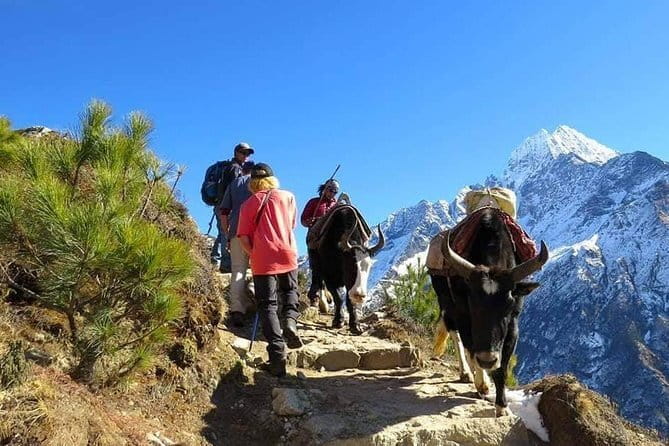
Day 4 is an acclimatization day based in Namche Bazaar. That does not mean sitting indoors all day. You visit the Sagarmatha National Park Museum, also called the Sherpa Museum, and learn about Sherpa mountaineering and local life.
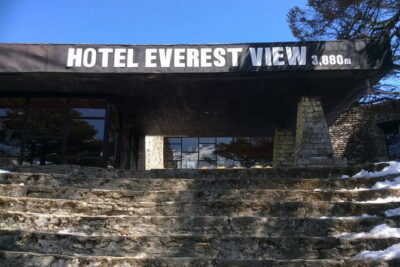
The route then heads toward Hotel Everest View, which is described as one of the highest luxury hotels in the world. From there, you can see peaks including Everest, Kusum Kanguru, Thamserku, and Kongde, with drinks and meals available at the hotel.
After the viewpoint, you descend toward Khumjung for lunch before returning to Namche. This is exactly the kind of day you want in an altitude itinerary: you gain height during the outing, then sleep again at the lower Namche elevation.
I particularly like this section because it mixes culture, scenery, and practical acclimatization. The drawback is that the schedule still involves walking, so you should not treat it as a full rest day in the usual holiday sense.
A few more treks around Kathmandu worth a look
- Everest Base Camp Trekking
★ 5.0 · 485 reviews - Annapurna Circuit Trek with Tilicho Lake
★ 5.0 · 368 reviews - Everest Base Camp Trekking – 13 Day
★ 5.0 · 365 reviews - Everest Base Camp Trek
★ 5.0 · 350 reviews
Tengboche brings the monastery and Ama Dablam views
Day 5 leads toward Tengboche. There is a short tea stop at Kyangjuma, where Ama Dablam becomes a major feature of the views. Lunch is planned at Phungi Thenga before the route reaches Tengboche.
Tengboche is known for its monastery, described here as the largest in the Khumbu region. The settlement is an important cultural stop, not just a place to sleep. If you want the trek to include more than mountain photographs, this is one of the most meaningful stops on the route.
You sleep in Tengboche, where the altitude is higher and the nights may feel more demanding. The walk includes forested sections and mountain paths, but the physical challenge increases as the route moves toward Dingboche.
Pangboche and the end of the tree line
Day 6 passes through Deboche and continues toward Pangboche. This is described as the last major settlement on the ascent toward Base Camp, with monasteries, schools, cultivated fields, and terraced farmland.
Pangboche also marks the point where trails separate toward Everest Base Camp and Ama Dablam Base Camp. Lunch is planned in the Pangboche area, followed by the walk to Dingboche.
At Dingboche, alpine vegetation becomes more obvious and trees begin to disappear. That change matters because it gives you a visual sense of the altitude. The villages become smaller, the air feels thinner, and the route has fewer lodges and teahouses ahead.
Dingboche is a practical overnight stop, but it is also where you should pay close attention to your body. Headaches, poor sleep, and unusual tiredness can occur at altitude. The itinerary gives you another acclimatization day before going higher, which is a strong feature.
Chukhung Ri adds a second Dingboche acclimatization day
Day 7 is set aside for an acclimatization hike toward Chukhung Ri. You climb for mountain views, descend to Chukhung for lunch, then return to Dingboche for another night.
The schedule lists a short walking time for Chukhung Ri, but you should not assume the day will feel easy. At this elevation, even a modest uphill route can leave you breathing hard. The reward is a different view of the surrounding peaks, including another face of Ama Dablam.
This is one of the most important days in the program. You gain height during the day but return to Dingboche to sleep, giving your body time to adjust before the route reaches Lobuche and Gorak Shep.
Thukla Memorial Park and Lobuche at high altitude
Day 8 heads toward Dughla, also called Thukla, on the way to Lobuche. The route crosses Thukla Pass and includes a stop at Thukla Memorial Park, which honors climbers who died on peaks in the Everest region.
This can be a quiet and serious part of the trek. The memorial gives the mountains a human dimension, reminding you that the route is tied to real expeditions and real risk, not just scenic walks.
Lobuche is the overnight destination. The Italian Pyramid, an international high-altitude research facility at about 5,050 meters, may be visited if time and energy allow. The building supports research in high-altitude medicine, glaciology, meteorology, and climate science, and there is also a teahouse option nearby.
The flexible option to visit or stay near the Italian Pyramid adds interest, but it should not take priority over rest. At this point, conserving energy for Base Camp is the sensible choice.
Everest Base Camp from Gorak Shep
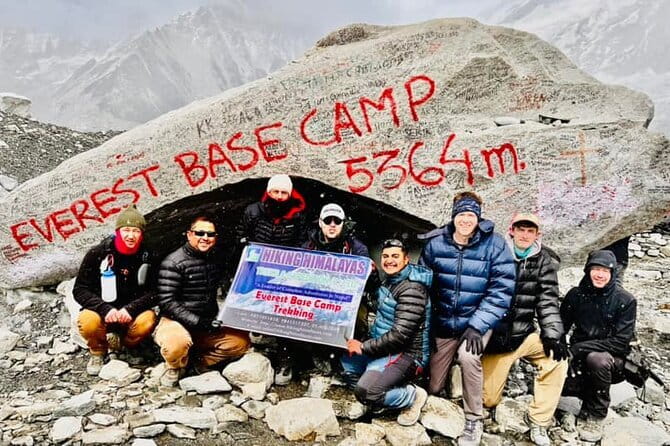
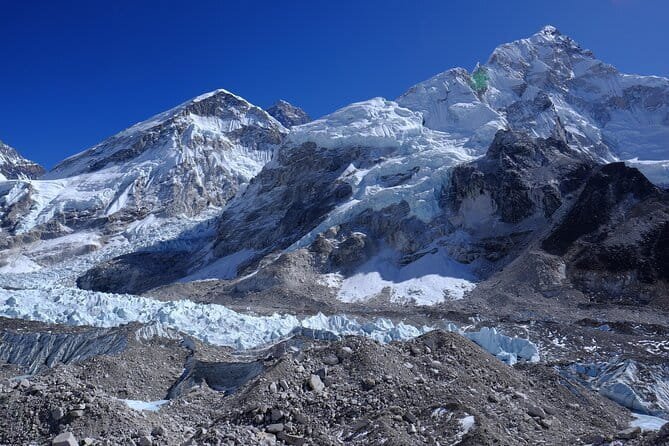
On Day 9, you walk to Gorak Shep, leave your main baggage and bedding there, eat lunch, and continue to Everest Base Camp. The route passes glaciers and provides views toward the Khumbu Icefall, Everest, Lhotse, Nuptse, Pumori, and other peaks.
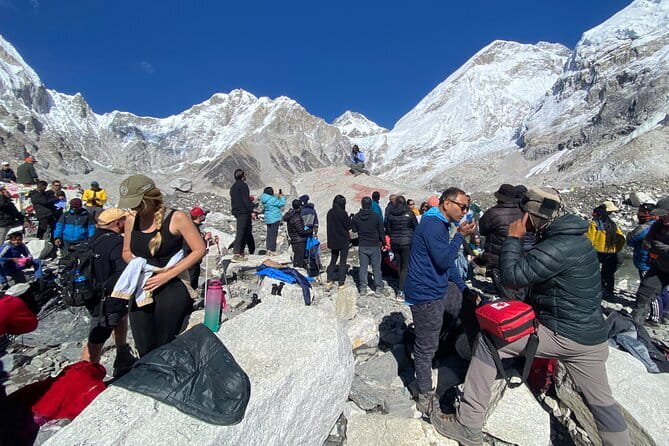
Base Camp is the emotional center of the trek. You reach the foot of the expedition route, take photographs, look toward the icefall, and then return to Gorak Shep for the night.
The schedule lists about an hour for the Base Camp stop, but the full day is much more demanding than that single figure suggests. You are already high, the route is rough, and you must walk back after reaching the goal. Leave enough energy for the return rather than racing toward the sign or photo point.
If conditions and time permit, there may also be an evening walk toward Kala Patthar Helipad for sunset views. Treat this as an optional extra, not as another obligation.
Kala Patthar sunrise is the visual high point
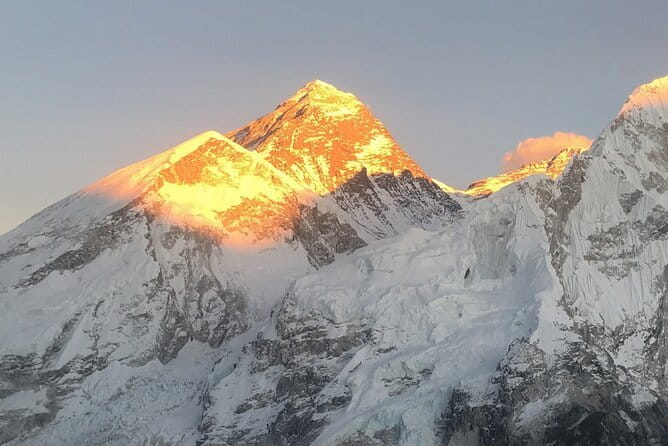
Day 10 starts around 4 a.m. with the climb toward Kala Patthar. The early start is tough, but it is planned for sunrise over the Everest range and the closest viewpoint of Mount Everest on this route.
You descend to Gorak Shep for breakfast, pack, and then begin the return toward Pheriche. Lunch is at Thukla or Dughla, with an overnight stay in Pheriche.
This is a demanding day because it combines a pre-dawn uphill climb with a long descent. Still, Kala Patthar may provide the clearest and most complete view of Everest during the entire trip. Base Camp gives you the destination, while Kala Patthar gives you the best broad mountain panorama.
The return through Namche and Lukla
The descent retraces the route through Pangboche and Phungi Thenga before reaching Namche Bazaar on Day 11. Downhill walking is usually faster, but it can be hard on knees and ankles, especially after several high-altitude days.
Namche is the place to celebrate. The plan mentions music venues and rock bars where you can have a cold beer, though alcoholic drinks and soft drinks are personal expenses. Take it easy if you still feel tired, since you need to reach Lukla and catch the return flight.
Day 12 continues through Monjo, where the national park permit is checked out, and Phakding, where lunch is planned. You spend the night in Lukla, ready for the flight back to Kathmandu.
The extra night in Lukla is sensible. Weather can affect flights, so keeping the schedule at the end of the trek gives you some breathing room. The program says poor weather may lead to a different date or a full refund if the activity is canceled, but you should still allow flexibility in your wider Nepal plans.
Kathmandu shopping and the final airport transfer
Day 13 brings the flight from Lukla to Kathmandu. Once back in the capital, you have time for shopping, bars, pubs, or a quiet rest before the farewell dinner arranged by Trek Curator.
Day 14 includes breakfast, last-minute shopping in Thamel, and an airport transfer. Typical purchases include handmade crafts, pashmina shawls, singing bowls, thangka paintings, jewelry, and Nepali tea. The shopping is not included, so keep room in your budget and baggage allowance.
The tour ends at Tribhuvan International Airport. Airport pickup and drop-off are included, which makes the beginning and end easier, especially if you are unfamiliar with Kathmandu.
What the $1,350 price really covers
At $1,350, the package offers solid value for a guided Everest Base Camp trek if the listed inclusions are important to you. You receive domestic flights between Kathmandu and Lukla, airport transfers, accommodation, local guide and porters, national park permits, TIMS cards, required land transport, a medical kit, and meals listed in the program.
The lodges and teahouses are practical rather than luxurious. You are paying for access, logistics, and support on a demanding route, not for hotel comfort at altitude.
Budget separately for:
- International airfare and Nepal visa fees
- Personal clothing, boots, sleeping equipment, and other gear
- Extra nights and meals caused by delays
- Alcohol, soft drinks, laundry, WiFi, and battery charging
- Emergency evacuation
- Guide and porter tips
- Any services not specifically listed
Emergency evacuation is the biggest financial point. The package includes a medical kit, but evacuation is not included, so suitable travel insurance is important.
Who should book this Everest Base Camp trek?
This trip suits you if you want a structured private trek with a local guide and porter support, and you prefer having flights, permits, lodging, and transfers arranged in advance. It also suits people who value cultural stops such as Thamel, the Sherpa Museum, Khumjung, Tengboche Monastery, and Thukla Memorial Park as much as the mountain views.
The route is not suitable for someone looking for a relaxed holiday. You need a moderate level of physical fitness, patience with basic teahouse accommodation, and willingness to walk for many hours at increasing altitude.
The named guide connections are worth noting. TN Bhatta is associated with a well-regarded family trek that included a daughter, while Rajendra is described as the guide who provided care and support on another Base Camp journey. If you are booking, ask which guide will lead your group and how the operator handles altitude symptoms and flight delays.
Should you book it?
Book this trek if you want the classic Everest Base Camp route with two clear acclimatization periods, a private group, local support, and a package price that covers many of the expensive logistics.
Think twice if you need guaranteed flight times, high-comfort hotels, or a trip with little physical strain. The best reason to choose this program is its practical shape: it gives you time in Namche and Dingboche, reaches Base Camp, adds Kala Patthar, and leaves room for Sherpa culture along the way. Just budget for gear, insurance, tips, personal expenses, and possible weather delays before you commit.
FAQ
How long is the Everest Base Camp trek?
The experience lasts approximately 14 days, including arrival and departure days in Kathmandu, the trek between Lukla and Everest Base Camp, and the return to Kathmandu.
Is airport pickup included?
Yes. Airport transfers are included, including pickup on arrival in Kathmandu and drop-off at Tribhuvan International Airport on departure.
Are flights between Kathmandu and Lukla included?
Yes. The domestic flights between Kathmandu and Lukla are included in the package.
Is accommodation included?
Yes. Accommodation is provided according to the program, using a Kathmandu hotel and lodges or teahouses during the trek.
Are permits included?
Yes. National Park permits and TIMS cards are included.
What is not included in the price?
International airfare, visa fees, extra nights and meals, personal gear, alcoholic and soft drinks, laundry, WiFi, battery charging, emergency evacuation, and guide and porter tips are not included.
Can I cancel for a full refund?
You can receive a full refund if you cancel at least 24 hours before the experience starts. Cancellations or changes made within 24 hours are not accepted for a refund. If poor weather cancels the experience, you may be offered another date or a full refund.
Just added around Kathmandu
- Everest Base Camp Trek★ 5.0 · 3 reviews
- Everest Base Camp Trek★ 5.0 · 7 reviews
- 15 Days Private Everest Base Camp Trek★ 5.0 · 30 reviews
- Everest Base Camp Trek★ 5.0 · 57 reviews
- 14-Day Everest Base Camp Trek★ 5.0 · 20 reviews
- 14 Days Everest Base Camp Trek★ 5.0 · 4 reviews
- From Kathmandu: Private 14-Day Everest Base Camp Trek★ 5.0 · 20 reviews
- 14 Days Private Everest Base Camp Trekking Tour★ 5.0 · 5 reviews
Everest Base Camp Treks, compared.
Everest Base Camp Helicopter Tour landing at Everest View Hotel
Read our review →
Tibet Tour 8 Days Lhasa to Everest Base Camp Small Group Tour
Read our review →
Dubai: Private Luxury Everest Yacht Cruise from Dubai Marina
Read our review →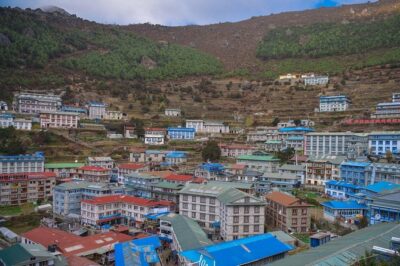
Browse the lists this trek appears in