
Review · KATHMANDU
14 Days Everest Base Camp Trek
The real prize here is not just reaching Everest Base Camp. It is the steady change from Kathmandu streets to Sherpa villages, prayer flags, glacial moraines, and high mountain air, with Everest, Ama Dablam, Lhotse, and Nuptse appearing bit by bit. The route also gives you two proper acclimatization days, at Namche and Dingboche, which matter far more than racing uphill.
I like the practical package: airport transfers, Kathmandu hotel nights, domestic flights, permits, a licensed guide, porter support, and all meals during the trek are included. I also like the private format. Your group sets its own rhythm rather than joining a large crowd. The main catch is the price of $2,200 does not cover travel insurance, personal gear, drinks, showers, Wi-Fi, tips, or international flights.
Key points to know
- Kala Patthar reaches 5,545 meters, giving you the route’s highest point and a broad view of Everest, Nuptse, Lhotse, and nearby peaks.
- Two acclimatization stops in Namche Bazaar and Dingboche help you adjust without wasting a full day.
- Lukla access is weather-sensitive, and the plan may use Manthali Airport for the Kathmandu connection.
- A porter is shared by two clients, so you should pack with that arrangement in mind.
- The private trip needs at least two people, making it a good fit for couples, friends, or a small family group.
- The package includes 13 breakfasts, 12 dinners, and 11 lunches, but drinks and sweets during the trek cost extra.
From Kathmandu to Lukla: A long first travel day
The trip begins with airport pickup and a private ride to a three-star hotel in Thamel. This is a useful start, since Thamel puts you near shops and restaurants where you can sort out any last-minute needs before heading into the mountains.
Day two is less simple than the short flight time suggests. You first drive for roughly four to five hours from Kathmandu to Manthali, also called Ramechhap, then take a 20-minute flight to Lukla. From Lukla, you walk for about four hours to Phakding.
That transfer arrangement is worth understanding before you book. The flight itself is brief, but the road connection adds a long morning and can make the day feel tiring before the trek has properly begun. The reward is a gentle first walking stage to Phakding, rather than an immediate push toward Namche Bazaar.
The route’s timing can change with weather and flight availability. Keep your first day flexible, and do not schedule an important international connection immediately after your return to Kathmandu.
More Everest Base Camp Treks in Kathmandu:
- Everest Base Camp Trek – 14 Days
★ 5.0 · 1,499 reviews - Everest Base Camp Trek
★ 5.0 · 842 reviews - Everest Base Camp Helicopter Tour landing at Everest View Hotel
★ 5.0 · 668 reviews
Namche Bazaar and the first serious climb
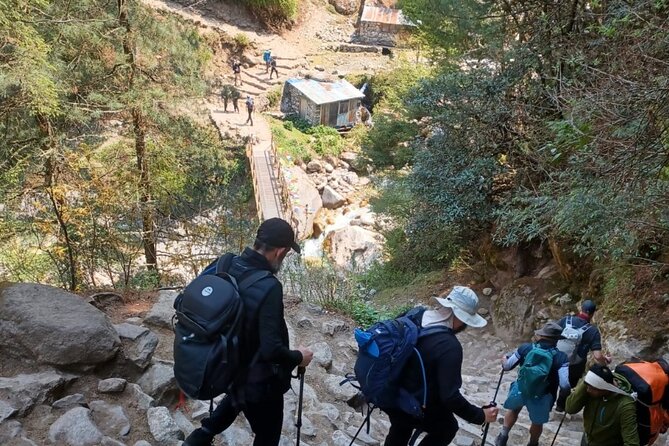
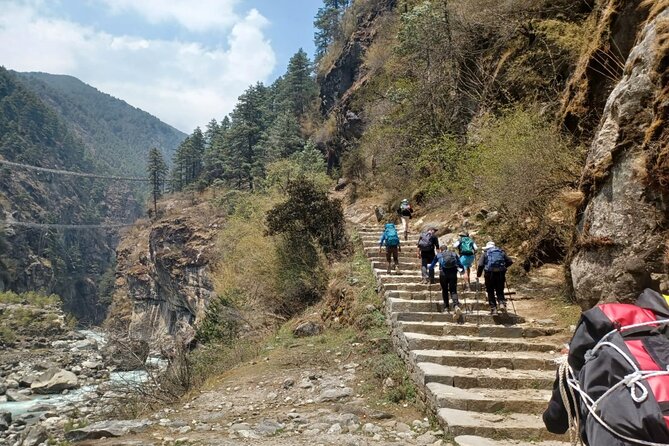
The walk from Phakding to Namche takes about five hours and is the first demanding section. You pass through Sherpa communities including Benkar and Chumoa, then enter Sagarmatha National Park at Monjo.
The trail becomes steep as you approach Namche. This is where a moderate fitness level becomes meaningful. You do not need to be a technical climber, but you should be comfortable walking uphill for several hours and repeating that effort day after day.
Namche is more than a stopping point. It is the main trading and service center for the Everest region, with marketplaces, lodges, and Sherpa food. The town gives you a chance to slow down before the higher stages, though the walk into it is not a soft introduction.
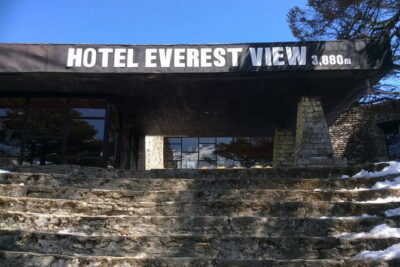
Day four is set aside for acclimatization. You walk to the Everest View Hotel, reaching viewpoints toward Ama Dablam, Thamserku, Everest, and Nuptse. The stated walking time is about five hours, so this is not a lazy day in the hotel. It is active rest, designed to help your body adjust while giving you a fine first view of the major peaks.
Tengboche brings monasteries and wide mountain views
From Namche, the trail leads toward Tengboche in about five hours. This section is described as having fewer steep stretches, making it one of the more comfortable days for photography.
You can expect views of Ama Dablam, prayer flags, and stupas along the way. Tengboche is especially important for its ancient monastery and its position among the high peaks. Sunrise and sunset here are major attractions, so have your camera and warm layers ready.
The appeal is not only visual. Tengboche adds a clear cultural element to the trek. You are moving through a region where Buddhist signs, chortens, mani walls, and monasteries are part of daily life, not decorative stops added for tourists.
The drawback is that comfort becomes more basic as you gain height. Hot showers, Wi-Fi, drinks, and other lodge extras are not part of the package. You pay separately for them where available.
Dingboche gives you two important nights at altitude
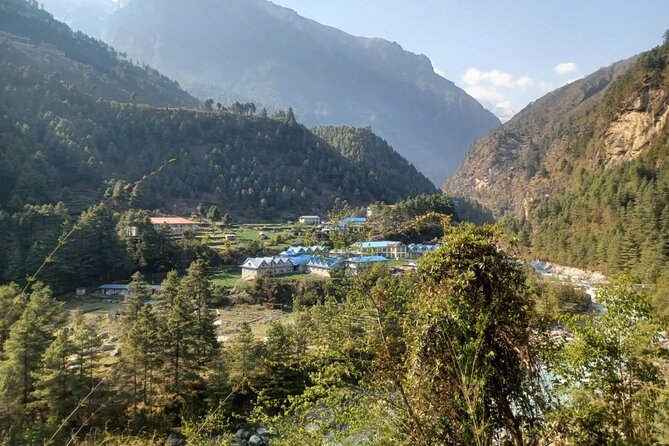
The walk from Tengboche to Dingboche takes about four hours. You pass through Pangboche, with views of Ama Dablam, chortens, and mani walls. The route also moves through fields and yak pasture as the vegetation becomes more alpine.
Dingboche is one of the most important points in the plan. You stay for two nights, using the second day for acclimatization. The walk to Nagarjun Hill rises to about 5,100 meters and takes roughly five hours.
That outing is not a throwaway stroll. It is a demanding high-altitude walk, but it gives you a useful reason to move rather than spending the day completely still. The mountain views reward the effort, and the extra night helps break up the long climb toward Gorak Shep.
You should treat the acclimatization schedule seriously. The route includes sensible rest points, but no schedule can guarantee that you will feel well at altitude. Good fitness helps, yet it does not replace caution. Tell your guide if you feel unwell, and do not treat the planned timetable as more important than your health.
A few more treks around Kathmandu worth a look
- Everest Base Camp Trekking
★ 5.0 · 485 reviews - Annapurna Circuit Trek with Tilicho Lake
★ 5.0 · 368 reviews - Everest Base Camp Trekking – 13 Day
★ 5.0 · 365 reviews - Everest Base Camp Trek
★ 5.0 · 350 reviews
Lobuche and the approach to Everest Base Camp
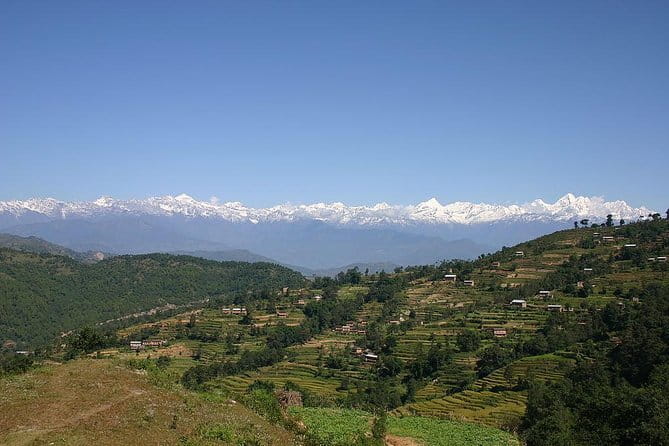
Day eight takes you toward Lobuche through Pheriche Valley. The walk lasts about four hours and rises gradually through alpine brush and yak pastures. Ama Dablam, Tawoch, and Cholatse become strong features of the view.
The next day is one of the trek’s major moments. You walk to Gorak Shep, a settlement surrounded by snow-covered peaks beside the lateral moraine of the Khumbu Glacier. From there, you continue to Everest Base Camp.
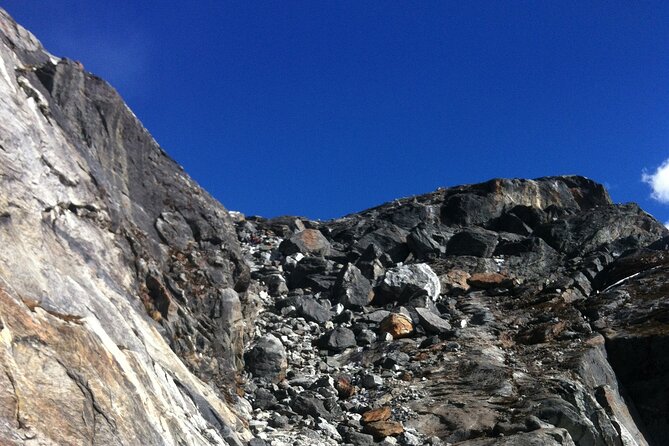
The walk to Base Camp is not a simple photo stop. You are crossing glacial terrain and dealing with thin air after several days of climbing. The setting shows the power of the Khumbu Glacier, with rough moraine underfoot and high peaks around you.
One practical point matters here: Everest Base Camp itself does not provide the broadest classic view of Everest. This program handles that well by scheduling Kala Patthar the following morning. Base Camp gives you the route’s famous destination and glacier setting, while Kala Patthar provides the more open mountain panorama.
Kala Patthar at 5,545 meters is the hardest reward
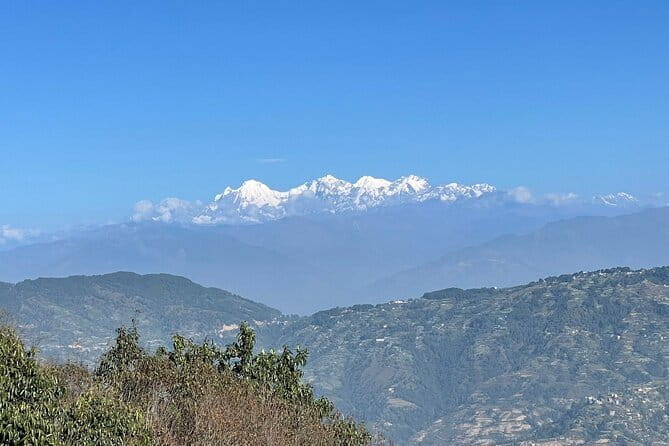
Day ten begins before dawn with a strenuous walk to Kala Patthar, the highest point on the trip at 5,545 meters. The early start is intended to put you on the viewpoint for sunrise, when the mountains can catch the first light.
From the top, the planned view includes Everest, Nuptse, Lhotse, Ama Dablam, and other major Himalayan peaks. This is the visual high point of the route, but it is also physically serious. You are walking at an altitude where every uphill step takes more effort, and the cold before sunrise can be sharp.
After Kala Patthar, you descend to Pheriche. The return does not become easy simply because you are going downhill. You have already spent the previous day reaching Base Camp, and the early start adds to the strain. Pace yourself, keep water and layers accessible, and listen to your guide.
The return to Lukla is part of the challenge
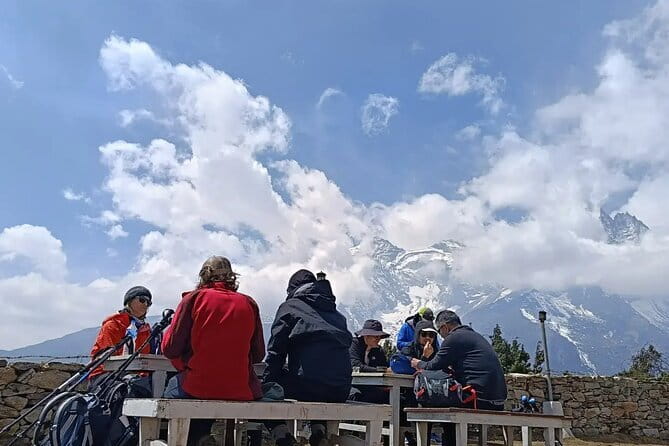
The walk from Pheriche toward Namche takes about five hours. The trail trends downhill, but it includes uphill sections, so do not expect a simple slide back to the airport. The return through forests and lower vegetation can feel refreshing after the bare, high-altitude terrain.
The following day is the final hiking stage, again around five hours, back to Lukla. You follow much of the same route in reverse and spend the night there.
Repeating the trail has one advantage: familiar ground lets you notice details you may have missed while climbing. It also has a clear downside. After Base Camp and Kala Patthar, the return can feel long, especially for tired knees and feet.
Day thirteen takes you back toward Kathmandu, depending on flights and weather. You may fly to Kathmandu directly or travel by air to Manthali Airport and continue from there. Once back in Kathmandu, you have time to shop and enjoy the farewell dinner at a typical Nepali restaurant.
What the $2,200 price really covers
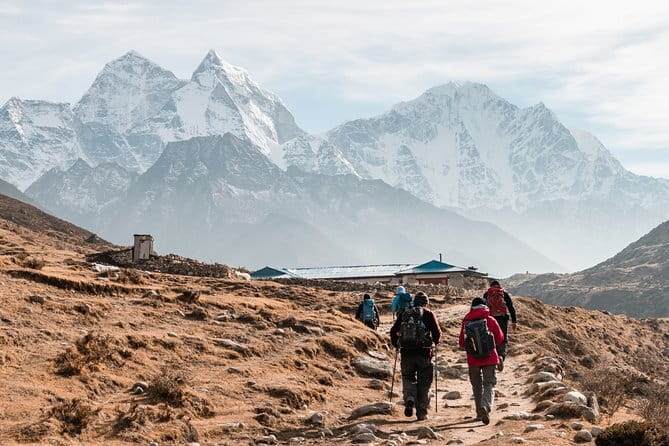
At $2,200 per person, this is not a bare-bones walking permit. The price bundles several costs that are easy to underestimate:
- Private airport pickup and drop-off
- Two Kathmandu hotel nights with breakfast
- Domestic flights and airport tax
- Trekking guide licensed by the government
- Porter support, with one porter assigned to two clients
- Breakfast, lunch, and dinner during the trek
- Sagarmatha National Park and TIMS permits
- Staff wages, accommodation, meals, gear, insurance, taxes, VAT, and office charges
- Farewell dinner and a completion certificate
That makes the price reasonable for someone who wants one company handling the main arrangements. You are not separately buying permits, guide services, porter logistics, domestic air tickets, and most meals.
Still, budget beyond the headline figure. International airfare, Nepal’s entry visa, travel insurance, high-altitude emergency evacuation coverage, personal trekking equipment, Kathmandu lunches and dinners, drinks, hot water, showers, Wi-Fi, bar bills, sweets, and tips are excluded.
The insurance point deserves special attention. High-altitude emergency evacuation cover is specifically left to you, so arrange it before departure and check that it applies to the elevations on this route.
Private groups and guide support
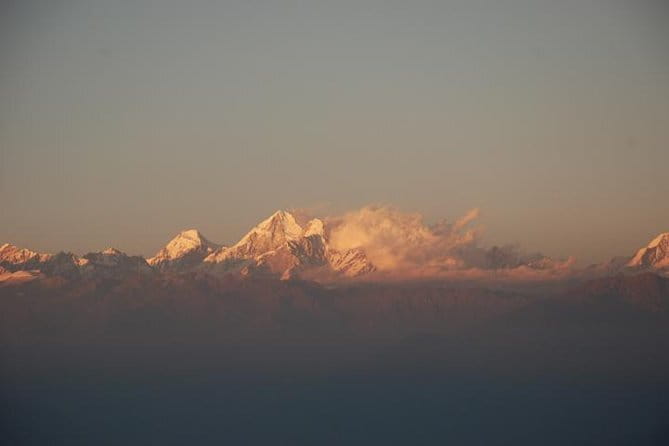
This is a private activity, with only your group taking part, and it requires a minimum of two people. That setup suits friends, couples, or relatives who want a shared schedule and fewer concerns about matching the pace of strangers.
The porter arrangement is generous enough to reduce the load, but it is not a personal porter for every participant. One porter carries luggage for two clients. Pack carefully, and keep the items you need during the day in your own daypack.
The company’s wider guiding team includes Pemba, the owner, and Prayash, a guide praised for helping with difficult trekking days on other routes. The available information does not promise that either person will lead this exact departure, so confirm your assigned guide before booking if that matters to you.
The strongest praise connected with the company focuses on organization, personal care, lodge choices, and help during demanding treks. That fits the structure here, which gives you a fixed route but leaves the walking experience in the hands of your guide and porter team.
Who should book this Everest trek?
I would recommend it to you if you want the classic Everest route in a compact 14-day plan, with a private group and most major costs arranged in advance. You should be comfortable with several hours of walking each day, steep sections, basic high-altitude conditions, and the chance that flights may shift because of weather.
It is less suitable if you want luxury lodges, guaranteed flight times, a slow acclimatization schedule, or a trip with no extra spending after arrival. The program is practical rather than indulgent.
Cancellation terms are fairly firm close to departure. Cancel at least six full days before the start for a full refund. Cancellation two to six full days ahead allows a 50 percent refund, while cancellation less than two full days ahead receives no refund.
Should you book it?
Book this trek if you value a private, well-bundled route with two acclimatization stops, guide and porter support, meals, permits, and Kathmandu transfers included. The strongest parts are the careful progression through Namche and Dingboche, the monastery at Tengboche, Everest Base Camp, and the sunrise push to Kala Patthar.
Before paying, confirm the current flight plan, your assigned guide, porter baggage limits, and the exact hotel and lodge standards. If you have moderate fitness, proper insurance, and realistic expectations about cold and basic facilities, the $2,200 package offers a sensible way into the Everest region. If you want comfort above all else, keep looking.
FAQ
How long does the Everest Base Camp Trek last?
The experience lasts approximately 14 days, including arrival and departure days in Kathmandu.
What is the highest point on the trek?
Kala Patthar is the highest point, at approximately 5,545 meters.
Is this a private tour?
Yes. Only your group participates, and the trip requires a minimum of two travelers.
What fitness level is required?
A moderate level of physical fitness is required. The route includes several days of walking for about four to five hours, steep sections, and high-altitude ascents.
Are meals included during the trek?
Yes. Breakfast, lunch, and dinner during the trek are included. The package specifies 13 breakfasts, 11 lunches, and 12 dinners.
Are domestic flights included?
Yes. Domestic flight tickets between the Lukla and Manthali route, along with domestic airport tax, are included. The return may use Kathmandu or Manthali Airport depending on weather and flight availability.
Is travel insurance included?
Staff insurance is included in the operating costs, but your personal travel insurance is not. You must arrange your own policy, including high-altitude emergency evacuation coverage.
What is the cancellation policy?
You receive a full refund if you cancel at least six full days before the start time. A cancellation two to six full days ahead receives a 50 percent refund, while cancellation less than two full days ahead is not refunded.
Just added around Kathmandu
- Everest Base Camp Trek★ 5.0 · 3 reviews
- Everest Base Camp Trek★ 5.0 · 7 reviews
- 15 Days Private Everest Base Camp Trek★ 5.0 · 30 reviews
- Everest Base Camp Trek★ 5.0 · 57 reviews
- 14 Days of Adventure Trekking to Everest Base Camp★ 5.0 · 2 reviews
- 14-Day Everest Base Camp Trek★ 5.0 · 20 reviews
- From Kathmandu: Private 14-Day Everest Base Camp Trek★ 5.0 · 20 reviews
- 14 Days Private Everest Base Camp Trekking Tour★ 5.0 · 5 reviews
Everest Base Camp Treks, compared.
Everest Base Camp Helicopter Tour landing at Everest View Hotel
Read our review →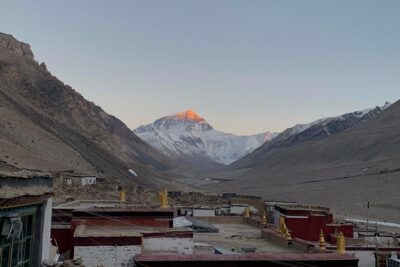
Tibet Tour 8 Days Lhasa to Everest Base Camp Small Group Tour
Read our review →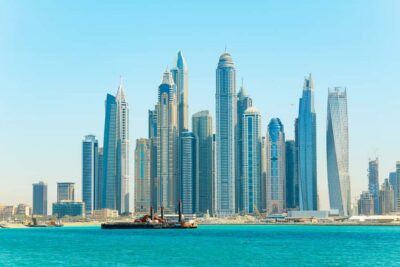
Dubai: Private Luxury Everest Yacht Cruise from Dubai Marina
Read our review →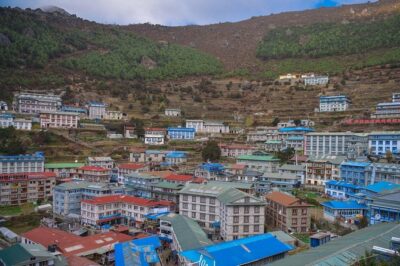
Browse the lists this trek appears in