
Review · KATHMANDU
Everest Base Camp Trek
Everest Base Camp is less about simply reaching a famous sign and more about the long approach through Sherpa villages, suspension bridges, monasteries, glaciers, and thin mountain air. This 15-day private trek takes you from Kathmandu to Lukla, then up through Namche Bazaar, Tengboche, Dingboche, Lobuche, Gorak Shep, and Base Camp.
I like the practical inclusions: full-board meals, permits, domestic flights, accommodation, and mountain gear are bundled into the $1,690 price. I also like the personal support, including an English-speaking guide, oxygen and pulse checks, first aid, and help arranging evacuation if things go badly.
The drawback is the altitude and rugged ground. This is not a sightseeing holiday with a few walks added. You need good fitness, patience for slow progress, and proper travel insurance, since helicopter evacuation itself is not included.
Key points to know before booking
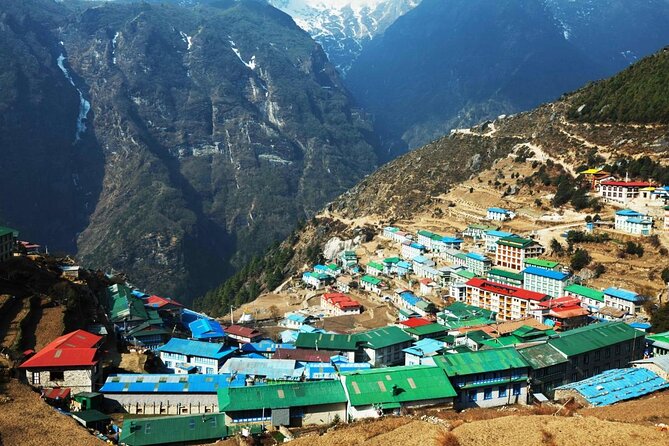
- Two acclimatization stops: You spend a rest day in Namche Bazaar and another in Dingboche, with optional hikes to Khumjung, Thame, Chhukung, or Nangkartshang Peak.
- A private trek: Only your group participates, with one licensed English-speaking mountain guide.
- Most major costs are covered: Flights, transfers, guesthouses, meals, permits, a sleeping bag, down jacket, and duffel bag are included.
- The hardest days come late: The trek to Everest Base Camp takes about eight hours, followed by Kala Patthar and a long return.
- Porters cost extra: You may book one to carry your luggage, so check the allowance and packing plan before departure.
- Weather can change everything: Lukla flights depend on conditions, and the operator may offer a new date or full refund if poor weather cancels the experience.
What the $1,690 Everest trek really covers
At $1,690 per person, this is a fairly complete trekking package rather than a bare guide service. You get airport pickup and drop-off in Kathmandu, hotel accommodation in the capital, domestic flights between Kathmandu or Ramechhap and Lukla, guesthouses along the route, full-board meals during the trek, permits, and a private guide.
The package also includes a sleeping bag, down jacket, and duffel bag supplied by Unique Adventure International. That matters because warm mountain gear is expensive to buy for one trip. You should still bring your own layered clothing, boots, gloves, and personal items, but borrowing the bulky pieces keeps the cost and luggage down.
A guide’s food, insurance, equipment, and organizational costs are included too. The company supplies a first aid kit and an oximeter for checking pulse, heart rate, and oxygen saturation at altitude. Those tools do not prevent altitude sickness, but they support sensible monitoring when used alongside how you actually feel.
The price does not cover your Nepal visa, international flights, drinks, laundry, phone and internet costs, tips, or personal purchases. Porters are also extra. That last point is important. Carrying your own bag for two weeks at high altitude can make a hard trek feel much harder, so ask about porter cost and luggage limits before you arrive.
Travel insurance is essential. The company says it can help arrange rescue and evacuation in a worst-case situation, but insurance for helicopter evacuation is not included. Read your policy carefully and confirm that it covers trekking at Everest Base Camp elevations.
More Everest Base Camp Treks in Kathmandu:
- Everest Base Camp Trek – 14 Days
★ 5.0 · 1,499 reviews - Everest Base Camp Trek
★ 5.0 · 842 reviews - Everest Base Camp Helicopter Tour landing at Everest View Hotel
★ 5.0 · 668 reviews
Kathmandu arrival and the flight to Lukla
Day one is intentionally simple. A representative meets you at Kathmandu International Airport and transfers you to your hotel. This gives you a chance to recover from an international flight, meet the company, and sort out equipment before the mountain section begins.
The stated meeting time is 6:15 a.m. for the flight and trek departure. Domestic flight arrangements can involve Kathmandu or Ramechhap, with transfers included according to the operating plan. Keep your morning flexible, since mountain aviation is sensitive to weather and scheduling.
The short flight to Lukla is part of the adventure. From the airstrip, the route begins gently beside the Dudh Koshi River. The first walking day takes about four hours and ends at Phakding, a small village at 2,610 meters with teahouses and scattered conifers.
This is a useful first day on foot because it lets your body begin adjusting without immediately forcing you into a major climb. You will still notice the rougher paths and repeated ups and downs, but the pace is manageable.
Namche Bazaar and the first altitude test
The walk from Phakding to Namche Bazaar is about five hours and more demanding. You pass through Monjo, where permits for Sagarmatha National Park and the local rural municipality are checked. This is also the formal gateway into the protected Khumbu region.
After Monjo, the trail climbs sharply toward Namche. The uphill gain is roughly 590 meters, and this is where the trek begins to feel serious. Halfway up, you may get your first views of Everest and Lhotse. Thamserku, Kwangde, and the sacred peak Khumbila add to the scene as you approach town.
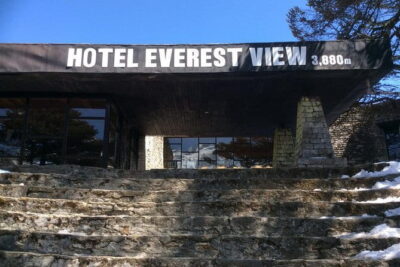
Namche is the main service center of the trek, but do not treat it as a place to rush through. The itinerary gives you a second day here for acclimatization. You can hike to Khumjung, with its local school and hospital, visit Thame, or walk toward the airstrip at Shyangboche and the Everest View Hotel.
The point is not to spend the day sitting still. A gentle walk higher than your sleeping altitude, followed by a return to Namche, helps your body adjust. Your guide should set the pace and watch for symptoms. Headache, nausea, unusual fatigue, and poor coordination deserve attention, not bravado.
Tengboche brings the culture into focus
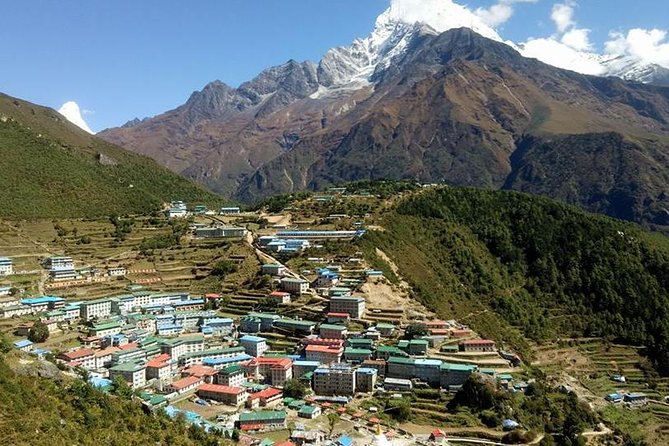
From Namche, the trail heads toward Tengboche. The route first climbs, then drops toward the Dudh Koshi at about 3,550 meters before rising again to Tengboche at 3,870 meters. It is a roughly six-hour walking day, with large views of Everest, Lhotse, Ama Dablam, and Thamserku.
Tengboche Monastery is the cultural heart of this part of the route. You can enter the monastery and listen to monks chanting mantras. That experience gives the trek a human center. The mountains are spectacular, but the Sherpa settlements and Buddhist practice explain how people live with this demanding environment.
Expect another climb after the valley crossing. The scenery helps, but the altitude is now doing real work on your body. Walk slowly, drink regularly, and resist the temptation to spend your energy racing ahead for photographs.
A few more treks around Kathmandu worth a look
- Everest Base Camp Trekking
★ 5.0 · 485 reviews - Annapurna Circuit Trek with Tilicho Lake
★ 5.0 · 368 reviews - Everest Base Camp Trekking – 13 Day
★ 5.0 · 365 reviews - Everest Base Camp Trek
★ 5.0 · 350 reviews
Dingboche, Chhukung, and the best acclimatization choice
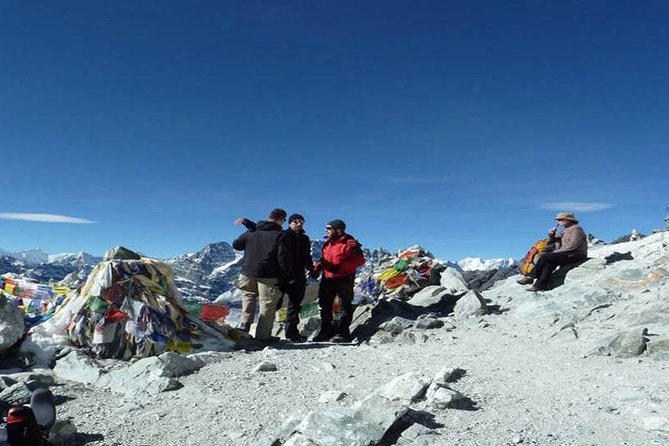
The next six-hour stage follows the Imja Khola through wooded sections and into higher, more open country. You pass Pangboche, where an old gompa sits above the village, before reaching Dingboche at 4,360 meters.
Dingboche feels different from the lower villages. Trees become less common, the air is colder, and the high peaks seem to close in around the valley. Ama Dablam and Island Peak are especially prominent.
You spend a second acclimatization day here. The optional walk to Chhukung offers views of Makalu, Island Peak, and Peak 38. A hike toward Nangkartshang Peak is another choice. I would ask your guide which option suits your condition rather than choosing the most ambitious walk simply because it sounds impressive.
This day is one of the strongest parts of the schedule. A rushed itinerary can save a night but leaves you with less room to adjust above 4,000 meters. Here, the extra day gives you a better chance of continuing safely toward Base Camp.
Lobuche and the stark route to Gorak Shep
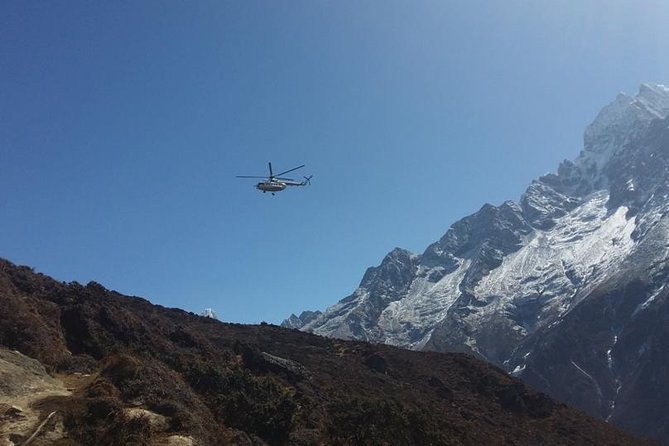
Beyond Dingboche, the valley becomes barren and the walking surface gets rockier. The six-hour route toward Lobuche passes below Thugla and offers views of Cholatse across the valley. The climb after Thugla is steep, and the high peaks begin to feel very close.
From Lobuche, Tawache and Nuptse rise dramatically above you. The view is powerful, but there is little shelter from the cold and wind compared with lower villages. Keep your down jacket accessible rather than buried at the bottom of your pack.
The following day is the big approach to Everest Base Camp. You walk beside the Khumbu Glacier and reach Gorak Shep, where you stop for lunch. From there, the path continues to Base Camp at about 5,400 meters.
This is listed as an eight-hour day, and that estimate should be taken seriously. The route can be rocky, uneven, and slow. At Base Camp, Everest itself is not the main view because the mountain is partly hidden by nearer peaks. Instead, you see Khubutse, Pumori, Changtse, and the Khumbu Icefall.
That may surprise people who expect a perfect front-facing view of Everest. Base Camp is still the goal, but the mountain panorama is often better from Kala Patthar the next morning.
Kala Patthar delivers the major view
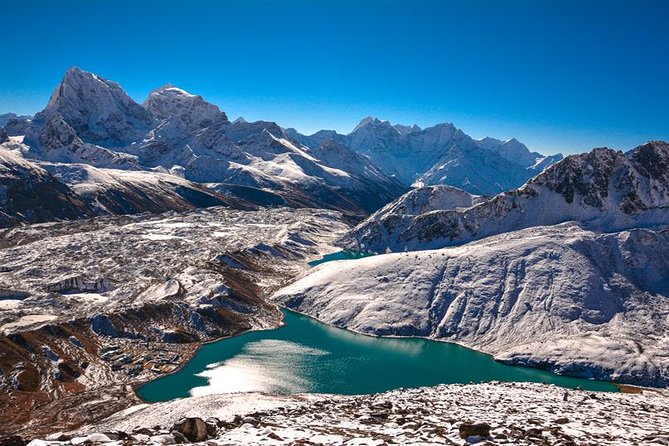
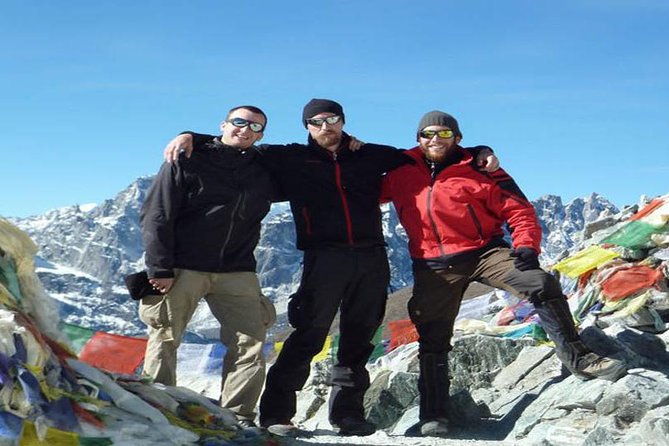
Kala Patthar, or Black Rock, is the visual high point of the trek. The summit gives you a broad view of Everest, Pumori, Lhotse, Changtse, Nuptse, and many surrounding peaks. Everest reaches 8,848 meters, while Pumori and Lhotse rise prominently around the viewpoint.
The ascent and return are described as an eight-hour day. At this altitude, even a moderate climb feels slow. You will want warm layers, water, and enough time to stop and breathe. Your guide’s judgment matters here, especially if you have developed symptoms overnight at Gorak Shep.
The schedule then begins the long descent toward Pheriche and back along the route toward Lukla. The supplied day-by-day description compresses some of this movement, so ask the operator to confirm exactly where you sleep after Kala Patthar and how the return days are arranged. A trek from Kala Patthar to Lukla in one day would not be realistic, while the later itinerary correctly describes several stages through Tengboche, Namche, and the lower villages.
The return through Tengboche and Namche
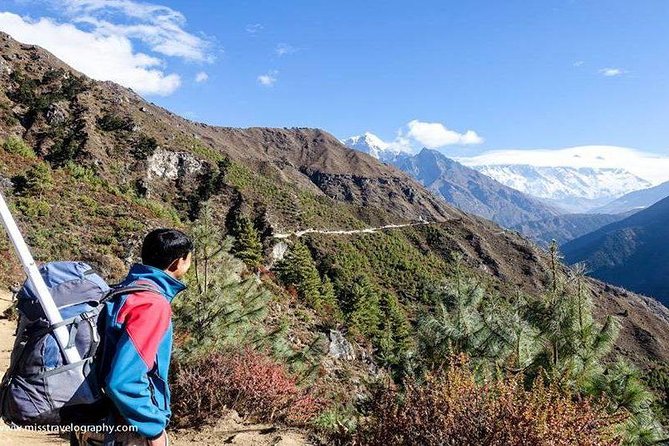
The return route gives you a different view of familiar ground. From the high valley, you head toward Pheriche and then through Pangboche and Tengboche, with Ama Dablam and Lhotse in view. You also pass monasteries and rhododendron forest before crossing the Imja Khola.
The route continues through Phungi Tenga, beside the Dudh Koshi, and onward through pine forest to Sansa and Kyanjuma. The day ends at Namche Bazaar. The listed duration for one portion is clearly a typo, so confirm the expected walking time with your guide, but the overall route is a normal full trekking day.
From Namche, you descend through Sherpa villages and cross the Tenzing and Hillary suspension bridge. The final walk to Lukla takes about seven hours. After the high altitude, the lower trail may feel easier, but descending puts pressure on knees and ankles. Trekking poles can be useful, though they are not listed among the supplied items.
You overnight in Lukla before the flight back. If clouds delay the aircraft, plans can change. The company has helped arrange helicopter transfers in difficult situations, but you should not assume that this cost is included. Your insurance and available funds need to cover such an event.
The human side of the trip
The strongest service feature here is personal contact. The owner, Khum Subedi, has been directly involved in airport welcomes, pre-trip advice, and communication through WhatsApp. That can be useful if you are unsure what to pack or need help before arrival.
Several guides associated with departures include Chandra, Raz or Razz, Ongchhu, Sumba Sherpa, and Megendra. Your assigned guide may be different, so request the name and qualifications before booking if that matters to you. The important point is that the package is built around one licensed English-speaking guide rather than a large group system.
Past departures also included help during injuries and health problems, with guides and porters taking an active role and the company arranging further support when needed. That is reassuring, but it is not a reason to underestimate the altitude. A strong operator can respond to trouble; it cannot remove the physical risk.
Kathmandu after the mountains
After the flight from Lukla, you return to your Kathmandu hotel. The next day is left open for sightseeing or rest. You can visit Pashupatinath, Swayambhunath, Boudhanath, or Bhaktapur Durbar Square, then spend time in Thamel for souvenirs.
This buffer day is practical. Flights from Lukla can be delayed, and finishing the trek in Kathmandu before your international departure gives you some breathing room. The final day includes airport drop-off and departure assistance.
Who should book this trek
I would choose this trip if you want a private itinerary with many of the major costs handled in advance. It suits an active person who values a guide, does not want to organize every permit and guesthouse personally, and appreciates having borrowed cold-weather gear available.
It is less suitable if you want comfortable roads, short walking days, or a flexible holiday with no fixed physical demands. You will spend long hours walking, sleep at high altitude, and face changing weather. The package says travelers should have moderate physical fitness, but I would prepare beyond the minimum with regular hill walking and stair work.
The private format is useful for pacing. You can discuss rest stops, symptoms, and acclimatization with your guide instead of trying to keep up with a large group. Porters are optional, but I would seriously consider adding one unless you are already comfortable carrying a pack for several hours a day.
Cancellation is simple: cancel at least 24 hours before the local start time for a full refund. Within 24 hours, no refund is offered. If poor weather cancels the experience, you are offered another date or a full refund.
Should you book it?
Book this Everest Base Camp trek if you want the classic route with strong logistical coverage and personal support at a clear price. The two acclimatization days, included meals and permits, borrowed sleeping bag and down jacket, and airport assistance make it a sensible package for a first Himalayan trek.
Before paying, confirm the exact flight airport, porter cost, luggage allowance, assigned guide, and sleeping arrangements after Kala Patthar. Also buy insurance that clearly covers high-altitude trekking and helicopter evacuation.
If you can accept the altitude, cold, rough paths, and possible flight delays, this trip gives you the full Everest approach: Sherpa villages, Tengboche Monastery, the Khumbu Glacier, Base Camp, and the wide summit view from Kala Patthar.
FAQ
How long is the Everest Base Camp trek?
The experience lasts approximately 15 days, including arrival and departure in Kathmandu, the trek between Lukla and Everest Base Camp, acclimatization days, and domestic flights.
Is this a private trek?
Yes. This is a private activity, so only your group participates. One licensed, English-speaking mountain guide is included.
What meals are included?
Breakfast, lunch, and dinner are included during the trekking portion. The package lists 11 lunches, 14 breakfasts, and 11 dinners.
Are trekking permits included?
Yes. The Sagarmatha National Park permit and Khumbu Pasang Lhamu Rural Municipality fee are included.
Is accommodation included?
Yes. Hotel accommodation in Kathmandu and guesthouse accommodation during the trek are included.
Are a sleeping bag and down jacket provided?
Yes. A sleeping bag, duffel bag, and down jacket supplied by Unique Adventure International are included for the trek.
Is a porter included?
No. Porters are not included in the listed price, but you can add one when booking.
What happens if bad weather cancels the experience?
If poor weather causes cancellation, you are offered a different date or a full refund. You can also cancel at least 24 hours before the local start time for a full refund.
Just added around Kathmandu
- Everest Base Camp Trek★ 5.0 · 3 reviews
- Everest Base Camp Trek★ 5.0 · 7 reviews
- 15 Days Private Everest Base Camp Trek★ 5.0 · 30 reviews
- Everest Base Camp Trek★ 5.0 · 57 reviews
- 14 Days of Adventure Trekking to Everest Base Camp★ 5.0 · 2 reviews
- 14-Day Everest Base Camp Trek★ 5.0 · 20 reviews
- From Kathmandu: Private 14-Day Everest Base Camp Trek★ 5.0 · 20 reviews
- 14 Days Everest Base Camp Trek★ 5.0 · 4 reviews
Everest Base Camp Treks, compared.
Everest Base Camp Helicopter Tour landing at Everest View Hotel
Read our review →
Tibet Tour 8 Days Lhasa to Everest Base Camp Small Group Tour
Read our review →
Dubai: Private Luxury Everest Yacht Cruise from Dubai Marina
Read our review →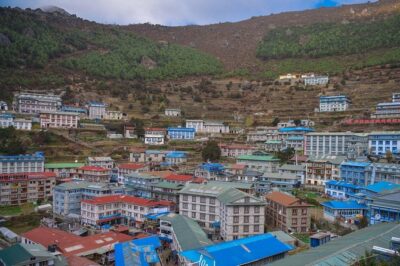
Browse the lists this trek appears in