
Review · KATHMANDU
Everest Base Camp Trek – 15 days
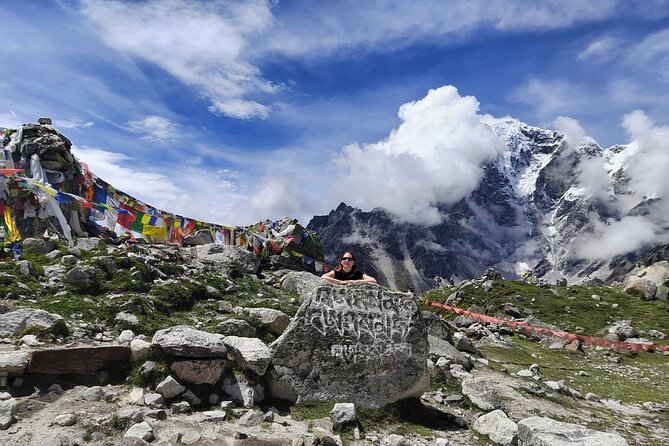
The real prize here is not just reaching Everest Base Camp. It is the slow approach through Sherpa country, where suspension bridges, mani stones, rhododendron forests, old monasteries, frozen rivers, and high mountain villages build the story day by day. You fly into Lukla, then walk toward the Khumbu Icefall beneath Everest, Nuptse, Lhotse, and Ama Dablam.
I like the built-in acclimatization days in Namche Bazaar and Dingboche. I also like that the price includes the Lukla flights, guide, porters, guesthouses, staff costs, a down jacket, and sleeping bag when needed. The main catch is altitude: Kala Patthar reaches 5,545 meters, so this is a serious physical challenge, not a casual mountain holiday.
Key points to know before booking
- Kathmandu sightseeing comes first: You visit Kathmandu Durbar Square, Swayambhunath, Boudhanath, and Pashupatinath with a private car and guide.
- The route uses two acclimatization stops: Namche Bazaar includes a walk to Everest View Hotel, while Dingboche includes a day trip toward Chhukung Valley.
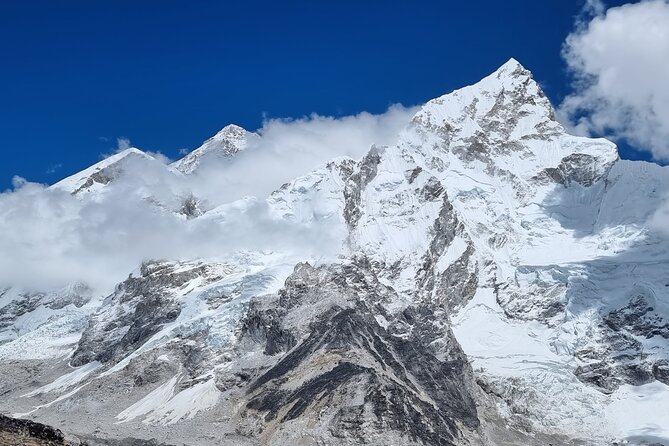
- The high point is Kala Patthar: The early morning climb reaches 5,545 meters and gives the trip’s clearest mountain panorama.
- Lukla flights are included: The half-hour flight from Kathmandu begins and ends the trekking section, subject to weather.
- You sleep in guesthouses: Accommodation is on a twin-sharing basis during the trek, with standard hotel accommodation in Kathmandu.
- The package is strongly staff-supported: A licensed English-speaking Sherpa guide and porters handle much of the practical work, while the company covers staff salary, insurance, equipment, and medicine.
What the $1,375 price really covers
At $1,375 per person, this trek is priced as a supported package rather than a bare walking route. That matters in the Everest region, where transport, food, staff, permits, accommodation, and high-altitude logistics can quickly add up.
The package includes hotel accommodation in Kathmandu for three nights, guesthouses during the trek, Kathmandu sightseeing by private car, airport transfers, Kathmandu to Lukla flights, a guide, porters, and the listed staff expenses. A down jacket and sleeping bag are available from Outshine Adventure if needed.
The price does not cover your travel insurance, monument entrance fees in Kathmandu, meals and drinks as a general category, tips, or personal expenses. The inclusions also separately mention dinner and breakfast, so I would ask the operator to confirm exactly which meals are included on each day before you pay. That small clarification can prevent awkward surprises once you are on the trail.
The value is strongest if you want one company handling the moving parts. You are not left to arrange the airport pickup, Lukla tickets, porters, or guesthouses on your own. You still need to budget for insurance with coverage above 5,300 meters, drinks, snacks, tips, and Kathmandu sightseeing entry fees.
More Everest Base Camp Treks in Kathmandu:
- Everest Base Camp Trek – 14 Days
★ 5.0 · 1,499 reviews - Everest Base Camp Trek
★ 5.0 · 842 reviews - Everest Base Camp Helicopter Tour landing at Everest View Hotel
★ 5.0 · 668 reviews
Days 1 and 2: Kathmandu before the mountains
Your arrival begins at Tribhuvan International Airport. An airport representative meets you with an Outshine Adventure sign, transfers you to the hotel, and takes you to the company office for documents and a briefing.
This first evening is useful for checking your equipment and asking direct questions about pace, altitude, meals, and your walking group. The maximum group size is 15, though the actual number on your departure may be smaller.
The second day is a full Kathmandu sightseeing tour by private car and expert guide. You visit Kathmandu Durbar Square, Swayambhunath, Boudhanath, and Pashupatinath. Each site gives you a different view of the Kathmandu Valley, from royal courtyards and Buddhist prayer traditions to one of the city’s most important Hindu temples.
Entrance fees are not included, so carry money for the monuments. The afternoon is left open for equipment shopping or final preparation. That is a sensible use of time. You can sort out anything missing before leaving for the trail instead of discovering the problem in Lukla.
Day 3: The Lukla flight and the easy walk to Phakding
The flight from Kathmandu to Lukla takes about 30 minutes. It is a small-plane mountain flight, and the short route offers your first close look at the Himalayan terrain. Weather can affect mountain flights, so keep your schedule flexible and do not plan a tight international connection immediately after the trek.
After breakfast in Lukla, you begin with a gradual descent of about 200 meters to Phakding. The walk takes roughly three hours and follows the Dudh Koshi River. Compared with the days ahead, this is a gentle start.
Phakding is your first overnight stop in the trekking region. Guesthouse accommodation is provided on a twin-sharing basis. This first day is less about covering ground and more about getting used to walking, the trail rhythm, and the support system around you.
Days 4 and 5: Namche Bazaar and the first big mountain views
The walk from Phakding to Namche Bazaar takes about five hours, with a climb of roughly 850 meters. You continue along the Dudh Koshi, then gain height toward Namche. This is where the trek begins to feel demanding.
Namche is the main trading and service center of the Everest region. It has shops, cafés, bars, and other facilities, which makes it a welcome place to spend two nights. The climb into town can leave you tired, especially because your body is still adjusting to altitude.
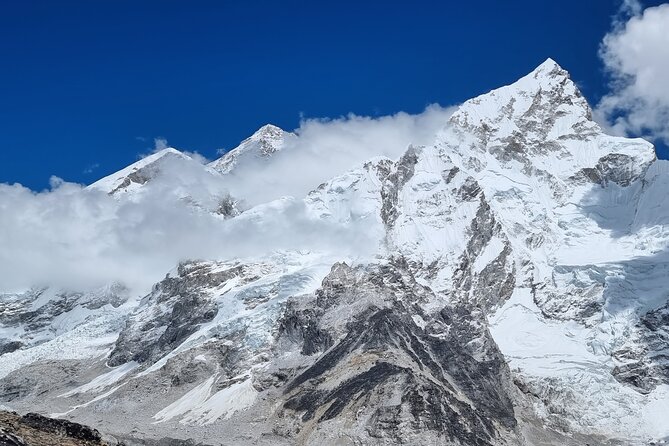
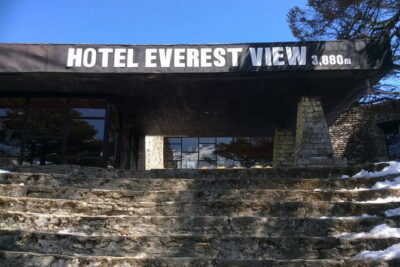
The next day is set aside for acclimatization. You walk up to Everest View Hotel, take time for tea and the panorama, then return to Namche. From the viewpoint, you can see Everest, Nuptse, Lhotse, Ama Dablam, Thamserku, and Kusum Kanguru.
This is not a wasted rest day. The uphill walk gives your body a useful altitude stimulus, while sleeping again at Namche gives you time to adjust. Walk slowly, drink regularly, and tell your guide if a headache, nausea, or unusual fatigue becomes worse.
A few more treks around Kathmandu worth a look
- Everest Base Camp Trekking
★ 5.0 · 485 reviews - Annapurna Circuit Trek with Tilicho Lake
★ 5.0 · 368 reviews - Everest Base Camp Trekking – 13 Day
★ 5.0 · 365 reviews - Everest Base Camp Trek
★ 5.0 · 350 reviews
Day 6: Tengboche and its hillside monastery
The trail from Namche to Tengboche takes about five hours. The route continues through mountain scenery toward one of the most memorable stops of the trek.
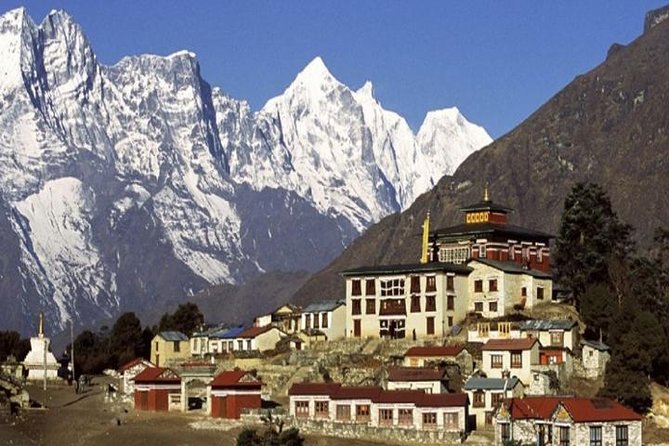
Tengboche is known for its monastery and its view of Ama Dablam. You may visit during morning or evening worship, when the resident lamas carry out religious ceremonies. The itinerary also allows time for meditation in the monastery.
This stop adds something beyond scenery. Everest Base Camp is a major goal, but the walk passes through a living cultural region. Tengboche helps you see the mountains as part of Sherpa religious life rather than only as a backdrop for a physical challenge.
The accommodation remains basic guesthouse lodging. That is part of the bargain here. You are not booking a resort trek, and conditions become simpler as you gain height.
Days 7 and 8: Dingboche, Ama Dablam, and useful acclimatization
The walk to Dingboche takes about five hours. The trail passes through rhododendron-covered sections before opening into the Imja Valley. Ama Dablam, Kantega, Island Peak, Nuptse, and Lhotse appear around the route.
Dingboche is another important altitude stop. The following day, you take a round trip toward Chhukung Valley before returning to Dingboche for the night. The route offers views of Island Peak, Ama Dablam, Tawoche, and the Lhotse-Nuptse ridge.
This day is valuable because you climb higher without sleeping higher. That is a common and sensible approach to altitude adjustment. It also breaks up the long push toward Base Camp, giving you time to settle into the slower pace required above Dingboche.
By this stage, the trip is no longer a simple mountain walk. You are dealing with thinner air, colder conditions, and longer recovery times. Your guide’s judgment becomes especially important. The team has used guides named Kali, Kumar, Santosh, Nima, Dilli, Prakash, and Bikash on different trips, with the company owner Gokul involved in planning and support. Ask for your guide’s name and experience before departure.
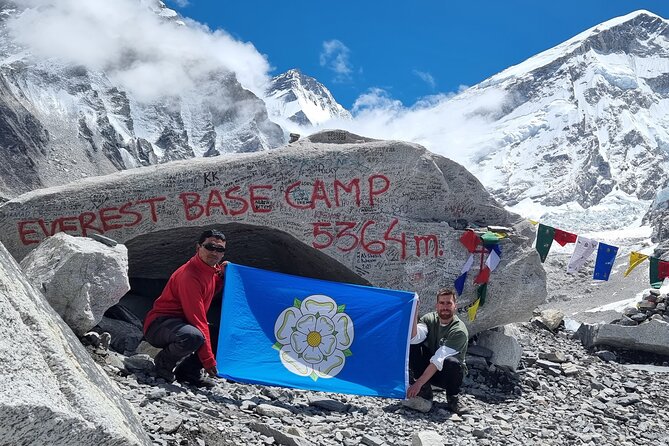
Days 9 and 10: Lobuche, Gorakshep, and Everest Base Camp
Day 9 takes you toward Lobuche in about five hours. The route follows the Dughla Valley beside frozen rivers and stone houses. The setting becomes more austere as trees disappear and the trail enters a world of rock, ice, and high peaks.
From ridge sections, you can look toward the Khumbu Icefall and Pumori. The views are dramatic, but do not let the scenery make you rush. At this height, a steady pace is more useful than speed.
The next day brings Gorakshep and Everest Base Camp. The walk to Gorakshep takes about three and a half hours, followed by roughly three hours out and back to Base Camp. Sleeping at Gorakshep makes the route more manageable because you climb to Base Camp, return, and spend the night at the same high settlement.
The trail follows a rocky path beside a short section of the Khumbu Glacier. From the area around Gorakshep, you can see Nuptse, Lho-La, Khumbutse, Pumori, and the surrounding ice. You might hear the sound of avalanches in the distance, a reminder that this is an active and powerful mountain environment.
Reaching Base Camp is the emotional high point for many people. It is worth knowing, though, that Everest itself is not necessarily the best view from the Base Camp area. Kala Patthar the next morning is designed to provide the bigger mountain panorama.
Day 11: The Kala Patthar sunrise climb
The early morning ascent of Kala Patthar is the toughest and most rewarding section for many hikers. The summit reaches 5,545 meters, and the route takes about six hours in total.
From the top, you get wide views toward Everest and the surrounding Himalayan peaks. The early start is tied to the light and mountain visibility, so expect a cold, demanding morning. Take warm layers, move slowly, and keep your camera protected from the cold.
This is a high point in every sense. You may feel tired, short of breath, or affected by the altitude. The guide should set the pace and monitor how you are doing. If you are unwell, reaching the summit is not worth risking your health.
Days 12 and 13: The long return to Lukla
After the high point, you retrace much of the route toward Namche Bazaar. The walk to Namche takes about six hours and is mostly downhill, though downhill does not always mean easy. Knees and feet can take a beating after several days on rocky trails.
Namche is a welcome stop because it offers shops, drinks, restaurants, and other facilities. You can rest, make calls if available, and enjoy a little comfort before the final walking day.
Day 13 takes about five and a half hours from Namche through Phakding to Lukla. This is your final day on the trail. Lukla has shops, restaurants, and bars, giving you a chance to relax before the flight back to Kathmandu.
The return route is familiar, but it can feel different now. You are walking downhill, carrying memories of the high country, and likely thinking about a hot shower and a proper bed.
Days 14 and 15: Back to Kathmandu and home
The flight from Lukla to Kathmandu takes about 30 minutes and offers another chance to see the mountain range through the aircraft windows. Again, flights depend on conditions, so avoid scheduling anything important too close to the expected arrival.
Back in Kathmandu, you return to the hotel and have time to reconnect with family and friends. The final day includes breakfast and a transfer to Tribhuvan International Airport according to your flight time.
The itinerary can also be extended if you have extra days and want more sightseeing or another activity in Nepal. That flexibility may be useful if your international flight schedule gives you extra time.
Guides, porters, and the human side of the trek
The strongest part of this arrangement is the attention from the local team. The company provides a licensed English-speaking Sherpa guide and porters to carry luggage, shared between two clients or trekkers.
Past trips have included guides such as Kali, Kumar, Santosh, Nima, Dilli, Prakash, and Bikash. The descriptions of their work point to practical care: helping with difficult sections, explaining the route, staying attentive to health, and adjusting plans when needed.
Gokul, the company owner, is also involved in organizing trips and answering questions. Communication before arrival is handled through the operator, and the company has provided support in languages including Spanish.
You should still be clear about porter weight limits, guide-to-client ratios, meal arrangements, and emergency procedures before setting off. Good support makes a major difference, but it does not remove the need for your own preparation.
Who should book this 15-day trek?
I would choose this trip if you want the classic Everest Base Camp route with transport, accommodation, staff, and acclimatization planned in advance. It suits people with a moderate level of fitness who are prepared to walk for several hours on successive days.
It is a good fit for first-time high-altitude trekkers who want local support rather than an independent route. Families and small groups may also appreciate the private Kathmandu sightseeing and the maximum group size of 15.
I would not choose it if you want luxury accommodation, a relaxed walking schedule, or guaranteed flight times. The guesthouses are practical rather than fancy, and the altitude can affect even fit walkers. You also need travel insurance that specifically covers trekking above 5,300 meters.
Cancellation terms are strict close to departure. You can receive a full refund when canceling at least six full days ahead, a 50 percent refund when canceling two to six full days ahead, and no refund inside two days. Weather or minimum-group cancellations may lead to a different date or a full refund.
Should you book the Everest Base Camp Trek?
Book it if you want a well-supported route that combines Kathmandu culture, a scenic Lukla flight, Sherpa villages, monastery visits, and the major goals of Everest Base Camp and Kala Patthar.
The strongest value comes from the included logistics and the two acclimatization days. The biggest risks are altitude, basic lodging, changeable mountain flights, and unclear meal details that should be confirmed before booking.
For the price, this is a sensible choice for a prepared hiker who wants local guides and porters handling the practical work. Pack carefully, buy the right insurance, leave room for flight delays, and respect the pace of the mountains.
FAQ
What is included in the 15-day Everest Base Camp trek?
The package includes airport transfers, three nights of standard hotel accommodation in Kathmandu, guesthouse accommodation during the trek, Kathmandu sightseeing by private car and guide, a licensed English-speaking guide, porters, Kathmandu to Lukla flights, government taxes, and staff salary, insurance, equipment, and medicine. A down jacket and sleeping bag are available if necessary.
Are meals included?
Dinner and breakfast are listed among the inclusions, while meals and drinks are also listed as excluded in the general conditions. Ask Outshine Adventure to confirm exactly which meals are covered on each day before booking.
How high is Kala Patthar?
Kala Patthar reaches 5,545 meters. The hike starts early in the morning and takes about six hours in total.
Is travel insurance required?
You must arrange your own travel insurance, including coverage for trekking above 5,300 meters. This insurance is not included in the tour price.
How many people can join the group?
The maximum group size is 15 people. The trek uses twin-sharing guesthouse accommodation.
What happens if bad weather cancels the trip?
If poor weather causes cancellation, you are offered a different date or a full refund. Lukla flights are weather dependent, so keeping extra flexibility in your wider Nepal schedule is sensible.
Just added around Kathmandu
- Everest Base Camp Trek★ 5.0 · 3 reviews
- Everest Base Camp Trek★ 5.0 · 7 reviews
- 15 Days Private Everest Base Camp Trek★ 5.0 · 30 reviews
- Everest Base Camp Trek★ 5.0 · 57 reviews
- 14 Days of Adventure Trekking to Everest Base Camp★ 5.0 · 2 reviews
- 14-Day Everest Base Camp Trek★ 5.0 · 20 reviews
- From Kathmandu: Private 14-Day Everest Base Camp Trek★ 5.0 · 20 reviews
- 14 Days Everest Base Camp Trek★ 5.0 · 4 reviews
Everest Base Camp Treks, compared.
Everest Base Camp Helicopter Tour landing at Everest View Hotel
Read our review →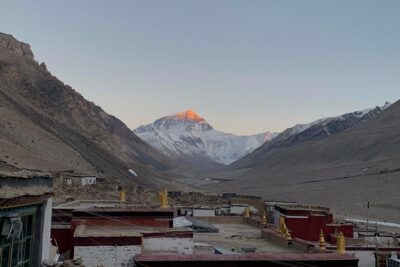
Tibet Tour 8 Days Lhasa to Everest Base Camp Small Group Tour
Read our review →
Dubai: Private Luxury Everest Yacht Cruise from Dubai Marina
Read our review →
Browse the lists this trek appears in