
Review · KATHMANDU
Everest Base Camp Trekking
The great reward here is the slow approach to Everest Base Camp, through Sherpa villages, prayer wheels, glacier country, and the high viewpoint of Kala Patthar. You do not simply arrive at Everest by vehicle or cable car. You earn the view step by step, with the Khumbu Glacier and giant peaks appearing in stages.
I like the two built-in acclimatization days at Namche Bazaar and Dingboche. I also like the practical inclusions: domestic flights, permits, a licensed guide, lodge accommodation, meals, and rental gear. The main caution is altitude. Kala Patthar reaches about 5,550 meters, and some itinerary timings look unusually long or out of order, so confirm the daily schedule before paying.
Key points to know before booking
- Ramechhap to Lukla routing: During busy trekking periods, you may take a roughly five-hour road transfer from Kathmandu to Ramechhap before flying to Lukla.
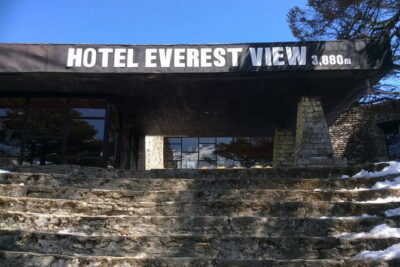
- Namche acclimatization: You get time for the Sherpa Culture Museum, the Everest View Hotel, and nearby villages rather than rushing straight uphill.
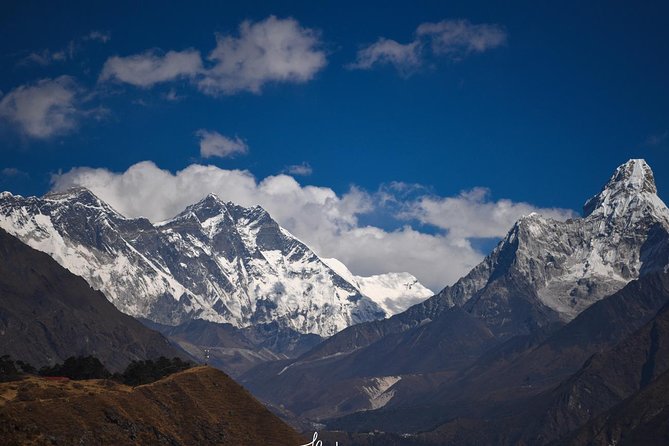
- Kala Patthar viewpoint: At about 5,550 meters, this is the best place on the route for a close view of Everest’s summit.
- All-in trekking basics: The price includes domestic flights, permits, a licensed guide, lodge stays, meals, a Kathmandu hotel, and rental sleeping gear.
- Private group format: Only your group takes part, which can make walking speed, rest stops, and support more personal.
- High-altitude demand: You need moderate fitness, patience, and a willingness to walk several hours a day in thin air.
Why this Everest route feels special
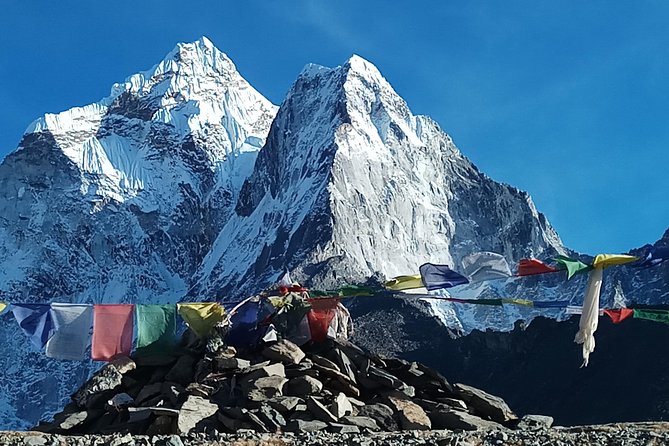
An Everest Base Camp trek is not just a mountain photo trip. It is a journey through the Khumbu region, where the route passes stone-built villages, Buddhist prayer flags, mani walls, suspension bridges, and fields edged by long hand-built stone barriers.
The mountains are only half the story. You also get a close look at Sherpa life, from the trading town of Namche Bazaar to the monastery at Tengboche. The pace gives you time to notice details that disappear on a rushed trip: water-powered prayer wheels, carved stones, old village paths, and the way every settlement is shaped by altitude.
The package costs $1,300 per person. That is a useful value if you would otherwise arrange each piece separately. Domestic flights, national park and local municipality permits, a government-licensed guide, accommodation, three daily meals, a Kathmandu hotel, private transport, a duffle bag, sleeping bag, and down jacket are included.
You still need to budget for drinks, hot and cold showers, charging, laundry, tips, travel insurance, rescue costs, visa fees, international flights, and possible extra nights. The flight schedule can change because of weather, and poor conditions may lead to a new date or a full refund under the stated cancellation terms.
More Everest Base Camp Treks in Kathmandu:
- Everest Base Camp Trek – 14 Days
★ 5.0 · 1,499 reviews - Everest Base Camp Trek
★ 5.0 · 842 reviews - Everest Base Camp Helicopter Tour landing at Everest View Hotel
★ 5.0 · 668 reviews
Ramechhap, Lukla, and the first walk to Phakding
The journey begins with an early road transfer from Thamel to Ramechhap. The drive takes about five hours, passing through countryside and foothills before you reach the airport. This is less convenient than flying directly from Kathmandu, but it reflects the way Everest flights may be handled during the busy trekking season.
From Ramechhap, the flight to Tenzing-Hillary Airport at Lukla takes you into a small mountain airstrip known for its short runway and dramatic setting. The flight itself is weather-sensitive, so build some flexibility into your wider Nepal plans if you have an international connection soon after the trek.
The first walking section leads from Lukla to Phakding. You pass farmland, Sherpa villages, suspension bridges, and mani walls carved with Buddhist prayers. Phakding sits beside the Dudh Koshi River and makes a sensible first overnight stop because the walking begins gently compared with the climbs ahead.
The supplied timing for this first day is not easy to read, with separate stop durations adding up to a very long day. Ask for the expected walking time, flight time, and overnight location in writing. That small check can prevent confusion on arrival.
Monjo, Jorsalle, and the climb into Namche Bazaar
The path from Phakding to Monjo follows the Dudh Koshi through pine forest and small settlements such as Toktok and Bengkar. You cross several suspension bridges, pass prayer flags and mani stones, and may stop for tea, lunch, or an apple pie along the route.
Monjo is the entrance to Sagarmatha National Park, where permits are checked. From there, the trail reaches Jorsalle, the last village before Namche. This section is fairly calm, but the day changes character after Jorsalle.
The major climb begins after the confluence of the Dudh Koshi and Bhote Koshi rivers. The path rises through forest and switchbacks toward a high suspension bridge. A viewpoint along the climb can offer a first sight of Everest, Lhotse, and Nuptse on a clear day.
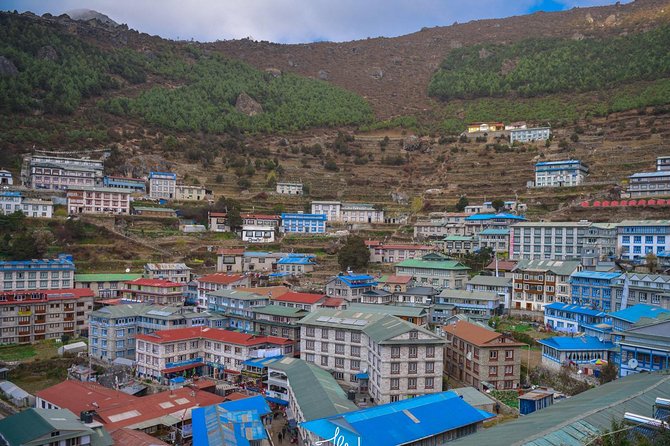
Namche Bazaar is a welcome arrival. The town curves around a natural amphitheater and has lodges, bakeries, cafes, gear shops, and places to rest. It is also an old trading center linked to Tibet and India, so it feels like more than a stop built only for trekkers.
A useful acclimatization day in Namche
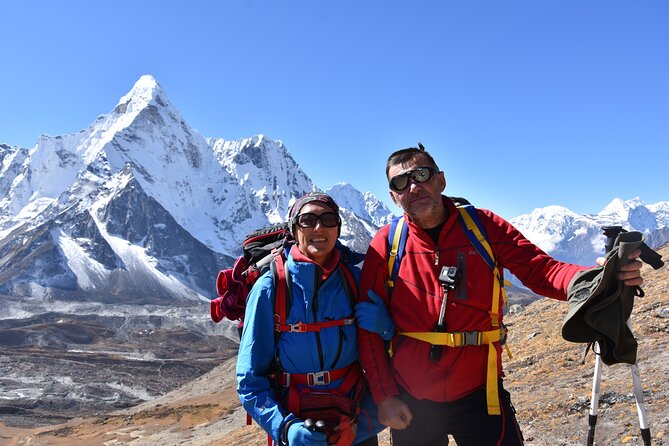
The Namche rest day is one of the strongest parts of this plan. You do not spend the whole day lying indoors. Instead, you can walk higher and return to sleep lower, which gives your body time to adjust to the altitude.
The Sherpa Culture Museum offers context about local customs, mountain life, traditional clothing, tools, and early Everest expeditions. It is a worthwhile stop because it helps you understand the communities that make this route possible.
For a short but rewarding outing, hike toward the Everest View Hotel. The route can provide broad views of Everest, Lhotse, Ama Dablam, and other peaks. Another option leads toward Khumjung and Khunde, where you can see traditional villages, old monasteries, and the famous Yeti scalp kept at Khumjung Monastery.
You should treat this as an active rest day, not a test of speed. The point is to gain some height, return to Namche, eat, drink, and sleep well.
A few more treks around Kathmandu worth a look
- Everest Base Camp Trekking
★ 5.0 · 485 reviews - Annapurna Circuit Trek with Tilicho Lake
★ 5.0 · 368 reviews - Everest Base Camp Trekking – 13 Day
★ 5.0 · 365 reviews - Everest Base Camp Trek
★ 5.0 · 350 reviews
Phunki Thanga and Tengboche Monastery
Leaving Namche, the trail passes the memorial stupa of Tenzing Norgay Sherpa before moving through rhododendron and pine forest. The views open toward Ama Dablam, Lhotse Shar, Taboche, Kangtega, and Thamserku.
The route drops to Phunki Thanga, a riverside hamlet with seven water-powered prayer wheels. The wheels turn with the river, and local belief connects each rotation with the Buddhist mantra Om Mani Padme Hum. It is a small detail, but one that gives the walk a strong sense of place.
After crossing the bridge, you climb through Saso Kharka toward Tengboche. This is a serious uphill section, especially after the previous day’s walking, but the setting improves as the forest thins.
Tengboche Monastery is the cultural high point of the lower route. The plan allows time for prayer ceremonies and a closer look at paintings of the Buddha and Guru Rinpoche. The monastery sits with Ama Dablam and other peaks behind it, creating one of the most memorable stops of the trek.
Dingboche and the second acclimatization pause
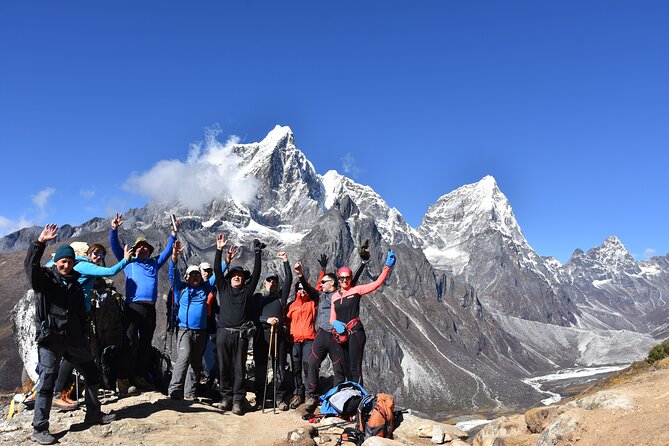
From Tengboche, the route passes Deboche and continues beside the Imja Khola. You cross a bridge and walk through Somare before reaching Dingboche, a traditional settlement surrounded by high mountain terrain.
A long stone wall near Dingboche runs along the fields. Local explanation links it to years of farmers removing rocks from the soil and piling them along the edge of their land. It is a practical feature, not a grand monument, but it shows how people have adapted farming to a difficult climate.
Dingboche provides another full acclimatization day. That pause matters because the route soon reaches much higher ground. You may feel fine at Namche and then notice a major difference above Dingboche, where exertion becomes harder and recovery takes longer.
Do not judge the trek only by distance. At altitude, a short uphill stretch can take as much effort as a longer walk at home. A good guide should help you keep a steady pace and watch for signs that you need rest or a slower plan.
The moraine route to Lobuche and Gorak Shep
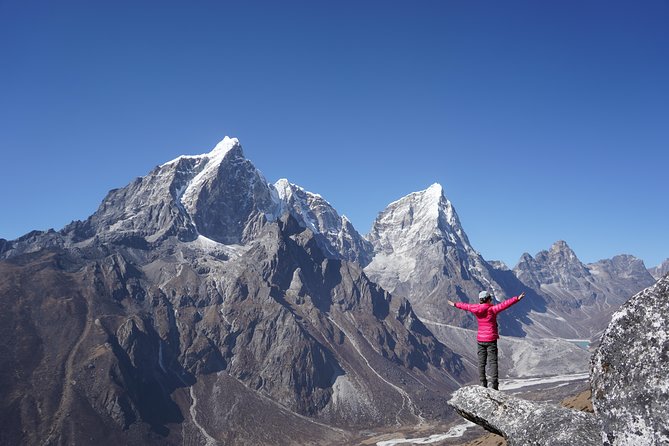
The walk from Dingboche to Lobuche follows moraine and open pasture toward Dughla. The route is divided by a climb over the moraine and a later section beyond Dughla. Views can be affected by haze, but the changing surface underfoot keeps the day interesting.
Lobuche is a basic high-altitude stop, and conditions here can feel far less comfortable than in Namche. Expect simple lodge accommodation and limited extras. The package includes accommodation and meals, but not hot or cold showers, drinks, or charging costs.
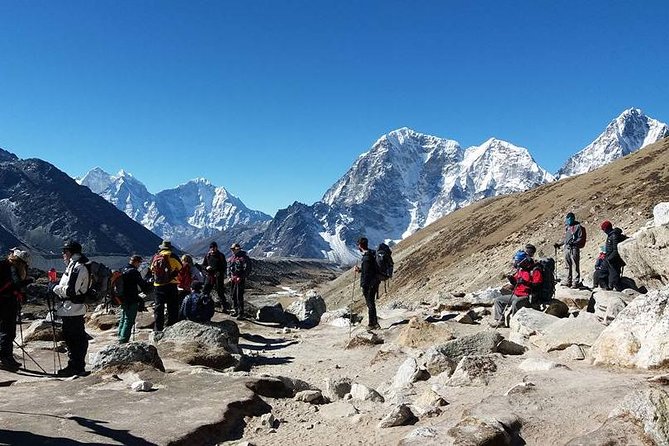
From Lobuche, the route continues toward Gorak Shep along the lateral moraine of the Khumbu Glacier. The scenery becomes stark and rocky, with Pumori, Nuptse, Everest, and icy ridges appearing through the thin air.
Gorak Shep sits at about 5,140 meters and is the last settlement before Base Camp. The walk may take three to four hours, but altitude makes the effort feel greater. Keep your day simple: walk steadily, drink what you can, eat, and follow your guide’s advice.
Kala Patthar and the closest view of Everest
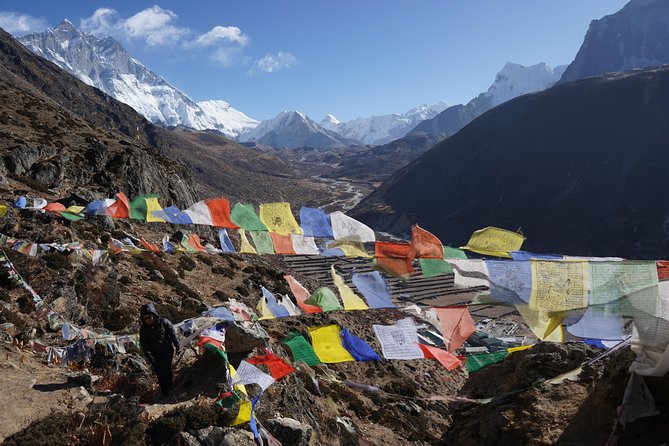
Kala Patthar is one of the main reasons to choose this route. The climb from Gorak Shep reaches about 5,550 meters and takes around two hours, with a steep path over loose rock and dusty switchbacks.
You do not climb Kala Patthar for a technical summit. You climb it for the view. From the top, Everest appears with Lhotse, Nuptse, Pumori, and Ama Dablam, while the Khumbu Glacier spreads below.
A key point is that Everest’s summit is not clearly visible from Base Camp itself. Kala Patthar gives you the close, direct view most people imagine when they picture an Everest trek.
The plan places Kala Patthar on the Gorak Shep day, then schedules Base Camp on the next day from Pheriche. That order is unusual because the route normally links Gorak Shep and Base Camp closely before descending. The written schedule also gives very long total timings on several days. Ask the operator to confirm exactly where you sleep on nights seven, eight, and nine, and when the Base Camp walk happens.
Everest Base Camp and the return through Tengboche
Everest Base Camp sits at about 5,364 meters beside the Khumbu Icefall. You cannot expect a clear view of Everest’s summit from Base Camp, but you can see the glacier, surrounding peaks, and, during climbing season, expedition tents on the ice.
The final approach may include slippery ground, narrow snowy sections, and uneven moraine. Reaching the camp is an emotional milestone because you have crossed the route on foot, not simply arrived for a quick photograph.
The return path descends toward Pheriche and then Tengboche. Going downhill is easier on your breathing, but it can be hard on knees and ankles, especially after several high days. Tengboche gives you another chance to pause at the monastery and enjoy the mountain views before the route drops toward Namche.
The return to Namche passes through wooded paths and Sherpa villages. The town feels especially comfortable after the cold, spare conditions above Lobuche and Gorak Shep.
Lukla, Kathmandu, and the practical finish
From Namche, you retrace the trail to Lukla. The route includes the same bridges, river valleys, forests, and settlements experienced on the way up, but the return often feels different because you now know how far you have come.
The final flight leaves Lukla as early as possible and returns you to Kathmandu. Again, weather can affect departure, so avoid scheduling an important international connection immediately afterward if you can.
Back in Kathmandu, you can spend time in Thamel, where the plan allows shopping and time to recover. Hotel accommodation in Kathmandu is included, along with the domestic flight back from Lukla.
What the $1,300 price really covers
The price is strongest for someone who wants one booking to handle the main trekking pieces. You receive:
- Private transportation
- Kathmandu to Lukla and return domestic flights
- Sagarmatha National Park and Khumbu Pasang Lhamu Rural Municipality permits
- A government-licensed trekking guide
- Lodge accommodation during the trek
- Kathmandu hotel accommodation
- Breakfast, lunch, and dinner for the stated 12 days
- Rental duffle bag, sleeping bag, and down jacket
You still pay for drinks, showers, charging, laundry, personal purchases, tips, insurance, rescue costs, Nepal visa fees, international airfare, and airport or departure taxes. Travel insurance with high-altitude trekking and rescue cover is especially important, although the package does not include it.
The private format can be useful if you want your own group rather than a large shared departure. Ask how many people are in your party, who your guide will be, and how porter support is arranged. Guides associated with this operator include Moti, Bhim, Ram, Tika Dhakal, and Him, but you should confirm your actual guide rather than assume one of these names.
Who should book this trek
This trip suits you if you want a classic Everest route with cultural stops, two acclimatization pauses, and the major viewpoints included. It is also a good fit if you value having permits, meals, flights, lodging, and basic gear handled together.
You should be comfortable walking for several hours on steep, uneven trails. A moderate fitness level is required, but altitude tolerance cannot be predicted by fitness alone. You need flexibility, because flights and mountain conditions can change the plan.
This is not the best choice if you want a relaxed holiday, private bathrooms, guaranteed flight times, or a short visit to the mountains. It is also not ideal if you cannot accept possible extra costs for weather delays, additional nights, drinks, showers, or rescue services.
Free cancellation is available up to 24 hours before the start time. If poor weather cancels the activity, you are offered another date or a full refund under the stated policy.
Should you book the Everest Base Camp trek?
I would consider booking this trek if you want the classic Everest route at a price that includes the costly basics. Namche, Tengboche, Kala Patthar, and Base Camp give you a strong mix of mountain views and Sherpa culture, while the included permits, flights, meals, guide, and gear make the price easier to justify.
Before booking, get the day-by-day plan clarified in writing. In particular, confirm the order of Kala Patthar and Base Camp, the actual walking hours, the Ramechhap transfer, the number of people in your private group, and your guide’s name.
If those details are clear and you have the fitness, insurance, and patience for high-altitude walking, this is a serious and rewarding way to reach Everest Base Camp. If you need predictable timing or more comfort, choose a slower itinerary with spare days.
FAQ
Where does the Everest Base Camp trek begin?
The experience begins in Kathmandu. During the busy trekking season, you take a road transfer of about five hours from Thamel to Ramechhap, then fly to Tenzing-Hillary Airport in Lukla.
How long does the trek take?
The stated duration is approximately 12 days. The route includes Kathmandu, Lukla, Phakding, Namche Bazaar, Tengboche, Dingboche, Lobuche, Gorak Shep, Kala Patthar, Everest Base Camp, and the return to Kathmandu.
Is a guide included?
Yes. A trekking guide licensed by the Nepal government is included. The activity is private, so only your group participates.
What altitude does Kala Patthar reach?
Kala Patthar reaches about 5,550 meters. It is included as a high viewpoint with close views of Everest, Lhotse, Nuptse, Pumori, Ama Dablam, and the Khumbu Glacier.
What meals are included?
Breakfast, lunch, and dinner are included for the stated 12-day program. Drinks are not included.
Is accommodation included?
Yes. Mountain lodge accommodation during the trek and a hotel in Kathmandu are included. Extra nights and their meals cost more.
Is trekking equipment provided?
A duffle bag, sleeping bag, and down jacket are available for rental as part of the package. The equipment must be returned after the trek.
What happens if bad weather cancels the trek?
The experience requires good weather. If it is canceled because of poor weather, you are offered a different date or a full refund. You can also cancel up to 24 hours before the start time for a full refund.
Just added around Kathmandu
- Everest Base Camp Trek★ 5.0 · 3 reviews
- Everest Base Camp Trek★ 5.0 · 7 reviews
- 15 Days Private Everest Base Camp Trek★ 5.0 · 30 reviews
- Everest Base Camp Trek★ 5.0 · 57 reviews
- 14 Days of Adventure Trekking to Everest Base Camp★ 5.0 · 2 reviews
- 14-Day Everest Base Camp Trek★ 5.0 · 20 reviews
- From Kathmandu: Private 14-Day Everest Base Camp Trek★ 5.0 · 20 reviews
- 14 Days Everest Base Camp Trek★ 5.0 · 4 reviews
Everest Base Camp Treks, compared.
Everest Base Camp Helicopter Tour landing at Everest View Hotel
Read our review →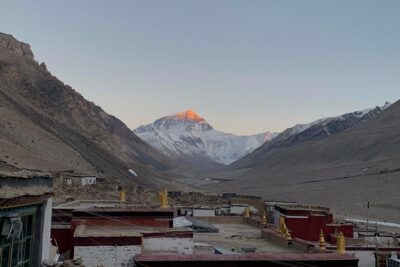
Tibet Tour 8 Days Lhasa to Everest Base Camp Small Group Tour
Read our review →
Dubai: Private Luxury Everest Yacht Cruise from Dubai Marina
Read our review →
Browse the lists this trek appears in