
Review · KATHMANDU
Everest Base Camp Trek
Everest Base Camp is not a sightseeing stop you simply check off. It is a high-altitude trek through Sherpa villages, suspension bridges, monasteries, and glacial valleys, with the hard work spread across nearly two weeks. This package gives you a guide and support crew while leaving room for you to arrange other time in Nepal your own way.
I like the two acclimatization days, especially the hike above Dingboche toward Nangkartshang Peak. I also like that the price includes flights, meals, permits, staff costs, filtered trail water, and porter support. The main caution is altitude: even fit hikers can struggle above Dingboche, and the itinerary moves quickly once you reach the high country.
Key points to know before booking
- Lukla flights and 11 days of porter service are included, which removes two major planning headaches.
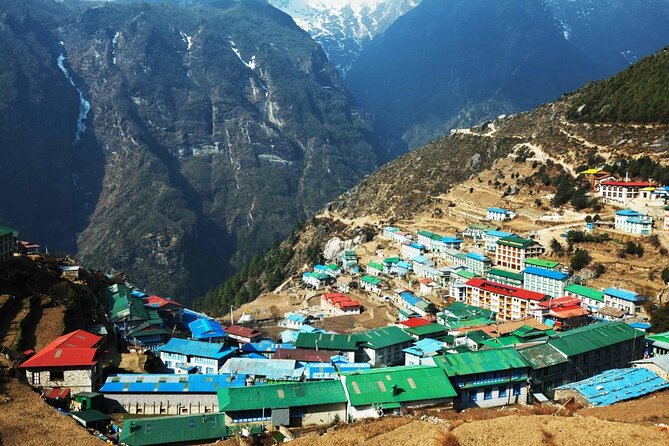
- Namche Bazaar and Dingboche each receive an acclimatization day, giving your body time to adjust.
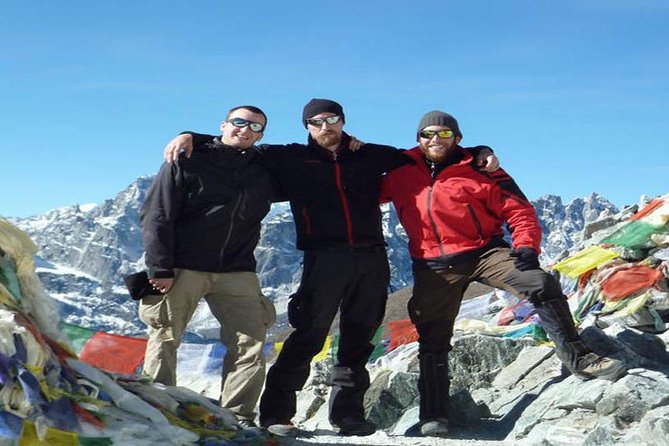
- Kala Patthar offers the clearest Everest panorama on the route, while Base Camp itself delivers the close view of the Khumbu Icefall.
- The package is partly independent by design, with a guide for the trek but freedom to organize extra time in Kathmandu or beyond.
- Group size is limited to 14 people, a useful balance between shared company and manageable trail logistics.
- Travel insurance is essential, since high-altitude rescue and evacuation are not included.
What the $1,600 price really covers
At $1,600 per person, this is not a bare-bones hike. The fee includes two nights in a three-star twin-share hotel in Kathmandu, guesthouse accommodation on the route, standard breakfast, lunch, and dinner during the trek, and the Kathmandu to Lukla return flight.
You also get a licensed English-speaking guide, porters for 11 days at a ratio of one porter for two people, national park and local municipality fees, airport and hotel transfers, and staff wages, insurance, equipment, and medicine. That package matters in the Everest region, where transport, food, and staffing costs rise with altitude.
Filtered water is supplied on the trail using a Katadyn Pocket Water Filter. Seasonal fruit, a duffel bag, trekking map, sun hat, first-aid kit, and completion certificate are also included. Those are practical touches, not decoration. You carry less, buy fewer plastic bottles, and have a basic emergency system behind you.
The price does not include international flights, Nepal visa fees, lunch and dinner in Kathmandu, drinks, personal trekking gear, travel insurance, or tips. Tipping is expected for the guide and porters, so include it in your real budget.
For the money, I see the strongest value in the airfare, staff support, meals, permits, and emergency preparation. You are still responsible for your boots, warm layers, sleeping gear, and insurance. This is a supported trek, not a luxury mountain holiday.
More Everest Base Camp Treks in Kathmandu:
- Everest Base Camp Trek – 14 Days
★ 5.0 · 1,499 reviews - Everest Base Camp Trek
★ 5.0 · 842 reviews - Everest Base Camp Helicopter Tour landing at Everest View Hotel
★ 5.0 · 668 reviews
Arrival in Kathmandu and the first briefing
Your airport representative meets you outside Tribhuvan International Airport with a Travel Pinto sign and transfers you to your hotel in a private tourist vehicle. The timing of your arrival affects the pre-trek meeting.
Arrive before 4 pm and the briefing takes place at the company office. Arrive later and the guide briefs you at the hotel. Bring your passport, three passport-size photographs, and a readable copy of your travel insurance policy. You also need to settle any balance and sign the trip form and liability waiver.
This first meeting is worth taking seriously. Ask about the day-by-day pace, food, water, weather, flight arrangements, and what happens if you feel ill at altitude. Guides named in past departures include Devendra, Uddhav, Dave, and Mohan, but your assigned guide may differ.
Day 2: The short flight to Lukla and the walk to Phakding
The flight from Kathmandu to Lukla takes about 35 minutes and offers an early look at the Himalayan foothills. During the busy trekking months of March through May and October through November, flights may operate from Manthali Airport in Ramechhap instead of Kathmandu because of air traffic.
That change matters. You may need an early road transfer to Manthali, so do not treat the flight as the only transport of the morning. Weather can also affect mountain flights, which is one reason a little flexibility in your wider Nepal plans is sensible.
Lukla sits at 2,804 meters. After meeting the porters and receiving a trail briefing, you descend toward the Dudh Kosi River and follow the route to Phakding at 2,610 meters. The first walk is relatively gentle, passing through Ghat before reaching the village.
This is a good opening day because you do not gain a great deal of height immediately. You get a first taste of the trail, suspension bridges, stone buildings, and porter-supported trekking without being thrown straight into the highest section.
Day 3: Suspension bridges and the climb to Namche Bazaar
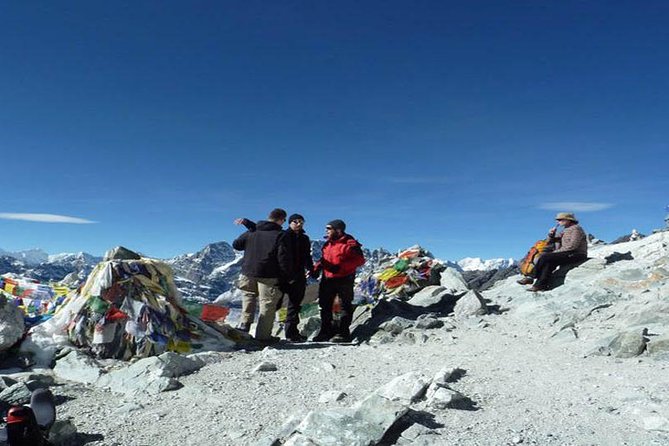
The trail follows the Dudh Kosi and crosses the river several times on suspension bridges decorated with prayer flags. You then enter Sagarmatha National Park, where the route climbs more sharply toward Namche Bazaar.
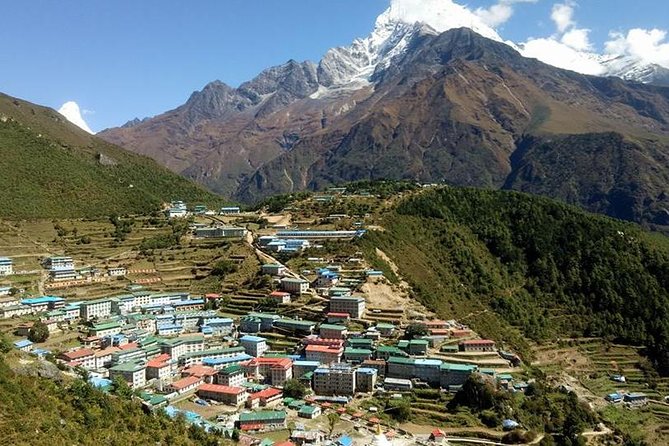
Namche sits at about 3,440 meters and is the main Sherpa settlement on the route. You will find lodges, restaurants, bakeries, shops, money exchange services, internet access, and hotels. That makes it more than an overnight stop. It is the last place on the route where you can enjoy a broad range of supplies and services.
The climb into Namche can feel tough because the altitude rises quickly from Phakding. Keep your pace slow and steady. You will get more from the day by arriving with energy left than by racing ahead.
A few more treks around Kathmandu worth a look
- Everest Base Camp Trekking
★ 5.0 · 485 reviews - Annapurna Circuit Trek with Tilicho Lake
★ 5.0 · 368 reviews - Everest Base Camp Trekking – 13 Day
★ 5.0 · 365 reviews - Everest Base Camp Trek
★ 5.0 · 350 reviews
Day 4: Sherpa culture and the first Everest views
The first acclimatization day takes place in Namche. You visit the Sherpa Museum, which focuses on local customs and mountain life, then hike toward Syangboche Airport and the Everest View Hotel.
From the high point, you may see Everest along with several other Himalayan peaks if the weather is clear. The value of this day is not just the view. A short hike followed by time in Namche gives your body a chance to adjust before the route climbs higher.
The museum adds cultural context to what might otherwise become a parade of mountain photographs. Take time to notice the Sherpa traditions, prayer flags, mani stones, and the way the villages function as working communities rather than scenic backdrops.
Day 5: Tengboche and its mountain monastery
The trail continues beside the Dudh Kosi toward Tengboche at 3,860 meters. The route includes fine views of the surrounding peaks and a descent to Debuche before the climb to the monastery area.
Tengboche Gompa is one of the most meaningful stops on the route. Inside, you can see ornate wall hangings, a large Buddha sculpture, musical instruments, and ceremonial robes. Depending on the day’s timing, the group may observe a prayer ceremony in the morning or evening.
Do not expect a private spiritual event arranged around your schedule. The ceremony depends on the monastery’s routine and the trekking plan. Still, even a short visit adds something important to the trek. You are moving through a living religious setting, not just hiking from lodge to lodge.
Day 6: Pangboche, mani stones, and Dingboche
From Tengboche, the path drops to Debuche, crosses a suspension bridge over the Imja Khola, and rises toward Pangboche. Along the way, you pass mani stones carved with Buddhist prayers.
The final destination is Dingboche, a traditional Sherpa village with views toward Lhotse, Island Peak, and Ama Dablam. Dingboche sits high enough for altitude to become a serious part of the experience, so the slower pace is welcome.
The route is not technically described as a mountaineering trip, but it is physically demanding. You walk for several hours over uneven ground, and the thin air can make ordinary slopes feel much steeper. Your guide’s job is especially important here: keep communicating if you develop a headache, nausea, unusual tiredness, or breathing problems.
Day 7: Nangkartshang Peak and a second acclimatization day
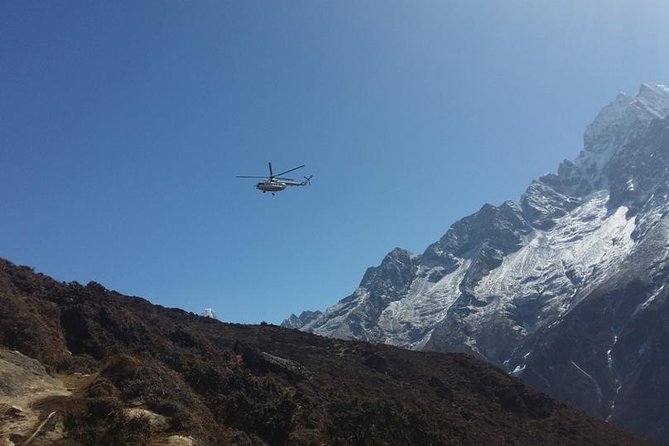
You stay in Dingboche for another night and make a day hike toward Nangkartshang Peak. This is a smart use of time because you gain height during the day, then sleep again at the same altitude rather than moving higher immediately.
The viewpoint is particularly good for Ama Dablam. If the sky is clear, you may see the mountain from its base to its summit. After the hike, you can rest or walk around Dingboche.
This day may be the difference between a manageable high-altitude trek and a miserable one. The route still feels demanding, but the schedule gives you a chance to adjust. One past departure required an extra acclimatization day because of altitude trouble, a useful reminder that the printed plan is not a command to push through illness.
Day 8: The memorials near Lobuche
The trail follows the lateral moraine of the Khumbu Glacier toward Lobuche, at the foot of Lobuche Peak. You pass stone memorials dedicated to climbers who died on nearby mountains.
This is a quiet and sobering stretch. The memorials make the risks of the Himalayas visible without turning the day into a lecture. The mountains are beautiful, but the altitude, cold, weather, and remoteness are real.
Some people begin to feel breathing problems around Lobuche. This is the point to be honest with your guide. A slower pace is sensible. Ignoring symptoms to protect a schedule is not.
Day 9: Everest Base Camp at 5,365 meters
The walk to Everest Base Camp is one of the hardest days. You follow the Khumbu Glacier and reach Base Camp at 5,365 meters, the highest point on the main route before the following morning’s climb to Kala Patthar.
Base Camp itself is not a village or a comfortable viewing platform. It is a rough, glacial setting, and the exact appearance changes with the season and expedition activity. In spring, climbing teams may be preparing for summit attempts.
The Khumbu Icefall provides the big visual moment. It is a spectacular wall of ice and broken seracs, and from Base Camp you are close enough to understand why climbers treat it with such care.
You return to Gorak Shep for the night. The listed schedule gives only a short formal stop at Base Camp, but the full day is physically long because of the walking distance and altitude. Expect a basic night and cold rooms, especially in October, when clear skies can come with very low temperatures.
Day 10: Kala Patthar and the finest Everest panorama
Kala Patthar rises to about 5,555 meters. The climb is demanding, but the viewpoint gives the clearest broad panorama of Everest on this route.
Everest rises ahead at 8,848 meters, with Nuptse, Pumori, Cholatse, Lhotse, and other major peaks around it. Base Camp gives you the feeling of reaching the expedition world. Kala Patthar gives you the photograph and the full scale of the mountain group.
You descend to Gorak Shep for breakfast, then continue down to Pheriche. This is a hard day because you climb above Base Camp before descending again. Your reward is not comfort. It is the view and the knowledge that you have reached the highest point of the trek.
Days 11 and 12: Returning through Tengboche, Namche, and Lukla
The return route passes through Pangboche and Tengboche before reaching Namche Bazaar. You already know parts of this trail, but the descent changes the experience. The air feels easier, and the villages become more familiar.
The next day takes you back to Lukla, where you have free time to rest, shower, and celebrate with the group. That final evening is a useful release after days of walking, cold rooms, early starts, and careful attention to altitude.
The 11 days of porter service are especially valuable on the return. Your main job is to walk and manage your day. You do not need to haul a full trekking load between every lodge.
Days 13 and 14: Flight back to Kathmandu and departure
The return flight from Lukla to Kathmandu takes about 35 minutes when conditions cooperate. A representative meets you and transfers you back to your starting hotel.
You can use this time for extra plans such as a Chitwan safari, river rafting, a Kathmandu shopping tour, or mountain biking. Those activities are not part of the $1,600 package, but the support team can help organize them.
On Day 14, you are transferred to Tribhuvan International Airport for departure. If you have an important international connection, allow room for flight changes caused by mountain weather. The package has a set end date, but Lukla flights are not as predictable as a city taxi.
Guide support, group size, and the feel of the trek
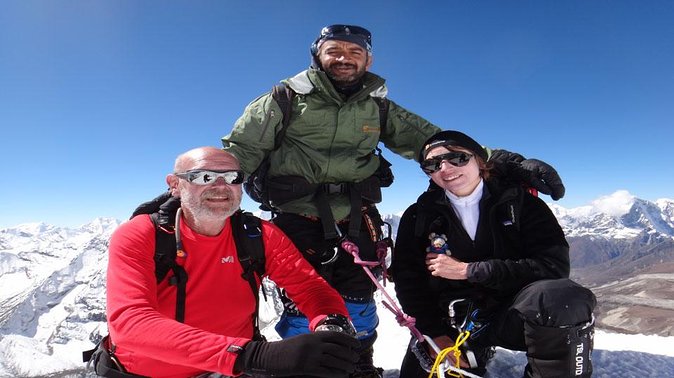
The group limit is 14 people, and that size should keep briefings and pace management reasonably practical. The guide is government licensed, English-speaking, and trained in first aid. Staff costs, insurance, equipment, medicine, and a comprehensive first-aid kit are included.
Past departures have been led by guides such as Devendra, Uddhav, Dave, and Mohan. The strongest praise has focused on guides who were patient, caring, attentive, and willing to help with last-minute changes. That matters more than polished speeches when you are tired at 5,000 meters.
The package works best if you want structure on the trail but independence elsewhere. You can arrange your own Kathmandu meals, extra Nepal activities, and international flights. The support team can assist with add-ons, while the trek itself has a clear route and daily plan.
Who should book this Everest Base Camp trek?
You should consider it if you have moderate physical fitness, are at least 18, and want a classic Everest route without arranging every permit, lodge, flight, porter, and meal yourself.
You should not treat it as a casual walking holiday. The highest nights are cold, the air is thin, some days are long, and altitude problems can affect people who are otherwise fit. Your travel insurance must cover high-altitude emergency rescue and evacuation.
I also recommend this trek if you value cultural stops along with mountain views. The Sherpa Museum, Tengboche monastery, mani stones, prayer flags, and village life make the route more than a march toward a famous sign.
Cancellation terms are strict close to departure. You receive a full refund if you cancel at least six full days before the start time, a 50 percent refund for cancellation two to six days before, and no refund inside two days. Poor weather or failure to reach the minimum group size may lead to a new date or full refund.
Should you book it?
Book this trek if you want the classic Everest Base Camp route with strong practical support, and if you are prepared to accept basic accommodation, weather uncertainty, and serious altitude.
The best reasons to choose it are the included Lukla flights, porter support, acclimatization days, meals, permits, and emergency preparation. The biggest reasons to pause are the cold rooms, demanding days near Lobuche and Base Camp, extra costs for gear and insurance, and the possibility that flights or health issues will disrupt the plan.
For a first Himalayan trek, this is a sensible middle ground. You are not locked into a luxury bubble, but you are not left to solve every mountain problem alone.
FAQ
How long does the Everest Base Camp trek take?
The package lasts approximately 14 days, including arrival in Kathmandu, the trek from Lukla to Everest Base Camp, the return flight, and departure from Nepal.
What is the price per person?
The listed price is $1,600 per person.
Is airport pickup included?
Yes. Airport and hotel transfers in a private tourist vehicle are included.
Are flights to Lukla included?
Yes. The Kathmandu to Lukla and Lukla to Kathmandu airfare, including airport departure tax, is included. During peak trekking months, flights may operate from Manthali Airport in Ramechhap instead of Kathmandu.
Is accommodation included?
Yes. The package includes two nights in a three-star twin-share hotel in Kathmandu and twin-share guesthouse accommodation during the trek. Attached toilets are specifically included in Lukla, Phakding, and Namche.
Are meals included?
Standard breakfast, lunch, and dinner are included during the trek. Lunch and dinner in Kathmandu, along with alcoholic, hot, and cold drinks, are not included.
Do I need travel insurance?
Yes. You must arrange travel insurance that covers emergency high-altitude rescue and evacuation. Insurance is not included in the tour price.
How much luggage support is provided?
Porter service is included for 11 days, with one porter assigned for every two people. A Travel Pinto duffel is also provided.
What is the cancellation policy?
You can receive a full refund if you cancel at least six full days before the start time. Cancellation two to six full days before departure receives a 50 percent refund, while cancellation less than two full days before departure is nonrefundable.
Just added around Kathmandu
- Everest Base Camp Trek★ 5.0 · 3 reviews
- Everest Base Camp Trek★ 5.0 · 7 reviews
- 15 Days Private Everest Base Camp Trek★ 5.0 · 30 reviews
- Everest Base Camp Trek★ 5.0 · 57 reviews
- 14 Days of Adventure Trekking to Everest Base Camp★ 5.0 · 2 reviews
- 14-Day Everest Base Camp Trek★ 5.0 · 20 reviews
- From Kathmandu: Private 14-Day Everest Base Camp Trek★ 5.0 · 20 reviews
- 14 Days Everest Base Camp Trek★ 5.0 · 4 reviews
Everest Base Camp Treks, compared.
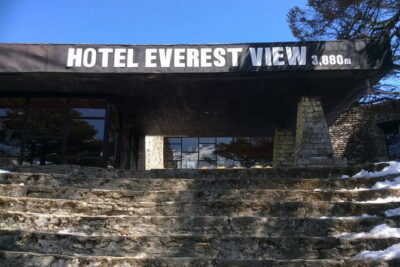
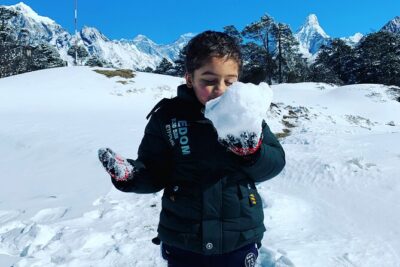
Everest Base Camp Helicopter Tour landing at Everest View Hotel
Read our review →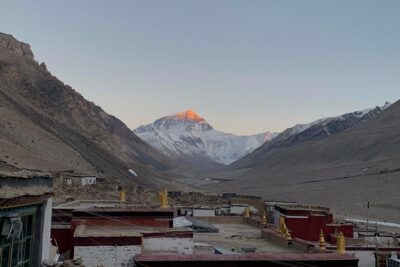
Tibet Tour 8 Days Lhasa to Everest Base Camp Small Group Tour
Read our review →
Dubai: Private Luxury Everest Yacht Cruise from Dubai Marina
Read our review →
Browse the lists this trek appears in