
Review · KATHMANDU
Everest Base Camp Trek – 16 Days
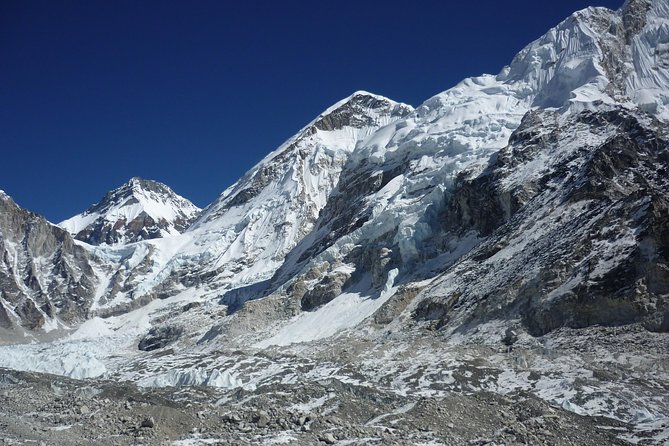
Everest Base Camp is not a summit climb. It is a long, demanding walk through the Khumbu region to the place where climbers begin their push toward Mount Everest. Along the way, you get prayer wheels, suspension bridges, yak trains, Sherpa villages, glaciers, Buddhist monasteries, and huge Himalayan peaks. The mountain views are the obvious prize, but the daily rhythm of village life gives the trek its real character.
I like two things here. First, the schedule gives you proper acclimatization time in Namche Bazaar and Dingboche, which matters far more than rushing uphill. Second, the package includes flights, permits, guides, porters, sleeping bags, down jackets, meals, and Kathmandu hotels, so you are not piecing together the trip alone. The main drawback is the route’s uncertainty: flights to Lukla can be canceled by poor weather, and the high altitude can stop even fit walkers in their tracks.
Key points to know before you book
- Lukla flights set the tone: The short domestic flight is scenic and weather-sensitive, with a 15-kilogram luggage allowance.
- Two acclimatization stops help: You spend time in Namche Bazaar and Dingboche instead of climbing higher every day.
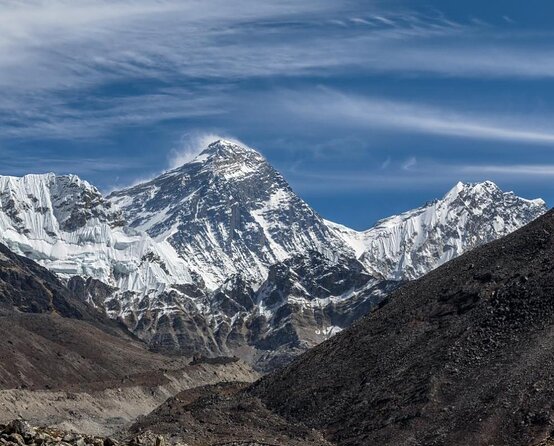
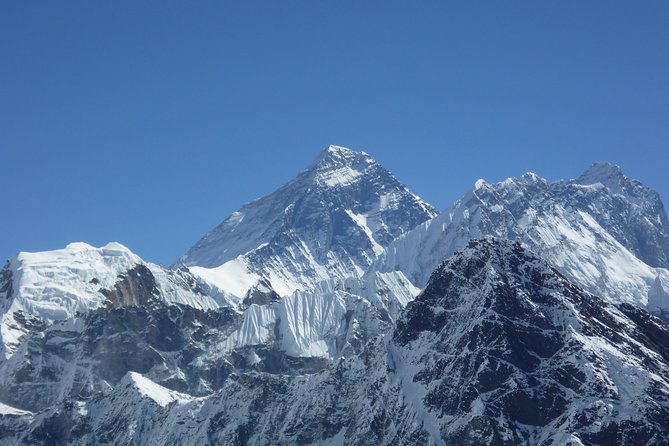
- Kala Patthar may be the visual highlight: The early morning climb offers a clear view of Everest and nearby peaks in first light.
- Sherpa support is built in: The standard arrangement includes an English-speaking guide and one porter for every two trekkers.
- The package covers the basics: Meals, permits, trekking gear loans, flights, accommodation, and airport transfers are included.
- This is a serious walk: Daily stages range from about four to eight hours, with thin air, cold, uneven ground, and basic mountain lodging.
What the 16-day Everest Base Camp trek is really like
This is a classic high-altitude trek with a sensible outline. You begin with two nights in Kathmandu, fly to Lukla, walk up the Dudh Koshi valley, reach Namche Bazaar, continue toward Tengboche and Dingboche, then push through Lobuche to Everest Base Camp and Kala Patthar.
The return is quicker in feeling, though not always easy. You retrace the trail to Namche and Lukla before flying back to Kathmandu. The extra city day at the end gives you a little breathing room if weather or fatigue disrupts the mountain schedule.
The walking days are not technical climbing days. You do not need mountaineering skills to reach Base Camp, but you do need patience, steady fitness, and the good sense to listen to your guide. The route includes steep sections, stone paths, bridges, glacier areas, and long days at elevations where even simple walking feels harder.
More Everest Base Camp Treks in Kathmandu:
- Everest Base Camp Trek – 14 Days
★ 5.0 · 1,499 reviews - Everest Base Camp Trek
★ 5.0 · 842 reviews - Everest Base Camp Helicopter Tour landing at Everest View Hotel
★ 5.0 · 668 reviews
Kathmandu: two useful days before the mountains
Your first day starts with an airport pickup at Tribhuvan International Airport and a private transfer to a three-star hotel. Breakfast is included in Kathmandu. The staff helps with check-in and gives you information about the trek.
Day two is set aside for preparation and time in the city. This is more useful than it may sound. You can check your clothing, sort your pack, handle any last-minute purchases, and rest before the mountain flights. You can also walk through Kathmandu’s colorful streets and alleys, though the supplied schedule does not set out a formal sightseeing program.
The final two Kathmandu nights are also included in the package, one at the beginning and one after returning from Lukla. Day 15 is free for rest, shopping, a massage, an optional day trip, or a meal on a rooftop terrace.
Lukla to Phakding: a short first walk with a dramatic start
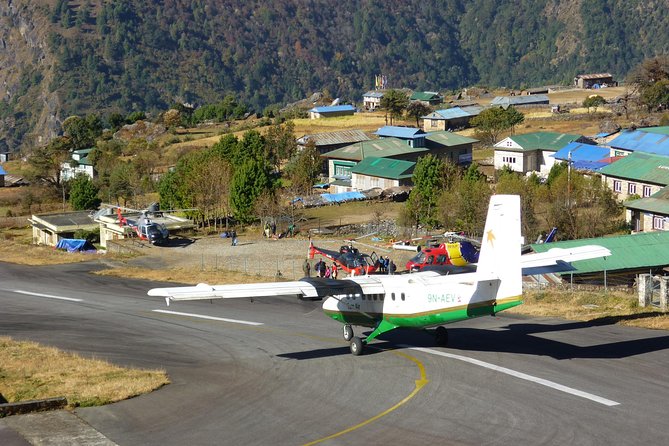
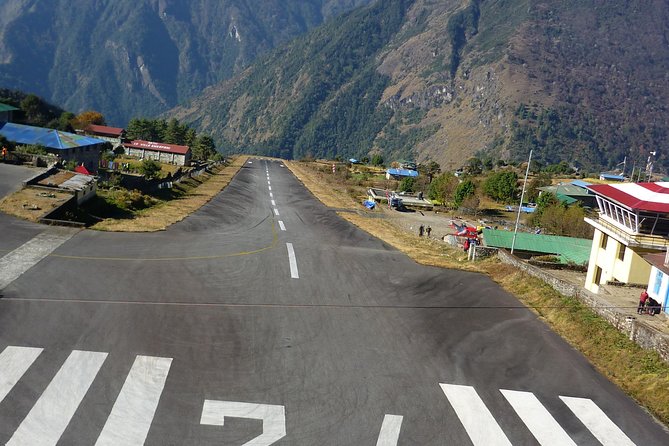
The flight from Kathmandu to Lukla is one of the most memorable parts of the trip. You see mountain ridges from the aircraft, then land in the Khumbu region and begin walking almost at once.
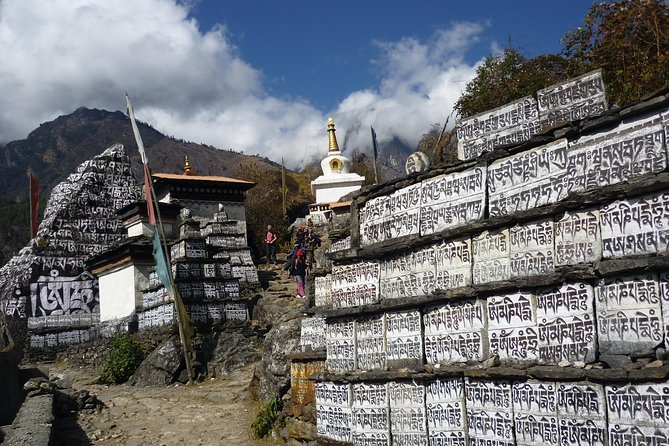
The first stage to Phakding takes about four hours. The trail descends toward the Dudh Koshi River, passes prayer wheels, and crosses a suspension bridge. You will see the first signs of the region’s Buddhist culture, including prayer stones and wheels placed beside the path.
Phakding is a small village and a gentle introduction to mountain lodging. Breakfast, lunch, and dinner are included on trekking days, with tea or coffee. Accommodation is in a guesthouse, with twin-sharing rooms as the standard arrangement.
Namche Bazaar: the first hard climb and first rest day
The walk to Namche Bazaar takes around six hours and brings a noticeable change in pace. You enter Sagarmatha National Park, a UNESCO World Heritage Site, pass through villages and rhododendron forests, and cross two suspension bridges near Jorsalle and Monjo.
The final uphill section to Namche is the part that tests your legs. Pack animals and porters use the same trail, so you will need to share space with donkeys, yaks, and people carrying supplies. This is not a polished mountain resort. Namche is a working trading town that serves the surrounding villages and trekking route.
The next day is for acclimatization. You may take a short hike toward the Everest View Hotel or spend time walking around Namche. The purpose is not to collect another sightseeing stop. It is to move gently at altitude, then sleep at the same elevation before going higher.
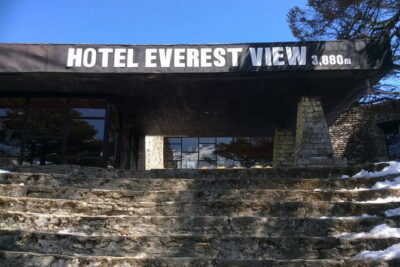
The hike toward the Everest View Hotel offers views of Everest, Ama Dablam, Thamserku, and Khangtega. You may also find the town’s collection of trekkers, cafés, and apple pie a welcome break from the trail. Namche is one of the better places to notice how many different people are drawn to the same mountain route.
A few more treks around Kathmandu worth a look
- Everest Base Camp Trekking
★ 5.0 · 485 reviews - Annapurna Circuit Trek with Tilicho Lake
★ 5.0 · 368 reviews - Everest Base Camp Trekking – 13 Day
★ 5.0 · 365 reviews - Everest Base Camp Trek
★ 5.0 · 350 reviews
Tengboche and Dingboche: forest, monastery, and thinner air
The six-hour walk from Namche to Tengboche brings more open mountain views, though the path rises and falls enough to feel tiring. Pine and rhododendron forests give way to pastures used by yak herders. Everest, Lhotse, Nuptse, Thamserku, and Ama Dablam appear along the route.
Tengboche is best known for its monastery and its setting beneath Ama Dablam. You have time to visit the monastery and see wooden prayer wheels and prayer flags representing the five Tibetan Buddhist elements: earth, wind, fire, water, and consciousness.
The following day leads through Deboche and across the Imja Khola toward Pangboche, then onward to Dingboche. This six-hour stage continues through rhododendron and conifer country but gradually feels more exposed and higher.
Dingboche is an important stop because altitude begins to dominate the experience. The village sits high enough that your breathing, appetite, sleep, and walking speed may all change. Go slowly. Your guide should be checking how you feel, not simply counting kilometers.
Dingboche acclimatization: the day that protects the rest of the trek
The second acclimatization day includes a hike toward Nagarsan Hill at about 5,100 meters. The supplied schedule gives this outing roughly four hours. The aim is to climb higher during the day, then return to Dingboche to sleep at a lower elevation.
From the hill, you can see Island Peak, Ama Dablam, Lhotse, Makalu, Nuptse, and other Himalayan peaks. The views are excellent, but the point is also practical. At this height, a short climb can feel like a major effort. You should not treat the day as a race.
This is one of the strongest parts of the schedule. High-altitude trekking rewards a slow pace, and the plan allows two separate acclimatization stops. Still, no schedule can guarantee that your body will adjust. A previous trekker became sick and dehydrated early in the route, then needed a guide to remain behind and help with recovery before rejoining the group. That is a useful reminder that safety may require changing the plan.
Lobuche and Everest Base Camp: the demanding centerpiece
The walk from Dingboche to Lobuche takes about five hours. You pass Dugla and continue beside the Khumbu Glacier. The surroundings become colder, barer, and more serious as the trees disappear.
Near the route is a memorial area for climbers who died attempting Everest. It is a quiet place to stop and think about the difference between walking to Base Camp and climbing beyond it. Reaching Base Camp is a major personal achievement, but it is not the summit of Everest.
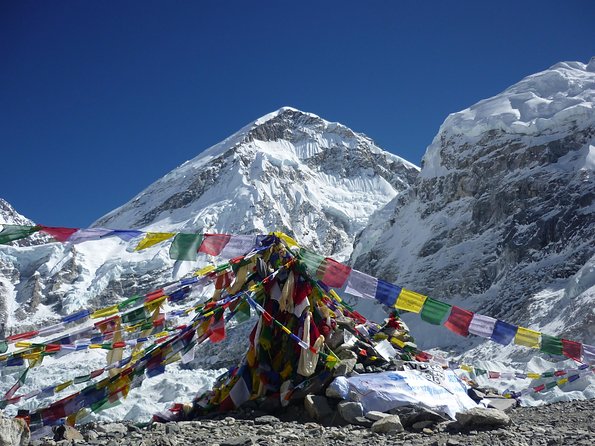
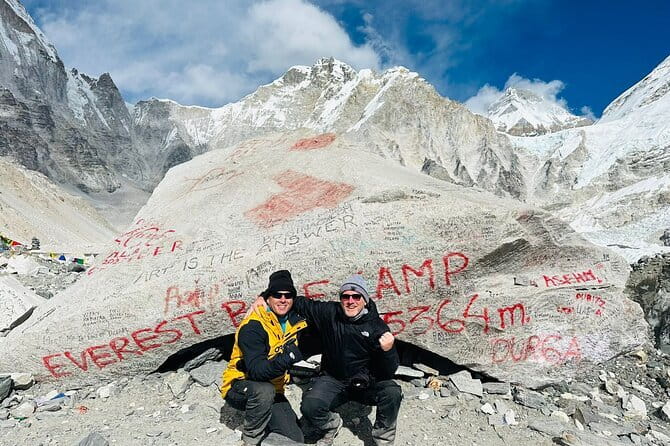
The next day is the longest and most important stage, at about eight hours. You walk toward Gorak Shep, then continue across rocky ground, glaciers, and frozen streams to Everest Base Camp. Prayer flags mark the destination.
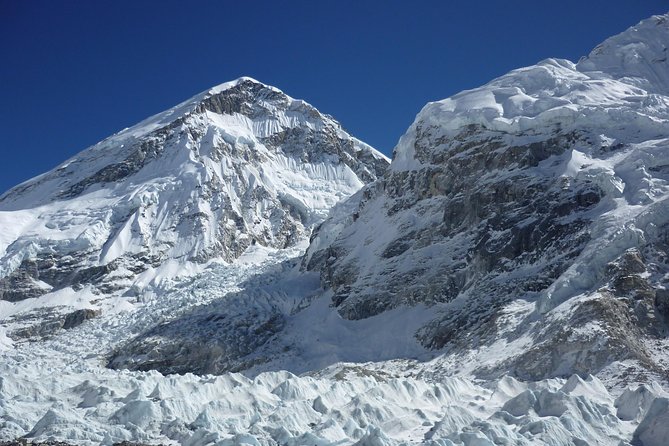
The views include Everest’s northern ridge, Pumori, Lingtren, Khumbutse, Nuptse, and other peaks. At Base Camp, you are looking at the staging area for expeditions rather than a permanent town or comfortable viewpoint. Conditions can be cold and rough, and the final section over rock and glacier requires care.
Accommodation around this part of the route is basic. The package promises the best available twin-sharing lodging, not luxury. Hot showers and attached bathrooms are specifically included in Lukla, Phakding, and Namche, but you should not assume the same standard at every higher stop.
Kala Patthar sunrise and the walk back down
The early climb to Kala Patthar is often the visual high point of the trek. You rise before dawn, climb above Gorak Shep, and wait for sunlight to reach the peaks. Everest, Pumori, Nuptse, and the surrounding mountains can take on a reddish glow as the sun appears.
The schedule gives this day about eight hours, including the descent to Pheriche. The early start and thin air make it hard, but photographers will find the timing worthwhile. If reaching Base Camp is the emotional goal, Kala Patthar is often the stronger place for seeing Everest itself.
From Pheriche, you return to Namche in about seven hours, then continue to Lukla in another seven-hour stage. The route is familiar, but the downhill direction does not make it effortless. Knees can complain, and tired feet make rocky paths less forgiving.
Arriving back in Namche may feel like returning to civilization. You have already crossed the hardest high sections, and the next day takes you through Phakding to Lukla. The final night in Lukla is useful because it leaves room for the return flight the following day.
Flights, guides, porters, and what the price covers
The package includes round-trip flights between Kathmandu and Lukla, or between Ramechhap and Lukla if operations require that arrangement. Weather can cancel or delay these flights, so keep your wider travel plans flexible and carry insurance that covers disruption.
Domestic luggage allowance is listed as 15 kilograms. That is not much for a 16-day trip, especially if you bring city clothes and trekking equipment. Pack carefully and confirm how your day bag and porter load will be handled before departure.
The standard staff arrangement is an experienced English-speaking guide and one porter for every two people. A personal Sherpa guide is available for an added charge. The group size can reach 14 people, while the activity is described as private for your own booking group. Ask for a clear explanation of how the group arrangement works on your departure date.
Included items are useful and expensive to arrange separately:
- Airport pickups and drops in a private vehicle
- Kathmandu hotel nights with breakfast
- Guesthouse accommodation during the trek
- Breakfast, lunch, dinner, and tea or coffee on the listed trekking days
- Trekking permits and paperwork
- Sleeping bag and down jacket
- A duffle bag, map, T-shirt, and completion certificate
- Government taxes and office service charges
You still pay for international flights, Nepal’s entry visa, insurance, drinks, bottled water, internet, laundry, phone calls, bar bills, personal equipment, and tips. Oxygen equipment is available on request for an extra charge.
The displayed price is $0, so treat that figure as a placeholder rather than a real cost. Ask for the current departure price, confirm what is included, and check the possible single surcharge of USD 230 if no one shares accommodation with you or if you request a solo departure.
What past guide support tells you about the experience
The company’s team has included guides named Bheg, Shiva, Hem, Ram, Santa, Kamal, Surya, Prem Karki, Lukpa, Tilak, and Bir. You should not assume a particular person will lead your trip, but these names give you a sense of the local staff pool.
The strongest pattern in the feedback is personal care. Guides have stayed with sick walkers, adjusted plans after canceled Lukla flights, checked clothing and equipment, helped slower walkers, and explained local culture and peak names along the way. That kind of support matters more than polished hotel service once you are above Namche.
The other highly praised feature is the porters. They carry the practical burden of moving supplies and bags through a place with no road access along much of the route. Pack lightly, respect the weight limits, and budget for tips.
Who should book this trek?
This trek suits you if you want a structured route to Everest Base Camp and prefer having flights, permits, meals, guides, and porters arranged in advance. It is also a good fit if you value cultural details such as monasteries, prayer wheels, prayer flags, and village life as much as mountain photographs.
You should be comfortable with four to eight hours of walking per day and have a moderate level of fitness. More important than speed is your ability to keep moving slowly for many days. If you have serious medical concerns, obtain professional advice before booking.
This is not the right choice if you need guaranteed flights, private bathrooms every night, a fixed low price, or a soft adventure with little physical strain. Weather, altitude, illness, and trail conditions can all force changes.
Cancellation is free up to 24 hours before the start time. Within 24 hours, there is no refund. If poor weather or an insufficient number of participants cancels the trip, you are offered another date, another experience, or a full refund.
Should you book the 16-day Everest Base Camp trek?
I would consider booking it if you want the classic Everest route with solid acclimatization days and practical support from a local trekking company. The schedule gives you the essential places: Namche, Tengboche, Dingboche, Lobuche, Base Camp, and Kala Patthar.
Before paying, get the real current price in writing, confirm the flight plan, ask who will guide your group, and check the exact accommodation at each stop. If you accept basic lodges, uncertain weather, and a demanding walk, this package offers a sensible way to reach one of the world’s most famous mountain destinations without arranging every moving part yourself.
FAQ
How long does the Everest Base Camp trek take?
The full experience lasts approximately 16 days, including time in Kathmandu, the trek from Lukla to Everest Base Camp, the return to Lukla, and the flight back to Kathmandu.
Where does the trek begin?
The experience begins with airport pickup at Tribhuvan International Airport in Kathmandu. The walking portion begins after a domestic flight to Lukla.
Are flights between Kathmandu and Lukla included?
Yes. The package includes round-trip flights between Kathmandu and Lukla, or between Ramechhap and Lukla if that routing is used.
Are meals included during the trek?
Yes. Breakfast, lunch, and dinner are included on the listed trekking days, along with a cup of tea or coffee.
Is accommodation included?
Yes. You receive two Kathmandu nights in a three-star hotel on a bed-and-breakfast basis, plus the best available twin-sharing guesthouse accommodation during the trek.
How much luggage can I take on the domestic flight?
The stated domestic flight luggage allowance is 15 kilograms.
Do I need travel insurance?
Yes. Travel insurance is required for the trip and is not included in the package.
What happens if bad weather cancels the experience?
If poor weather causes cancellation, you are offered a different date or a full refund. Flight cancellations can also affect the schedule, so you should allow flexibility around the Lukla flights.
Just added around Kathmandu
- Everest Base Camp Trek★ 5.0 · 3 reviews
- Everest Base Camp Trek★ 5.0 · 7 reviews
- 15 Days Private Everest Base Camp Trek★ 5.0 · 30 reviews
- Everest Base Camp Trek★ 5.0 · 57 reviews
- 14 Days of Adventure Trekking to Everest Base Camp★ 5.0 · 2 reviews
- 14-Day Everest Base Camp Trek★ 5.0 · 20 reviews
- From Kathmandu: Private 14-Day Everest Base Camp Trek★ 5.0 · 20 reviews
- 14 Days Everest Base Camp Trek★ 5.0 · 4 reviews
Everest Base Camp Treks, compared.
Everest Base Camp Helicopter Tour landing at Everest View Hotel
Read our review →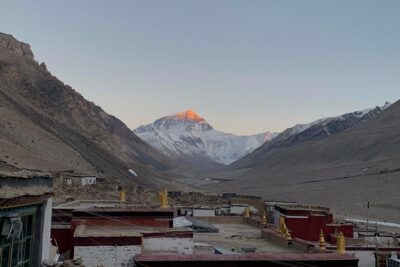
Tibet Tour 8 Days Lhasa to Everest Base Camp Small Group Tour
Read our review →
Dubai: Private Luxury Everest Yacht Cruise from Dubai Marina
Read our review →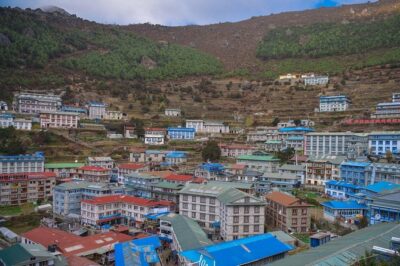
Browse the lists this trek appears in