
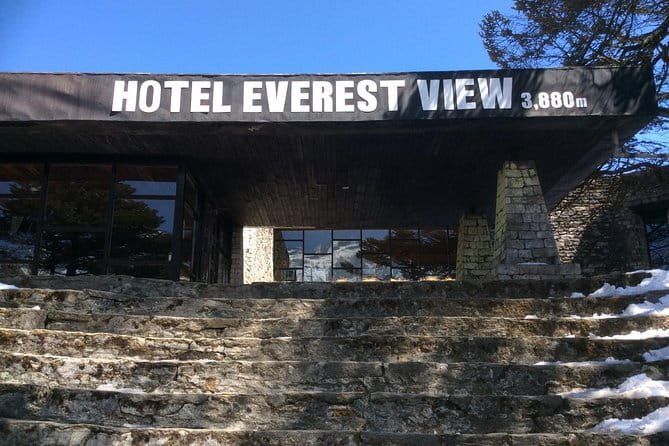
Review · KATHMANDU
Everest Base Camp Trek – 14 Days
The prize here is not just reaching Everest Base Camp. It is the slow change from Kathmandu streets to pine forests, Sherpa villages, high meadows, glaciers, and finally the stark world around Gorakshep. Kala Patthar at 5,545 meters provides the big mountain view, while Base Camp gives you the stronger sense of arriving somewhere hard-won.
I like the two acclimatization days, one in Namche Bazaar and one in Dingboche. I also like the practical setup: Lukla flights, permits, an experienced English-speaking guide, and one porter shared by two people. The main caution is altitude. This is a demanding trek, and the schedule leaves little room for delays caused by weather or health.
Key points at a glance
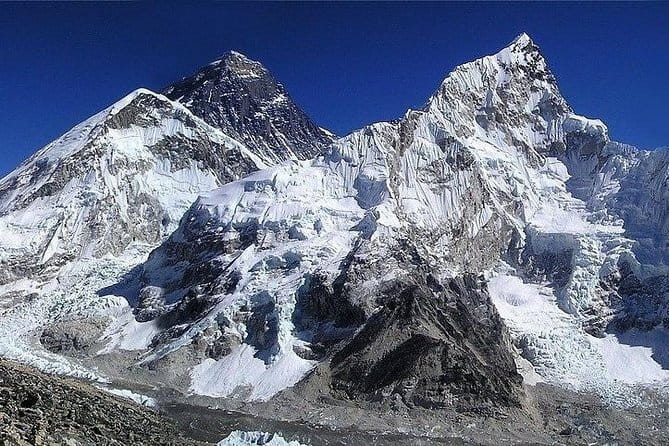
- Reach Everest Base Camp on day nine: Walk from Lobuche through Gorakshep and across the Khumbu Glacier area before returning to Gorakshep.
- Climb Kala Patthar at 5,545 meters: This is the trek’s highest point and the place for close views of Everest, Pumori, Ama Dablam, and surrounding glaciers.
- Two useful acclimatization stops: Namche Bazaar and Dingboche give your body time to adjust while still offering worthwhile local hikes.
- Small group size: The maximum group size is 15, which is large enough for company but small enough for a guide to keep track of the group.
- Strong local support: Your package includes an English-speaking guide with more than 10 years of experience and a porter shared between two people.
- Weather matters: Lukla flights can be affected by poor conditions, so you should keep your plans flexible before and after the trek.
From Kathmandu to the runway at Lukla
The trip begins at Tribhuvan International Airport, where a representative from Nepal Trek Adventure and Expedition meets you with a sign and takes you to your hotel. This airport pickup is a small but useful touch, especially if you arrive tired or are seeing Kathmandu for the first time.
You spend two nights in Kathmandu at a three-star hotel or similar accommodation. The package does not spell out a sightseeing program in the capital, so think of these nights mainly as arrival and return nights rather than a guided Kathmandu tour.
The real mountain journey begins early on day two. The flight from Kathmandu to Tenzing-Hillary Airport in Lukla takes about 35 minutes. The short flight is scenic, but it also sets the tone for the trek: weather can affect mountain aviation, and your timetable may need patience.
At Lukla, your guide briefs the group and introduces the porters. The first walk heads downhill toward the Dudh Kosi River, then follows the main route toward Namche Bazaar. The overnight stop is Phakding at about 2,610 meters.
This first walking day is useful because it is not an immediate assault on altitude. You pass through Ghat and several small settlements, with an easier trail than the days ahead. Even so, you should not treat it as a warm-up stroll. You are already carrying a daypack, walking on mountain paths, and beginning a steady climb.
More Everest Base Camp Treks in Kathmandu:
- Everest Base Camp Trek – 14 Days
★ 5.0 · 1,499 reviews - Everest Base Camp Trek
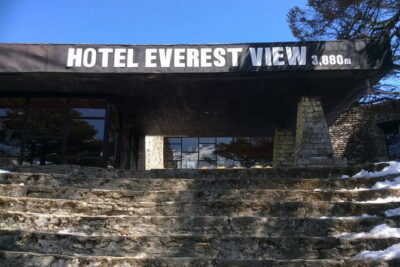
★ 5.0 · 842 reviews - Everest Base Camp Helicopter Tour landing at Everest View Hotel
★ 5.0 · 668 reviews
Namche Bazaar gives you time to adjust
The path from Phakding to Namche passes through forest, fields, yak pastures, and villages. Thamserku rises above the route, and you enter Sagarmatha National Park on the way.
Namche Bazaar is the Khumbu region’s main Sherpa settlement and the practical center of the trek. It is also your first major altitude test. At this point, the itinerary becomes more than a march toward Base Camp. Namche gives you a place to stop, breathe, buy forgotten items, and let your body catch up.
The extra day here is one of the best features of the program. You are encouraged to remain active rather than spend the whole day lying in bed. A walk around the area or a visit to Khumjung village can make the rest day feel purposeful.
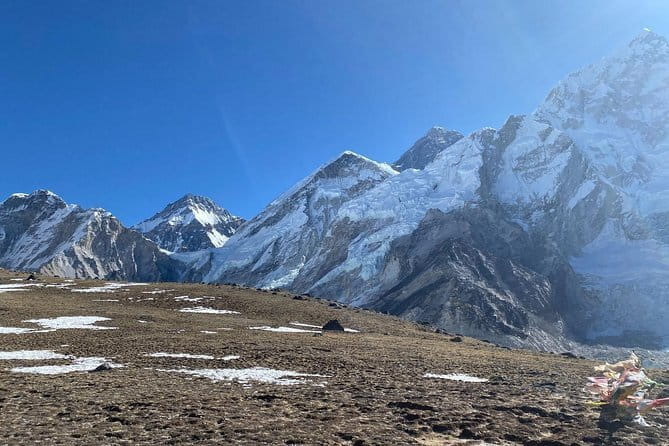
Khumjung is associated with the school built by Sir Edmund Hillary as a thank-you to the Sherpa community. The surrounding viewpoints also open up views toward Kwangde, Thamserku, Kangtega, Nuptse, Lhotse, Ama Dablam, and Everest.
You should use Namche to check your clothing, water, snacks, and personal medication. Chocolate and other small supplies are available here if you forgot to buy them in Kathmandu. Prices and choice become more limited higher up.
Tengboche brings forest, flowers, and a monastery setting
Leaving Namche, the trail rises gradually, with some sections close to steep slopes. Ama Dablam becomes a major presence, and the route passes through pine forest, waterfalls, and rhododendrons.
The overnight stop is Tengboche. The day includes lunch at about 3,680 meters, followed by the climb toward the village. Tengboche is valued for its mountain setting and its Buddhist monastery, although the supplied itinerary does not specify a monastery visit as a formal included activity.
This section often feels more varied than the higher trail. You still have trees and colored flowers, but the air is thinner and the walking is more serious. Keep your pace slow. Your guide’s job here is not to get you to the next lodge quickly, but to help you arrive in condition for the harder days.
The guide is included in the price and is described as an English speaker with more than a decade of experience. Names associated with the company include Sujan Nepal, TB, Shiva, Dipak, and Tribhuvan. Your assigned guide may be different, so confirm that before departure if a particular guide matters to you.
Dingboche is the second major altitude check
The route continues through Pangboche and then reaches the alpine meadows above the tree line. You pass Orsho, where routes divide, and follow the lower path to Dingboche at about 4,410 meters.
Dingboche is a turning point. Trees are largely gone, the air is thinner, and the views of Ama Dablam and the Imja River feel more open. The itinerary notes a helicopter landing pad, an internet cafe, Moonlight Lodge, and a high-altitude billiards hall. These details remind you that even remote trekking villages have practical services and a little social life.
The second acclimatization day is spent in Dingboche. You can walk around the settlement or take the optional outing toward Chhukung and Chhukung Ri. Chhukung village sits at about 4,730 meters, while Chhukung Ri reaches about 5,550 meters.
The Chhukung Ri option is far more demanding than a casual rest-day walk. It offers views toward Makalu, Ama Dablam, and Baruntse, but you should only attempt it if you feel well and your guide agrees. The listed lunch stop is Hotel Bright Star in Chhukung, though the schedule says you may choose any hotel there.
I particularly value this rest day because altitude problems often appear when people push too hard too soon. The program gives you a chance to test your body before the route gets higher.
A few more treks around Kathmandu worth a look
- Everest Base Camp Trekking
★ 5.0 · 485 reviews - Annapurna Circuit Trek with Tilicho Lake
★ 5.0 · 368 reviews - Everest Base Camp Trekking – 13 Day
★ 5.0 · 365 reviews - Everest Base Camp Trek
★ 5.0 · 350 reviews
Lobuche marks the shift into a stark high-altitude world
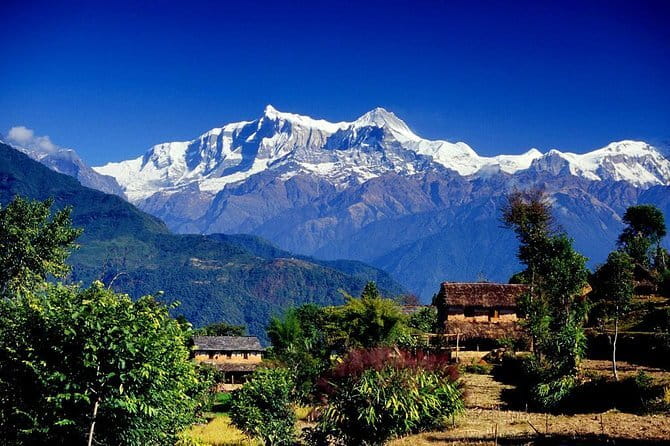
After Dingboche, the route follows a broad valley toward Dughla, then continues through yak grazing areas and on to Lobuche at about 4,910 meters.
The scenery changes sharply above the tree line. Green slopes give way to open, snow-covered ground and bare mountain sides. The villages are fewer, and the route feels more exposed. Views toward Tawache, Pumori Peak, and Cholatse provide plenty to look at, but the cold and thin air become harder to ignore.
This is where you need to manage your energy carefully. Eat even if your appetite is low, drink regularly, and tell your guide about headaches, nausea, unusual fatigue, or breathing trouble. The package requires you to carry appropriate travel insurance covering medical treatment and emergency evacuation. That is not paperwork to leave until the last minute.
The porter arrangement is one porter for every two people, carrying your luggage. You still need a daypack with water, warm layers, sun protection, personal medicine, and items you may need during the day.
Everest Base Camp is the emotional high point
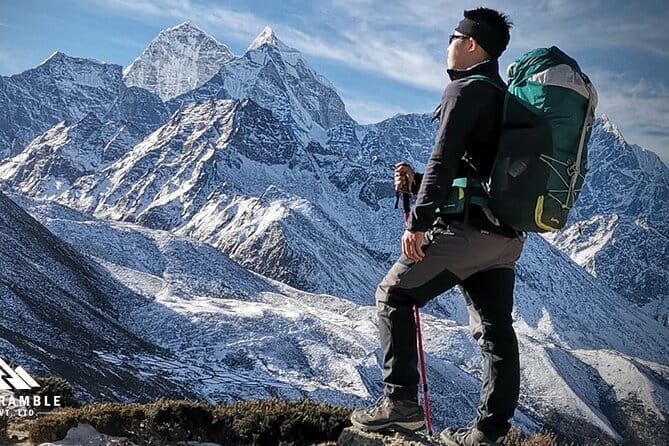
From Lobuche, it takes roughly two to three hours to reach Gorakshep. The route passes through the Khumbu Glacier area, described in the itinerary as the world’s highest glacier. Ice formations and small pools make this section visually unusual, but the footing can be tiring and uneven.
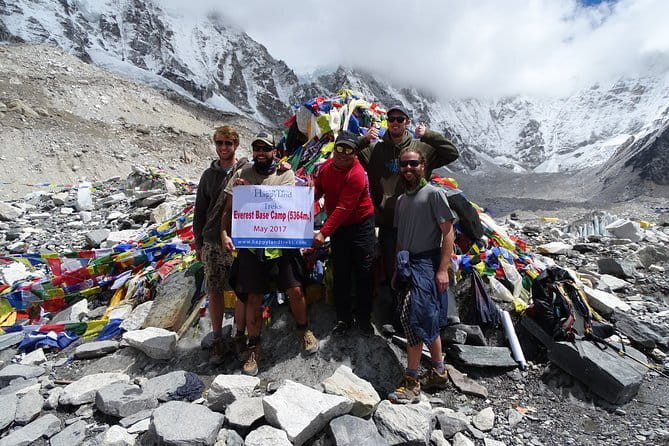
From Gorakshep, you continue to Everest Base Camp. This is the place where mountaineering expeditions begin their attempts on the summit. The exact appearance of Base Camp changes by season, and you should not expect a permanent village or a simple viewpoint.
The return to Gorakshep comes the same day. That out-and-back structure means the Base Camp visit is not an overnight stop. You reach the goal, take in the setting, and then return to a basic high-altitude lodge.
Base Camp is the named objective, but it is not necessarily the best place for a full view of Everest itself. That is why the next morning matters so much.
Kala Patthar provides the broad mountain view
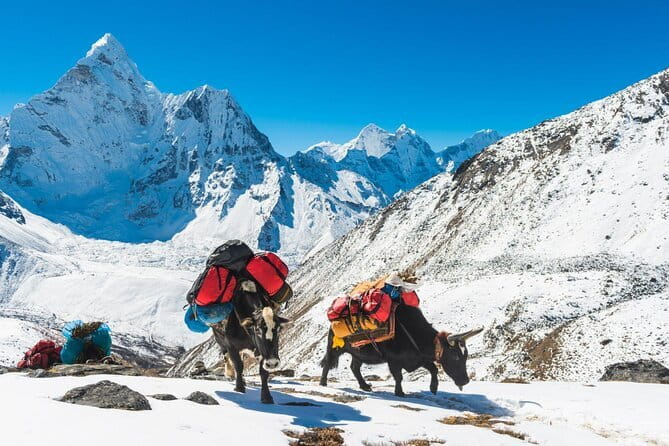
The ascent of Kala Patthar reaches 5,545 meters, the highest point on this trek. From the top, the itinerary highlights views of Everest, Ama Dablam, Pumori Peak, glaciers, and surrounding mountains.
This is the moment for which you should save some energy. The climb is high and demanding, but the payoff is a wider, more memorable view than you usually get from Base Camp. The air can be cold, and weather may limit what you see, so keep expectations practical.
After Kala Patthar, the route includes a visit to the H.M.A.R. hospital, built in 1975, or a nearby village at about 4,371 meters. The wording suggests this part may depend on timing and conditions, so ask your guide how it fits into the day.
The itinerary then turns downhill. You return through Orsho, Somare, Pangboche, and Tengboche on the way to Namche Bazaar, stopping often for mountain views. Descending is easier for breathing, but it still puts pressure on knees and ankles. Trekking poles can be useful, though they are not listed as included equipment.
The return to Lukla is part of the experience
Day 12 brings you back to Lukla, where the trek ends. The schedule leaves the afternoon free for rest, a hot shower, and time with the group. The evening is described as a chance to have drinks and dance together.
Alcohol is not a good idea at high altitude, but by Lukla you are much lower than Base Camp. The tour states that the minimum drinking age is 18. You should still keep the evening sensible if you are flying back the next morning.
The return flight to Kathmandu takes about 35 minutes. As with the outward flight, weather can affect the schedule. I would avoid booking a tight international connection immediately after the Lukla flight. The package provides a transfer back to the original hotel in Kathmandu, and the final day includes airport transport to Tribhuvan International Airport.
If you extend your stay, the company lists options such as Chitwan jungle activities, river rafting, shopping, and mountain biking. Those are separate from the 14-day trek.
What the $1,800 price really covers
At $1,800 per person, the package includes several of the costly and important pieces:
- Kathmandu to Lukla and return flights
- Trekking permits
- Two Kathmandu hotel nights
- An English-speaking guide with more than 10 years of experience
- A porter shared by two people
- Ten lunches
- Ten dinners
- Twelve breakfasts
- Airport pickup and final airport transfer
That is a useful package for someone who wants the main arrangements handled in advance. The price also gains value from the two acclimatization days and the small maximum group size of 15.
You still need to budget for tips, travel insurance with medical and emergency evacuation cover, and any expense not listed under inclusions. The food count suggests that some meals, especially in Kathmandu and possibly around the travel days, are not covered. Ask the company for a current list of what you should pay locally.
The package does not list gear rental, bottled water, snacks, hot showers, internet use, or personal drinks as included. Do not assume these are covered.
Who should choose this trek
This trek suits you if you have a moderate level of physical fitness and want a structured route with local support. You should be comfortable walking for multiple days at increasing altitude, sleeping in simple mountain accommodation, and accepting changes caused by weather.
It is a good fit if you want both scenery and cultural contact. The route passes through Sherpa villages, yak pastures, Buddhist areas, and Sagarmatha National Park rather than taking you straight to a single viewpoint.
It is not a good choice if you need guaranteed flight times, dislike basic facilities, or want a relaxed sightseeing holiday. The 14-day label includes airport transfers, Kathmandu nights, flights, and return logistics. The mountain walking itself is concentrated into the middle of the trip.
The company’s strongest service pattern is personal coordination. Binod Sapkota, the director, is named in several accounts of the company’s work, with guides such as Sujan Nepal, TB, and Shiva receiving especially warm praise for organization, care, and help during difficult moments. One particularly important example involved arranging a rapid helicopter evacuation for a trekker who became ill. That does not remove the need for your own insurance, but it shows why a responsive local operator matters in the Khumbu.
Booking details and cancellation terms
The meeting point is Tribhuvan International Airport in Kathmandu, with a listed start time of 6:15 a.m. The ticket redemption point is Nepal Trek Adventure and Expedition on Thamel Marg.
Confirmation is provided at booking. Free cancellation is available when you cancel at least 24 hours before the experience start time. Cancellations inside 24 hours are not refunded, and late changes are not accepted.
The operator also notes that the trek requires suitable weather and a minimum number of participants. If poor weather or insufficient numbers cause cancellation, you are offered another date or experience, or a full refund.
Should you book the Everest Base Camp Trek?
Book it if you want the classic Everest route with the major logistics arranged, two acclimatization days, local guides, porter support, and a return by the same trail. The strongest value comes from the complete structure, not from luxury.
Before paying, confirm the exact guide, current flight arrangements, meal coverage, porter baggage limit, accommodation standards, and what happens if Lukla weather disrupts the schedule. If you have the fitness, the patience, and the right insurance, this is a well-supported way to reach Everest Base Camp and stand above 5,500 meters at Kala Patthar.
FAQ
Where does the Everest Base Camp Trek begin?
The experience begins at Tribhuvan International Airport in Kathmandu, Nepal. An airport representative meets you and transfers you to the hotel.
How long does the trek last?
The full experience lasts approximately 14 days, including Kathmandu hotel nights, Lukla flights, the trek, the return to Kathmandu, and departure transfer.
What time does the experience start?
The listed start time is 6:15 a.m. at Tribhuvan International Airport.
Are flights between Kathmandu and Lukla included?
Yes. The package includes the Kathmandu to Lukla and Lukla to Kathmandu flights.
Is a guide included?
Yes. The package includes an English-speaking trekking guide with more than 10 years of experience.
Is porter support included?
Yes. One local Sherpa porter is provided for every two guests to carry luggage.
What is the highest point on the trek?
Kala Patthar is the highest point, at approximately 5,545 meters.
Is travel insurance included?
No. You must arrange your own travel insurance, including medical treatment and emergency evacuation coverage.
Can I cancel for a full refund?
Yes, if you cancel at least 24 hours before the experience start time. Cancellations or changes made within 24 hours are not accepted for a refund.
Just added around Kathmandu
- Everest Base Camp Trek★ 5.0 · 3 reviews
- Everest Base Camp Trek★ 5.0 · 7 reviews
- 15 Days Private Everest Base Camp Trek★ 5.0 · 30 reviews
- Everest Base Camp Trek★ 5.0 · 57 reviews
- 14 Days of Adventure Trekking to Everest Base Camp★ 5.0 · 2 reviews
- 14-Day Everest Base Camp Trek★ 5.0 · 20 reviews
- From Kathmandu: Private 14-Day Everest Base Camp Trek★ 5.0 · 20 reviews
- 14 Days Everest Base Camp Trek★ 5.0 · 4 reviews
Everest Base Camp Treks, compared.
Everest Base Camp Helicopter Tour landing at Everest View Hotel
Read our review →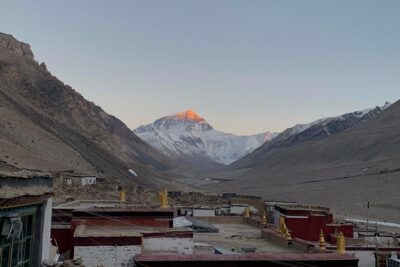
Tibet Tour 8 Days Lhasa to Everest Base Camp Small Group Tour
Read our review →
Dubai: Private Luxury Everest Yacht Cruise from Dubai Marina
Read our review →
Browse the lists this trek appears in