
Review · KATHMANDU
Everest Base Camp+Gokyo Ri
The best part of this trek is the combination of Gokyo Ri and Everest Base Camp. You do not simply walk to one famous viewpoint, take a picture, and return. The route brings together high mountain scenery, Sherpa villages, yak herding, and a demanding crossing over Cho La Pass. You get a broader taste of the Everest region than on a standard base camp route.
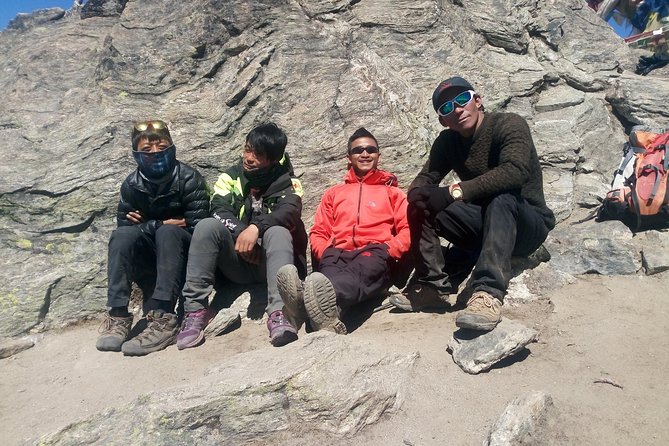
I like the strong guide-and-porter reputation, especially the personal attention associated with guides such as Raj and Nara. I also like the private format, which lets your group move at its own pace. The catch is clear: 15 days at altitude requires real fitness, and the tour information needs clarification about exactly what is included, especially Kathmandu lodging and some meals.
Key points to know before you book
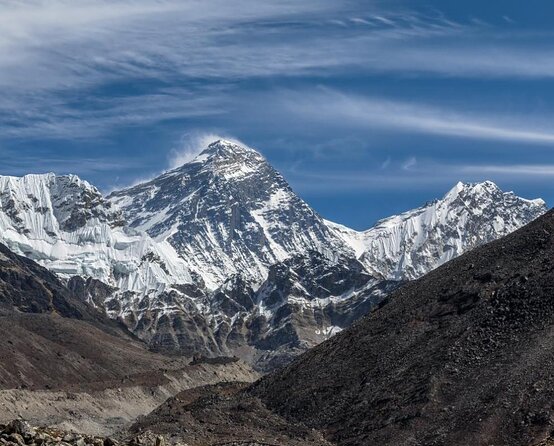
- Gokyo Ri and Everest Base Camp in one trek: You get two of the Everest region’s major goals rather than choosing only one.
- Cho La Pass adds difficulty and variety: The crossing links the Gokyo and Everest areas, but it also makes the trek harder.
- Sherpa culture is part of the experience: You pass through communities shaped by yak herding, tourism, short growing seasons, and mountain life.
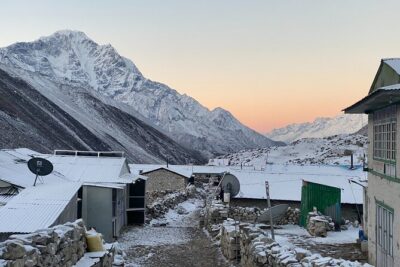
- Seven major peaks come into view: Everest, Lhotse, Makalu, Cho Oyu, Nuptse, Thamserku, and other Himalayan summits feature in the route.
- Private group format: Only your party takes part, with pickup offered and a stated start time of 5:00 a.m.
- Flexible cancellation, with weather limits: You can cancel for a full refund up to 24 hours before departure, while poor weather may lead to a new date or refund.
Why the Gokyo Ri and Everest Base Camp route is special
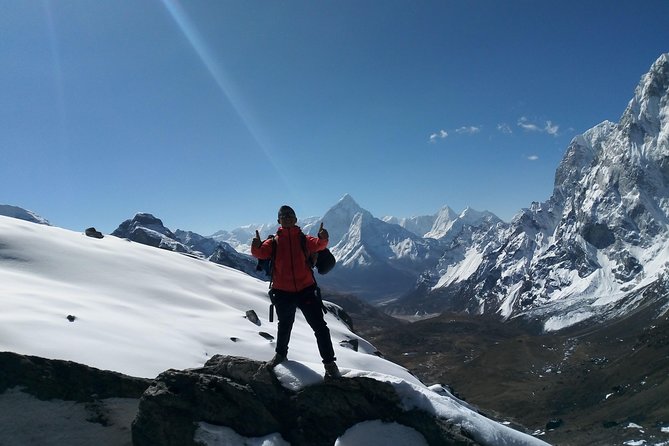
A standard Everest Base Camp trek gives you the famous destination. This route adds Gokyo Ri, a high viewpoint in the Gokyo area, and connects the two zones through Cho La Pass. That makes the trip feel more like a crossing of the Everest region than a simple out-and-back hike.
From high points along the route, you can expect views of Everest at 8,848 meters, Lhotse at 8,511 meters, Makalu at 8,463 meters, Cho Oyu at 8,153 meters, Nuptse at 7,861 meters, and Thamserku at 6,623 meters. These numbers matter because the route gives you a chance to see several of the world’s highest mountains in one trip.
The appeal is not only the peaks. The Khumbu area is home mainly to Sherpa communities, and the journey offers a look at their daily life, customs, and traditions. Crops are limited by the short growing season. Yak herding and tourism are central occupations. You should pay attention to the practical details of village life, not only the mountain views.
More Everest Base Camp Treks in Kathmandu:
- Everest Base Camp Trek – 14 Days
★ 5.0 · 1,499 reviews - Everest Base Camp Trek
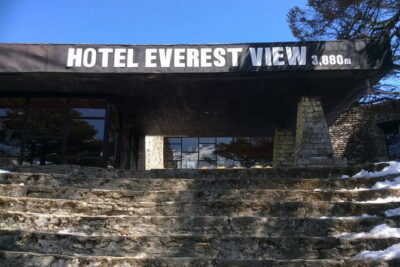
★ 5.0 · 842 reviews - Everest Base Camp Helicopter Tour landing at Everest View Hotel
★ 5.0 · 668 reviews
What the 15-day trek feels like
The supplied plan does not provide a complete day-by-day schedule, so you should request the exact overnight stops before paying. The broad shape is clear, however. You start in the Kathmandu area, move into the Everest trekking region, reach the Gokyo side, climb Gokyo Ri, cross toward Everest Base Camp over Cho La, and finish after reaching the base camp area.
A 15-day schedule gives you time to walk, rest, and adjust to altitude. That is important in the Himalayas. The trip is not a quick sightseeing outing, and you should not treat the 5:00 a.m. meeting time as a minor detail. Early starts can help with long walking days and changing mountain conditions, but they also mean that your routine will be physically demanding.
The route’s biggest attraction is its variety. You can move from areas with plant life and wildlife into colder, higher country where the mountains dominate every view. The change in surroundings helps break up the long trek and gives you more than one kind of Himalayan experience.
Gokyo Ri gives you a different mountain view
Gokyo Ri is the first major reason to choose this route instead of a standard Everest Base Camp trek. The viewpoint offers a high vantage point over the surrounding peaks and valleys. The exact visibility depends on weather, but clear conditions can make this one of the most memorable parts of the entire journey.
The viewpoint also changes how you understand the region. From the Everest Base Camp side, Everest is the obvious star. From the Gokyo side, you get a wider feeling for the Himalayan chain and see how several enormous peaks fit together.
The climb to Gokyo Ri is not a casual walk. You need enough fitness for a sustained uphill effort at altitude. Take it slowly, keep your breathing steady, and follow the guide’s advice. The tour is described as suitable for people with a moderate fitness level, but that phrase should not be confused with easy. You need to be comfortable walking for several hours over uneven mountain paths.
Cho La Pass is the demanding link
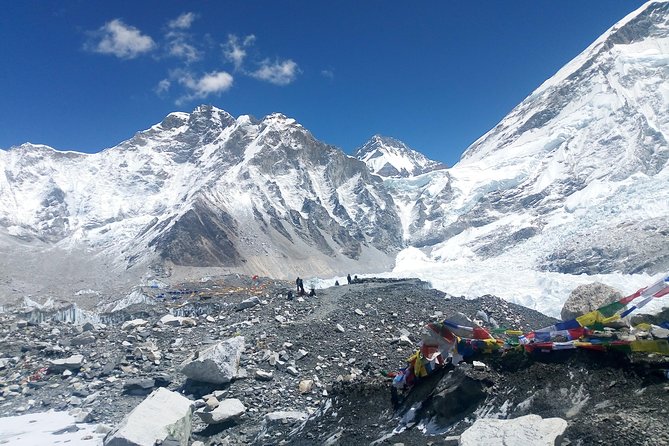
The crossing of Cho La Pass is what gives this itinerary its adventurous edge. It links the Gokyo area with the route toward Everest Base Camp, creating a more complete circuit through the region.
It is also the point that deserves the most careful preparation. The available information does not give a precise pass elevation, trail condition report, or equipment list. Ask the operator what footwear, clothing, and personal equipment are required for your departure. Conditions can change, and this portion should not be treated like an ordinary village walk.
The pass also explains why the tour is best for people with moderate or better fitness. You will be combining long walking days, altitude, and a high crossing. A private group can be useful here because the pace may be easier to manage than in a large mixed party, but a private tour does not remove the physical demands.
A few more treks around Kathmandu worth a look
- Everest Base Camp Trekking
★ 5.0 · 485 reviews - Annapurna Circuit Trek with Tilicho Lake
★ 5.0 · 368 reviews - Everest Base Camp Trekking – 13 Day
★ 5.0 · 365 reviews - Everest Base Camp Trek
★ 5.0 · 350 reviews
Everest Base Camp remains the big goal
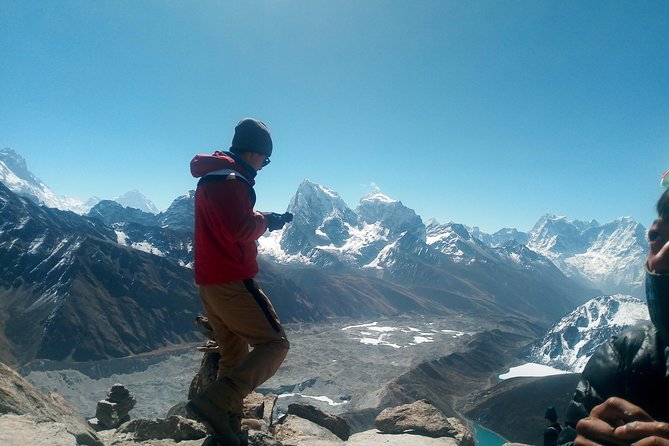
Reaching Everest Base Camp is the emotional center of the trek. It is the place most people picture when they think about walking in the Khumbu, and arriving there after Gokyo Ri and Cho La gives the achievement extra weight.
The route is not just about standing at a named destination. You have already crossed high country, spent time among Sherpa communities, and seen the mountains from several angles. That context makes Base Camp feel like part of a larger journey rather than a single photo stop.
Keep your expectations sensible. The tour details do not promise a particular season, exact visibility, or a specific amount of time at Base Camp. Mountain weather can change plans, and the cancellation terms specifically recognize that poor conditions may force a date change or refund.
Sherpa culture adds meaning between the viewpoints
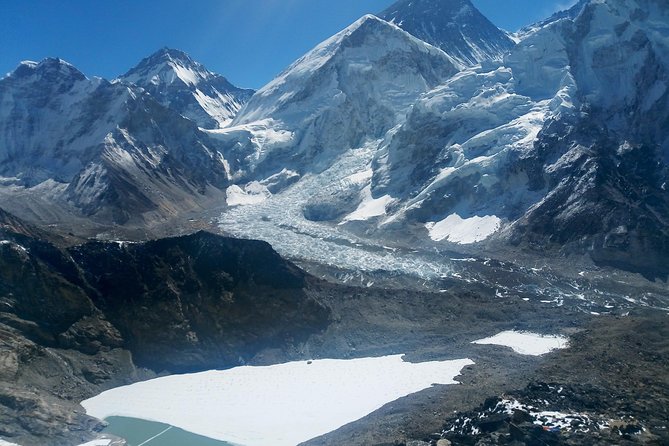
The communities along the route are not simply stops between mountain sections. Sherpa life is closely tied to the terrain, the short crop-growing season, yak herding, and tourism.
You may see how difficult it is to grow food in a high mountain environment. The available description points out that only a few crops can be raised during the short growing season. That detail helps explain why yaks and tourism are so important to local livelihoods.
Your guide can help turn village walks into something more meaningful. Ask about local traditions, seasonal work, and the role of tourism. Guides named Raj and Nara are connected with past trips offered by this company, but you should confirm who will lead your departure. A good guide is especially useful when you want more than a path from one overnight stop to another.
Food and accommodation need a careful check
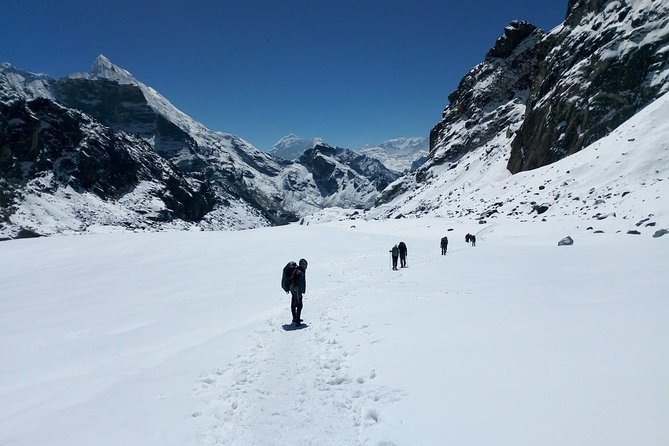
Breakfast, lunch, dinner, coffee, and tea are listed among the included items. The food description says lunch can be chosen from a teahouse or hotel, and normal coffee and all types of tea are available.
At the same time, the exclusion section says lunch and dinner are excluded, along with Kathmandu accommodation and bar bills. That is a direct inconsistency. Do not assume every meal is covered simply because meals appear in the included section. Ask the operator for a written breakdown of:
- Which meals are included on trekking days
- Whether Kathmandu accommodation is included
- Whether teahouse or hotel rooms are included
- What drinks are covered
- Whether alcoholic drinks and bar purchases are separate
- Whether personal insurance is required and arranged by you
This matters because a $1,333.34 price can represent good value if the main trekking arrangements and meals are covered, but the final cost rises if you must separately pay for Kathmandu lodging, some lunches and dinners, drinks, insurance, and other personal expenses.
Is $1,333.34 a fair price?
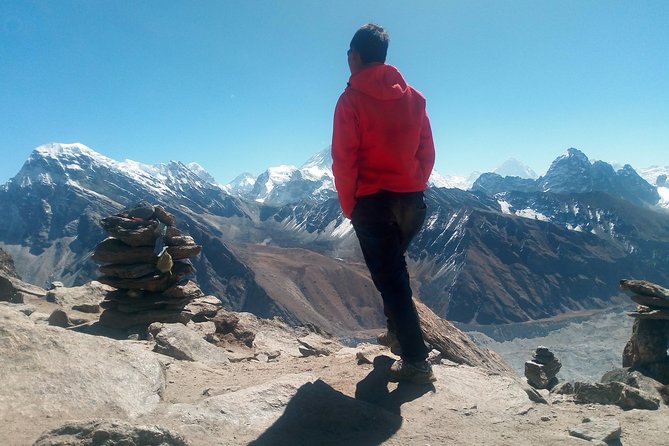
The price is $1,333.34 per person for about 15 days. That works out to roughly $89 per day before any excluded costs. For a private Himalayan trek with guiding, porter support, meals, and a route combining Gokyo Ri, Cho La, and Everest Base Camp, the price may be attractive.
The value depends on what is actually included. The private format is important. You are not placed into a large group with a fixed pace, and the provider advertises pickup. Experienced guides and porters can also make a major difference on a route where route decisions, timing, and altitude management matter.
Still, compare the final price rather than the headline price. Kathmandu accommodation, personal insurance, alcoholic drinks, bar bills, and possibly some meals are listed as extra. Ask about transport, permits, porter arrangements, and accommodation as well. Those details are not fully spelled out in the supplied information.
Private trekking can suit the right group
This is a private activity, so only your group participates. That arrangement is useful if you are traveling with a partner or a small circle and want a shared pace.
The private setup may also help on hard days. You can discuss timing with your guide rather than being locked into the speed of a large group. That does not mean you can change the mountain weather or skip the need for acclimatization, but it can make the days feel less rigid.
Past departures included couples and people who returned for more than one Nepal trek. That suggests the operator is accustomed to repeat clients and different levels of trekking experience, but you should still describe your own fitness honestly before booking.
Timing, weather, and cancellation
The stated start time is 5:00 a.m. Confirm the exact meeting place and pickup details with the operator, since the listing gives a start time but does not provide a full transfer schedule.
You can cancel up to 24 hours before the local start time for a full refund. Changes made less than 24 hours before departure are not accepted, and late cancellations are not refunded.
Weather is a real factor. If poor conditions force cancellation, you are offered another date or a full refund. The same applies if the minimum number of participants is not met, although the activity is described as private. Ask how the minimum applies to your booking.
Who should book this trek?
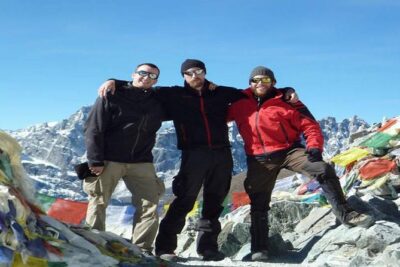
You should consider it if you want more than the usual Everest Base Camp route and like the idea of linking Gokyo Ri, Cho La, and Base Camp in one trip. It suits an active person who can handle long mountain walking days and who wants contact with Sherpa communities as well as famous summits.
It is also a good match for a couple or small private group that values direct attention from a guide. The names Raj and Nara are associated with past departures, so ask if either is available and who will lead your trip.
I would hesitate if you want a relaxed holiday, dislike early starts, or have not prepared for altitude and extended walking. I would also wait before booking until the meal, lodging, transport, and equipment details are confirmed in writing.
FAQ
Where does the Everest Base Camp and Gokyo Ri trek take place?
The trek takes place in Nepal’s Everest region, with the tour based out of Kathmandu.
How long does the trek last?
The experience lasts approximately 15 days.
What are the main goals of the route?
The main goals are Gokyo Ri, Cho La Pass, and Everest Base Camp.
What mountains can I see?
The route offers views of Everest, Lhotse, Makalu, Cho Oyu, Nuptse, Thamserku, and other Himalayan peaks.
Who lives in the region?
The people living in the area are mainly Sherpa communities.
What are common local occupations?
Yak herding and tourism are identified as the main occupations. Only a few crops can be grown during the short cropping season.
Is the tour private?
Yes. Only your group participates in this private activity.
What fitness level is required?
A moderate physical fitness level is required.
Is pickup available?
Yes. Pickup is offered, and the stated start time is 5:00 a.m.
What is the cancellation policy?
You can cancel at least 24 hours before the local start time for a full refund. Poor weather or failure to meet the minimum number of participants may result in a different date or a full refund.
Should you book it?
Book this trek if you want a serious Everest-region adventure with two major viewpoints, a high pass, Sherpa culture, and a private guide. The strongest reasons to choose it are the Gokyo Ri and Everest Base Camp combination, the mountain variety, and the personal guiding associated with leaders such as Raj and Nara.
Before paying, get the full itinerary and a written list of inclusions. In particular, settle the conflicting meal information and confirm Kathmandu lodging, transport, permits, porter support, and equipment. If those details are clear and you are ready for 15 demanding days, this route offers a strong way to experience the Everest region from more than one angle.
Just added around Kathmandu
- Everest Base Camp Trek★ 5.0 · 3 reviews
- Everest Base Camp Trek★ 5.0 · 7 reviews
- 15 Days Private Everest Base Camp Trek★ 5.0 · 30 reviews
- Everest Base Camp Trek★ 5.0 · 57 reviews
- 14 Days of Adventure Trekking to Everest Base Camp★ 5.0 · 2 reviews
- 14-Day Everest Base Camp Trek★ 5.0 · 20 reviews
- From Kathmandu: Private 14-Day Everest Base Camp Trek★ 5.0 · 20 reviews
- 14 Days Everest Base Camp Trek★ 5.0 · 4 reviews
Everest Base Camp Treks, compared.
Everest Base Camp Helicopter Tour landing at Everest View Hotel
Read our review →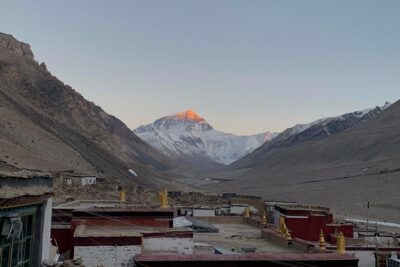
Tibet Tour 8 Days Lhasa to Everest Base Camp Small Group Tour
Read our review →
Dubai: Private Luxury Everest Yacht Cruise from Dubai Marina
Read our review →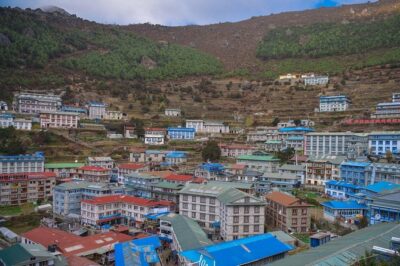
Browse the lists this trek appears in