
Review · KATHMANDU
Everest Base Camp Trek
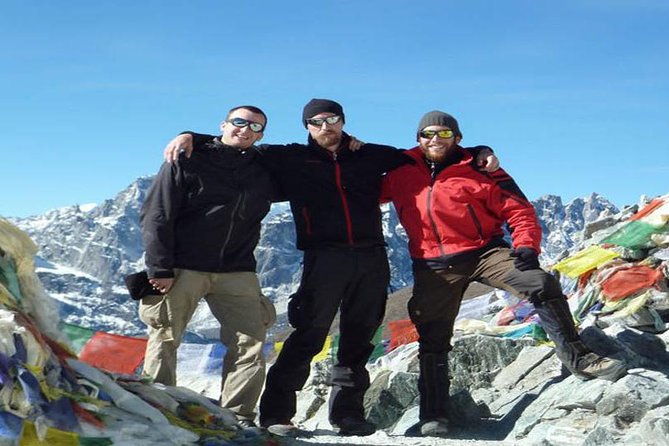
Everest Base Camp is not a gentle mountain walk. It is a serious 14-day journey to 5,364 meters, reached by foot from Lukla through Sherpa villages, Buddhist monasteries, glacier country, and thin mountain air. The best part is the steady change in scenery, from Kathmandu’s temples to the high Khumbu, with a licensed guide beside you.
I like that the package includes Kathmandu to Lukla flights, tea-house lodging, airport pickup, and a private group capped at eight people. I also like the built-in acclimatization day at Namche and the slower day around Dingboche, both important when your body is working hard at altitude.
The main drawback is the tight schedule around Lukla flights and the high-altitude risk. Weather can delay or cancel flights, and the itinerary appears to compress several Kathmandu sights and the first trek section into a busy day. Plan extra time and ask the operator to confirm the exact schedule before you pay.
Key points before you book
- 5,364-meter high point: Everest Base Camp is demanding, and altitude sickness can affect fit people of any age.
- Lukla flights included: The round trip from Kathmandu includes airport tax, but weather delays remain your responsibility.
- Tea-house trekking: You get 11 nights in basic mountain lodges rather than tent camping.
- Private groups of up to eight: You trek only with your own booking group, not a large mixed crowd.
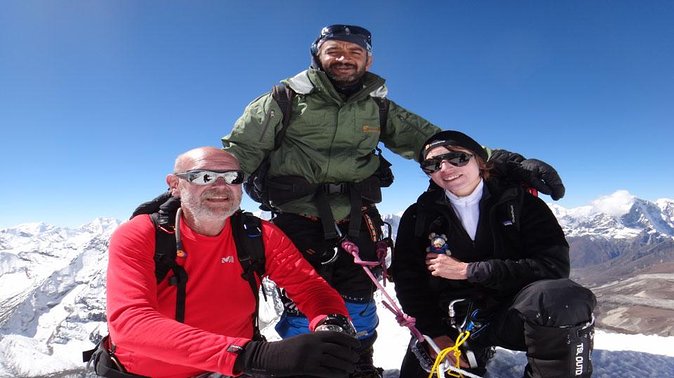
- Three useful acclimatization stops: Namche, Dingboche, and the Kala Patthar area break up the climb.
- Budget beyond the $999 price: Food is listed at about $350 per person, with $150 suggested for gratuities.
What the $999 price really covers
At $999 per person, this is a practical package rather than a luxury trip. The price includes the Kathmandu to Lukla and Lukla to Kathmandu flights, airport tax, two nights in a three-star Kathmandu hotel with breakfast, 11 tea-house nights, a licensed trekking guide, government taxes, service charges, a first-aid kit, and an operator T-shirt.
That bundle has real value. The domestic flights alone are a major part of the trip’s logistics, and arranging tea-house rooms, permits, transfers, and a guide separately would take time. You also get arrival and departure assistance by private car, which is helpful after a long international flight.
The advertised extra for food and drinks is $350 per person. That works out to about $25 per day, though the supplied details do not spell out exactly which meals are covered. Dinner is listed as included, and breakfast is included on the stated Kathmandu hotel nights, but you should ask the company to confirm the meal plan for every trekking day.
A suggested gratuity of $150 per person is also listed. Treat this as a budget item, not part of the tour price. A realistic basic total is therefore closer to $1,499 per person before personal gear, insurance, extra nights, or flight-delay costs.
More Everest Base Camp Treks in Kathmandu:
- Everest Base Camp Trek – 14 Days
★ 5.0 · 1,499 reviews - Everest Base Camp Trek
★ 5.0 · 842 reviews - Everest Base Camp Helicopter Tour landing at Everest View Hotel
★ 5.0 · 668 reviews
Kathmandu starts with temples and practical preparation
Your meeting point is Tribhuvan Airport in Kathmandu. The company provides pickup and departure help by private car, so send your arrival details in advance. You will need a clear passport copy, two passport-size photographs, your occupation, and your home address for permits. Your passport must be valid for at least six months.
The first day includes time in Kathmandu and Thamel. Thamel is the useful base for trekking equipment, restaurants, money exchange, and last-minute supplies. Required trekking gear can be bought or rented in Kathmandu, and the guide can help arrange it.
The schedule also lists Swayambhunath, Boudhanath Stupa, and the Garden of Dreams. Swayambhunath gives you a first look at Kathmandu’s Buddhist and Hindu culture, while Boudhanath is one of the city’s most important Buddhist sites. These stops add cultural weight before the mountain days begin, though the schedule places several attractions close to the Lukla and Phakding transfer. Confirm which sights are visited on which day, since the printed timing is not entirely clear.
You spend either two or three Kathmandu nights depending on which part of the description you follow. The included section says two nights, on days 1 and 13, while the overview refers to three nights. Ask for the confirmed hotel plan in writing.
Lukla and Phakding mark the real start
The flight from Kathmandu to Lukla takes about an hour. Lukla is the gateway for the trek, and its small-aircraft schedule depends heavily on weather. The package includes the airfare and airport tax, but not protection from cancellations.
The first walking section reaches Phakding. The itinerary gives this day a long 12-hour block, although the exact walking time is not clearly stated. You should expect a day shaped by the flight, meeting your guide, organizing luggage, and beginning the trail, not simply a leisurely sightseeing transfer.
Pack lightly. You are expected to carry your own luggage, with a recommended limit of 10 kilograms, or about 22 pounds. Extra bags may be left at the company office or hotel in Kathmandu. That is a useful arrangement, especially if you are combining the trek with a longer Nepal trip.
Namche Bazaar gives you a first taste of altitude
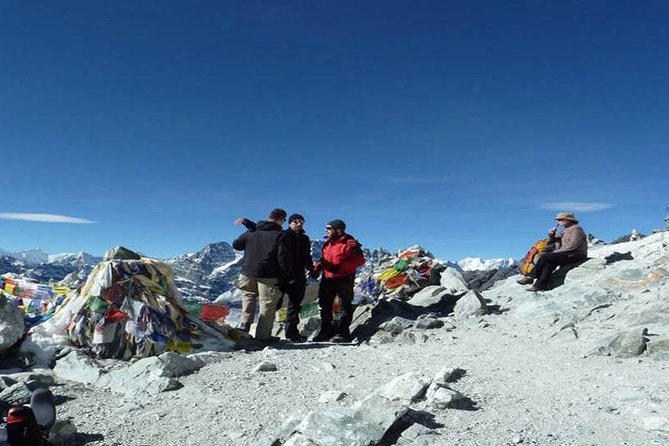
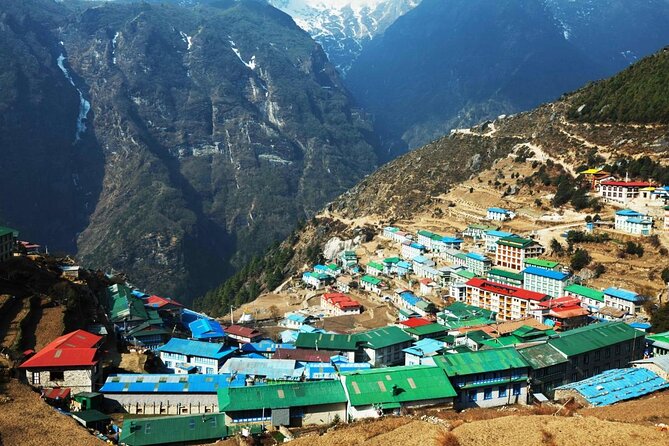
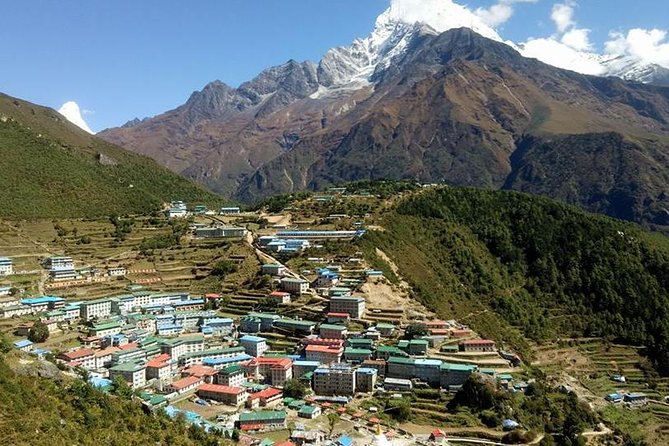
The route then follows the Dudh Koshi River toward Namche Bazaar. The river section adds sound and movement to the walk, but this is also where the climb begins to feel serious. Namche is not just a stop on the map. It is the main settlement for supplies, rest, and acclimatization in the Khumbu.
The schedule gives the approach to Namche a full day, followed by a separate day in town. That rest day is one of the tour’s strongest features. You are not simply stopping for comfort. Your body needs time to adjust before the trail climbs higher.
The acclimatization outing goes to an Everest View Point and lasts about two hours. The aim is to walk higher and return to sleep lower, a sensible pattern for this altitude. You should still treat the day as active, not as complete rest.
A few more treks around Kathmandu worth a look
- Everest Base Camp Trekking
★ 5.0 · 485 reviews - Annapurna Circuit Trek with Tilicho Lake
★ 5.0 · 368 reviews - Everest Base Camp Trekking – 13 Day
★ 5.0 · 365 reviews - Everest Base Camp Trek
★ 5.0 · 350 reviews
Tengboche brings monastery and mountain views
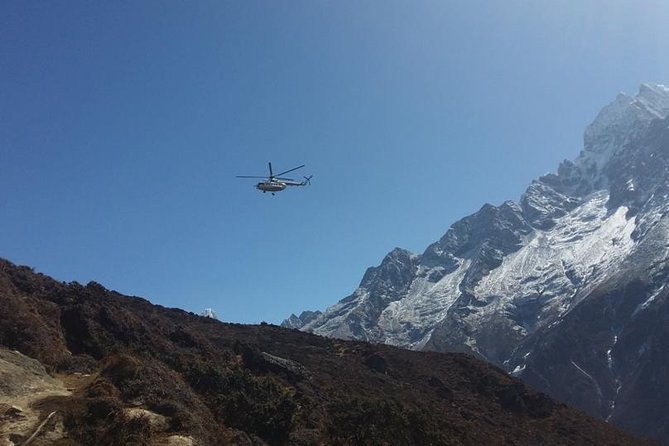
From Namche, the trail continues to Tengboche. The stop includes Tengboche Gompa, an important monastery in the Khumbu, along with views toward Ama Dablam and Taboche. This is one of the most memorable cultural and scenic sections of the route.
The monastery visit is included, but you should remember that it is a working religious place, not simply a photo stop. Follow local instructions, keep your voice low, and ask before photographing people or ceremonies.
Tengboche also brings a sharper reminder of the route’s physical demands. You are now spending long days on foot and sleeping higher than before. The itinerary uses broad 12-hour blocks, so ask your guide for the expected walking hours, elevation gain, and tea-house location each morning.
Dingboche provides another important pause
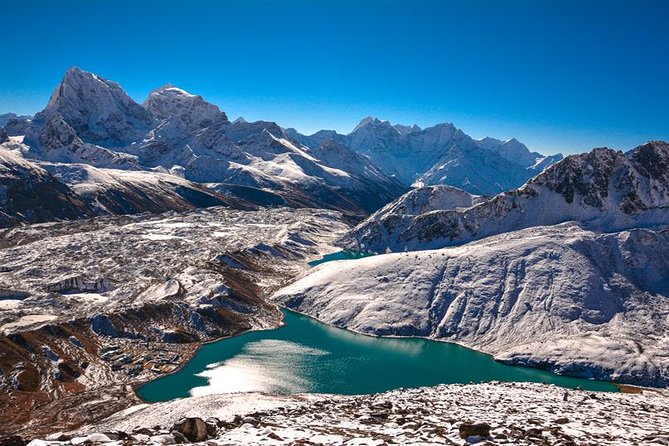
The trail reaches Dingboche, a high settlement surrounded by open mountain country. The program gives you one day to arrive and another day in the Dingboche area, with Chukhung listed as a nearby point of interest.
This second acclimatization pause is valuable. Above Dingboche, the air becomes thinner, and a steady pace matters more than speed. Your guide should monitor how you are feeling and explain what symptoms require rest, descent, or medical help.
The trip notes say all leaders have basic first-aid training and know the closest medical facilities. That is reassuring, but it is not a replacement for travel insurance. Insurance covering medical treatment and emergency repatriation is required, and you must show proof on the first day.
Lobuche and the Khumbu Glacier feel stark and high
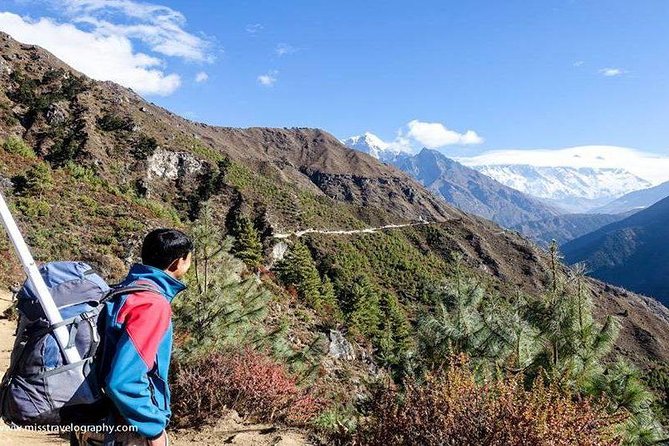
After Dingboche, the route continues to Lobuche. The glacier section is listed as a stop, and the Khumbu Glacier gives this part of the walk a rough, high-mountain character. You are now approaching the area where the trip becomes less about sightseeing and more about managing cold, fatigue, weather, and altitude.
The tea houses are included, but do not expect hotel comfort. The supplied details do not specify room arrangements, heating, bathrooms, or charging facilities, so ask before departure. Basic lodging can be perfectly adequate when you know what you are getting. Surprise is the problem.
Lobuche is also a good point to reassess your condition. The trip notes are direct about the risk of adverse health effects at altitude, regardless of age, gender, or fitness. If you develop serious symptoms, tell the guide immediately rather than trying to prove toughness.
Gorak Shep and Everest Base Camp are the trip’s main test
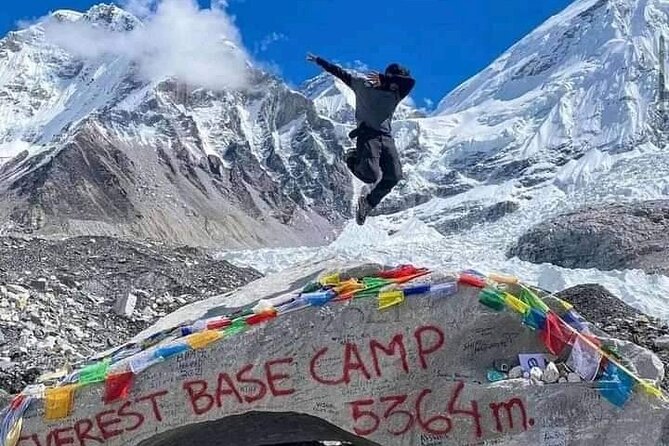
The itinerary places Mount Everest, Gorak Shep, and Everest Base Camp in the highest part of the trek. Gorak Shep is the staging point for the Base Camp walk, and the schedule allows a long day in this area.
Everest Base Camp itself is a major goal, but it is not a summit and does not always provide the classic view of Everest that first-time hikers imagine. The value is reaching the base of the world’s highest mountain system, seeing the Khumbu Glacier area, and understanding the scale of the route on foot.
At this altitude, the day can feel slow. Keep your pace measured, drink according to your guide’s advice, and protect your energy for the return. The altitude is the key issue here, not the distance alone.
Kala Patthar is the high viewpoint
The next morning includes Kala Patthar, followed by the long descent toward Pheriche, the Dughla road, and Pangboche. Kala Patthar is the trip’s high viewpoint, listed at roughly 5,545 meters in many route descriptions, although the tour’s stated maximum is Everest Base Camp at 5,364 meters. The exact high point depends on how far you walk on the Kala Patthar section.
This is likely to be one of the toughest mornings. The stop is listed for about an hour, but the complete outing includes the climb, time at the viewpoint, and the descent. You should not judge the day by the short stop duration.
The reward is a broad mountain view that includes Everest and nearby peaks, weather permitting. Conditions can change quickly, so do not treat a clouded viewpoint as a failed trip. The walk itself is a demanding achievement.
The return through Pangboche and Namche
The descent through Pangboche and back to Namche is quicker in terms of altitude gain, but it still requires care. Tired knees, uneven paths, and long hours can make downhill walking harder than expected.
Namche appears again before the route returns to Lukla. That familiar stop gives you a chance to recover before the final flight. Keep some flexibility in your schedule here, because the Lukla flight is one of the least predictable parts of the trip.
The program then flies you back to Kathmandu on day 13, followed by a final Kathmandu day. Do not book an international departure immediately after the scheduled return unless you are comfortable with the risk. The operator specifically advises keeping one or two extra days for Lukla delays and cancellations.
Guide support, group size, and communication
This is a private activity, with a maximum of eight people per booking. That is a useful middle ground. You have more privacy than in a large group, but you are not necessarily paying for a one-to-one guide.
A government-licensed guide is included, with basic first-aid training and support during the trek. One piece of feedback names Bishnu as the person keeping arrangements on track and Basu as an excellent guide. Since guide assignments can change, ask whether either person will handle your departure and who will be leading your group.
English is the standard guide language. A guide speaking another language costs an additional $200 per group. Clarify the language before booking, especially if medical instructions or altitude warnings need to be understood quickly.
Who should book this Everest trek?
You should consider this trip if you want the major Everest Base Camp route with the main logistics arranged for you. It suits people with strong physical fitness who are comfortable carrying their own luggage, sleeping in tea houses, and accepting basic conditions.
It is also a good fit if you value a small private group and want help with flights, permits, airport transfers, and gear arrangements. The Kathmandu visits add a little culture instead of sending you straight from airport to mountain.
I would hesitate if you have very limited hiking experience, cannot allow extra days for delays, or want fixed hotel comfort throughout. The minimum age is eight, but that does not mean the trip is suitable for every child. Fitness, altitude tolerance, and medical advice matter more than the minimum age.
Free cancellation is available up to 24 hours before the start time. Inside that window, the payment is not refunded, and changes are not accepted.
Should you book it?
Book this trek if the $999 starting price fits your budget after adding food, tips, insurance, gear, and possible delay costs. The package offers solid logistical value, especially with flights, tea houses, permits, airport transfers, and a licensed guide included.
Before committing, get written answers about the two-versus-three-night Kathmandu discrepancy, daily walking hours, tea-house room standards, meals, guide assignment, and the plan if Lukla flights are canceled. If you can handle a demanding high-altitude route and keep your schedule flexible, this is a sensible way to reach Everest Base Camp without arranging every moving part yourself.
FAQ
How long is the Everest Base Camp trek?
The experience lasts approximately 14 days, including Kathmandu time, the trek from Lukla, the return flight, and the final Kathmandu day.
Where does the tour begin?
The meeting point is Tribhuvan Airport in Kathmandu, Nepal. Arrival pickup and departure assistance by private car are included.
Are flights from Kathmandu to Lukla included?
Yes. Round-trip domestic airfare between Kathmandu and Lukla is included, along with airport tax.
How many people can join one booking?
This is a private activity, and the maximum is eight people per booking.
What accommodation is included?
The package includes two stated nights in a three-star Kathmandu hotel and 11 nights in tea houses during the trek. Another part of the description refers to three Kathmandu nights, so confirm the exact hotel schedule before booking.
Are meals included?
Dinner is listed as included, and breakfast is included on the stated Kathmandu hotel nights. Food and drinks are otherwise listed as an extra cost of about $350 per person. Ask the company to confirm the full daily meal plan.
How high does the trek go?
Everest Base Camp is approximately 5,364 meters, or 17,598 feet, above sea level. Kala Patthar is also included as a high viewpoint.
Is travel insurance required?
Yes. You need insurance covering medical expenses and emergency repatriation, and proof must be shown to the tour leader on the first day.
What luggage limit is recommended?
You are advised to keep your luggage under 10 kilograms, or about 22 pounds. Extra luggage can be left at the company office or hotel in Kathmandu.
Can Lukla flights be delayed or canceled?
Yes. Weather can affect Lukla flights, and the operator advises allowing one or two extra days for delays or cancellations.
Just added around Kathmandu
- Everest Base Camp Trek★ 5.0 · 3 reviews
- Everest Base Camp Trek★ 5.0 · 7 reviews
- 15 Days Private Everest Base Camp Trek★ 5.0 · 30 reviews
- Everest Base Camp Trek★ 5.0 · 57 reviews
- 14 Days of Adventure Trekking to Everest Base Camp★ 5.0 · 2 reviews
- 14-Day Everest Base Camp Trek★ 5.0 · 20 reviews
- From Kathmandu: Private 14-Day Everest Base Camp Trek★ 5.0 · 20 reviews
- 14 Days Everest Base Camp Trek★ 5.0 · 4 reviews
Everest Base Camp Treks, compared.
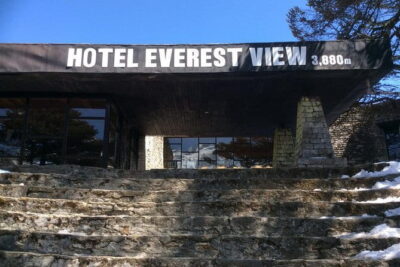
Everest Base Camp Helicopter Tour landing at Everest View Hotel
Read our review →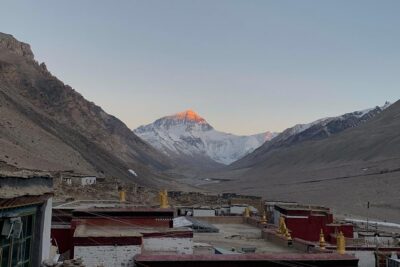
Tibet Tour 8 Days Lhasa to Everest Base Camp Small Group Tour
Read our review →
Dubai: Private Luxury Everest Yacht Cruise from Dubai Marina
Read our review →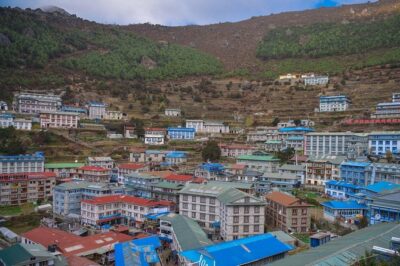
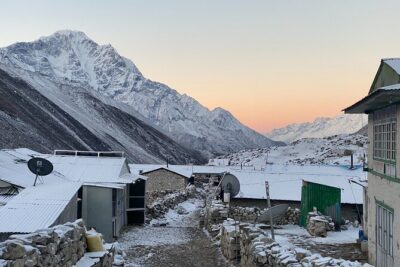
Browse the lists this trek appears in