
Review · KATHMANDU
12 Days Everest Base Camp Kala Patthar Trek
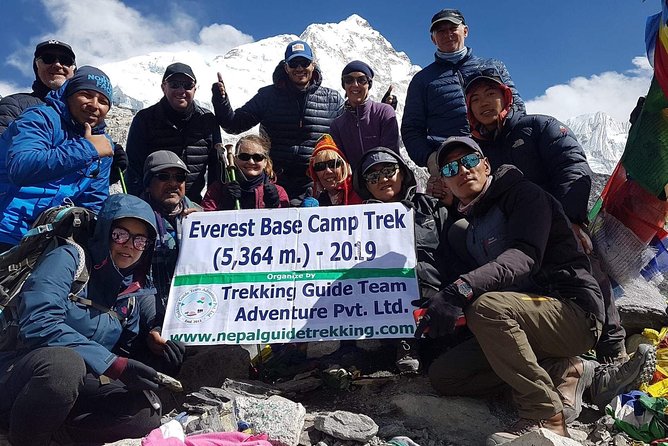
The great appeal here is simple: you walk into the Everest region instead of merely looking at it from a viewpoint. Over 12 days, you follow mountain trails to Everest Base Camp and Kala Patthar, sleep in family-run tea houses, and experience the steady rhythm of Himalayan trekking.
I like the private format, which gives your group direct access to its guide, and I like that food, permits, porters, lodging, and transport are arranged together. The strongest guides associated with past departures include Shambu, Ram, and Deepak Gurung, but your assigned guide may differ.
The main catch is that this is a serious high-altitude trek, not a sightseeing holiday. You also need to budget for equipment, insurance, Kathmandu lodging, drinks, tips, and possible weather-related flight costs.
Key points before you book
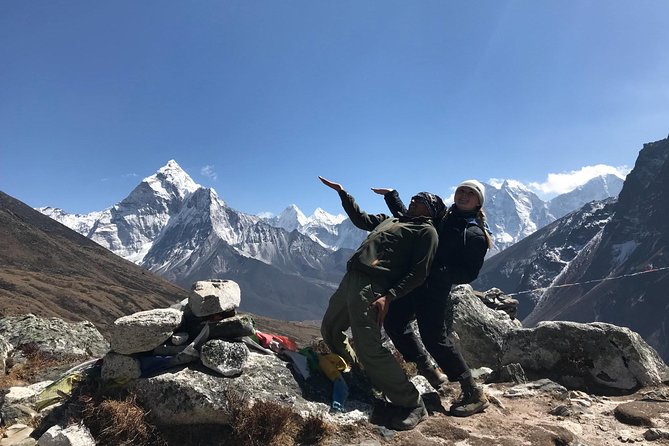
- Kala Patthar gives you the high viewpoint: The trek reaches both Everest Base Camp and Kala Patthar, with the latter serving as the key mountain-view objective.
- Tengboche adds culture to the walking: You visit Tengboche Monastery, an important stop in the Sherpa region.
- Private guiding keeps the trip personal: Only your group takes part, with a guide and porter support arranged for the trek.
- Family-run tea houses are part of the experience: Ten nights are included in mountain lodges on a twin-sharing basis, with outside toilets.
- Lukla flights need patience: Weather can delay or cancel the domestic flight, and extra helicopter or hotel costs may fall to you.
- The price covers the essentials: At $1,799 per person, the package includes meals, permits, lodging, transport, guide services, porters for most bookings, and domestic flights.
What the 12-day Everest trek is really like
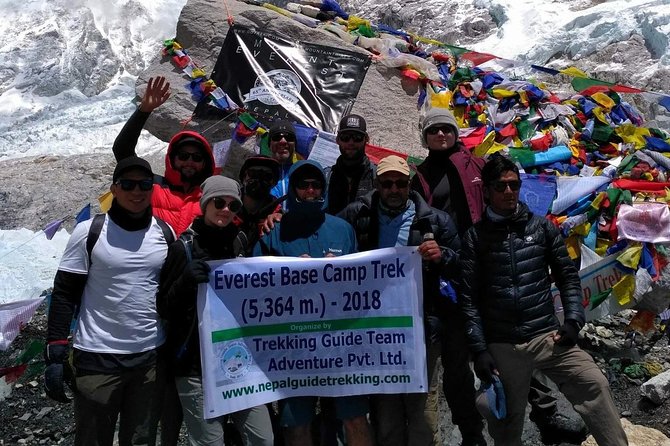
This trip is built around a classic Everest Base Camp route, with Kala Patthar added for a higher viewpoint. You begin in Kathmandu and travel by domestic flight toward Lukla, the mountain gateway used for the trek.
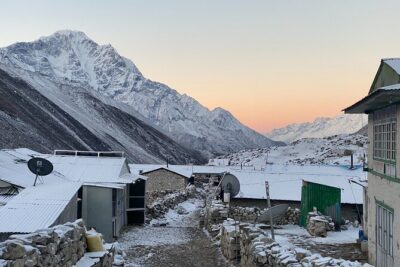
From there, the journey is on foot. You walk through the Khumbu region, staying in tea houses and lodges rather than camping. That choice matters. You get a roof, a bed, and cooked meals, while still living close to the mountain communities that support the route.
The exact daily walking schedule is not supplied, so you should ask for the current day-by-day plan before paying. A 12-day schedule is fairly compact for this altitude, and the pace may feel demanding. Your guide’s judgment, your own fitness, and the weather will all affect how the days unfold.
More Everest Base Camp Treks in Kathmandu:
- Everest Base Camp Trek – 14 Days
★ 5.0 · 1,499 reviews - Everest Base Camp Trek
★ 5.0 · 842 reviews - Everest Base Camp Helicopter Tour landing at Everest View Hotel
★ 5.0 · 668 reviews
Kathmandu preparation and the flight to Lukla
Kathmandu is the starting point, but accommodation there is not included. You need to arrange your own hotel before and after the trek, unless the operator confirms a separate package.
You will also obtain your Nepal entry visa on arrival at Tribhuwan International Airport. The supplied information gives the visa cost as $30 per person and says you need two passport-size photos. Check current requirements before departure, since visa rules and fees can change.
The flight to Lukla is one of the trip’s practical pressure points. Mountain weather changes quickly. A delayed flight can mean returning to your hotel, paying for that night yourself, and trying again the next day.
If the flight remains disrupted, a helicopter may be offered. The stated estimate is about $300 total, using the flight ticket plus an extra payment of roughly $150 to $200, though the actual price is set by the airline on the day. You should carry access to emergency funds for this possibility.
The package includes one airport transfer to Lukla and one return transfer. Repeated trips back to the airport because of weather are not included. This is not a flaw in the trek itself, but it is an important cost risk.
Walking into the Khumbu region
Once you leave Lukla, the trip changes character. Roads and city comforts give way to footpaths, suspension bridges, mountain villages, and tea houses. The route is not presented as a luxury walk. You will be carrying a daypack, gaining altitude, and adjusting to simpler facilities.
The guide leads the group, while porters carry the main luggage. For groups, one porter is assigned for every two people. A solo booking does not include a porter, although one can be added for $250.
That rule can affect your decision more than it first appears. A solo trekker may need to carry more gear or pay the additional amount. Ask exactly how much weight your porter will carry and how your luggage will be divided before leaving Kathmandu.
The mountain lodges are family-run, which gives the trip a more local feel than a hotel-based tour. Rooms are twin-share, and the package includes 10 nights in lodges or tea houses. Toilets are outside, so expect basic conditions. Hot showers are not included, and drinks such as tea and coffee cost extra.
Tengboche Monastery and Sherpa culture
Tengboche Monastery is one of the main cultural highlights. The stop breaks up the long walking days with a place connected to Sherpa Buddhist life and the local mountain community.
The value of visiting Tengboche is not just the building itself. It gives you a chance to see that the Khumbu is a lived-in region, not simply a trail to the world’s highest mountain. Your guide can help explain the local setting and customs, which is one reason the quality of guiding matters so much.
Past departures have included guides named Shambu, Ram, and Deepak Gurung. Shambu is also described as a former Nepalese Army Sergeant Major, while Deepak is noted for a patient and caring approach. These details may help you understand the level of guide experience available, but they do not guarantee that one of those guides will lead your departure.
You should ask who is assigned to your group and what language support is available. A private guide is most useful when you can ask questions freely, set a sensible pace, and speak openly about headaches, fatigue, or other symptoms.
A few more treks around Kathmandu worth a look
- Everest Base Camp Trekking
★ 5.0 · 485 reviews - Annapurna Circuit Trek with Tilicho Lake
★ 5.0 · 368 reviews - Everest Base Camp Trekking – 13 Day
★ 5.0 · 365 reviews - Everest Base Camp Trek
★ 5.0 · 350 reviews
Reaching Everest Base Camp
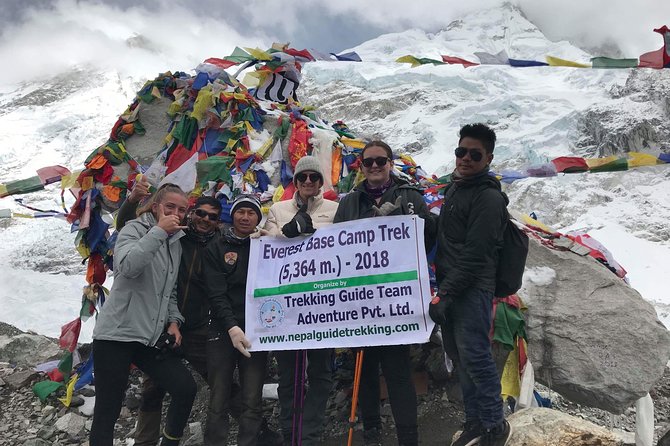
Everest Base Camp is the emotional center of the trek. It is a destination with a clear purpose, and reaching it gives the walking days a strong sense of direction.
The route to Base Camp is not described as an easy day trip. You should expect sustained physical effort and high altitude. The operator requires a strong level of fitness, and that warning deserves attention. Being fit at sea level does not automatically mean you are ready for long uphill walking at altitude.
You are responsible for bringing or renting suitable equipment. The recommended list includes a sleeping bag rated to minus 15 degrees, a down jacket, trekking shoes, warm clothing, gloves, trekking poles, sunglasses, sunscreen, socks, a torch, and personal towels.
The medical list includes supplies for headaches, fever, pain, stomach problems, diarrhea, cuts, and bandages, along with Diamox. You should speak with a medical professional about altitude medication before the trek rather than treating this list as a prescription.
Personal travel insurance is required but not included. Make sure your policy covers helicopter rescue and medical expenses. Ordinary trip cancellation coverage may not be enough for a high-altitude trek.
Kala Patthar and the mountain views
Kala Patthar is the other major goal, and in many ways it is the better viewpoint. Base Camp is the symbolic destination, while Kala Patthar is where you go for a broader view toward Everest and the surrounding peaks.
The climb adds effort after you have already spent days walking at altitude. That makes the summit attempt a test of pacing and patience. Your guide should help decide how quickly to walk and when to stop.
The supplied experience description promises epic mountain views, but weather can limit what you see. Clear skies are never guaranteed. Even so, the route gives you a strong mountain setting, and the high viewpoint helps put the scale of the region into perspective.
This is also where a private group has an advantage. You are not tied to a large party’s pace. If everyone in your group is fit and acclimatizing well, you can maintain a steady schedule. If someone is struggling, the guide can respond directly.
Food, lodging, and what is included
Breakfast, lunch, and dinner are included during the trek. This is a substantial part of the $1,799 price because food costs rise in remote mountain areas, where supplies must be transported along the route.
The package also includes lodge accommodation, permits, guide and porter salaries, guide and porter food, drinks, lodging, transportation, and insurance. Domestic transportation connected with the stated plan is included as well.
The final day includes a typical Nepali cultural dinner. That gives the trip a pleasant finish and adds something beyond the mountain route itself.
You should still plan for personal spending. Alcoholic and non-alcoholic drinks are excluded, including tea and coffee. Hot showers are also extra or unavailable through the package, and you should not assume that every lodge provides the same facilities.
Lukla flights include only 12 kilograms of luggage. Extra baggage costs Rs 100 per kilogram. Pack carefully, and confirm whether the 12-kilogram allowance applies to checked luggage only or to your total flight baggage.
Is $1,799 good value?
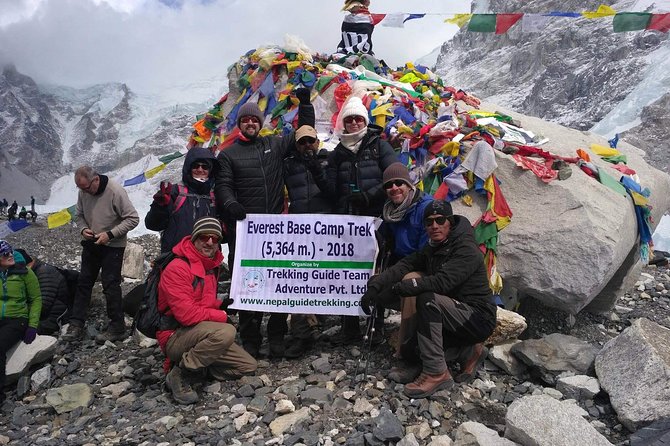
For a private 12-day Everest Base Camp trek, $1,799 is a useful all-in-one price if you already own or can rent the required equipment. Meals, tea-house lodging, guide services, porters for shared bookings, permits, and domestic flights would be expensive and time-consuming to organize separately.
The value is strongest for a small group that wants support without paying for a luxury expedition. You are paying for coordination and local staff, not high-end rooms or private bathrooms.
The price becomes less complete once the exclusions are counted. Add Kathmandu hotels, your Nepal visa, international flights, travel insurance, equipment, drinks, tips, possible extra luggage, and any weather-related hotel or helicopter expense.
Solo hikers should calculate carefully. The listed package does not include a porter for one person, and adding one costs $250. If your luggage is light and you are comfortable carrying more, you may prefer to travel without that extra cost.
The guides and the human side of the trek
The strongest praise in the supplied comments focuses on the staff rather than on fancy facilities. Shambu is repeatedly associated with careful support, practical knowledge, and strong group leadership. Ram is described as a dependable guide, and Deepak Gurung as patient and caring.
Porters also receive specific attention. Keshab, Mahes, Gyayen, Geshep, and Sita Ram are named in past departures, with particular appreciation for safe luggage handling and help during a medical evacuation.
That is worth noting because porter support is not just a packing service. These staff members help make a difficult route possible, yet the package leaves tips to you. Bring cash for gratuities and ask the operator for current tipping guidance.
The private setup also suits families and groups with mixed abilities, provided everyone understands the physical demands. A prior group included nine people and three children, but that does not mean this route is suitable for every child. Ask about age, fitness, and altitude experience before booking a family departure.
What can go wrong
The main risks are altitude, weather, and the fixed cancellation terms.
If you develop a serious health problem or need rescue, personal insurance becomes essential. A past departure included a medical evacuation, showing why the guide team and insurance arrangements matter. The package does not promise that every extra rescue or hotel cost is covered.
Lukla weather can disrupt the schedule. A canceled flight may require another night in Kathmandu, another airport transfer, or a helicopter. Those charges are yours unless you have separate coverage or receive a different arrangement from the operator.
The booking is non-refundable and cannot be changed for any reason. That is a major consideration for a trip dependent on international flights, health, and mountain weather. Do not book until your dates, insurance, and fitness plans are firm.
Who should book this trek?
I would consider this trip a good fit if you want a private, supported Everest trek and are comfortable with basic lodges. It suits people who value a local guide, included meals, and porter help more than hotel comfort.
It also works well for friends or family traveling together. You can share the guide, divide porter costs, and make decisions as a group.
I would be cautious if you want a flexible cancellation policy, guaranteed flights, private bathrooms, or a relaxed walking schedule. The 12-day format leaves less spare time than a longer acclimatization plan, and the extra costs are easy to underestimate.
The published record shows 61 ratings with a five-star score and 100 percent recommendation. That is a strong signal about satisfaction with the guiding team, but it does not remove the need to prepare properly for altitude and weather.
Should you book the Everest Base Camp Kala Patthar trek?
Book it if you want the full Everest Base Camp experience in a private group, with the practical work mostly arranged for you. The combination of tea-house lodging, mountain meals, porters, Tengboche Monastery, Base Camp, and Kala Patthar gives you both cultural and outdoor substance.
Before committing, confirm the assigned guide, the precise daily schedule, altitude planning, luggage rules, and the total cost of possible delays. If you have strong fitness, suitable insurance, and realistic expectations about basic facilities, the $1,799 price can be good value.
If you need more time at altitude or more protection against cancellation, ask whether a longer version is available. For this 12-day plan, preparation is not optional. It is what turns a hard trek into a rewarding one.
FAQ
How long is the Everest Base Camp Kala Patthar trek?
The experience lasts approximately 12 days.
What is the price per person?
The listed price is $1,799 per person.
Is this a private trek?
Yes. Only your group participates in the activity.
Are meals included?
Yes. Breakfast, lunch, and dinner are included during the trek. Drinks such as tea, coffee, and alcohol are not included.
Is accommodation included?
Yes. Ten nights in mountain lodges or tea houses are included on a twin-sharing basis. The facilities are basic, and toilets are outside.
Is a porter included?
For group bookings, one porter is included for every two people. A solo trekker does not receive a porter in the listed price, but can add one for $250.
Is the Nepal entry visa included?
No. The stated visa cost is $30 per person, and two passport-size photos are required for the visa on arrival.
Are flights to Lukla included?
Domestic flights connected with the trek are included. The baggage allowance is 12 kilograms, with extra luggage charged at Rs 100 per kilogram.
What happens if the Lukla flight is canceled?
You may need to return to your hotel and try again the next day. The extra hotel and transport costs are not included. A helicopter may be available for an additional charge, estimated at about $150 to $200 beyond the flight ticket, depending on the airline.
Is travel insurance included?
No. You must arrange personal travel insurance that covers helicopter rescue and medical bills.
Is equipment included?
No. You need to arrange items such as a minus 15 degree sleeping bag, down jacket, trekking shoes, gloves, warm clothes, sunglasses, sunscreen, trekking poles, and personal medical supplies.
Can I cancel for a refund?
No. The experience is non-refundable and cannot be changed after booking.
Just added around Kathmandu
- Everest Base Camp Trek★ 5.0 · 3 reviews
- Everest Base Camp Trek★ 5.0 · 7 reviews
- 15 Days Private Everest Base Camp Trek★ 5.0 · 30 reviews
- Everest Base Camp Trek★ 5.0 · 57 reviews
- 14 Days of Adventure Trekking to Everest Base Camp★ 5.0 · 2 reviews
- 14-Day Everest Base Camp Trek★ 5.0 · 20 reviews
- From Kathmandu: Private 14-Day Everest Base Camp Trek★ 5.0 · 20 reviews
- 14 Days Everest Base Camp Trek★ 5.0 · 4 reviews
Everest Base Camp Treks, compared.
Everest Base Camp Helicopter Tour landing at Everest View Hotel
Read our review →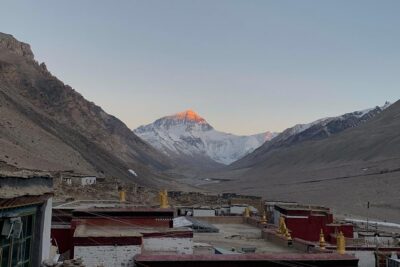
Tibet Tour 8 Days Lhasa to Everest Base Camp Small Group Tour
Read our review →
Dubai: Private Luxury Everest Yacht Cruise from Dubai Marina
Read our review →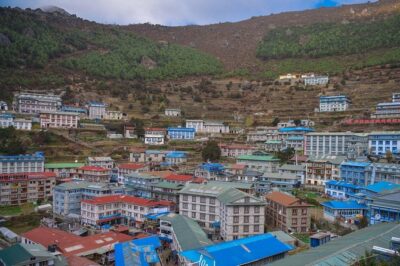
Browse the lists this trek appears in