
Review · ARUSHA
4 days Best experience Kilimanjaro Hike, Serengeti &Ngorongoro
Materuni’s coffee country, Chemka’s clear spring, Serengeti’s open plains, and Ngorongoro’s wildlife-filled bowl make this a remarkably full four-day Tanzania trip. You get a taste of mountain culture and a proper northern-circuit safari without committing to a long Kilimanjaro climb.
I especially like the mix of active and scenic stops on the first day, and the chance to sleep near Serengeti’s Seronera area before visiting Ngorongoro. The trade-off is pace: long drives, early starts, camping, and a packed schedule leave little room for a slow morning or extra time at any one place.
Key points to know before booking
- Materuni reaches about 2,500 meters, with a village trek, coffee tour, traditional food, and views toward Mount Kilimanjaro.
- Chemka Hot Spring adds a genuine swimming stop after the mountain walk, with water described as warm in one area and cooler in another.
- Serengeti and Ngorongoro provide two different safari settings, from wide-ranging game country to a compact crater with excellent wildlife viewing.
- The safari vehicle has a pop-up roof, useful for standing safely and seeing animals above the vehicle sides.
- Guides may include Ezra, Michael, Mathew, or Abuu, with past trips also mentioning a guide called Bulldozer. Ask who will lead your departure.
- This is sold as a private activity, even though the headline describes a group tour, so confirm the final arrangement before paying.
What this four-day Tanzania trip is really trying to do
This is not a Kilimanjaro summit trek. It is a day hike in the Kilimanjaro area, followed by two of Tanzania’s best-known wildlife destinations. That distinction matters. You will not climb toward Uhuru Peak or spend several nights on the mountain. Instead, you walk from Materuni village to roughly 2,500 meters, see a waterfall area, learn about coffee production, and enjoy local food.
The route then shifts from mountain scenery to safari country. You travel by road to Serengeti National Park, spend time around the Seronera area, and continue to Ngorongoro Conservation Area. On the final day, you descend into the crater for a game drive before returning to Arusha or continuing to the airport.
I see this as a strong sampler for someone with limited time. It covers culture, walking, swimming, scenery, and wildlife in one compact trip. It is less suitable if you want a relaxed safari with several full days in one park.
More Kilimanjaro Climbs in Arusha
- 8-Day Small-group Lemosho Kilimanjaro Summit Trekking
★ 5.0 · 186 reviews - 7-Day Machame Kilimanjaro Summit Tour from Arusha
★ 5.0 · 125 reviews - Mountain Kilimanjaro Day Hike
★ 5.0 · 102 reviews
Day 1: Materuni village, coffee, and Chemka Hot Spring
The first day begins near Arusha and combines three quite different experiences. You travel to Materuni village, walk uphill to around 2,500 meters above sea level, take part in a coffee tour, eat hot traditional food, and then continue to Chemka Hot Spring before returning to Arusha.
The Materuni walk is the most active part of the day. The distance and walking time are not clearly specified, so ask your operator for the expected route and elevation gain. At this height, even a moderate walk can feel harder than it looks, especially if you have just arrived in Tanzania or are not used to mountain paths.
The coffee portion gives the day a local focus rather than making it only a viewpoint stop. You can expect a local guide to explain the coffee process and connect the crop to everyday life in the village. Past departures have specifically praised guides such as Mathew and Ezra for explaining the coffee experience and the walk clearly. Guide assignments can change, so confirm your guide’s name in advance if that matters to you.
The meal is described as hot traditional food, which is welcome after walking. The information provided does not specify the menu, dietary arrangements, or whether vegetarian meals are available. If you have allergies or food restrictions, tell the company before departure.
Chemka Hot Spring supplies the day’s easygoing finish. The water is described as clean, with one side warm and another cooler. That makes it more like a natural swimming pool than a hot bath. Bring a swimsuit, towel, dry clothes, and a waterproof bag for your phone.
The day is listed at about six hours, though transfers can affect the actual schedule. The combination is appealing, but it is a lot for one day. You hike, eat, swim, and return to Arusha, where the plan names Graceland Hotel for the overnight stay. Confirm the hotel and pickup time because the published details do not explain how long each transfer will take.
Day 2: The long road to Serengeti
After breakfast, you leave at about 8:00 a.m. with a packed lunch and head directly toward Serengeti National Park. The stated travel time is about eight hours, followed by an evening game drive of roughly two hours before dinner and overnight at a tented camp in the Seronera area.
This is the day to set realistic expectations. The Serengeti is not a quick side trip from Arusha. Much of the day is spent on the road, and arrival time depends on road conditions and stops. The reward is that you reach the park in time for an initial wildlife drive instead of waiting until the following morning.
The pop-up roof on the safari jeep is an important practical feature. It gives you a better view when the vehicle stops and lets you look across the grassland without viewing through side windows. Bring a hat, sunscreen, water, and a light layer. Dust and sun are part of the road experience.
Your guide’s skill matters especially on this day. The team has included guides named Michael, Ezra, Mathew, and Abuu on different departures. The strongest comments about the service focus on clear communication, wildlife explanations, and help before the trip. Ask whether your guide will also handle the park route and campsite arrangements.
The evening drive is short compared with a full safari day, but it offers a useful first look at Serengeti wildlife and the Seronera area. You might see large herds, predators, or smaller species, but no safari can promise the Big Five. Animal sightings depend on season, location, weather, and luck.
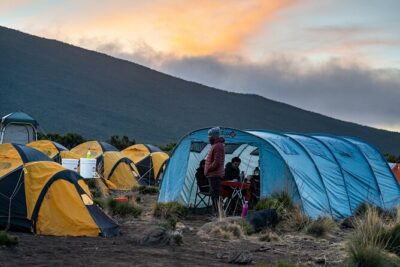
The overnight is described as a tented camp at Serengeti Seronera. Camping equipment, meals, and drinking water are included. The exact tent setup, bathroom arrangement, bedding, and electricity details are not stated, so ask before booking if comfort is a major concern. A past four-day departure was praised for good sleep arrangements and food, but conditions can vary by camp and date.
Day 3: From Serengeti toward Ngorongoro
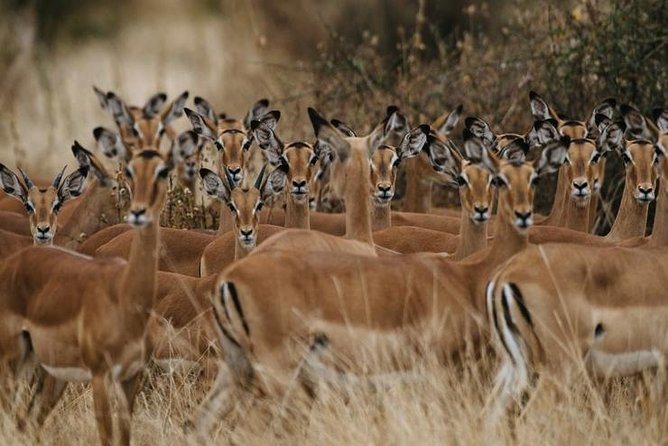
Day three begins with an early morning game drive before you head toward Ngorongoro Conservation Area. This early start is worthwhile because cooler hours often make wildlife activity more likely, and the light can be excellent for photographs.
Ngorongoro is different from Serengeti in both geography and management. It is a Conservation Area rather than a national park, and Maasai communities graze cattle in the wider area alongside wildlife. The itinerary includes a chance to see something of Maasai life, though it does not promise a formal village visit or cultural demonstration.
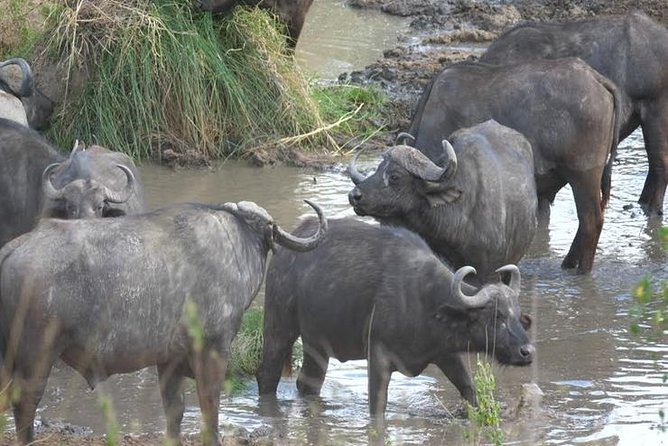
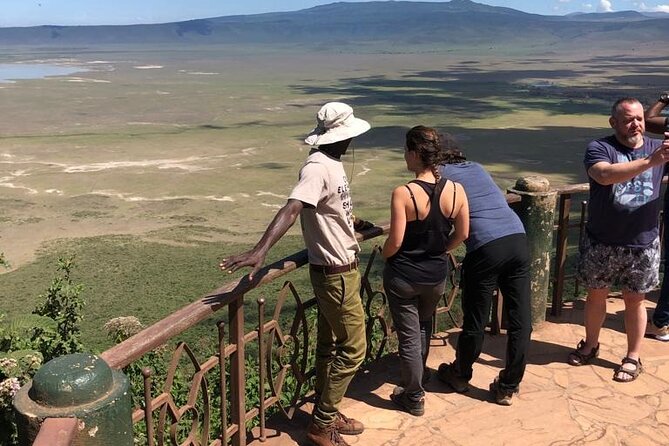
You stop at the entrance gate and learn about the volcanic setting before driving around the crater rim. From above, you can look down toward herds of wildebeest and buffalo. The rim viewpoint is one of the trip’s strongest visual moments because it gives you the scale of the crater before you enter it.
The day is listed at about six hours. That includes the morning drive, the journey toward Ngorongoro, and rim viewing, so timing may feel tight. You spend the night at Simba Camping Site on the Ngorongoro crater rim. The high position can make the night cooler than in Arusha or the Serengeti, so pack warm layers even if your daytime clothing is light.
This is also the trip’s most exposed camping night. The supplied information confirms camping equipment, but not the exact facilities at Simba campsite. Ask about toilets, showers, charging, and sleeping arrangements. That simple conversation can prevent an uncomfortable surprise.
Same trailhead, a different route:
- 4 Days Mount Meru Trekking
★ 5.0 · 55 reviews - From Arusha/Moshi: Kilimanjaro Hike Marangu Route Day Trip
★ 4.5 · 54 reviews - Mount Kilimanjaro Day Hike Through Marangu Route to Mandara Hut
★ 5.0 · 37 reviews - 5 days safari, hiking & culture (Serengeti & kilimanjaro)
★ 5.0 · 27 reviews
Day 4: Descending into the crater
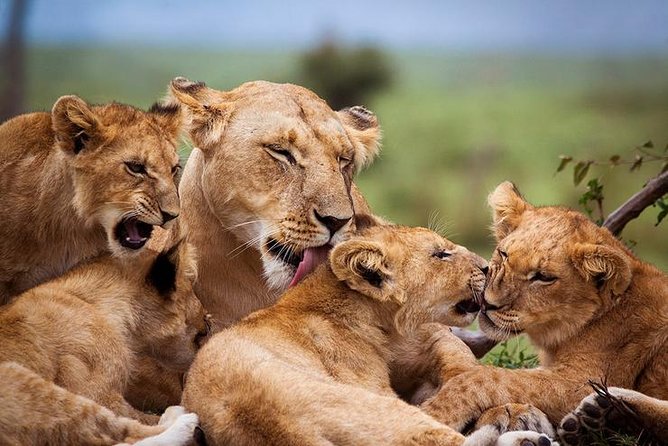
After breakfast, you finally descend into Ngorongoro Crater for the main game drive. The crater walls form a natural enclosure, and the compact setting gives you a good chance to see several kinds of wildlife in one morning.
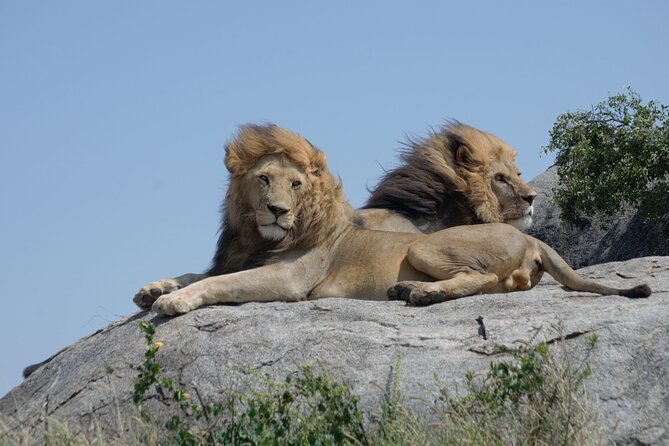
The itinerary highlights the Big Five: lion, elephant, buffalo, rhinoceros, and leopard. It also lists hippos, hyenas, flamingos, and other species. Seeing every one is never guaranteed, particularly leopard and rhino, but Ngorongoro is a sensible place to look because animals are concentrated within the crater floor.
The descent and return make this a focused wildlife day rather than a long open-ended safari. You have breakfast first, enter the crater, and later drive back to Arusha or the airport. Confirm the return timing if you have a flight, since the schedule does not provide a precise arrival hour.
The final drive can be tiring. You have already completed the Materuni walk, a long transfer to Serengeti, an early morning game drive, and a night at the crater rim. Still, ending with Ngorongoro makes sense: it places the most concentrated wildlife experience at the close of the trip.
Wildlife expectations in Serengeti and Ngorongoro
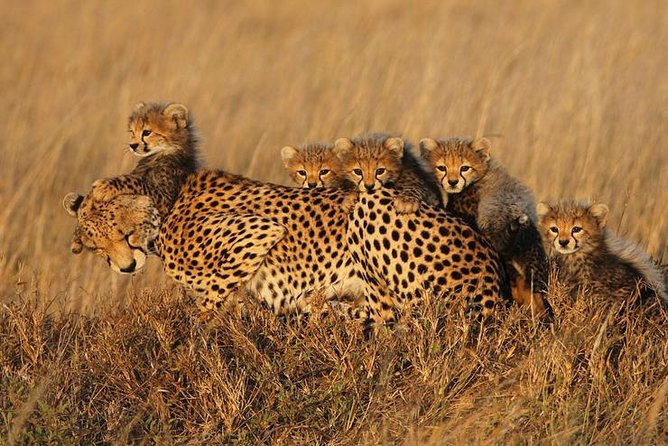
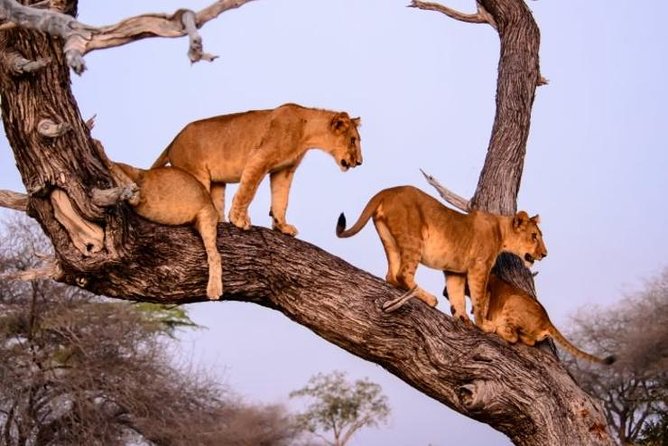
This itinerary gives you two chances to see major African animals in very different settings. Serengeti offers broader game country and a longer sense of distance. Ngorongoro gives you a more enclosed area where animals can be easier to locate.
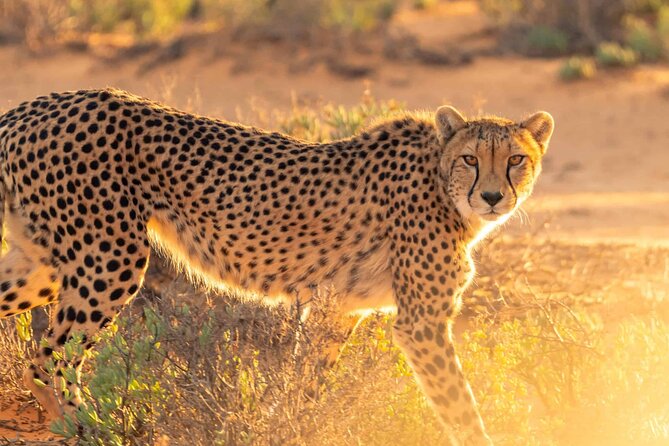
Past departures have reported sightings of all five animals on some trips, along with cheetahs. Treat that as a fortunate outcome, not a promise. Your guide can help by reading animal behavior, choosing routes, and sharing information, but the timing of nature remains outside anyone’s control.
I would bring binoculars if you have them. They are especially useful for distant animals on the Serengeti and for scanning the crater floor. A camera with a zoom lens helps, but the pop-up roof gives you a good basic viewing position even if you travel with only a phone.
Guides, service, and the private-tour setup
The company is Dancing Simba Safaris. The published arrangement says this is a private activity for your group, although the headline also calls it a group tour. That wording is unclear, so ask directly how many people will be in your vehicle and whether anyone outside your booking will join.
Several guide names are associated with past departures, including Ezra, Michael, Mathew, Abuu, and Bulldozer. The most consistently praised qualities are friendly service, wildlife explanations, quick replies from David during planning, and willingness to answer questions. One French-speaking departure was also arranged, so ask about language support if needed.
Private travel can be valuable here because the schedule is tight. You may be able to discuss food, airport timing, or the pace of the Materuni walk more easily than on a fixed large-group departure. On the other hand, private does not automatically mean luxurious. The included camping and long road transfers keep this closer to an active, value-focused safari than a high-end lodge trip.
What is included, and what you should confirm
The package includes a private safari adventure, camping equipment, meals, drinking water, and a safari jeep with a pop-up roof. The meal list states three dinners, four lunches, and four breakfasts, although the day-by-day description specifically mentions a lunch box on the Serengeti drive and traditional food at Materuni.
That meal count deserves clarification because the itinerary describes four days but not every meal in equal detail. Ask what is served on the first day, whether the final lunch is included, and how dietary requests are handled.
Tipping, flights, and personal items are excluded. The displayed price is $0.00, which is not enough information to judge value or establish the actual amount payable. Treat it as an incomplete or placeholder figure and request a written total covering park fees, transport, camping, guide services, and any airport transfer.
Confirmation is provided at booking, and free cancellation applies if you cancel at least 24 hours before the start time. Cancellations within 24 hours are not refunded, and late changes are not accepted.
Who should book this experience?
I would choose this trip if you want a short, active introduction to northern Tanzania and like variety. It suits people who want more than a standard safari, especially those interested in a village walk, coffee, swimming, and local food as well as wildlife.
It also suits first-time visitors who appreciate help with planning. Past departures describe useful booking communication, airport pickup assistance, and guides who answered questions throughout the trip.
I would hesitate if you want several full days in the Serengeti, a summit climb of Kilimanjaro, or lodge-based comfort. The schedule is demanding, the second day includes a long road transfer, and two nights are camping-based. You should also reconsider if you need a precise timetable, since the supplied plan leaves some transfer and accommodation details open.
Should you book the four-day route?
Book it if your priority is variety and you have only four days. Materuni and Chemka give the trip a human and outdoor side, while Serengeti and Ngorongoro supply the major wildlife draw. The pop-up-roof vehicle, included meals, camping gear, and private setup add practical value.
Before confirming, ask four questions: the actual price, the final group size, the assigned guide, and the exact camping facilities. If those answers suit your budget and comfort level, this is a busy but rewarding way to sample Tanzania’s northern circuit without signing up for a full Kilimanjaro expedition.
FAQ
Is this a Kilimanjaro summit hike?
No. The first day is a day trek from Materuni village to about 2,500 meters above sea level. It includes a coffee tour and local food, but it is not a summit climb.
How long is the tour?
The experience lasts approximately four days.
Where does the tour begin?
The tour is based in Arusha, Tanzania. The first day visits Materuni village and Chemka Hot Spring before returning to Arusha.
Is the tour private?
The information describes it as a private activity for your group only. The headline also uses the term group tour, so confirm the final group arrangement when booking.
What meals are included?
The package lists three dinners, four lunches, and four breakfasts. It also includes drinking water and a traditional meal at Materuni.
Is camping equipment provided?
Yes. Camping equipment is included. The overnight locations described are a tented camp in Serengeti’s Seronera area and Simba Camping Site on the Ngorongoro crater rim.
What is the cancellation policy?
You receive a full refund if you cancel at least 24 hours before the experience starts. Cancellations or changes made within 24 hours are not accepted for a refund.
More 4-Day Experiences in Arusha
- 4 Days Mount Meru Climbing | Hiking | Trekking Tour
★ 5.0 · 13 reviews - 4 Days best Mount meru trekking
★ 5.0 · 2 reviews - Cusco: 4-Day Inca Trail to Machu Picchu with Accommodation
★ 4.8 · 432 reviews - Pokhara: 4-Day Ghorepani, Poonhill & Ghandruk Mountain Trek
★ 5.0 · 132 reviews
Just added around Arusha
- Mt. Kilimanjaro: Shira plateau to Cathedral point 3872m Day hike★ 5.0 · 7 reviews
- 5 days safari, hiking & culture (Serengeti & kilimanjaro)★ 5.0 · 27 reviews
- One Day Hike from Kilimanjaro to Mandara★ 5.0 · 2 reviews
- 3 Days Mount Meru trekking★ 4.5 · 7 reviews
- climb the KILIMANJARO via Lemosho route★ 5.0 · 4 reviews
- 6 Day: Hiking Kilimanjaro via Machame Route★ 5.0 · 2 reviews
- Private 8 day Northern Circuit Kilimanjaro Climb★ 5.0 · 8 reviews
- Kilimanjaro Waterfalls Hike & Moshi Hot Springs Day Trip Tour★ 5.0 · 4 reviews
Kilimanjaro Climbs, compared.
8-Day Small-group Lemosho Kilimanjaro Summit Trekking
Read our review →
Climbing Kilimanjaro through 7 days Machame Route
Read our review →
Browse the lists this trek appears in