
Review · ARUSHA
8 Days Mountain Kilimanjaro Lemosho Route
Kilimanjaro’s Lemosho Route gives you the mountain in chapters: thick rainforest, open moorland, the high Shira Plateau, volcanic rock, a giant wall, and finally the cold, bare summit zone. The 8-day plan is not a quick dash. It uses extra time and altitude changes to give your body a better chance to adjust.
I like two things right away. First, the route includes a full day around Shira Plateau and time near Lava Tower, both useful for acclimatization. Second, the price includes camping gear, a sleeping bag, meals, and clean water, so you are not assembling a mountain expedition from scratch. The company also pays for membership in the Kili Porter Assistance Program, which matters on a trek that depends heavily on porter support.
The main consideration is the summit day. You leave Barafu Camp around midnight, climb for 6 to 8 hours, then descend all the way to Mweka Camp. That is a long, cold, tiring day, and moderate fitness is the minimum stated requirement. You should be ready for discomfort, not just pretty photographs.
Key points before you book
- The 8-day route favors acclimatization: You spend a full day on Shira Plateau and climb high to Lava Tower before sleeping lower at Barranco.
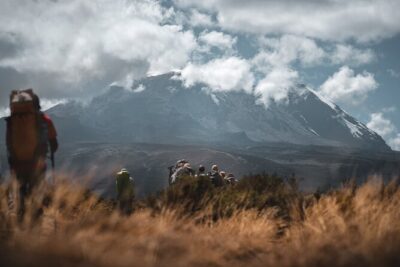
- The scenery changes constantly: Expect rainforest, tall grasses, heather, volcanic rock, moorland, alpine desert, and an Arctic summit zone.
- The summit push begins around midnight: The climb to Uhuru Peak takes 6 to 8 hours, followed by a 4 to 6 hour descent to Mweka Camp.
- The trek is private: Only your group participates, with pickup offered from your accommodation after breakfast.
- The main guide praised by name is John Danford: James has also handled trip communication and planning for some climbers.
- Many basics are covered: Meals, clean water, camping gear, a sleeping bag, fees, and taxes are included, but tips, insurance, visas, and flights are not.
Why Lemosho works well over eight days
The Lemosho Route is a good choice if you want more than a straight uphill march. It begins on the western side of Kilimanjaro and joins other routes near Barranco Camp. That longer approach lets you gain height in stages, walk across the Shira Plateau, and spend time at useful acclimatization points.
The route is described as suitable for different hiking experience levels, but do not read that as easy. Kilimanjaro is high, and the summit reaches 19,341 feet. The daily hiking distances are not always huge, yet altitude makes ordinary walking feel harder.
The 8-day version is especially useful if you have limited high-altitude experience. One of the strongest features is the climb to Lava Tower at 15,190 feet, followed by a drop to Barranco Camp at about 13,044 feet. You go high, then sleep lower. That pattern gives your body valuable adjustment time without turning every day into a race.
This is also a private activity, so your pace and daily rhythm are handled within your own group. That can be a real advantage on a demanding mountain. The itinerary allows flexible walks from camp, although the exact choice depends on your guide and conditions.
More Kilimanjaro Climbs in Arusha
- 8-Day Small-group Lemosho Kilimanjaro Summit Trekking
★ 5.0 · 186 reviews - 7-Day Machame Kilimanjaro Summit Tour from Arusha
★ 5.0 · 125 reviews - Mountain Kilimanjaro Day Hike
★ 5.0 · 102 reviews
Day 1: Londorossi Gate to Mti Mkubwa Camp
Your driver and guide pick you up after breakfast and take you toward Lemosho Gate. The drive includes a chance to stop at a local village for lunch and last-minute supplies before you meet the mountain crew.
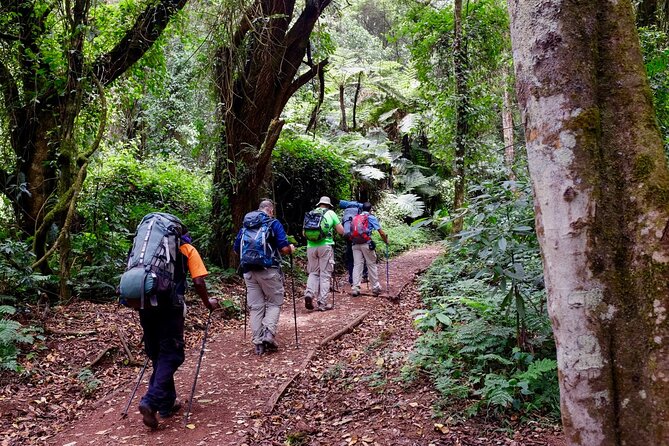
The opening walk lasts about three to four hours. You enter the thick rainforest at the lower base of Kilimanjaro and continue to Mti Mkubwa, also called Big Tree Camp. The forest is one of the best reasons to choose Lemosho. It feels far removed from the summit work ahead, with thick vegetation and possible sightings of colobus monkeys.
This first day is short enough to ease you into the routine. You will still need to carry personal essentials, manage changing weather, and get used to sleeping at camp. The route is also a little longer overall than some faster Kilimanjaro plans, so you trade a more gradual start for another night on the mountain.
Day 2: Rainforest to Shira 1 Camp
The trail leaves the forest and moves into tall grasses, heather, and volcanic rock covered with hanging lichen. The change is striking. You begin to see much farther, and the mountain feels more open.
The day covers about 8 kilometers and takes roughly 5 to 6 hours, with elevation rising from 9,498 to 11,500 feet. You cross rolling ground and several streams before reaching Shira Ridge, then descend gently to Shira 1 Camp.
This is where Kibo, Kilimanjaro’s main summit cone, first comes into view across the plateau. That first clear look can be a powerful moment, but do not let the view tempt you into rushing. The mountain is still well above you, and a slow pace is part of the plan.
The itinerary lists this habitat as heath, though the earlier part of the walk still carries the feel of a transition from forest to open high country. Expect a longer walking day than day one, but not yet a brutal one.
Day 3: Shira Plateau and Moir Hut
Day three is one of the route’s best features. Instead of simply marching onward, you spend a full day exploring the Shira Plateau. The trail moves east through moorland meadows toward Shira 2 Camp, then turns toward Moir Hut at the base of Lent Hills.
You walk about 11 kilometers in 5 to 7 hours, reaching roughly 13,800 feet. That height makes the day useful for acclimatization, and the varied options around Lent Hills let the guide shape the walk to suit the group.
Shira Plateau is among the highest plateaus on earth, and it gives this trek a distinct character. You are not yet among the summit’s bare rocks, but the vegetation is shorter and the air feels thinner. The open setting also gives you a wider view of the mountain and surrounding volcanic ground.
The drawback is simple: this is not a rest day. You are already high, and the altitude may slow you down. I would treat this as a steady walking day, not a chance to prove how fast you can climb.
Same trailhead, a different route:
- 4 Days Mount Meru Trekking
★ 5.0 · 55 reviews - 4 days Best experience Kilimanjaro Hike, Serengeti &Ngorongoro
★ 5.0 · 54 reviews - From Arusha/Moshi: Kilimanjaro Hike Marangu Route Day Trip
★ 4.5 · 54 reviews - Mount Kilimanjaro Day Hike Through Marangu Route to Mandara Hut
★ 5.0 · 37 reviews
Day 4: Lava Tower to Barranco Camp
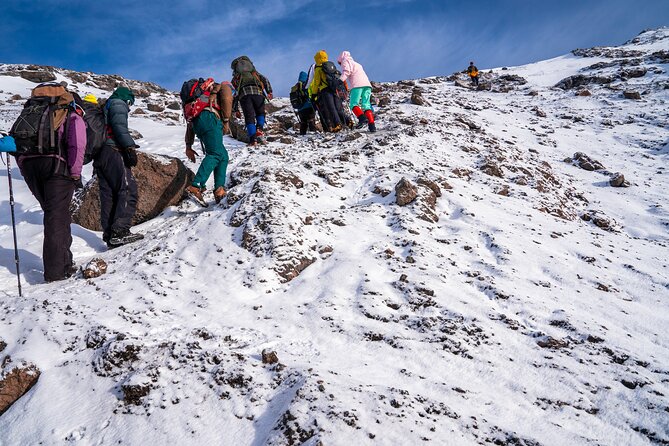
Day four is the key acclimatization day. You climb from Moir Hut to Lava Tower, a 300-foot volcanic rock formation, reaching 15,190 feet. The climb takes about 3 to 4 hours over 7 kilometers.
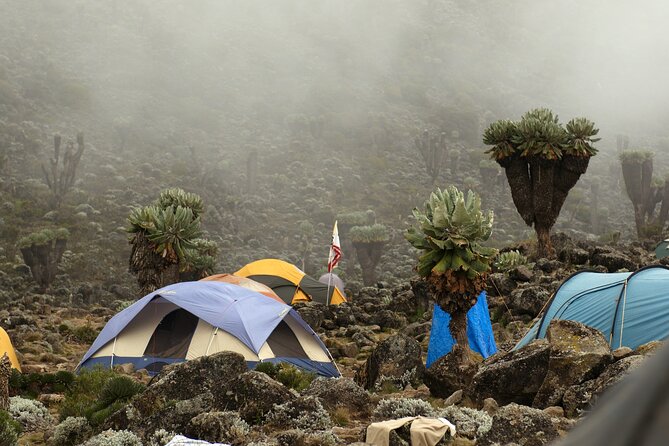
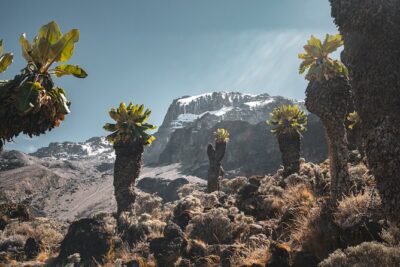
After time at the high point, you descend 3 kilometers to Barranco Camp at about 13,044 feet. That second section takes another 1 to 2 hours. The route passes through the unusual Senecio Forest, where giant plants create a strange contrast with the volcanic ground.
You finish the day at nearly the same general altitude where you began, but the time spent higher is the point. This is a good example of why the eight-day schedule costs extra time but earns its keep. You get exposure to serious altitude before summit day, then sleep lower than the day’s highest point.
The total walking time is around 6 hours. You should expect this to feel harder than the distance suggests. Lava Tower is high, and the combination of climbing, thin air, and a later descent can drain your energy.
Day 5: The Barranco Wall and Karanga Camp
Day five covers only about 5 kilometers and takes 2 to 3 hours, but do not call it effortless. The route drops into a ravine, then climbs the steep Barranco Wall, which rises nearly 900 feet.
The wall is non-technical, meaning you do not need technical climbing equipment for the route described here. It is still steep and requires careful footing. From the top, you cross a series of hills and valleys before dropping into Karanga Valley and climbing once more to Karanga Camp.
This shorter day is designed for acclimatization and recovery after the Lava Tower section. It also gives you one of the trek’s most memorable physical challenges without the full burden of summit day.
Your guide matters here. John Danford is repeatedly associated with successful summit attempts on this route, and the supplied trip information points to his role as chief head guide. A guide who manages pace and encouragement well can make a steep section feel controlled rather than chaotic.
Day 6: Karanga to Barafu Camp
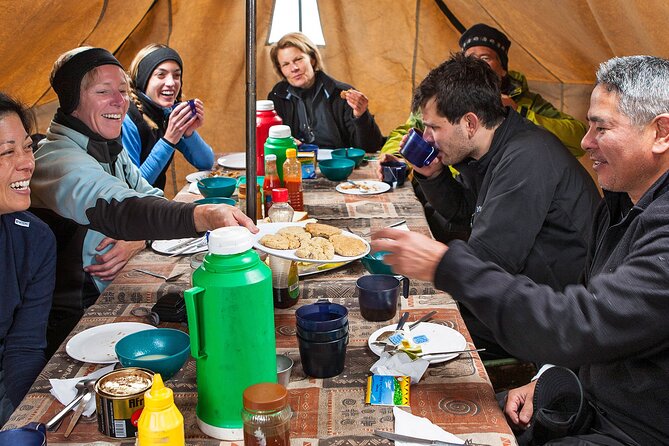
Day six is short on paper: about 4 kilometers and 1 to 2 hours from Karanga Camp to Barafu Camp. The trail climbs from about 13,106 to 15,331 feet through rocky alpine desert.
You reach the junction with the Mweka Trail, then continue upward to Barafu Hut. From here, you have completed the Southern Circuit, which gives views of Kibo and Mawenzi from different angles.
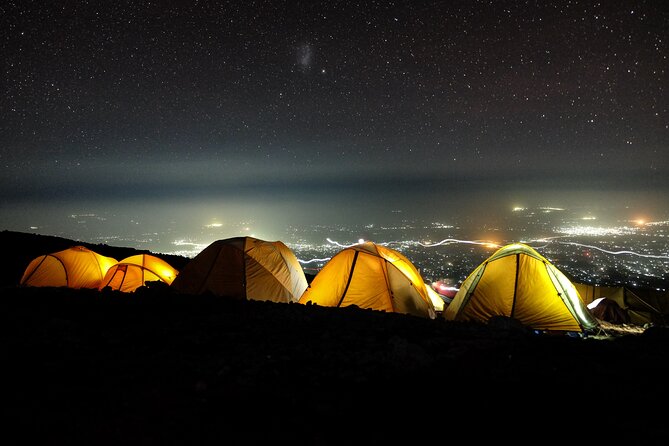
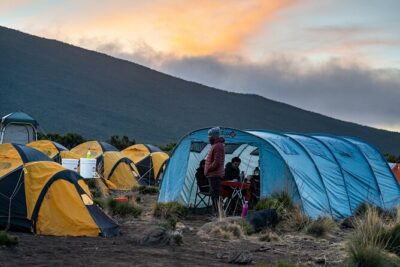
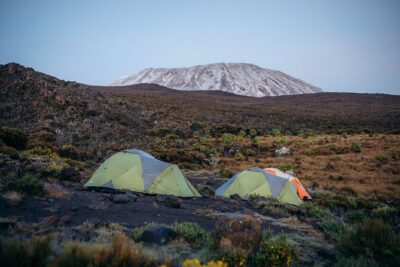
Barafu is the staging point for the summit. You make camp, rest, and eat an early dinner before the midnight start. The schedule sounds gentle because the walking time is short, but your body has accumulated several days of altitude and effort. This is the day to drink the clean water provided, organize your summit clothing, and sleep whenever you can.
The itinerary does not specify an exact dinner time or sleeping arrangement beyond camping, so expect the guide to set the routine according to the group and mountain conditions.
Day 7: Uhuru Peak and the long descent
This is the day that decides the whole trek. You leave Barafu around midnight and climb in darkness toward Uhuru Peak at 19,341 feet.
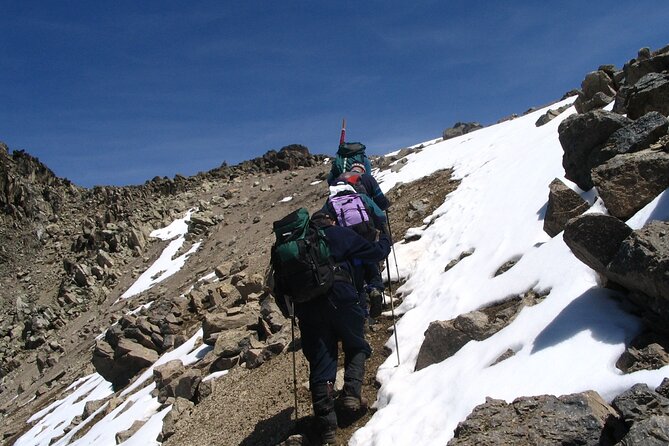
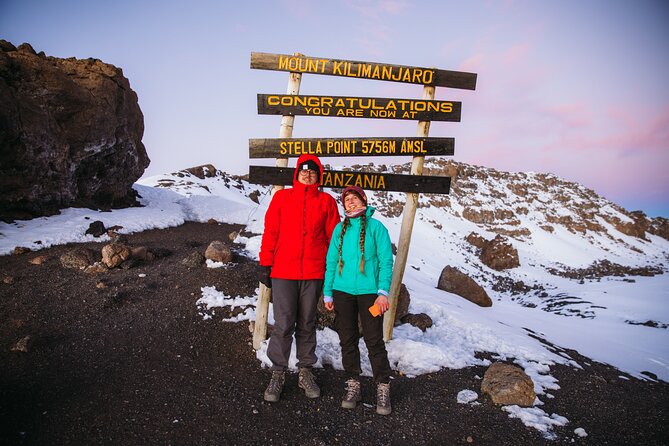
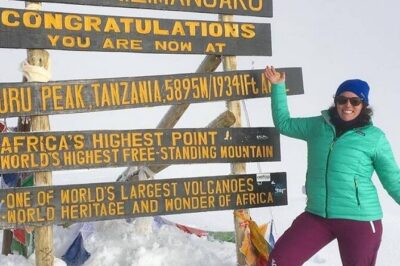
The ascent takes about 6 to 8 hours over 6 kilometers. Cold, wind, darkness, and altitude combine to make this the most demanding section. You take short, frequent breaks, then approach Stella Point at about 18,900 feet. From there, the sunrise over Mawenzi is one of the major rewards of the route.
The final push to Uhuru Peak is not a casual photo stop. At this height, every step can feel slow. You should follow the guide’s pace, keep your layers ready, and save energy for the descent.
After reaching the summit, you descend 12 kilometers to Mweka Camp, losing more than 9,000 feet. That section takes another 4 to 6 hours and moves back into rainforest. In total, you may be moving for 10 to 14 hours, with the summit climb and descent combined.
This is the biggest practical warning I would give you: do not judge the trek only by the daily mileage. Summit day is a full physical test. The eight-day schedule improves acclimatization, but it does not remove the cold, fatigue, or altitude.
Day 8: Mweka Camp to the gate
The final day is a 10-kilometer descent from Mweka Camp at about 10,065 feet to Mweka Gate at roughly 5,380 feet. Walking time is listed at 2 to 3 hours.
At lower elevations, the trail can be wet and muddy. Your boots and trousers may need a final clean by the time you reach the gate. You collect your summit certificates there, then continue about another hour to Mweka Village, where a vehicle takes you back to your hotel in Moshi.
The finish is practical rather than luxurious. You still have a final walk after reaching the gate, so keep some patience in reserve. After eight days, even an easy descent can feel longer than expected.
What the $2,840 price covers
At $2,840 per person, this is not a bare-bones permit and guiding fee. The cost includes all fees and taxes, clean water, camping gear, a sleeping bag, and seven breakfasts, seven lunches, and seven dinners.
That package has real value. Camping equipment is bulky and expensive to arrange independently, while meals and water remove two major daily chores. You are paying for an organized private climb with a full mountain support system rather than simply buying access to the trail.
The price does not include tips, travel insurance, visas, or flights. Those costs can change your final budget substantially. You should also check exactly what personal equipment you must bring, since the included camping gear does not mean every item of clothing or luggage is supplied.
The company identifies itself as a paid member of KPAP, the Kili Porter Assistance Program. On a trek where porters carry much of the camp system, ethical treatment and fair pay are important parts of the value question, not a side note.
Food, camping, and the human side of the trek
The included meals make the trip easier to manage, but the information does not provide a detailed menu. You should confirm dietary arrangements before booking if you have special needs.
Clean water is included, which is particularly useful during long high-altitude days. Hydration will be part of your daily routine, especially before the Lava Tower section and summit push.
The strongest praise connected with this operation centers on the mountain crew, especially John Danford. James is also named in connection with prompt trip planning and communication. Those names give you useful points of contact when confirming who will lead your climb, but you should ask directly who is assigned to your departure.
The private format means only your group participates. That can help if you want a more personal pace, though it also means your group’s fitness and attitude shape the experience. A small, steady group is usually better suited to this route than a group that treats every climb as a contest.
Who should choose this Kilimanjaro trek
I would recommend this route to you if you want a gradual approach, varied scenery, and a private trip with major basics bundled into the price. It is particularly suited to someone with moderate fitness who prefers extra acclimatization time over a shorter itinerary.
It also fits first-time high-altitude hikers who understand that a longer route improves preparation but does not guarantee a summit. The full Shira Plateau day, Lava Tower climb, and shorter Karanga day create a sensible rhythm.
You should think twice if you dislike camping, struggle with long descents, or want a relaxed sightseeing holiday. Summit day begins around midnight and can last up to 14 hours when ascent and descent are combined. This is an adventure with real physical demands.
The tour begins at 8:00 a.m., with pickup offered after breakfast, and ends back at the meeting point after the return to Moshi. Confirmation is received at booking. Free cancellation is available up to 24 hours before the local start time, but changes or cancellations inside that window are not refunded.
Should you book the 8-day Lemosho Route?
Book it if your priority is a better-paced Kilimanjaro climb with varied scenery, private guiding, included equipment, and extra time for altitude adjustment. The route is especially appealing if the chance to walk across Shira Plateau and pass through the Senecio Forest sounds as important as reaching the summit.
Before paying, confirm the assigned guide, porter arrangements, personal equipment list, meal needs, and what pickup location is covered. Also budget separately for insurance, visa, flights, and tips.
I would not choose this plan simply because it is the cheapest way up Kilimanjaro. Choose it because the eight-day schedule gives you a more measured climb, and because you are ready for the hard truth of summit day: the mountain rewards patience, but it still asks for stamina.
FAQ
How long is the Kilimanjaro Lemosho trek?
The experience lasts approximately eight days. The itinerary begins with pickup after breakfast and ends after the descent to Mweka Gate, a walk to Mweka Village, and transport back to the hotel in Moshi.
What is the highest point reached?
The route reaches Uhuru Peak at 19,341 feet. You also climb to Lava Tower at 15,190 feet before descending to Barranco Camp.
Is this a private tour?
Yes. Only your group participates in the activity.
What meals are included?
The package includes seven breakfasts, seven lunches, and seven dinners.
Is camping equipment provided?
Yes. Camping gear and a sleeping bag are included, along with clean water.
What is not included in the price?
Tips, travel insurance, visas, and flights are not included.
What fitness level is required?
A moderate physical fitness level is required. The summit day includes a 6 to 8 hour climb to Uhuru Peak followed by a 4 to 6 hour descent to Mweka Camp.
Just added around Arusha
- Mt. Kilimanjaro: Shira plateau to Cathedral point 3872m Day hike★ 5.0 · 7 reviews
- 5 days safari, hiking & culture (Serengeti & kilimanjaro)★ 5.0 · 27 reviews
- One Day Hike from Kilimanjaro to Mandara★ 5.0 · 2 reviews
- 3 Days Mount Meru trekking★ 4.5 · 7 reviews
- climb the KILIMANJARO via Lemosho route★ 5.0 · 4 reviews
- 6 Day: Hiking Kilimanjaro via Machame Route★ 5.0 · 2 reviews
- Private 8 day Northern Circuit Kilimanjaro Climb★ 5.0 · 8 reviews
- Kilimanjaro Waterfalls Hike & Moshi Hot Springs Day Trip Tour★ 5.0 · 4 reviews
Kilimanjaro Climbs, compared.
8-Day Small-group Lemosho Kilimanjaro Summit Trekking
Read our review →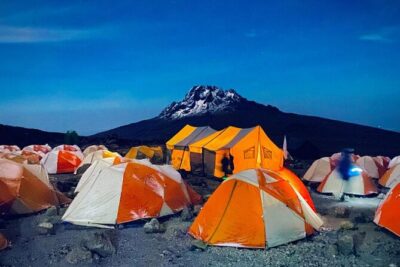
Climbing Kilimanjaro through 7 days Machame Route
Read our review →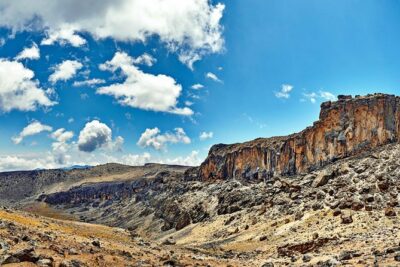
Browse the lists this trek appears in