
Review · NEPAL
Pokhara: 7-Day Annapurna Base Camp Via PoonHill & Hot Spring
Annapurna Base Camp is the prize, but the route earns its keep long before you reach 4,130 meters. You begin with Poon Hill sunrise, pass through Ghorepani and Tadapani, follow the Modi River, and finish with a hot spring soak at Jhinu Dada. That gives you a fine mix of mountain views, village life, forest walking, and a proper high point.
I like the varied route, which packs several of the Annapurna region’s best sights into seven days. I also like the practical care built into the trip: an English-speaking guide, permits, private-group arrangements, four-wheel-drive transport, and guide costs are covered. Guides named on recent departures include Mahesh and Prakash, with porters such as Bishal, Avinesh, and Sujal also praised for their support.
The catch is simple: this is a demanding trek, not a gentle mountain holiday. You will walk for roughly four to six hours on most trekking days, climb to 4,130 meters, and make a quick descent after reaching Base Camp. The price also does not cover a porter, personal drinks, bottled or boiled water, showers, charging, or rescue insurance.
Key points to know before booking
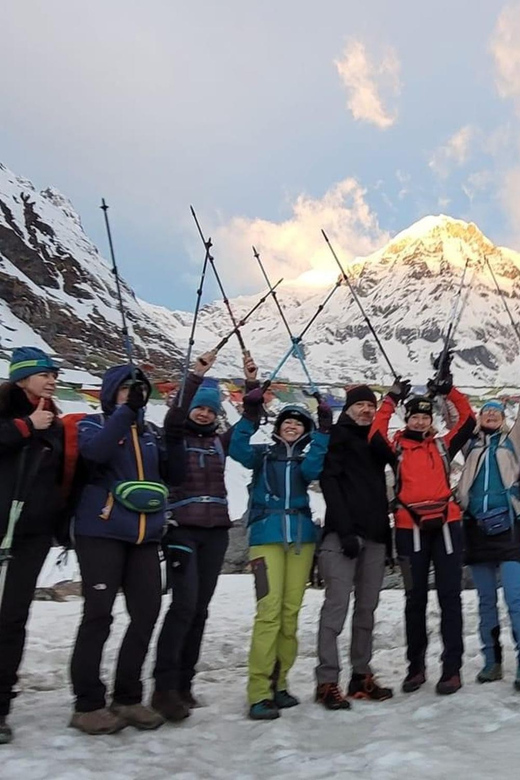
- Poon Hill sunrise comes early: You climb to 3,210 meters before breakfast for mountain views and first light over the Annapurna range.
- Annapurna Base Camp reaches 4,130 meters: The altitude is serious enough to require a steady pace and attention to how you feel.
- The route changes character each day: Expect villages, rhododendron and bamboo forests, river valleys, high mountain scenery, and a natural hot spring.
- Transport saves time at both ends: A four-wheel-drive jeep handles the road sections from Pokhara and the final connection back to the city.
- The group is private: You can travel with your own party and communicate with a guide in English, Hindi, or Nepali.
- The $267 price covers many core costs: Permits, tea house accommodation, guide expenses, government tax, transport, and meals on the full-package option are included.
Why the Poon Hill and Base Camp combination works
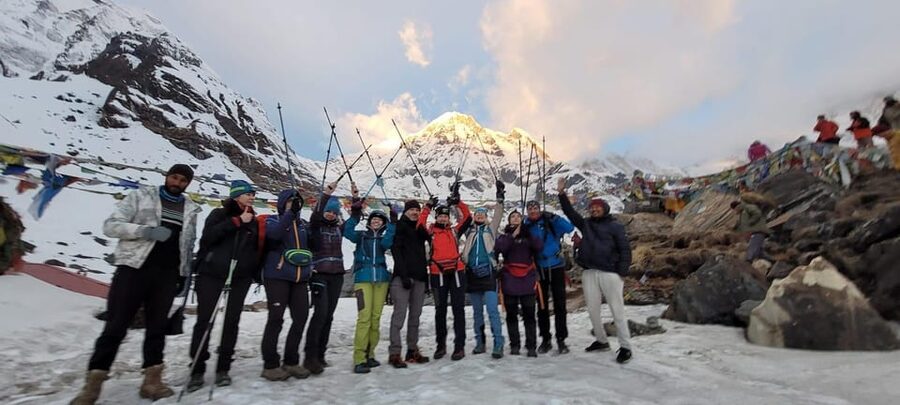
Many short Annapurna trips force you to choose between a sunrise viewpoint and Base Camp. This route gives you both, along with a hot spring at the finish. That is its main selling point.
Poon Hill provides a quick visual reward near the start. At 3,210 meters, it gives you a broad mountain view before the longer approach to Base Camp. You then continue through Tadapani, Chuile, Sinuwa, Deurali, and the upper Modi River area before reaching the great mountain amphitheater at Annapurna Base Camp.
I like this order because the trip begins with a viewpoint and ends with the biggest destination. The route does not simply repeat one type of scenery. You move from road-accessible villages to forest paths, then into a high mountain basin surrounded by snow-covered peaks.
The schedule is tight. Seven days allows you to see a great deal, but it leaves less room for weather delays, illness, or a slower pace. A private group helps because the guide can adjust the walking rhythm to your ability, but you still need to arrive ready for sustained uphill and downhill movement.
More Hot Spring Treks in Nepal
- Pokhara: 5 Day Annapurna Base Camp Trek & Natural Hot Spring
★ 4.9 · 44 reviews - From Pokhara: 5-Day Annapurna Basecamp Trek with Hot Springs
★ 4.9 · 26 reviews - Pokhara: 7-Day Annapurna Base Camp Trek & Natural Hot Spring
★ 5.0 · 11 reviews
Day 1: Pokhara to Ulleri and Ghorepani
Your first day starts with a drive from Pokhara toward Nayapul, followed by a road section through streams, villages, and rhododendron forest. The total drive to Ulleri takes about three hours, then you walk for around four hours to Ghorepani at 2,840 meters.
This is a useful first day because the jeep cuts out a large amount of road walking. You still get a proper trekking start, but the vehicle carries you farther into the foothills before your legs face the trail.
Ghorepani is the key overnight stop before Poon Hill. You stay in a tea house, a simple mountain accommodation option where the focus is warmth, food, sleep, and a convenient place near the trail. Do not expect city-hotel comforts. Personal expenses such as showers, charging, drinks, and laundry are not included, so carry some Nepalese rupees for small costs.
The first day may look manageable on paper, but the combination of driving, climbing, and a four-hour walk can feel long. Use the evening to prepare your day pack for the early Poon Hill start.
Day 2: Poon Hill sunrise, Tadapani, and Chuile
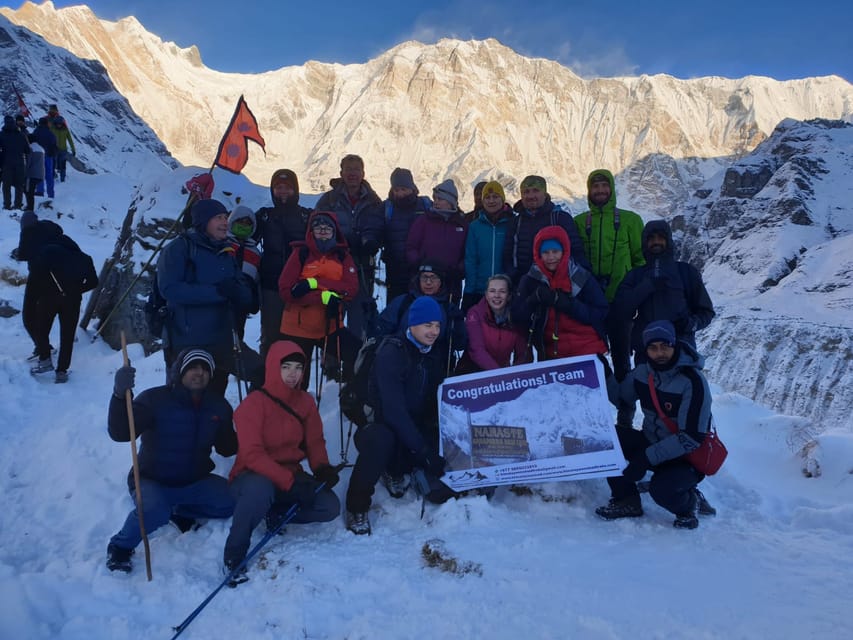
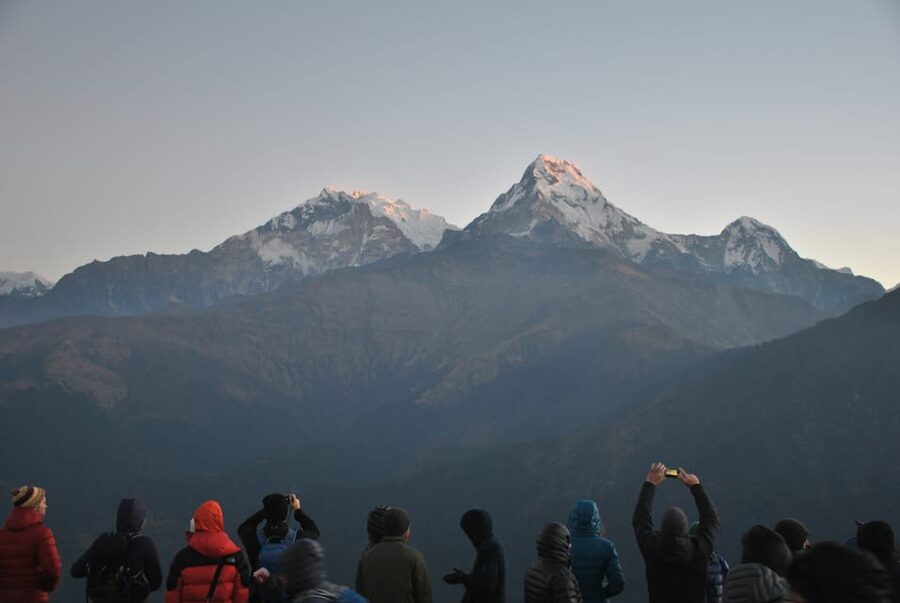
Day two is the scenic centerpiece of the lower route. You climb from Ghorepani to Poon Hill at 3,210 meters for sunrise, then return for breakfast before continuing toward Tadapani and Chuile at about 2,400 meters.
The early start is part of the deal. You will be walking before breakfast, likely in cold conditions, so keep your jacket, headlamp if you carry one, gloves, and camera close at hand. The view is the reward: the Annapurna range and surrounding peaks appear in changing light, while Ghorepani provides a mountain village base below.
After breakfast, the route turns into a long descent and forest walk. Tadapani and Chuile bring you back to a lower altitude, which can feel helpful after the morning climb. You will stay in a hotel in the village area.
This day combines a short, sharp climb with several hours of continued walking. It is also one of the reasons the trek suits people who want a lot from limited time. You get a major viewpoint, a mountain settlement, and a full day on the trail without using a separate excursion.
Day 3: Chuile to Sinuwa beside the rivers
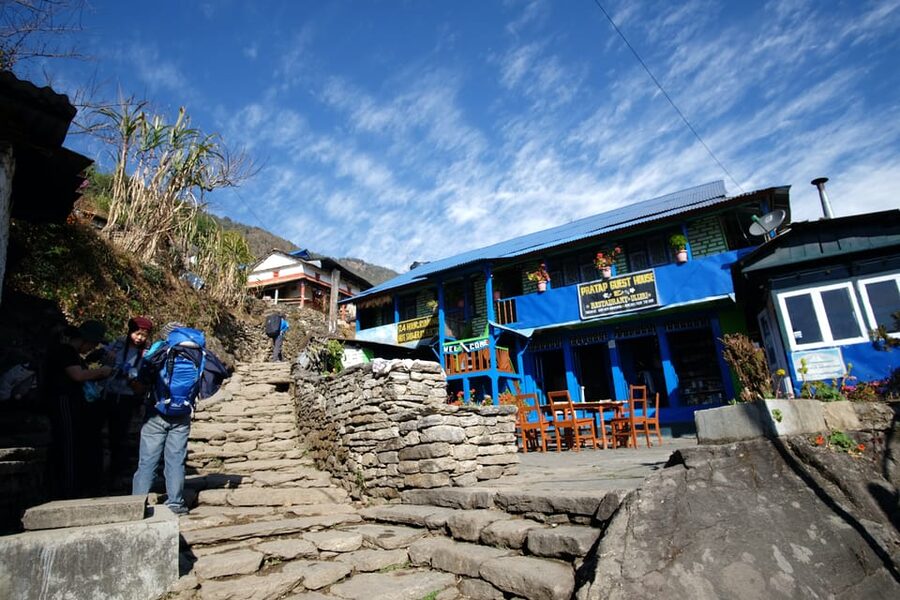
The route toward Base Camp continues from Chuile to Sinuwa, at about 2,170 meters, in roughly five hours. One of the day’s defining features is the meeting point of the Kumrung and Modi Rivers.
The river setting changes the mood of the trek. Instead of focusing only on peaks, you spend time beside moving water and follow the valley toward the higher sanctuary route. This is a quieter transition day, though it still includes the ordinary work of mountain walking: uneven paths, climbs, descents, and repeated changes in pace.
Sinuwa is an important point on the approach to Annapurna Base Camp. You are still below the high mountain zone, but the route now feels more focused. From here, the trail continues through forest toward Dovan and Deurali.
Your guide matters on this section. The best use of a private guide is not simply finding the path. It is keeping the day at a pace you can sustain, explaining the local surroundings, and noticing when you need a break or more water. Recent departures have featured guides including Mahesh and Prakash, both associated with careful support and clear answers to questions.
More Annapurna Treks in Nepal:
- Annapurna Circuit Trek with Tilicho Lake
★ 5.0 · 368 reviews - Annapurna base camp trek 5 Days
★ 5.0 · 252 reviews - 14-Day Private Annapurna Base Camp Trek
★ 5.0 · 180 reviews - Trekking in Annapurna/Langtang/Everest/Upper Mustang regions
★ 5.0 · 161 reviews
Day 4: Sinuwa to Deurali at 3,200 meters
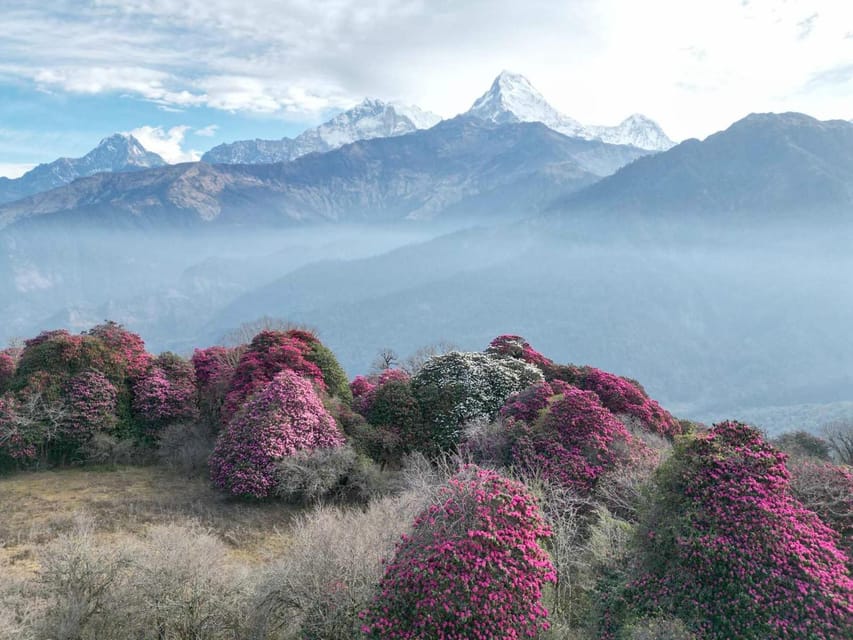
The fourth day takes about six hours and brings you from Sinuwa to Deurali, at 3,200 meters. You pass through lush rhododendron and bamboo forest, reach Dovan, and continue toward higher ground.
This is where the route begins to feel more serious. Deurali is already high, and the following day takes you above 4,000 meters. The forest remains attractive, but your attention should shift toward steady breathing, regular rest, and drinking enough water.
The Annapurna and Machhapuchhre views become more important as you gain height. Machhapuchhre, often called Fishtail, is one of the region’s most recognizable peaks. The scenery here is not just a distant backdrop. The trail is carrying you toward a mountain basin enclosed by dramatic summits.
The six-hour estimate is a useful planning guide, not a guarantee. Your pace, trail conditions, and the group’s needs can change the timing. In a private group, this flexibility is a real benefit. The tradeoff is that you are still following a compressed schedule, so a major delay could affect later days.
Day 5: Deurali to Annapurna Base Camp
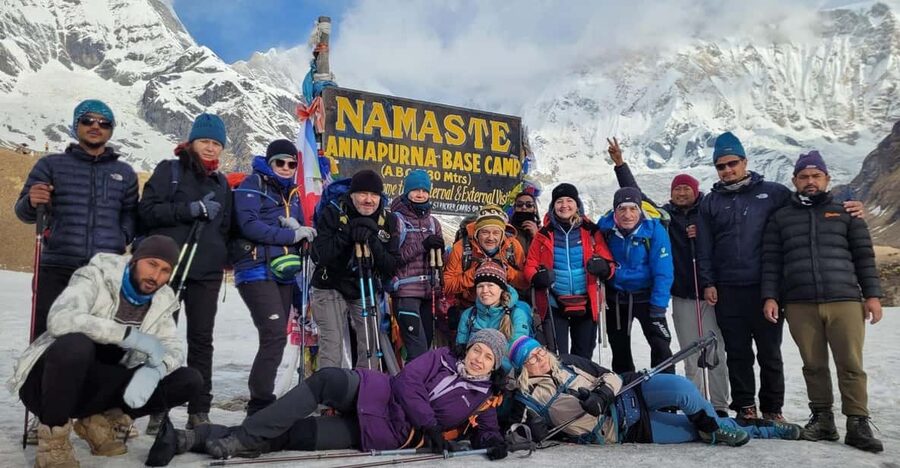
This is the day you have been working toward. The trek from Deurali to Annapurna Base Camp takes around six hours and reaches 4,130 meters.
The final approach brings you into the high mountain amphitheater. Snow-covered peaks and dramatic glaciers surround the destination, creating a setting that feels much bigger than the village trails below. This is the strongest mountain moment of the trip.
Altitude is the main concern. The route rises from 3,200 meters to 4,130 meters in a single day, so do not treat the distance as the only challenge. Walk slowly, follow your guide’s advice, and tell the guide promptly if you feel unwell. The provided schedule does not include a separate acclimatization day, which is one reason this trek suits fit hikers with previous mountain-walking experience more than complete beginners.
The reward is not only reaching the sign or stopping point at Base Camp. It is the change in scale around you. At lower elevations, you look toward the peaks. Here, you are surrounded by them.
You spend the night according to the available trek accommodation arrangements. Conditions at high altitude are basic, and personal comforts remain limited. A sleeping bag is listed among the recommended items, so take that instruction seriously.
Day 6: Returning from Base Camp to Bamboo
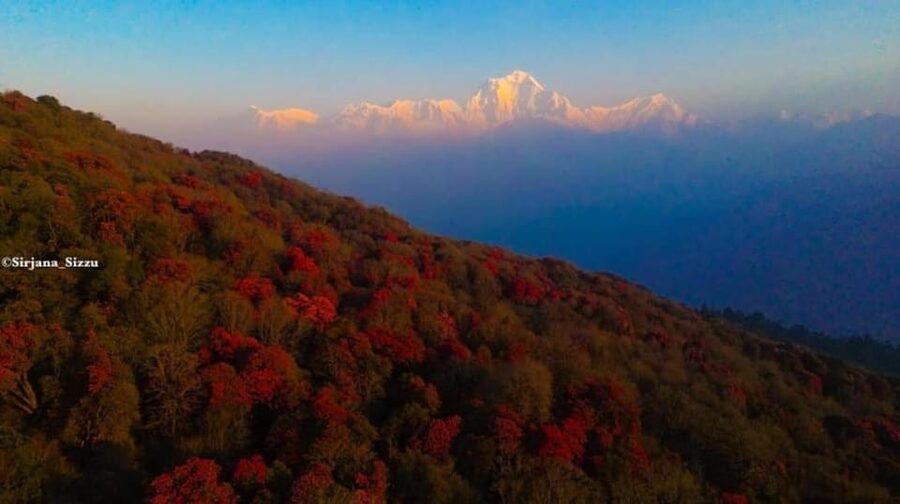
After the high point, you retrace the route to Bamboo at 2,300 meters. The day takes about six hours.
Walking back on the same trail has a practical benefit: you see familiar places from a new angle, and the descent usually gives you a wider view down the valley. It also brings the relief of lower altitude. Bamboo is a sensible overnight stop because it breaks the long return into a manageable section.
Downhill walking is not automatically easy. After the Base Camp day, your knees and feet may appreciate trekking poles, careful foot placement, and regular pauses. This is another point where a porter can help if you choose to hire one. Porter service is available for purchase but is not included in the stated price.
Day 7: Bamboo to Jhinu Dada and back to Pokhara
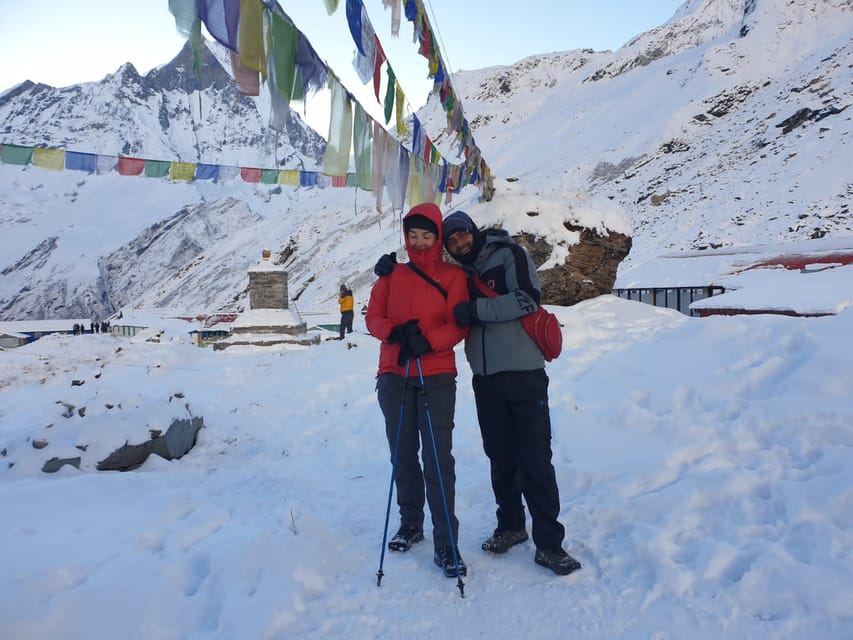
The final trekking day leads from Bamboo to Jhinu Dada at about 1,600 meters. After around five hours of walking, you reach the hot spring area and have about two hours to relax in the natural hot water.
That hot spring is a smart finish. It gives tired legs something more useful than another viewpoint and breaks up the final return. Bring a swimsuit, towel, and a small change of clothes if you want to make the stop more comfortable, though the supplied information does not list those items as included.
You then trek for about 30 minutes to Samrung and take a jeep back to Lakeside Pokhara. The drive takes roughly two and a half hours. This final road connection means you do not need another night on the trail, but the day remains long because it combines walking, bathing, and driving.
The ending has a satisfying rhythm: mountain path, hot water, road back to the lake. You finish with time to reflect on the high pass of the trip without adding another strenuous overnight section.
What the $267 price really covers
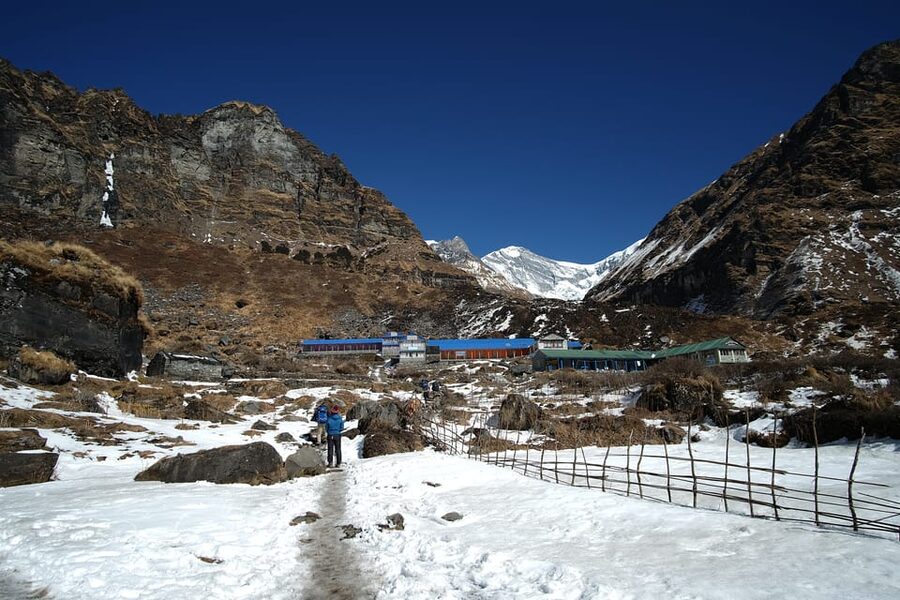
At $267 per person, this trip offers solid value if you want a guided, organized private trek and select the full-package option. The price includes permits, required paperwork, the Trekkers’ Information Management System fee, government tax, trekking accommodation, four-wheel-drive transport, and guide expenses.
For the full package, breakfast, lunch, and dinner during the trek are included. Confirm that you are booking this meal option, since the information distinguishes it from other arrangements.
Guide costs cover meals, accommodation, salary, equipment, insurance, and transportation. That removes a major source of uncertainty. The package also includes hotel pickup and drop-off, which is useful in Pokhara when you have bags and an early start.
Budget separately for soft and hard drinks, bottled or boiled water, phone calls, laundry, bar bills, battery charging, showers, and other personal needs. International flights, a Nepalese visa, sightseeing entrance fees, travel and rescue insurance, and extra nights in Pokhara are also outside the price.
A porter is not included. If you do not want to carry a full pack, arrange one in advance and ask exactly what the porter service covers.
Guides, group size, and the level of support
This is a private-group trek with live guiding in English, Hindi, or Nepali. That makes it easier to ask questions, adjust the pace, and keep the group together without waiting for a large mixed party.
Recent guide names connected with this route include Mahesh and Prakash. Support teams have also included porters such as Bishal, Avinesh, and Sujal. The strongest pattern is attentive care: guides answer questions, explain the area, and adjust the route to the group’s ability and expectations.
That does not remove the physical demands. A good guide can manage timing and offer useful advice, but you still need to walk the trail. The trip is not suitable for pregnant women, and anyone with concerns about high altitude or strenuous trekking should speak with a medical professional before booking.
What to pack for seven days in the Annapurna region
The required packing list is short but important:
- Passport or ID card
- Comfortable trekking shoes
- Sunglasses and sunscreen
- Warm jacket
- Comfortable clothes
- Sleeping bag
- Trekking gear
I would keep a warm layer and rain protection easy to reach, even though the supplied list only specifically names a jacket. Your day pack should also have water, personal medication, snacks if you use them, and a small wash kit.
Because charging, showers, and bottled or boiled water are extra, plan for those costs. Do not assume every comfort associated with Pokhara will be available in mountain villages.
Should you book this trek?
Book it if you want a fast but full Annapurna experience: Poon Hill sunrise, village stays, forest trails, Base Camp at 4,130 meters, and a Jhinu hot spring finish. The private format and included guide costs make the $267 price attractive for people who value structure and support.
Think twice if you want a slow acclimatization schedule, very short walking days, or hotel-level comfort. The route is demanding, especially on the ascent to Base Camp and the long return days.
For a fit hiker with limited time, this is a strong choice. Pack carefully, budget for extras, confirm the full-package meal option, and be honest about your ability to handle altitude. If those points suit you, this seven-day route gives you an unusually broad taste of the Annapurna region without stretching the trip into two weeks.
FAQ
How long is the Annapurna Base Camp via Poon Hill trek?
The trek lasts seven days, beginning and ending in Pokhara.
What is the highest point on the trek?
Annapurna Base Camp is the highest destination at 4,130 meters. Poon Hill reaches 3,210 meters.
Is Poon Hill included in the itinerary?
Yes. You climb to Poon Hill from Ghorepani for sunrise and mountain views on day two.
Is transportation included?
Yes. The package includes hotel pickup and drop-off, plus four-wheel-drive jeep transport according to the itinerary and group size.
Are meals included during the trek?
Breakfast, lunch, and dinner are included during the trek with the full-package option.
Is a porter included?
No. A porter is available for purchase but is not included in the stated price.
What languages can the guide speak?
The available guide languages are English, Hindi, and Nepali.
Can I cancel the booking?
You can cancel up to 24 hours in advance for a full refund. The trip also offers a reserve-now-and-pay-later option.
More Spa & Hot Springs in Nepal
- Pkr/Kathmandu: 5-Day Annapurna Base Camp & Hot spring Trek
★ 5.0 · 6 reviews - Pokhara: Amazing 7-Day ABC Trek with Natural Hot Spring
★ 5.0 · 5 reviews - Pokhara: 5-Day Trek to Annapurna Base Camp and Hot Springs
★ 5.0 · 4 reviews - Pokhara: 7-Day Annapurna Base Camp Trek & Hot Spring
★ 4.0 · 3 reviews
More Poon Hill Treks in Nepal
- Poon hill Trek 3 days
★ 5.0 · 176 reviews - Pokhara: 4-Day Ghorepani, Poonhill & Ghandruk Mountain Trek
★ 5.0 · 132 reviews - Ghorepani – Poon Hill Trek 3N-4D
★ 5.0 · 125 reviews - 4 Days Poon Hill Trek
★ 5.0 · 94 reviews
Just added around Nepal
- Everest Base Camp Trek★ 5.0 · 3 reviews
- Everest Base Camp Trek★ 5.0 · 7 reviews
- 15 Days Private Everest Base Camp Trek★ 5.0 · 30 reviews
- 14-Day Everest Base Camp Trek★ 5.0 · 20 reviews
- Everest Base Camp Trek★ 5.0 · 57 reviews
- 14 Days of Adventure Trekking to Everest Base Camp★ 5.0 · 2 reviews
- From Kathmandu: Private 14-Day Everest Base Camp Trek★ 5.0 · 20 reviews
- 14 Days Everest Base Camp Trek★ 5.0 · 4 reviews
Annapurna Base Camp Treks, compared.




Trekking in Annapurna/Langtang/Everest/Upper Mustang regions
Read our review →


Kathmandu to Annapurna Base Camp (ABC) 5-Day Trek
Read our review →Browse the lists this trek appears in