
Review · POKHARA
Pokhara: 5-Day Trek to Annapurna Base Camp and Hot Springs
The best part of this trek is the quick change in scenery. In five days, you move from Pokhara’s lakeside streets to glacial rivers, waterfalls, thick forest, high mountain valleys, and Annapurna Base Camp at 4,120 meters. The route also ends with a soak at Jhinu Dada, which is exactly the sort of practical reward you want after a long descent.
I like the mix of serious mountain walking and simple village life. You sleep in tea lodges rather than polished hotels, and your guide handles permits, route finding, and the day’s pace. I also like that transport cuts out a long approach walk from Pokhara. The catch is that this is a very demanding five-day schedule, especially the long return from base camp.
Key points to know before you book
- The highest point is Annapurna Base Camp at 4,120 meters, reached on day three.
- The route begins and ends by shared Jeep, with trekking starting near Jhinu and Sinuwa.
- Jhinu Dada’s hot springs come at the end of the trek, after the hardest downhill section.
- Meals and a porter depend on the option you choose, so check the booking price carefully.
- Guides such as Tanka and porter Chhabi may be assigned, but guide names are not guaranteed in advance.
- The five-day plan is compact, with up to eight hours of walking on the return day.
From Pokhara to the Modi Khola valley
Your pickup begins at a hotel in Lakeside Pokhara or at the airport. You should wait in the lobby or at the entrance of your apartment five to ten minutes before the agreed time. The road transfer uses a shared Jeep, first toward the trekking area and then as far as the road allows near Jhinu.
The stated first day combines about three hours by Jeep with roughly four hours on foot. Permits are checked, and the necessary conservation entry paperwork and Trekkers’ Information Management System permit are included. That matters because it leaves you free to focus on walking rather than sorting out official details on the trail.
The exact route description uses both Samrung to Sinuwa and Pokhara to Jhinu as the first transport section. The practical point is simple: you will not start walking in central Pokhara. You will ride toward the roadhead, then follow the Modi Khola River through small villages and forested hills.
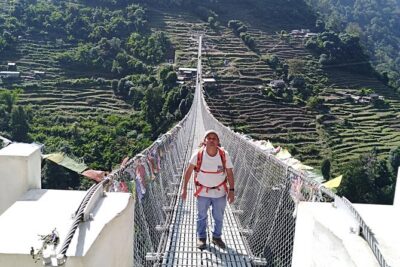
This first stretch gives you a useful introduction to the route. You cross the river and walk toward Sinuwa, with Jhinu Dada nearby on the lower return route. The villages are not grand sightseeing stops. Their value is in the slow change from road travel to mountain footpath, with tea lodges, farmland, bridges, and river sounds replacing traffic.
The accommodation is in a private room at a tourist-standard lodge. Do not expect city-hotel comforts. Tea lodges are practical places to eat, sleep, and recharge, but personal expenses can include showers, battery charging, laundry, bottled or boiled water, and phone calls. Bring some Nepalese rupees for these extras.
More Annapurna Treks in Pokhara
- Trekking in Annapurna/Langtang/Everest/Upper Mustang regions
★ 5.0 · 161 reviews - Pokhara: Annapurna Foothills Day Hike with Transfers
★ 5.0 · 100 reviews - Kathmandu/Pokhara: 5-Day Annapurna Base Camp (ABC) Trek
★ 4.9 · 72 reviews
Day two: Sinuwa to Deurali through forest
Day two is a proper mountain day. From Upper Sinuwa, you climb toward Chhomrong, one of the larger villages on the route, then continue through dense forest toward Deurali at 3,230 meters. The stated walking time is six to seven hours.
Chhomrong is important less for sightseeing than for its position on the route. It is one of the last substantial villages before the trail grows more remote and the valley narrows. You gain height, lose some of the easy road access, and begin to feel that Annapurna Base Camp is no longer an abstract destination on a map.
The forest section brings shade and a different rhythm. You may pass streams, waterfalls, and steep stair sections, so comfortable hiking shoes are not optional. The surface can be uneven, and the same route that feels manageable on the way up can feel tough on your knees during the return.
Your guide’s role becomes more useful here. The English-speaking, government-registered guide is responsible for leading the trek and watching the group’s pace. A particularly good guide will adjust the day to your condition rather than treating the schedule as a race. Tanka is one guide associated with this experience, and his work has included checking on health, safety, and fitness throughout the trek, but you should confirm your assigned guide before departure.
At Deurali, the night is about rest rather than entertainment. The lodge is a base for the next day’s climb into the Annapurna Sanctuary. Pack the items you need for the night in your daypack, keep warm clothing handy, and do not count on a large room or extensive charging facilities.
Day three: Deurali to Machhapuchhare Base Camp and ABC
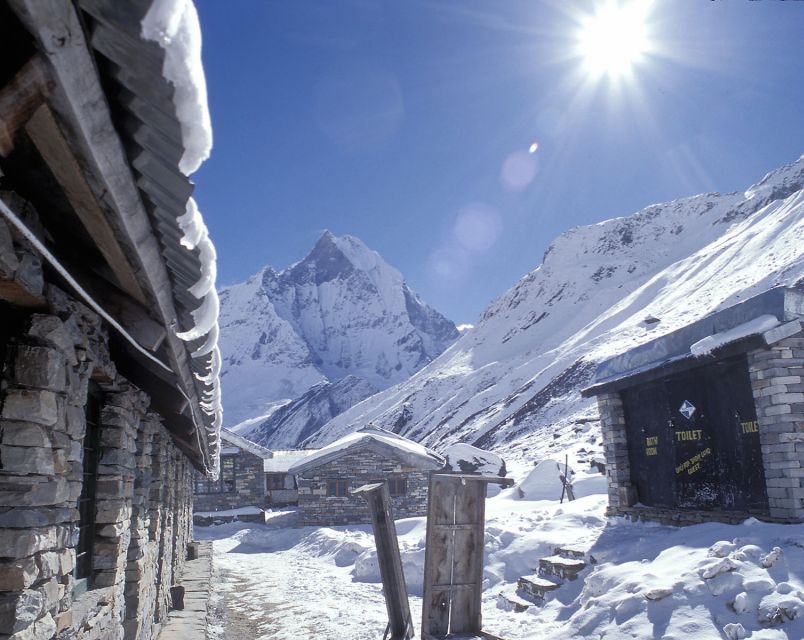
The main goal arrives on day three. You walk from Deurali to Annapurna Base Camp in about five to six hours, passing streams and reaching Machhapuchhare Base Camp before continuing into the higher valley.
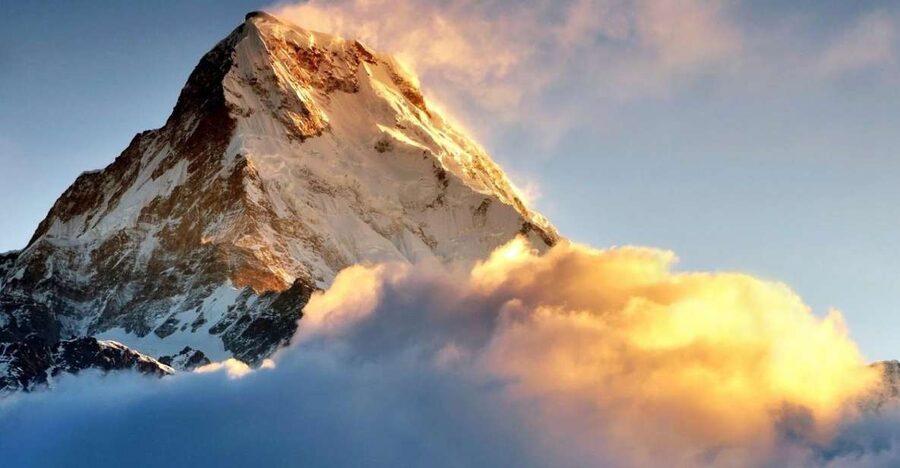
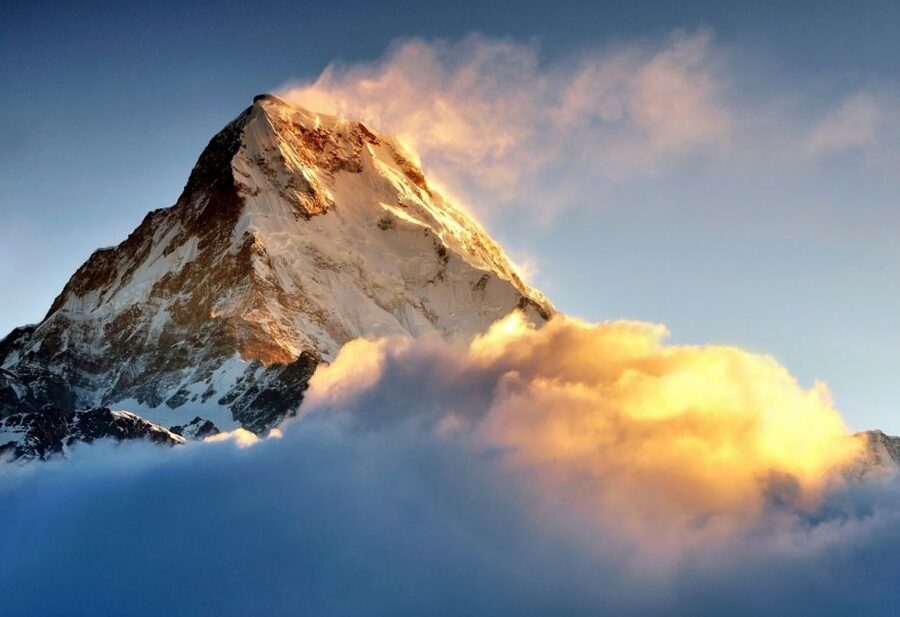
Machhapuchhare is also known as Fishtail, a famous mountain in the Pokhara area. The trail then enters the broad high valley often called the Annapurna Sanctuary. The route description refers to an Ablation Valley, a hollow corridor between the glacier and the mountain. That geological setting is one reason the walk feels so different from the lower forest trail.
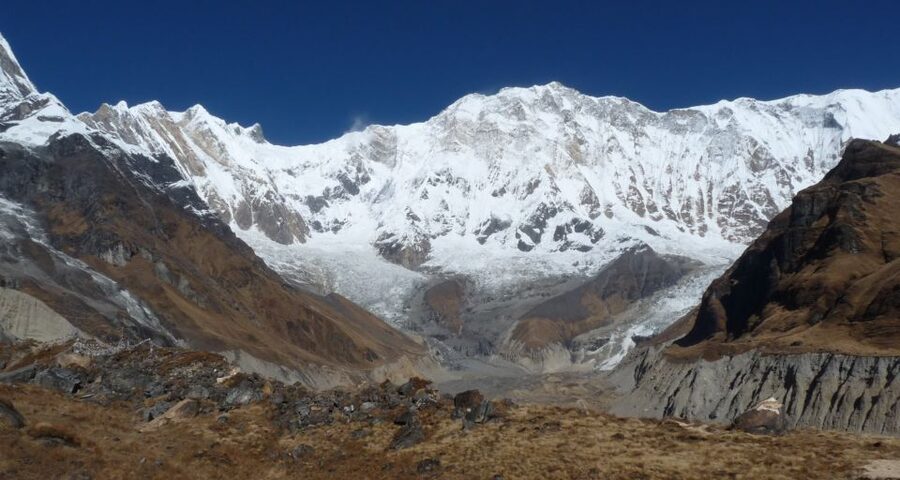
You should expect a gradual but serious increase in effort. At 4,120 meters, Annapurna Base Camp is high enough that every climb feels slower. You will see glacial rivers, mountain walls, waterfalls, and wide views as the vegetation thins. The scenery is the reward, but the altitude is not something to ignore.
This is where a five-day schedule becomes demanding. You reach ABC after two full walking days, rather than taking a slower acclimatization plan. The program is designed for people who already have a reasonable level of fitness and are comfortable walking for several hours on steep, uneven ground.
There is a night at Annapurna Base Camp. That gives you a chance to see the high valley in more than one mood, though conditions and visibility can change quickly. Bring a warm layer, sunglasses, a sun hat, sunscreen, and a change of clothes. The packing list also includes toiletries, insect repellent, and a daypack, although insects are generally less of a concern at the highest point than in the lower forest.
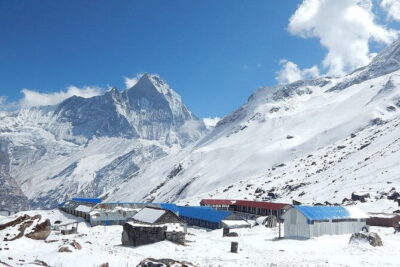
The base camp itself is not a luxury destination. You stay in a mountain lodge, eat according to the package you select, and prepare for an early or at least demanding return. If you want long, quiet hours at the highest point, a longer itinerary may suit you better than this compact version.
Day four: the hard descent to Sinuwa
The return from Annapurna Base Camp to Sinuwa takes about seven to eight hours. This is the toughest day for many people, not because you are still climbing toward the summit of the route, but because the descent is long and hard on your knees.
The trail drops around 1,600 meters from ABC toward Bamboo and Sinuwa. Descending steep stone steps can be surprisingly tiring. Trekking poles, if you use them, can help with balance and reduce some strain. The supplied information does not promise poles, so bring your own if they are important to you.
You follow the only practical way out of the Annapurna Sanctuary, crossing back through streams and forest. The views change as you lose height, but the route is not simply a scenic stroll. You need steady footwear, careful footing, and enough water and snacks for a long day.
This is also the point where a porter can make a major difference. Porter service is included only with the all-inclusive option, and there is an extra charge if you add one to a budget booking. Carrying a large pack down many steps can make the final two days much harder, so compare the package options with your own fitness and luggage needs.
The porter named Chhabi has been part of a guide team for this trek, and the pair were described as a calm, well-matched team. You should not assume the same staff will be assigned, but it is worth asking for the names of your guide and porter before you leave Pokhara.
More Hot Spring Treks in Nepal
- Pokhara: 5 Day Annapurna Base Camp Trek & Natural Hot Spring
★ 4.9 · 44 reviews - From Pokhara: 5-Day Annapurna Basecamp Trek with Hot Springs
★ 4.9 · 26 reviews - Pokhara: 7-Day Annapurna Base Camp Trek & Natural Hot Spring
★ 5.0 · 11 reviews - Pokhara: 7-Day Annapurna Base Camp Trek & Hot Spring
★ 4.0 · 3 reviews
Day five: Sinuwa, Jhinu Dada, and back to Pokhara
The last day combines a shorter morning trek with another Jeep ride. You walk from Lower Sinuwa toward Jhinu Dada, passing farmland around the river, then take a shared Jeep back toward Lakeside Pokhara. The stated walking time is about four hours, followed by roughly three hours on the road.
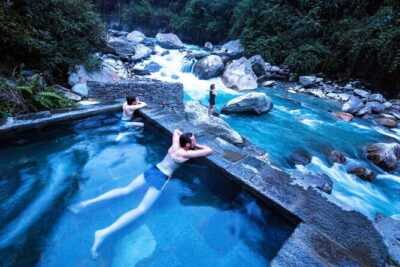
Jhinu Dada is the welcome finale. The hot spring baths are reached after the main high-altitude section, and soaking there gives your legs a break before the road journey. It is not a substitute for rest, but it is a fine way to close a demanding trek.
The hot springs are also a reminder that this route is about more than reaching a viewpoint. You pass through working villages, sleep in local-style lodges, cross rivers, and move through several climate zones. The experience has a clear physical goal, but its appeal comes from the changing human and natural setting along the way.
Keep a dry change of clothes accessible. You do not want to bury them at the bottom of a pack after four days of walking. Also remember that drinks, showers, charging, and personal purchases are not included, so save money for the end of the route as well as the start.
What the $206 price really covers
At $206 per person, the trip offers a useful bundle for someone who wants the main arrangements handled. Hotel pickup and drop-off, shared Jeep transport, private tourist-standard lodge accommodation, permits, government-registered guide services, guide wages, guide accommodation, and guide meals are included.
The value depends mainly on the package you choose. Meals and a porter are included only with the all-inclusive option. On the budget option, you pay for your own meals and porter service, as well as drinks and other personal costs.
That distinction can make the headline price look lower than your final spend. Ask specifically which meals are covered, whether a porter is included, and how much luggage the porter will carry. Also budget for bottled or boiled water, hot or cold drinks, alcoholic drinks, showers, laundry, battery charging, phone calls, and bar bills.
You are paying for more than a bed. Permits and transport can be awkward to arrange separately, and having a registered guide is valuable on a route where the walking days are long and the weather can change. The shared Jeep keeps the cost down, but it also means you should not expect a private vehicle or a flexible departure time.
The score for this experience is 5 out of 5 from four published ratings, with praise focused on friendly, attentive, safety-minded guiding. The strongest practical point is not the number itself. It is the repeated emphasis on guides watching each person’s condition and adjusting the walking pace. That is exactly what you want on a short itinerary at altitude.
Fitness, altitude, and what to pack
You do not need technical climbing equipment for this trek, but you do need stamina. Walking times range from four hours to eight hours, and the route includes steep uphill sections, uneven paths, streams, and long descents.
The itinerary reaches 4,120 meters quickly. Travel insurance with trekking and rescue cover is recommended, and that advice should be taken seriously. The activity is not suitable for pregnant women or people with heart problems.
Pack light enough to walk comfortably, but bring the required basics:
- Passport or ID card
- Comfortable shoes and proper hiking shoes
- Sunglasses, sun hat, and sunscreen
- Warm and spare clothing
- Toiletries and insect repellent
- A daypack
- Money for personal expenses
The guide can help with route decisions, but you remain responsible for telling the guide if you feel unwell. The pace should be adjusted to your condition, not your pride. On the return day, protect your knees and keep your steps controlled.
Who should choose this five-day route?
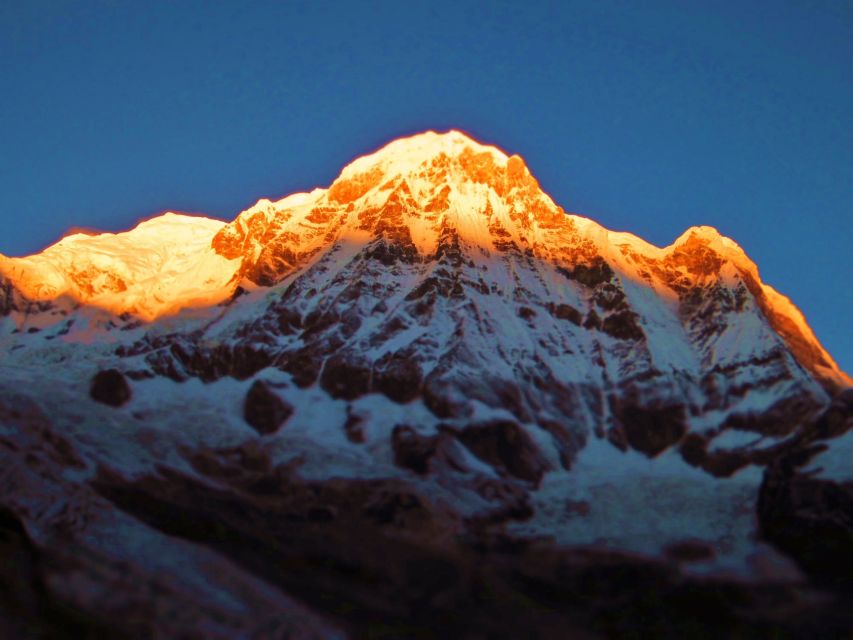
I would recommend it to you if you want to reach Annapurna Base Camp but have limited time in Nepal. It suits fit hikers who accept long walking days, basic lodge accommodation, and a fast gain in altitude.
It also works well if you value support with paperwork and transport. The English-speaking guide, included permits, and pickup from Pokhara remove several tasks that can distract from the trek.
I would think twice if you want a slow mountain holiday. Five days leaves little spare time for bad weather, tired legs, or extended stops. If you prefer shorter walking days and more time at the base camp, ask about a longer version before booking.
There is also a confusing difference between the five-day schedule and another description that refers to a seven-day journey, including extra nights and a final return through Jhinu. The detailed day-by-day plan is five days, but confirm the exact route, nights, and transport before paying. This is especially important if you have flights or other plans after the trek.
Should you book this Annapurna Base Camp trek?
Book it if you want a compact, well-supported route from Pokhara to ABC, with village lodges, a registered guide, shared transport, and hot springs at the finish. The $206 starting price can be good value when permits, guide costs, accommodation, and transport are included.
Before booking, confirm three things: the exact five-day schedule, whether meals and a porter are included in your selected option, and the name of your guide. If Tanka is assigned, you may have a guide known for careful pacing and health checks, but staff assignments can change.
Choose a longer trek instead if you need more time to acclimatize or dislike eight-hour walking days. For a fit hiker who wants the Annapurna Sanctuary without spending a full week on the trail, this is a strong and practical choice.
FAQ
How long is the trek?
The detailed itinerary lasts five days, beginning and ending in Lakeside Pokhara. Another description refers to seven days, so confirm the exact duration and overnight stops before booking.
What is the highest point on the route?
Annapurna Base Camp is the highest point, at 4,120 meters.
Is transportation from Pokhara included?
Yes. Hotel or airport pickup and drop-off are included, along with shared Jeep transport between Pokhara and the road-access points near the trek.
Are meals included?
Meals are included if you select the all-inclusive option. They are not included with the budget option.
Is a porter included?
A porter is included with the all-inclusive option. The budget option does not include one, and an extra charge applies if you request porter service.
What type of accommodation is provided?
You stay in private rooms at tourist-standard lodges along the route.
Can I cancel the booking?
You can cancel up to 24 hours in advance for a full refund. You can also reserve now and pay later, according to the stated booking terms.
More Spa & Hot Springs in Pokhara
- Mount Batur Sunrise Trekking & Hot Spring Tour
★ 5.0 · 54 reviews - Mount Batur Trekking & Hot Spring
★ 5.0 · 50 reviews - Mount Batur Sunrise Trek & Hot Springs Tour
★ 4.8 · 45 reviews - All inclusive Mount Batur Trekking with Hot Spring tour
★ 5.0 · 41 reviews
More Hot Spring Treks in Pokhara
- Private Tour Mount Batur Sunrise Trekking and Natural Hot Spring
★ 5.0 · 431 reviews - Mount Batur Sunrise Trek & Natural Hot Spring Experience
★ 5.0 · 95 reviews - 3D/2N Rinjani trekking summit,lake and hot springs.
★ 5.0 · 85 reviews - Mount Batur Sunrise Trekking & Natural Hot Spring – All Inclusive
★ 5.0 · 58 reviews
Just added around Pokhara
- Pokhara: Sarangkot Sunrise & Panoramic Annapurna View Tour★ 4.8 · 10 reviews
- Pokhara: Majestic Mardi Base Camp Guided Trek with HotSpring★ 5.0 · 6 reviews
- Pokhara: Bungee Jumping Experience Near Annapurna★ 5.0 · 9 reviews
- Pokhara: Annapurna Day Hike with Panoramic Views★ 4.3 · 7 reviews
- Pokhara: 9-Day Annapurna Base Camp Trek with Poon Hill★ 5.0 · 6 reviews
- Pokhara: 7-Day Annapurna Base Camp Trek & Hot Spring★ 4.0 · 3 reviews
- Pokhara: 5-Day Ghorepani and Poon Hill Private Trek★ 5.0 · 4 reviews
- Pokhara:4-Day Ghorepani Poon Hill Guided Trek via Ghandruk★ 5.0 · 3 reviews
Annapurna Base Camp Treks, compared.
Trekking in Annapurna/Langtang/Everest/Upper Mustang regions
Read our review →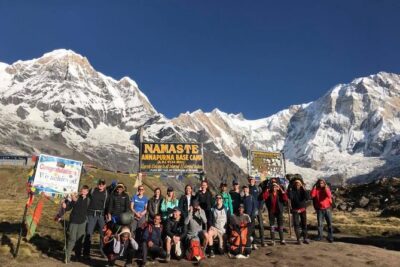
Kathmandu to Annapurna Base Camp (ABC) 5-Day Trek
Read our review →Browse the lists this trek appears in