
Review · NEPAL
Kathmandu: 7 Day Langtang Valley Trek
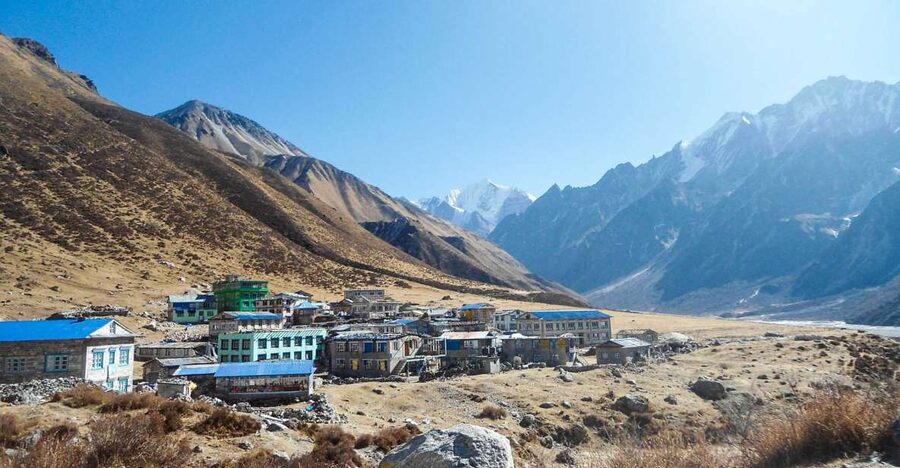
The great draw here is the steady approach to Kyanjin Gompa, where snow-covered Himalayan peaks close in around a high Buddhist settlement. You walk from river forest to rhododendron woods, then past yak grazing grounds and glacial streams. I like the private format and the chance to spend a full acclimatization day at 3,870 meters. I also like that permits, transport, teahouse lodging, and a licensed guide are arranged for you.
The drawback is simple: this is a serious mountain trek, not a gentle village walk. You may cover about 15 kilometers and spend around eight hours walking on demanding days, with steep climbs and hundreds of steps. Lodging can be plain, meals cost extra, and the schedule may feel tight if transport from the valley runs late.
Key points to know before you book
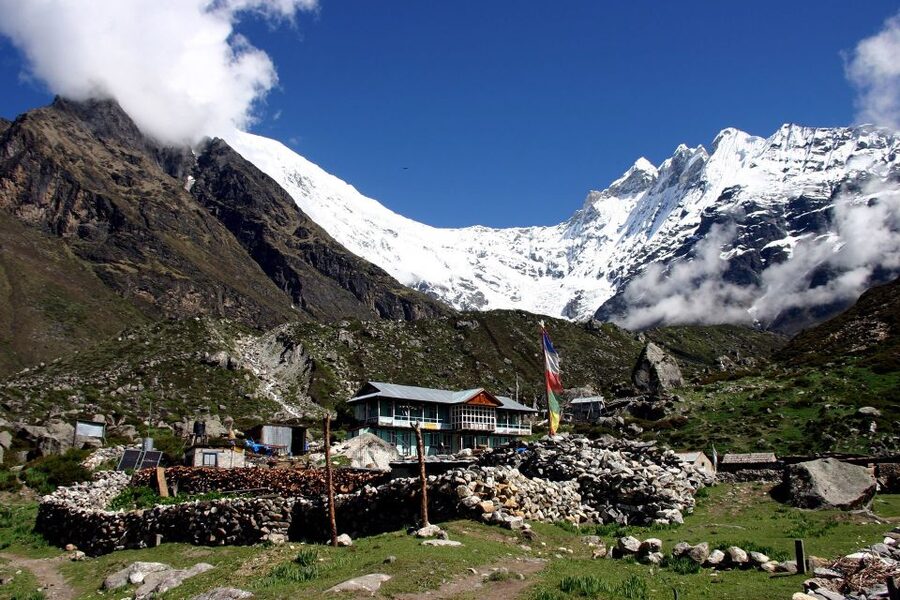
- Kyanjin Gompa is the high point: You spend two nights here, giving you time for short hikes toward Kyanjin Ri or Tserko Ri.
- The private guide matters: A private group lets the walking pace fit your ability rather than forcing you to match strangers.
- The route reaches 3,870 meters: Altitude is a real factor, even though this is a short trek.
- Tamang culture is part of the route: You pass through villages where local customs, Buddhist sites, and mountain life shape the trip.
- Meals are not included: Budget about NPR 2,500 per person per day for food.
- The road is part of the adventure: Your first and last days include a long drive between Kathmandu and Syabrubesi.
Why the Langtang Valley feels different
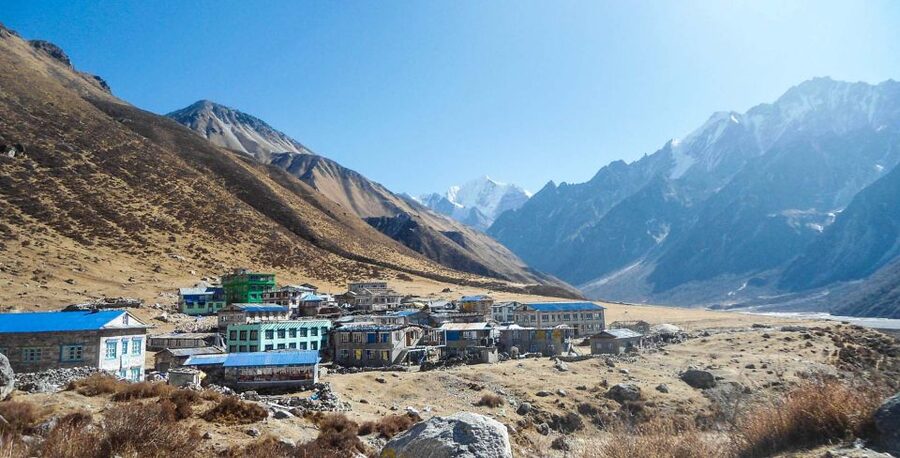
Langtang offers a compact Himalayan trek with a clear sense of progression. You begin in Kathmandu, ride toward Syabrubesi, and then follow the Langtang River into a valley framed by high peaks. Each walking day changes the setting: low forest first, then oak and rhododendron, then open high country around Kyanjin Gompa.
I like this route because it gives you more than mountain scenery. The Tamang and Sherpa communities add a human side to the trek, while Buddhist places such as Kyanjin Gompa give the high valley a strong sense of place. You are not simply walking toward a viewpoint. You are passing through working villages, forests, suspension bridges, pastures, and a living mountain region.
The trip is also short enough to fit into a wider Nepal holiday, though seven days does not make it easy. Your acclimatization day helps, but it does not remove the physical challenge. You need to arrive ready to walk uphill for several hours and to sleep in simple teahouse accommodation.
More Langtang Treks in Nepal:
- Trekking in Annapurna/Langtang/Everest/Upper Mustang regions
★ 5.0 · 161 reviews - Langtang Valley Trek
★ 5.0 · 140 reviews - Langtang Valley Trek
★ 5.0 · 61 reviews
Day 1: Kathmandu to Syabrubesi at 1,550 meters
The first day is spent mostly on the road. Your vehicle collects you in Kathmandu and follows a scenic route through villages and rural country toward Syabrubesi, the usual starting point for the trek.
This drive gives you your first look at the changing terrain, but it can also be tiring. You have not started walking yet, and still, much of the day is taken up by road travel. The practical benefit is that transport to the trailhead is already arranged, with a return vehicle included at the end.
Syabrubesi sits at about 1,550 meters and serves as a useful overnight stop before the walking begins. You can rest, organize your pack, and meet your guide. Since the group is private, you are not tied to a large fixed party or a shared walking pace.
The first night is also a reminder to keep your luggage sensible. Oversize luggage is not allowed, so bring only what you need for the trek. A passport or identity document is required, and you should carry a passport-sized photo for the permits.
Day 2: Syabrubesi to Lama Hotel at 2,380 meters
Your first walking day follows the Langtang River through forest. Expect suspension bridges, uneven paths, and a gradual but sustained climb to Lama Hotel.
The forest is one of the pleasures of this section. Oak and rhododendron trees give the route shade, while the river provides a steady sound below. This is not the wide-open Himalayan view many people picture, but it is a fine introduction because the trail makes you work for the higher scenery.
Lama Hotel is a green, quiet stopover rather than a grand destination. The value is in its position on the route. You reach a comfortable point for the night, eat at the lodge, and prepare for a longer climb the next day.
Keep your daypack organized. Water, warm layers, rain protection, snacks, and a small first aid supply should be easy to reach. A basic first aid kit is provided, but you should still bring any personal medication you need.
Day 3: Lama Hotel to Langtang Village at 3,430 meters
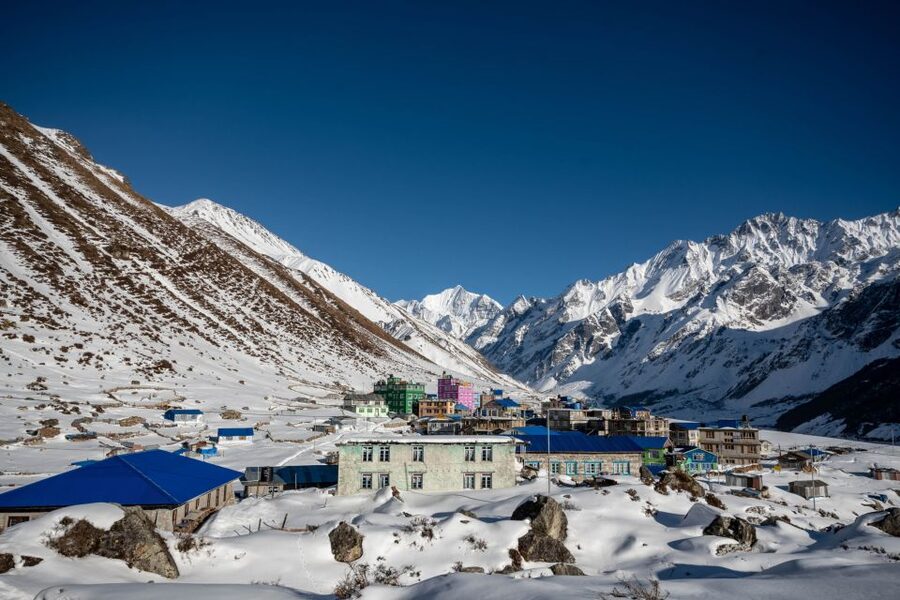
The trail continues upward through thick oak and rhododendron forest. The climb becomes more noticeable as you gain altitude, and the valley begins to open toward the mountains.
Langtang Village is important both as a high stopping point and as a place to see Tamang culture. The route passes through communities shaped by mountain farming, trade, Buddhism, and tourism. Your guide can help you understand the local setting, but the best approach is often simple: walk at a respectful pace, observe village life, and give people space.
This is one of the days when you should avoid racing ahead. You are moving from 2,380 meters to 3,430 meters, a meaningful gain in height. Walk slowly, drink regularly, and tell your guide if you feel unwell. The private arrangement is especially useful here because your guide can keep an eye on your pace rather than managing a large group.
The scenery improves as you climb, but the trail still demands effort. Some people focus only on reaching the next lodge and miss the small changes around them: forest thinning, wider views, old stone structures, and the growing presence of the peaks.
A few more treks around Nepal worth a look
- Pokhara: 7 Day Annapurna Base Camp Trek
★ 4.9 · 38 reviews - Pokhara: 7-Day Annapurna Base Camp Trek & Natural Hot Spring
★ 5.0 · 11 reviews - 7 Days Langtang Valley Private Trek From Kathmandu
★ 5.0 · 10 reviews - Pokhara: 7-Day Annapurna Base Camp Via PoonHill & Hot Spring
★ 5.0 · 6 reviews
Day 4: Langtang Village to Kyanjin Gompa at 3,870 meters
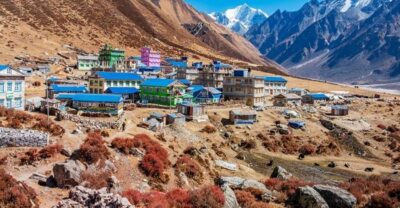
This is the route’s most memorable walking day. You leave the village behind and move into a more open high valley, passing yak pastures and glacial streams on the way to Kyanjin Gompa.
The change in scenery is dramatic. Trees become less dominant, the air feels thinner, and the snow-covered peaks appear closer. Langtang Lirung is a major visual presence, with other high summits forming the backdrop around the valley.
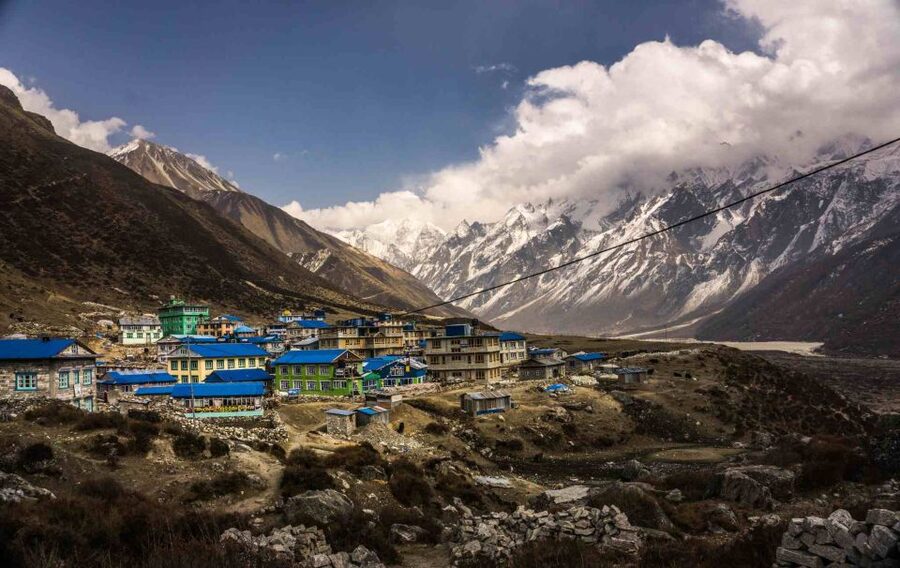
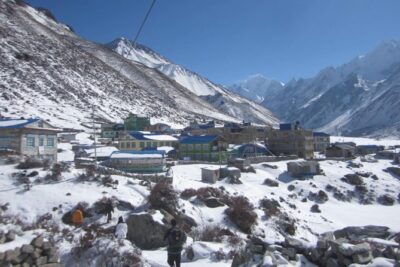
Kyanjin Gompa is both a Buddhist monastery and your base for the next two nights. The settlement has a remote, high-altitude feel that makes the journey worthwhile. You can explore the monastery, walk around the nearby area, and enjoy views that are far more immediate than those seen lower down.
At 3,870 meters, however, the beauty comes with a cost. You may sleep less comfortably, feel short of breath, or notice that every uphill step takes more effort. Do not treat arrival at Kyanjin Gompa as the finish line. The following day is built into the plan for acclimatization, and you should use it.
Day 5: Acclimatization around Kyanjin Gompa
The extra day at Kyanjin Gompa is one of the strongest parts of the schedule. Instead of climbing higher and leaving at once, you have time to adjust to the altitude and explore at a controlled pace.
You can choose a short hike toward Kyanjin Ri or Tserko Ri, depending on your condition and the plan agreed with your guide. These high points offer wider views of the surrounding peaks, but they also add more climbing. You do not need to force the longest option to make the day worthwhile.
If your legs need a break, stay closer to the settlement and visit the local cheese factory. This gives the day a cultural and practical focus rather than making it only about height and distance.
I would treat this as a flexible day, not a test of toughness. Some people feel strong at Kyanjin Gompa, while others need the rest. Your private guide can help decide how far to walk, but you should speak up early if you have a headache, unusual fatigue, or other altitude concerns.
The views are the reward, but the main value is adaptation. A rushed itinerary could take you to Kyanjin Gompa and turn straight around. This plan gives you a better chance to enjoy the high valley without treating your body as an afterthought.
Day 6: Kyanjin Gompa back to Lama Hotel
You begin the return journey by retracing the trail to Lama Hotel. The route is familiar, but the experience changes because you are walking downhill and looking back toward the high valley.
Descending is usually easier on the lungs, but it can be hard on knees and feet. The trail includes uneven ground, bridges, and steps, so good shoes and careful footing matter. The same route that felt like a long climb on the way up may now feel like a steady test of your legs.
The return to Lama Hotel breaks the descent into manageable sections. You get a night in a lower and generally more comfortable setting before the final walk to Syabrubesi.
This day can also feel long because the most dramatic goal is behind you. I suggest treating the descent as part of the experience rather than dead time. The forest, river, and villages look different in reverse, and the slower pace gives you more room to notice them.
Day 7: Lama Hotel to Syabrubesi, then Kathmandu
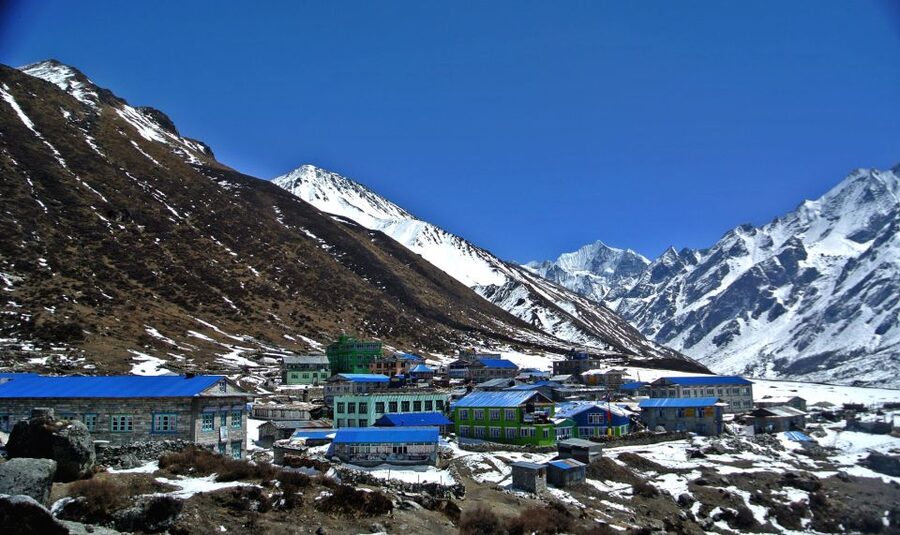
The last walking section takes you from Lama Hotel back to Syabrubesi. From there, your vehicle returns you to Kathmandu, where the organized trek ends.
This is a demanding final day because it combines more trail walking with a road journey. You should not assume that reaching Syabrubesi means you are finished for the day. Keep water and snacks accessible, and expect the drive to take additional time.
The included hotel pickup and drop-off, Kathmandu accommodation before and after the trek, and transport to and from the trailhead make the logistics simpler. The exact hotel arrangements are described as usually one or two nights in Kathmandu, so confirm the number of nights before paying.
The return drive can be less glamorous than the mountain section, but it is useful. You do not need to arrange a separate vehicle or find your way back from Syabrubesi after seven days on foot.
The private guide and porter arrangement
The private format is a practical advantage on a route with very different daily demands. A large group can force you to wait, hurry, or compromise on rest. Here, your guide can set the pace around your walking ability and the altitude.
The guide is English-speaking, licensed, and experienced with the route. The guide also helps with the practical side of the trek, including route decisions, permits, lodge arrangements, and basic support if a problem arises. Since you are in a remote area, that support matters more than polished commentary.
Porter service is available as an option for carrying your main backpack. If you hire a porter, keep your daypack light and retain your essentials with you. Your passport, documents, money, water, medication, warm layer, and personal electronics should not disappear into a large bag you cannot access during the day.
One piece of advice is worth stressing: ask clear questions before departure. Confirm the walking distances, likely daily hours, accommodation standard, meal costs, porter fee, and the number of Kathmandu hotel nights. The price is easier to judge when you know exactly what is covered.
Teahouses, meals, and the $450 price
At $450 per person, the package includes a lot of the basic structure: hotel pickup and drop-off, transport from Kathmandu to Syabrubesi and back, trekking permits, teahouse accommodation, an experienced guide, first aid supplies, and usually one or two Kathmandu hotel nights. Porter service is listed as an option, so ask if it is included in your exact booking or charged separately.
Meals are not included. The stated estimate is about NPR 2,500 per person per day, which covers the seven-day trek at roughly NPR 17,500 before drinks, snacks, or extras. That is a major part of your real budget.
The value is strongest if you want one company to handle the transport, permits, guide, and accommodation. It is weaker if you expect hotels or lodges to feel polished. Teahouse lodging is functional mountain accommodation, and conditions may vary from one stop to another.
The price also needs to be weighed against the private format. You are not paying only for a bed and a road transfer. You are paying for a guide who can adjust the pace, help with route logistics, and support you in a high-altitude area. Still, ask for a clear list of inclusions, especially around porters, meals, and Kathmandu nights.
Fitness, altitude, and what to pack
You should be comfortable with long uphill walks before booking. The route includes hundreds of steps, steep sections, suspension bridges, and days that may reach about eight hours of walking. One account of the trek described roughly 1,200 meters of ascent and 15 kilometers on demanding days, so use that as a warning about the effort involved rather than expecting an easy seven-day stroll.
Bring a passport-sized photo, your passport or identity card, and a copy of the document. Pack light because oversize luggage is not allowed. You should also bring practical walking clothing, sturdy footwear, warm layers, rain protection, personal medication, and a small daypack.
Drones are not allowed. Pregnant people, wheelchair users, people with mobility impairments, and those with back problems should not choose this experience. If you have concerns about altitude or your ability to walk for several hours, discuss them with a medical professional before booking.
The cancellation policy is flexible: you can cancel up to 24 hours ahead for a full refund. You can also reserve now and pay later, which helps if your Nepal plans are still moving.
Who should book this Langtang trek?
I would recommend it to you if you want a compact Himalayan trek with a private guide, mountain villages, monastery visits, and serious scenery without arranging every permit and transfer yourself.
It suits an active visitor who accepts basic accommodation and understands that the highest days will be hard. The private group setup is helpful if you are traveling alone, with a partner, or with friends whose pace can be managed together.
I would not choose it if you want a relaxed sightseeing holiday, hotel comforts, or a schedule with plenty of spare time. The road transfers and walking days leave limited room for delays, and the mountain conditions can make simple plans feel strenuous.
Should you book it?
Book this trek if Kyanjin Gompa, high Himalayan views, and a guided private route are your priorities. The strongest features are the two-night stay at altitude, the acclimatization day, and the chance to walk through Tamang communities rather than simply visit a viewpoint.
Before committing, get the full cost in writing. Confirm whether porter service is included, how many Kathmandu hotel nights you receive, what teahouse standard to expect, and how meals are handled. With those details clear, the $450 price can be reasonable for a tightly organized private trek.
If you are fit, pack light, and accept long walking days, this can deliver a powerful first Himalayan experience. If your main concern is comfort or flexibility, choose a slower itinerary with more time in the valley.
FAQ
How long is the Langtang Valley trek?
The experience lasts seven days, including the drive from Kathmandu to Syabrubesi, the trek to Kyanjin Gompa, the return walk, and transportation back to Kathmandu.
What is the price per person?
The listed price is $450 per person.
What is the highest point reached?
The itinerary reaches Kyanjin Gompa at 3,870 meters. Optional hikes from there include Kyanjin Ri and Tserko Ri.
Are meals included?
No. Meals are available for purchase, with an estimated cost of about NPR 2,500 per person per day.
Is accommodation included?
Yes. Teahouse lodging during the trek is included, along with usually one or two nights of hotel accommodation in Kathmandu before and after the trek.
Is a guide provided?
Yes. An experienced, licensed, English-speaking trekking guide leads the private group.
Is porter service included?
Porter service is available as an option to carry your main backpack. Confirm the exact fee and inclusion before booking.
What documents should I bring?
Bring a passport-sized photo and your passport or identity card. A copy of the document is accepted.
Can I cancel the booking?
Yes. You can cancel up to 24 hours in advance for a full refund. Reserve now and pay later is also available.
Just added around Nepal
- Everest Base Camp Trek★ 5.0 · 3 reviews
- Everest Base Camp Trek★ 5.0 · 7 reviews
- 15 Days Private Everest Base Camp Trek★ 5.0 · 30 reviews
- Everest Base Camp Trek★ 5.0 · 57 reviews
- 14 Days of Adventure Trekking to Everest Base Camp★ 5.0 · 2 reviews
- 14-Day Everest Base Camp Trek★ 5.0 · 20 reviews
- From Kathmandu: Private 14-Day Everest Base Camp Trek★ 5.0 · 20 reviews
- 14 Days Everest Base Camp Trek★ 5.0 · 4 reviews
Langtang Valley Treks, compared.
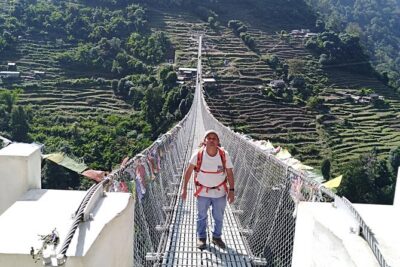
Trekking in Annapurna/Langtang/Everest/Upper Mustang regions
Read our review →
7 Days Langtang Valley Private Trek From Kathmandu
Read our review →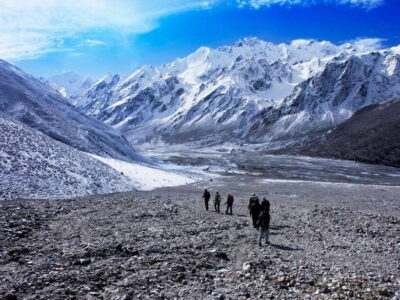
Browse the lists this trek appears in