
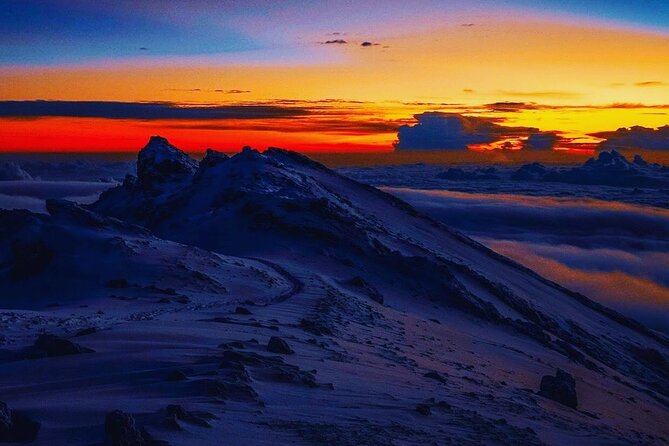
Review · MOSHI
Private Kilimanjaro Hike 7 Day Lemosho Route
Kilimanjaro’s Lemosho Route gives you the mountain’s best scenery in one steady sweep: rainforest, open moorland, volcanic rock, glaciers, alpine desert, and the crater rim. The trail begins quietly on the western side before circling south toward Uhuru Peak, Africa’s highest point.
I like the route’s mix of low-crowd trail time and wide views, especially across Shira Plateau. I also like the practical setup: two Moshi hotel nights, private transport, camping gear, treated water, meals, oxygen, and a pulse oximeter are included. The main drawback is the pace. Seven days is a serious undertaking, and Day 2, the summit night, and the long descent demand real stamina.
Key points to know before booking
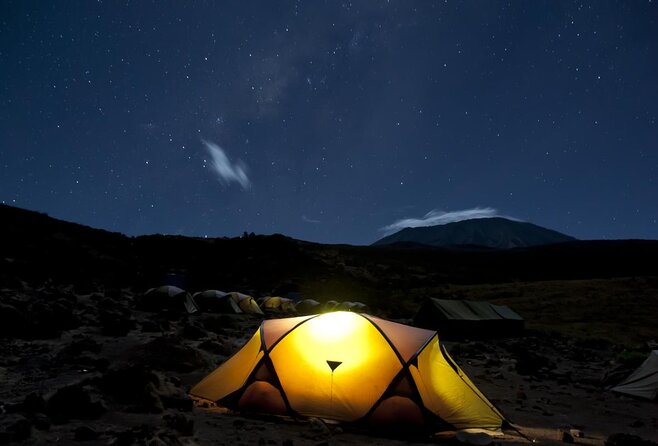
- Western start at 2,360 meters: You enter through Lemosho Gate and begin in montane forest rather than starting high and abruptly.
- Scenic Shira Plateau crossing: Day 2 covers about 16.5 kilometers and offers views toward Kibo and the Northern Icefields.
- Important acclimatization profile: You climb to Lava Tower at 4,600 meters, then sleep lower at Barranco Camp.
- Private arrangements: Only your group participates, with hotel transfers, camping equipment, meals, and park fees included.
- Hard summit schedule: You wake around midnight, reach Stella Point at about 5,756 meters, then continue to Uhuru Peak at 5,895 meters.
- Strong operational feedback: Past groups have praised Elias and guides such as Eli, Benson, Frank, and Sebastian for communication, organization, safety, and encouragement.
Why the Lemosho Route earns its reputation
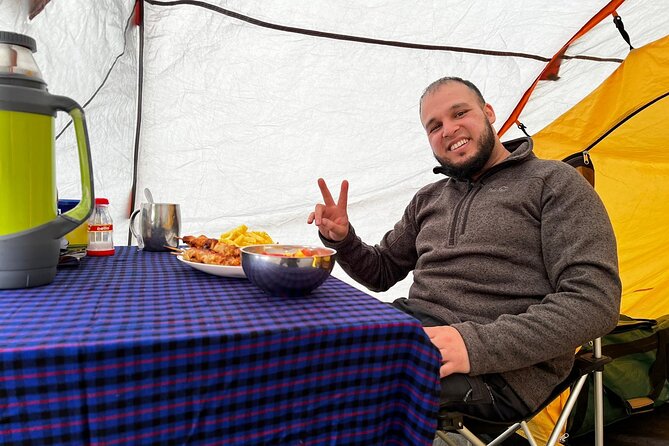
The Lemosho Route is a strong choice if scenery matters as much as reaching the top. You begin on Kilimanjaro’s western flank, where the first walking takes place in forest. The route then climbs through heather and moorland toward Shira Ridge and Shira Plateau before joining the southern circuit.
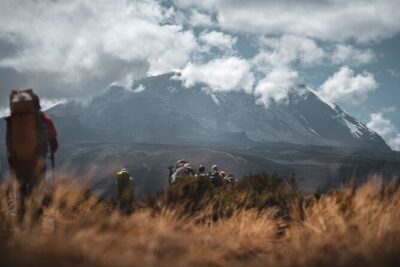
That gradual change in vegetation is one of the trip’s great rewards. You do not simply walk uphill for a week. You move from tall forest to open grassland, then into rocky alpine desert, with Kibo and Mawenzi appearing in different moods along the way.
The route is also chosen for its acclimatization pattern. The key example comes on Day 3, when you climb to Lava Tower at 4,600 meters and then descend to Barranco Camp at about 3,900 meters. That climb high, sleep lower pattern gives your body useful exposure to altitude before the summit attempt.
Still, this is not a gentle trek. The itinerary includes long walking days, cold nights, rough ground, and a summit push that lasts through the night and into the following day. The route may be scenic and well planned, but altitude remains the deciding factor.
More Kilimanjaro Climbs in Moshi
- Kilimanjaro climb by Lemosho Route (7-day)
★ 5.0 · 651 reviews - Kilimanjaro climb, Machame Route (7-day)
★ 5.0 · 262 reviews - Kilimanjaro Climbing Lemosho Route 8 Days.
★ 5.0 · 186 reviews
Day 1: Lemosho Gate to Big Tree Camp
Pickup is scheduled after breakfast, around 8:00 a.m., with transfer to Lemosho Gate. The gate sits at roughly 2,360 meters on the western side of Kilimanjaro, and the operator handles the park and hiking formalities before you set off.
Your first walk covers about 7 kilometers and takes around four hours. The trail passes through the Lemosho glades and montane forest before reaching Big Tree Camp.
This is a useful first day because it eases you into the trip. You are walking at altitude, but the distance is modest compared with what follows. The forest also gives you an early sense of Kilimanjaro as a living mountain, not just a summit to be checked off.
The practical advantage is that you arrive at camp with time to settle in. Camping equipment, sleeping pads, sleeping bags, chairs, and tables are included, so you do not need to carry a full camp setup yourself. Meals include breakfast, lunch, and dinner.
Day 2: The long crossing of Shira Plateau
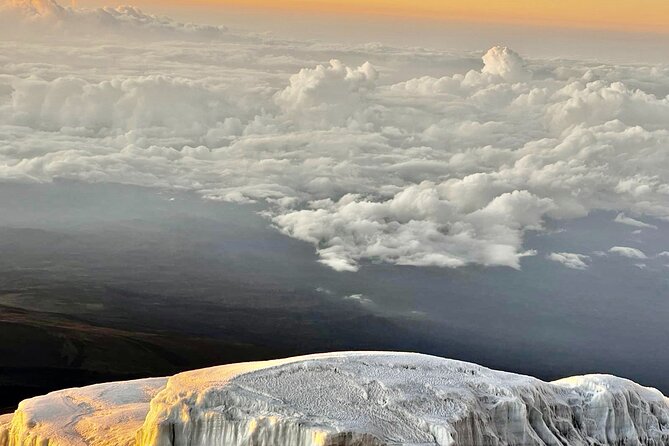
Day 2 is one of the most scenic and demanding days before the summit. You cover about 16.5 kilometers in nine to ten hours across grassy moorland and heather, with volcanic rock formations scattered along the route.
The trail rises toward Shira 1 Camp, where Kibo Peak may appear above the clouds. After a break, you continue toward Shira 2 Camp and views of the Northern Icefields. The open setting gives you broad views in several directions, a sharp contrast to the forest of Day 1.
I would pay close attention to the distance here. Ten hours on uneven ground is tiring even before altitude becomes a serious issue. You need comfortable boots, layered clothing, water access, and a willingness to walk slowly. The route is designed for a steady pace, not a race.
The reward is the sense of space. Shira Plateau is one of the places where Kilimanjaro feels vast and exposed. The mountain is no longer hidden by trees, and the changing views help make this more than a simple transfer between camps.
Day 3: Lava Tower and Barranco Camp
Day 3 provides one of the most useful altitude lessons of the entire hike. You climb into alpine desert and reach Lava Tower at approximately 4,600 meters. Then you descend for about three hours to Barranco Camp at around 3,900 meters.
The total distance is about 10 kilometers, with roughly six hours of walking. The climb to Lava Tower can feel difficult because you gain height quickly, but the later descent is part of the plan rather than a setback.
From the route toward Barranco Camp, you get views of the Western Breach and Barranco Wall. The camp sits below the wall, creating a dramatic setting for the evening. Sunset here can be memorable, but the scenery should not distract you from the main purpose of the day: helping your body adjust to altitude.
You may notice headaches, unusual tiredness, or shortness of breath at this stage. The supplied safety equipment includes emergency oxygen, a first aid kit, and a pulse oximeter. Those items do not remove the risk of altitude sickness, but they show that basic monitoring and emergency support are part of the operating plan.
Same trailhead, a different route:
- Climbing Kilimanjaro – Machame Route
★ 5.0 · 170 reviews - Climbing Kilimanjaro through 7 days Machame Route
★ 5.0 · 151 reviews - Kilimanjaro climb, Lemosho Route (8-day)
★ 5.0 · 148 reviews - Kilimanjaro climb, Lemosho Route (6-day)
★ 5.0 · 129 reviews
Day 4: Barranco Wall and the Karanga Valley
After breakfast, you climb the Barranco Wall. It looks intimidating from below, but the route is described as easier than its appearance suggests. You pass beneath the Heim and Kersten glaciers before continuing toward Karanga Valley.
This is a shorter day, with about four hours of walking listed. That shorter schedule matters because the summit attempt is close. You have time to eat lunch at camp, rest, and take a nap.
The views change again. Kibo’s glaciers rise above the route, while Mawenzi’s jagged peaks appear to the east. If you still feel strong, the plan includes a possible afternoon acclimatization walk, though the supplied schedule does not give a detailed distance or duration for that extra outing.
For you, the smartest choice is to treat this as a recovery day. The temptation is to keep exploring because the walking time is shorter, but sleep and hydration are more valuable than squeezing in extra steps.
Day 5: Barafu Camp and the wait for midnight
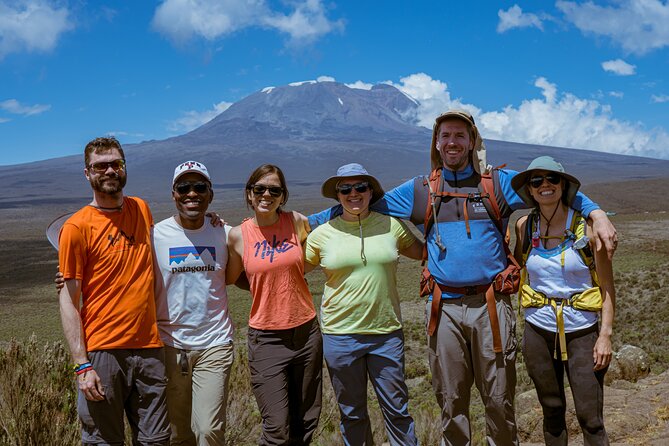
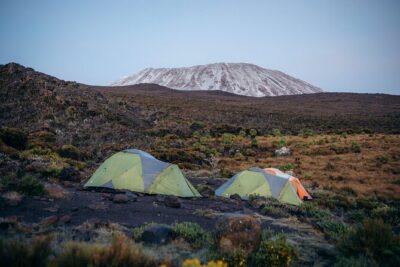
Day 5 takes you from Karanga to Barafu Camp at approximately 4,640 meters. The listed distance is only 4 kilometers, with about four hours of walking, but the high altitude makes this a meaningful day.
You get views of both Kibo and Mawenzi along the way. Once at Barafu, lunch is provided, followed by a quiet afternoon in your tent. Dinner comes early, and the plan is to sleep before being woken around midnight.
Barafu is not the place for a long afternoon of sightseeing. Your goal is to eat, drink, organize your summit clothing, and rest. The midnight alarm arrives quickly, so keep essential layers and personal items ready before lying down.
This part of the schedule is one reason the trip suits people who can handle a disrupted sleep pattern. You are not simply walking during daylight hours. The summit day begins when most people are asleep and continues well after sunrise.
Day 6: Stella Point, Uhuru Peak, and the long descent
Summit day is the hardest part of the experience. You wake around midnight for light tea and breakfast, make final preparations, and begin a four to five hour climb toward the crater rim.
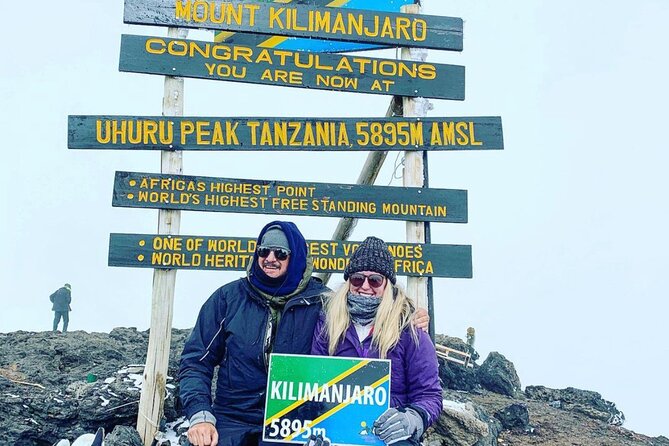
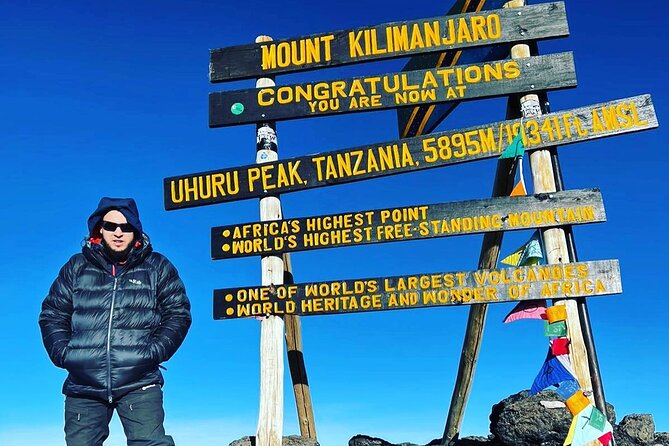
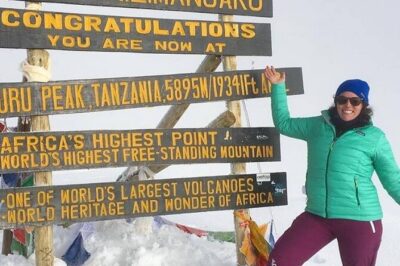
The target is Stella Point at approximately 5,756 meters, reached around sunrise. From there, the route continues for about one hour to Uhuru Peak at 5,895 meters. The final section can feel slow because the air is thin and the trail gains height over a short distance.
At Uhuru Peak, you have reached the highest point in Africa. Time at the top may be limited by cold, wind, fatigue, and altitude, but there is time for photographs and a brief celebration.
The day does not end at the summit. You descend to Barafu Camp for lunch and rest, then continue toward Millennium Camp according to the itinerary. The overall day is listed at about 12 hours, and that figure captures the challenge better than the summit height alone.
You should be ready for a difficult emotional and physical swing. Reaching Uhuru Peak can feel enormous, followed by a long descent when your legs are already worn out. Good guides matter here. The company’s named guides include Eli, Benson, Frank, and Sebastian, while Elias is associated with planning and company coordination. Strong communication and calm encouragement are especially valuable on this day.
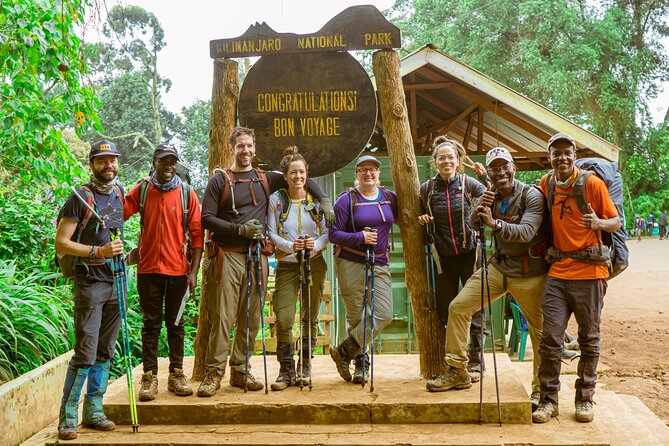
Day 7: Millennium Camp to Mweka Gate
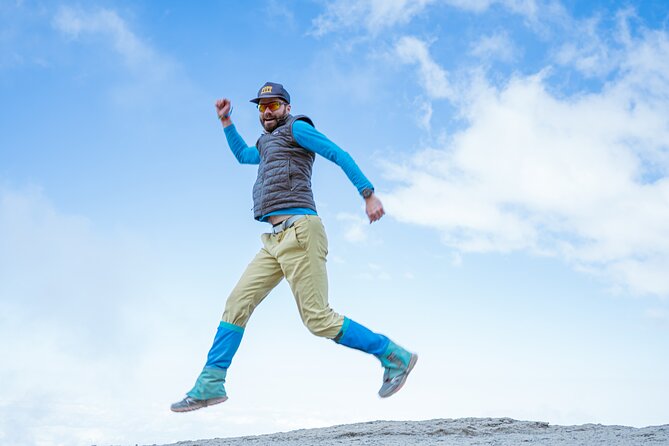
The final descent takes you from Millennium Campsite through montane forest to Mweka Gate. The listed walking time is about five hours, covering approximately 14 kilometers.
Compared with summit day, this is straightforward, but tired knees can make downhill walking unpleasant. Trekking poles may be useful, though they are not specifically listed among the included equipment, so you should confirm what you need to bring.
At Mweka Gate, you collect your certificates and meet the private car for the return to your Moshi hotel. Breakfast and lunch are included on this day. The promised reward is simple and very welcome: a shower, a bed, and a cold drink.
The two included Moshi hotel nights add real value. One night is provided on arrival and another after the hike, giving you a place to recover before and after the mountain rather than forcing you to organize those nights separately.
What the $2,450 price includes
At $2,450 per person, this is not a budget walk, but the price includes many of the costly pieces of a Kilimanjaro climb. You receive private transportation, park fees and taxes, camping equipment, sleeping gear, chairs, tables, guide and porter wages, meals, treated water, hotel nights, emergency oxygen, and a first aid kit with a pulse oximeter.
Food is covered for seven breakfasts, seven lunches, and six dinners. That reduces the number of extra costs you need to manage during the climb.
The private format is also important. Your group participates on its own rather than being placed into a larger public departure. That can make communication easier and may give the guides more flexibility with pacing, although the provided details do not state the maximum group size or guide-to-climber ratio.
You should still budget separately for the Tanzanian visa, listed at $50. The details do not state tipping recommendations, personal gear costs, flights, or other optional expenses, so ask for a full pre-trip cost sheet before paying.
The support team and practical safety details
The strongest pattern in the available feedback is praise for organization, communication, guides, porters, food, and safety. Specific names connected with past climbs include Elias, Eli, Benson, Frank, and Sebastian.
The company supplies treated water throughout the trek, which is a major practical benefit. You do not need to plan your entire drinking supply from town, though you should confirm what bottles or hydration systems you need to carry.
Emergency oxygen and a pulse oximeter are included, along with a first aid kit. These are reassuring provisions, but they are not a substitute for honest communication with your guide. If you feel unwell, say so early. Altitude problems can worsen quickly.
The included camping setup also means you can focus on walking rather than building camp. Fair wages for guides and porters are listed as part of the price, an important point when comparing operators. You should still ask how tipping is handled and what porter welfare practices are followed, since those details are not provided here.
Who should choose this seven-day climb?
I would recommend this route to a fit first-time Kilimanjaro climber who wants strong scenery and a private arrangement. You need a moderate level of physical fitness at minimum, but you should also be comfortable with long days, cold camping, high altitude, and the possibility of very little sleep before the summit.
The route works well for people who value organization. Hotel nights, transfers, meals, equipment, water, and safety supplies are arranged in one package. It also suits couples, families of adults, or a group of friends who want the mountain experience to remain private.
I would think twice if you dislike camping, struggle with steep downhill walking, or want a relaxed holiday schedule. The seven-day length is efficient, but it leaves little spare time if altitude or weather causes delays. Poor weather can lead to cancellation, in which case you are offered another date or a full refund.
Free cancellation is available if you cancel at least 24 hours before the start time. Changes or cancellations made later are not accepted for a refund, and the local time cut-off applies.
Should you book the Nafika Lemosho climb?
Book it if you want Kilimanjaro’s scenic western approach, a private seven-day plan, and a package that covers most major mountain costs. The route provides a strong mix of forest, plateau, glaciers, alpine desert, and summit views, while the Lava Tower to Barranco section gives the itinerary a sensible acclimatization feature.
Before booking, confirm the exact Day 4 and Day 6 schedule, your guide-to-climber ratio, porter arrangements, personal equipment list, tipping expectations, and the full airport or hotel transfer plan. The listed meeting details refer to Kilimanjaro Airport and Kilimanjaro National Park, while the daily plan describes hotel pickup around 8:00 a.m., so clear communication is worthwhile.
For a private Kilimanjaro climb, the price is reasonable when you count the hotels, meals, camping setup, park costs, transport, and safety equipment. The real question is not simply cost. It is whether you are ready for the long Shira Plateau day, the midnight summit start, and the 12-hour summit schedule. If you are, this Lemosho plan offers one of the mountain’s most scenic ways to reach Uhuru Peak.
FAQ
How long is the Kilimanjaro Lemosho hike?
The hike lasts seven days, including the route from Lemosho Gate to Mweka Gate and the return to your Moshi hotel.
What is the price per person?
The listed price is $2,450 per person.
Is this a private tour?
Yes. Only your group participates in the activity.
What meals are included?
The package includes seven breakfasts, seven lunches, and six dinners.
Are hotel nights included?
Yes. Two nights in a Moshi hotel are included, one on arrival and one after the hike.
What safety equipment is provided?
The package includes emergency oxygen, a first aid kit, and a pulse oximeter.
What happens if bad weather cancels the climb?
Because the activity requires good weather, you will be offered another date or a full refund if it is canceled for that reason.
More 7-Day Experiences in Moshi
- 7-Day Machame Kilimanjaro Summit Tour from Arusha
★ 5.0 · 125 reviews - 7 Days Kilimanjaro via Machame route affordable price
★ 5.0 · 110 reviews - 7-Day: Inca Trail Trek to Machu Picchu Group Tour
★ 5.0 · 40 reviews - Pokhara: 7 Day Annapurna Base Camp Trek
★ 4.9 · 38 reviews
Just added around Moshi
- Mount Kilimanjaro National Park Day Trip★ 5.0 · 7 reviews
- Mount Kilimanjaro Day Hike – All-Inclusive, No Hidden Fees★ 4.0 · 7 reviews
- Moshi, Kilimanjaro: Local Market Shopping Experience★ 5.0 · 2 reviews
- Moshi: Kilimanjaro Climb Marangu Route Guided Tour★ 4.3 · 6 reviews
- Kilimanjaro: Village Walk, Coffee Tour, Waterfall, and Lunch★ 4.5 · 56 reviews
- Kilimanjaro: Day trip -hike to Mandara Hut Kilimanjaro 2700m★ 5.0 · 3 reviews
- #1. Best Kilimanjaro Day hike Tour-Machame Route-ISMANI★ 4.2 · 47 reviews
- Climbing Kilimanjaro – Marangu Route★ 5.0 · 65 reviews
Kilimanjaro Climbs, compared.
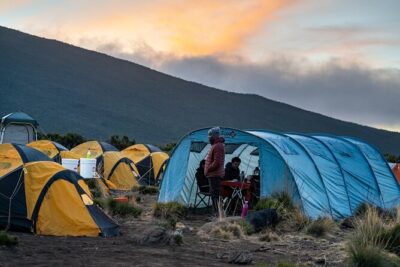
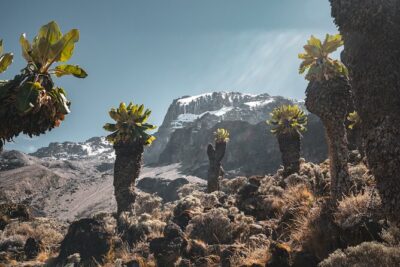
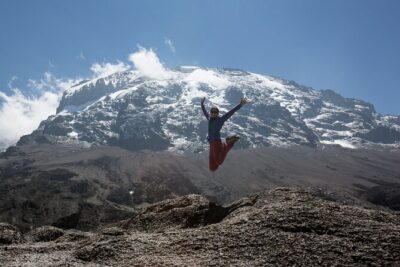
8-Day Small-group Lemosho Kilimanjaro Summit Trekking
Read our review →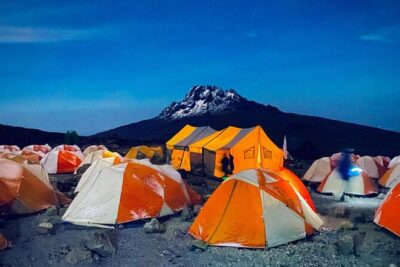
Climbing Kilimanjaro through 7 days Machame Route
Read our review →
Browse the lists this trek appears in