
Review · KATHMANDU
Manaslu Circuit Trek (15 Days)
The Manaslu Circuit gives you big Himalayan views without the crowds of Everest or Annapurna. You move from Kathmandu’s streets to river gorges, pine forests, yak pastures, monasteries, and the demanding crossing of Larke Pass. The route feels remote, but the planning is reassuring: permits, airport transfers, licensed guides, porters, and emergency procedures are arranged.
I especially like the two built-in acclimatization days around Samagaon and Dharamsala. I also like the cultural shift as villages become more Tibetan in style, with mani walls, gompas, stone homes, and yak pasture replacing the lower valleys. The trade-off is clear: this is a hard trek with long walking days, basic lodging, limited charging and hot water, and meals mostly paid separately.
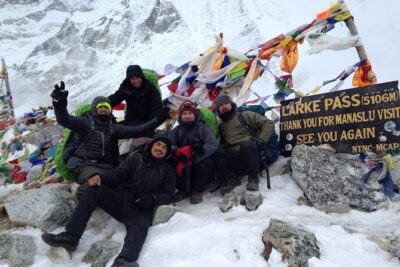
- Larke Pass is the physical high point: Day 12 is a pre-dawn start over rocky, glacier-fed terrain and the toughest day of the route.
- The route changes constantly: You pass subtropical forest, river gorges, pine and rhododendron woods, dry high valleys, and yak grazing ground.
- Samagaon earns its rest day: The Pungyen Gompa hike gives you mountain views while helping your body adjust to altitude.
- The group stays small: Departures can include up to 15 people, with one assistant guide for every five trekkers.
- Your pack is limited: One porter serves two trekkers, so you carry a daypack and need to pack carefully.
- The price has useful inclusions: Permits, Kathmandu hotel nights, transport, guides, porters, and crew insurance are covered, but most meals and personal extras are not.
Why the Manaslu Circuit feels different
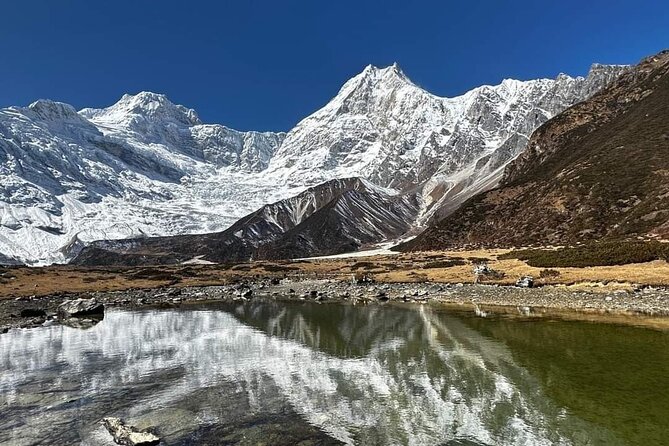
The Manaslu Circuit is a good choice if you want a long Himalayan journey with a stronger sense of distance and local life. The route follows the Budi Gandaki River for much of the approach, then turns into a high mountain world of bare slopes, yak pasture, monasteries, and stone villages.
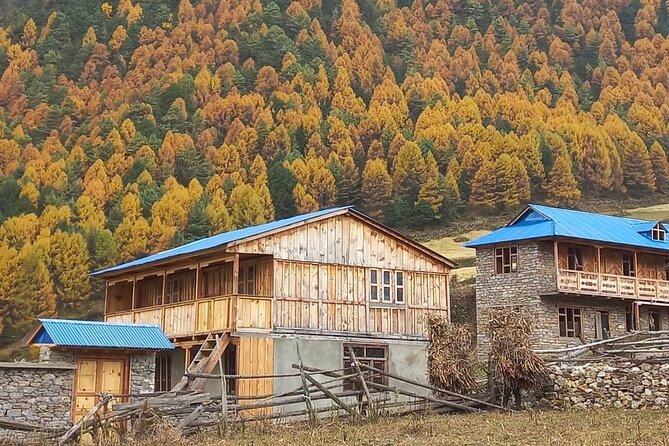
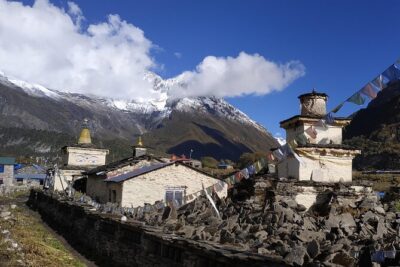
The cultural change is one of the route’s best features. Lower villages have Gurung influences, while places such as Namrung, Lihi, Samagaon, and Samdo show a stronger Tibetan character. You will see carved mani stones, prayer walls, traditional homes, and mountain settlements shaped by altitude and trade.
The route is not polished in the way some popular treks are. That is part of its appeal, but it also means rough roads, simple teahouses, and fewer comforts. If you need a private room, reliable Wi-Fi, and a hot shower every night, this will test your patience. If you value quiet trails and a slower connection with mountain communities, the inconvenience feels worthwhile.
Days 1 and 2, Kathmandu preparation before the trail
Your first day begins with an airport pickup at Tribhuvan International Airport and a transfer to a three-star hotel in Thamel. The rest of the day is free. That gives you time to recover from your flight, sort gear, and walk a few streets around central Kathmandu without rushing into the mountains.
Day 2 is practical rather than scenic. The company waits for the Manaslu permits to be issued and collects your physical passport and two passport photos for the immigration process. Bring the original passport, not just a copy. The permit process depends on it.
This extra day is useful. It gives the guide team time to check equipment, explain the route, and answer questions before the long drive. Ask about porter luggage limits, meal costs, water treatment, and charging fees before leaving Kathmandu. Clear preparation matters on a trek where small problems become harder to solve at altitude.
More Manaslu Treks in Kathmandu:
- Manaslu Circuit Trek
★ 5.0 · 292 reviews - Manaslu Circuit Trek
★ 5.0 · 184 reviews - Manaslu Circuit Trek:
★ 5.0 · 106 reviews
Day 3, the long road to Machha Khola
The drive from Kathmandu to Machha Khola takes most of the day and shifts quickly from city traffic to foothills and river valleys. It is scenic, but do not confuse scenic with comfortable. The road journey is long, and the route includes rough stretches.
Machha Khola is the practical starting point for the walking portion. You will likely feel that the trek has begun before your boots hit the trail, simply because the road access becomes more remote and the river valleys close in around you.
Private transport from Kathmandu to Machha Khola is included. That is an important value point, since arranging this transfer alone can add stress and delay. Keep water, snacks, rain protection, and essential medication in your daypack rather than buried in porter luggage.
Days 4 and 5, river gorges and Gurung villages
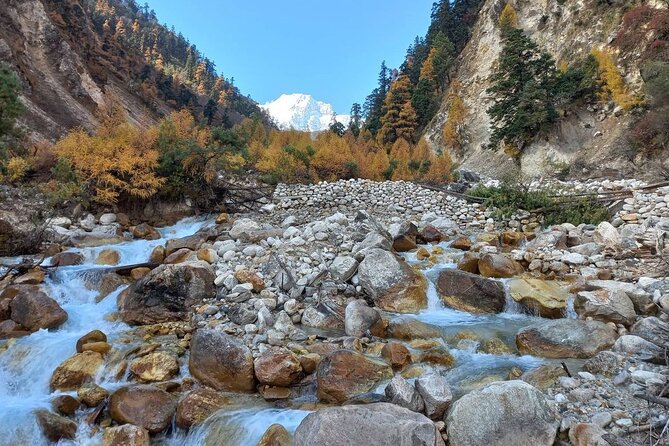
Day 4 takes you from Machha Khola to Jagat, roughly 15 kilometers over six to seven hours. The route gains about 600 meters and loses about 250 meters, with narrow paths beside the Budi Gandaki River.
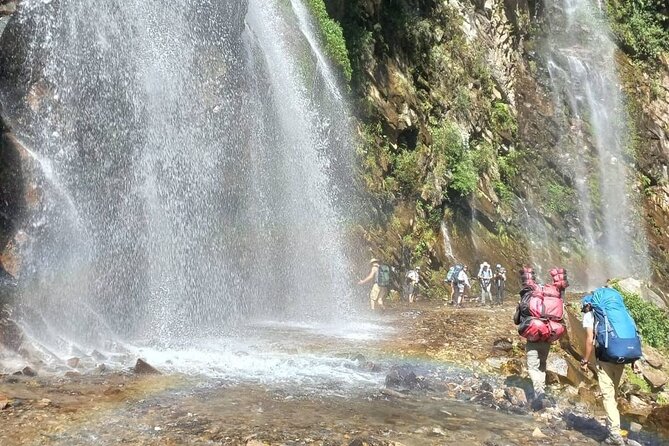
You pass Tatopani, known for its natural hot spring, though this itinerary does not include time for a soak. At Dobhan, the Shiar Khola meets the Budi Gandaki, creating dramatic river views and steep-sided gorges. The trail includes bamboo, waterfalls, rocky sections, and narrow ridges. This is a proper walking day, not a gentle introduction.
Jagat is an important checkpoint village, and the route begins to feel more organized around permit control and trekking traffic. The village setting also gives you an early look at the mountain communities that support the circuit.
On Day 5, you walk about 18 kilometers to Deng. Expect seven to eight hours, around 1,050 meters of ascent, 400 meters of descent, and some flatter sections. The path passes Salleri and the large Gurung village of Phili before continuing through forest and river country.
This is one of the more demanding early days because the elevation gain is substantial. The sensible approach is to walk steadily, drink often, and avoid racing the group. Your guide’s job is not just to show the way. It is also to watch how you are handling the climb.
Days 6 and 7, entering the Tibetan-influenced upper valley
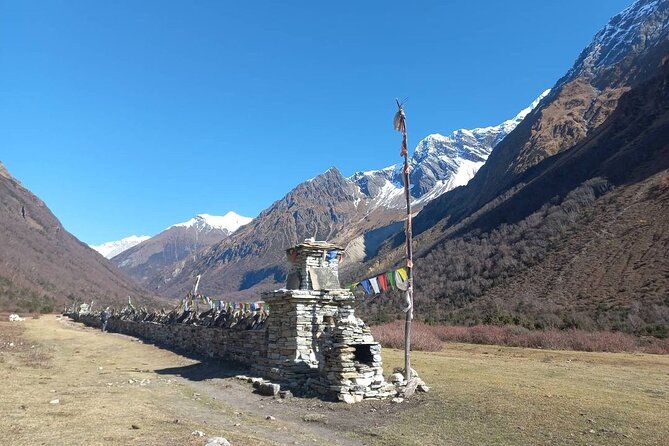
Day 6 leads from Deng to Namrung, about 19 kilometers and seven to eight hours. The route gains roughly 1,100 meters, with a small amount of descent and long forest sections.
After Deng, pine and rhododendron woods replace the warmer lower vegetation. You pass Bihi and Rana, where stone houses and Tibetan-influenced details become more common. The setting feels quieter and more alpine, though the walking remains varied.
Namrung is a key point on the circuit because the culture and scenery begin to change sharply. You are now moving toward the high Nubri Valley, where mountain life, Buddhist practice, and yak herding shape the rhythm of the villages.
Day 7 continues to Lihi, with about 700 meters of ascent and 100 meters of descent. Terraced fields, switchbacks, forests, and yak pasture fill the day. The route is less about one single attraction and more about watching the valley transform as you gain height.
Lihi is a small settlement, and its size is part of the experience. Do not expect a long menu, a range of hotel choices, or much nightlife. You come here for the mountain setting and the chance to sleep in a working village.
A few more treks around Kathmandu worth a look
- Everest Base Camp Trek – 14 Days
★ 5.0 · 1,499 reviews - Everest Base Camp Trek
★ 5.0 · 842 reviews - Everest Base Camp Helicopter Tour landing at Everest View Hotel
★ 5.0 · 668 reviews - Everest Base Camp Trekking
★ 5.0 · 485 reviews
Day 8, Shyala and the approach to Samagaon
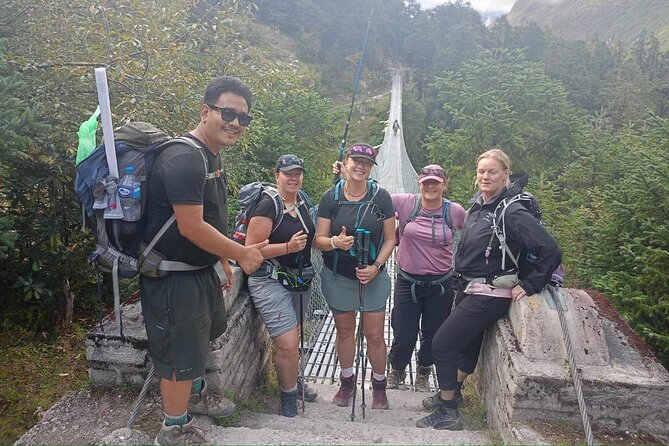
The trail to Shyala passes through pine and rhododendron forest, with mani walls and mountain views appearing along the way. Shyala is one of the most photogenic villages on the route, surrounded by Manaslu, Himalchuli, Peak 29, and Ngadi Chuli.
From Shyala, you continue through yak pasture and scrubland toward Samagaon. The day covers about 17 kilometers, with around 500 meters of ascent. The walking is gradual in places, but the growing altitude makes every uphill section more noticeable.
Samagaon is the largest village in the Nubri Valley and one of the circuit’s main cultural centers. Its position beneath Manaslu gives you a strong sense of arrival. This is where the route stops feeling like a forest trek and becomes a high mountain journey.
Teahouse accommodation is included, but standard means basic. Hot showers, Wi-Fi, and battery charging usually cost extra where available. Keep expectations sensible and bring a power bank, though you should still expect limited power in remote sections.
Day 9, acclimatization at Samagaon and Pungyen Gompa
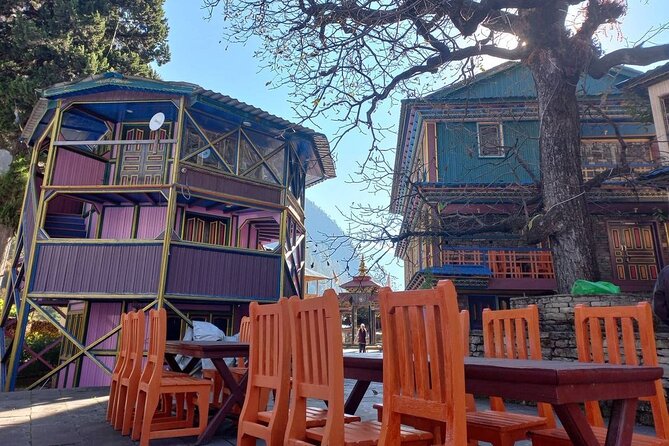
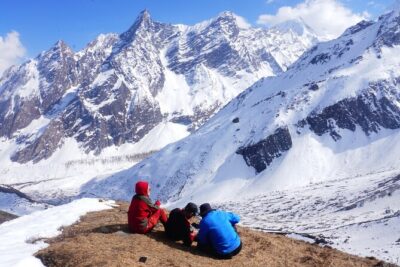
Day 9 is an acclimatization day, but it is not necessarily a day spent lying in bed. The planned three to four-hour round trip to Pungyen Gompa takes you up a ridgeline with broad views toward Manaslu and the surrounding peaks.
This is one of the smartest parts of the schedule. A short hike followed by a night at the same elevation gives your body time to adjust without adding another sleeping location. It also gives you a cultural stop that feels connected to the valley, rather than a quick roadside photo opportunity.
Use the day to ask your guide about symptoms of altitude sickness and the plan if someone becomes unwell. The company provides altitude briefings and has emergency procedures, but no itinerary can remove the risks of high-altitude trekking. Your travel insurance must cover medical treatment and helicopter evacuation up to 5,200 meters.
Days 10 and 11, Samdo and the final approach
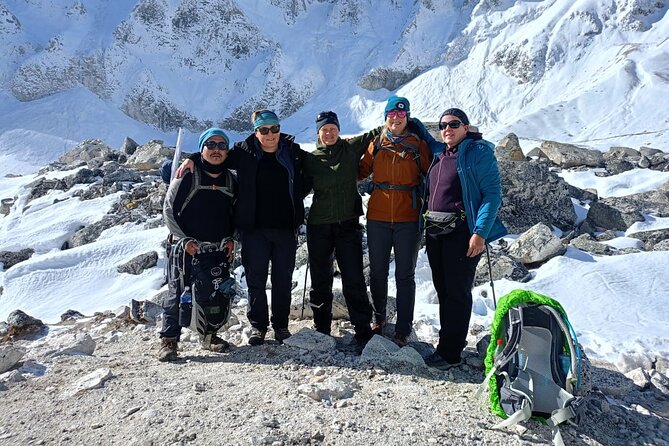
Day 10 takes you from Samagaon to Samdo. The trail first descends to a wooden bridge over the Budhi Gandaki, then climbs through dry yak pasture and open high country. Mani walls mark the route and reinforce the cultural shift into the upper valley.
Samdo feels remote in a way that is hard to replicate on busier Nepal routes. Vegetation becomes sparse, the villages are smaller, and the open terrain exposes the scale of the mountains. The walking distance is not specified in the supplied plan, so ask your guide for the exact day’s timing before setting out.
On Day 11, you walk from Samdo to Dharamsala, also called the Larke Pass base camp area in many trekking plans. It is a shorter but important acclimatization day, with a steady climb over rocky alpine ground.
This is the day to sort gloves, layers, water, snacks, headlamp, and camera batteries. The next morning begins before dawn. Put anything you need for the pass in your daypack, because you will not want to open your porter’s bag in the cold.
Day 12, crossing Larke Pass to Bimthang
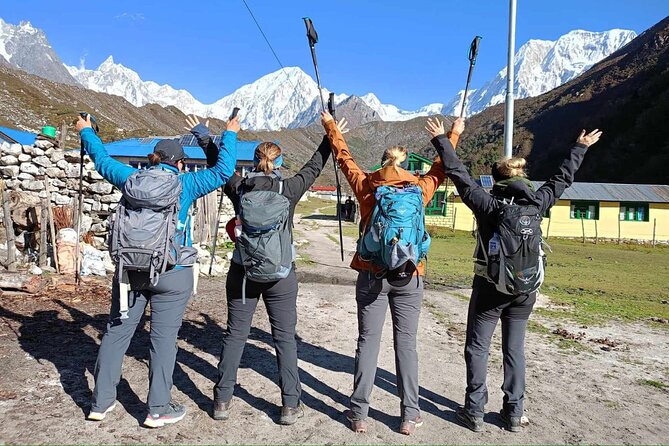
Day 12 is the hardest and most rewarding day of the circuit. You leave Dharamsala before sunrise and climb over rocky moraine and glacier-covered terrain toward Larke Pass.
The ascent is demanding because of the early start, cold conditions, altitude, and uneven ground. Your guide sets the pace, and that is where the included first-aid training and mountain experience matter. Keep the group together, take short rests, and tell the guide promptly if you feel unwell.
After the pass, the trail descends toward Bimthang. The change can feel dramatic: the upper route is stark and exposed, while the descent brings broader views and a different feel to the valley. Bimthang is not simply a place to sleep after a hard day. It marks the moment when the circuit turns from high pass terrain toward forested lower country.
This is the day that makes the trek a serious undertaking rather than a scenic village walk. You should have a moderate level of physical fitness at minimum, and you should be comfortable walking for many hours on uneven trails.
Day 13, descending through forest to Dharapani
The route from Bimthang to Dharapani descends through pine, rhododendron, and oak forest. You pass Yak Kharka, a seasonal grazing area, and gradually leave the bare alpine terrain behind.
The descent is easier on the lungs but can be tiring on the knees. Trekking poles are useful here, especially after the long pass day. The changing vegetation also provides a satisfying sense of progress. You can see the route moving back toward warmer valleys and more settled villages.
Dharapani is where the Manaslu route connects with the Annapurna region. It is a useful transport point, but it can feel busier and more developed than the villages farther up the circuit.
Day 14, the rough road back to Kathmandu
After breakfast, a shared jeep takes you from Dharapani toward Besisahar along the Marsyangdi River. The route passes Tal village and waterfalls, with cliff-side roads and river views along the way.
The shared jeep is included from Dharapani to Besisahar, while private transport is provided onward to Kathmandu. This arrangement keeps the package practical, but the road day can be bumpy and tiring. Build flexibility into your expectations rather than imagining a quick, smooth transfer.
The trip back to Kathmandu is a major transition. After two weeks of foot travel and teahouse nights, road noise and city traffic may feel surprisingly intense. An extra night in Kathmandu is not included if delays or schedule changes require it, so keep some financial room for changes.
Day 15, a final morning in Thamel
Your last day depends on your flight time. You may have a few hours for Thamel, where you can buy souvenirs, sit in a café, or simply recover before the airport transfer.
Airport departure transport is included. Check your bags carefully before leaving the hotel, especially if your passport was used during the permit process. The activity ends back at the Kathmandu meeting point, and the provider operates daily during the stated season.
What the $1,657.50 price really covers
At $1,657.50 per person, the price is attractive for a guided 15-day circuit, but you need to read the inclusions correctly. It covers three-star Kathmandu accommodation with breakfast, standard teahouses during the trek, government fees, required conservation and restricted-area permits, airport transport, the Kathmandu to Machha Khola transfer, and Besisahar to Kathmandu transport.
It also includes a licensed, first-aid-trained guide, porters at a two-to-one ratio, one assistant guide for every five trekkers, and insurance for the trekking crew. A group of up to 15 people is large enough to share costs but still manageable on a mountain trail.
The main extra cost is food. Trek meals are not included, and in Kathmandu only the specified breakfasts and welcome and farewell dinners are covered. You also pay for bottled or treated water, hot showers, charging, Wi-Fi, personal gear, tips, visa costs, travel insurance, and unexpected delays or rescue expenses.
Bring a filter bottle or purification tablets. This saves money and reduces plastic waste, which fits the company’s stated effort to use local teahouses, reduce waste, and support village economies through local wages and training.
Guide support, porter limits, and safety
The strongest part of this arrangement is the support structure. The guide is licensed and first-aid trained, assistants are added at a ratio of one per five trekkers, and porters carry overnight bags rather than leaving you to manage a full load.
Named guides connected with departures include Raj Rai, Tshering, Pemba Sherpa, and Dhan Bir Rai. The exact guide for your date may differ, so confirm that before booking if a particular person matters to you. The organization has also been noted for clear pre-arrival communication, gear advice, and attentive support from its operations team, including Prashant and Prem.
You still need your own travel insurance. It must cover accidental and medical treatment plus helicopter evacuation up to 5,200 meters. Crew insurance is included, but that does not protect you.
Who should book this trek
Book this route if you want a quieter Himalayan circuit, can manage long days on rough trails, and enjoy village life more than resort comfort. It suits people who value guides, local porters, cultural contact, and a carefully planned acclimatization schedule.
Think twice if you dislike shared rooms, basic teahouses, separate meal bills, long road transfers, or uncertain weather. The pass day is not a casual sightseeing stop, and the itinerary does not leave much room for illness or major delays.
The cancellation policy is straightforward: cancel at least 24 hours before the start for a full refund. Poor weather or failure to meet the minimum group size may lead to a new date, another experience, or a full refund.
Should you book the Manaslu Circuit Trek?
I would book this trek if your priority is a remote route with strong mountain scenery, Tibetan-influenced culture, and organized local support. The included permits, transport, porters, assistant guides, and acclimatization days give the $1,657.50 price real value.
I would not book it without good insurance, proper gear, and a realistic food budget. The best reason to choose this trip is not comfort. It is the chance to cross Larke Pass, walk through the Nubri Valley, and experience a less crowded side of Nepal with a team that pays attention to safety and local communities.
FAQ
How long is the Manaslu Circuit Trek?
The experience lasts approximately 15 days, including Kathmandu preparation, transport days, the trek, and the return to Kathmandu.
What is the price per person?
The listed price is $1,657.50 per person.
What is included in the accommodation?
You receive accommodation in a three-star hotel in Thamel, Kathmandu, with breakfast, plus standard teahouse accommodation during the trek.
Are meals included?
Meals during the trek are not included. In Kathmandu, the package includes the stated hotel breakfasts, a welcome dinner, and a farewell dinner.
Is airport pickup provided?
Yes. Private transport is provided for arrival and departure at Tribhuvan International Airport.
What transportation is used after the trek?
A shared jeep takes you from Dharapani to Besisahar. Private transport then takes you from Besisahar to Kathmandu.
Do I need to provide my passport?
Yes. The original physical passport is required so the Nepal immigration department can issue the trekking permits. Two passport-sized photos are also required.
What fitness level is required?
You should have a moderate level of physical fitness. The route includes long walking days, significant elevation gain, rough trails, and the demanding crossing of Larke Pass.
Is travel insurance included?
No. You must arrange your own insurance, including accidental and medical cover and helicopter evacuation up to 5,200 meters.
Just added around Kathmandu
- Everest Base Camp Trek★ 5.0 · 3 reviews
- Everest Base Camp Trek★ 5.0 · 7 reviews
- 15 Days Private Everest Base Camp Trek★ 5.0 · 30 reviews
- Everest Base Camp Trek★ 5.0 · 57 reviews
- 14 Days of Adventure Trekking to Everest Base Camp★ 5.0 · 2 reviews
- 14-Day Everest Base Camp Trek★ 5.0 · 20 reviews
- From Kathmandu: Private 14-Day Everest Base Camp Trek★ 5.0 · 20 reviews
- 14 Days Everest Base Camp Trek★ 5.0 · 4 reviews
Manaslu Circuit Treks, compared.
Experience the Thrill of a Lifetime:12-Days Manaslu Circuit trek
Read our review →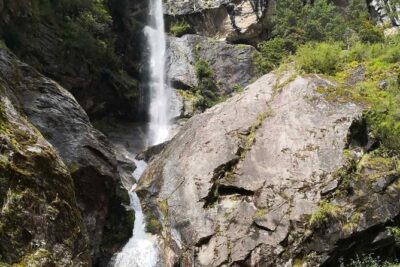
Browse the lists this trek appears in