
Review · KATHMANDU
Manaslu Circuit Trek
The Manaslu Circuit takes you from steamy rice terraces and river gorges to the snowbound Larkya La Pass at about 5,160 meters. It feels wilder than Nepal’s famous Annapurna Circuit, with fewer people, more rough trail, and a stronger sense of being far from the road.
I like two things right away: the dramatic change in scenery, from waterfalls and jungle to glaciers and yak pasture, and the living Tibetan Buddhist culture in villages such as Lho, Sama Gaun, and Samdo. The drawback is just as clear: this is a hard trek, with long days, basic teahouses, high altitude, and a rough road at both ends.
Key points to know before booking
- The Larkya La crossing is the big prize: You start before dawn and cross Nepal’s high point on this route, with views of Himlung, Kang Guru, and Annapurna II.
- The route changes character every few days: Expect rice fields, sal forest, waterfalls, fir and rhododendron woods, Tibetan villages, glaciers, and dry high valleys.
- Two acclimatization days matter: You spend time around Sama Gaun and Samdo, with options for Manaslu Base Camp, Birendra Tal, Pungyen Gompa, or the Tibetan border area.
- The road journey is part of the challenge: The ride to Soti Khola is long, dusty, and bumpy. A private jeep gives you more control than a local bus and jeep combination.
- Guide support is a major part of the value: Guides including KP, Pemba, Dilman, Narayan, Sajan, and Mitra are praised for pacing, route knowledge, communication, and adjusting plans to weather and group ability.
- The price covers the basics, not everything: At $1,081 per person, you get transport, permits and taxes, breakfast, lunch, and dinner. Kathmandu lodging and a porter are not included.
Why Manaslu feels different from Nepal’s busier circuits
The Manaslu route circles Mount Manaslu, the world’s eighth-highest mountain, but the appeal is not only the summit views. The trail follows the Budi Gandaki River through a deep gorge, then climbs into a high valley shaped by Tibetan Buddhist customs and trade with the nearby borderlands.
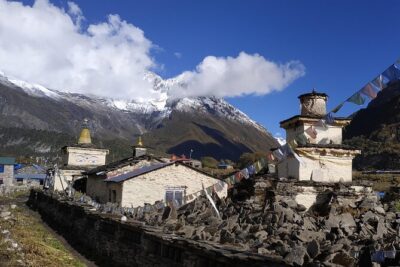
You will cross suspension bridges above icy water, pass mani walls carved with Buddhist prayers, and walk through villages where Tibetan clothing, gompas, prayer flags, and yak herding remain part of daily life. That combination gives the trek a strong sense of place.
The route is not untouched. Roads reach far into the lower valley, and vehicles can share parts of the trail. Still, once you climb beyond the lower villages, the scale, isolation, and roughness make this feel like a serious Himalayan journey rather than a comfortable walking holiday.
This is a private trip, so only your group participates. That matters if you want your guide to adjust walking speed, meal stops, rest days, or side trips. Guides such as KP and Pemba are praised for doing exactly that, including changing the schedule to make better use of good weather.
More Manaslu Treks in Kathmandu:
- Manaslu Circuit Trek
★ 5.0 · 292 reviews - Manaslu Circuit Trek:
★ 5.0 · 106 reviews - Manaslu Circuit Trek (15 Days)
★ 5.0 · 50 reviews
Days 1 and 2: Soti Khola, Machhakhola, and the first real walking
The journey begins with transport from Kathmandu toward Soti Khola. The ride can take about eight hours and is not a gentle introduction. Local buses and jeep combinations stop for food and toilet breaks, but the road is described as long, dusty, and bumpy.
A private jeep costs more in many trekking arrangements, but here private transportation is included. It gives you more flexibility and avoids being packed into a local vehicle for the entire ride. Do not expect a smooth highway trip. This is mountain access, and the road is part of the price you pay for reaching a less developed route.
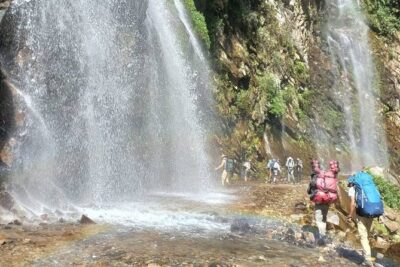
On day two, you finally begin walking toward Machhakhola. The trail passes sal forest, cliffs, waterfalls, and the river. Gurung and Ghale villages add a human scale to the wild setting.
At Nyali Khola, people pray to local river and mountain deities for protection. You may also encounter mule trains. Stand on the uphill side of the trail when they pass, not near the drop. It is a small safety habit, but an important one on narrow paths.
Machhakhola means fish river. The day takes about six hours, and it is your first useful test of fitness. You are not yet at extreme altitude, but the trail already rises and falls enough to make the legs work.
Days 3 and 4: Tatopani, Jagat, and the restricted area
The trail follows the Budi Gandaki toward Jagat, twisting beside the river and passing through forest. Monkeys and langurs may appear in the trees, while Gurung villages and shepherd communities provide a look at rural mountain life.
Tatopani means hot water. A soak in the warm pools can ease tired legs, though the day continues afterward. You still have suspension bridges and a cantilever bridge before reaching Jagat, a stone-paved Gurung village.
Jagat marks an important change. From here, you enter the Manaslu Restricted Area, so permits and checkpoints become part of the journey. This also explains why a guided private trip is useful. You are not simply following a popular public trail with signs at every turn.
The next day passes Sirdibas and Phillim. Buddhist prayer flags and gompas become more common, while the route follows the river through rhododendron and pine forest. At Pewa, a simple teahouse and a plate of dal bhat bring the day to a close.
These are basic mountain accommodations. Meals are included, which is valuable because food choices become more limited as you go higher. Breakfast, lunch, and dinner are covered for all 14 days, but you should not confuse that with hotel-level dining or broad menu choice.
Days 5 and 6: Namrung, Lho, and the first great mountain views
Day five includes a landslide zone, so this is a place to follow your guide’s instructions closely. The trail is not only physically demanding. Loose ground and exposed sections require attention, especially if weather has affected the path.
Namrung brings a pleasant surprise. A local business owner who worked in Hong Kong returned and built a hotel and restaurant with coffee and Wi-Fi. In a remote trekking valley, a good cup of coffee and a connection to the outside world can feel like a small luxury.
The following day leads toward Lho through a more strongly Tibetan Buddhist setting. Mani walls line the trail, and villagers follow traditional Tibetan customs. You pass terraces, fir, oak, and rhododendron forest, along with painted gate arches near Sho.
Lho is one of the early visual highlights. The village offers striking views of Manaslu, at 8,163 meters, and Manaslu North, at 7,157 meters. The walking time is only about four hours, which helps your body adjust as you gain altitude.
I would treat this shorter day as useful recovery, not an excuse to race ahead. The goal is to arrive at the higher camps in good shape. Altitude rewards patience.
A few more treks around Kathmandu worth a look
- Everest Base Camp Trek – 14 Days
★ 5.0 · 1,499 reviews - Everest Base Camp Trek
★ 5.0 · 842 reviews - Everest Base Camp Helicopter Tour landing at Everest View Hotel
★ 5.0 · 668 reviews - Everest Base Camp Trekking
★ 5.0 · 485 reviews
Days 7 and 8: Sama Gaun and acclimatization around Manaslu
The route to Sama Gaun is another shorter day. Pine forest and a mossy gully lead toward the main village of the Nubri people. As you approach, the mountain views give way to broad yak pastures.
Sama Gaun is an important stop, with a large gompa, shops, a health post, a heliport, and telephone or Wi-Fi access. It is one of the last places where you may find several services together before the high pass.
Day eight is for acclimatization, but you still walk. That is the right approach at altitude. Options include Pungyen Gompa, Manaslu Base Camp, or Birendra Tal.
The Manaslu Base Camp option reaches about 4,400 meters and requires more effort. Birendra Tal is the shorter choice if you feel tired. A packed lunch is provided for the outing, and you walk slowly while keeping hydrated.
This flexibility is one of the strongest reasons to book with an experienced guide. The best choice depends on how you feel that morning, not on a rigid promise to tick off every viewpoint. Several guides, including Dilman and Pemba, are praised for keeping a sensible pace and helping people through altitude problems.
Days 9 and 10: Samdo, glaciers, and the Tibetan border
The walk to Samdo takes about three hours through a broad valley of yak pastures. The short schedule is deliberate. At this height, your body needs time more than mileage.
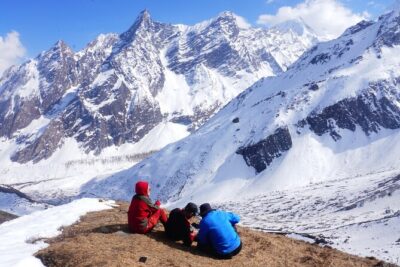
From Samdo, you can explore nearby villages or hike toward Samdo Peak. The higher viewpoint lets you see the route toward Larkya La and the direction of Tibet. The next day provides another acclimatization period, with the option of looking toward the Tibetan border.
You cannot cross into Tibet on this trip, but you may see yak caravans moving over the border routes. With luck, you might also spot blue sheep, pikas, or marmots. Looking south, Samdo Glacier has a large serac near its top.
These days can feel slow if you are used to filling every hour. That is a mistake here. Rest, hydration, and gradual altitude gain are what make the pass day possible. If you develop symptoms of altitude sickness, tell your guide early. One guide, Dilman, is specifically praised for giving careful help when a participant became ill at altitude.
Days 11 and 12: Dharamsala and the Larkya La Pass
The trail continues through rugged high country to Dharamsala, a picturesque stopping point with mountain views. The walk takes about four hours, but the thin air makes the day feel longer than the clock suggests.
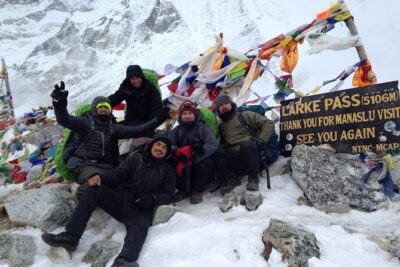
The next morning begins early. You must cross Larkya La before afternoon, when weather can worsen. The pass reaches about 5,160 meters, and snow or poor weather can make the crossing very demanding. Crampons may be needed, depending on conditions, so ask the operator what equipment and safety arrangements apply for your departure date.
At the top, the reward is enormous: Himlung at 7,126 meters, Kang Guru at 6,981 meters, and Annapurna II at 7,937 meters. You also look toward a great glacial cirque and the icefalls below.
The descent takes about three hours and leads to Bimthang. You may see Pongkar Tal between the Pongkar and Salpudanda Glaciers. This is a long day, around ten hours, and it is the hardest section of the circuit for many people.
Do not judge the trek only by the pass itself. The early start, cold, thin air, snow, steep descent, and tired legs all matter. Good guides such as Narayan and KP are praised for changing plans when weather windows shift. That kind of judgment is more valuable than a fixed schedule in the Himalayas.
Days 13 and 14: Forests, rough trail, and the return to Kathmandu
After Bimthang, the route drops through lush forest and rhododendron bushes. The air grows warmer, and signs of farming return.
You cross the Dudh Khola and stop for lunch at Karche Village. The trail shows signs of glacier floods and can become rough. Later, fields and forest replace the stark high valley, giving your body and eyes a welcome change.
The final transport day takes around ten hours back to Kathmandu by local jeep and bus or private jeep. Private transport is again the more comfortable and flexible option, but the distance remains long. Reaching Kathmandu by evening is the plan, though mountain roads are never the place for an overly tight onward connection.
The package ends in Kathmandu. Hotel accommodation there is not included, so plan those nights separately.
What the $1,081 price really gives you
At $1,081 per person, the price has solid value if you want a guided, organized trek rather than arranging every permit, meal, vehicle, and teahouse yourself.
Included are private transportation, all fees and taxes, and 14 breakfasts, 14 lunches, and 14 dinners. That removes several daily decisions and protects you from a series of small costs adding up in a remote region.
The important exclusions are Kathmandu hotels and a porter. You should budget for those separately. The supplied information also describes porters positively, with specific teams praised for their strength and good humor, but you should confirm before booking whether porter service can be added and at what cost.
The private format is another part of the value. You are not tied to a large public group, and your guide can respond to fitness levels, illness, weather, or a desire to visit a monastery. The main question is not simply if the price is cheap. It is if you want support on a restricted, high-altitude route where transport and logistics are not simple.
Who should book this Manaslu trek
You should consider it if you are physically fit, comfortable walking for up to ten hours, and happy with basic teahouse accommodation. You also need to accept that the trail can be rough and that weather may change the plan.
This trek suits someone who wants fewer people on the path, strong cultural contact, and a gradual journey from lowland farms to high glaciers. It also suits a solo person who does not want to trek alone in a restricted area, since the trip is private and guided.
It is not the right pick if you want short walks, reliable roads, hotel comforts, or a relaxed mountain holiday. Families can manage it in some cases, but fitness and altitude tolerance matter more than age. One family completed the circuit with a 10-year-old, but that should not be taken as proof that the route is easy.
Communication and guide quality appear to be strong points. Saugat handles trip planning, while guides such as KP, Pemba, Dilman, Narayan, Sajan, and Mitra are praised for friendliness, route skill, cultural explanations, humor, and flexibility. Ask which guide will lead your group, since the personal fit can shape a demanding two weeks.
Should you book it?
Book this Manaslu Circuit Trek if you want Nepal at its most dramatic and are ready to work for it. You get deep river gorges, Tibetan villages, Buddhist monuments, glaciers, wildlife possibilities, and one huge pass crossing, plus meals and transport arranged for you.
Skip it if you want an easy introduction to Himalayan walking. The road rides are rough, the high-altitude days are serious, porters are not included, and Larkya La depends on weather and trail conditions.
For a fit hiker who values space, culture, and a route that still feels exploratory, the $1,081 price is reasonable. Confirm porter arrangements, the named guide, current pass conditions, and any gear needed for snow before paying. Free cancellation is available up to 24 hours before the start time, which gives you some protection while making those final plans.
FAQ
How long does the Manaslu Circuit Trek take?
The experience lasts about 14 days, including transport from Kathmandu to Soti Khola and the return journey to Kathmandu.
Where does the trek begin and end?
The meeting point is Tribhuvan Airport in Kathmandu. The trip begins with transport toward Soti Khola and ends in Kathmandu.
What is the highest point on the route?
The highest point is Larkya La Pass, at about 5,160 meters. The supplied description also refers to the pass as 5,167 meters.
Are meals included?
Yes. Breakfast, lunch, and dinner are included for all 14 days.
Is transportation included?
Yes. Private transportation, all fees, and taxes are included. The route information also explains that local bus and jeep combinations or a private jeep may be used for the long road sections.
Is a porter included?
No. A porter is listed as not included, so you should arrange and budget for porter service separately if you need it.
Do I need strong physical fitness?
Yes. The experience states that participants should have a strong fitness level. Walking days range from about three to ten hours, and the Larkya La crossing is physically demanding.
Can I cancel for a full refund?
Yes, if you cancel at least 24 hours before the experience start time. Cancellations made less than 24 hours in advance are not refunded, and late changes are not accepted.
Just added around Kathmandu
- Everest Base Camp Trek★ 5.0 · 3 reviews
- Everest Base Camp Trek★ 5.0 · 7 reviews
- 15 Days Private Everest Base Camp Trek★ 5.0 · 30 reviews
- Everest Base Camp Trek★ 5.0 · 57 reviews
- 14 Days of Adventure Trekking to Everest Base Camp★ 5.0 · 2 reviews
- 14-Day Everest Base Camp Trek★ 5.0 · 20 reviews
- From Kathmandu: Private 14-Day Everest Base Camp Trek★ 5.0 · 20 reviews
- 14 Days Everest Base Camp Trek★ 5.0 · 4 reviews
Manaslu Circuit Treks, compared.
Experience the Thrill of a Lifetime:12-Days Manaslu Circuit trek
Read our review →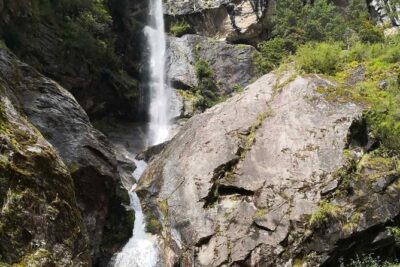
Browse the lists this trek appears in