
Review · KATHMANDU
Around Manaslu Trek
The great prize here is the Larkya La Pass, a 5,116-meter crossing between the Manaslu and Annapurna regions. You spend days following the Budhi Gandaki through river gorges, forests, stone villages, mani walls, and high glacier country before making the pass and descending toward Besisahar.
I like two things in particular: the private format, which keeps the trip focused on your own group, and the broad mix of scenery and culture. You get Hindu and Buddhist sites, rhododendron woods, high mountain views, and old Gurung villages rather than one long walk through similar terrain. Past trips were organized by Hom, with guides including Nabin and Promod Pangeni.
The main caution is cost control and timing. The $1,840 price covers plenty, but lunch and dinner, drinks, hot showers, snacks, tips, personal equipment, and insurance are extra. Day 8 is also not clearly described, so I would ask for the exact plan before paying.
Key points to know before booking
- 5,116-meter Larkya La Pass: The toughest day brings moraines, a steep final approach, and views of Cheo Himal, Himlung Himal, Kangguru, and Annapurna II.
- Restricted Manaslu region: Special permits and paperwork are included, with three passport photographs required.
- Private trekking group: Only your party takes part, with one guide assigned to the trek.
- Rough road at the start: The ride from Kathmandu to Soti Khola takes about seven to eight hours and includes rough sections after Dhading Bensi.
- Meals are only partly included: Fourteen breakfasts are listed, while lunch, dinner, drinks, snacks, and many personal costs are separate.
- Mixed cultural setting: The route includes Hindu temples, Buddhist gompas, kani gateways, mani walls, and Gurung villages.
Why the Manaslu Circuit is worth your time
Manaslu, at 8,163 meters, is the world’s eighth-highest mountain. The circuit gives you close views without requiring a mountaineering expedition, though the route itself is a serious high-altitude trek.
You begin in the lower Budhi Gandaki valley, where the trail feels green, steep, and river-driven. As you climb, the valley opens. Forest gives way to stone villages, wide gravel bars, glaciers, and snow peaks. The change is gradual enough to make the journey feel like a real crossing of Nepal, not a quick transfer between viewpoints.
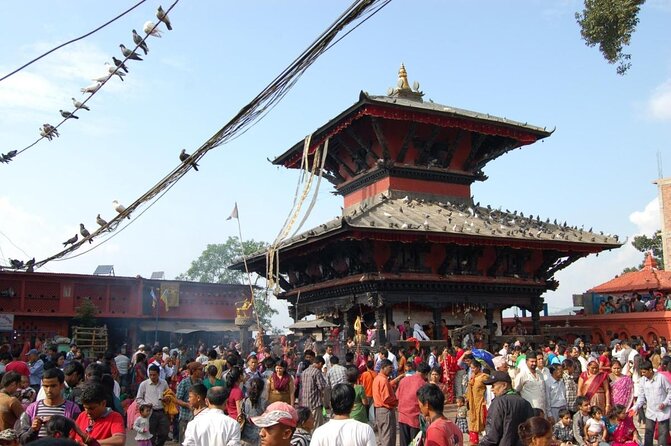
The cultural side matters just as much. You pass Hindu temples and Buddhist settlements, with gompas, prayer walls, and traditional village gateways along the way. The villages of Lho, Samagaon, and Samdo give the route its character, while the views of Manaslu and the surrounding peaks provide the visual reward.
This is not Nepal’s easiest circuit. The high pass, long days, rough roads, and basic lodge accommodation require a moderate level of fitness. Still, the itinerary keeps most walking days to about five or six hours, with longer days at the start, on the pass, and during the final descent.
More Manaslu Treks in Kathmandu:
- Manaslu Circuit Trek
★ 5.0 · 292 reviews - Manaslu Circuit Trek
★ 5.0 · 184 reviews - Manaslu Circuit Trek:
★ 5.0 · 106 reviews
Day 1: Kathmandu to Gorkha and Soti Khola
The first day is mostly a transport day. You leave Kathmandu in a private vehicle, travel on paved roads toward Dhading Bensi, and then continue over rougher roads to Soti Khola. The full journey takes about seven to eight hours.
The route includes a stop connected with Gorakha Nath Temple in Gorkha. This gives the day a cultural pause, though the main purpose is reaching the trailhead.
I would set your expectations correctly. This is not a scenic road transfer all the way through. The rough road section can feel tiring after several hours in a vehicle, but private transport gives your group more control than a shared public bus. The inclusion of ground transportation is one of the useful parts of the package, especially at the beginning and end of the trek.
Day 2: Soti Khola to Maccha Khola
Your first major walking day introduces the character of the Budhi Gandaki valley. You cross a bridge, pass through Sal forest, and climb above rapids before reaching rocky trails near Khursane.
The path moves up and down beside the mountain, passing two waterfalls and a steep cliffside section before reaching the Gurung village of Labubesi. The valley then widens, with the Budhi Gandaki winding past broad gravel bars.
You finish by dropping toward a sandy riverbed, crossing rounded stones, and using another suspension bridge to reach Maccha Khola. This is a varied day, but the rough footing and repeated rises and descents can make it feel harder than the six-hour walking estimate suggests.
Day 3: Maccha Khola to Jagat
The trail remains narrow and active. You cross Tharo Khola and a suspension bridge over Yaru Khola, then climb stone stairs to Tharo Bharyang.
From there, the route shifts to the western bank of the Budhi Gandaki before continuing toward Jagat. The river remains your guide, sometimes close below the path and sometimes hidden in the gorge.
A stop linked with the Gorkha Museum is included in the day’s description. Jagat is an important point on the route and gives you a stronger sense that you are moving into the restricted Manaslu trekking area.
A few more treks around Kathmandu worth a look
- Everest Base Camp Trek – 14 Days
★ 5.0 · 1,499 reviews - Everest Base Camp Trek
★ 5.0 · 842 reviews - Everest Base Camp Helicopter Tour landing at Everest View Hotel
★ 5.0 · 668 reviews - Everest Base Camp Trekking
★ 5.0 · 485 reviews
Day 4: Jagat to Deng
This is a six-hour walking day through bamboo forest and along the valley. After reaching Deng Khola and crossing it, you arrive at Deng for the night.
The scenery here is more enclosed than the open high valley you will see later. Bamboo, river crossings, and steep valley walls create a quieter woodland section. It is a good reminder that the Manaslu route is not simply a procession of snow peaks. Much of its appeal comes from the changing plant life and river terrain.
The overnight lodges are described as the best available twin-sharing options. That wording is useful: expect practical mountain accommodation rather than hotel comfort.
Day 5: Deng to Namrung
The Budhi Gandaki becomes a constant feature as you cross it several times. The trail passes gompas and moves upstream through dense forest before reaching a narrower gorge, where the river drops sharply.
After the gorge, the forest thins and the trail becomes easier for a time. The final approach to Namrung includes a steep climb, making this another day when steady pacing matters more than speed.
Namrung is an important cultural and scenic point. You are moving deeper into the high country, and the Buddhist influence becomes more apparent through religious buildings and route details. The included guide is especially valuable here, since the route combines river crossings, forest paths, and steep sections rather than one simple track.
Day 6: Namrung to Lho
The route takes you through Lho, one of the most memorable villages on the circuit. The day also includes views of Manaslu and a visit to Ribung Gompa.
This is a six-hour walking day, but the main pleasure comes from slowing down in the village and looking up. Lho gives you a clearer connection with the mountain itself, while Ribung Gompa adds a cultural stop to the scenery.
If Buddhist architecture and village life interest you, this is one of the strongest days of the trek. The route is not only about reaching the next lodge. It gives you places where the mountain setting and local religious tradition meet.
Day 7: Lho to Samagaon
The views widen as you leave Lho. Himal Chuli and Peak 29 appear, with other high mountains nearby. From the area around Shyala, you can see large glaciers and snowy summits, while Ganesh Himal appears toward the far end of the route.
The day ends at Samagaon after about six hours. This is one of the key settlements of the circuit and a major staging point before the route turns toward Samdo and the pass.
The itinerary does not list a separate acclimatization excursion here, so do not assume one is included. Ask your guide or the operator exactly how Day 8 is handled, especially because Samagaon is an important point before you continue higher.
Day 8: Clarify the Samagaon plan
The supplied schedule lists six hours and identifies the Gorkha District Forest Office, but it does not provide a clear walking description or destination. That is the biggest planning gap in the program.
You should ask whether this is a rest or acclimatization day, a local walking day, or a regular transfer. Do not treat that question as a small detail. The days ahead take you to Samdo and then above 5,000 meters, so the exact use of Day 8 affects how demanding the rest of the trek will feel.
The private format may make adjustments easier, but the published plan should still be clarified before departure.
Day 9: Samagaon to Samdo
The route descends toward the Budhi Gandaki, now flowing north, then follows it toward a bridge over a side stream. A left-hand trail leads toward Manaslu Base Camp, though the itinerary does not say that the base camp detour is included.
You continue past mani walls as the valley widens. The trail then drops across a shelf, crosses the Budhi Gandaki on a wooden bridge, and climbs between two branches of the river. A kani gateway marks the approach to Samdo.
Samdo is close to the high border country and feels more exposed than the lower villages. This six-hour day is not the longest, but the rising altitude makes a measured pace important. Keep water, warm layers, and personal snacks easy to reach.
Day 10: Samdo to Dharamsala
This is a relatively short climb into the Larkya or Dharamsala glacier valley. The route brings views of Larkya Peak and Cho Danda.
The short distance can be misleading. You are now preparing for the highest and hardest day, and altitude can affect how quickly you walk and how well you sleep. The package does not include drinks, so budget for water, tea, and other purchases along the route.
Dharamsala is a functional overnight stop before the pass. Think of it as a place to rest and prepare, not a comfortable mountain resort.
Day 11: Larkya La Pass to Bimtang
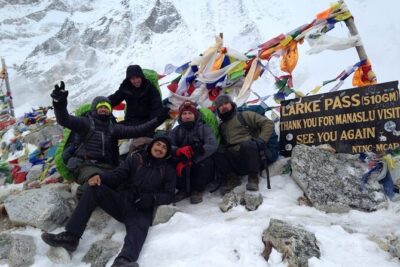
This is the defining day. You cross mountain-glacier moraines on a gradual ascent that becomes steeper near the pass. At 5,116 meters, Larkya La demands patience, warm clothing, and a sensible pace.
From the pass, the views include Cheo Himal, Himlung Himal, Kangguru, and Annapurna II. This is the point where the route connects the Manaslu area with the Annapurna Conservation Area.
The descent continues to Bimtang, making this a long and demanding day even though the schedule lists six hours. Moraines and altitude add difficulty, and the weather can affect the experience. The cancellation terms allow a new date or full refund if poor weather cancels the experience, but conditions during the trek can still change quickly, so follow your guide’s advice.
Day 12: Bimtang to Tilije
After the pass, the route changes tone. You walk for about four to five hours toward Tilije, passing rhododendron forest and green fields before a steep climb.
This section offers welcome contrast after the gray rock and snow of the pass. The forest and fields bring back lower-altitude color, and the shorter walking time gives you a chance to recover.
The trip’s plant life is easy to overlook when the mountain views dominate, but rhododendron forests, wild flowers, and protected wildlife are part of what makes the circuit feel complete.
Day 13: Tilije to Syange
The trail follows the Marshyangdi Khola toward Chyamje, then descends through rhododendron and pine forest to Syange. The seven-hour day is longer, but much of the route now loses altitude.
Crossing the river keeps the day active, while the forest provides shade and a softer setting than the high pass. Even so, tired legs may make the descent harder than expected. Trekking poles and careful footing would be sensible personal equipment, though gear is not included in the price.
Day 14: Besi Sahar and return to Kathmandu
The final walking section covers about 800 meters to Besi Sahar, followed by the return drive to Kathmandu. The full day is listed at about nine hours, so this is not a relaxed final morning.
Private ground transport is included, which adds real value on this long return. After two weeks of mountain roads and footpaths, you will likely appreciate having the journey organized rather than arranging your own connection.
The trip also includes two nights in a three-star Kathmandu hotel with breakfast and sightseeing at Swayambhunath, Pashupatinath, Boudhanath, and Durbar Square. A farewell dinner is included before departure.
What the $1,840 price really covers
At $1,840 per person, this is not a bare-bones trek. The package includes private ground transport, Kathmandu sightseeing, two hotel nights, trekking lodges, one guide, local and government taxes, office service charges, special permits, fourteen breakfasts, and a farewell dinner.
The permit arrangement matters because the Manaslu area is restricted. You need to bring three passport photographs, and the paperwork is included. One past trip also had visa arrangements handled by Hom, but visa service is not clearly listed among the inclusions, so confirm that point directly.
The price does not cover two daily meals during the trek. Lunch and dinner are extra, as are water, tea, coffee, bar bills, snacks, hot showers, phone calls, laundry, tips, donations, extra porters, personal trekking equipment, travel insurance, and emergency helicopter arrangements.
That makes the advertised amount a useful starting price, not your final trip budget. The strongest value comes if you want one company to handle permits, transport, lodging, and guiding. If you already own equipment and are comfortable paying for meals as you go, the arrangement is easier to understand.
Guide support and private group advantages
The company assigns one experienced guide to your private group. Previous Manaslu arrangements included Nabin, while another longer Nepal trip used Promod Pangeni. Hom handled arrangements directly for several past groups, so you may want to ask who will lead your departure and how many people will be in your party.
A private trek gives you more control over walking speed and rest stops than a large group. It does not remove the physical demands, though. Your guide can help with pacing and route decisions, but you still need moderate fitness and suitable personal equipment.
Who should book this trek?
I would choose this trek if you want a serious Himalayan route with a strong mix of scenery and village culture, and if you prefer a private arrangement rather than a fixed large group.
It suits people who can handle several consecutive walking days, rough early roads, basic lodges, and a high pass. It is less suitable if you want reliable hotel comfort, included restaurant meals, or a short and easy mountain holiday.
Before booking, ask for three things in writing: the exact Day 8 plan, the name and experience of your assigned guide, and a realistic estimate for meals and other daily expenses. Those answers will tell you far more about the final value than the headline price alone.
Should you book the Around Manaslu Trek?
I would book it if Larkya La, Manaslu views, Buddhist villages, and a private 14-day route are your main goals. The combination of permits, transport, lodging, guide service, and Kathmandu sightseeing makes the package practical for a first organized Manaslu circuit.
I would wait or compare other options if you need all meals included, want a clearly explained acclimatization schedule, or are not ready for a 5,116-meter pass. Confirm Day 8 and your extra budget first. If those points suit you, this is a demanding but rewarding way to experience one of Nepal’s great mountain circuits.
FAQ
How long is the Around Manaslu Trek?
The experience lasts approximately 14 days, including the journey from Kathmandu to the trailhead, the trek, the return to Kathmandu, and Kathmandu sightseeing.
What is the highest point of the trek?
The highest point is Larkya La Pass at 5,116 meters.
Is transportation included?
Yes. Ground transportation in a comfortable private vehicle is included according to the itinerary. The first drive to Soti Khola takes about seven to eight hours, and the final return from Besi Sahar to Kathmandu is also included.
Are meals included?
Fourteen breakfasts are included. Lunch and dinner during the trek are not included, and you must also pay separately for drinks, snacks, tea, coffee, and bar bills.
Is accommodation included?
Yes. The package includes two nights with breakfast at a three-star hotel in Kathmandu and the best available twin-sharing lodge accommodation during the trek.
Are permits included?
Yes. Necessary paperwork and special permits are included. You need to bring three passport-size photographs.
Is this a private tour?
Yes. Only your group participates in the activity, with one guide assigned to the trek.
What happens if poor weather cancels the experience?
If poor weather causes cancellation, you will be offered a different date or a full refund. For other cancellations, you must cancel at least 24 hours before the local start time to receive a full refund.
Just added around Kathmandu
- Everest Base Camp Trek★ 5.0 · 3 reviews
- Everest Base Camp Trek★ 5.0 · 7 reviews
- 15 Days Private Everest Base Camp Trek★ 5.0 · 30 reviews
- Everest Base Camp Trek★ 5.0 · 57 reviews
- 14 Days of Adventure Trekking to Everest Base Camp★ 5.0 · 2 reviews
- 14-Day Everest Base Camp Trek★ 5.0 · 20 reviews
- From Kathmandu: Private 14-Day Everest Base Camp Trek★ 5.0 · 20 reviews
- 14 Days Everest Base Camp Trek★ 5.0 · 4 reviews
Manaslu Circuit Treks, compared.
Experience the Thrill of a Lifetime:12-Days Manaslu Circuit trek
Read our review →
Browse the lists this trek appears in