
Review · KATHMANDU
7 Days Langtang Valley Private Trek From Kathmandu
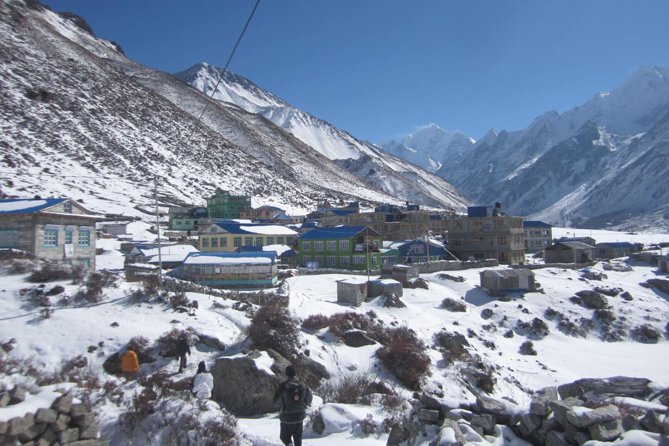
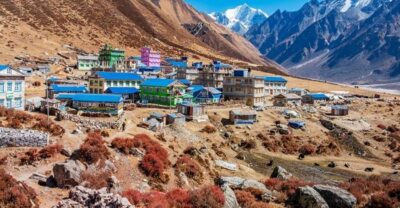
Langtang gives you a real Himalayan trek without a long domestic flight. From Kathmandu, you travel by road to Syabru Bensi, then walk through bamboo and rhododendron forest, mountain villages, rushing streams, and high grazing country toward Kyanjin Gompa. I like the close access from Kathmandu and the way the route brings you into Tibetan-influenced villages rather than keeping you on a polished tourist circuit.
I also like the straightforward price of $585 per person, which covers meals, tea house lodging, a guide, permits, transport, and airport transfers. Guides linked with Outdoor Himalayan Treks include Rupak, Prakash, Dilli, Badri, and Arjun, though you should confirm your assigned guide before departure. The main catch is that this is a demanding trek with basic accommodation, long road transfers, and a calendar that needs clarification: the program is sold as seven days, but the supplied schedule runs from arrival on Day 1 through the return to Kathmandu on Day 8.
Key points to know before booking
- Reach the Himalayan foothills by road: The journey begins with a seven to eight-hour public bus ride from Kathmandu to Syabru Bensi.
- Walk through several natural zones: Expect pine, bamboo, fir, and rhododendron forest, waterfalls, streams, open meadows, and snowy peaks.
- Sleep in basic tea houses: Six nights are included on a twin-sharing basis, with toilets and bathrooms outside the room.
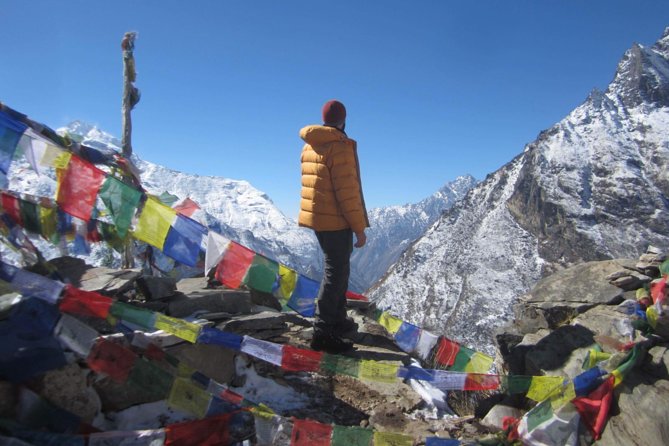
- Reach Kyanjin Gompa at 3,870 meters: The final approach is short, and you may have time for Kyanjin Ri if conditions and energy allow.
- Use a private group format: Only your party takes part, with an English-speaking trekking guide.
- Budget for extras: Drinks, hot showers, charging, porters, tips, insurance, and personal purchases cost more.
Why Langtang works for a short Nepal trek
Langtang Valley is one of the closest trekking areas to Kathmandu. That saves you the expense and uncertainty of a domestic flight, but it does not make the journey easy. The road to Syabru Bensi is long, and the walking days gain height quickly once you leave the lower valley.
The route is appealing because it offers several kinds of Nepal in a compact trip. You see villages shaped by Tibetan culture, forest alive with monkeys and birdlife, narrow river valleys, stone paths, open pasture, and peaks such as Langtang Lirung, Gang Chhenpo, Naya Kangri, and Dorje Lakpa. Langtang Lirung rises to 7,246 meters and dominates much of the upper valley.
I would choose this route if you want a genuine mountain walk but have less time than the classic longer treks. You should not choose it simply because the price is low. The route still asks for good fitness, comfort with steep trails, and patience on rough mountain roads.
More Langtang Treks in Kathmandu:
- Langtang Valley Trek
★ 5.0 · 140 reviews - Langtang Valley Trek
★ 5.0 · 61 reviews - Langtang Valley Trek
★ 5.0 · 50 reviews
Day 1: Airport pickup and a night in Kathmandu
Your trip begins with a private airport transfer to your Kathmandu hotel. Two nights in a deluxe Kathmandu hotel with breakfast are included, although the schedule should be checked carefully because the listed walking and driving days appear to total eight calendar days.
This first night gives you a useful buffer for arrival, passport paperwork, packing, and meeting the guide. The operator asks for scanned passport copies and passport-sized photographs for each person. Keep your passport current, since it is required on the day of travel.
The hotel night is one of the practical advantages of booking a package rather than arranging each piece yourself. Still, the included hotel stay does not cover extra nights or additional activities in Kathmandu, so build those into your budget if your flights do not match the scheduled transfers.
Day 2: The long public bus ride to Syabru Bensi
The road from Kathmandu to Syabru Bensi takes about seven to eight hours. Public bus transport is included, not a private vehicle, and the actual time depends on traffic and road conditions.
This is not the glamorous part of the trip. It is a full travel day, and the ride may feel tiring before the walk has even begun. Pack snacks, water, and anything you need to reach easily during the journey. Mineral water and other drinks are not included.
Syabru Bensi sits at about 1,550 meters, so you begin the trek at a moderate height rather than jumping straight into thin air. That gradual start is helpful, especially if you have little experience with altitude.
Day 3: Syabru Bensi to Lama Hotel
The first walking day covers about 10.9 kilometers and takes six to seven hours. You climb from Syabru Bensi to Lama Hotel at 2,450 meters, gaining roughly 1,070 meters.
This section introduces the character of the valley. You walk beside mountain streams and through forest, with bamboo, pine, and other vegetation appearing along the route. Waterfalls and rugged rock add drama without requiring a technical climb.
The ascent is serious. Six to seven hours of walking, often on uneven ground, can test your legs before the highest part of the trek. A guide can help set a pace that protects your energy for the days ahead. That matters here because the program does not include a separate acclimatization day.
Lama Hotel is a simple overnight stop. Tea house rooms are basic, and bathrooms are outside the room. You receive breakfast, lunch, and dinner during the trek, but tea, coffee, hot water, soft drinks, alcohol, and bottled water cost extra.
A few more treks around Kathmandu worth a look
- 7 Days Langtang Valley Trek from Kathmandu
★ 5.0 · 3 reviews - All Inclusive Langtang Valley Trek – 7 Days
★ 5.0 · 2 reviews - From Kathmandu: 7-Day Annapurna Basecamp Trek
★ 5.0 · 2 reviews - Kilimanjaro climb by Lemosho Route (7-day)
★ 5.0 · 651 reviews
Day 4: Lama Hotel to Langtang Village
Day 4 covers approximately 14.8 kilometers and takes seven to eight hours. You climb about 980 meters to Langtang Village at 3,430 meters.
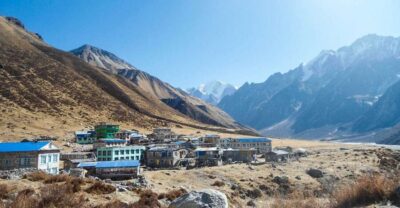
This is one of the longer and more rewarding days. Forest gives way to wider views as you gain height, and the valley begins to feel more open. You may see grassy stretches, distant snowy ridges, and signs of the Tibetan influence that makes Langtang different from routes farther south.
The altitude becomes a real concern here. A rise from 2,450 to 3,430 meters in one day is substantial. Tell your guide about headache, nausea, unusual tiredness, or poor sleep. Do not treat a private trek as a race. The guide can adjust the pace, but you need to speak up early.
Langtang Village provides a cultural part of the experience as well as a place to sleep. The route passes through communities where local life remains closely tied to the mountains, livestock, lodges, and seasonal conditions.
Day 5: Langtang Village to Kyanjin Gompa
The final approach to Kyanjin Gompa is much shorter: about 6.8 kilometers and two to three hours of walking. You gain around 460 meters, reaching 3,870 meters.
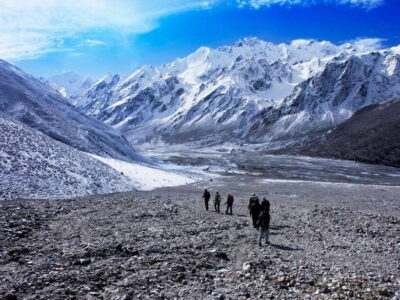
This shorter day is welcome after the previous climbs. The valley opens toward high peaks, glaciers, rocky ridges, and broad mountain views. Kyanjin Gompa is the high point of the standard route and the place where the valley’s glacier country feels most immediate.
If time, weather, and energy allow, you may visit Kyanjin Ri in the afternoon. The supplied program does not promise this as a separate summit day, so treat it as an optional extension rather than a guaranteed part of the trip. Ask your guide about conditions before setting out.
Kyanjin Gompa is also where the basic nature of the accommodation matters most. Tea houses are functional, not luxurious. A sleeping bag and down jacket are specifically recommended, along with warm layers, gloves, a thermal cap, and a headlamp.
Day 6: The long return to Lama Hotel
The descent to Lama Hotel takes seven to eight hours and covers about 21.6 kilometers. You lose roughly 1,430 meters, making this the longest walking day in the program.
Many hikers underestimate descents. Downhill walking can be hard on knees and ankles, especially after several days on rough paths. Trekking poles are a smart item to bring, and you should keep your pace controlled rather than racing toward the lower elevation.
The return route gives you a second look at the forest and river valley from a different direction. It may feel less exciting than the climb to Kyanjin Gompa, but it is still a full mountain day. Start with enough time and keep food and water accessible.
A porter is not included. You can arrange one for an additional cost, which may be worth considering if you want to carry only a daypack. Even with a porter, keep your personal essentials, warm layer, rain protection, medication, and documents with you.
Day 7: Lama Hotel to Syabru Bensi
The last walking day covers about 10.9 kilometers and takes five to six hours. You descend 1,070 meters to Syabru Bensi.
Compared with Day 6, this is a shorter finish, but it remains a proper hike. The lower elevation brings back warmer conditions and more forest. Once you reach Syabru Bensi, the mountain walking portion is complete.
The supplied schedule then lists the return drive to Kathmandu as Day 8, taking another seven to eight hours. This is the clearest detail to settle before paying for flights or extra hotels. The product is described as seven days, yet the day-by-day plan includes arrival, five trekking days, and a separate return drive.
What the $585 price really covers
At $585 per person, the package offers solid value if you want help with the trip’s basic structure. Included are six nights of tea house accommodation during the trek, two Kathmandu hotel nights with breakfast, three meals a day while trekking, a professional English-speaking guide, the Langtang National Park permit, and a TIMS card.
Airport pickup and drop-off by private transport are included. The Kathmandu to Syabru Bensi and return transport uses a public bus, which keeps the cost down but means less control over comfort and departure timing.
Emergency evacuation and medication arrangements are listed, but this does not replace proper insurance. Your policy must cover helicopter evacuation, medical care, accidents, cancellation, baggage loss or damage, and theft. The emergency costs are to be handled by your insurance company.
The price does not include a porter, drinks, hot showers, charging fees, phone calls, laundry, extra snacks, tips, visas, international flights, or travel insurance. These exclusions are normal for a budget trek, but they can add up. I would set aside extra money for drinks, charging, tips, and warm clothing if you are not already equipped.
Forest, wildlife, and the protected valley
Langtang National Park was established in 1971 and covers about 1,710 square kilometers. The protected area includes fir and rhododendron forest, bamboo, alpine meadows, streams, and high glacial country.
You might see monkeys, and the park is known for wildlife such as red pandas, Himalayan black bears, and wild boar. Sightings are never guaranteed, so think of the animals as a bonus rather than a promised feature. The plant life is also part of the appeal, especially rhododendrons in spring and the unusual tree orchids found in the area.
The route’s variety is its greatest natural strength. You are not walking through one unchanging forest for a week. The views shift from wooded river corridors to open high valleys and snow-covered peaks.
Packing for basic tea houses and changing weather
The supplied gear list is sensible. Bring or arrange a sleeping bag, down jacket, headlamp, water bottle, first-aid kit, water purification treatment, trekking poles, raincoat, sunglasses, gloves, socks, thermal cap, fleece, and sunscreen.
You can bring your own equipment or ask the operator for help obtaining items after arrival. That is useful if you are flying with limited luggage, but confirm rental or purchase costs before relying on it.
Dress for changing conditions. The trip operates in all weather, and the cancellation terms allow a full refund or a new date if poor weather cancels the experience. You can cancel for a full refund if you do so at least 24 hours before the start time. Changes or cancellations inside that window are not refunded.
Who this private trek suits best
This trip suits hikers who want a short, guided Himalayan experience with private group arrangements and a strong mix of nature and local culture. It is also a good fit if you prefer having permits, meals, lodging, and transport organized in advance.
The route is less suitable for anyone expecting hotel comforts, private road transport, or easy walking. You need good health and a moderate to strong level of fitness. Previous mountain experience helps, but the operator specifically advises a medical check before the trek.
Families can take part, but children must be accompanied by an adult. Because the walking days are long and the highest overnight point reaches 3,870 meters, parents should assess fitness carefully rather than relying on age alone.
Should you book the Langtang Valley trek?
I would book this trek if you want a close-to-Kathmandu route, high mountain scenery, Tibetan-influenced villages, and a sensible all-in-one starting price. The strongest features are the varied walking, the short approach to Kyanjin Gompa, and the help of a private English-speaking guide.
Before booking, ask three direct questions: Is the trip actually seven or eight calendar days? Who is the assigned guide? What transport schedule and tea house standards should you expect? If you are comfortable with public buses, basic rooms, long climbs, and extra costs for drinks and gear, $585 is a fair starting value.
FAQ
How long is the Langtang Valley trek?
The experience is advertised as approximately seven days, but the supplied schedule runs from airport arrival on Day 1 through the return drive to Kathmandu on Day 8. Confirm the exact dates before booking flights.
What is the highest point reached?
The main route reaches Kyanjin Gompa at 3,870 meters. An afternoon visit to Kyanjin Ri may be possible if time and conditions allow.
How difficult is the trek?
You need good health and a moderate level of physical fitness. Walking days range from two to three hours to seven or eight hours, with significant climbs and descents. Previous mountain experience is helpful.
What accommodation is included?
Six nights of basic tea house accommodation during the trek are included on a twin-sharing basis. Toilets and bathrooms are outside the room. Two Kathmandu hotel nights with breakfast are also included.
Are meals included?
Breakfast, lunch, and dinner are included during the trek. Drinks such as tea, coffee, mineral water, hot water, soft drinks, and alcohol are not included.
Is a porter included?
No. A porter can be arranged for an additional cost if you do not want to carry your own larger pack.
What transport is included?
Airport, hotel, and airport transfers use private transport. The journey between Kathmandu and Syabru Bensi uses a public bus.
Do I need travel insurance?
Yes. You need insurance covering cancellation, accidents, medical care, emergency evacuation, baggage loss or damage, and theft. Helicopter rescue and medical costs must be covered by your insurance company.
Just added around Kathmandu
- Everest Base Camp Trek★ 5.0 · 3 reviews
- Everest Base Camp Trek★ 5.0 · 7 reviews
- 15 Days Private Everest Base Camp Trek★ 5.0 · 30 reviews
- Everest Base Camp Trek★ 5.0 · 57 reviews
- 14 Days of Adventure Trekking to Everest Base Camp★ 5.0 · 2 reviews
- 14-Day Everest Base Camp Trek★ 5.0 · 20 reviews
- From Kathmandu: Private 14-Day Everest Base Camp Trek★ 5.0 · 20 reviews
- 14 Days Everest Base Camp Trek★ 5.0 · 4 reviews
Langtang Valley Treks, compared.
Trekking in Annapurna/Langtang/Everest/Upper Mustang regions
Read our review →
Browse the lists this trek appears in