
Review · KATHMANDU
10 Days Nepal Trip – Heritage Kathmandu – Natural Pokhara and Poon Hill Trek
Kathmandu temples, Pokhara lakes, and a sunrise above Annapurna make this 10-day Nepal trip a strong first look at the country. You get city sightseeing, a four-day mountain walk, and the main overland links arranged for you, all for $480 per person.
I like two things right away: the mix of culture and nature keeps the trip from feeling one-note, and the package includes practical pieces such as airport transfers, tourist buses, trekking permits, TIMS, guides, and lodging. The private format also means only your own group takes part.
The main catch is the pace. Several days involve six to seven hours of walking or road travel, and the trek uses small, basic guest houses rather than comfortable hotels. You should also budget separately for meals, drinks, and entrance fees.
Key points worth knowing before you book
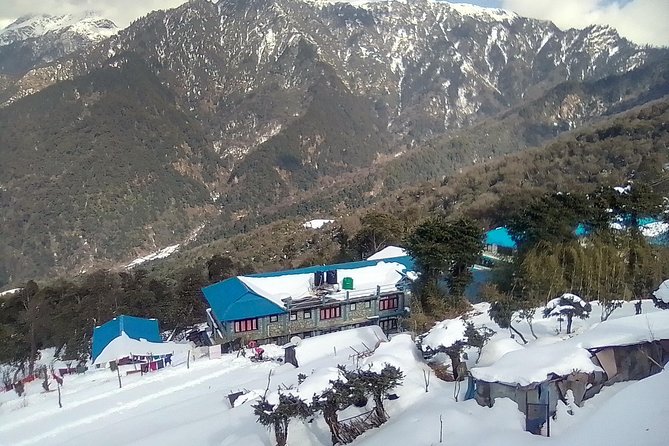
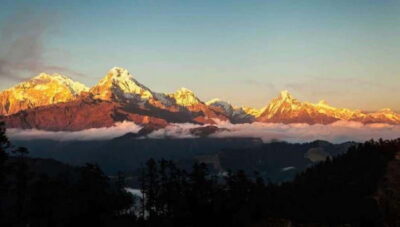
- Poon Hill sunrise: An early climb rewards you with views toward Mount Annapurna, followed by a trek to Tadapani.
- Kathmandu’s four major sights: Pashupatinath, Boudhanath, Swayambhunath, and Kathmandu Durbar Square fill the heritage day.
- A private trip: Your group participates on its own, with an English-speaking guide for the trek and city tours.
- Simple mountain lodging: Hotels in Kathmandu and Pokhara are listed at two-star level, while trek nights use basic guest houses.
- Useful transport coverage: Airport pickup, hotel transfers, tourist buses, private Pokhara transfers, and the Kimche to Nayapul shared jeep are included.
- A demanding schedule: Expect long transport days and sustained walking, with moderate physical fitness required.
Why this Nepal trip works for a first visit
Nepal can be awkward to plan because its best sights are spread between the Kathmandu Valley, Pokhara, and the foothills of the Annapurna region. This trip handles that basic structure in one package. You begin in the capital, cross to Pokhara, walk into the hills, return to the lakeside city, and finish with Kathmandu’s main heritage sights.
That route gives you three very different views of Nepal. Kathmandu is about temples, shrines, courtyards, and religious life. Pokhara is slower and more open, with lakes, viewpoints, caves, and waterfalls. The Poon Hill section gives you a taste of Himalayan trekking without committing to a much longer expedition.
At $480 per person, the value depends on what you want included. You are not paying for luxury, and food and entrance charges are extra. But airport service, hotels, buses, permits, a trekking guide, city guiding, and several private transfers are covered. For someone who wants one booking to handle the main moving parts, that is a useful package.
The three published ratings are all at the top level, with the strongest praise aimed at service, guides, vehicles, and accommodation. One recurring point is the friendly, good-humored guide service. The exact guide names are not provided, so you should ask for the assigned guide’s name before departure.
More Poon Hill Treks in Kathmandu
- 4 Days Poon Hill Trek
★ 5.0 · 94 reviews - Ghorepani(Poonhill Trek)
★ 5.0 · 81 reviews - 4-day Poon Hill Trek
★ 5.0 · 74 reviews
Day 1: A gentle arrival in Kathmandu
Your first day is deliberately light. You are collected at the airport or another location in Kathmandu and taken to your hotel, with about one hour set aside for the transfer.
That is useful after a long flight. You do not need to find a taxi, explain your hotel to a driver, or arrange a last-minute pickup. The night is in a two-star level hotel, so think of it as a practical base rather than a polished city stay.
There is no scheduled sightseeing on this day. Use the time to rest, check your walking shoes, and confirm the early transfer planned for the next morning.
Day 2: The seven-hour road to Pokhara
The day starts at 6:30 a.m. with a transfer to the bus station. From there, you take a tourist bus to Pokhara, a journey listed at about seven hours, followed by a transfer to your hotel.
This is an important part of the trip to understand. Nepal’s road journeys can take a large part of the day, so Pokhara is not a quick hop from Kathmandu. The tourist bus keeps the transfer organized, but you will spend most of the day seated.
The payoff is a change in mood. Kathmandu is dense and historic, while Pokhara is the base for the mountain section and sits beside Fewa Lake. You get the evening there, though the schedule does not promise a separate activity.
Day 3: Nayapul to Ulleri
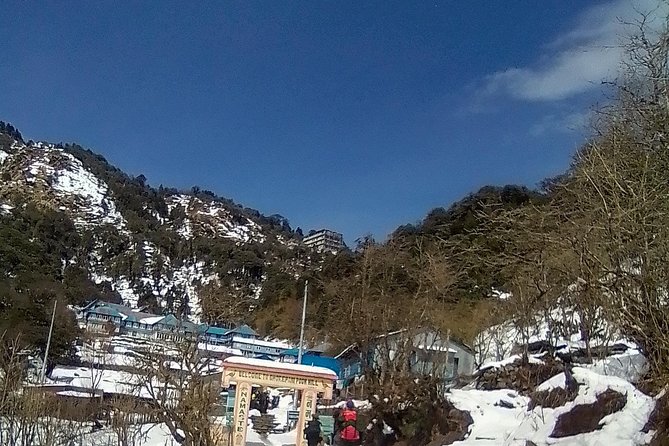
A private vehicle takes you from Pokhara to Nayapul, a drive of about one and a half hours. From Nayapul, the trek begins, with Ulleri as the night’s destination and around six hours of walking planned.
This is your first real test of the route. The day shifts quickly from road transport to walking, so wear your trekking shoes from the start and keep water and small essentials close at hand. The elevation gain and exact trail conditions are not supplied, so you should ask the operator for current guidance before setting out.
Accommodation is in a small, basic guest house. That usually means the room is a place to sleep and dry out, not a hotel-style retreat. The trade is location: you stay on the trail and avoid returning to the city each evening.
Same trailhead, a different route:
- Everest Base Camp Trek – 14 Days
★ 5.0 · 1,499 reviews - Everest Base Camp Trek
★ 5.0 · 842 reviews - Everest Base Camp Helicopter Tour landing at Everest View Hotel
★ 5.0 · 668 reviews - Everest Base Camp Trekking
★ 5.0 · 485 reviews
Day 4: Ulleri to Ghorepani
The next six-hour trek takes you to Ghorepani. This is another full walking day, and it comes before the early morning climb to Poon Hill, so pacing matters.
I would treat the day as steady rather than competitive. Keep your rhythm comfortable, take breaks, and carry only what you need for the trail. The package includes a trekking guide, which is especially helpful when you are dealing with changing pace, unfamiliar paths, and simple mountain accommodation.
Ghorepani is more than a stopping point. It positions you for the trip’s signature morning, the walk to Poon Hill. A good night here depends partly on how well you manage the previous day, so save energy rather than trying to rush.
Day 5: Poon Hill sunrise and Tadapani
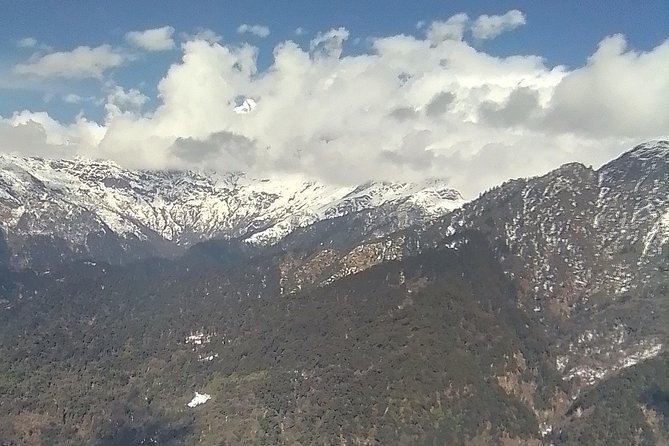
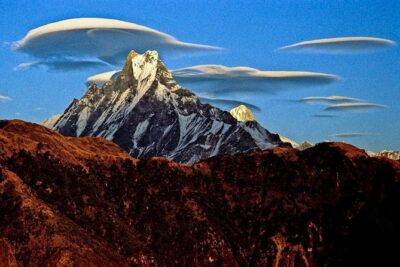
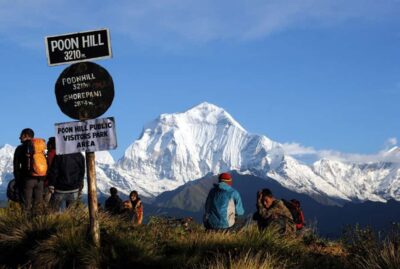
This is the emotional center of the trip. You rise early for the trek to Poon Hill and watch the sun come up over Mount Annapurna. Afterward, you continue walking to Tadapani, making this a roughly seven-hour day.
The early start is not a minor detail. You will be walking before daylight, so keep a headlamp or other suitable light source on your packing list unless the operator confirms one is supplied. The climb is followed by more trekking, so the view comes with a physical price.
Still, this is exactly the kind of morning that makes a short Himalayan trek worthwhile. You are not merely looking at a mountain from a road or hotel window. You reach a viewpoint on foot, then continue through the hills instead of turning back to the same lodge.
The schedule says the admission ticket for Poon Hill is included. Other charges along the route are not specified, so ask what, if anything, you should carry for local services.
Day 6: Ghandruk, Kimche, and the ride back to Pokhara
You trek to Ghandruk, explore the Gurung village, and then walk down to Kimche. From there, a shared jeep takes you to Nayapul, where a private vehicle returns you to Pokhara. The full day is listed at about seven hours.
Ghandruk gives the trek a cultural focus. After several days of trail walking, time in a Gurung village adds a sense of place that a viewpoint alone cannot provide. The schedule does not list a long village tour, so expect exploration within the time allowed rather than an extended cultural program.
The transport arrangement is practical but not fully private. The Kimche to Nayapul section uses a shared jeep, while the Nayapul to Pokhara transfer is private. That distinction matters if you prefer complete control over departure times and space in the vehicle.
By the time you reach Pokhara, you will probably be ready for a proper shower and an easier evening. The return to a two-star hotel is a welcome change after basic guest-house nights.
Day 7: Pokhara’s waterfalls, caves, lakes, and viewpoints
This is a long guided sightseeing day, listed at about seven hours. The stops include Devi’s Fall, a cave, the Mountain Museum, World Peace Stupa, Sarangkot, Begnas Lake, and Fewa Lake.
The range is broad. Devi’s Fall and the cave offer natural attractions, while the Mountain Museum gives the day a Himalayan context. World Peace Stupa and Sarangkot are viewpoint stops, and Begnas Lake and Fewa Lake show you two different sides of Pokhara’s water scenery.
Do not expect a slow lakeside day. Seven stops in one day means time at each place will be limited, and entrance fees are not included. Carry money for tickets, and ask your guide which stops have the highest priority if the schedule runs late.
Sarangkot is especially useful as a viewpoint stop, but conditions can affect what you see. The trip promises the location, not guaranteed clear mountain views. Fewa Lake is also a good counterpoint to the mountain trek because it brings you back to a quieter, more open setting.
Day 8: Returning to Kathmandu by tourist bus
The tourist bus leaves Pokhara at 7 a.m. for the return to Kathmandu. The journey is listed at around seven hours, followed by a transfer to your hotel.
This is another day where transport, not sightseeing, is the main event. If you dislike long bus rides, this schedule may feel heavy. If you want a single organized route through Nepal, it keeps the trip simple and avoids the work of arranging separate tickets and transfers.
The private hotel and bus-station transfers are useful here. You do not need to manage the connection alone, though you should be ready early and keep valuables and important documents with you during the road journey.
Day 9: Kathmandu’s four landmark sights
The final full day covers Kathmandu’s principal heritage stops: Pashupatinath Temple, Boudhanath Temple, Swayambhunath Temple, also called the Monkey Temple, and Kathmandu Durbar Square. The guided touring lasts about six hours.
Each stop gives you a different view of the capital. Pashupatinath is a major Hindu temple complex. Boudhanath is known for its great Buddhist stupa. Swayambhunath adds a hilltop setting and the playful monkeys named in its common title. Kathmandu Durbar Square brings together the old royal center and traditional architecture.
Entrance fees are not included, so keep extra money for the day. The order of stops is not specified, and the timing may change with traffic or local conditions. Your guide can help you use the available hours well, but six hours is still a tight window for four major places.
This day also explains why the tour begins and ends in Kathmandu. You get a first night to settle in, then return after the trek with a better sense of how the city differs from the mountain villages and Pokhara.
What the $480 price really covers
The price is strongest when you value organization over comfort. Included are airport transfers in a private car, two-star hotel accommodation in Kathmandu and Pokhara, tourist bus transport between the cities, private hotel and bus-station transfers, trekking permits, TIMS, an English-speaking guide, and the private Pokhara to Nayapul transfers.
The trek includes small basic guest houses. Food and drinks are not included, nor are city entrance fees. Gratuities are optional, so you can decide what feels appropriate based on the service you receive.
The private label can be slightly confusing because one transport segment uses a shared jeep. The sightseeing and trekking are for your group only, but not every vehicle is private. Ask for a full cost breakdown before booking so you know how much extra to allow for meals, tickets, and tips.
For ten days, the price is appealing for a budget-conscious visitor who wants the major logistics handled. It is less attractive if you want higher-end hotels, private road transport throughout, or a relaxed schedule with spare days.
Who will enjoy this trip most
I would recommend this experience to you if you want a first taste of Nepal without planning every transfer yourself. It suits people who can manage repeated six to seven-hour days, basic trekking lodges, early starts, and long bus journeys.
It is also a good fit if you want variety. You will see religious monuments, urban heritage sites, lakes, caves, waterfalls, viewpoints, a Gurung village, and a Himalayan sunrise in one trip.
I would think twice if you need lots of downtime, dislike basic accommodation, or want detailed information about trail difficulty before committing. The stated requirement is moderate physical fitness, but the exact elevation profile, trail surface, and daily ascent are not supplied. Ask those questions directly.
Couch Adventure Nepal receives its strongest praise for service, guides, vehicles, and accommodation. That makes the human and practical side of the trip a key reason to consider it. Since guide names are not listed, request the name and trekking experience of your assigned guide before you go.
Should you book this Nepal experience?
Book it if you want a compact, budget-minded introduction to Nepal with the big pieces arranged. The combination of Kathmandu’s temples, Pokhara’s natural sights, and Poon Hill’s sunrise is hard to beat for a ten-day schedule.
Do not book it expecting a luxury holiday or a slow retreat. You will spend full days on roads and trails, pay extra for food and entrance tickets, and sleep simply during the trek.
My call is favorable for an active first visit. Confirm the guide’s name, the current trail conditions, the exact hotel names, and your likely extra costs before paying. If those details suit you, $480 offers a practical way to see a wide slice of Nepal in one private trip.
FAQ
Is airport pickup included?
Yes. Airport pickup is provided in a private car, and the final airport drop-off is also included according to your flight schedule.
How long is the tour?
The experience lasts approximately 10 days, from arrival in Kathmandu through airport transfer on the final day.
Is this a private tour?
Yes. Only your group participates in the private tour and activity.
Are meals and drinks included?
No. All meals and drinks are excluded, but they are available for purchase.
Are entrance fees included?
City sightseeing entrance fees in Kathmandu and Pokhara are not included. The Poon Hill admission ticket is listed as included.
Is trekking permission included?
Yes. Trekking permits and TIMS are included.
What type of accommodation is provided?
Kathmandu and Pokhara use two-star level hotels. During the trek, accommodation is in small, basic guest houses.
How fit do I need to be?
You should have a moderate level of physical fitness. The trekking days are listed at about six to seven hours, and the itinerary includes an early morning walk to Poon Hill.
More Historical Tours in Kathmandu
- Annapurna Circuit Trek with Heritage Highlights
★ 4.5 · 2 reviews - Trekking History and Indigenous Heritage in Minca + Cacao & Coffee + Waterfall
★ 4.9 · 63 reviews - From Hanoi : Sapa Moutain Trek – Halong bay Heritage
★ 4.5 · 25 reviews
Just added around Kathmandu
- Everest Base Camp Trek★ 5.0 · 3 reviews
- Everest Base Camp Trek★ 5.0 · 7 reviews
- 15 Days Private Everest Base Camp Trek★ 5.0 · 30 reviews
- Everest Base Camp Trek★ 5.0 · 57 reviews
- 14 Days of Adventure Trekking to Everest Base Camp★ 5.0 · 2 reviews
- 14-Day Everest Base Camp Trek★ 5.0 · 20 reviews
- From Kathmandu: Private 14-Day Everest Base Camp Trek★ 5.0 · 20 reviews
- 14 Days Everest Base Camp Trek★ 5.0 · 4 reviews
Poon Hill Treks, compared.
4-Day Ghorepani, Poonhill & Ghandruk Mountain Trek
Read our review →
Browse the lists this trek appears in