
Review · MOSHI
Climbing Kilimanjaro – Machame Route
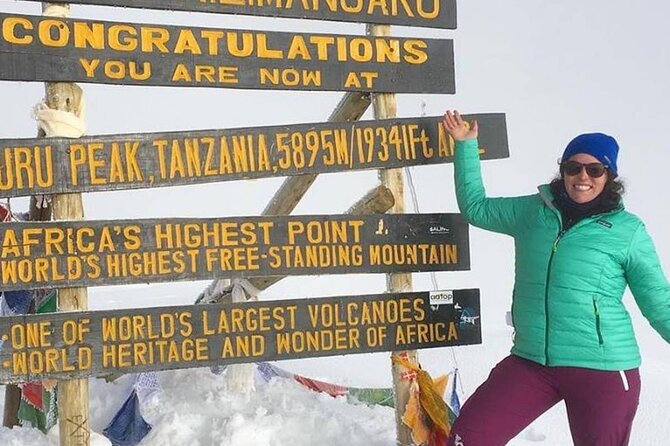
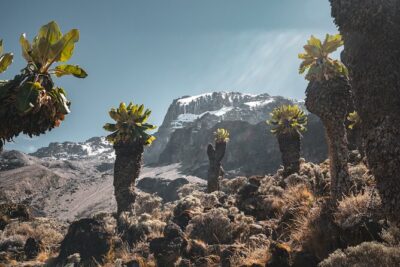
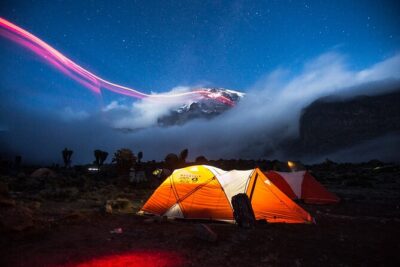
Kilimanjaro’s Machame Route gives you the mountain in changing acts: rainforest, open moorland, rocky high country, ice and scree near the summit. The six-day climb is scenic but demanding, with long walking days and a midnight push from Barafu Camp to Uhuru Peak.
I like two things right away. First, porters, cooks, and guides handle the camp work, food, water, and route logistics. Second, the route does not simply march uphill. You climb high to Lava Tower, then descend to Barranco, giving your body some useful altitude adjustment. The catch is clear: six days leaves little spare time, and several people found the pace hard, especially before summit day.
Key points to know before booking
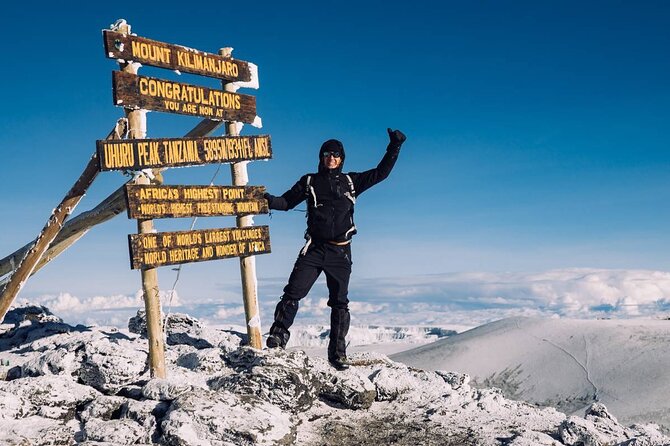
- The route reaches 5,895 meters at Uhuru Peak, after a night ascent from Barafu Camp.
- The scenery changes every day, from montane forest to moorland, semi-desert, alpine desert, and summit scree.
- A crew manages the practical work, including tents, meals, boiled water, luggage, and camp dining.
- The hardest stretch comes before and during the summit attempt, with a long day from Barafu to Uhuru Peak and down to Mweka.
- The price includes more than the trek itself, including two Moshi hotel nights, park fees, rescue fees, and airport transfers.
- A maximum of 12 people keeps the group fairly small, though the actual guide team and support crew are larger.
What the $2,322 price really covers
At $2,322.06 per person, this is not a bare-bones hiking package. The price includes two nights at Springlands Hotel in Moshi, transportation to and from the mountain, airport transfers from Kilimanjaro International Airport, park fees, rescue fees, tents, sleeping mattresses, meals, boiled water, and the mountain crew.
That crew includes qualified guides, porters, a cook, and a waiter. A mess tent, tables, small camping chairs, candles, crockery, and cutlery are also supplied. You are not expected to carry the food, shelter, or cooking equipment yourself.
I see real value here if you are comparing the cost with a self-arranged climb. The mountain fees alone are not the full story. You are paying for a working camp system, route support, food, transport, and hotel logistics before and after the hike.
You still need to budget for tips, climbing gear, visas, personal items, drinks and meals not listed, extra hotel nights, and a single-room supplement at Springlands Hotel unless you book the one-person rate. Emergency oxygen is not included, though rescue fees, a first aid kit, and pulse oximeters are included.
More Kilimanjaro Climbs in Moshi
- Kilimanjaro climb by Lemosho Route (7-day)
★ 5.0 · 651 reviews - Kilimanjaro climb, Machame Route (7-day)
★ 5.0 · 262 reviews - Kilimanjaro Climbing Lemosho Route 8 Days.
★ 5.0 · 186 reviews
Day 1: Machame Gate to Machame Camp
Your morning begins with a briefing, breakfast, and a roughly 45-minute drive from Moshi to Machame village. The elevation rises from about 910 meters in Moshi to 1,490 meters at the village.
The road may allow a drive farther toward the gate. If conditions are poor, you walk the final three kilometers on a muddy road, which takes about an hour. That detail matters. Your first hiking day may begin with an extra approach walk before the official trail even starts.
After registering at Machame Gate, you enter the montane forest. The day covers about 18 kilometers and takes roughly seven hours, ending at Machame Camp at 2,980 meters. A packed lunch is provided at the gate, and drinking water is available there as well.
This first section is a proper hike, not a gentle stroll. The forest offers shade and a softer start than the upper mountain, but mud can slow you down. Porters and cooks move ahead with the supplies, then prepare camp while you walk.
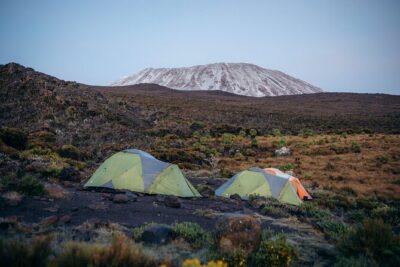
Machame Camp is your first night under canvas. You should expect a simple mountain camp rather than a hotel-style setup. The practical advantage is that your tent and sleeping arrangement are prepared for you, leaving you to eat, rest, and manage your own clothing and gear.
Day 2: Moorland and the Shira Plateau
From Machame Camp, the path climbs for about an hour to the top of the forest. The character of the walk then changes. You move through moorland for around two hours before continuing along a rocky ridge toward the Shira Plateau.
The day covers about nine kilometers and takes roughly six hours, though the schedule also allows time for lunch and rest. Shira Camp sits at about 3,840 meters, west of Kibo, the main summit cone.
The reward is open scenery. You can see toward the Western Breach and its glaciers, with Kibo beginning to feel like the main subject of every view. This is one of the route’s best visual transitions because the thick forest gives way to broad, exposed high country.
The drawback is the cold. Shira is exposed, and temperatures can fall well below freezing. The crew boils water for drinking and washing, then serves dinner in the mess tent or camp dining area. Bring dependable warm layers and keep your sleeping system dry.
This is also where the support setup becomes more useful. You are gaining altitude while the crew handles cooking, water, and camp work. That leaves you with one main job: walk slowly, eat enough, drink regularly, and rest.
Day 3: Lava Tower, altitude symptoms, and Barranco
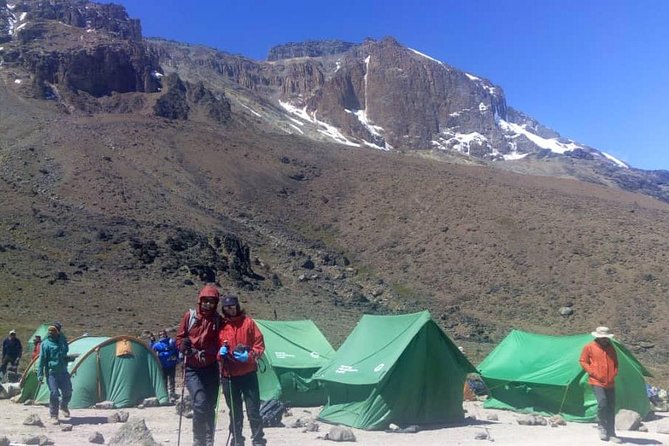
Day three is one of the most important days on the route. You leave Shira and head east into rocky semi-desert, climbing to Lava Tower at 4,630 meters.
The walk to Lava Tower takes about five hours, followed by lunch in a designated area. This is the highest point reached before the summit attempt, and it is often the first place where altitude symptoms become noticeable. Breathlessness, headaches, and irritability can appear here.
The route then descends nearly 680 meters to Barranco Camp, at about 3,950 meters. That climb-high, sleep-lower pattern is one of the most useful features of the Machame Route. You get a taste of higher elevation without sleeping at the day’s maximum height.
The total day is about 15 kilometers and roughly seven hours. It is also described as the toughest day so far, so do not judge your progress only by distance. The uphill section is slow and tiring, while the descent can be hard on tired legs.
Barranco brings the famous Barranco Wall into view. The next morning, the trail takes you up its misty, rocky face. You do not need technical climbing equipment for the route as described, but you do need steady feet, patience, and comfort with uneven ground.
Same trailhead, a different route:
- Climbing Kilimanjaro through 7 days Machame Route
★ 5.0 · 151 reviews - Kilimanjaro climb, Lemosho Route (8-day)
★ 5.0 · 148 reviews - Kilimanjaro climb, Lemosho Route (6-day)
★ 5.0 · 129 reviews - Kilimanjaro climb, Marangu route (6-day)
★ 5.0 · 72 reviews
Day 4: Barranco Wall to Barafu Camp
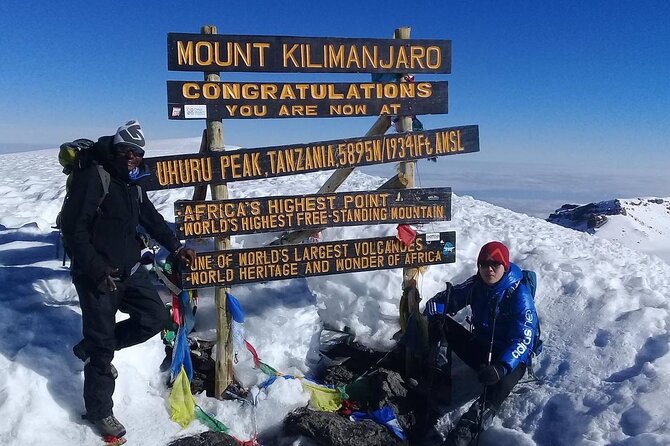
The route from Barranco passes toward Karanga Valley and then continues to Barafu Camp. The day covers about 13 kilometers and takes roughly seven hours through alpine desert.
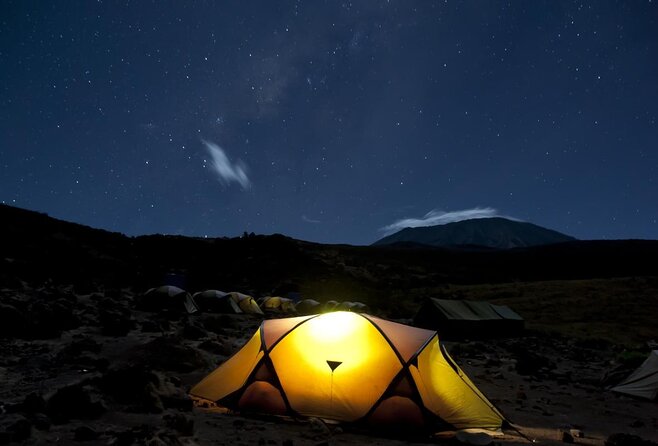
This is not the most dramatic day for distance, but it is a crucial preparation day. Barafu Camp sits at about 4,550 meters on an exposed, stony ridge. Strong wind is part of the setting, and the narrow, uneven ground deserves care, especially after dark.
You should reach camp with enough time to prepare for the summit attempt. Organize your headlamp, spare batteries, camera batteries, thermal layers, gloves, and summit clothing before dinner. Water can freeze, so the itinerary advises keeping it in a protected container or close to your body.
The summit is still about 1,345 meters higher. That number does not tell the whole story. You will leave around midnight, walk through darkness, climb on scree, reach the crater rim, touch the summit area, and then descend a long way the same day.
This is the point where the six-day schedule shows its weakness. There is not much recovery time before the summit push. If you are choosing between a six-day and seven-day Machame itinerary, the extra day can make the longer version worth serious thought.
Day 5: Stella Point, Uhuru Peak, and the long descent
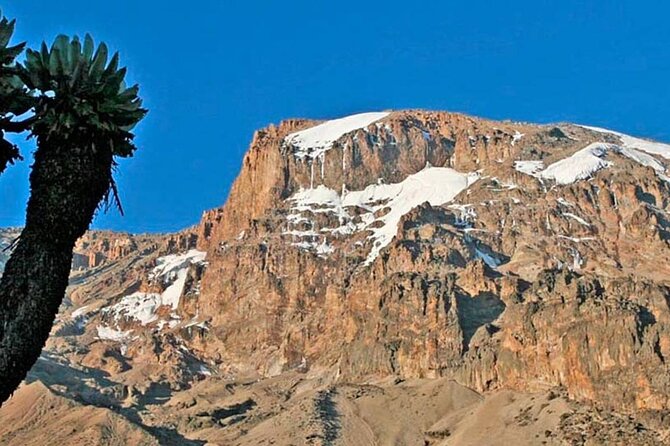
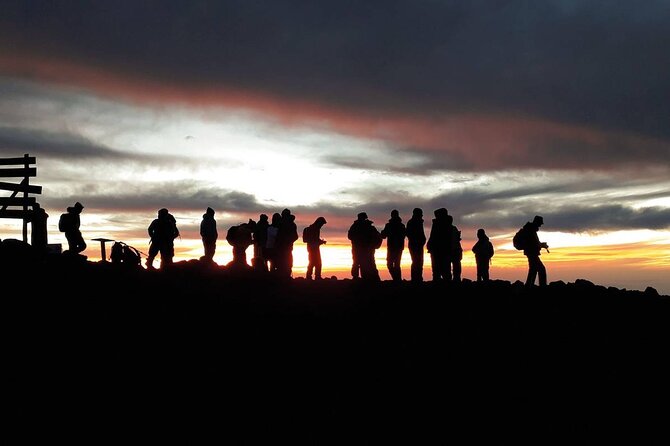
Summit day begins around 11:30 p.m. with tea and biscuits. You set off in the dark toward Stella Point, climbing through heavy scree. The ascent to Stella Point at 5,685 meters takes about six hours for many people.
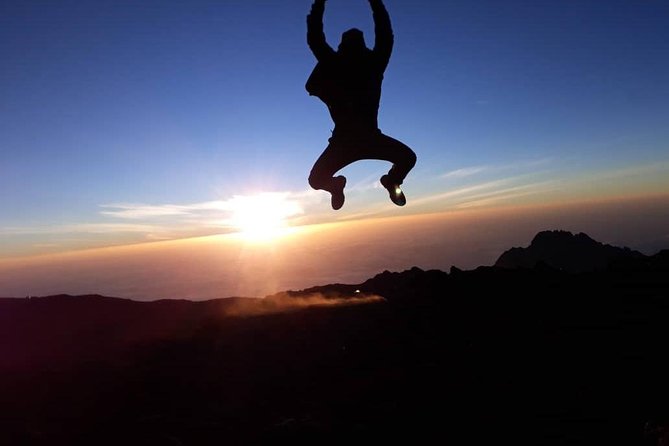
The effort is slow and mental as much as physical. Darkness hides the larger view, the air is thin, and every step can feel expensive. At Stella Point, sunrise can bring the most memorable view of the climb, with the crater rim and upper mountain opening around you.
From Stella Point, the trail continues along the crater rim toward Uhuru Peak at 5,895 meters. The summit is the highest point in Africa, but the certificate distinction is also practical: climbers who reach Stella Point receive green certificates, while those who reach Uhuru Peak receive gold certificates.
The summit ascent is listed at about eight hours. Afterward, you descend roughly seven to eight hours to Mweka Camp at 3,100 meters. The full day covers about seven kilometers uphill and 23 kilometers downhill.
That descent is easy to underestimate. Your legs are tired, your attention is lower, and loose scree can make downhill walking awkward. You may feel enormous relief after reaching the summit, but Mweka is still a long way below.
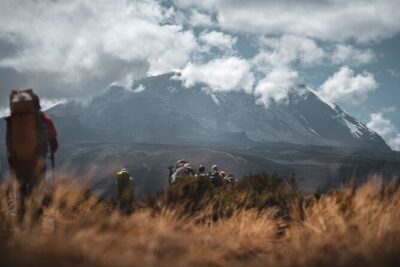
This is also where your guide team matters most. Specific guides named in past trips include Salim, Yesse Lema, Julius, Godlisten, and Abdallah Chombo, known as Soap. The company does not guarantee a particular guide, but the guide’s role is central in setting the pace, watching for altitude trouble, and keeping the group moving safely.
Day 6: Mweka Gate and the return to Moshi
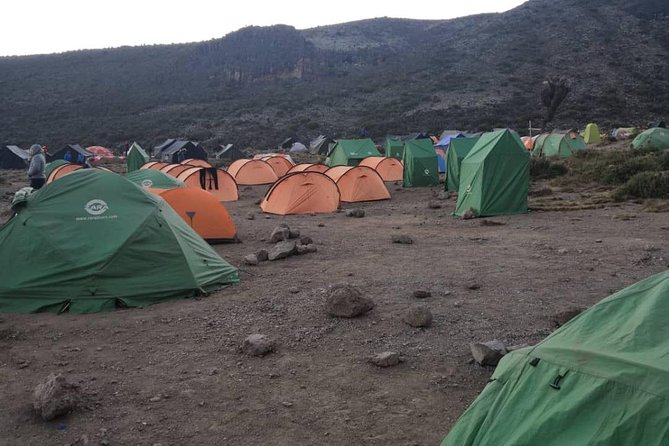
After breakfast at Mweka Camp, you descend through forest toward Mweka Gate at about 1,980 meters. The listed hiking time is around three hours, with a total distance of about 15 kilometers.
The final path can be muddy and may continue into Mweka village before transport. From there, you return to Springlands Hotel for a hot lunch, a shower, and the official end of the mountain portion.
The hotel stop is more than a tidy finish. After several nights in a tent and a summit day that can last most of 24 hours, a hot shower and a real bed feel like part of the reward.
Successful climbers receive summit certificates at Springlands Hotel. Tips are given at the end of the trip, with the guide receiving them there. Since tips are not included, you should plan for this cost before you arrive.
Food, camp life, and the support crew
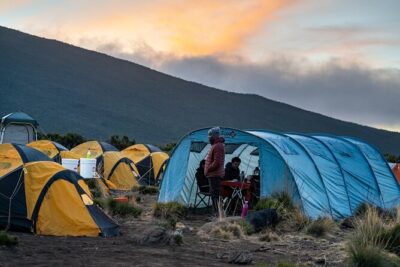
Meals include breakfast, lunch, and dinner on the mountain. The cook prepares the food, and the included dining tent, tables, chairs, crockery, and cutlery make meals more organized than a simple picnic beside the trail.
Food received especially strong praise. Several people were surprised by the quality and variety, and one group specifically described the meals as excellent. Do not treat that as a guarantee of restaurant dining, but it does suggest that the food is designed to keep you fueled rather than merely fed.
The crew also provides boiled water for drinking and washing. You should still bring your own personal water system or bottles as required for the trip, since the supplied information does not specify individual bottle arrangements.
Porters carry the equipment and supplies, while guides lead the walking days. That service makes the climb possible for many people, but it also raises an important ethical question: pack responsibly and follow the operator’s luggage limits so the crew is not carrying needless weight.
Fitness, altitude, and the six-day question
The listed fitness level is moderate, but the summit day is far beyond an ordinary moderate hike. You need to handle repeated days of walking, steep and rocky ground, cold nights, and a long descent after reaching the summit.
The Machame Route is often called the scenic route, but it is not the easy route. Day three reaches 4,630 meters, day four ends at 4,550 meters, and the summit reaches 5,895 meters. Altitude can affect you even if you are fit.
The strongest practical advice is to train for time on your feet, not just gym strength. One account described the six-day schedule as too hard physically, with too little time to rest and take in energy. If you want more breathing room, ask about a seven-day Machame option before booking this six-day package.
The maximum group size is 12 people. That is small enough for a more manageable walking group, though the complete mountain party includes guides, porters, cooks, and other support staff.
Who should choose this climb
You should consider this trip if you want:
- A highly scenic route with several habitat changes.
- A supported climb where meals, tents, water, and transport are arranged.
- A small group with a maximum of 12 participants.
- A clear summit goal and certificate at the end.
- A challenging adventure rather than a relaxed mountain holiday.
Think twice if you dislike cold nights, muddy paths, long descents, or early starts. Think even harder about the six-day version if you have limited hiking experience or want generous rest periods.
Pickup is offered, mobile tickets are used, and confirmation comes at booking. Free cancellation is available up to 24 hours before the start time, while later cancellations and changes are not accepted.
Should you book the Machame Route?
I would choose this climb for the scenery, the strong support package, and the chance to experience Kilimanjaro without managing every camp detail yourself. The crew, meals, boiled water, hotel nights, transfers, park fees, and rescue fees give the price solid value.
I would not choose it casually. Six days is a tight schedule, and the summit day is a serious physical test. If your fitness is uncertain, ask about adding a day. If you are ready for cold, altitude, long walks, and a midnight start, this route offers one of the most varied ways to cross Kilimanjaro.
FAQ
How long is the Machame Route experience?
The mountain itinerary lasts six days, with approximately seven days of hiking and travel time shown across the schedule. Two nights at Springlands Hotel in Moshi are included before and after the climb.
What is the highest point reached?
The summit is Uhuru Peak at 5,895 meters. Stella Point is at 5,685 meters, and climbers who reach Stella Point receive a green certificate. Those who reach Uhuru Peak receive a gold certificate.
What is included in the price?
The price includes two Springlands Hotel nights, return mountain transportation from Moshi, airport transfers, park fees, rescue fees, tents, sleeping mattresses, meals, boiled water, a mess tent, dining equipment, guides, porters, a cook, and a waiter.
Are meals included?
Yes. Breakfast, lunch, and dinner are included on the mountain. The package lists six breakfasts, six lunches, and six dinners.
Are climbing guides and porters included?
Yes. Qualified guides, porters, a cook, and a waiter are included, along with their mountain accommodation and entry fees. Tips for the guides, porters, cook, and waiters are not included.
Is airport pickup available?
Yes. Return airport transfers to Kilimanjaro International Airport are included, and pickup is offered.
What fitness level do I need?
The activity lists a moderate physical fitness level. You should also be prepared for challenging terrain, high altitude, cold camps, and a long summit day followed by a lengthy descent.
How many people can join the group?
The maximum group size is 12 participants.
Can I cancel for a full refund?
Yes, if you cancel at least 24 hours before the experience start time. Cancellations or changes made less than 24 hours before the start time are not accepted for a refund.
Just added around Moshi
- Mount Kilimanjaro National Park Day Trip★ 5.0 · 7 reviews
- Mount Kilimanjaro Day Hike – All-Inclusive, No Hidden Fees★ 4.0 · 7 reviews
- Moshi, Kilimanjaro: Local Market Shopping Experience★ 5.0 · 2 reviews
- Moshi: Kilimanjaro Climb Marangu Route Guided Tour★ 4.3 · 6 reviews
- Kilimanjaro: Village Walk, Coffee Tour, Waterfall, and Lunch★ 4.5 · 56 reviews
- Kilimanjaro: Day trip -hike to Mandara Hut Kilimanjaro 2700m★ 5.0 · 3 reviews
- #1. Best Kilimanjaro Day hike Tour-Machame Route-ISMANI★ 4.2 · 47 reviews
- Private Kilimanjaro Hike 7 Day Lemosho Route★ 5.0 · 60 reviews
Kilimanjaro Climbs, compared.
8-Day Small-group Lemosho Kilimanjaro Summit Trekking
Read our review →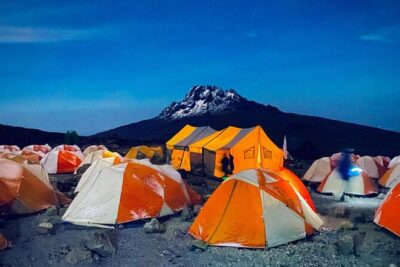
Climbing Kilimanjaro through 7 days Machame Route
Read our review →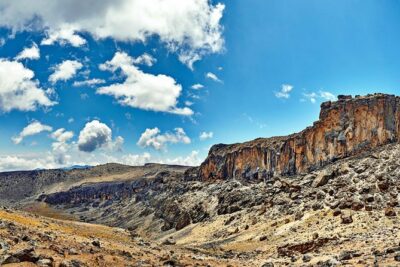
7-Day Machame Kilimanjaro Summit Tour from Arusha
Read our review →Browse the lists this trek appears in