
Review · HANOI
Trekking In Ha Giang 5 Days
Ha Giang is northern Vietnam at its most dramatic: steep rice terraces, sharp mountain roads, and isolated villages connected by footpaths rather than city streets. This five-day trip mixes long treks with village visits, cycling, scenic drives, and homestay nights, so you see more than the famous viewpoints.
I like the chance to spend time with Tay, Hmong, and Yao communities, and I like that the route reaches places such as Tay Con Linh and Thien Huong village instead of stopping only at roadside lookouts. The main caution is stamina: one trek covers 17 to 18 kilometers and lasts close to seven hours, while several days combine walking with long drives.
Key points to know before booking
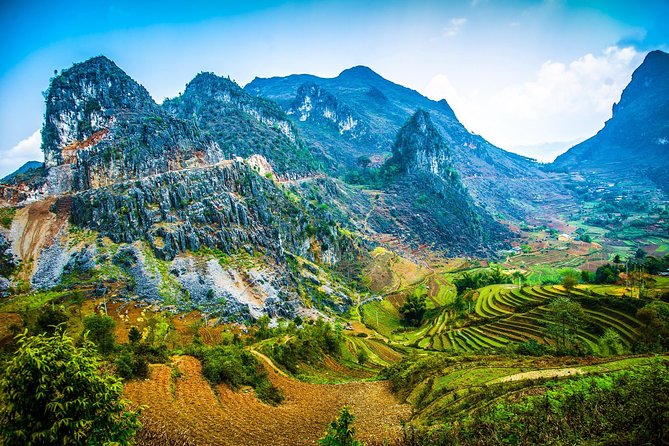
- 17 to 18 kilometers on Day 2: Expect a serious full-day trek through forest, terraces, and mountain villages.
- Ma Pi Leng Pass on foot: The three-hour hike gives you time above the Nho Que valley rather than a quick photo stop from a vehicle.
- Three ethnic cultures: The route includes Tay, Hmong, and Yao villages, homes, schools, markets, and local meals.
- A private tour: Only your group takes part, with a licensed English-speaking guide and 24/7 hotline support.
- Long transfers matter: Hanoi to Ha Giang takes about six hours on the first day, and the return to Hanoi is not described in detail.
- Most costs are covered: Transport, accommodation, meals listed in the plan, permits, entry tickets, and drinking water are included in the $626.61 price.
Why Ha Giang rewards hikers who want more than viewpoints
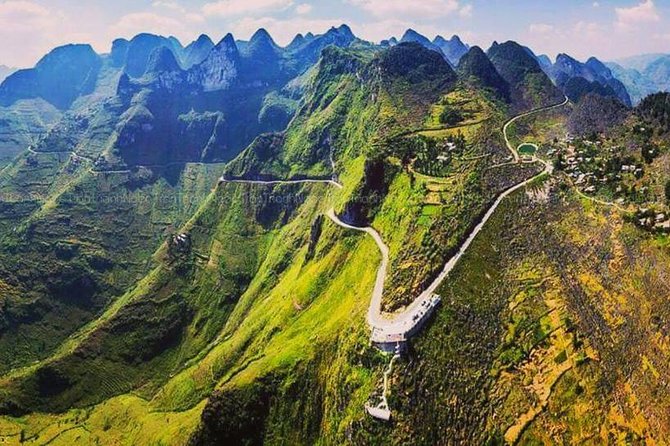
Many northern Vietnam tours show you Ha Giang from a road vehicle. This one asks you to walk through it. That difference matters. At walking speed, a terraced hillside becomes a working farm, a stilt house becomes a place to pause, and a narrow trail gives you time to notice how villages fit into the valleys.
The route also gives you several ways to see the region. You hike through forest and rice fields, cycle around a Yao village, walk to Hmong settlements, visit a market, and drive along mountain roads. It is not a pure trekking holiday, but that mix makes the five days more varied and gives your legs some relief.
The cultural side is handled through direct encounters rather than a string of formal attractions. You have lunch at a Yao family home, pass a local school, visit Tay villages, and enter traditional houses. The plan even includes time to relax beside a wild stream on the first afternoon.
That said, you should not expect a polished resort-style trip. Homestay accommodation is part of the appeal, but comfort can be simpler than in a city hotel. The schedule is active, and the phrase off the beaten track means uneven paths, rural stops, and fewer conveniences.
A few more treks around Hanoi worth a look
- Trekking around Ha Giang 5 days 4 nights
★ 3.0 · 2 reviews - Annapurna base camp trek 5 Days
★ 5.0 · 252 reviews - Kathmandu to Annapurna Base Camp (ABC) 5-Day Trek
★ 5.0 · 102 reviews
Day 1: Six hours from Hanoi to a Tay homestay
Pickup begins at 8 a.m. in Hanoi. The first major task is the transfer to Ha Giang, which takes about six hours. This is not a small prelude. You will spend a large part of the day in an air-conditioned car, watching the scenery shift from Hanoi’s dense streets to quieter rural areas.
A stop along the way allows for a short walk through local villages. After lunch at a local restaurant, the road follows the Lo River toward Ha Giang city. The river route gives the journey a sense of direction, and the changing countryside helps explain why Ha Giang feels so different from Hanoi.
Once you arrive, the schedule slows down. You can wander around Tay villages, see rice fields, look at wooden stilt houses with palm-leaf roofs, or cool off beside a wild stream. Dinner is a local dish at the homestay or nearby accommodation.
I like this gentle first afternoon because it keeps the arrival day from becoming a simple transfer. Still, the six-hour drive means you should keep your expectations realistic. If you are hoping to start a major hike immediately, this is not that day.
Day 2: Tay Con Linh, Yao villages, and the hardest walking day
Day 2 is the physical center of the trip. The trek covers about 17 to 18 kilometers and lasts close to seven hours. You start from a Tay village and follow less-used trails through wild forest and terraced rice fields toward the highest point of the Tay Con Linh range.
This section is for people who enjoy walking for its own sake. The paths are described as off-road trails, so you should expect natural surfaces rather than paved paths. The reward is access to a quieter part of Ha Giang, where mountain communities and farmland shape the route.
The high point is also connected with the Yao people. You may meet ethnic-minority students at a local school, then stop for lunch with a Yao family. These moments give the day a human scale. You are not simply looking across a valley from a platform. You are seeing homes, schools, and food as part of daily life.
After lunch, the trail becomes easier as it descends toward the valley. The day finishes in a Tay village before you continue toward Quan Ba in the Dong Van Karst Plateau Global Geopark.
The name Heaven Gate is attached to Quan Ba, but the day’s description focuses mainly on the trek and the move toward the geopark. Do not read it as a short sightseeing outing. This is a demanding day, and the distance is the clearest reason to book only if you are comfortable walking for hours over mountain trails.
Day 3: Cycling, Hmong villages, and the old royal palace
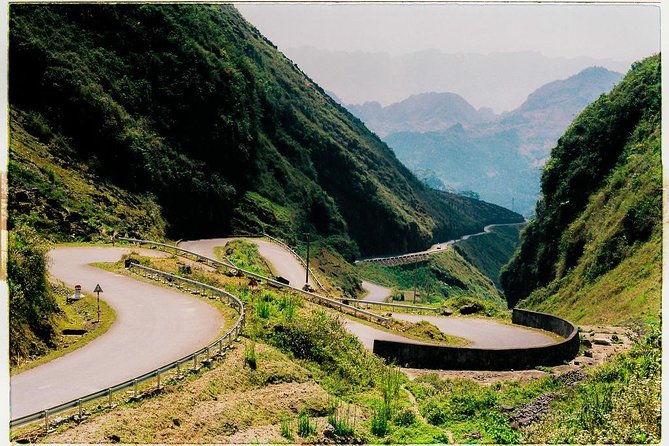
The morning begins at a Yao village, where you can spend one to two hours cycling and observing local traditions. The cycling section breaks up the walking schedule while keeping you close to village life.
Afterward, you transfer toward Dong Van. Lunch takes place in Yen Minh town, and the route includes a short walk to isolated Hmong villages. This is another good example of the trip’s rhythm: transport connects the larger areas, then your guide takes you on foot to places that are not simply roadside attractions.
The day’s major cultural stop is the old palace of the Hmong King. It offers a different kind of context from the homesteads and rice terraces. You see a historic residence connected with Hmong leadership, set within the wider karst region.
If time permits, you can take a 20-minute walk to a vacant French fortress on a mountain top for sunset. The wording matters: this stop depends on the day’s timing. It should be treated as a possible extra rather than a guaranteed part of the program.
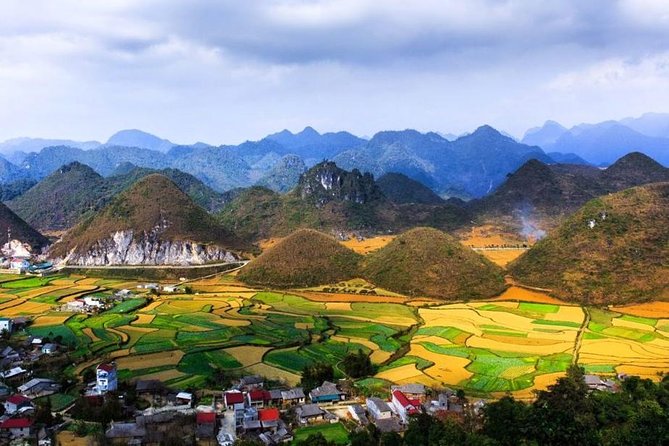
By the end of Day 3, you reach Dong Van. The Dong Van Karst Plateau Global Geopark is one of the main reasons people come to this part of Vietnam, but the appeal here is not limited to geology. The limestone mountains, villages, farms, roads, and cultural sites all appear together as you move through the area.
Same trailhead, a different route:
- Hanoi – Sapa 2 Days 1 Night Overnight At Homestay
★ 5.0 · 899 reviews - From Hanoi: 2-Day Sapa Trekking Trip with Homestay & Meals
★ 4.8 · 704 reviews - Sapa 3 Days 2 Nights Trekking Tour (1 Night In Ta Van Village, 1 Night In Hotel)
★ 5.0 · 699 reviews - 3-Day Trekking Adventure of Sapa from Hanoi – Stay Ta Van Village
★ 5.0 · 611 reviews
Day 4: Dong Van market, Thien Huong, and Ma Pi Leng Pass
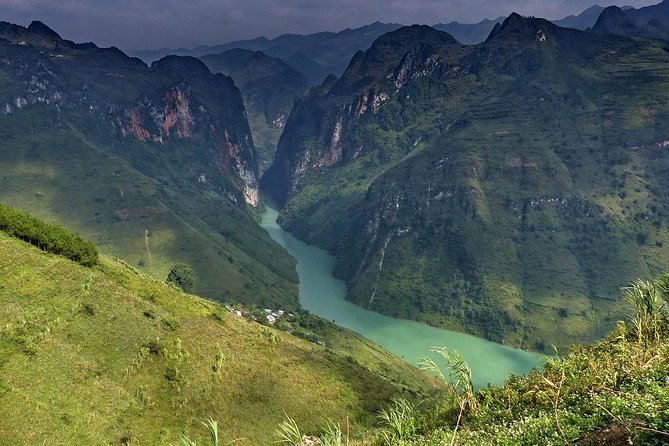
Day 4 brings the most famous scenery on the route. You begin at Dong Van market, with a chance to see a Hmong fair if the visit falls on a Sunday. The market timing is important, since the Sunday version is the special opportunity described in the schedule.
After the market, you hike toward the edge of the Nho Que valley. The route leads through mountain country with views toward the border area with China. A seven-kilometer hike continues to Thien Huong village, where Tay residents live in traditional clay houses.
This is a useful day for comparing two kinds of Ha Giang scenery. The market and village show community life, while the trail shows the scale of the surrounding mountains. You also return to Dong Van for lunch, so the day is active but organized around a known base.
After lunch, a 20-minute drive takes you to the Ma Pi Leng trekking point. Ma Pi Leng is often treated as a quick roadside stop, but this tour gives you about three hours on foot. The trail reaches the top of the pass and passes local Hmong villages.
The views toward the Nho Que River and the steep valley are the visual high point of the trip. You will want good shoes and enough water, even though drinking water is supplied in the car. The route description does not give an exact elevation or trail difficulty, so your guide will be important in setting the pace.
I especially like the decision to walk Ma Pi Leng rather than simply photograph it from a vehicle. The tradeoff is that Day 4 is another long day after the demanding trek on Day 2. You may be tired by the time the pass appears, but the schedule gives you a memorable final outing.
Day 5: A brief Yen Minh stop before Hanoi
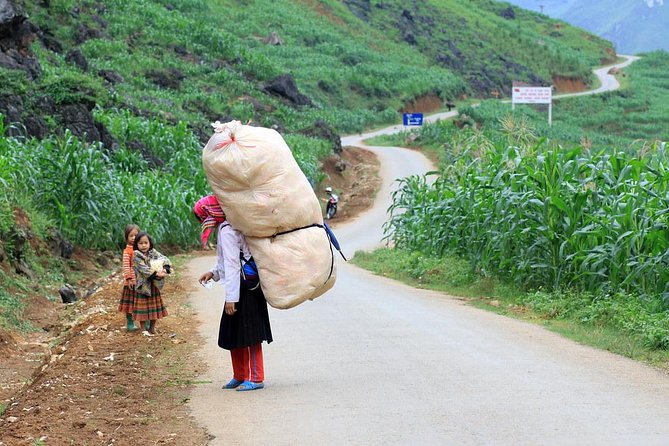
The final morning begins in Yen Minh, with a short listed stop of about eight minutes before the return journey to Hanoi. The schedule is much less detailed than the earlier days, so you should confirm the expected arrival time in Hanoi before booking onward transport or a flight.
The vague timing is the main practical weakness of the itinerary. The trip is described as five days, but the final return transfer is not given a clear duration. Since the first Hanoi to Ha Giang journey takes about six hours, it is sensible to leave a generous buffer before any important connection.
What the $626.61 price covers
At $626.61 per person, this is not a budget bus ride. It is a private five-day package that includes an air-conditioned car, a licensed English-speaking guide, accommodation in homestays or three-star hotels, drinking water in the vehicle, sightseeing tickets, travel permits, and the activities described.
The meal package includes four breakfasts, five lunches, and four dinners. That covers most meals during the five days, but drinks with meals are extra. Personal purchases, souvenirs, tips, and travel insurance are also outside the price.
The value improves if you are traveling with a small private group and want one price covering the major moving parts. A private tour means only your group participates, and group discounts are offered. You are paying for the guide, vehicle, permits, food, and organization as much as for the actual trekking.
I would compare the cost with the convenience you need. If you enjoy arranging rural transport, homestays, trail access, and permits yourself, a self-planned trip might cost less. If you want one team to manage a complicated northern route while you focus on walking, the package is easier to justify.
Guides, homestays, and the human side of the route
The tour is built around a licensed English-speaking guide. That role matters here because the route crosses several cultural areas and includes village visits, school contact, family meals, and traditional homes. A good guide can explain what you are seeing and help keep visits respectful.
Names connected with the organizing team include Windy, Ivan, and Jack. Windy is associated with trip planning and customized advice, while Ivan and Jack are named as guides who helped make the northern route easier to understand and navigate. You should confirm who will lead your departure at booking, since a specific guide is not guaranteed in the supplied details.
Accommodation is listed as a homestay or three-star hotel. That gives the operator some flexibility, so do not assume every night will have the same standard. The homestay option is valuable because it keeps you close to local life, but it may not suit you if you require a predictable hotel setup every night.
Who should book this Ha Giang trek?
I would recommend it to you if you want a private route with substantial walking and real contact with rural communities. It suits people who would rather see rice terraces from a trail, eat lunch with a local family, and cycle through a village than spend five days moving between large sightseeing stops.
It also works for couples, families, or friends who want their own group rather than a mixed coach tour. Most people can participate, but the 17 to 18-kilometer Day 2 trek and the three-hour Ma Pi Leng walk should guide your decision.
You may want to reconsider if you dislike long car transfers, basic accommodation, uncertain final-day timing, or steep mountain paths. This is not a gentle sightseeing circuit. It is a physically active trip with a generous amount of time outdoors.
Free cancellation is available if you cancel at least 24 hours before the 8 a.m. start time. Cancellations or changes made later are not accepted for a refund, and the policy uses local time.
Should you book it?
Book this trip if your priority is walking through Ha Giang rather than simply looking at it from a bus window. The strongest parts are the Tay Con Linh trek, the Yao family lunch, the Hmong villages, and the extended walk on Ma Pi Leng Pass.
Before paying, confirm the guide assigned to your group, the exact homestay and hotel plan, and the return time to Hanoi on Day 5. If those details suit you and you are ready for long days on foot, the price covers a great deal and the route reaches the kind of northern Vietnam that is easy to miss on a faster tour.
FAQ
Where does the tour start?
The tour starts in Hanoi, Vietnam, with pickup at 8 a.m. from your hotel.
Where does the tour end?
The activity ends back at the Hanoi meeting point after the return journey from Ha Giang.
How long is the tour?
The tour lasts approximately five days.
Is this a private tour?
Yes. Only your group participates in the activity.
What accommodation is included?
Accommodation is provided in homestays or three-star hotels, depending on the arrangements for the trip.
Are meals included?
Yes. The package includes four breakfasts, five lunches, and four dinners. Drinks with meals are not included.
Is drinking water provided?
Yes. Drinking water is provided in the car during the trip.
What physical activity is involved?
The tour includes a 17 to 18-kilometer trek on Day 2, a seven-kilometer hike to Thien Huong village on Day 4, and a three-hour walk at Ma Pi Leng Pass. Cycling and shorter village walks are also included.
Is travel insurance included?
No. Travel insurance is not included, and personal drinks, souvenirs, other personal expenses, and tips are also separate.
Just added around Hanoi
- 8-Days Hanoi, Sapa Trekking And Halong Bay Cruise★ 5.0 · 8 reviews
- From Hanoi : Sapa Moutain Trek – Halong bay Heritage★ 4.5 · 25 reviews
- Trekking around Ha Giang 5 days 4 nights★ 3.0 · 2 reviews
- Mai Chau – Pu Luong trekking 3 days 2 nights★ 4.5 · 7 reviews
- 2-Day Trekking in Sa Pa from Ha Noi by sleeping bus★ 5.0 · 4 reviews
- Hanoi: 3D2N Mu Cang Chai Visit All Attractions, Trek, Ethnic Life★ 5.0 · 3 reviews
- 2-Day SAPA Trekking – Villages-Homestay-Ethnic-Local Food-Market★ 5.0 · 2 reviews
- Sapa trekking – Unique Route – 2D1N★ 5.0 · 3 reviews
5-Day Experiences, compared.


Kathmandu to Annapurna Base Camp (ABC) 5-Day Trek
Read our review →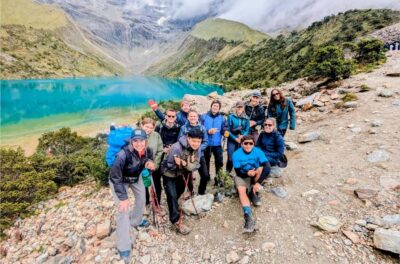
Machu Picchu: 5-Day Salkantay Trek with Panoramic Train
Read our review →
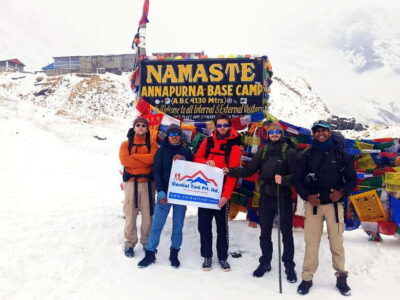
Kathmandu/Pokhara: 5-Day Annapurna Base Camp (ABC) Trek
Read our review →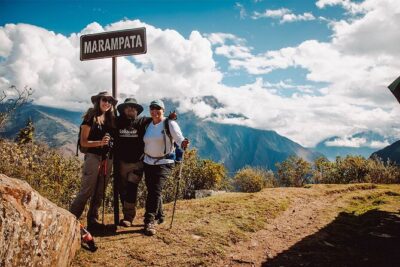

5-Day Pearl of Africa Chimps and Gorilla Trekking Safari
Read our review →Browse the lists this trek appears in