
Review · CUSCO
Ausangate Trek 5 Days
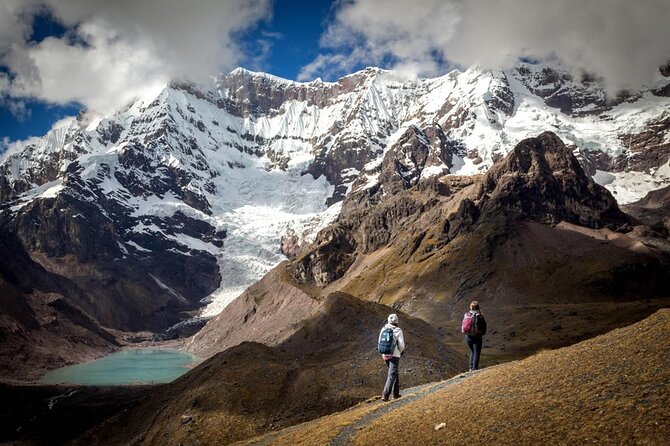
Ausangate is Peru without the crowds: a high, tough circuit through glacier country where turquoise lakes, alpacas, and enormous snow-covered peaks do most of the talking. I like the small groups of up to 10, and I like that the route ends with a local family sharing food, traditions, and weaving rather than simply sending you back to Cusco.
The other big plus is the all-inclusive camp setup. A cook, horse driver, and guide handle the hard work, while you eat hot meals and soak in hot springs at Upis and Pacchanta. The catch is the altitude: you sleep as high as 4,630 meters, cross a 5,200-meter pass, and need solid fitness, warm gear, and a sensible approach to acclimatization.
Key points to know before you book
- 5,200-meter Palomani Pass: This is the trek’s highest point and its hardest climb.
- Two hot-spring stops: Upis on the first evening and Pacchanta near the end help take the edge off the cold and effort.
- Small, personal groups: The maximum group size is 10, and some departures run with only two hikers.
- Strong guiding team: Guillermo and Urbano, also called Chino, are praised for cultural knowledge, route care, and friendly support.
- Good camp food: Five lunches, four dinners, and four breakfasts are included, with a dedicated cook preparing meals in camp.
- Real extra costs: You still pay the 20-sol entrance fee and bring or rent a sleeping bag.
Why Ausangate feels different from the Inca Trail
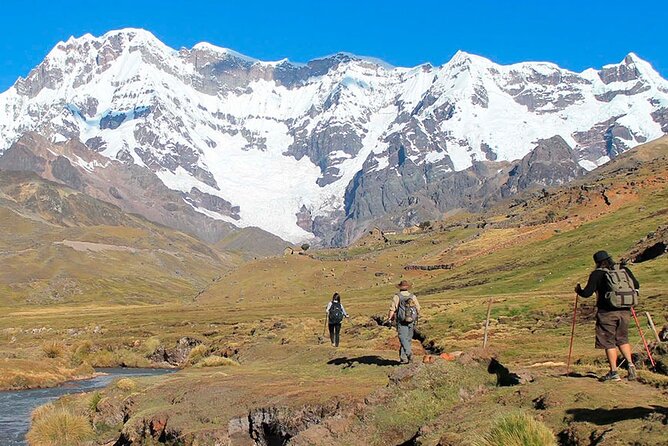
The Ausangate Trek is about open mountain country, not stone ruins or busy archaeological sites. You circle Ausangate, one of the great sacred peaks of the Cusco region, moving through broad high valleys, glacial lakes, passes, and small rural communities.
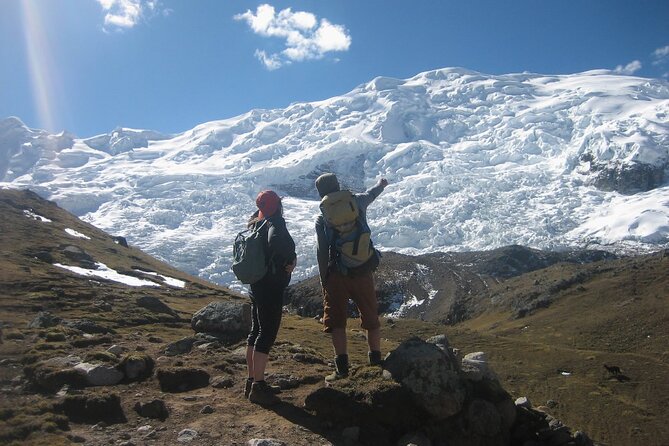
I would choose this route if you want silence and big scenery more than famous monuments. One of the pleasures is how little development you see along the trail. The route can feel far from ordinary life, with the mountain appearing from different angles each day and alpacas adding a welcome bit of movement to the wide, severe setting.
The route also carries a spiritual side. At Palomani Pass, the guide performs a ceremony for Apu Ausangate, the sacred mountain spirit. That moment gives the trek a cultural center. It is not just a photo stop at a high point. You are being introduced to a way of seeing the mountain as a living presence.
This is not a casual walk. The itinerary includes several long days at extreme altitude, and the camps are all above 4,200 meters. Even strong hikers should treat the altitude as the main challenge, not an afterthought.
A few more treks around Cusco worth a look
- Machu Picchu: 5-Day Salkantay Trek with Panoramic Train
★ 5.0 · 79 reviews - Classic Choquequirao Trek – 5 Days / 4 Nights
★ 5.0 · 52 reviews - Ultimate Lares Trek & Inca Trail 5 days
★ 5.0 · 47 reviews
The early start from Cusco and the road to Rondoca
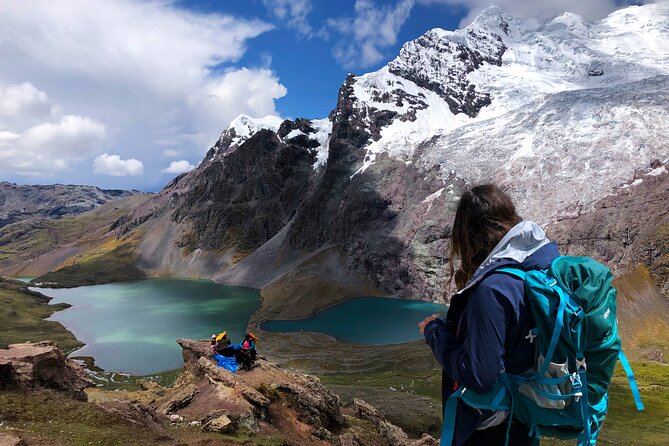
Your day begins at 5:00 a.m. in Cusco. Private transport takes you toward Tinke, where you can buy last-minute supplies and have breakfast before continuing to Rondoca, the starting point of the hike.
This first transfer matters because it gives you a final chance to sort out small needs before entering the high country. The provided information does not specify exactly what is available in Tinke, so I would not rely on it for major equipment. Bring your important personal items from Cusco, especially warm layers, medication, and any preferred snacks.
At Rondoca, you meet the rest of the trekking crew, including the cook and horse driver. Horses carry the camping equipment, which means your own load can be lighter than on a fully independent trek. That support is one of the strongest practical reasons to book an organized trip here.
The first walking section lasts about three to four hours. You hike for roughly two hours before lunch, with views toward Ausangate, then continue to the village of Upis. The itinerary gives the distance as 8 kilometers, although it also lists 3 miles, which is not the same measurement. I would use the stated hiking time and altitude gain as the better guide to the day.
Day 1: Upis hot springs at 4,200 meters
The first camp is at Upis, around 4,200 meters. That is already higher than many people have ever slept, so the day is short by design. You are not racing into the circuit. You are getting your legs moving and beginning the night at altitude.
The Upis hot springs are the reward. After the road transfer and first climb, soaking while looking toward the mountains gives you a useful reset before dinner. Coca tea is also served, a familiar Andean drink used by many people to help with the demands of high altitude.
The setting is pleasant, but do not mistake a hot spring for a cure-all. The camp is still very high, and the night can be cold. Pack warm clothing where you can reach it easily, rather than burying it in a duffel that has already gone onto a horse.
Day 2: Two high passes and the blue lakes
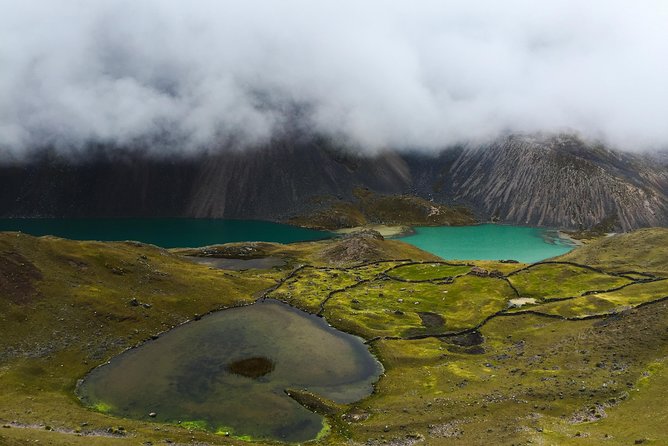
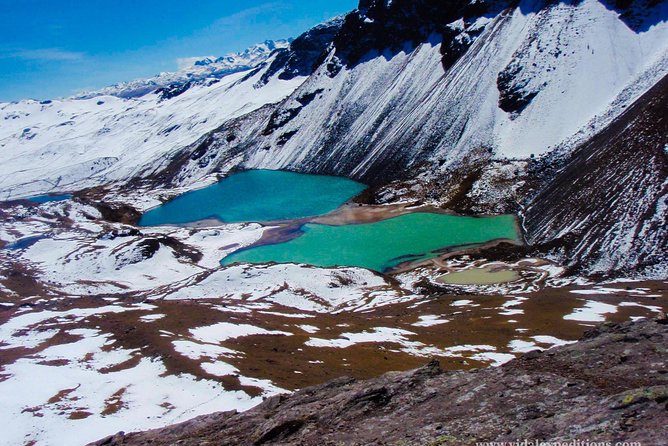
Day two is the first serious test. You are woken with hot coca tea, eat breakfast, and climb to Arapa Pass at 4,850 meters. From there, the route drops for about two and a half hours through the valley, passing Puqa Q’ocha and continuing to turquoise Jatun Puqa Q’ocha.
Lunch beside Jatun Puqa Q’ocha is one of the trip’s visual highlights. You get a long look at the water, the surrounding high country, and Ausangate. This is the sort of stop where you should slow down. The point is not only to collect photographs, but to let your breathing settle before the next climb.
After lunch, you ascend to Apacheta Pass at 4,980 meters. A bright turquoise lagoon lies below, fed by snowmelt from Ausangate. The route then descends for about an hour to Ausangate Qocha, where you camp for the second night.
The figures describe an eight-hour day, around 12 kilometers, with roughly seven hours of walking. That combination tells you what to expect: not a huge distance on paper, but a demanding day because of the altitude, two passes, and uneven ground. If you are feeling poorly, tell your guide early. A guide such as Guillermo or Urbano can only help if you speak up.
Same trailhead, a different route:
- Cusco: 4-Day Inca Trail to Machu Picchu with Accommodation
★ 4.8 · 432 reviews - From Cusco: 7 Lakes Ausangate Trek with Breakfast and Lunch
★ 4.8 · 360 reviews - Cusco: Machu Picchu 2-Day Inca Trail with Panoramic Train
★ 4.9 · 260 reviews - From Cusco: 2-Day Inca Trail to Machu Picchu
★ 4.2 · 244 reviews
Day 3: Palomani Pass and the trek’s highest point
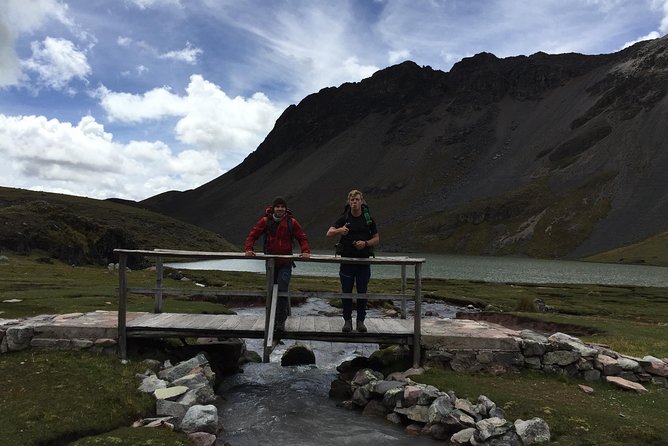
Day three reaches the top of the circuit at Palomani Pass, 5,200 meters. The climb takes about two hours from camp, followed by a descent to Uchuy Phinaya for lunch and another afternoon walking section to camp.
The pass is the emotional high point as well as the physical one. The ceremony for Apu Ausangate gives the climb a sense of place that a simple summit photograph cannot provide. Guides Guillermo and Urbano, known as Chino, are particularly valued for explaining local culture and mountain traditions, so this is a good time to ask questions.
At 5,200 meters, every step can feel slow. The itinerary estimates six to seven hours of hiking over about 13 kilometers, with elevation changing from 4,600 meters to 5,200 meters and then down to 4,300 meters. The next camp sits around 4,500 meters, so you continue sleeping high even after the pass.
This day rewards patience. You may find yourself stopping often, and that is sensible. The route is not improved by hurrying. Eat what you can, drink regularly, and use the guide’s pace rather than treating the climb like a race.
Day 4: Glacial lakes and Pacchanta hot springs
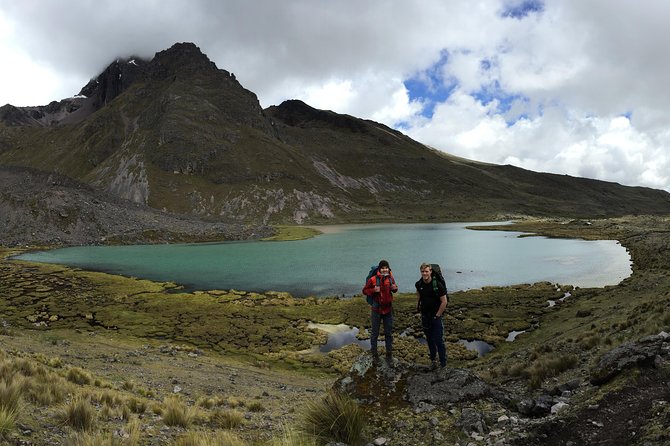
The fourth day is shorter, at about six hours and 15 kilometers, with the route descending toward Pacchanta. There is one pass left to cross, and the day is designed for taking in the scenery rather than chasing altitude records.
You pass deep blue lagoons and glacial lakes in changing colors. Ausangate remains in view, but from a new angle, while Pacchanta Valley begins to open below. The itinerary even allows for a cold swim for anyone brave enough. At these elevations, I would treat that as optional in the strongest sense. Wet clothes and cold air can make a long day less comfortable.
The final reward is Pacchanta’s hot springs. After four days of walking, this soak has real value. It is a chance to rest your legs before the final cultural visit and bus ride, and the view back toward Ausangate keeps the mountain present right to the end.
The camp elevation is listed as 4,300 meters, described as descending. Clarify the exact sleeping arrangement for your departure if that matters to you, since the itinerary presents Pacchanta as the goal but does not give a detailed camp description for the night.
Day 5: Food, weaving, and a local welcome
The final morning begins after breakfast with a ceremony hosted by a local family. You learn about traditional food, local customs, and weaving techniques before taking a bus back to Cusco.
This is an important finish. The trek could end with a vehicle and a long road ride, but the family visit connects the scenery to daily life. You see skills and customs in use, not only described by a guide while walking.
The day includes about three hours of activity, and breakfast is included. The information does not specify the exact arrival time in Cusco, so avoid scheduling a tight evening connection or a nonrefundable activity on the same day.
Food, horses, and the people who make camp work
The price includes five lunches, four dinners, and four breakfasts. That is a strong part of the value, since food at high altitude is not a minor detail. A hot meal after seven hours on the trail changes the whole feel of camp.
Benigno is frequently praised for producing varied, filling food from a camp kitchen, with Euden assisting on some departures. Expect the meals to be a major part of the experience, not a basic afterthought. Exact menus are not provided, so bring any special food you know you need.
A horse driver handles the equipment, and Angel is specifically praised for caring for gear, setting up tents, and helping with camp chores. This support lets you focus on hiking, but it also highlights the working structure behind the trip. The horses and crew are essential to keeping the circuit comfortable.
Guides Guillermo and Urbano, or Chino, receive particular praise for route knowledge, cultural explanations, encouragement, and photography help. The guide is not just there to point out the trail. On this route, good interpretation makes the ceremony, local traditions, wildlife, and mountain setting easier to understand.
What $660 buys, and what it does not
At $660 per person, the tour is not a budget day trip, but the price covers five days of guiding, camping equipment, horses for equipment, transport described in the itinerary, and most meals. A dedicated cook and support crew add real value, especially on a route where camps sit far above ordinary roads and towns.
Small groups improve that value. With a maximum of 10 people, the guide can give more attention to pace and questions than on a large departure. Some trips operate with only two hikers, which can feel closer to a private expedition while retaining organized support.
You still need to budget for the 20-sol entrance fee and a sleeping bag. Those are not included. The sleeping bag is particularly important because the nights can be very cold, even if daytime sun feels strong. One experienced hiker compared the evening cold here with the Himalayas, so bring the warmest mountain clothing you own.
The tour also requires a moderate fitness level. That phrase should not be read as an easy rating. The route reaches 5,200 meters and includes days of six to eight hours. Your enjoyment will depend heavily on arriving in Cusco ready for high-altitude walking.
Who should choose this trek
I would recommend the Ausangate Trek if you want:
- High mountain scenery with few other hiking groups
- A small operation with personal guiding
- Cultural context alongside natural scenery
- Hot springs at both an early and late stage
- Camp support that carries equipment and prepares meals
- A challenging route away from the busiest Cusco circuits
I would think twice if you dislike cold camping, long climbs, or uncertain weather. The route is remote in feel, the camps are very high, and the schedule leaves little room for a leisurely low-altitude recovery day.
This is also a better fit for someone who values mountains and local culture over famous ruins. If Machu Picchu or Inca stonework is your main reason for visiting Peru, this trek does not replace those experiences. It offers something different: a demanding circuit around a sacred peak, with lakes, livestock, local families, and wide open views.
Booking details and cancellation
Confirmation is provided at booking. The departure begins at 5:00 a.m., and the maximum group size is 10.
You can cancel up to 24 hours before the start for a full refund. Cancellations or changes made within 24 hours are not accepted for a refund. Poor weather or failure to reach the minimum number of participants can lead to a rescheduled date, another experience, or a full refund.
Should you book the Ausangate Trek?
Book it if you want one of Peru’s strongest high-altitude mountain experiences and are prepared to work for it. The best features are clear: an uncrowded route, an excellent support team, hot meals, cultural contact, and two useful hot-spring stops.
Before paying, make sure you are honest about altitude and cold. Pack a proper sleeping bag or arrange one, bring serious layers, and allow yourself enough time in Cusco to adjust before the 5:00 a.m. start. If you can handle that preparation, the five days around Ausangate offer scenery and cultural encounters that are hard to find on a shorter, busier excursion.
FAQ
How long is the Ausangate Trek?
The experience lasts approximately five days. Hiking days range from about three to eight hours, with the longest walking days on days two and three.
How high does the trek go?
The highest point is Palomani Pass at 5,200 meters, or about 17,060 feet. Camps are also very high, including one at approximately 4,630 meters.
What meals are included?
The tour includes five lunches, four dinners, and four breakfasts. Meals are prepared by the trekking cook during the camping portion.
Is a sleeping bag included?
No. A sleeping bag is not included, so you need to bring or arrange one separately.
Is the entrance fee included?
No. The entrance fee costs 20 soles and is paid separately.
How many people can join the tour?
The maximum group size is 10 people. Some departures may operate with only two hikers.
What happens if bad weather cancels the trek?
If poor weather causes cancellation, you are offered a different date or a full refund.
Just added around Cusco
- Classic Choquequirao Trek – 5 Days / 4 Nights★ 5.0 · 52 reviews
- Short Inca Trail 2 Day Hike to Machu Picchu with Permits & Train★ 5.0 · 51 reviews
- 2 Day Tour Throughout the Short Inca Trail to Machu Picchu★ 5.0 · 36 reviews
- Small Group: 4-Day Inca Trail Trek to Machu Picchu★ 5.0 · 33 reviews
- 5-Day: Salkantay Trek to Machupicchu and Humantay Lake★ 5.0 · 42 reviews
- 2 Day – Short Inca Trail to Machu Picchu – Group Service★ 5.0 · 30 reviews
- 5 Day – Salkantay trek to Machu Picchu – Group Service★ 4.5 · 27 reviews
- Salkantay Trek Standard 5D/4N★ 5.0 · 48 reviews
5-Day Experiences, compared.
Kathmandu to Annapurna Base Camp (ABC) 5-Day Trek
Read our review →
Machu Picchu: 5-Day Salkantay Trek with Panoramic Train
Read our review →
Kathmandu/Pokhara: 5-Day Annapurna Base Camp (ABC) Trek
Read our review →
5-Day Pearl of Africa Chimps and Gorilla Trekking Safari
Read our review →
Browse the lists this trek appears in