
Review · RISHIKESH
5 Days Kedarkantha Trek
Kedarkantha gives you a proper Himalayan summit without requiring a long expedition. You drive from Dehradun through Mussoorie and the Yamuna Valley, sleep among pine forests, camp beside frozen Juda Ka Talab, and climb to a 3,429-meter summit with wide views toward Uttarakhand and Himachal Pradesh.
I like the way this trip handles the practical work: transport from Dehradun, tents, sleeping bags, meals, cooks, porters for camp equipment, and first-aid gear are included. I also like the human side, with guides such as Aarya, Arjun, Rocky, Sonu, Megha, Kamesh, and Surender Rana named in past feedback for keeping people moving and cared for.
The catch is simple: this is not an easy stroll. The altitude, snow, cold, steep sections, and long first and final drives demand reasonable fitness. The listed price is attractive, but personal luggage mules, insurance, last-night accommodation, and unforeseen medical or weather costs are extra.
Key points before you book
- The summit reaches 3,429 meters: Expect a real altitude challenge, with a stone marker and Trishul at the top.
- The road journey takes time: Day one from Dehradun to Sankri can take about 12 hours, with mountain roads and scenic stops.
- Camping is part of the appeal: You spend nights in an alpine tent, including camps near Juda Ka Talab and Kedarkantha Base Camp.
- Most core costs are covered: Transport, meals, guides, cooks, equipment, forest fees for Indian nationals, and camp support are included.
- You need at least six people for a customized group: The overall group size can reach 25 people.
- Winter conditions change the experience: Juda Ka Talab may freeze, and snow can make the route much harder than the distance suggests.
The long road from Dehradun to Sankri
The trek begins at Prince Chowk in Dehradun. The listed start time is 12:00 am, so confirm the exact departure time before setting an alarm. The drive to Sankri takes about 12 hours and is a full day in its own right.
You pass through Mussoorie and stop at Kempty Falls before following the Yamuna Valley. A breakfast stop beside the Yamuna gives you a chance to stretch and eat with a view, which matters on a road day this long.
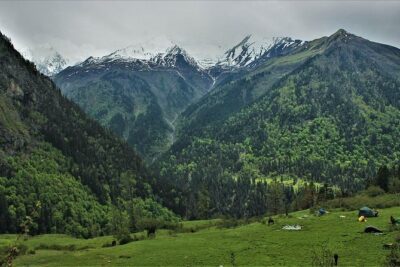
After Mori, the scenery changes again. Pine forests close in around the road, and the Tons River runs through the valley below. The Tons is known for rafting and kayaking, with strong rapids, so this stretch gives you a glimpse of the river’s power even though water activities are not part of the trek.
Netwar marks the gateway to Govind Wildlife Sanctuary. You reach Sankri by early evening at an altitude of 1,920 meters and stay in a guesthouse on a triple-sharing basis.
I would treat this first day as transport, not as a relaxed sightseeing day. Mountain roads can be tiring, and the itinerary includes several stops without promising long visits at each one. Still, the route helps you move gradually from city level toward the high country rather than arriving at the trailhead in one sudden leap.
A few more treks around India worth a look
- Annapurna base camp trek 5 Days
★ 5.0 · 252 reviews - Kathmandu to Annapurna Base Camp (ABC) 5-Day Trek
★ 5.0 · 102 reviews - Machu Picchu: 5-Day Salkantay Trek with Panoramic Train
★ 5.0 · 79 reviews
From Sankri village to frozen Juda Ka Talab
After breakfast, you leave Sankri and begin the trek toward Juda Ka Talab. The stated distance is about 4 kilometers, normally taking 2 to 3 hours, though snow and uphill sections can change the pace.
The early trail passes through village life. You may see children heading to school and local women beginning their daily work. The route crosses Saud before entering the forest, giving you a useful look at the communities that live around the trail.
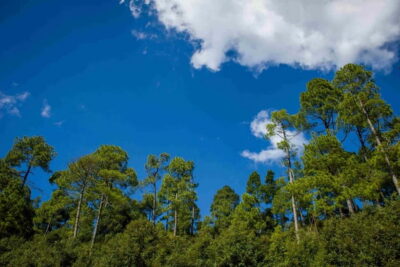
The climb becomes sharper as you enter pine and maple woods. Once you reach a ridge, the path becomes wider and more even for a time. The thick trees keep the trail cool, since sunlight has trouble reaching the forest floor.
Juda Ka Talab sits at about 2,774 meters. In winter, the lake can freeze, and the camp may receive heavy snowfall. This is one of the most memorable parts of the route, but it is also where cold-weather preparation starts to matter. A good sleeping bag, warm layers, dry socks, gloves, and protection for your phone are more useful here than extra casual clothing.
You sleep beside the lake in camp. The included setup covers sleeping bags, mattresses, tents, stools, tables, kitchen facilities, and toilet tents with portable seats. The comfort is practical rather than luxurious. You are there for shelter, warmth, food, and rest, not hotel service.
The pine forest and Kedarkantha Base Camp
From Juda Ka Talab, the trail continues through dense pine forest. After a meadow with shepherds’ huts, you climb another section to Kedarkantha Base Camp at about 3,429 meters.
The distance from Juda Ka Talab is listed as 3 kilometers, taking roughly 2 to 3 hours. The short distance can be misleading. At altitude, and especially on snow, a few kilometers can feel much longer. Take the pace set by the guide rather than trying to win the day.
The forest section is one of the prettiest parts of the trek. You get tall trees, open meadows, huts, and changing views rather than one continuous climb. It is also a strong place for photography, but keep your camera or phone protected from cold and moisture.
The base camp can feel colder than the summit because it has less natural insulation. That detail is worth taking seriously. Keep your night layers accessible, and do not bury gloves or a hat at the bottom of your bag.
From camp, you can see several Uttarakhand peaks. The open view gives you a preview of the summit day, though the main attraction is not visible in a single tidy frame. Mountains overlap, ridges fade into one another, and the weather can change the view quickly.
The operator provides an experienced guide team, cooks, and support staff. Names appearing in past trip feedback include Aarya, Arjun, Rocky, Kamesh Bhardwaj, Sonu, Megha, Bharadwaj, and Surender Rana. Your assigned staff may be different, so think of these names as examples of the team rather than a promise about who will lead your departure.
Summit morning at 3,429 meters
The climb from Base Camp to Kedarkantha summit is listed at about 2 hours. The short timing does not mean the climb is effortless. Snow, cold, steep ground, and altitude can slow you down, and the summit is the point where a moderate fitness level becomes important.
At the top, a stone arrangement and a Trishul mark the summit. The reward is a 360-degree view toward the peaks of Uttarakhand, Chaainsheel Pass, and the Kailash ranges of Himachal. You can also look down toward the Har Ki Dun Valley.
The summit has a religious connection in its name. Kedar refers to Lord Shiva, while Kantha means throat. Local legend connects the peak with an earlier location considered for the Kedarnath temple and with Shiva’s attempt to avoid the Pandavas while disguised as a cow. You do not need to know the full story to enjoy the place, but it gives the summit a stronger sense of meaning than a simple altitude figure.
Allow yourself time to enjoy the top, but follow the guide’s instructions about weather and descent. High mountain conditions can shift quickly, and the summit is not the place to linger if visibility or wind worsens.
After the summit section, the itinerary returns you to Juda Ka Talab for another night. This makes for a demanding day, so conserve energy early. The combination of summit effort and descent is often more tiring than the climb alone.
Same trailhead, a different route:
- Half day trekking (munnar valley Trekking & Tours )
★ 5.0 · 310 reviews - Nag Tibba 2 Days Trek (Pantwari to Pantwari)
★ 5.0 · 274 reviews - Bhrigu Lake and Alpine Meadow Trek
★ 5.0 · 121 reviews - Har Ki dun Trek by Himalaya Shelter
★ 5.0 · 102 reviews
What the included equipment means for you
At $120 per person, the package offers strong value if you use the included services. The price covers transport between Dehradun and Sankri, guides, cooks, support staff, kitchen and toilet tents, sleeping bags, mattresses, crampons, camping furniture, and mule support for the camping equipment.
Meals include four breakfasts, four dinners, and three lunches. Food quality has received particularly warm praise, including reports of satisfying meals in cold conditions. That matters on a trek because regular hot food can make the difference between merely getting through the day and enjoying it.
The package also includes first-aid supplies, an oximeter, and a portable oxygen cylinder. These are safety provisions, not a replacement for fitness or medical advice. If you have a health concern, bring personal medicines and discuss your needs before departure.
Forest entry and trekking fees are included for Indian nationals. The supplied details do not say that the same fee treatment applies to foreign nationals, so international visitors should confirm any extra charges before paying.
Personal luggage is different from camp equipment. A mule can carry your personal bag for INR 500 per bag per day, and that charge is not included. Pack light if you can. You will be happier carrying only what you need, and you may avoid a sizable extra cost.
You also need to budget for tips, personal medicines, phone calls, adventure insurance, packed lunch boxes, and costs caused by bad weather or medical problems. The last day has no included accommodation. Hotels are available at about INR 1,600 to INR 3,000 per room.
Food, tents, and camp life
The accommodation pattern is one night in a triple-sharing guesthouse in Sankri, followed by three nights in twin-sharing alpine tents. This arrangement suits people who want a supported outdoor trip but do not expect private rooms.
The camp equipment is more complete than a basic self-supported outing. There are kitchen tents, common tents, toilet tents, portable toilet seats, tables, and stools. Reviews also highlight cozy tents, warm water, and helpful staff, though you should still expect cold nights and simple facilities.
Packed meals deserve planning. A lunch box for packed lunch or breakfast is not included because the operator aims to reduce polythene use. Bring or arrange a suitable reusable container if the daily plan requires food on the trail.
The camp routine is likely to feel social, especially with a group of up to 25 people. That can be a benefit if you like shared meals and encouragement. It can also mean less quiet and less flexibility than a private trek. A customized group requires at least six people, so this option works best for families, friends, or organized groups who want to travel together.
Who will enjoy this trek most
I would recommend Kedarkantha to you if you want a first Himalayan snow trek with a clear summit goal and a support team handling the major camp work. The route offers forest walking, village scenes, snow camping, high views, and a manageable five-day structure.
You should have moderate physical fitness. The trip is sometimes described as suitable for beginners, but that label can be misleading. The elevation and terrain still demand preparation, especially on summit day and during the return from the top.
This trip may not suit you if you want long hotel stays, private bathrooms, flexible departure times, or a gentle sightseeing holiday. The first drive is long, camps are basic, and the weather can alter the route or schedule.
Guide support is one of the package’s strongest practical features. Past feedback repeatedly highlights guides who help people reach the summit, check comfort, and keep the group together. Names such as Aarya, Rocky, Sonu, and Megha appear alongside comments about care and encouragement. Ask who will lead your departure and how the group handles slower walkers before you set out.
Cancellation and weather details
You can receive a full refund if you cancel at least six full days before the start time. Cancellation 2 to 6 full days before departure allows a 50 percent refund, while cancellation less than two full days before departure receives no refund.
The activity depends on suitable weather. If poor weather causes cancellation, you are offered another date or a full refund. The same applies if the minimum number of participants is not reached. Changes are not accepted inside the stated cutoffs, so read the timing carefully and use local time.
Should you book the Kedarkantha Trek?
Book this trek if you value a well-supported snow route more than luxury. At $120, the inclusion of transport, meals, camping equipment, guides, cooks, safety equipment, and camp support makes the price appealing, especially if you do not already own cold-weather gear.
Go in with open eyes. The trek is physically demanding, the roads take time, personal luggage and insurance cost extra, and the midnight start listing needs confirmation. If you prepare for cold, pack lightly, and accept simple camp living, Kedarkantha offers a rewarding first step into the Himalayas with a genuine summit finish.
FAQ
Where does the Kedarkantha trek start and finish?
The trek starts at Prince Chowk in Dehradun, Uttarakhand. The activity ends back at the same meeting point in Dehradun.
How long does the experience last?
The experience lasts approximately five days. Day one is the drive from Dehradun to Sankri, and day five is the return drive to Dehradun.
What is included in the price?
The price includes transport from Dehradun to Sankri and back, guides, cooks, support staff, camping equipment, sleeping bags, mattresses, kitchen and toilet tents, crampons, camp furniture, trekking and forest fees for Indian nationals, camp-equipment mule support, one guesthouse night, three nights in alpine tents, breakfasts, lunches, and dinners.
Is accommodation included on every night?
One night in Sankri is included in a triple-sharing guesthouse. Three nights are included in twin-sharing alpine tents. Accommodation on the final day is not included.
How difficult is the Kedarkantha trek?
You should have a moderate level of physical fitness. The route includes uphill walking, altitude, cold, and possible snow. The summit section is listed at about two hours, but conditions can make it harder.
What is the highest point of the trek?
The Kedarkantha Base Camp and summit are listed at an altitude of 3,429 meters. The summit has a stone arrangement and a Trishul marker.
Is personal luggage carried by mule?
Mules carry the camping equipment included in the package. Personal luggage can be carried by mule for an additional cost of INR 500 per bag per day.
How many people are needed for a customized group?
A customized group booking requires at least six people. The overall activity has a maximum group size of 25 people.
What happens if bad weather cancels the trek?
If poor weather causes cancellation, you are offered another date or a full refund. If the minimum number of participants is not reached, you are also offered a different date or experience, or a full refund.
Just added around India
- Gokarna Beach Trek★ 5.0 · 9 reviews
- Jaipur Trekking and Hiking Tour with Guide★ 5.0 · 21 reviews
- Nagtibba Trek (Pantwari to Pantwari)★ 5.0 · 39 reviews
- Tirath Expedition: Trek to the Tirath Hans Kund & Saketi Top(4280m)★ 5.0 · 9 reviews
- Dayara Bugyal and Surya Top Trek★ 5.0 · 10 reviews
- 7-Day Kuari Pass Trek★ 5.0 · 3 reviews
- Triund Trek & Snow Line Trek★ 4.5 · 9 reviews
- Snowline Trek★ 4.5 · 11 reviews
Rishikesh Trekking Tours, compared.
Browse the lists this trek appears in