
Review · KATHMANDU
Kathmandu: Langtang Valley 6-Day all inclusive Guided Trek
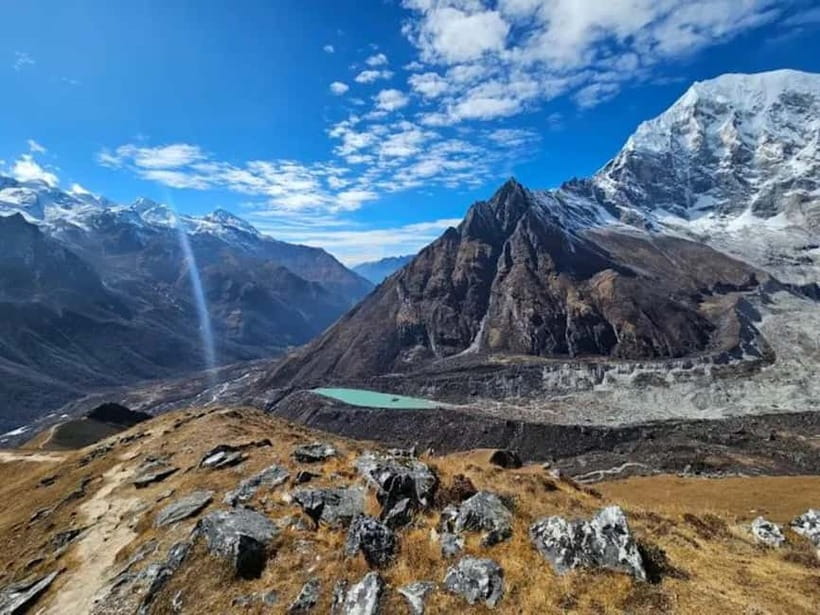
Langtang gives you a taste of Himalayan trekking without sending you into a long expedition. The route moves from river valleys and Tamang villages to high meadows beneath Langtang Lirung and Dorje Lakpa. I especially like the visit to Kyanjin Gompa and the local yak cheese factory, two stops that make this more than a mountain walk.
I also like the practical six-day format, with transport, permits, a licensed English-speaking guide, and teahouse stays arranged. The main consideration is the altitude: Kyanjin Gompa sits at 3,870 meters, and the optional Kyanjin Ri climb reaches 4,770 meters, so you need good fitness and must take altitude symptoms seriously.
Key points at a glance
- A six-day Himalayan route: Drive from Kathmandu to Syabrubesi, walk to Kyanjin Gompa, then return by the same valley route.
- Tamang and Tibetan culture: See traditional villages, monasteries, local mountain life, and a working yak cheese factory.
- Big mountain views: The route brings you close to Langtang Lirung, Dorje Lakpa, and other high peaks.
- Optional Kyanjin Ri climb: Add a strenuous high viewpoint from Kyanjin Gompa if your energy, weather, and guide’s advice allow.
- Useful inclusions: National park permit, TIMS card, teahouse lodging, local bus transport, guide, and first aid kit are covered.
- Watch the fine print: Full-board meals are included only if that option is selected, and a porter requires an added fee.
Why Langtang works for a short Himalayan trip
You do not need two weeks to reach a proper mountain village in the Langtang Valley. This trip uses six days to take you from Kathmandu into a quieter corner of Nepal, where the trail follows the Langtang River and passes through forest, waterfalls, stone settlements, and high pasture.
The route is especially good if you want scenery and local culture in equal measure. You will not simply walk from one sleeping place to another. The changes in altitude and vegetation are part of the story. Lower sections feel warm and wooded, while the upper valley becomes more open, colder, and more exposed.
I would describe the trek as moderate, but that word needs context. The daily walking is manageable for someone with good physical fitness, yet the route climbs steadily and reaches nearly 3,900 meters. The optional Kyanjin Ri ascent is a serious extra effort. You should arrive ready to walk uphill for several hours, not treat this as a casual sightseeing outing.
At $179 per person, the trip offers good value for a guided Nepal trek, particularly because permits, local transport, teahouse accommodation, and an English-speaking guide are included. Read the meal and porter details carefully. Full-board meals are included only with the selected meal option, and the listed porter service requires an add-on, with one porter assigned for two trekkers.
More Langtang Treks in Kathmandu:
- Langtang Valley Trek
★ 5.0 · 140 reviews - Langtang Valley Trek
★ 5.0 · 61 reviews - Langtang Valley Trek
★ 5.0 · 50 reviews
Day 1: Kathmandu to Syabrubesi, then Pahiro
The first day begins with a roughly six-hour drive from Kathmandu to Syabrubesi. This is local bus transport, not a private luxury transfer, so you should expect a practical and scenic ride rather than a quick highway journey.
The road carries you toward the Langtang region, with mountain scenery appearing as you leave the capital behind. Once you reach Syabrubesi, the walking begins. The first trek takes about two hours, following forest paths and the Langtang River to Pahiro at 1,550 meters.
Pahiro is a useful first overnight stop because it keeps the opening walk fairly gentle after the long drive. You get your first feel for the trail without immediately pushing into high altitude. The tradeoff is that the day combines six hours on the road with a short trek, so it will still feel full.
Your accommodation is in a teahouse. These mountain lodges offer basic amenities and local meals, not hotel-style comfort. That simplicity is part of the appeal, but you should expect limited Wi-Fi and charging facilities. A power bank is a sensible item to pack.
Day 2: Forests, waterfalls, and the climb to Ghoda Tabela
From Pahiro, the trail heads toward Ghoda Tabela at 2,900 meters. You walk through green forest, pass waterfalls, and move through small settlements as the valley begins to feel more remote.
This is one of the days when the route’s changing vegetation becomes clear. The forest gives shade and a sense of enclosure, while breaks in the trees offer views into the valley and toward the peaks. The sound of moving water is a steady companion along parts of the trail.
The climb from 1,550 meters to 2,900 meters is substantial. Even though the day is described as moderate, you should not rush it. Walk at a pace that lets you speak without gasping, drink water often, and tell your guide if you develop a headache, nausea, unusual tiredness, or other discomfort.
Ghoda Tabela is not just a place to sleep. It is a natural stopping point before the higher part of the valley. The overnight stay breaks up the ascent and gives your body time to adjust before Kyanjin Gompa.
Day 3: Reaching Kyanjin Gompa at 3,870 meters
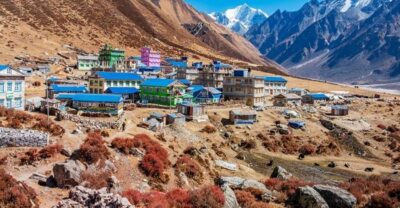
The walk from Ghoda Tabela to Kyanjin Gompa is the visual high point of the main route. The trail continues upward through the Langtang Valley, with mountain views becoming more prominent as the trees thin and the country opens.
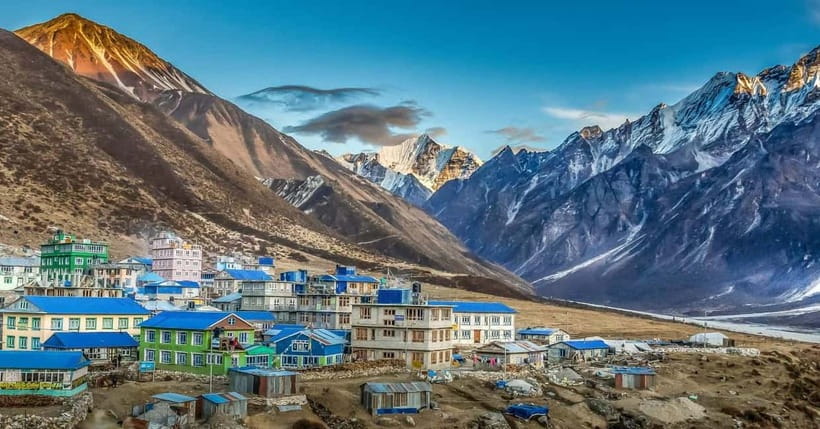
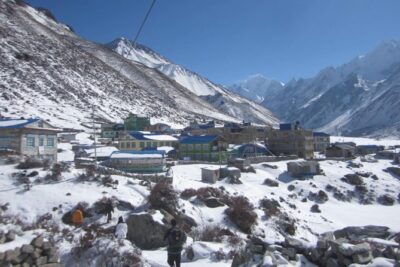
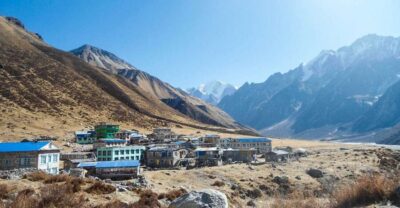
Kyanjin Gompa sits at 3,870 meters and serves as the main destination of the trek. It is a mountain village with a strong connection to Tamang and Tibetan traditions. You have time to visit local monasteries and see the yak cheese factory, which gives you a direct link to the food and working life of the valley.
The cheese factory is a particularly good detail in this itinerary. You are not only looking at peaks from a trail. You are seeing how local people use the mountain environment and livestock to make a living. It is the kind of small, grounded stop that makes a trek feel connected to place.
The altitude makes this day more demanding than the distance alone suggests. You may feel the thinner air when walking uphill, so keep your pace slow and let the guide set a sensible rhythm. The gradual ascent helps with acclimatization, but it does not remove the need for care.
Spend the night in a teahouse at Kyanjin Gompa. Facilities remain basic, and charging or Wi-Fi may be limited. Keep warm clothing, water, and essential items close at hand rather than buried in a large bag.
A few more treks around Kathmandu worth a look
- Kathmandu: 6-Day Limitless Langtang Trek
★ 5.0 · 21 reviews - 6 Days Poon Hill – Ghandruk Circuit Trek from Kathmandu
★ 5.0 · 10 reviews - Kathmandu: 6 Days Langtang Valley Trek with Kyanjin Ri
★ 5.0 · 7 reviews - From Kathmandu: 6-Day Langtang Valley Guided Trek
★ 5.0 · 2 reviews
Day 4: Kyanjin Ri or a slower morning in the high valley
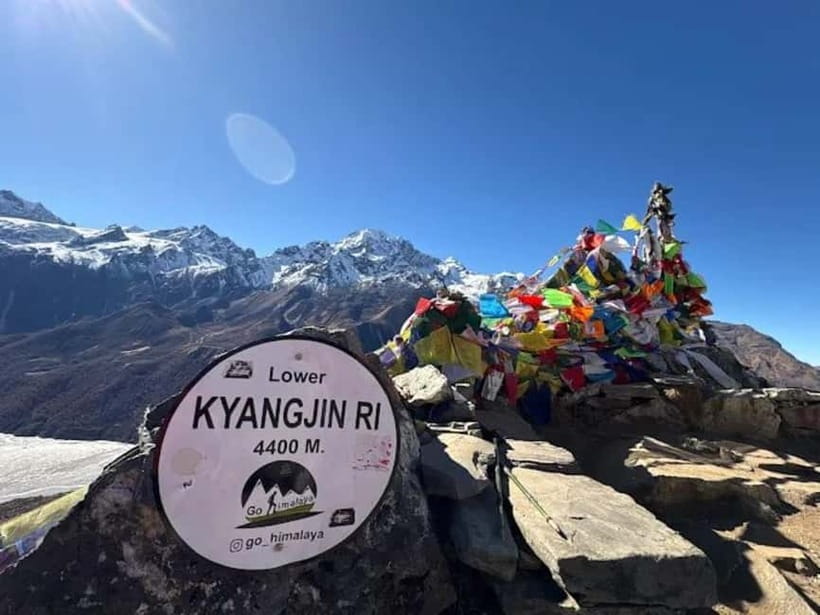
Day four gives you the trek’s biggest optional challenge. Kyanjin Ri rises to 4,770 meters and offers broad views of the Langtang peaks, including the high mountains around the valley. If you are fit, acclimatized, and feeling well, this can be the day that turns a fine trek into a memorable mountain outing.
The climb is optional for a reason. At this height, the air is thin, and the path can feel much harder than the lower trail. Your guide can help you judge the conditions and your energy. Do not attempt the summit simply because it appears on the schedule. A safe, enjoyable day at Kyanjin Gompa is better than forcing a high climb while unwell.
After the optional ascent, you return along the same route and continue down to Thangsyap at 3,200 meters. Descending gives your body a break from the highest altitude, although the downhill walking can be tough on knees and ankles.
If you skip Kyanjin Ri, you still have a worthwhile day. You can spend more time around Kyanjin Gompa, visit the monastery and cheese factory, and enjoy the mountain setting at a less punishing pace. The itinerary does not make the viewpoint a requirement, which is a useful feature for mixed-ability groups.
Day 5: Following the Langtang River back to Syabrubesi
The final trekking day follows the Langtang River downhill from Thangsyap to Syabrubesi at 1,550 meters. The route brings back the forests and lower valley scenery you saw near the start of the trek, but you will now recognize how far the trail climbed.
Descending usually feels easier on the lungs, though not always on the legs. Take care on uneven sections and avoid racing downhill. The river, woods, villages, and last mountain views provide a calm ending to the walking portion.
You spend the night in Syabrubesi, which means you do not have to finish the trek and immediately board a bus for Kathmandu. That overnight break is practical. It leaves room for a meal, rest, and a final evening in the valley before the return journey.
Day 6: The road back to Kathmandu
The last day is a drive from Syabrubesi to Kathmandu. You can use the ride to watch the mountain scenery change again, from the Langtang region toward the capital.
Because the journey takes several hours, your arrival time may depend on road conditions and the pace of local transport. This is not a flight connection day, so the plan is less stressful than it would be if you had to catch an international departure immediately afterward. Still, I would avoid booking an important same-day flight unless you have allowed plenty of extra time.
The return drive also gives the trip a clean shape. You begin by leaving Kathmandu for a trailhead, walk into the upper valley, then retrace your route to the road. It is a compact trek rather than a one-way crossing.
Culture along the trail
The Langtang Valley route has a strong cultural element without turning the walk into a staged village visit. You pass through Tamang communities, see traditional mountain settlements, and visit monasteries connected to Tibetan Buddhist practice.
Your English-speaking licensed guide is important here. A guide can explain what you are seeing, help with the daily pace, and support communication at teahouses. The experience provider is Nepal treks, but no individual guide’s name is supplied, so you should confirm the assigned guide before departure if that matters to you.
The local cheese factory at Kyanjin Gompa is a highlight because it is specific and hands-on. It helps you understand that the valley is not just a scenic backdrop. People live and work here, and the high pastures support local food production.
The two available ratings are both five out of five. One describes being in love with the experience and guide, while another praises the beautiful route, the local guide, and the attention given to local points of interest. Those comments match the strongest part of the trip: the quality of the guiding and the chance to notice details you could easily walk past alone.
What the $179 price really covers
The price is attractive for a six-day guided trek, but the value depends on which options you choose. Included services cover private airport transfers, Kathmandu to Syabrubesi transport by local bus, Langtang National Park entry, the TIMS card, teahouse accommodation, a licensed English-speaking guide, a first aid kit, government taxes, and service charges.
Full-board breakfast, lunch, and dinner are included if you select that option. If you do not, you need to budget separately for meals during the walk. Lunch and dinner in Kathmandu are not included.
A porter is available as an add-on, with one porter for two trekkers. If you want to carry only a small daypack, include that cost when comparing the total price. Without a porter, you should be ready to carry your own clothing, water, and personal gear.
You also pay for personal extras such as Wi-Fi, bar bills, hot showers, and other purchases. International airfare, visa fees, and mandatory travel insurance are outside the tour price.
For the right person, this is a solid budget package. You receive the permits and core arrangements that can be awkward to organize alone, while still traveling by local bus and staying in simple teahouses. It is not the right choice if you expect private vehicles, polished lodges, or hotel comforts.
When to go and what to pack
Spring, from March through May, and autumn, from September through November, are the recommended seasons. These months generally offer clear skies and pleasant temperatures, making it easier to enjoy mountain views and trail conditions.
The provided information does not specify a full packing list, but a few needs are clear. Bring clothing suitable for changing temperatures, sturdy walking footwear, a water bottle, sun protection, and a power bank. You should also carry any personal medication and keep your travel insurance details accessible.
Altitude preparation matters more than packing clever extras. Drink plenty of water, walk steadily, and tell your guide about any symptoms. The ascent is gradual compared with a rapid jump into high country, but Kyanjin Gompa and Kyanjin Ri are still high places.
Teahouse accommodation means you should set realistic expectations. You will have a bed and basic amenities, but Wi-Fi and charging may be limited. Hot showers can cost extra, and personal comforts vary from one stop to another.
Who should book this trek
I would choose this route if you want a short Himalayan trek with a clear itinerary and a strong mix of scenery and culture. It suits couples, solo trekkers, families with good fitness, and first-time trekkers who want a guide rather than a fully independent trip.
It also works well for someone with limited time in Nepal. You reach a high mountain valley, visit Kyanjin Gompa, and return to Kathmandu in six days. The route is described as quieter than more crowded Himalayan options, which may appeal if you want peaceful mountain walking.
I would think twice if you dislike long bus rides, basic lodging, or changing weather. I would also avoid booking it without preparation if you are not comfortable with sustained uphill walking. The price is low, but the trek is not effortless.
Cancellation is flexible up to 24 hours before the start for a full refund, and you can reserve now and pay later. Pickup is included, though you should contact the provider if you are staying outside the listed pickup area.
Should you book the Langtang Valley trek?
Book it if you want a compact, guided Himalayan trek with local culture, mountain scenery, and a reasonable price. The strongest reasons are the excellent route variety, the visit to Kyanjin Gompa and its yak cheese factory, and the support provided by a guide who can point out local details and help manage the ascent.
Before paying, confirm three things: that your booking includes full-board meals, the cost of the porter add-on, and the pickup arrangements. If you are fit, comfortable with teahouse conditions, and prepared for altitude, this six-day route gives you a lot of Nepal in a short time.
FAQ
How difficult is the Langtang Valley trek?
The trek is rated moderate and is suitable for people with good physical fitness. The route reaches 3,870 meters at Kyanjin Gompa, and the optional Kyanjin Ri climb reaches 4,770 meters.
Is Kyanjin Ri included in the itinerary?
Kyanjin Ri is optional. You can attempt the climb from Kyanjin Gompa if you feel fit and conditions are suitable, then return to the route toward Thangsyap.
What accommodation is provided?
You stay in teahouses during the trek. They offer basic amenities and local meals, with limited Wi-Fi and charging facilities.
Are meals included in the price?
Breakfast, lunch, and dinner during the trek are included if you select the full-board option. Lunch and dinner in Kathmandu are not included.
Is a porter included?
A porter is available as an add-on, with one porter for two trekkers. The standard inclusions list does not include the porter unless you add that service.
What is the best season for this trek?
The recommended seasons are spring, from March through May, and autumn, from September through November. These periods generally bring clear skies and pleasant temperatures.
Just added around Kathmandu
- Everest Base Camp Trek★ 5.0 · 3 reviews
- Everest Base Camp Trek★ 5.0 · 7 reviews
- 15 Days Private Everest Base Camp Trek★ 5.0 · 30 reviews
- Everest Base Camp Trek★ 5.0 · 57 reviews
- 14 Days of Adventure Trekking to Everest Base Camp★ 5.0 · 2 reviews
- 14-Day Everest Base Camp Trek★ 5.0 · 20 reviews
- 14 Days Everest Base Camp Trek★ 5.0 · 4 reviews
- From Kathmandu: Private 14-Day Everest Base Camp Trek★ 5.0 · 20 reviews
Langtang Valley Treks, compared.
Trekking in Annapurna/Langtang/Everest/Upper Mustang regions
Read our review →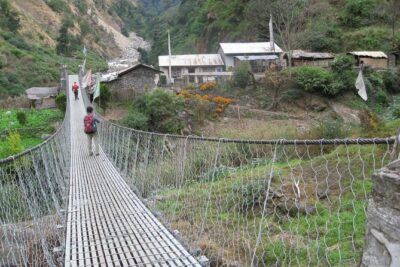
7 Days Langtang Valley Private Trek From Kathmandu
Read our review →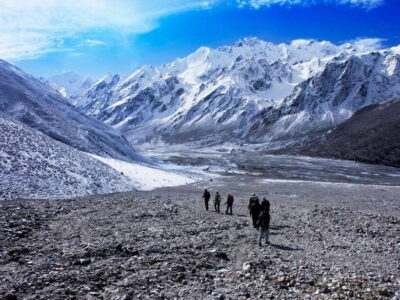
Browse the lists this trek appears in