
Review · KATHMANDU
12 days A Perfect hiking tour to Annapurna Base Camp via Ghorepani and Poon Hill
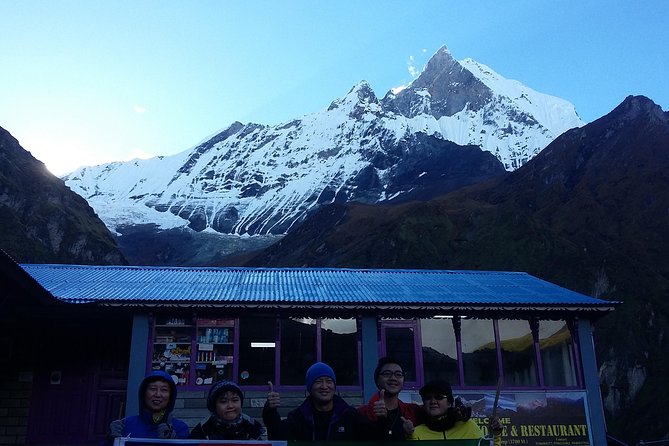
Annapurna Base Camp is the prize here, but Poon Hill sunrise may be the moment you remember most. You climb from lowland villages through rhododendron and oak forests into a mountain bowl surrounded by peaks over 7,000 meters high. It is a classic Himalayan route with a clear sense of progress each day.
I like the steady build from easy trails near Nayapul to the high sanctuary, and I like that meals, lodging, a guide, porter support, transfers, and most transport are bundled into the $1,343 price. The personal guiding also matters. Chhabi has led repeat clients on several Nepal treks, and the company receives especially warm praise for guide and porter care.
The main consideration is physical effort. Altitude and steep stairs make this more than a scenic walk, especially above Deurali. Also, the transport details need checking before you pay: the inclusions mention a Kathmandu to Pokhara flight, while the day-by-day plan describes six-hour tourist-coach rides.
Key points to know before booking
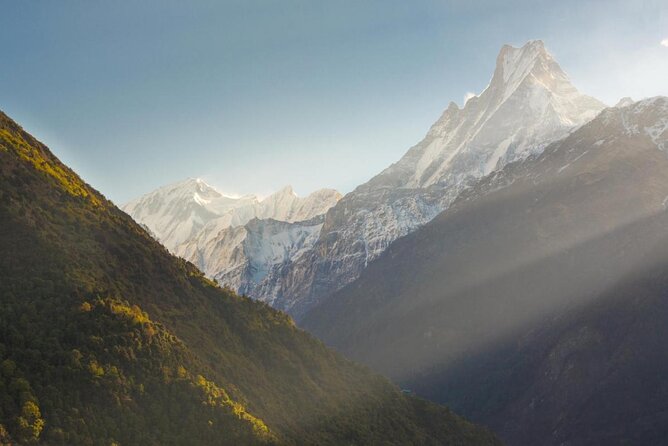
- Poon Hill at 3,210 meters: Rise early for a sunrise view toward Dhaulagiri, Annapurna South, and Machhapuchhre.
- Annapurna Base Camp at 4,130 meters: The trail ends in the Annapurna Sanctuary, a high valley ringed by massive peaks.
- A private 12-day trip: Only your own group participates, with a professional guide and one shared porter for every two people.
- Village-to-mountain variety: The route passes through Birethanti, Ulleri, Ghorepani, Gurung villages, bamboo forest, and high alpine country.
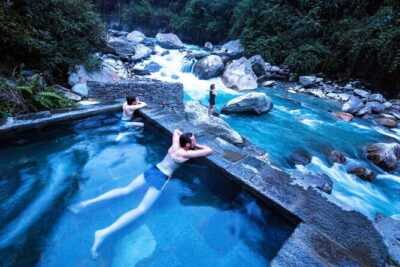
- Recovery at a natural hot spring: Day 10 gives your legs a welcome break beside the Modi River.
- Good package value with one transport question: Meals, lodging, transfers, fees, and support are included, but confirm whether your Pokhara connection is by flight or bus.
From Kathmandu to Pokhara: a long first day
The trip begins at 7:15 a.m. in Kathmandu, with pickup and transport to Pokhara. The daily plan describes a six-hour tourist-bus ride, so you should expect a full travel day rather than an immediate start on the trail.
Pokhara is the practical gateway to the Annapurna region. The package includes accommodation at Hotel Kantipur or a similar property, with breakfast. You are not paying only for a walk in the mountains. The price also covers Kathmandu lodging at Kathmandu Suite Home or a similar hotel, airport pickup and drop-off, transport, taxes, and handling charges.
One detail deserves a direct question before booking. The included-services list says flight Kathmandu to Pokhara, while the itinerary says you will take a tourist coach to Pokhara and later return by private vehicle or coach. That may reflect an itinerary change or a standard description that was not updated. Ask the operator to confirm the actual transport, departure times, and whether a flight supplement applies.
More Annapurna Treks in Kathmandu
- Annapurna Circuit Trek with Tilicho Lake
★ 5.0 · 368 reviews - Annapurna base camp trek 5 Days
★ 5.0 · 252 reviews - 14-Day Private Annapurna Base Camp Trek
★ 5.0 · 180 reviews
Nayapul to Tikhedhunga: an easy introduction
After breakfast on day two, you drive about 45 kilometers from Pokhara to Nayapul. The road journey takes about an hour, and the walk begins beside the Modi Khola.
A short walk brings you to Birethanti at 1,065 meters. This large village has shops and tea houses, giving you a first look at the practical rhythm of the route. From there, the trail follows the Bhurungdi Khola and climbs gradually toward Hille at 1,495 meters.
The day ends at Hille or Tikhedhunga, with Tikhedhunga at about 1,525 meters. This is described as a short and relatively easy walking day, which is useful after the transfer from Pokhara. You get time to settle into the pace, test your boots, and learn how your body handles repeated uphill walking.
Ulleri and Ghorepani: stairs, forests, and the first big views
Day three is tougher. Leaving Tikhedhunga, you make a steep climb to Ulleri, a large Magar village at 2,070 meters. The route then becomes gentler as it passes through oak and rhododendron forest toward Banthanti at 2,250 meters.
The trail continues to Nangethanti at 2,460 meters before the final hour to Ghorepani at 2,775 meters. This is a proper uphill day, not a gentle stroll. Pace yourself early, especially on the climb from Tikhedhunga.
Ghorepani is important because it prepares you for Poon Hill and gives you the first strong sense that the high mountains are getting close. The forest section also changes the feel of the trek. You are no longer simply walking between lowland villages. You are gaining height through mountain woodland, with the weather and temperature likely to shift as you go higher.
Poon Hill sunrise and the walk to Tadapani
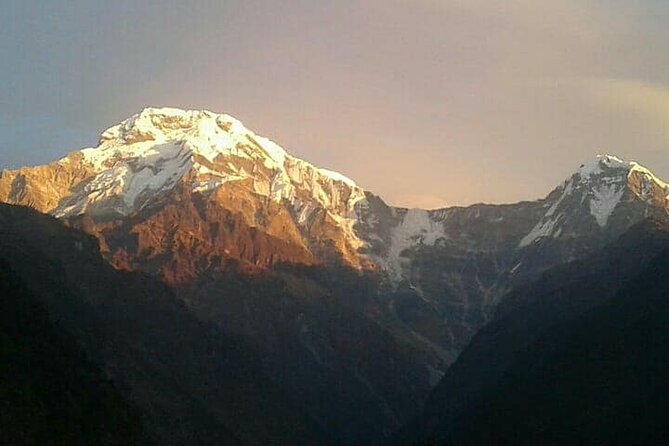
Day four starts before breakfast. You climb to Poon Hill at 3,210 meters for sunrise, then return to Ghorepani for a hot meal before continuing to Tadapani.
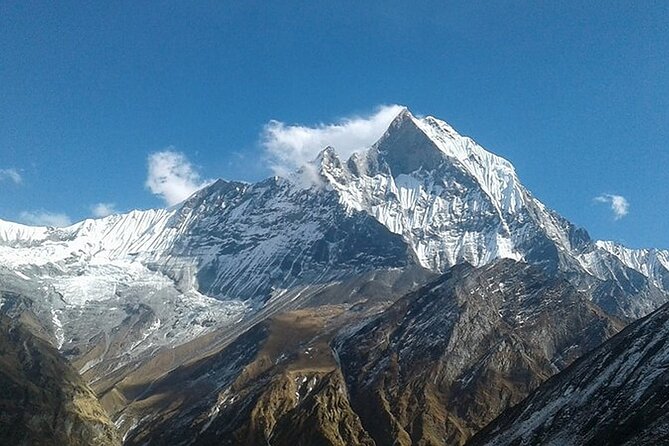
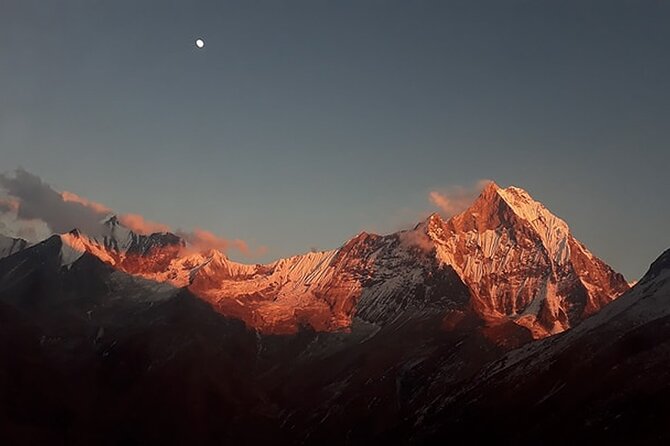
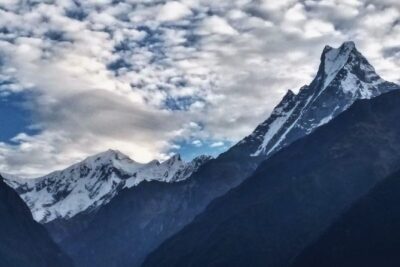
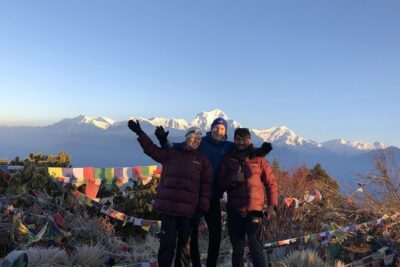
This early start is worth understanding. Poon Hill is not the highest point of the trek, but it is one of the best places for a broad mountain view. The route offers sightlines toward Dhaulagiri, Annapurna South, and Machhapuchhre, also known as Fishtail. Sunrise timing and visibility depend on weather, so no guide can guarantee a clear panorama.
After breakfast, you keep walking to Tadapani. The day combines a pre-dawn climb, a descent back to the lodge area, and another stretch of trail. It is a full day, even if the Poon Hill section itself is short. Bring a headlamp and keep warm clothing accessible for the early morning.
More Poon Hill Treks in Kathmandu
- 4 Days Poon Hill Trek
★ 5.0 · 94 reviews - Ghorepani(Poonhill Trek)
★ 5.0 · 81 reviews - 4-day Poon Hill Trek
★ 5.0 · 74 reviews - Ghorepani Poon Hill Trek
★ 5.0 · 61 reviews
Tadapani to Chhomrong: a change in village culture
The fifth day begins with a steep descent through forest. The trail eases as you reach Gurjung, a village associated with the Gurung people, then continues more easily toward Chhomrong at 2,020 meters.
This section is valuable because the trek is not just a mountain-view trip. You pass through communities where the route is part of everyday life, and the guide can help you understand the local setting and the typical Nepalese way of life described by the operator.
The descent can be hard on knees, even though it does not gain much height. Trekking poles can be useful, but equipment is not supplied, so bring your own if you rely on them. Chhomrong marks the approach to the Annapurna Sanctuary and the more enclosed section of the route.
Bamboo forest and Deurali: the serious altitude begins
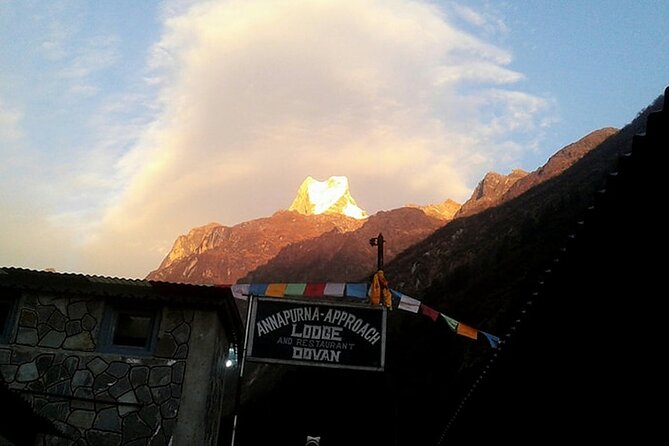
On day six, the trail drops to the Chhomrong Khola, then climbs again to Khuldighar at 2,380 meters. There is an Annapurna Conservation Area Project check post along the way. From there, you continue toward Dovan.
The pattern is typical of Himalayan trekking: lose height to cross a river, then regain it on the other side. That can feel inefficient, but it is part of the route’s character and keeps the walking varied.
Day seven continues through bamboo and rhododendron forest, passing Dovan, Himalayan Hotel, and Hinko before reaching Deurali. Deurali sits on a ridge above Hinko, and this stretch is described as particularly subject to avalanches.
That warning should not scare you away, but it does make weather and guide judgment important. Stay with the group, follow instructions, and accept that conditions may change the schedule. At this stage, you are also above 3,000 meters, so a moderate fitness level is not optional. Walk slowly, drink regularly, and tell your guide if you feel unwell.
Machapuchhre Base Camp and Annapurna Sanctuary
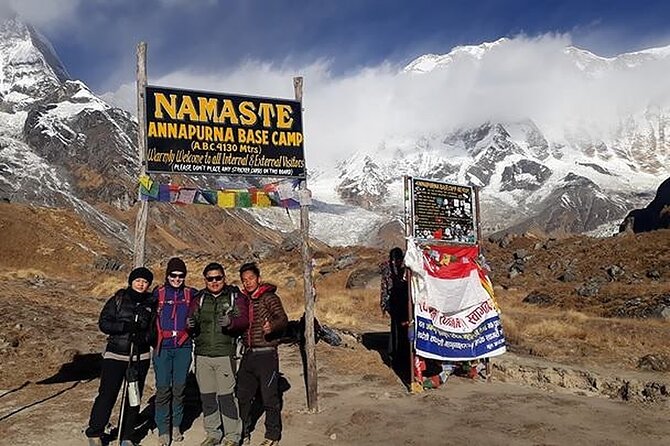
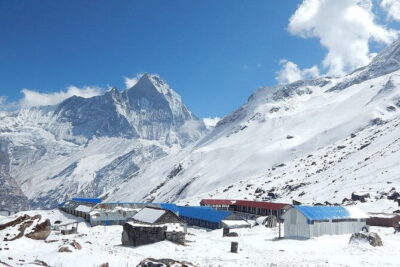
Day eight is the central achievement of the trek. You climb into an open valley and pass Machapuchhre Base Camp at about 3,700 meters. From there, the mountains surround the route, creating the enclosed setting known as the Annapurna Sanctuary.
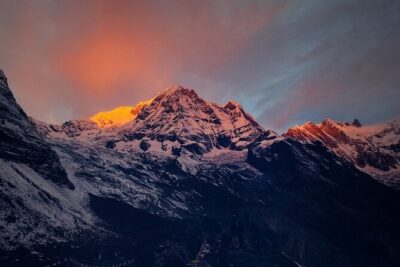
Annapurna Base Camp sits at 4,130 meters. The appeal is not just reaching a sign or a camp building. You are standing inside a high mountain bowl with Annapurna peaks rising around you, including summits over 7,000 meters. The scenery becomes more dramatic because the valley narrows the view and makes the surrounding walls feel close.
This is also the day when altitude matters most. The itinerary allows time at base camp, but it does not list a separate acclimatization day. That makes the gradual rise through the previous week especially important. You should be prepared for cold, basic high-altitude accommodation, and a slower pace than at lower elevations.
Sleeping-bag hire is not included, and trekking equipment is your responsibility. Confirm what bedding is available at the lodges and bring or rent suitable cold-weather gear before leaving Kathmandu.
Returning from base camp and resting by the river
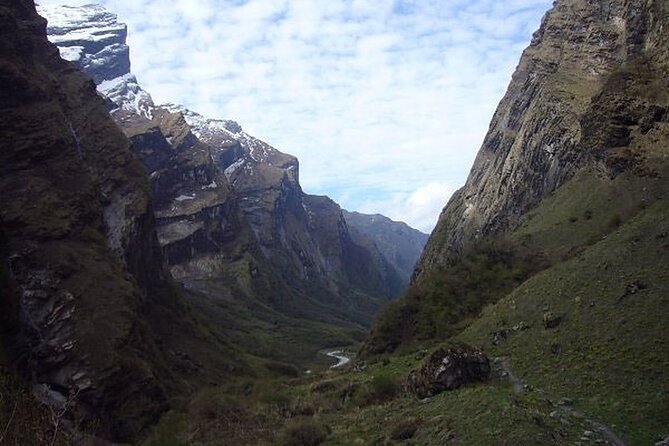
On day nine, you take in the Annapurna views in the morning, eat breakfast, and retrace the trail to Dovan. The return walk is not simply an easy version of the ascent. Descending can be tiring after the highest point, and uneven ground still demands attention.
Day ten is designed as a recovery day after the demanding mountain section. You relax in a natural hot spring beside the Modi River. That is a smart inclusion: a rest stop gives your legs time to recover before the final walk toward Nayapul and the return to Pokhara.
The itinerary does not name the exact hot spring or specify how long you stay there, so ask your guide for the day’s timing. Drinks and alcoholic drinks are not included and can be purchased separately.
Birethanti, Nayapul, and the journey home
On day eleven, you make an easy three-hour downhill walk to Birethanti and Nayapul, where the road connects with Pokhara. A 45-minute drive takes you back to the city.
This final walking day is useful because it gives you a clear end to the trail rather than dropping you directly from a remote mountain lodge into a vehicle. You return to Hotel Kantipur or a similar property and have a night in Pokhara before the final journey.
Day twelve brings breakfast and the return to Kathmandu. The itinerary describes a six-hour tourist coach, while the included-services section refers to private transport and also lists a flight on the outbound route. Confirm the final arrangement in writing. Long road travel can be tiring after a trek, but it is part of the stated schedule.
What the $1,343 price covers
At $1,343 per person, this is not a bare-bones trek. The cost includes Kathmandu and Pokhara accommodation, breakfast, lunch, and dinner according to the schedule. It also includes a professional guide, one shared porter for every two people, airport transfers, transport, fuel surcharge, landing and facility fees, taxes, and handling charges.
The food allowance is generous on paper: 12 breakfasts, 11 lunches, and 10 dinners. Drinks are extra, as are alcoholic drinks, travel insurance, and trekking equipment such as a sleeping bag.
The private format is a useful feature. Only your own group participates, so you avoid being attached to a large mixed party. At the same time, one porter shared between two people means you should pack sensibly. Keep your daily essentials in your daypack and ask the company about the porter’s weight limit.
The strongest personal touch comes from the guide and porter service. Chhabi has guided repeat clients on earlier Nepal trips, and one American pair credited their guide and porter with helping maintain comfort and safety from airport pickup through departure. That does not remove the need to judge the company yourself, but it suggests a well-established working relationship within the team.
Who should book this Annapurna trek
I would recommend this route to you if you want a serious but organized Himalayan trek with a clear goal. It suits people who like village walking, changing scenery, early starts, and a high mountain finish. It also works well for a private group that wants guide support without joining strangers.
The listed minimum age is eight, but the physical demands deserve more attention than the age rule. Children must be accompanied by an adult, and everyone should have moderate physical fitness. The steep Ulleri climb, repeated descents, long walking days, and 4,130-meter base camp make this a poor choice for anyone expecting a casual holiday.
The route also suits you if you want cultural contact without giving up logistical support. You will pass Magar and Gurung communities, stay along a well-used trekking corridor, and still have meals, lodging, transport, a guide, and porter assistance arranged.
Free cancellation is available if you cancel at least 24 hours before the local start time. Weather or minimum-group issues can also lead to a new date or full refund. That flexibility is useful in Nepal, where mountain conditions can affect plans.
Should you book it?
Book this trek if the combination of Poon Hill sunrise and Annapurna Base Camp matches what you want from Nepal. The route has a strong rhythm: easy beginning, steep forest climbs, cultural villages, high mountain views, a demanding summit section, and a hot-spring rest day.
Before booking, confirm the Kathmandu to Pokhara transport, ask what sleeping gear is available, and make sure your insurance covers trekking at 4,130 meters. If you are fit, comfortable with basic mountain conditions, and willing to walk several hours most days, the package offers solid value and attentive guide support. If you want short walks, flexible sleeping arrangements, or guaranteed clear weather, choose a less demanding trip.
FAQ
What is the duration of the Annapurna Base Camp trek?
The experience lasts approximately 12 days, beginning and ending at the meeting point in Kathmandu.
What altitude does the trek reach?
The highest point is Annapurna Base Camp at about 4,130 meters. Poon Hill reaches 3,210 meters, and Machapuchhre Base Camp is about 3,700 meters.
Is this a private tour?
Yes. Only your own group participates in the activity.
What meals are included?
The package includes breakfast, lunch, and dinner according to the itinerary. It lists 12 breakfasts, 11 lunches, and 10 dinners. Drinks and alcoholic drinks are not included.
Is a guide and porter included?
Yes. A professional guide is included, along with one shared porter for every two people.
Is trekking equipment included?
No. Trekking equipment, including a sleeping bag, is not included. You must arrange your own equipment or confirm rental options with the operator.
Just added around Kathmandu
- Everest Base Camp Trek★ 5.0 · 3 reviews
- Everest Base Camp Trek★ 5.0 · 7 reviews
- 15 Days Private Everest Base Camp Trek★ 5.0 · 30 reviews
- Everest Base Camp Trek★ 5.0 · 57 reviews
- 14 Days of Adventure Trekking to Everest Base Camp★ 5.0 · 2 reviews
- 14-Day Everest Base Camp Trek★ 5.0 · 20 reviews
- 14 Days Everest Base Camp Trek★ 5.0 · 4 reviews
- From Kathmandu: Private 14-Day Everest Base Camp Trek★ 5.0 · 20 reviews
Annapurna Base Camp Treks, compared.
Trekking in Annapurna/Langtang/Everest/Upper Mustang regions
Read our review →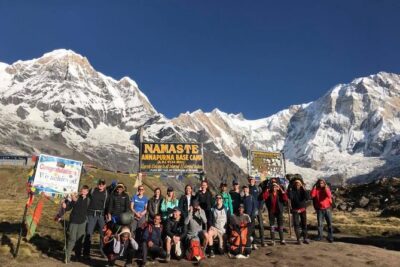
Kathmandu to Annapurna Base Camp (ABC) 5-Day Trek
Read our review →Browse the lists this trek appears in