
Review · CUSCO
6 day Rainbow Mountain x Ausangate Trek – FlashpackerConnect
Rainbow Mountain is only the finale. The real prize is the long route through the Ausangate region, where you pass turquoise lagoons, grazing alpacas, glacial valleys, hot springs, and high mountain passes far from Cusco’s usual day-trip circuit. This is a serious trek, not a quick photo stop.
I like the small maximum group of eight, which should make camp routines and pacing easier, and I like that pack horses carry up to 6 kilograms of your gear. The five nights of camping, meals, transport, guide, permits, sleeping bag, and first-aid equipment also make the $1,050 price easier to understand. The drawback is equally clear: you spend several days above 4,200 meters, with two passes around 5,051 meters and one at 5,130 meters.
Key points before you book
- Ausangate is the main event: Rainbow Mountain comes after five days of high-altitude trekking.
- The route reaches 5,130 meters: You need strong fitness and time to adjust to altitude.
- Pack horses carry up to 6 kilograms: You still need a personal daypack for essentials.
- Upis hot springs soften the first day: It is a welcome way to relax after transport from Cusco.
- Camping is comfortable but basic: Tents, sleeping bags, meals, tea, snacks, and a portable toilet are included.
- The cancellation terms are strict: The experience is non-refundable unless the operator cancels for lack of minimum numbers.
Why this six-day route is different from a Rainbow Mountain day trip
Most people who visit Rainbow Mountain make a long day of it from Cusco. This trip takes the slower, harder approach. You walk for five days through the Ausangate area before reaching the famous striped mountain, so the final viewpoint feels like part of a larger journey rather than an isolated stop.
The route is built around the Nevado Ausangate massif, one of the major high peaks in the Cusco region. Your views change constantly: broad valleys, ice-covered peaks, colored hills, moraine, alpacas, llamas, and small farming communities. You may also spot condors, vicuñas, or Andean chinchillas, though wildlife is never guaranteed.
The group size matters here. With no more than eight people, your guide can keep a closer eye on pace, meals, gear, and altitude symptoms than on a large bus-based outing. An English and Spanish-speaking guide leads the trek, while horsemen and pack horses carry camping equipment and your duffel.
You should still think of this as a demanding expedition. The advertised hiking days reach six to eight hours, and the highest passes are above 5,000 meters. A strong level of fitness is required, but fitness alone does not remove the need for acclimatization.
A few more treks around Cusco worth a look
- Kilimanjaro climb, Lemosho Route (6-day)
★ 5.0 · 129 reviews - Kilimanjaro climb, Marangu route (6-day)
★ 5.0 · 72 reviews - Singalila Ridge Trek from Darjeeling – 6 Days
★ 5.0 · 56 reviews
Day 1: Cusco to Upis and its hot springs
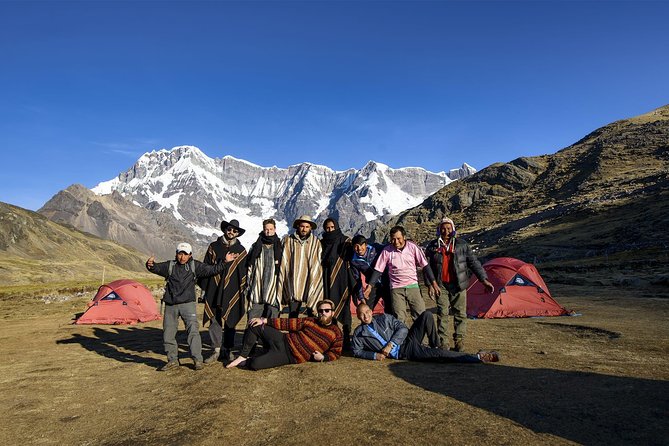
Pickup begins early, with the stated start time at 6:00 am. Private transport takes you from Cusco to Tinqui, the trailhead area, where you eat lunch while your personal gear and camp supplies are loaded onto horses.
The first walking section lasts only two to three hours. That short opening is useful because the altitude rises quickly, and you can begin adjusting without immediately facing a long climb. Camp is at about 4,200 meters, or 13,780 feet, near Upis.
The best feature of the first afternoon is the hot springs. After transport and a short hike, you can soak, drink coca tea, and loosen your legs before dinner. It is a sensible start to a trek that becomes much tougher later.
Do not mistake the short hiking time for an easy day overall. You are sleeping high, and your first night may be cold. Pack warm layers, a hat, gloves, and a water bottle where you can reach them. Your duffel is carried by horse, but you need your own daypack for water, rainwear, snacks, and anything needed during the walk.
Day 2: Seven lagoons and a camp beneath the high peaks
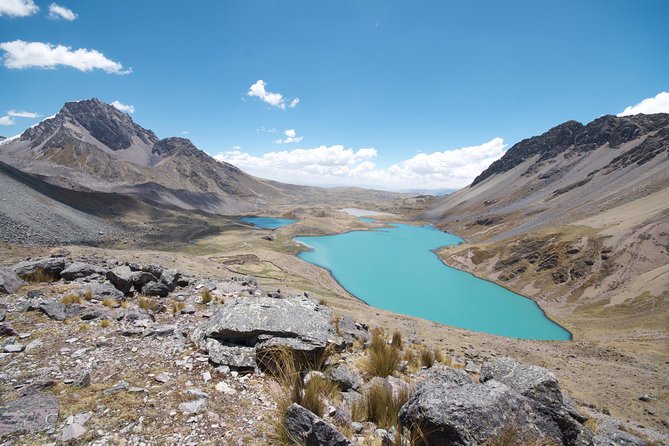
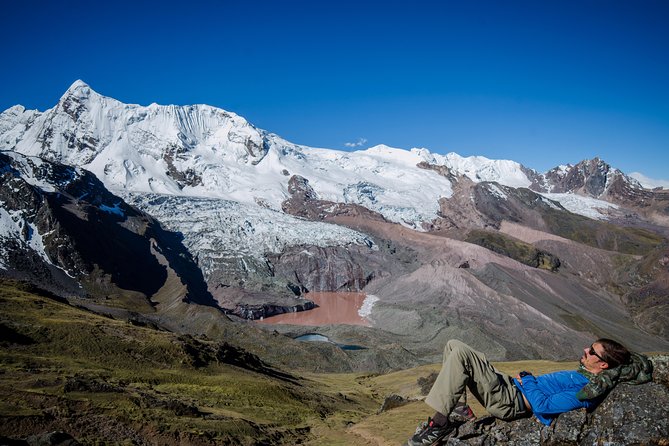
The schedule starts early, with coca tea or coffee delivered to your tent at 5:00 am, followed by breakfast. You then walk about five hours and cover roughly 10 kilometers toward the seven lagoons of Ausangate.
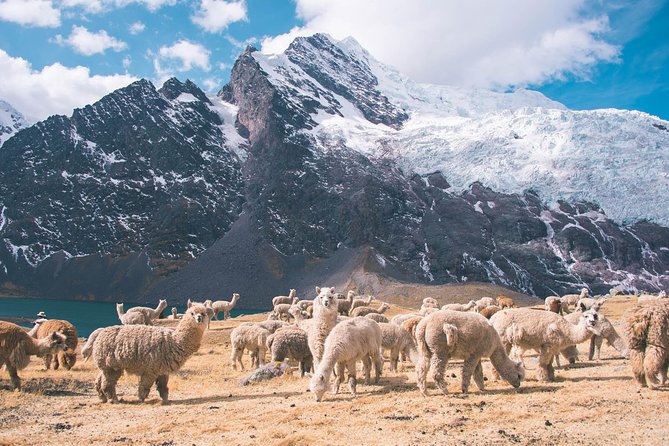
This is one of the route’s most rewarding days. The lakes come in different shades and sit among some of the highest mountains in the area. You also pass farmers and alpacas, giving the walk a stronger connection to daily life in the Andes than a quick viewpoint visit.
Camp is at Ninaparayuc. The crew sets up your tent, prepares lunch and dinner, and gives you time to rest or walk around the nearby lakes. That support makes a real difference after a morning at altitude. You are not spending your evening cooking or hauling a full load.
The day is still physically demanding. Five hours may sound modest, but high altitude slows every climb and makes recovery less predictable. Keep your pace steady, drink regularly, and tell the guide early if you feel unwell. The route includes a first-aid kit and oxygen tank, but those are safeguards, not substitutes for taking altitude symptoms seriously.
Day 3: Qampa Pass, moraine, and chinchilla country
Day three is one of the hardest sections. You climb to Qampa Pass at 5,051 meters, then descend into the Qampa Valley. The reward is a broad view toward Ausangate, with glaciers and llamas spread across the valley below.
The full walking day lasts seven to eight hours and covers about 14 kilometers. After the pass, you stop for lunch at Surapampa, then continue down through ancient moraine toward Huchuy Phinaya camp.
The moraine gives the afternoon a different feel from the smooth lake country of day two. This is also the area associated with mountain chinchillas, sometimes described as Andean rabbits. You may pause to look for them and take photographs, but avoid expecting a wildlife show. The animals are small and sightings depend on luck.
Dinner at Huchuy Phinaya should feel well earned. This is a day where trekking poles, layered clothing, and a carefully packed daypack are especially useful. The route has uneven surfaces, so the operator does not recommend it for people with walking disabilities.
Same trailhead, a different route:
- Cusco: 4-Day Inca Trail to Machu Picchu with Accommodation
★ 4.8 · 432 reviews - From Cusco: 7 Lakes Ausangate Trek with Breakfast and Lunch
★ 4.8 · 360 reviews - Cusco: Machu Picchu 2-Day Inca Trail with Panoramic Train
★ 4.9 · 260 reviews - From Cusco: 2-Day Inca Trail to Machu Picchu
★ 4.2 · 244 reviews
Day 4: The highest pass at Palomani
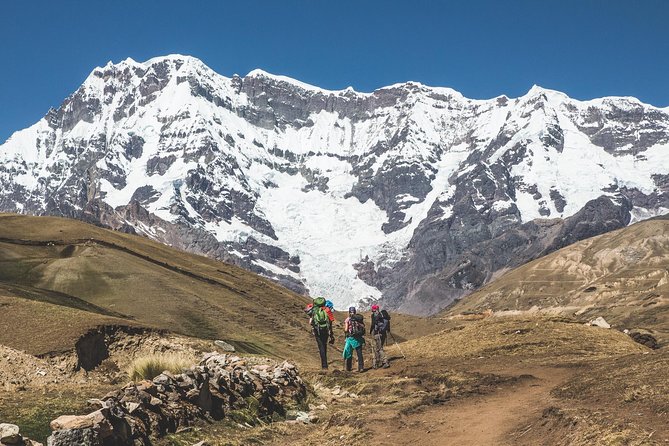
Day four brings the trek’s highest point. You climb to Palomani Pass at 5,130 meters, or 16,831 feet. That is higher than the previous day’s pass and likely the toughest single climb of the trip.
The route continues past colored hills and more glacial lagoons before dropping into a valley for lunch. After eating, you walk for about two more hours to Puca Cocha camp, located around 4,600 meters. The day totals seven to eight hours and about 14 kilometers.
This is where the six-day format earns its keep. You are not racing to a single viewpoint and returning to Cusco the same evening. The route gives you time to move through the mountains, stop for meals, and camp close to the next section.
Still, the camping altitude is a real consideration. At 4,600 meters, a warm sleeping bag and dry clothing are not luxuries. The included sleeping bag helps, but you should confirm that your personal clothing and rain protection are suitable for all-weather conditions.
Day 5: Red Mountain Valley and the first view of Rainbow Mountain
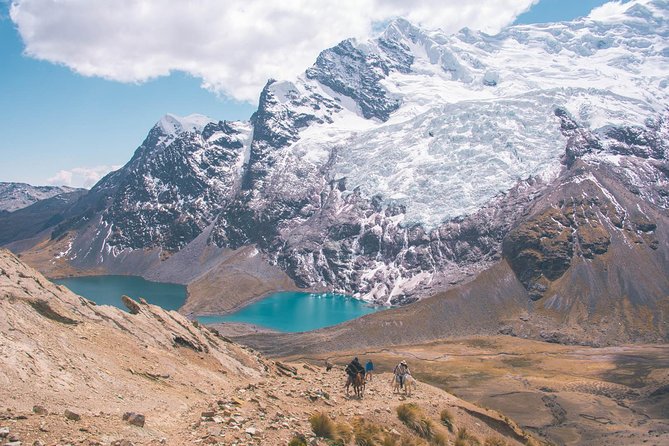
The fifth day covers about 13 kilometers and takes six to seven hours. You first climb Puca Cocha Pass, listed at 5,051 meters, then enter Red Mountain Valley.
The route provides views of Ausangate and colored glacial lakes before reaching Warmi Saya Pass. From here, you can see Rainbow Mountain in the distance. That first glimpse gives the final day a clear purpose, but it also shows why this is not a short walk from the road.
After descending, you reach camp for lunch and a long rest. The provided schedule describes this as the final camping stop before Rainbow Mountain. Tea time and dinner are included, so you can focus on eating, drying out, and preparing for the early start.
This day may be shorter than day three or day four, but it is not gentle. You climb another high pass after several demanding days. If your legs are tired, keep your pace controlled rather than trying to push ahead of the group.
Day 6: Rainbow Mountain, Red Valley, and the return to Cusco
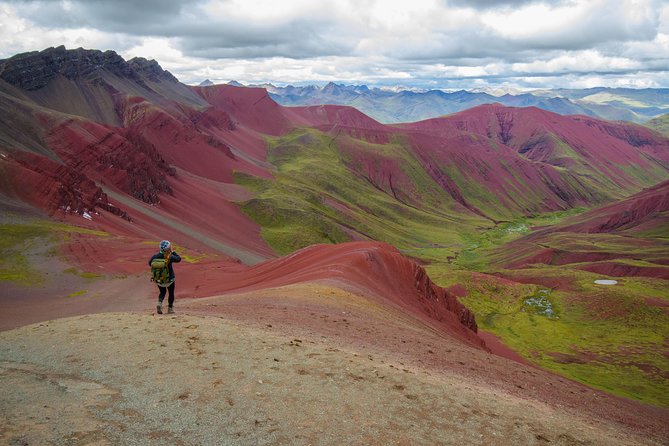
The final morning begins at 4:45 am, with coca tea delivered to your tent. You then walk for roughly 45 minutes to an hour, covering about 1 kilometer before reaching Rainbow Mountain.
You have around 30 minutes to one hour at the viewpoint, depending on walking speed and weather. That gives you time for photographs and for taking in the stripes across the mountain. Conditions can change quickly at this elevation, so keep a warm layer and rain protection in your daypack even if the morning begins clear.
The route then continues to Red Valley, which takes another 30 minutes. After that, you walk to the bus station, board the van, and return toward Cusco. The schedule places hotel drop-off at about 3:00 pm, after a farewell meal and goodbyes to the horsemen and chef.
The final day is short on foot but long in total timing. You have an early wake-up, a high-altitude viewpoint, a descent, transport, and a return to the city. Do not plan a tight evening flight or an important appointment without allowing for delays.
What the $1,050 price covers
At $1,050 per person, this is not a budget day trip. It is a supported six-day trek with private transport from and back to your Cusco hotel, a bilingual guide, camping equipment, pack horses, horsemen, a chef, food, private-land fees, and a portable toilet.
The included food is substantial: five breakfasts, five lunches, and five dinners, along with snacks and coffee or tea. A vegetarian option is available if you request it when booking. Meals matter more than usual here because you are walking for hours at altitude and cannot simply buy food along the route.
You also receive a duffel bag carried by horse, with up to 6 kilograms allowed per person. That reduces the weight on your back, but it does not eliminate the need for a personal pack. Carry water, sunscreen, sunglasses, rain gear, warm layers, personal medication, and anything you need during the day.
You must provide your personal trekking gear and backpack. A riding horse is not included, so do not book this assuming you can ride sections of the route. The first-aid kit and oxygen tank are included, but the requirement for strong fitness should be taken seriously.
Who should book this trek
I would choose this for an active person who wants the Ausangate region more than a quick Rainbow Mountain photograph. It suits someone comfortable with several nights in tents, early starts, basic camp facilities, and long days at extreme altitude.
It is also a good fit if you value practical support. The guide handles the route, the crew carries the bulk of the equipment, meals are prepared, and private transport removes the need to arrange separate transfers.
I would not choose it for a relaxed holiday, a first-ever high-altitude outing, or anyone who needs flexible cancellation. The experience operates in all weather, and the strict policy says your payment is non-refundable if you cancel or request a change.
There is one important booking warning. A single account describes the company canceling the trek only a couple of days before departure, after the person had built a three-week Peru plan around it. The published terms do allow a full refund if the operator cancels because the minimum number is not met, but you should still avoid building an inflexible itinerary around this trek until your departure is firmly confirmed.
Final call: is Rainbow Mountain by Ausangate worth it?
Book it if you want the long route, not just the famous viewpoint. The seven lagoons, hot springs, high passes, Ausangate views, pack-horse support, and small group are the real value, while Rainbow Mountain provides the finale.
Skip it if you dislike camping, struggle with altitude, need a soft schedule, or cannot accept strict cancellation terms. For the right person, $1,050 buys a well-supported high-Andes crossing. For the wrong person, six days above 4,200 meters will feel like work from the first morning.
FAQ
How long is the trek?
The experience lasts approximately six days, starting and ending in Cusco.
What time does pickup begin?
The stated start time is 6:00 am, with private transportation from your hotel in Cusco.
How high does the trek go?
The highest pass is Palomani at 5,130 meters, or 16,831 feet.
How much walking is required?
Daily hiking ranges from about 45 minutes to one hour on the final day to six to eight hours on the longer days. Distances listed range from 1 kilometer to 14 kilometers.
Is accommodation included?
Yes. Camping tents and sleeping bags are included for the trek, along with a portable toilet.
Are meals included?
Yes. The package includes five breakfasts, five lunches, and five dinners, plus snacks and coffee or tea. A vegetarian option is available if requested at booking.
Can I cancel for a refund?
The experience is non-refundable and cannot be changed for any reason. If the operator cancels because the minimum number of people is not reached, you will be offered another date or experience, or a full refund.
Just added around Cusco
- Classic Choquequirao Trek – 5 Days / 4 Nights★ 5.0 · 52 reviews
- Short Inca Trail 2 Day Hike to Machu Picchu with Permits & Train★ 5.0 · 51 reviews
- 2 Day Tour Throughout the Short Inca Trail to Machu Picchu★ 5.0 · 36 reviews
- Small Group: 4-Day Inca Trail Trek to Machu Picchu★ 5.0 · 33 reviews
- 5-Day: Salkantay Trek to Machupicchu and Humantay Lake★ 5.0 · 42 reviews
- 2 Day – Short Inca Trail to Machu Picchu – Group Service★ 5.0 · 30 reviews
- 5 Day – Salkantay trek to Machu Picchu – Group Service★ 4.5 · 27 reviews
- Salkantay Trek Standard 5D/4N★ 5.0 · 48 reviews
6-Day Experiences, compared.
6 Days Climbing Mount Kilimanjaro Machame Route
Read our review →
6-day Private Camping Safari Tour from Kilimanjaro Airport
Read our review →
6 Days best adventure kilimanjaro ,Tarangire ,Serengeti &Ngorongoro crater
Read our review →
Browse the lists this trek appears in