
Review · KATHMANDU
Annapurna Sunrise Trek
The big draw here is Poon Hill at sunrise, when Dhaulagiri, Annapurna I, Annapurna South, Machhapuchhre, and Hiunchuli catch the first light. You also get a useful slice of Nepal in one week: Kathmandu, the road to Pokhara, mountain villages, forest trails, and Gurung culture in Ghandruk.
I like the sensible route and the practical inclusions. A guide, porter support, meals during the trek, permits, transport, and airport transfers are covered, so you can focus on walking instead of sorting out each piece yourself. I also like the human scale of the trip, with time to meet local villagers and visit Ghandruk’s homes, museum, and monasteries.
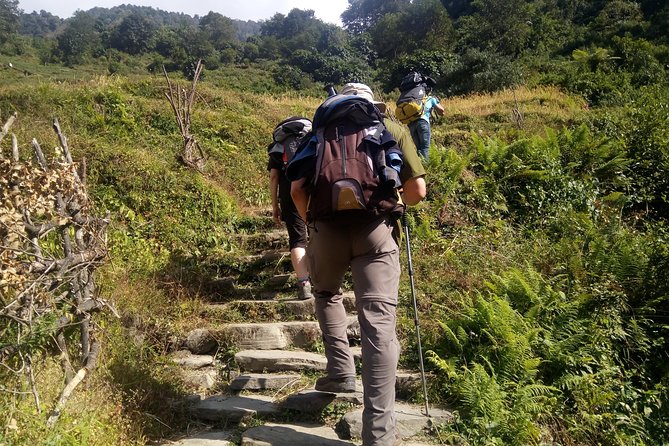
The main consideration is that this is called a short and easy trek, but moderate fitness is still needed. The stone steps up from Nayapul to Ulleri, the climb to Ghorepani, and the pre-dawn hike to Poon Hill will test your legs. The seven-hour bus rides between Kathmandu and Pokhara also take up a fair amount of the trip.
Key points to know before booking
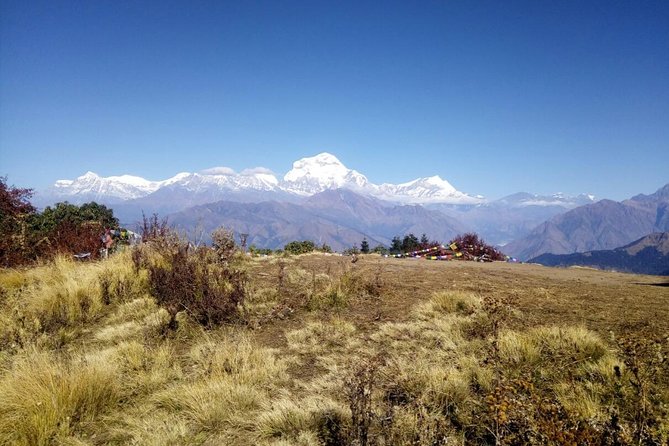
- Poon Hill sunrise at 3,210 meters: The early climb rewards you with views of Dhaulagiri, Annapurna, Fishtail, Hiunchuli, and nearby peaks.
- A seven-day Kathmandu-to-Kathmandu route: The schedule combines city time, two long bus rides, Pokhara, and four days of walking.
- Ghorepani at 2,800 meters: You sleep in a mountain village with views toward Dhaulagiri, Annapurna I, Annapurna South, Nilgiri, and Hiunchuli.
- Ghandruk’s Gurung culture: The final trekking day includes traditional houses, a museum, monasteries, terraces, forests, streams, and waterfalls.
- Useful trekking support: A professional guide, porter service, ACAP permit, TIMS card, and three daily meals during the trek are included.
- Private group format: Only your own group takes part, giving the operator room to adjust the pace and discuss what you want to see.
What the Annapurna Sunrise Trek is really like
At $769.24 per person, this is not just a mountain walk. The price covers the moving parts that can quickly become a nuisance in Nepal: airport transfers, road transport, a Pokhara hotel, a trekking guide, porter support, permits, taxes, and meals on the trail.
You still pay separately for Kathmandu accommodation and food, international flights, a Nepal visa, personal purchases, hot showers, battery charging, laundry, drinks, rescue insurance, and tips. That makes the price reasonable for a supported private trek, but you should budget for those extras before you arrive.
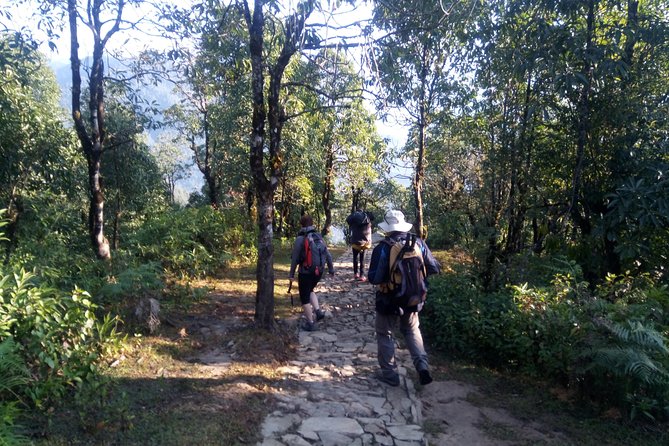
The route is best for someone who wants Himalayan scenery without committing to a long, remote expedition. You will not spend weeks at high altitude, yet the trek still gives you a proper mountain rhythm: early starts, stone paths, guesthouses, forests, village meals, and tired legs at the end of the day.
More Annapurna Treks in Kathmandu
- Annapurna Circuit Trek with Tilicho Lake
★ 5.0 · 368 reviews - Annapurna base camp trek 5 Days
★ 5.0 · 252 reviews - 14-Day Private Annapurna Base Camp Trek
★ 5.0 · 180 reviews
Day 1: Kathmandu arrival and a gentle cultural start
Your first day begins with pickup at Tribhuvan International Airport or another agreed location in Kathmandu. A private vehicle takes you to your hotel, and one of the operator’s staff members explains the plan.
After you refresh and eat, the schedule includes a visit to Swoyambhunath Chaitya near Thamel. This gives you an early look at Kathmandu before the walking begins. The evening orientation, held while exploring the streets around Thamel, is a useful chance to confirm the route, ask about meals and gear, and settle any last-minute questions.
The hotel and food in Kathmandu are not included, so check exactly what your arrival package covers. Airport pickup is included, but you should confirm the meeting details in advance, especially if your flight arrives late or changes.
Day 2: Seven hours from Kathmandu to Pokhara
The tourist bus to Pokhara leaves after breakfast and takes about seven hours. This is a long road day, but it helps you see how quickly Nepal changes outside the capital.
The drive passes terraced fields, forest, rocky gorges, rivers, and towns associated with different ethnic communities. It is not a fast transfer, and road conditions can affect the timing, but the scenery makes the journey part of the experience rather than dead time.
Once you reach Pokhara, you check into a hotel on a bed-and-breakfast basis. The free time is intended for Phewa Lake, where you may go boating and look for reflections of Machhapuchhre and the Annapurna range. Pokhara is also a useful pause before the walking starts, giving you one evening to rest and organize your daypack.
I would keep this evening fairly calm. The next day includes a road transfer and a climb, so Pokhara is better used for a relaxed meal and an early night than for a packed sightseeing schedule.
Day 3: Nayapul to Ulleri, with a serious first climb
The morning drive from Pokhara to Nayapul takes about 90 minutes and covers roughly 42 kilometers. At Nayapul, around 1,060 meters, you begin walking toward Birethanti and the Modi Khola area.
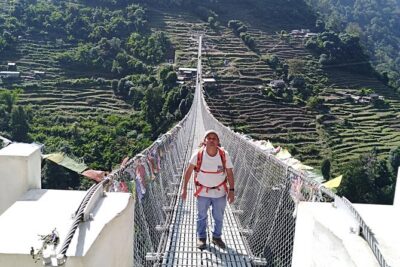
The trail passes through forest and crosses suspension bridges and the Tikhedhunga Khola. Lunch is planned at Ramghai, giving you a break before the climb toward Ulleri.
Ulleri sits at about 1,960 meters, and reaching it involves a substantial ascent. This is where the description of the trek as short and easy needs a little context. You do not need technical mountaineering skills, but you do need steady legs and patience on uphill stone steps.
The first day combines driving and roughly six hours of travel and walking. Expect to feel the change from sightseeing to trekking. A small daypack, water, rain protection, and walking shoes you trust will matter more than fancy equipment.
More Sunrise Treks in Kathmandu
- Ghorepani Poon Hill Sunrise Trek
★ 5.0 · 21 reviews - 5-Day Sunrise Tour in Kathmandu Near Everest
★ 5.0 · 12 reviews - Ghorepani Ghandruk Trek ( Poon Hill circuit, Annapurna sunrise view trek)
★ 5.0 · 11 reviews - Kathmandu: Nagarkot Sunrise, Mt. Everest Himalayas View Tour
★ 4.2 · 6 reviews
Day 4: Ulleri to Ghorepani through forest and high views
The climb continues from Ulleri to Ghorepani, taking about five and a half hours. You pass Banthanti, cross two small streams, and continue through forest before reaching Nangethanti for lunch.
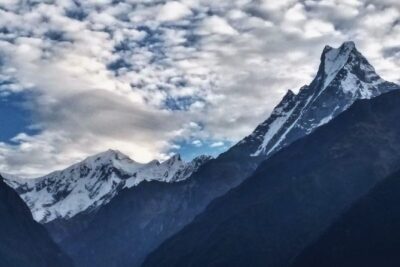
This is one of the prettiest walking days. The trail brings views of Machhapuchhre and green hills, while rhododendron forest adds color in season. The route does not simply point straight at the peaks all day. It alternates between enclosed woodland, village sections, and open points where the mountains appear across the valley.
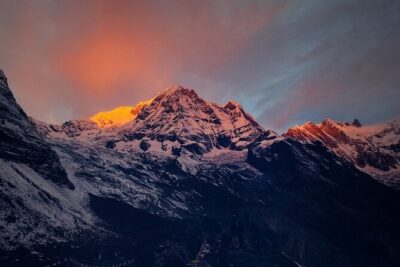
Ghorepani sits at approximately 2,800 meters. From here, the mountain panorama includes Dhaulagiri at 8,167 meters, Annapurna I at 8,091 meters, Annapurna South, Tarke Kang, Nilgiri, and Hiunchuli.
The altitude is not extreme, but it is high enough to make the climb feel harder than the distance suggests. Take the afternoon slowly, drink water, and prepare for an early wake-up. The best part of the route is still ahead, and Poon Hill requires a pre-dawn start.
Day 5: Poon Hill sunrise and the walk to Tadapani
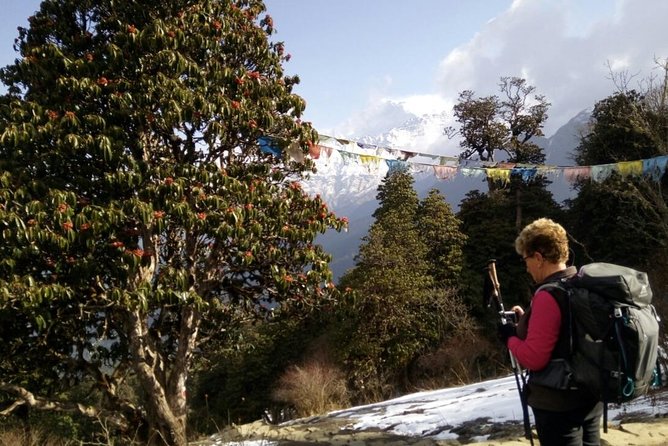
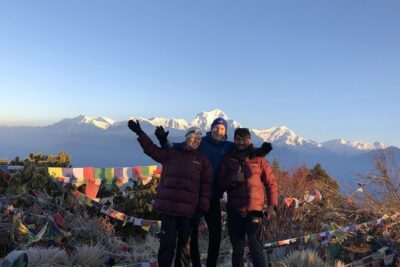
This is the central day of the trip. You leave before dawn and climb to Poon Hill, at about 3,210 meters, to see the sun rise over the Himalayas.
The viewpoint looks toward Dhaulagiri, Annapurna I, Annapurna South, Machhapuchhre, Hiunchuli, Thapa Peak, and neighboring summits. The appeal is not only the number of peaks. It is the changing light, as the ridges move from dark outlines to warm color.
The early start is cold and the path can be tiring, especially after the climb to Ghorepani the day before. Bring warm layers and keep your headlamp or other light ready. The timing is set around sunrise, so this is not a morning for sleeping in.
After returning to Ghorepani for breakfast, you continue toward Tadapani through naturally wooded trails. The full walking day is about six and a half hours, depending on pace and stops. This is a demanding schedule, but it gives you the main reward early and then moves you onward instead of returning to the same lodge.
Tadapani is the night stop after the sunrise walk. By then, a hot shower, charging a battery, or a cold drink may cost extra, so carry enough cash for small personal expenses.
Day 6: Forest paths, Ghandruk, and the return toward Pokhara
The trail from Tadapani descends toward Ghandruk through quiet forest. The route includes streams, waterfalls, and the possibility of seeing monkeys. It is a pleasant change from the more uphill focus of the earlier days.
Ghandruk gives this trek more than mountain views. The village is associated with Gurung culture and includes traditional houses, terraces, a museum, and monasteries. This is the place to slow down and pay attention to the details around you rather than rushing from one viewpoint to the next.
After exploring Ghandruk, you continue down to Nayapul. The day includes about five and a half hours of trekking followed by roughly 90 minutes of driving to Pokhara. The published schedule describes an overnight at Nayapul after a final meal, while the route also includes the drive to Pokhara, so confirm the exact night’s accommodation with the operator before departure.
This is the one itinerary detail I would clarify in writing. The overall trip is presented as seven days, and the schedule returns you to Pokhara before the final bus to Kathmandu. Knowing where you sleep on this night prevents an avoidable surprise.
Day 7: The long return to Kathmandu
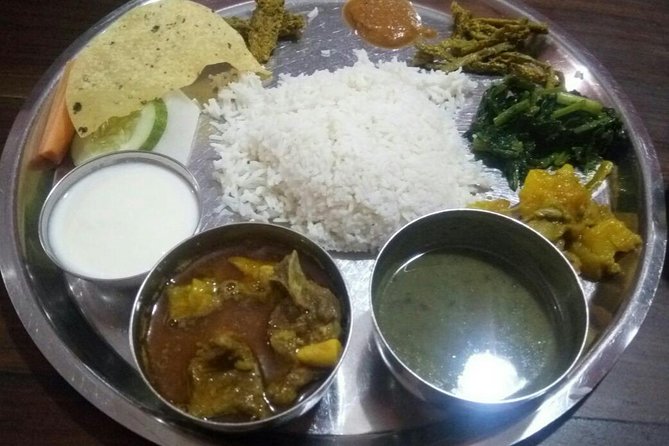
The tourist bus back to Kathmandu takes about seven hours. After four days on foot, the ride gives you time to watch Nepal pass by again, though it can feel long after the physical effort of the trek.
The plan includes a farewell dinner at a Nepali restaurant in Kathmandu. If you have energy, you may use spare time for places such as Pashupatinath Temple or Durbar Square, but the schedule may not leave much room for a full visit.
Airport drop-off is included in a private vehicle, though you should confirm the timing if your international flight leaves soon after the bus reaches Kathmandu. A same-day road transfer and flight connection would leave little room for delays.
Guides, porters, and the private format
A professional trekking guide leads the route, and porter support is arranged at a ratio of one porter for two trekkers. The price also covers insurance for the guide and porters.
This arrangement is valuable because your porter carries the main baggage while you walk with a lighter daypack. Be sensible about what you bring. Keep valuables, documents, medicine, water, and warm clothing with you rather than putting everything in the porter’s load.
Guide Bijay is associated with the planning of one version of this trip and is described as helpful when shaping the route around what the group wanted to do and see. If you hope to request him, ask the operator before booking because guide assignment is not guaranteed by the published information.
The private format means only your group participates. That is useful for pacing, rest stops, and questions about local life. It does not mean the route is private in the sense of having empty trails. Ghorepani and Poon Hill are popular, and you should expect other trekkers at the main viewpoints.
Meals, accommodation, and practical costs
During the trek, breakfast, lunch, and dinner are included. The route uses guesthouse accommodation in the mountain villages, including Ghorepani, while Pokhara includes a bed-and-breakfast hotel.
Kathmandu accommodation and food are not included. Neither are drinks, hot showers, battery charging, laundry, bar bills, or cold drinks during the trek. Carry local cash for these items, since the route includes small villages where payment choices may be limited.
The itinerary gives you a good mix of support and local lodging. You get transport and organized meals, but you still spend nights in simple mountain accommodation rather than a resort. That is part of the appeal, though comfort will be basic compared with your Kathmandu or Pokhara hotel.
Fitness, timing, and who should book
You need a moderate level of fitness. The route has no stated technical climbing, but it includes repeated ascents and descents, a high point at 3,210 meters, long walking days, and early starts.
I would recommend it if you want:
- A short introduction to the Annapurna region
- A guided and supported route
- A private group rather than a fixed large departure
- Strong mountain views without a long expedition
- Time in Pokhara and Ghandruk as well as on the trail
I would think twice if you dislike long bus rides, simple guesthouses, early mornings, or steep stone paths. You should also avoid treating the word easy as a promise of effortless walking. The route is accessible to people without much trekking experience, but only if they prepare for sustained uphill and downhill work.
The cancellation terms are friendly: you can receive a full refund if you cancel at least 24 hours before the local start time. Changes or cancellations inside that window are not accepted for a refund. Travel and rescue insurance for you is not included, so arrange that independently.
Should you book the Annapurna Sunrise Trek?
I would choose this trip if your priority is a compact Himalayan experience with strong scenery and organized support. Poon Hill delivers the signature moment, while Ghandruk adds a cultural layer that keeps the trek from becoming only a mountain-view checklist.
The value is strongest for a first-time trekker who wants a guide, porter, permits, meals, transfers, and a private group arranged in one package. Before paying, confirm the guide, the exact Day 6 overnight arrangement, Kathmandu hotel plans, and the cost of personal extras.
Book it if you can handle the early mornings, the climb to Ulleri, the altitude at Ghorepani and Poon Hill, and two long bus journeys. If those tradeoffs sound fair, this is a practical way to get a real taste of the Annapurna region in seven days.
FAQ
How long is the Annapurna Sunrise Trek?
The experience is planned as a seven-day trip, beginning and ending in Kathmandu. It includes travel to Pokhara, trekking through Ulleri, Ghorepani, Poon Hill, Tadapani, and Ghandruk, then returning to Kathmandu.
What time does the tour start?
The stated start time is 5:15 am. The Poon Hill sunrise walk also begins before dawn on Day 5.
Is airport pickup included?
Yes. Airport pickup and drop-off in a private vehicle are included. Pickup can also be arranged from another agreed location within Kathmandu.
What meals are included?
Breakfast, lunch, and dinner are included during the trekking section. Hotel accommodation in Pokhara is provided on a bed-and-breakfast basis. Food in Kathmandu is not included.
Are permits included?
Yes. The Annapurna Conservation Area Permit and TIMS card are included, along with government and local taxes.
Is porter support provided?
Yes. An experienced porter carries baggage, with a stated ratio of one porter for every two trekkers. Insurance for the guide and porters is included.
What is the cancellation policy?
You can cancel at least 24 hours before the local start time for a full refund. Cancellations or changes made less than 24 hours before the start are not refunded or accepted.
More Morning in Kathmandu
- Bali: Mount Batur Sunrise Trek With Guide and Breakfast
★ 4.8 · 3,461 reviews - Mount Batur Sunrise Trekking Private All Inclusive
★ 5.0 · 906 reviews - Mount Batur Sunrise Trekking Private Tour with Breakfast and Hotel Transfer
★ 5.0 · 885 reviews - From Sharm: Mount Moses Trekking, Sunrise & Monastery Visit
★ 4.2 · 698 reviews
More Sunrise Treks in Nepal
- An 8- day itinerary for Ghorepani Pun Hill trek for Sunrise & Himalaya view Tour
★ 5.0 · 5 reviews - Annapurna Poon hill Sunrise Trek
★ 5.0 · 4 reviews - Pokhara: 2-Day Ullerai, Ghorepani & Poon Hill – Sunrise Trek
★ 5.0 · 21 reviews - Pokhara: Sarangkot Sunrise & Panoramic Annapurna View Tour
★ 4.8 · 10 reviews
Just added around Kathmandu
- Everest Base Camp Trek With Local Expert Sherpa Guide★ 5.0 · 15 reviews
- Everest Base Camp Trek with Helicopter Return – 10 Days★ 5.0 · 9 reviews
- Everest Base Camp Trek Via Salleri★ 5.0 · 9 reviews
- Everest Base Camp Trek★ 5.0 · 33 reviews
- Everest Base Camp Trek Via Gokyo Lake and Cho La Pass★ 5.0 · 8 reviews
- Everest Base Camp Trek – 16 Days★ 5.0 · 16 reviews
- Everest Base Camp Trek -17 Days★ 5.0 · 9 reviews
- 12 Days Everest Base Camp Trek★ 5.0 · 53 reviews
Annapurna Base Camp Treks, compared.
Trekking in Annapurna/Langtang/Everest/Upper Mustang regions
Read our review →
Kathmandu to Annapurna Base Camp (ABC) 5-Day Trek
Read our review →Browse the lists this trek appears in