Review · TREKKING
ADVENTURE KOKODA 10-Day Premium Kokoda Campaign Trek Australian Led
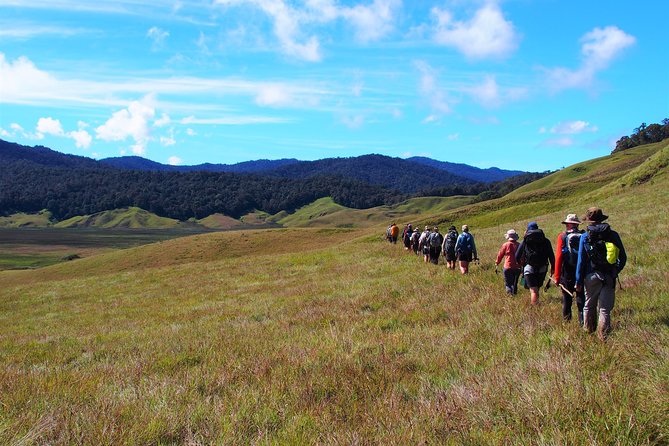
The most powerful part of this 12-day Kokoda trek is that it treats the track as both a demanding mountain walk and a wartime memorial. You follow the original route from Owers Corner to Kokoda, stopping at battle sites, patrol positions, supply areas, defensive ridges, Lake Myola, and the Isurava Memorial.
I like the small group limit of 15, which should make the long days easier to manage, and I like the serious historical focus. Leaders such as Peter Morrison, Angelo, Jake, and Major Scott Babington have been praised for strong battlefield briefings, personal attention, and a real feel for the campaign. The Dawn Service at Isurava and the visit to the crashed P40 Kittyhawk near Lake Myola are especially unusual highlights.
The main caution is simple: this is not a casual rainforest walk. You need strong fitness, a tolerance for wet and rough ground, and patience for early starts, steep climbs, basic village camps, and long days on your feet. Food is cooked fresh on the trail, but one past participant found it less impressive than expected.
Key points at a glance
- Ten trekking days from Owers Corner to Kokoda: You cover the historic route from south to north rather than taking a shortened section.
- Battlefield interpretation throughout: An Australian expedition leader and local Koiari guides connect the jungle track to the battles fought there.
- Dawn Service at Isurava: The 5:00 AM ceremony is one of the trek’s most solemn and memorable moments.
- Two nights around Bombers and Lake Myola: You get time to explore both lakes, the Moss Forest, and the remains of a P40 Kittyhawk.
- Practical support in remote country: Tents, meals, safety equipment, satellite communication, radios, permits, and vehicle transfers are included.
- Personal carrier costs extra: Your own carrier is not part of the $3,443 price, so budget for that separately if you do not want to carry your full load.
What the $3,443 price really covers
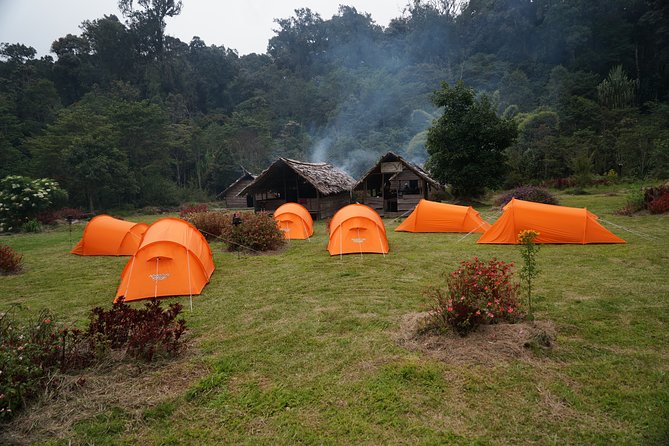
At $3,443, this is a serious expedition purchase rather than a cheap guided hike. The price includes pre and post-trek twin-share accommodation and meals in Papua New Guinea, all vehicle transfers, a private charter flight between Port Moresby and Kokoda, campsite fees, a trekking permit, a personal mosquito-proof tent, and fresh trail meals.
It also covers a useful safety net. The group carries a first-aid kit, satellite phone, two UHF radios, and maintains a 24-hour link with Port Moresby. In a remote part of Papua New Guinea, those items matter more than a welcome drink or a polished hotel lobby.
Your tent is carried, erected, and taken down by the trek team. That saves energy at the end of a hard day. You still need to decide how much of your own clothing and equipment to carry, because a personal carrier is not included. If you hire one, a 75-litre backpack is supplied.
The package also includes a topographic map, polo shirt, Kokoda completion certificate, and a 15 percent Paddy Pallin discount on trekking clothing and equipment. Those are pleasant extras, but the real value lies in the logistics, local support, historical access, and emergency communication.
International flights, passport costs, travel insurance, malaria medication, personal first-aid supplies, and personal clothing remain your responsibility. Ask your doctor about anti-malarial medication well before departure, and do not treat the included group first-aid kit as a substitute for your own supplies.
A few more treks around the world worth a look
- Mount Etna: Trek to 3000m with cable car and 4×4
★ 4.6 · 3,823 reviews - Bali: Mount Batur Sunrise Trek With Guide and Breakfast
★ 4.8 · 3,461 reviews - From Chania: Full-Day Samaria Gorge Trek Excursion & Guide
★ 4.6 · 3,191 reviews
Port Moresby to Owers Corner: setting the tone
You arrive in Port Moresby at about 2:00 PM and check into Sogeri Lodge. A trek briefing follows at 5:30 PM, with dinner and introductions at 7:30 PM.
That first afternoon is useful. You can meet the Australian expedition leader, Koiari trek leader, guides, and carriers before the early starts begin. The group then leaves Sogeri Lodge by bus the next morning for McDonald’s Corner and Owers Corner.
At McDonald’s Corner, you inspect a monument before continuing to Owers Corner. There, the group meets the guides and porters and examines a 25-pound artillery gun. This is a good opening lesson in the campaign’s supply problems. The Kokoda route was not just a line on a map. It was a brutal transport corridor, and the equipment moved along it by hand.
Your first day on the track begins with a meeting point around 10:30 AM. That late start may sound gentle, but it follows a very early reveille and a transfer by road. You should arrive ready to walk, not expecting a relaxed sightseeing morning.
Days 3 and 4: Imita Ridge and the Maguli Range
The next morning takes you to the Golden Staircase and up toward Imita Ridge, reaching about 860 metres above sea level. You inspect weapon pits on the Brigade position among the rock face of Fortress Imita.
This section matters because Imita Ridge was the final defensive line before Port Moresby. The climb gives the battlefield briefing a physical setting. You are not simply hearing that Australian forces made a stand here. You are looking at the ridge and feeling what steep, humid movement would have demanded from exhausted troops.
Day 4 brings a grinding climb to the crest of the Maguli Range, also known as Mogolonumu, at about 1,335 metres. The route includes false ridges, which can make a climb feel longer than its map distance. The views are described as spectacular, but you will need to earn them.
Breakfast at Banana Camp breaks up the day. You also inspect Japanese delaying positions and hear how the terrain shaped movement and defense. I would pay close attention to the briefings here, since the small earthworks and jungle positions can be easy to miss without someone pointing them out.
Days 5 and 6: Nauro Lookout, Menari and Efogi
Day 5 starts early, at 5:00 AM. You trek to Hehomuri Creek, also known as 5 Creeks, at the base of Ladavi Saddle. A sharp climb takes you to Nauro Lookout at about 1,035 metres, followed by the Menari Gap in Ladavi Saddle.
This is a day to manage your pace. The route repeatedly changes height, and a hard push early on can make the afternoon uncomfortable. The briefings and rest stops help, but they do not remove the physical demands.
On Day 6, you descend toward Kavai Creek at about 1,200 metres, then climb to Efogi 2 Village, also called Laununumu, at around 1,385 metres. You inspect a Japanese monument erected by Corporal Nishimura and receive a battlefield briefing about the Japanese assembly area.
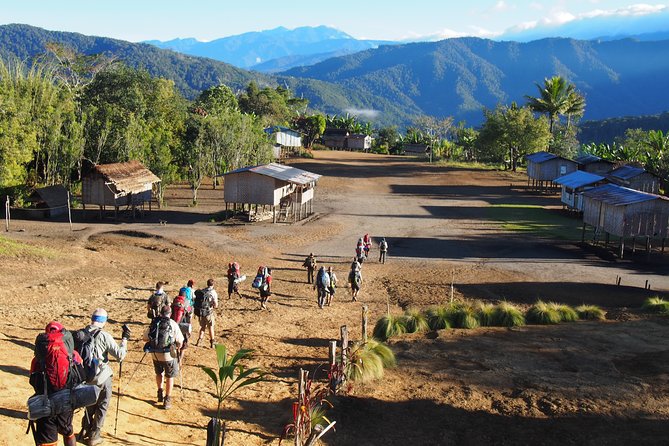
The village sections are important because they show how closely the track is tied to local communities. The trek is not only about military monuments. Your Koiari guides and carriers are part of the experience, and their work supports the practical side of moving a group through remote country.
Same trailhead, a different route:
- Mount Etna: Summit Crater Trek with Cable Car
★ 4.8 · 1,875 reviews - La Palma: Tajogaite Volcano Guided Trek
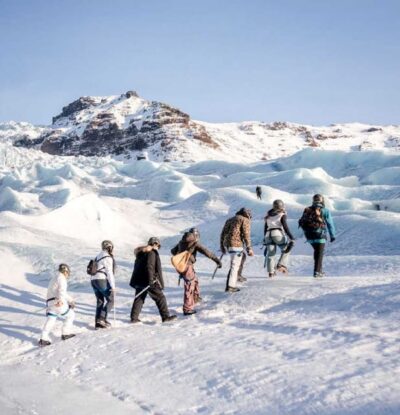
★ 4.8 · 1,810 reviews - Skaftafell: Ice Cave Tour and Glacier Hike
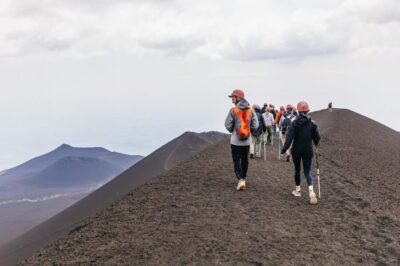
★ 4.5 · 1,746 reviews - Etna: summit craters trekking with volcano guide 3350mt
★ 4.7 · 1,712 reviews
Days 7 and 8: the Moss Forest and Lake Myola
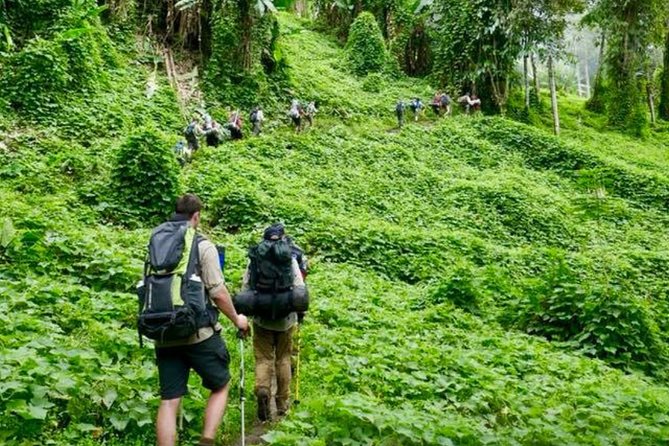
The route continues through the Moss Forest to Lake Myola 1. You then cross toward Lake Myola 2, a prairie-like area formed in an extinct volcanic crater. Captain Bert Kienzle discovered the lakes while searching for a route, and they became an important wartime logistics area.
This is one of the trek’s most distinctive changes of scenery. After days of forest, ridges, creeks, and steep climbs, the open space around the lakes gives you room to see the scale of the high country.
The itinerary includes two nights at Bombers campsite, allowing a fuller visit to both lakes. You also inspect the wreck of an American P40 Kittyhawk fighter aircraft on the northern edge of the lakes. That is a rare sight and one reason this longer route is more appealing than a rushed Kokoda crossing.
The extra time also creates a practical recovery window. After exploring the lakes, you return to Bombers for a late lunch and a make-and-mend afternoon in the Moss Forest. This means repairing or sorting equipment, resting, and preparing for the next section. Do not mistake the quieter afternoon for a luxury break. Camps remain basic, and the surrounding conditions can still be wet and tiring.
Day 8 climbs via a track cut by Captain Kienzle to the main Mount Bellamy track junction at about 2,245 metres. You then descend to Kokoda Gap at roughly 2,190 metres, with broad views toward the Yodda Valley on the northern side.
This is among the trek’s highest country. Even if you are fit, altitude changes, steep ground, mud, and repeated climbs can wear you down. Good socks, sensible layering, and careful foot care will matter more than fancy equipment.
Days 9 and 10: Vabula Ridge and the Isurava Dawn Service
Day 9 takes you to Vagebau Creek at around 1,895 metres for morning tea. You then climb to Vabula Ridge at about 1,905 metres before descending to a defensive position used by the 2/14th and 2/16th battalions during their fighting with Japanese forces.
The route here rewards attention. Defensive positions in thick country may not look dramatic at first glance. The value comes from the battlefield explanation, which helps you understand why a ridge, creek, or saddle mattered.
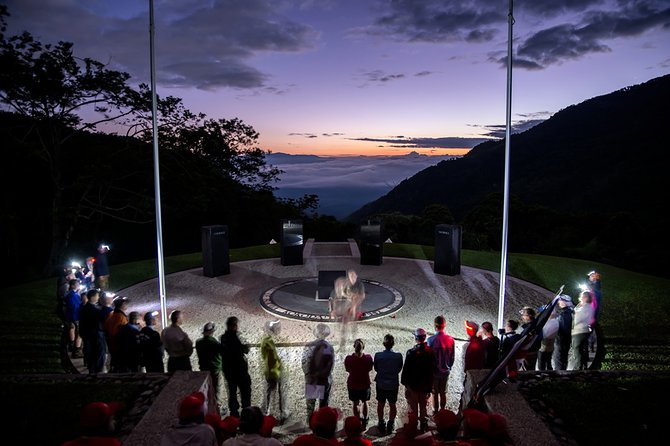
Day 10 begins at 4:30 AM. At 5:00 AM, the group attends a Dawn Service at the Isurava Memorial, followed by a wartime briefing on the Battle for Isurava.
This is the emotional centre of the trek. The ceremony includes the trekkers, PNG guides, and carriers, and its early hour gives it a quiet, respectful setting. You then begin walking at 8:00 AM, heading to Isurava Village via Etume and Ilole creeks before continuing down the mountain.
The early start is physically demanding, especially after several days on the track. Still, this is not an event I would want to rush or skip. The memorial, battlefield briefing, and shared service give the route its clearest sense of purpose.
Day 11: reaching Kokoda
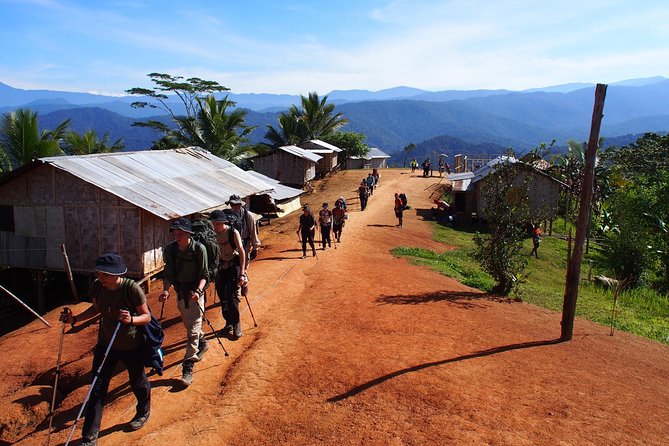
Your final full trekking day begins at Hoi and follows the track to Kokoda at about 395 metres above sea level, passing through Kovello.
You inspect the plateau where the 39th Militia Battalion first met the Japanese and hear about the two battles for Kokoda. The route ends with monuments, memorials, and the arrival point that gives the whole track its name.
Reaching Kokoda is a satisfying finish, but it is not simply a photo stop. By this point, you have crossed the same broad corridor that links the southern approaches, central ridges, high lakes, and northern battlefields. The historical pieces fit together because you have physically moved through them.
A private charter flight returns you from Kokoda to Port Moresby. That avoids retracing the long route by road and makes the final day more efficient.
Guides, local support and the historical focus
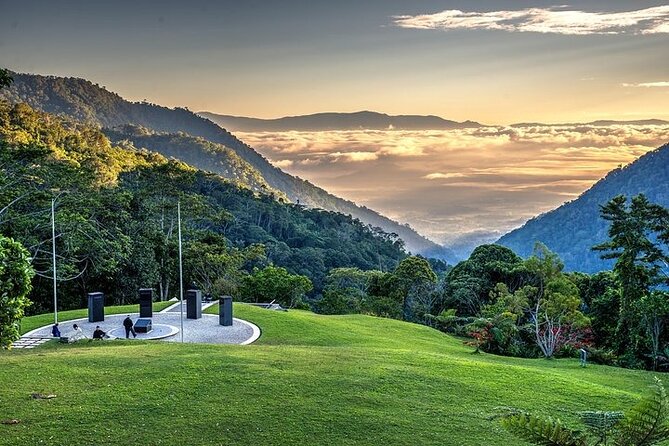
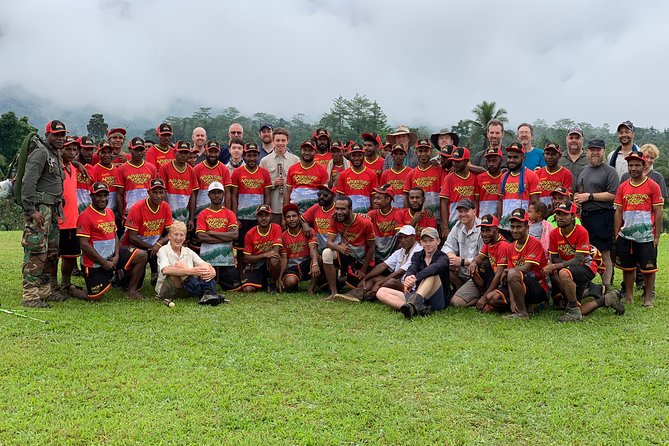
The trip combines an Australian specialist expedition leader with an experienced Koiari trek leader and local guide and carrier team. That combination is important. The Australian leader brings campaign history and military context, while the local team handles the track, camps, transport of equipment, and day-to-day movement.
Recent departures have featured leaders including Peter Morrison, Angelo, Jake, and Major Scott Babington. Peter and Angelo received particular praise for their battlefield readings, track wisdom, personal attention, and ability to keep the group together. Major Scott Babington was singled out for making the historical side especially strong.
The precise leadership team may vary by departure, so I would confirm names before booking if that matters to you. The essential point is the format: this is not a walk with a guide who only points out plants and camps. The program is built around military sites, campaign decisions, patrol routes, supply bases, and memorials.
Food, camps and what you carry
Fresh meals are prepared, cooked, and served on the trail by a PNG cook known as the Boss Cook. Breakfast, lunch, and dinner are included for the listed trek days, and the pre and post-trek lodging also includes meals.
Food is a practical consideration rather than a selling point. One past participant found it less satisfying than expected, so bring realistic expectations. If you have dietary needs, personal snacks, or strong preferences, ask what can be accommodated before departure.
You receive a personal mosquito-proof tent, and the guides carry, set up, and dismantle it. Village campsite fees and trek equipment such as safety ropes, machetes, shovels, and tarpaulins are included.
You must bring your own clothing, personal equipment, and personal first-aid items. A personal carrier costs extra. This is worth budgeting for if you want to conserve energy for the climbs and battlefield visits.
Who should book this Kokoda trek?
I would choose this trip if you want the full historical route, not just a short rainforest challenge. It suits people who care about the Kokoda campaign, memorials, local guiding, and the link between terrain and military events.
It also suits fit walkers who are comfortable with early mornings, steep climbs, changing elevations, basic camps, and long days. The tour operator specifically asks for a strong fitness level, and that warning should be taken seriously.
I would hesitate if your main goal is a comfortable holiday, a flexible schedule, or a polished food and lodging experience. The price buys support and access, not resort comfort.
The group maximum of 15 is a good middle ground. You get company and safety without the feel of a large walking convoy. The mobile ticket and included transfers simplify the booking side, while free cancellation is available if you cancel at least 24 hours before the local start time. The minimum group requirement means the operator may offer another date or a full refund if the trek cannot run.
Should you book Adventure Kokoda?
Book it if you want a serious, Australian-led Kokoda experience with the original route, strong military interpretation, local Koiari support, Lake Myola, the P40 wreck, and the Isurava Dawn Service. The package is expensive, but much of the cost goes toward remote logistics, safety, transport, meals, permits, and experienced staff.
Before paying, confirm the exact guide team, ask about the personal carrier cost, and make sure your fitness and medical preparation are suitable. If those details line up, this is a well-supported way to walk the Kokoda Track with purpose rather than simply crossing it as a physical challenge.
FAQ
How long does the Adventure Kokoda trek take?
The full experience lasts about 12 days, including arrival, 10 trekking days, and the final departure day.
Where does the trek start?
The trek begins at Owers Corner after a transfer from Sogeri Lodge near Port Moresby. The listed meeting point is Jacksons International Airport in Port Moresby.
Where does the trek finish?
The walking route finishes at Kokoda. A private charter flight then returns the group to Port Moresby.
Is a private charter flight included?
Yes. The package includes a private charter flight between Port Moresby and Kokoda.
Is a personal carrier included?
No. A personal carrier is an additional cost. If you engage one, a 75-litre backpack is included.
Are tents provided?
Yes. Each trekker receives a personal mosquito-proof tent. The trek guides carry, erect, and dismantle the tents.
Are meals included?
Yes. The package includes 11 breakfasts, 11 dinners, and 10 lunches, along with pre and post-trek accommodation and meals in Papua New Guinea.
Is the Isurava Dawn Service included?
Yes. The group attends a 5:00 AM Dawn Service at the Isurava Memorial on Day 10.
What fitness level is required?
The tour specifies that you should have a strong physical fitness level. The route includes steep climbs, high ridges, early starts, and long trekking days.
What is not included in the price?
International flights, passport costs, anti-malarial medication, travel insurance, personal clothing and equipment, personal first-aid items, and a personal carrier are not included.
Just added around the world
- Everest Base Camp Trek★ 5.0 · 3 reviews
- Everest Base Camp Trek★ 5.0 · 7 reviews
- 15 Days Private Everest Base Camp Trek★ 5.0 · 30 reviews
- Everest Base Camp Trek★ 5.0 · 57 reviews
- 14 Days of Adventure Trekking to Everest Base Camp★ 5.0 · 2 reviews
- 14-Day Everest Base Camp Trek★ 5.0 · 20 reviews
- From Kathmandu: Private 14-Day Everest Base Camp Trek★ 5.0 · 20 reviews
- 14 Days Everest Base Camp Trek★ 5.0 · 4 reviews
Trekking Tours, compared.
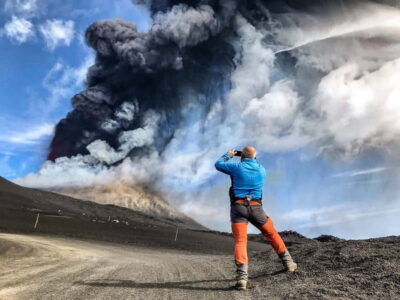
Mount Etna: Trek to 3000m with cable car and 4×4
Read our review →
Mount Batur Sunrise Trek With Guide and Breakfast
Read our review →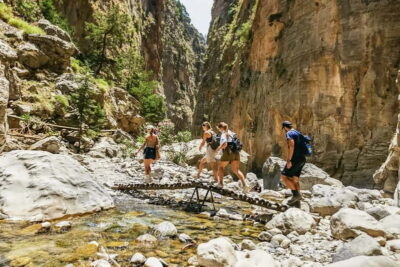
Full-Day Samaria Gorge Trek Excursion & Guide
Read our review →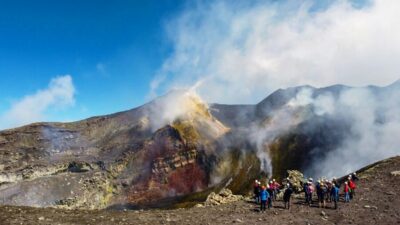
Mount Etna: Summit Crater Trek with Cable Car
Read our review →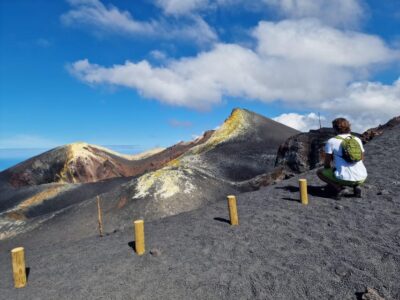
Etna: summit craters trekking with volcano guide 3350mt
Read our review →