
Review · GREECE
From Rethymno: Samaria Gorge Full-Day Trek, Pickup & Guide
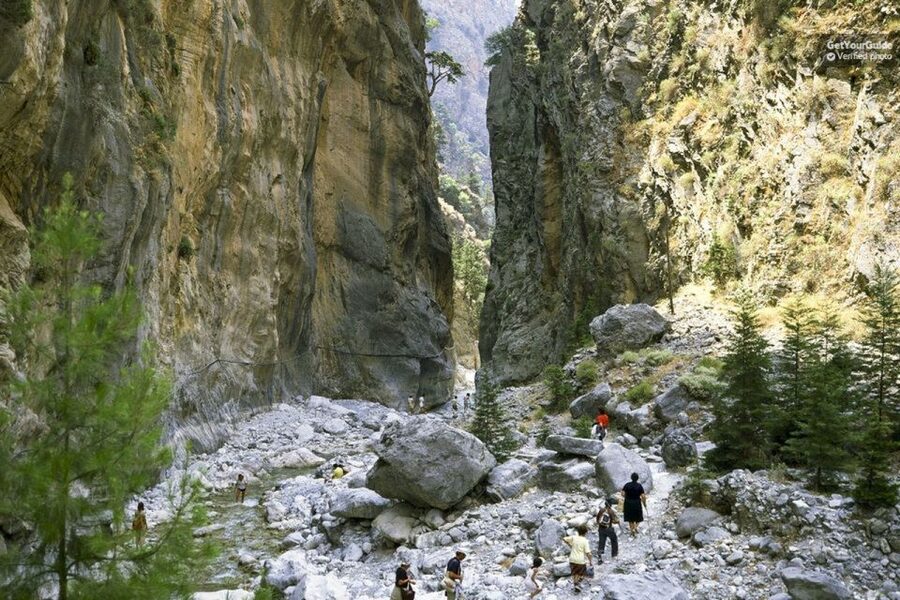
Samaria Gorge is one of Crete’s great outdoor days: a long descent through the White Mountains, beneath ancient trees, beside clear water, and between huge walls of rock. The route is beautiful from start to finish, but this is a serious hike, not a gentle walk in the countryside.
I like the freedom of walking at your own pace, with the guide staying at the back of the group to help when needed. I also like the practical transport plan: a coach takes you to the high starting point, and a ferry carries you from Agia Roumeli to the waiting bus at Sfakia. The drawback is clear: 18 kilometers over loose, uneven rock can be hard on knees, ankles, and calves, especially in summer.
Guides such as Pia, George, Alexandra, and Yorgos have been praised for clear instructions, language skills, and personal attention. Still, the trip works best for people who already feel comfortable on long mountain walks. Bring proper footwear, keep your bag light, and save some strength for the final kilometers.
Key Points at a Glance
- A downhill mountain trek: The route begins around Omalos in the White Mountains and drops through rocky ground toward the coast.
- A self-paced hike: You do not need to stay in a tight walking group. The guide explains the route and remains available along the way.
- Fresh water on the trail: Springs and refill points let you top up your bottle, while there are no shops inside the gorge.
- Agia Roumeli is your reward: After the walk, you have time for lunch, a swim, or a cold drink beside the sea.
- Transport is the real convenience: Coach transfers, ferry tickets, and the return connection remove the need to arrange a one-way mountain journey yourself.
Why Samaria Gorge Is Such a Big Day
The gorge is not simply a scenic walk with a few rocky patches. The official route is described as about 18 kilometers, while the full walk to Agia Roumeli can feel closer to 20 or 21 kilometers once you include the stretch from the gorge exit to the village.
The hiking time is usually around five to six hours, although pace, heat, crowds, and rest stops make the day vary. One part of the path drops sharply from roughly 1,200 meters toward lower ground, and the early descent can be especially tough because the stones are loose and the surface is uneven.
You will spend much of the day watching your feet. That sounds obvious, but it matters. The rocks can be slippery, and several sections feel more like careful scrambling than a smooth trail. A sturdy pair of hiking shoes with good grip is the sensible choice. Running shoes may work for a fit person, but sandals and smooth-soled trainers are poor choices.
The effort pays off through constant change. You pass through forest, open rocky ground, narrow gorge sections, riverbed scenery, and towering rock walls. Ancient trees provide shade in places, while other stretches are exposed to the sun. This variety keeps the walk interesting, but it also means you need to manage your energy instead of racing the first half.
A few more treks around Greece worth a look
- From Chania: Full-Day Samaria Gorge Trek Excursion & Guide
★ 4.6 · 3,191 reviews - Samaria Gorge Trek: Full-Day Excursion from Chania with Guide
★ 4.5 · 51 reviews - Samaria Gorge Trek: Full-Day Excursion from Rethymno with Guide
★ 4.5 · 46 reviews
Pickup From Rethymno and the Drive to Omalos
Pickup begins early from a wide group of locations around Rethymno, including Rethymno town, Perivolia, Misiria, Adelianos Kampos, Panormo, Skaleta, Georgioupoli, Kavros, Atsipopoulo, and nearby coastal areas. Your exact pickup point and time are sent separately after booking, so give the operator your hotel name and location.
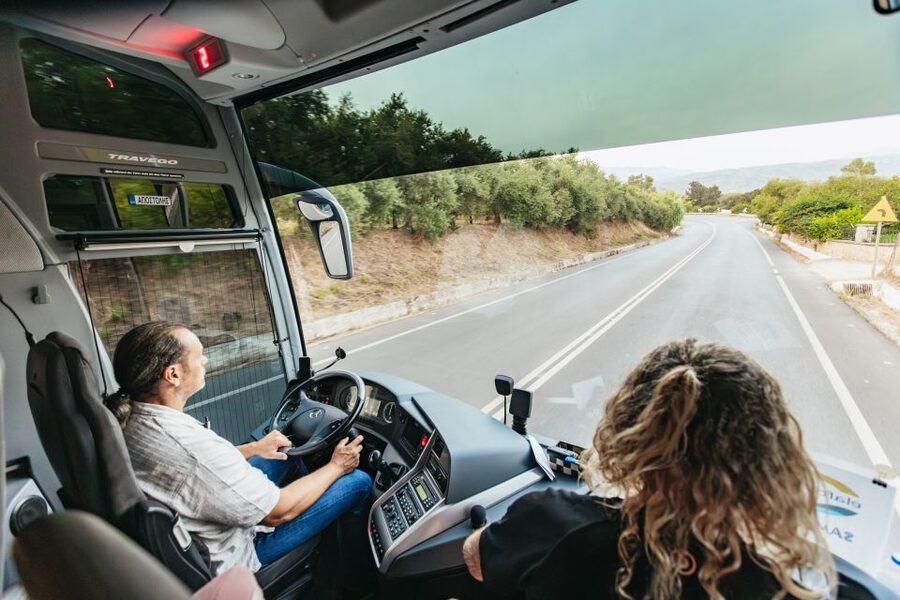
The coach ride to Omalos takes about 90 minutes. This is not dead time. The road climbs into the White Mountains, with broad views and tight bends that reveal more of the Cretan interior as you rise. The air-conditioned bus is especially welcome on the return journey, when your legs are tired and the sun has done its work.
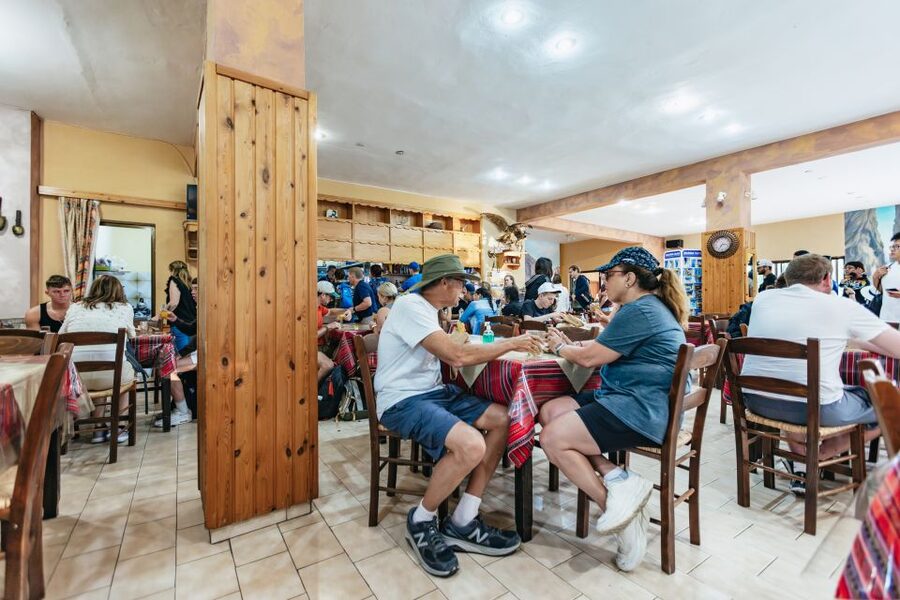
A short stop at Omalos gives you time for breakfast, a bathroom break, and a final check of your supplies. Food at the café is basic, and cash may be needed. This is a good place to buy a sandwich or extra snack because there are no shops once you enter the gorge.
The guide uses this pause to explain the route, meeting arrangements, ferry connection, and safety points. Guides commonly speak English, German, and French. Pia, George, and Alexandra have all been singled out for giving clear briefings and checking that people understood the plan.
The First Descent: Where Good Shoes Matter Most
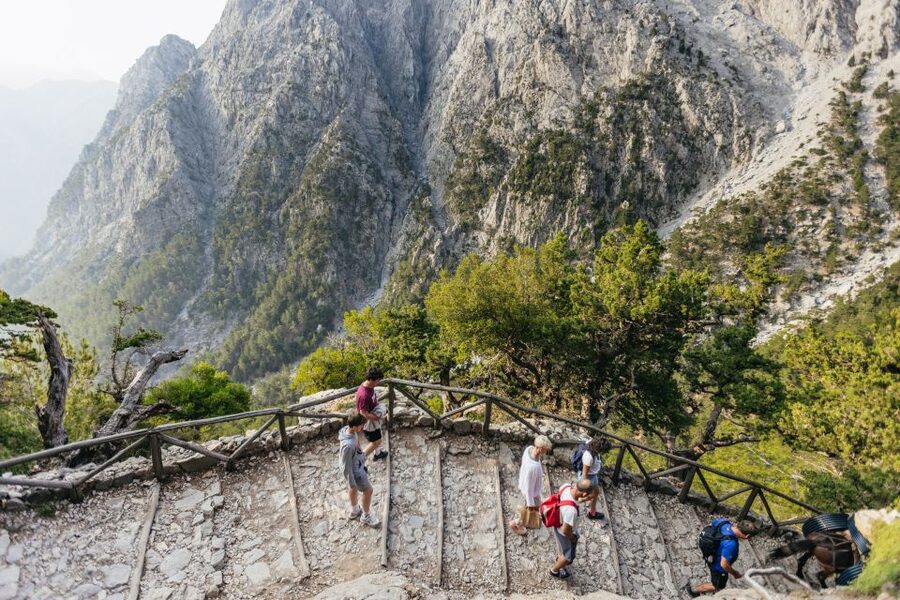
The trail begins high in the mountains, and the first part descends steadily over stone steps, loose rocks, and uneven ground. This is where your footwear matters most. A shoe that grips well and supports your ankle will make the descent much less tiring.
Do not confuse downhill with easy. Descending for several hours can be harder on your knees and thighs than climbing. Keep your pace controlled, especially if the path is crowded. Stop before taking photographs rather than trying to look around while walking.
The guide is generally not leading a close, fixed walking line. You move at your own speed, while the guide stays toward the back and checks on the group. That arrangement gives you room to pause for photographs or walk with your own companions, but you still need to manage your time carefully.
The route is easy to follow because it is the main path through the gorge, and there are regular resting areas. Way-marking can feel limited in some places, so listen carefully to the briefing and do not wander off the marked trail. The gorge has wardens positioned at various points to assist if needed, but mobile phone reception is not available in the gorge.
Ancient Trees, Springs, and the Gorge’s Narrow Walls
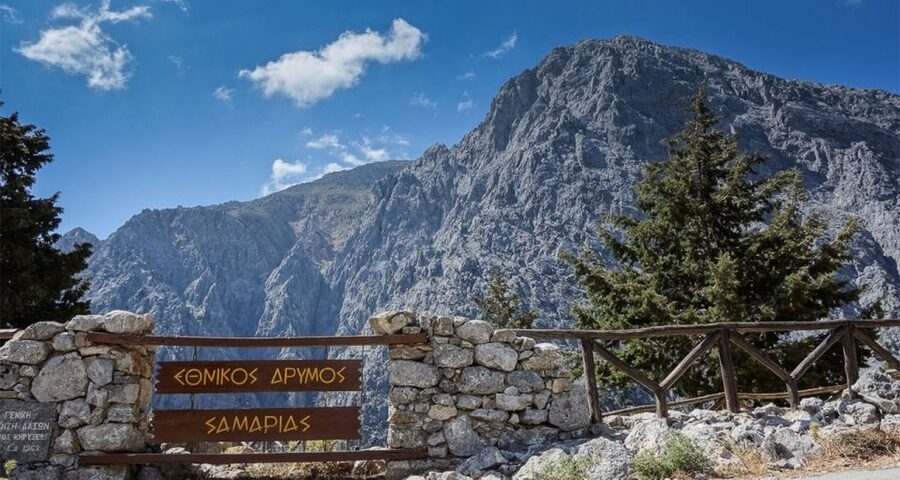
As you continue, the setting changes from the steep opening descent to a more enclosed route beside the river. The forest contains trees described as centuries old, with some regarded as around a thousand years old. These shaded sections are a welcome break from the exposed rock.
Fresh-water springs and refill points appear along the route. Carry a reusable bottle and fill it whenever you can. You do not need to haul a huge supply from Omalos, but you should not start with a nearly empty bottle either. Water is essential in warm weather, and the exposed sections can feel hot even after a cool morning start.
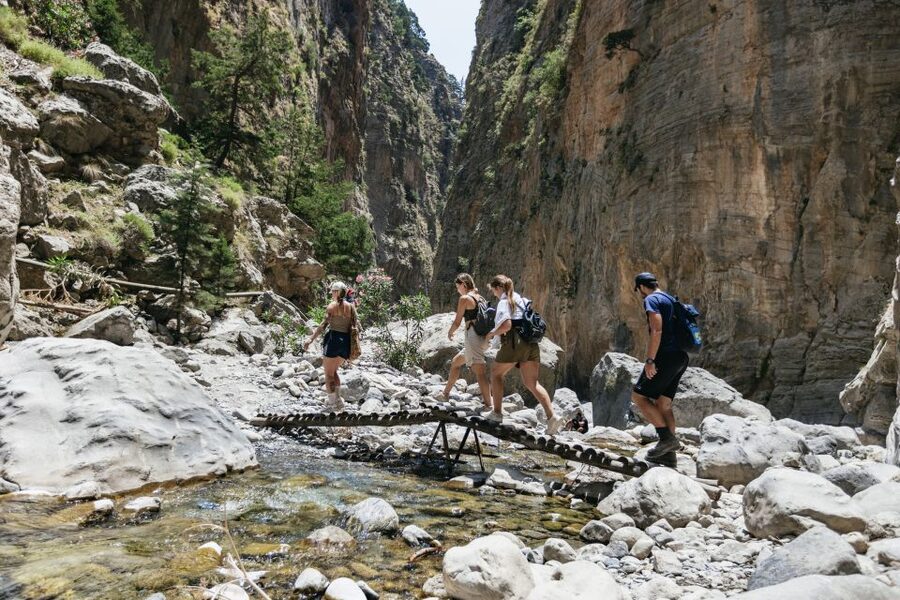
The gorge’s rock formations become more impressive as you move deeper into the valley. The walls close in, and the scale of the stone around you makes the walking feel more dramatic than the distance alone suggests. Your guide can point out local plants, flowers, and bird species, as well as features of the mountain environment.
Keep your eyes open for the kri-kri, Crete’s wild mountain goat. Seeing one is never guaranteed, but the possibility adds a little excitement to a route already filled with natural detail. The best approach is to pause in safe places and look around without stepping outside the marked path.
There are rest areas and toilets at points along the trail. Facilities are basic, and toilet paper or handwashing supplies may not always be available. Carry tissues and hand sanitizer in a small day bag.
Same trailhead, a different route:
- Kourtaliotiko Gorge: Guided River Adventure Trek with Lunch
★ 4.9 · 106 reviews - Kourtaliotiko Gorge River Trek with Lunch! Pick-up Avaliable
★ 4.8 · 90 reviews - Karpathos Lastos mountain Hike with guide
★ 5.0 · 55 reviews - River Trekking at Kourtaliotiko Gorge Waterfalls to Preveli Beach
★ 5.0 · 48 reviews
The Last Kilometers to Agia Roumeli
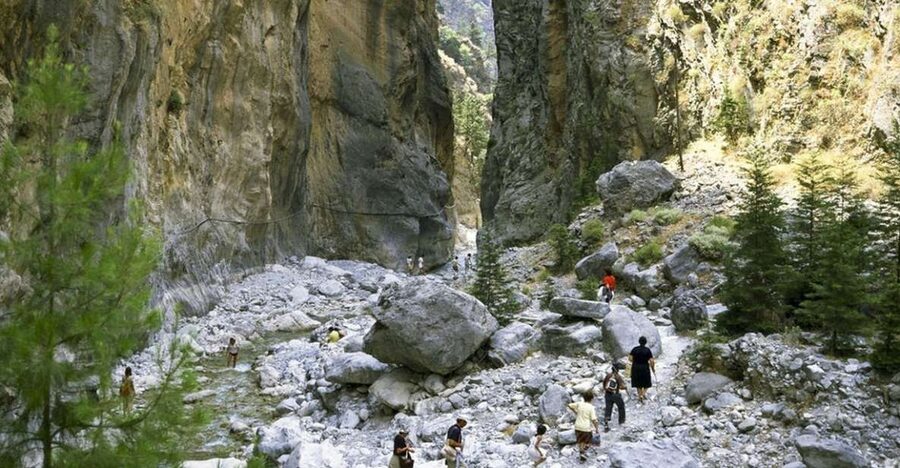
The walk does not finish the moment you leave the narrow gorge. You still have a further stretch toward Agia Roumeli, and this is where tired legs begin to matter. Several people underestimate this part because they think the main gorge is already behind them.
The later section can have less shade and more direct sun. This is also when the heat, distance, and rocky footing begin to catch up with you. Keep drinking, take short rests, and avoid using all your energy early in the day. The guide can offer advice, but you are responsible for setting a pace you can maintain.
Some walkers use poles to reduce strain on their knees and improve balance. They are especially useful on the downhill sections and over loose stones. If you do not usually hike, do not treat the stated distance as a rough suggestion. The route is long enough to leave you stiff for several days.
A small shuttle may be available for the roughly two-kilometer connection between the gorge exit and Agia Roumeli. It costs about €2 when used, so carry a little extra cash. If you walk this final stretch, allow time for it when planning your ferry connection.
Agia Roumeli: Swim, Lunch, and a Proper Rest
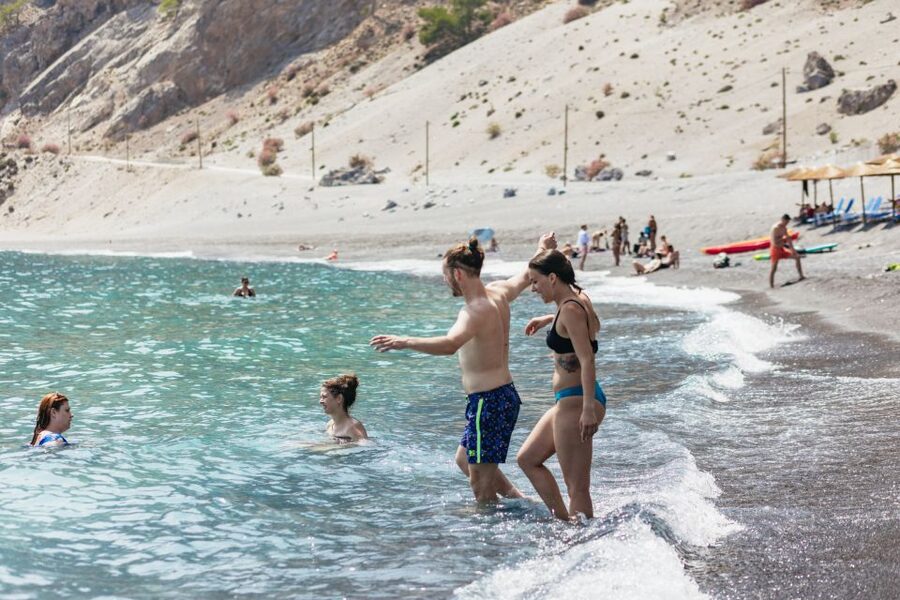
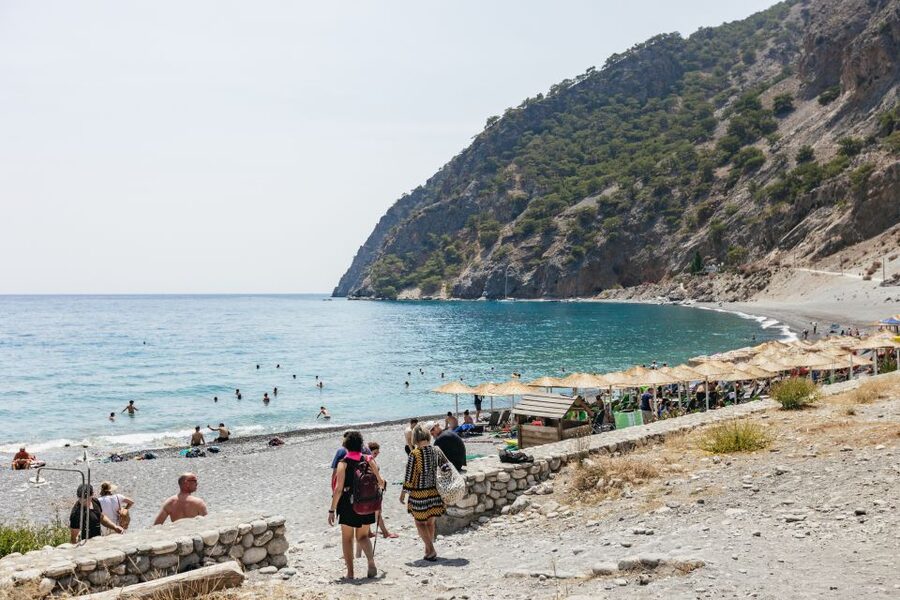
Agia Roumeli is a satisfying finish because it gives you something simple after the effort: food, a drink, and the sea. You have about two hours here, depending on the day’s timing, to visit a taverna, sit in the shade, or swim in the clear water.
This is not a long village tour. The main value is recovery time. You can cool your feet or take a full swim, then find lunch before the ferry. Several tavernas, bars, and shops serve the people arriving from the gorge, and some places are praised for friendly service and good food.
Do not spend all your time wandering if you still need to collect your ferry ticket. The guide arranges a meeting point, and the boat connection is fixed. Keep an eye on the time, especially if you choose to walk from the gorge exit rather than take the local shuttle.
A spare pair of socks can be useful after the hike. Some people also pack lightweight sandals for the village and beach, since your hiking shoes may be dusty, damp, or uncomfortable by then.
The Ferry to Sfakia and the Long Ride Home
The ferry from Agia Roumeli to Sfakia takes about an hour. It is a scheduled transport connection rather than a private cruise, but it gives you a calm final look at Crete’s south coast. After several hours on foot, sitting down and watching the shoreline pass is a welcome change.
Your return bus waits in Sfakia for the transfer back toward Rethymno. The coach journey takes about 90 minutes, though the full day can run from nine to twelve hours depending on pickup locations and road conditions. With many hotel stops, some people may not reach their accommodation until evening.
The return arrangement is one of the strongest reasons to book this kind of excursion. You avoid organizing a one-way rental car route, public transport connections, entrance tickets, and the ferry separately. The day is long, but the logistics are handled in one chain.
What the $37 Price Really Covers
At about $37 per person, the base price is attractive for a full-day outing with pickup, an air-conditioned coach, the hiking arrangement, a multilingual guide, and the return ferry connection. You are mainly paying for transport and coordination, not a private hiking leader who walks beside you every minute.
Budget separately for the Samaria Gorge entrance fee and ferry. The gorge fee is €10 for many adults, with different rules for EU children and older EU citizens. The ferry is €14 for adults and €7 for children up to age 12. Food, drinks, and the optional local shuttle are also extra.
That puts the real cost above the advertised starting price, but the package still offers good value if you are staying in Rethymno and want the classic one-way route. Doing it independently means arranging transport to Omalos, buying the same entrance and ferry tickets, and making sure you connect with the bus at Sfakia.
The main thing you do not receive is a continuous guided walk. You get a mountain escort, route information, support, and group coordination, then walk independently at your own pace. For many people, that is a benefit. If you want detailed commentary every few minutes or a private hiking companion, choose the private group option if available.
Who Should Book This Trek
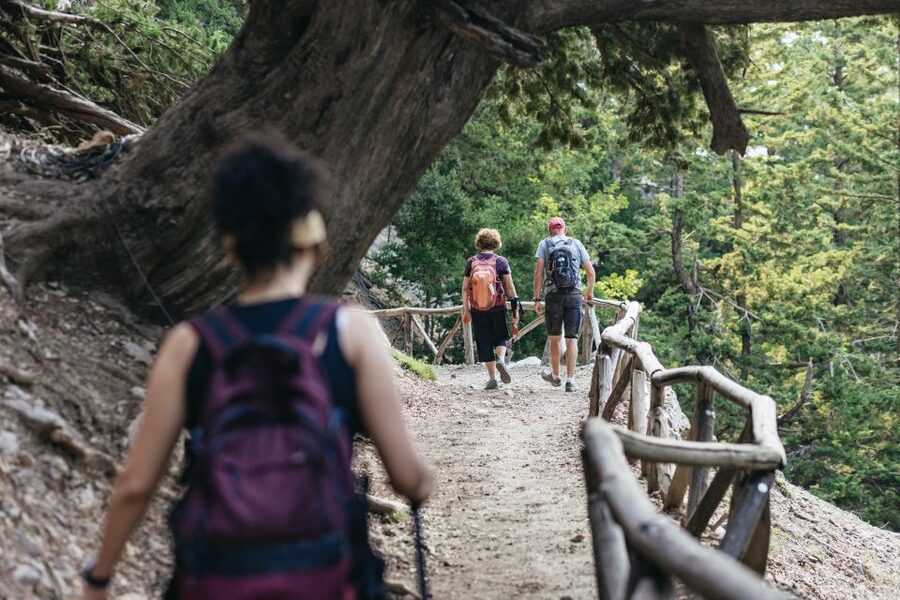
You should consider this trip if you enjoy long days outside, can manage uneven mountain ground, and are happy to walk for five or six hours with limited services along the way. It is a strong choice for fit couples, active families with older children, and anyone who wants to see Samaria Gorge without handling the transport alone.
Children under six are not suitable for the trek. It is also not recommended for pregnant women, people with heart or back problems, people with mobility impairments, or wheelchair users. The distance and rocky surface are the key issues, not just the downhill direction.
Moderately fit people have completed it without regular hiking experience, but that does not mean it feels easy. Expect tired legs and possible stiffness for a few days. If your knees or ankles already give you trouble, this is the wrong place to test them.
Go in prepared with hiking shoes, a hat, sunscreen, water bottle, snacks, tissues, hand sanitizer, and a small amount of cash. Do not carry a heavy backpack. There are refill points, so pack enough food and water for the gaps rather than every possible need.
Final Verdict: A Big Cretan Adventure With Clear Conditions
I would book this excursion if Samaria Gorge is high on your Crete list and you want the simplest way to connect Rethymno, Omalos, Agia Roumeli, and Sfakia. The scenery is exceptional, the self-paced format is practical, and the guides have a strong record of giving clear instructions and looking after people who need help.
I would not book it as a casual sightseeing day. The rocky descent, long distance, summer heat, and final walk toward the port demand real preparation. Pick sturdy footwear, keep your bag light, and protect your energy for the final hours. If you can handle that, the swim at Agia Roumeli and the ferry ride home make a fine ending to one of Crete’s most memorable outdoor days.
FAQ
How long does the Samaria Gorge trip from Rethymno take?
The full excursion lasts about nine to twelve hours. The coach ride to Omalos takes around 90 minutes, the hike takes roughly five to six hours, the ferry takes about one hour, and the return coach takes around 90 minutes.
How long is the Samaria Gorge walk?
The advertised hike is about 18 kilometers. The total distance can feel closer to 20 or 21 kilometers if you include the walk from the gorge exit toward Agia Roumeli.
Is the hike guided the entire way?
You walk at your own pace rather than in a tightly led group. The mountain escort gives instructions, remains toward the back of the group, and can help if needed. Guides speak English, French, and German.
What extra costs should I expect?
The Samaria Gorge entrance fee is €10 for many adults, and the ferry costs €14 for adults or €7 for children up to age 12. Food, drinks, and an optional roughly €2 shuttle to Agia Roumeli are also extra.
What should I bring?
Bring hiking shoes or sturdy trainers with good grip, a hat, sunscreen, water, trekking equipment, snacks, tissues, hand sanitizer, and some cash. A light bag and a spare pair of socks are useful.
Is this trek suitable for children?
Children under six are not recommended for the activity. The trek is also unsuitable for pregnant women, wheelchair users, people with mobility impairments, and people with heart or back problems.
Just added around Greece
- Half-Day River Trekking Stenosia from Kalamata★ 5.0 · 12 reviews
- Ios Island Trekking Tours: Discover Ios Unexplored★ 5.0 · 32 reviews
- Private Trekking Rouvas Gorge★ 4.5 · 4 reviews
- Samaria Gorge Trek: Full-Day Excursion from Heraklion with Guide★ 3.5 · 6 reviews
- River Trekking in Neda★ 4.5 · 7 reviews
- Karpathos Lastos mountain Hike with guide★ 5.0 · 55 reviews
- River Trekking at Kourtaliotiko Gorge Waterfalls★ 5.0 · 3 reviews
- River Trekking at Kourtaliotiko Gorge★ 5.0 · 4 reviews
Greece Trekking Tours, compared.
Full-Day Samaria Gorge Trek Excursion & Guide
Read our review →
Kourtaliotiko Gorge: Guided River Adventure Trek with Lunch
Read our review →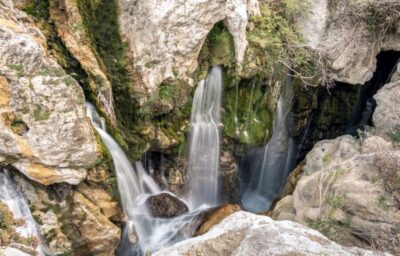
Kourtaliotiko Gorge River Trek with Lunch! Pick-up Avaliable
Read our review →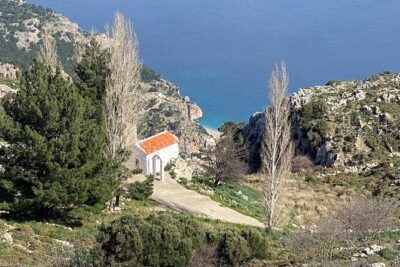
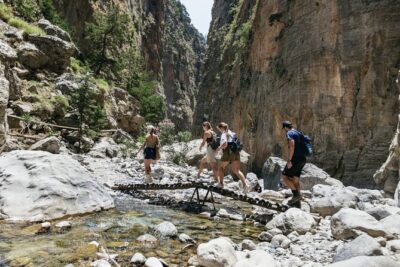
Samaria Gorge Trek: Full-Day Excursion from Chania with Guide
Read our review →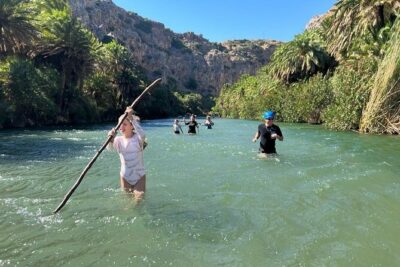
River Trekking at Kourtaliotiko Gorge Waterfalls to Preveli Beach
Read our review →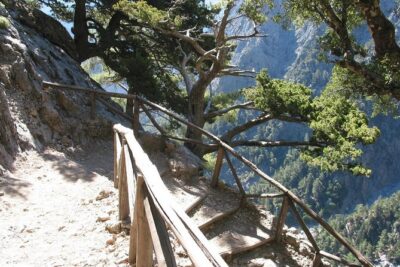
Samaria Gorge Trek: Full-Day Excursion from Rethymno with Guide
Read our review →
Kourtaliotiko Gorge: Guided River Trekking with Lunch
Read our review →Browse the lists this trek appears in