
Review · MHAMID
6 days trekking To The heart of Desert
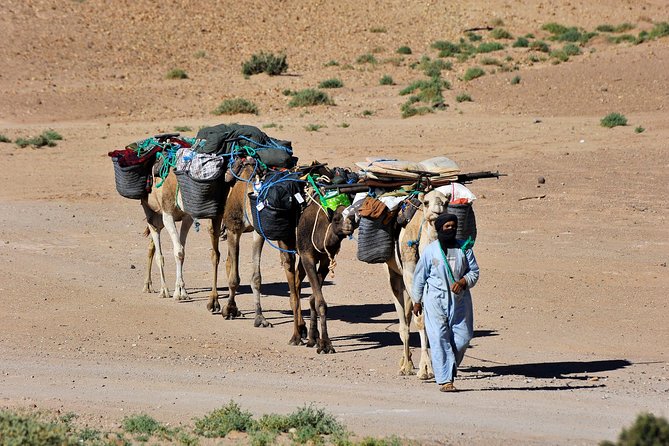
The best part of this six-day Sahara trek is its slow pace. You leave the roads behind and cross southern Morocco on foot, following a camel caravan through dunes, tamarisk groves, old pilgrimage sites, and wide-open desert. At Erg Zahar, you can climb the dunes for sunset, look toward the Algerian border, and eat sand bread and tajine around camp.
I like the way the route mixes walking with real desert routines: tea under tamarisk trees, midday rest, camel drivers handling the luggage, and evenings around the fire. I also like the private format and the personal touch provided by Khalil, Abdo, Ali, and Mohamed, who are named as members of the guiding team.
The main drawback is the travel time. The first and last days involve long road journeys between Marrakech and M’Hamid, while the walking days bring several hours in sun, sand, and wind. This is a better choice for someone who wants a genuine desert trek than for someone seeking a quick overnight camp.
Key points before you book
- Six days on foot in the Sahara: Most walking days involve roughly three to four hours, split around lunch and the hottest part of the day.
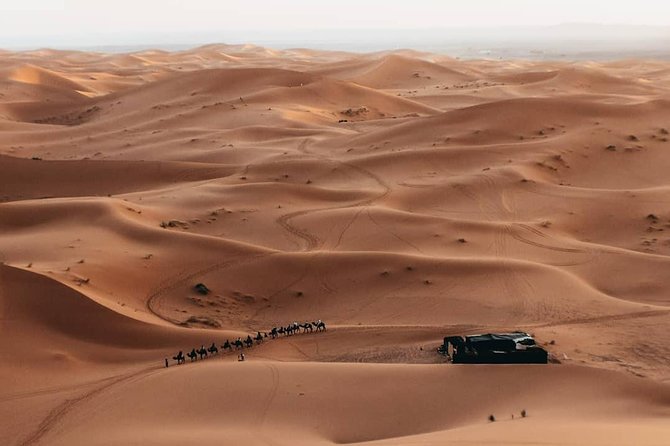
- Erg Zahar is the visual high point: Climb the dunes for sunset, see toward the Algerian border, and spend the night among some of the largest dunes in the M’Hamid area.
- A camel caravan carries your luggage: You walk with the guide and camel drivers rather than carrying everything yourself.
- The trip begins and ends in Marrakech: The road route crosses the High Atlas, Tichka Pass, Ait Benhaddou, the Draa Valley, Zagora, and M’Hamid.
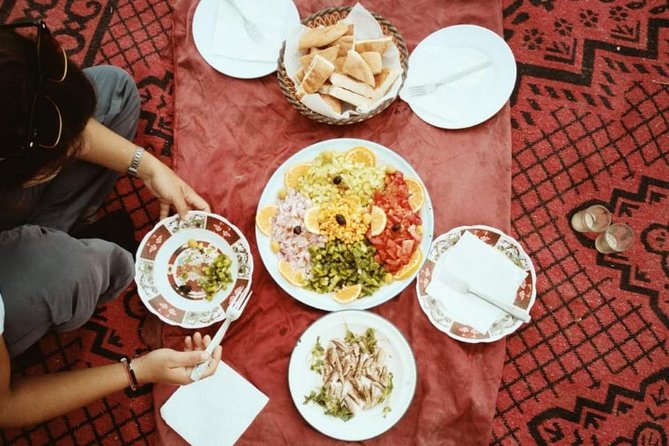
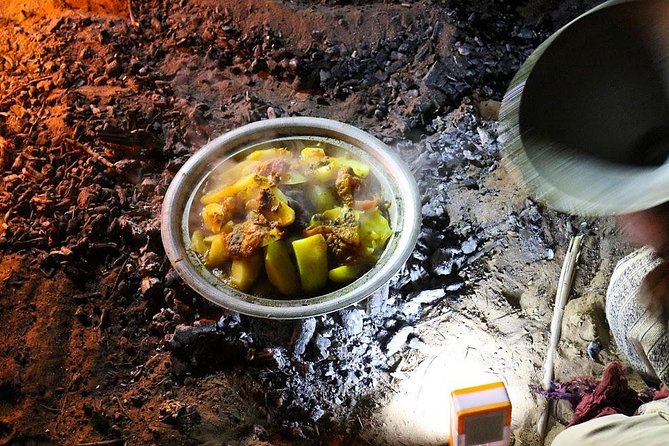
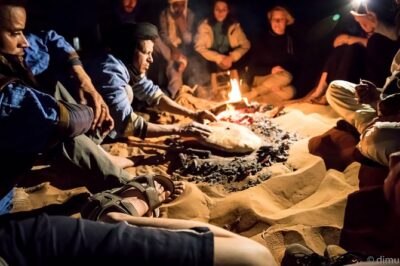
- Nomadic-style evenings are part of the appeal: Expect tea, cooking, songs, stories, and simple desert camps rather than hotel comforts.
- Good shoes and reasonable fitness matter: Day 3 includes a mix of plateau and sand, and the tour requires several hours of walking in desert conditions.
From Marrakech over Tichka Pass to M’Hamid
Your journey starts at 8:00 a.m. near Café de France on Marrakech’s Jemaa el-Fna. The road heads south through the High Atlas Mountains and over Tichka Pass at 2,260 meters, the highest road pass in Morocco.
This is not merely a transfer. The route gives you changing views of mountain valleys, winding roads, colored earth, and Berber villages. You also visit kasbahs along the way, including Tamnougalte and Ait Benhaddou.
Ait Benhaddou is a 16th-century fortified village and a UNESCO site. It is one of Morocco’s best-preserved kasbah settlements and has appeared in major Hollywood films. You will want time to look closely at the earthen walls and compact design, though the day is long and the schedule continues onward.
From there, the route follows the palm-lined Draa River Valley toward Zagora, known as a center of date production. The final stretch takes you to M’Hamid, the last major settlement before the open Sahara.
You spend the first night at a nomadic-style camp. It is a useful transition from road travel to desert life, though you should not expect a luxury camp at this price and pace. The included accommodation is practical, and the point is to get close to the setting rather than stay in a polished resort.
A few more treks around Morocco worth a look
- Marrakech: 6 Day Trekking Tachedirt To Toubkal Via Ifni Lake
★ 5.0 · 3 reviews - Kilimanjaro climb, Lemosho Route (6-day)
★ 5.0 · 129 reviews - Kilimanjaro climb, Marangu route (6-day)
★ 5.0 · 72 reviews
Day 2: Palm groves, tamarisk shade, and Sidi Naji
After breakfast, you leave M’Hamid on foot with the guide and camel caravan. This is when the trip changes character. The road disappears, your bags are carried by camel, and the day follows the old rhythm of walking, resting, eating, and moving again.
The route heads toward a palm grove. Lunch and tea are served in the shade of tamarisk trees, which is more than a pleasant detail. In the desert, shade determines the shape of the day, and the midday pause keeps the walking manageable.
After lunch and rest, you continue to Sidi Naji. Local oral tradition connects this sanctuary with a marabout, or holy man, said to have lived there for 18 grandfathers. The site gives the route a human and spiritual dimension. You are not simply crossing empty sand. You are passing through places tied to local memory and custom.
The camp is set near the dunes for the night. Evening silence is one of the strongest reasons to choose this trek over a short desert excursion. Away from modern distractions, you get time for the sky, the fire, and conversation with the team.
Day 3: Reaching Erg Zahar and the best sunset
Day 3 is the most demanding and possibly the most rewarding walking day. You leave Sidi Naji and head toward Erg Zahar, described as the third-largest dune area in the M’Hamid desert.
The walking is divided into two hours in the morning and two hours in the evening. That split is important. The morning air is cooler, and the long lunch break under tamarisk trees gives you time to eat and nap before the afternoon section.
The ground changes between flat plateau and sand. You need proper walking shoes, not flimsy sandals. Sand can be tiring even when the distance looks modest, and the open sun leaves little room for rushing.
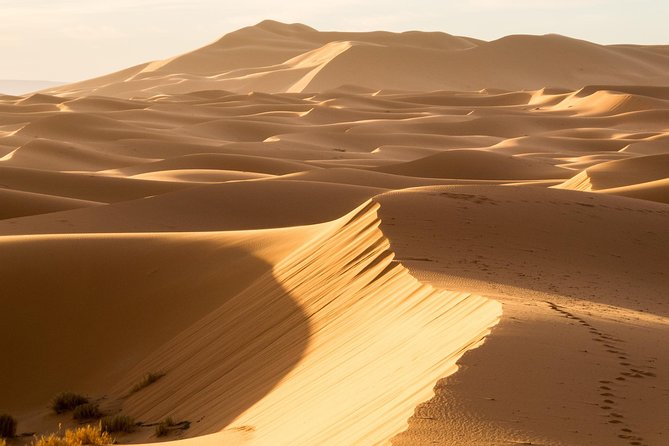
As you approach Erg Zahar, camp is prepared near the dunes. You can ride the dune for sunset, look toward the Algerian border, and watch the colors change across the sand. This is likely the emotional center of the trip, especially if you enjoy wide views rather than constant activity.
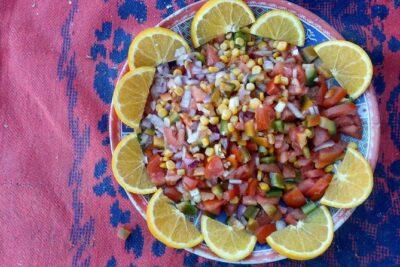
The evening includes sand bread and tajine. Food cooked in camp, after a day of walking, has a simple appeal. The meal is part of the experience, not just a service included in the price.
Day 4: Across Lahdybat toward Kraat Jamal
After breakfast at Erg Zahar, the route continues toward Kraat Jamal, crossing Lahdybat. The setting changes again, with more tamarisk trees along the way.
Lunch is taken in this area before the group crosses the Draa Valley. The day ends in a place known for wild camels, where you spend your last night in the desert.
This day may feel less dramatic than Erg Zahar, but it gives the trek a useful sense of progression. You are moving through several types of desert terrain rather than camping beside one large dune for multiple nights. For me, that variety makes the walking feel like a journey instead of a stationary camp visit.
The pace still depends on heat, wind, and the group. The itinerary describes a private activity, so only your own group participates. That can make rest stops and walking speed easier to manage, but you should still discuss your fitness level before booking.
Same trailhead, a different route:
- Mt Toubkal Ascent Express Trek 2 Days 1 Nights
★ 4.7 · 962 reviews - Marrakesh: 2-Day Mt. Toubkal Trek with 1-Night Stay & Meals
★ 4.7 · 795 reviews - Marrakech: 2-Day Atlas Mountains Trek with Village Stay
★ 4.8 · 717 reviews - From Marrakech: 3-Day Mount Toubkal Climbing Trek
★ 4.7 · 597 reviews
Day 5: Three hours back to M’Hamid
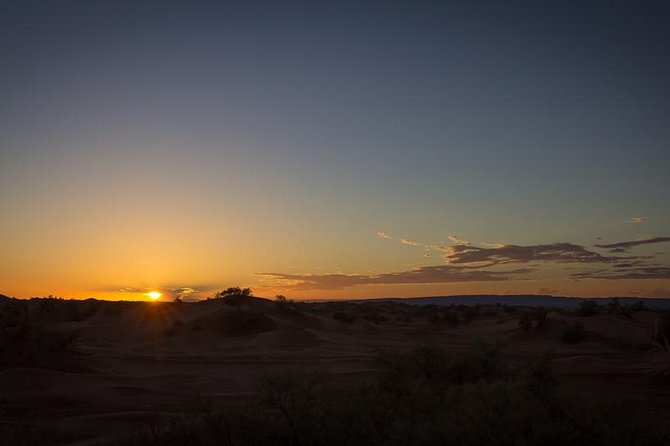
With the morning breeze, you begin the walk back to M’Hamid. The stated walking time is about three hours, followed by a return to camp where you can shower, eat lunch, and spend the night.
This is a welcome change after several nights outside. A shower matters after repeated walks through sand, and the final night in M’Hamid gives you a softer landing before the long drive north.
The experience includes five nights of accommodation according to the package details, while meals are listed as six breakfasts, six dinners, and five lunches. Since the day-by-day schedule can be read slightly differently from the meal list, confirm the exact sleeping arrangements and final meal plan when you book.
Day 6: The long road back to Marrakech
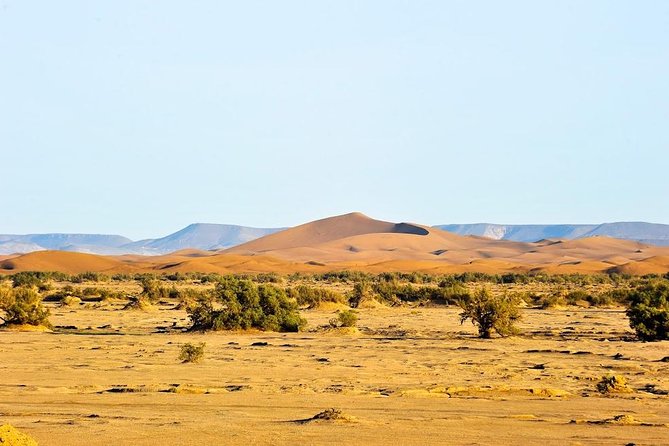
The final day begins early at your M’Hamid accommodation. You retrace the road north through the desert and Atlas region and should arrive back at your Marrakech hotel or riad in the late afternoon.
The transfer is listed at about 15 hours, so treat this as a serious travel day. The return route gives you another chance to see the Draa Valley, the mountain roads, and the changing colors of southern Morocco, but you will be tired after nearly a week of walking and camping.
If you have a flight on the same evening, this schedule leaves little margin. A night in Marrakech after the trek is the safer plan.
What the walking is really like
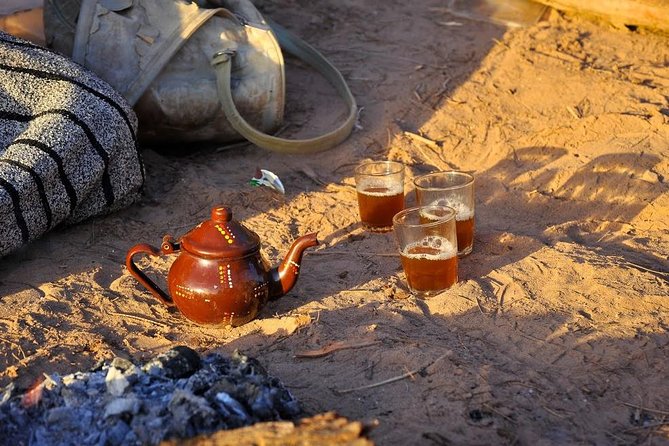
The tour is described as suitable for people with moderate physical fitness. That wording deserves attention. You do not need to be an athlete, but you should be comfortable walking for several hours on uneven ground and coping with sun, sand, and limited shade.
The route is not one continuous march from sunrise to sunset. The day often breaks into a morning walk, lunch under tamarisk trees, a nap or rest, and an afternoon walk. That rhythm is sensible in a hot desert, but it still requires patience.
Bring sturdy shoes, sun protection, light clothing that covers your skin, and a small day bag. The camel caravan carries the main luggage, but you will want water and personal items close at hand. Bottled water, tea, coffee, breakfasts, dinners, and five lunches are listed as included, although the general inclusions section also says food and drinks are not included. Clarify that apparent contradiction before departure.
The people and the private-tour feel
Khalil is identified as the manager and organizer, while Abdo, Ali, and Mohamed are named among the guides. The human side of this trip matters. The experience is built around local guiding, camel handling, cooking, songs, and stories around the fire.
Past descriptions of the tour highlight very attentive camel support, including several camel drivers and more than one camel per person in one group. That exact staffing level may vary, so do not assume it is guaranteed, but it shows how the luggage and camp work are intended to be handled.
The private format is another strong point. Only your group takes part, which is useful for families, couples, or friends who want a quieter journey. One family completed a similar trek with children aged 8, 10, and 12, and the walking was described as three to five hours a day. Still, children’s comfort will depend on heat, patience, and their ability to handle simple camps.
French-speaking customers may also find the operation accessible, since several descriptions of the experience are in French. The listed team names and repeated emphasis on kindness, organization, food, songs, and stories suggest a warm, personal style rather than a purely logistical transfer.
What the $999.74 price buys you
At $999.74 per person, this is not a cheap way to see the Sahara. Its value depends on how you measure the trip.
The price covers five nights of accommodation, a driver and guide, local taxes, bottled water, coffee or tea, breakfasts, dinners, and five lunches. It also includes the camel caravan, the desert guide team, the road journey between Marrakech and M’Hamid, and the route through Ait Benhaddou, Tichka Pass, Zagora, and the Draa Valley.
For a private six-day journey with transport from Marrakech and several days of camel-supported walking, the package can make sense if you want an organized expedition without arranging each piece yourself. You are paying for people, animals, transport, meals, camp setup, and route planning, not just a bed in the desert.
The value is weaker if you want a polished resort-style holiday or only a short taste of desert scenery. Much of the price also pays for the long road transfers. Ask for a clear list of what food and drinks are covered, since the package information uses conflicting wording about inclusions.
Who should book this desert trek
You should consider this trip if you want:
- Several days away from roads, screens, and city noise
- A walking-based desert experience rather than a short vehicle excursion
- Local guides, camel drivers, camp cooking, songs, and stories
- A private trip for your own family or group
- A route that includes both the Sahara and major sights between Marrakech and M’Hamid
- A chance to see Erg Zahar at sunset and spend nights in simple desert camps
You may prefer another option if you want a short transfer, hotel-level comfort, a fixed short walking distance, or a compact itinerary. The 15-hour return drive is also a serious drawback for anyone with limited time.
Booking confirmation is provided at the time of purchase, and free cancellation is available up to 24 hours before the 8:00 a.m. start. Changes or cancellations inside that window are not accepted for a refund.
Should you book it?
I would choose this trek if my main goal were to slow down and experience the Sahara through walking, camp life, and time with a local team. The combination of Sidi Naji, Erg Zahar, tamarisk-shaded rests, camel-supported luggage, and nomadic-style evenings gives the route more substance than a quick dune visit.
I would not book it without first confirming the meal details, sleeping arrangements, and exact pickup plan. If you are fit enough for several hours of walking and comfortable with basic desert conditions, the price offers a substantial six-day experience. If you mainly want dramatic dunes with minimal exertion, choose a shorter camp trip instead.
FAQ
Where does the tour begin?
It begins at Hôtel Restaurant Café de France near Jemaa el-Fna in Marrakech at 8:00 a.m.
Where does the tour end?
The activity ends back at the Marrakech meeting point, with drop-off at your Marrakech riad or hotel listed for the final day.
How long is the tour?
The experience lasts approximately six days, including the road journey from Marrakech to M’Hamid and the return to Marrakech.
Is this a private tour?
Yes. Only your own group participates in the activity.
How much walking is involved?
The walking days generally involve several hours on foot. Day 3 is divided into two hours in the morning and two hours in the evening, and Day 5 includes about three hours walking back to M’Hamid.
Do camels carry the luggage?
Yes. A camel caravan carries the luggage during the desert trek.
What meals are included?
The package lists breakfast and dinner for six days and five lunches. Bottled water, coffee, and tea are also listed, but the food and drink wording is not fully consistent, so confirm the exact meal plan before booking.
Can I cancel for a full refund?
Yes, if you cancel at least 24 hours before the local start time. Cancellations or changes made less than 24 hours before departure are not accepted for a refund.
Just added around Morocco
- Essaouira Beach Horse Rides &Treks for All Levels★ 5.0 · 13 reviews
- 4 days tour and trek from Fez to Marrakech via Sahara Desert★ 5.0 · 3 reviews
- 2 days trekking from Chefchaouen to Akchour★ 5.0 · 12 reviews
- 4 days trekking in the Rif mountains★ 5.0 · 9 reviews
- 3-Day Trekking from Chefchaouen – Rif Mountains Adventure★ 5.0 · 16 reviews
- Trekking in Morocco / Atlas Mountains and Sahara Trek (5days)★ 5.0 · 8 reviews
- 8-Day Morocco Adventure: Imperial Cities & Sahara Desert Trek★ 5.0 · 37 reviews
- Paradise Valley Trekking★ 5.0 · 5 reviews
MHamid Trekking Tours, compared.
From Zagora: 3-Desert Tour to Erg Chigaga Dunes & Caml Trek
Read our review →Browse the lists this trek appears in