
Review · MOROCCO
Mt Toubkal Ascent Express Trek 2 Days 1 Nights
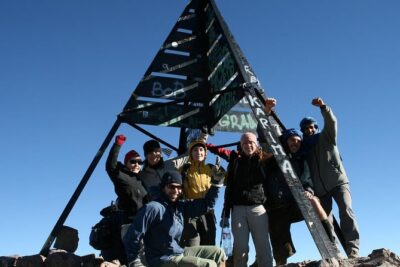
Mount Toubkal rises to 4,167 meters, making it the highest peak in North Africa. This two-day route gets you from Marrakech to the summit and back with surprising speed, but the short schedule demands strong legs, sensible pacing, and proper clothing. The sunrise from the top can be unforgettable, with views toward Marrakech, the High Atlas, the Anti-Atlas, and the Sahara.
I like the excellent guide support and the warm Berber hospitality along the route. Guides such as Mohamed, Omar, Mustafa, Hussain, Yassine, and Mouad have been praised for steady pacing, altitude checks, and helping people who fell behind or felt ill. I also like the price: at $147 per person, transport, meals, tea, refuge lodging, and guiding make this a strong value.
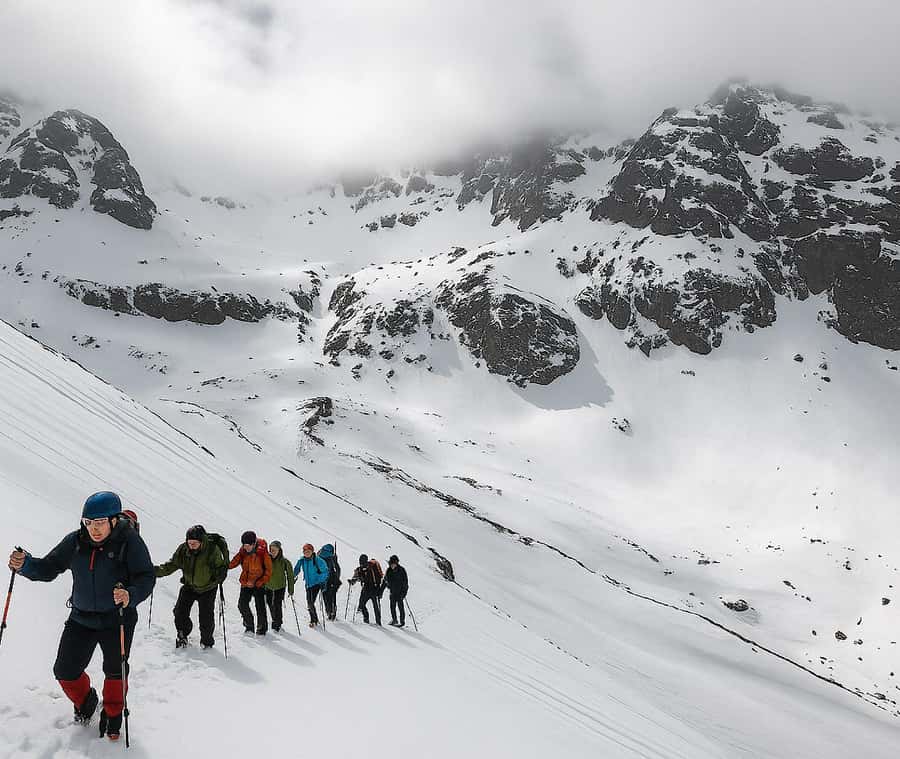
The catch is the second day. Ten to twelve hours of walking, much of it above 3,000 meters, is a serious test. In winter, snow, wind, crampons, and poor visibility can stop the summit attempt. You need to treat this as a demanding mountain trek, not a casual day trip from Marrakech.
Key points to know before climbing Mount Toubkal
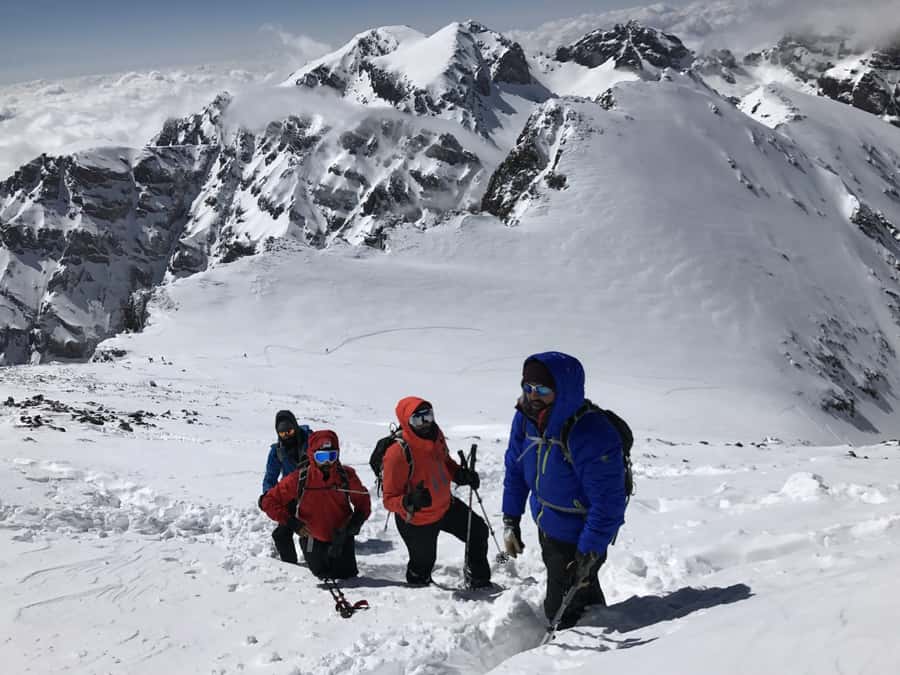
- The summit day is long: Expect roughly 10 to 12 hours from the refuge to the summit, back to the refuge, and down to Imlil.
- The route is non-technical but demanding: You do not need climbing skills, though loose rock, easy scrambling, snow, and crampons may be part of the route.
- Sunrise is the reward: The early start is timed to reach the summit around first light when conditions allow.
- Guides provide strong personal support: The guiding team helps with pacing, equipment, altitude concerns, and returning safely if conditions turn bad.
- The refuge is basic: Shared rooms, bunk beds, limited sleep, and simple facilities are part of the deal.
- Winter equipment matters: Warm layers, gloves, a head torch, sunglasses, rain gear, and suitable boots are not optional in cold months.
What the $147 price really buys you
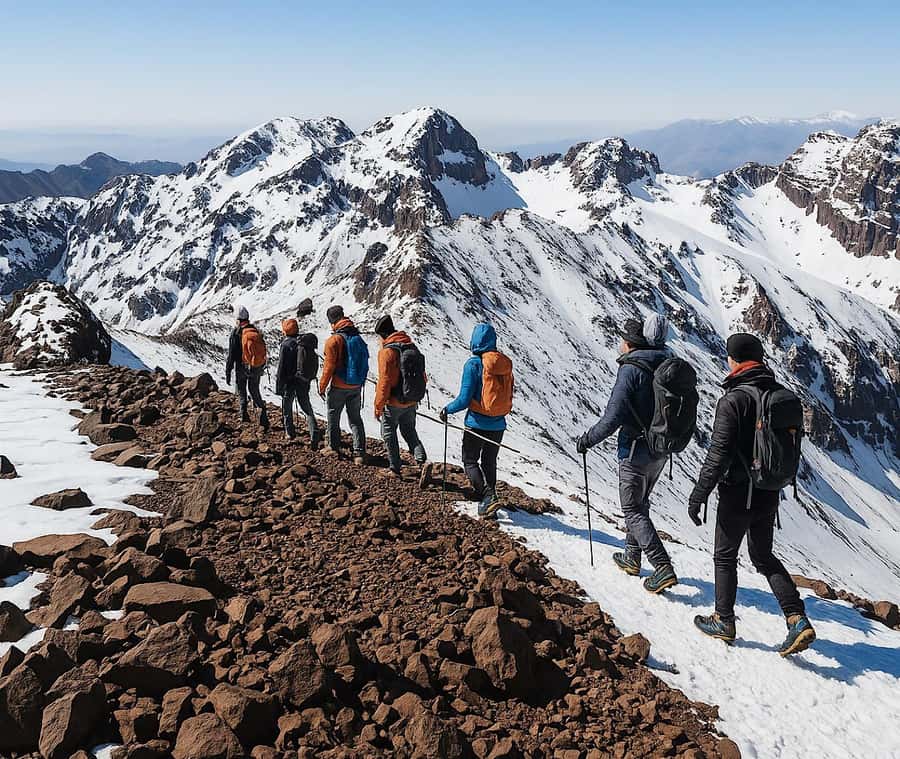
At $147, this Mount Toubkal ascent offers a lot for a two-day mountain trip. The price includes pickup and drop-off in Marrakech, return transport, a local and professional guide, meals, tea and coffee, and one night of refuge accommodation. For many people, arranging the guide, refuge, transport, and meals separately would be less convenient and may not cost less.
The value is especially clear if you need help with the mountain logistics. In Imlil, you can rent sleeping bags, crampons, ice axes, warm clothes, walking poles, and other equipment. You can also leave unnecessary luggage there. A mule costs 20 euros, while porters are not included.
Still, $147 does not mean everything is covered. Bring cash for water, snacks, equipment rental, soft drinks, or a mule. Several people found that extra food was useful, especially on the long summit day. Larger walkers may need more calories than the included meals provide.
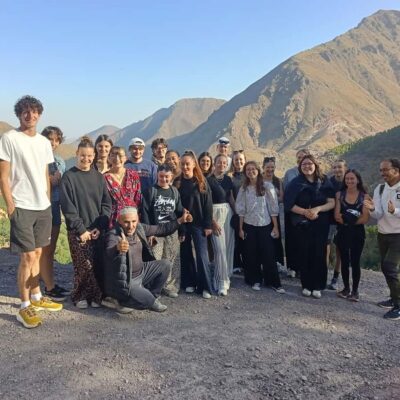
The small-group limit is 14 people, though the exact size can vary. A smaller group usually makes it easier for the guide to watch everyone, set a steady pace, and respond if someone struggles. The guide names are not guaranteed, but the operation has used guides including Mohamed Boudchichi, Omar, Mustafa, Hussain, Hassan, Yassine, Mouad, Kamal, and Ibrahim.
More Atlas Mountains Treks in Morocco:
- Marrakesh: 2-Day Mt. Toubkal Trek with 1-Night Stay & Meals
★ 4.7 · 795 reviews - Marrakech: 2-Day Atlas Mountains Trek with Village Stay
★ 4.8 · 717 reviews - From Marrakech: 3-Day Mount Toubkal Climbing Trek
★ 4.7 · 597 reviews
Leaving Marrakech for Imlil and the Aït Mizane Valley
Your pickup is normally from your hotel or riad in Marrakech. The provider confirms the exact meeting point directly, often by email or message. Allow some patience at the start, since pickup arrangements have occasionally caused delays or confusion. A central Marrakech location may be simpler than a difficult-to-find accommodation.
The drive takes you toward Imlil, at about 1,740 meters. Imlil is the practical gateway to Mount Toubkal, and it is where you meet the local mountain team, arrange any equipment rentals, and sort out luggage before walking.
There can be a wait in Imlil while groups are organized and equipment is handed out. Use this time well. Check your boots, tighten your pack, fill your water bottles, and make sure your warm layers are easy to reach. Take your passport, since a checkpoint may appear on the way to the mountain.
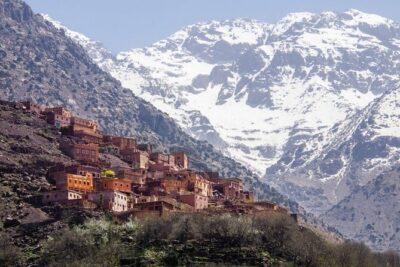
The first walking section follows the Aït Mizane Valley toward Aremd. This is a good introduction to the area because the route passes through villages, farmland, and mountain scenery rather than sending you straight onto a bare ridge. The valley also gives you a chance to settle into the guide’s pace.
Sidi Chamharouch and the first taste of altitude
The route continues toward Sidi Chamharouch, a well-known shrine and stopping point beside a waterfall. The place adds cultural interest to what could otherwise be a simple uphill walk. It is also a natural place for a drink, snack, or short rest.
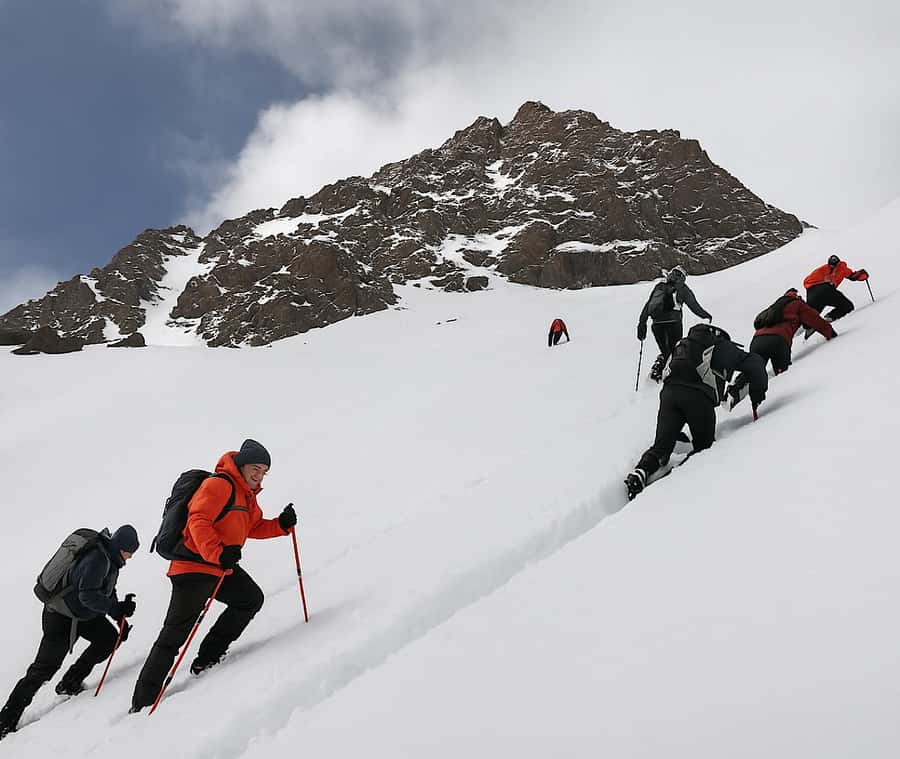
From here, the path becomes steeper and rougher. The walking remains non-technical, but the surface can be rocky and uneven. You will feel the elevation gain more clearly as the air thins and the valley drops farther below.
The total walking time from Imlil to the refuge is about five to six hours. That figure depends on the group pace, stops, weather, and how well you handle the climb. Do not race the first section. Several strong walkers found that a measured pace early on helped once altitude became more noticeable.
Meals are provided along the way as arranged by the mountain team. Food has been a strong part of the experience, with fresh, plentiful meals and good vegetarian choices. Still, pack high-calorie snacks. Nuts, dried fruit, energy bars, or chocolate can make a real difference when the next meal feels far away.
Sleeping at 3,207 meters in the Toubkal Refuge
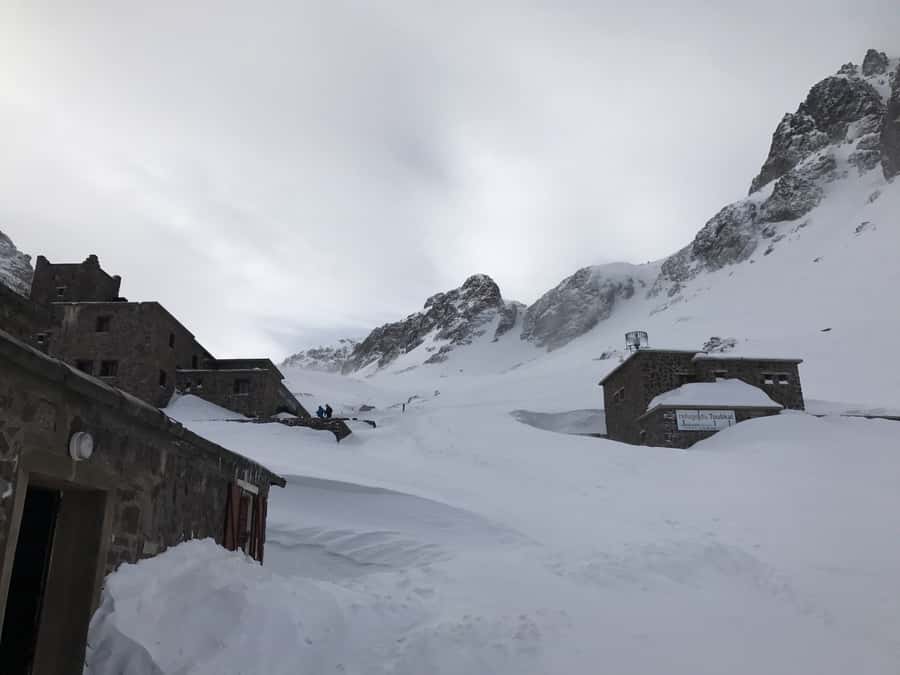
The refuge sits at about 3,207 meters and is your overnight base. It offers a bed, food, and shelter from the mountain, but it is not a private hotel. Expect shared rooms, bunk beds, basic facilities, and a crowded atmosphere.
Sleep can be poor. Some people find the dormitory noisy or the beds hard, while others are simply too excited or uncomfortable at altitude to rest well. Bring a sleeping bag, or rent one in Imlil. A towel and head torch are also useful, since lights may not stay on when you need them.
Dinner is part of the stay, and the cooking team has served good Moroccan-style food, including vegetarian meals. Portions have sometimes felt limited, especially for bigger walkers or when winter weather restricts supplies. Keep your personal snacks accessible rather than buried in a mule bag.
The refuge is important for more than comfort. It breaks the ascent into two sections and gives you a protected place to prepare for the summit start. It also creates the social side of the trip. You share a room, meals, and a tough goal with people from several countries. That can turn a hard walk into a memorable group experience.
A few more treks around Morocco worth a look
- From Marrakesh: 2-Day Mount Toubkal Trek
★ 4.7 · 591 reviews - Toubkal Trekking 2 Days
★ 5.0 · 98 reviews - Toubkal trek – 2 days
★ 5.0 · 90 reviews - Marrakech: 2-Day Atlas Villages Trekking Tour
★ 4.5 · 76 reviews
The pre-dawn climb toward Jbel Toubkal
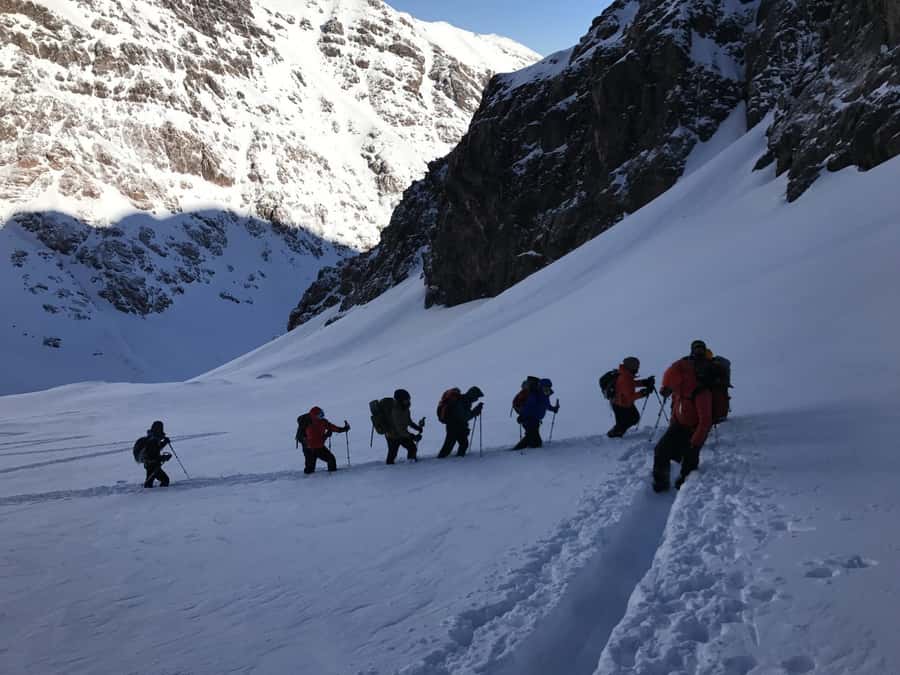
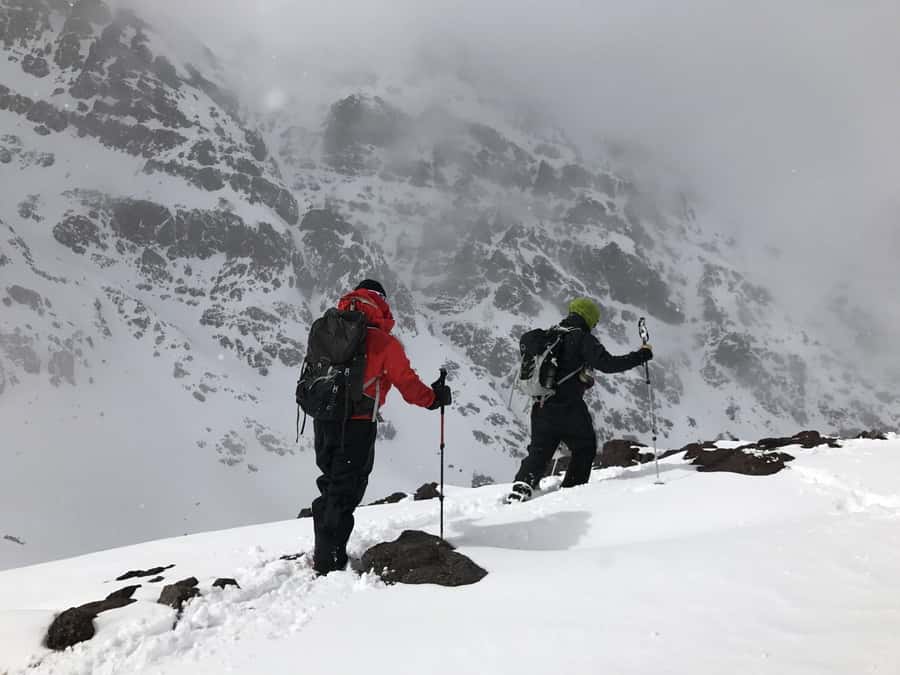
The second day begins early, often around 4 a.m., with breakfast before the climb. Your head torch becomes essential as you leave the refuge in darkness. The goal is to reach the summit near sunrise, though snow, wind, pace, and visibility can change the timing.
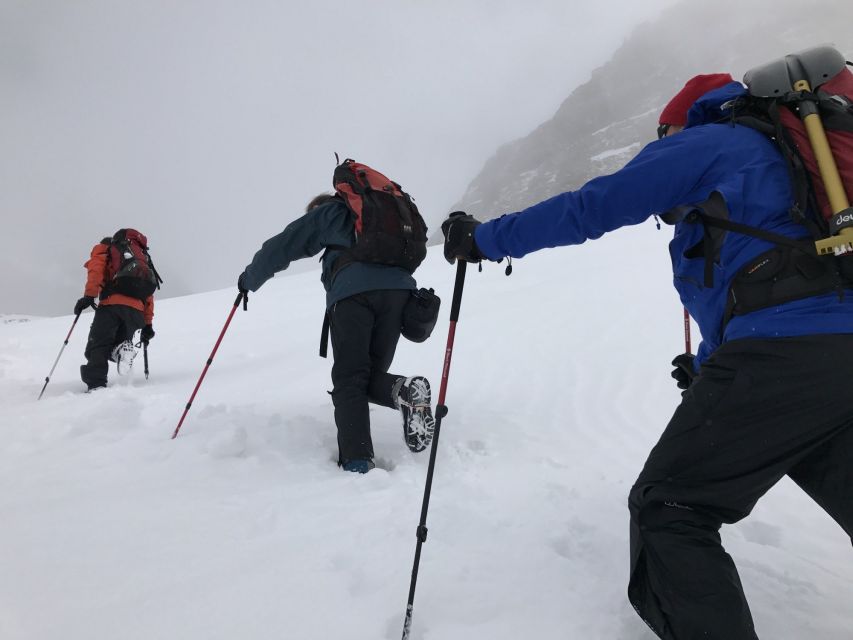
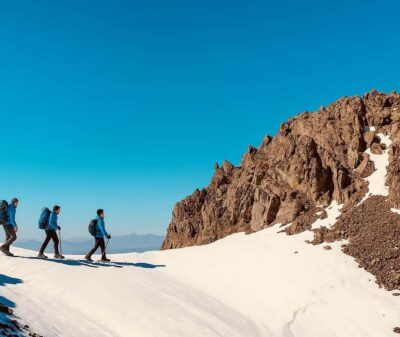
The route crosses streams and climbs through rocky ground toward a higher plateau. In warmer, drier conditions, the challenge is steep walking over loose rock. From November through April, snow can cover the route. You may need crampons or an ice axe for security, and both can be rented in Imlil.
This is a non-technical trekking route, not a rock climb. You do not need ropes or advanced mountaineering ability. You do need balance, stamina, and comfort with steep paths, loose stones, easy scrambling, and possible snow slopes.
Altitude is the main issue. You go from Marrakech to 3,207 meters in the first day, then climb to 4,167 meters the next morning. Headache, nausea, unusual fatigue, or dizziness should be reported to the guide at once. A guide may slow the pace, turn someone around, or arrange a mule and transport down. That is sensible mountain judgment, not failure.
Sunrise at 4,167 meters
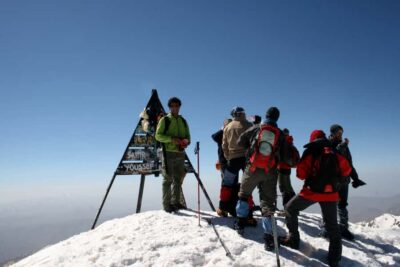
Reaching the summit is the emotional high point of the trek. From the top, you can see the High Atlas to the north, the plain around Marrakech, and the Anti-Atlas and Sahara to the south when visibility is good.
Sunrise gives the summit extra drama. The first light spreads across the ridges while the air remains sharply cold. You should have your gloves, hat, sunglasses, and spare warm layer ready before reaching the top. The wind can be strong even when the weather in Marrakech feels mild.
Do not assume the summit is guaranteed. Winter storms have stopped ascents because of blizzards, deep snow, or unsafe conditions. On some departures, the group reached the refuge but was not allowed to continue. Guides have sometimes substituted another mountain or focused on getting everyone safely back down.
That flexibility is part of a responsible trip. Mount Toubkal is a high mountain, and a summit decision depends on current conditions. You may feel disappointed, but reaching the refuge in a storm can still be a serious and rewarding mountain day.
The long descent to Imlil
After the summit, you retrace the route toward the refuge, collect your belongings, and continue down to Imlil. The descent is often harder than expected. Tired legs, loose rock, and steep downhill sections put stress on knees and feet.
The full second day can last 10 to 12 hours. That includes the pre-dawn ascent, time at the summit, the return to the refuge, and the long descent to Imlil. Plan to feel tired at the end. A rest day after the trek is a wise choice, especially if you have more time in Morocco.
Guides have helped people down by adjusting the pace, carrying heavy packs, accompanying sick walkers, or arranging a mule. One practical point: keep valuables and essential items with you. Bags carried by mule need to be clearly identified, and an item can be misplaced during the return.
Once you reach Imlil, a vehicle takes you back to Marrakech. The return transport is included, though drop-off has not always been as smooth as pickup. Confirm where you will be left before setting off, and keep your phone charged for the final transfer.
What to pack for this fast ascent
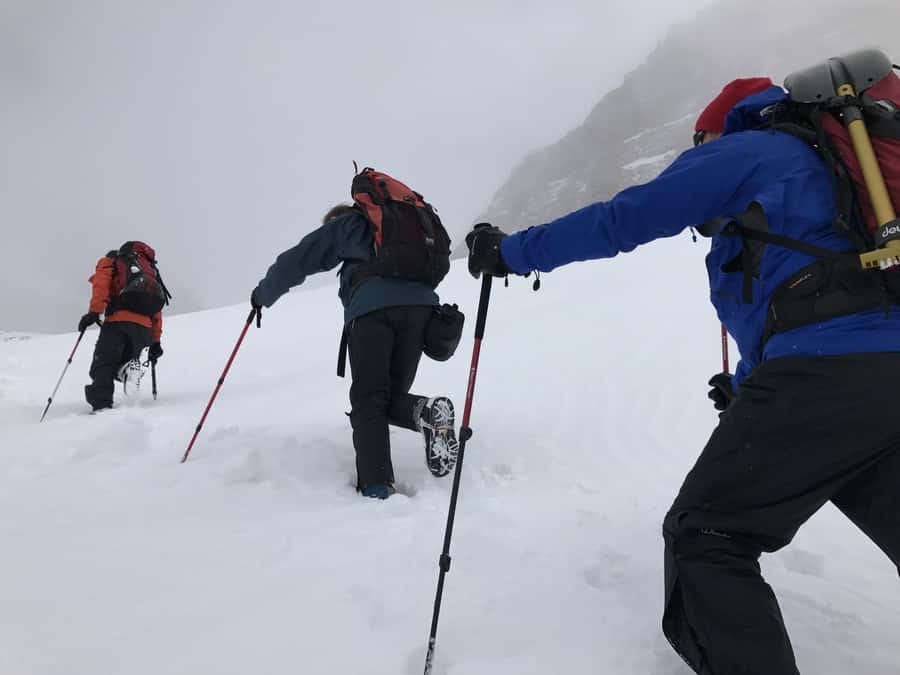
Your packing choices can decide how comfortable and safe the trek feels. Conditions change sharply between Marrakech and the summit, so do not pack as if this were a warm-weather walk.
Bring:
- Sturdy hiking shoes or boots
- Warm layers, including a hat and gloves
- Waterproof rain gear
- Sunglasses
- A head torch with charged batteries
- Sleeping bag
- Towel
- Water and high-calorie snacks
- Phone, charger, and some cash
In winter, arrange crampons, an ice axe, or warmer clothing in Imlil if needed. Do not wait until the summit morning to discover that your footwear is unsuitable.
You may also want walking poles, though they are not listed as included. Equipment rental is available in Imlil. Ask the local team what current conditions require, since snow and ice levels vary.
Who should choose this two-day Toubkal trek?
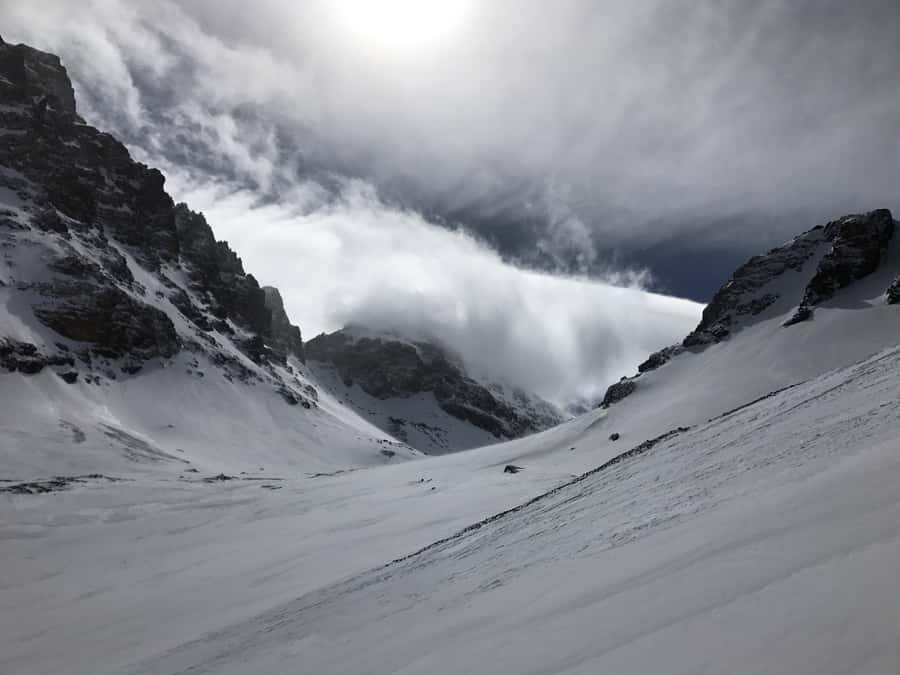
This trip suits you if you already hike, enjoy a demanding challenge, and want to reach a 4,000-meter summit without organizing every detail yourself. A fit and determined walker can manage the route, but the fast schedule makes it harder than a slower three or four-day ascent.
It is a good first 4,000-meter peak for someone with solid walking fitness and the right attitude. The route is not technical, and guides offer plenty of help. It is not a good choice if you want relaxed sightseeing, long breaks, private rooms, or a guaranteed summit.
People with mobility impairments and pregnant women should not book this activity. If you are unsure about altitude or winter walking, choose a longer itinerary or ask a medical professional before going.
The guide team is one of the strongest parts of the experience. Good guides keep the pace controlled, check on quieter walkers, explain Berber culture, and make clear decisions in bad weather. Several guides have also helped children and people with altitude sickness, though every participant still needs to take responsibility for fitness and equipment.
Should you book the Mount Toubkal Ascent Express?
Book it if you want a high-value, tightly scheduled mountain challenge from Marrakech and accept that the second day will be long. The combination of transport, meals, refuge lodging, guiding, and local support is hard to fault at $147.
Before paying, look honestly at your fitness, the season, and your tolerance for basic accommodation. Pack for cold weather even if Marrakech is warm, bring your own snacks, and leave room in your schedule to recover afterward.
I would choose this trek for a determined hiker who wants a first North African summit and values local guides over comfort. I would skip it in favor of a slower route if you are new to long mountain days, worried about altitude, or visiting during unsettled winter weather. The summit is wonderful when conditions allow, but the real measure of the trip is getting safely through the mountain.
FAQ
How high is Mount Toubkal?
Mount Toubkal is 4,167 meters high and is the highest peak in North Africa.
How long is the trek?
The activity lasts two days and includes one night at the Toubkal Refuge.
How much walking is required on the first day?
The first day involves about five to six hours of walking from Imlil at 1,740 meters to the refuge at 3,207 meters.
How long is summit day?
The second day can involve 10 to 12 hours of walking, including the summit, return to the refuge, and descent to Imlil.
Is Mount Toubkal a technical climb?
It is a non-technical trekking peak rather than a technical climb. The route can include easy scrambling, loose rock, and snow slopes.
Are crampons and ice axes needed?
From November through April, snow may mean you need crampons or an ice axe for security. These items can be rented in Imlil.
Is accommodation included?
Yes. One night at a mountain refuge is included, with shared and basic sleeping arrangements.
Are meals included?
Yes. Meals are included according to the schedule, along with tea and coffee. Soft drinks are not included.
Is a sleeping bag provided?
No. You need to bring one or rent one in Imlil.
Is transport from Marrakech included?
Yes. Hotel or riad pickup, return transport from Marrakech, and drop-off are included. The provider confirms the meeting point directly.
How large is the group?
The activity is offered as a small-group trek with up to 14 participants.
Can the summit attempt be canceled?
Yes. Severe weather, snow, or unsafe conditions can prevent the summit attempt. The guides decide how to proceed based on mountain conditions.
Can I cancel the booking?
You can cancel up to 24 hours in advance for a full refund. The activity also allows you to reserve now and pay later.
Just added around Morocco
- Essaouira Beach Horse Rides &Treks for All Levels★ 5.0 · 13 reviews
- 4 days tour and trek from Fez to Marrakech via Sahara Desert★ 5.0 · 3 reviews
- 2 days trekking from Chefchaouen to Akchour★ 5.0 · 12 reviews
- 4 days trekking in the Rif mountains★ 5.0 · 9 reviews
- 3-Day Trekking from Chefchaouen – Rif Mountains Adventure★ 5.0 · 16 reviews
- Trekking in Morocco / Atlas Mountains and Sahara Trek (5days)★ 5.0 · 8 reviews
- 8-Day Morocco Adventure: Imperial Cities & Sahara Desert Trek★ 5.0 · 37 reviews
- Paradise Valley Trekking★ 5.0 · 5 reviews
Atlas Mountains Treks, compared.
2-Day Mt. Toubkal Trek with 1-Night Stay & Meals
Read our review →
Summiting and Hiking the Atlas Mountains Day Trek from Marrakech
Read our review →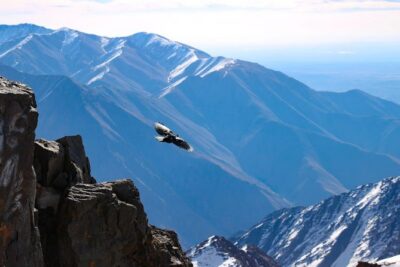
Browse the lists this trek appears in