
Review · MHAMID
5-day trek – In the Draa Valley
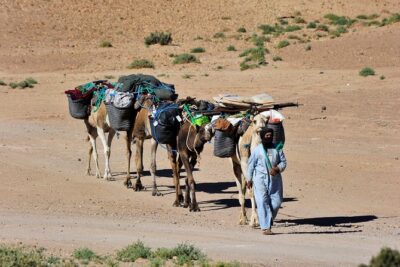
The best part of this five-day Draa Valley trek is the steady pace. You walk 13 to 17 kilometers a day through shifting desert country, following animal tracks and old routes rather than rushing from one photo stop to another. The setting moves between high ergs, dry open ground, and surprisingly green pockets where desert plants have adapted to life at the Sahara’s edge.
I like the direct contact with nomadic life, especially the time spent with local guides such as Bakkar and Mohammed. I also like that eating and sleeping equipment is included, so the trip is built around simple camp life, shared meals, bread baked in the sand, songs, and evenings under the stars. The main caution is the physical demand: five days of walking in open desert is not a sightseeing stroll, and the sleeping bag is your responsibility.
Key points
- 13 to 17 kilometers of walking per day: Plan for a real trek, with repeated long days on sand and firm desert ground.
- A less-frequented stretch of the Draa Valley: The route alternates between fertile areas and stark, arid terrain.
- Local nomadic guides: Bakkar, Mohammed, and the wider four-person team provide cultural context and practical support.
- Camp life is part of the attraction: Equipment, meals, fireside evenings, singing, dancing, and traditional bread-making shape the experience.
- A private trip for your group: You are not placed with strangers, though the group still needs to match the walking demands.
- M’Hamid start and finish: Pickup is offered, but private transportation is not included, so confirm exactly how your arrival will work.
Five days at the Sahara’s green edge
M’Hamid is the launch point for this trek into the Draa Valley, a region that refuses the usual postcard version of the Sahara. You do get impressive ergs and broad stretches of sand, but you also see scrub, desert plants, and fertile sections shaped by the valley’s water. That change of scenery gives the walk more texture than a simple out-and-back among dunes.
The trip is described as an introduction to nomadic life. That means the appeal is not only the scenery. You are learning how people and animals move through a dry environment, how food is prepared with limited equipment, and how a day is organized when the sky and ground replace roads and buildings.
One detail matters here: the supplied information calls the experience a five-day trek, while one overview line refers to a two-day trek. The detailed description, price, and repeated five-day accounts all point to a five-day program, but I would confirm the exact schedule before paying. A small wording mismatch is worth clearing up when you are committing to a remote walking trip.
A few more treks around Morocco worth a look
- Trekking in Morocco / Atlas Mountains and Sahara Trek (5days)
★ 5.0 · 8 reviews - Annapurna base camp trek 5 Days
★ 5.0 · 252 reviews - Kathmandu to Annapurna Base Camp (ABC) 5-Day Trek
★ 5.0 · 102 reviews
Walking 13 to 17 kilometers through changing desert
Your main activity is walking, often for several hours at a time. The reported daily distance of 13 to 17 kilometers gives you a useful sense of the effort. Sand can make a moderate distance feel much longer, and there may be limited shade, so your fitness and attitude matter as much as your enthusiasm.
The route follows the traces of animals that live around the Sahara’s northern edge. That is a fine way to read the desert. Instead of treating it as empty space, you begin to notice that it has routes, food sources, plants, and signs of movement. The guides’ local experience is especially important here, since the value of the walk comes from understanding what you are seeing.
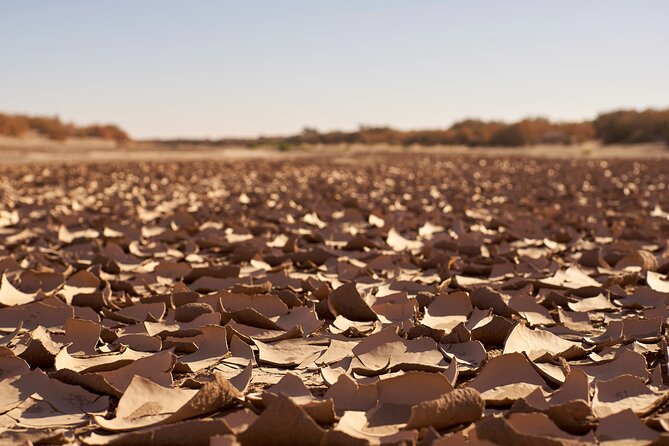
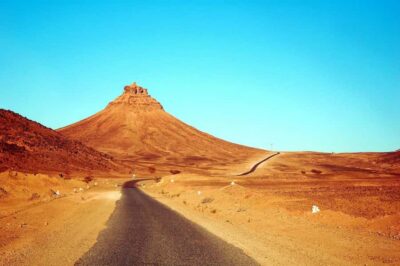
The Draa Valley changes as you go. Some sections are arid and spare, with open ground and dunes. Others have plants that have adapted to the dry climate and areas that feel unexpectedly green. That contrast is one of the strongest reasons to choose this trip over a quick desert excursion from a nearby town.
You should still be realistic. This is not a gentle stroll broken up by frequent vehicle transfers. The itinerary information does not provide a detailed daily timetable, exact distances by day, or a route map. Ask about those points if you have knee, ankle, or back concerns, or if you are unsure about walking several consecutive days.
Ergs that connect desert scenery with local history
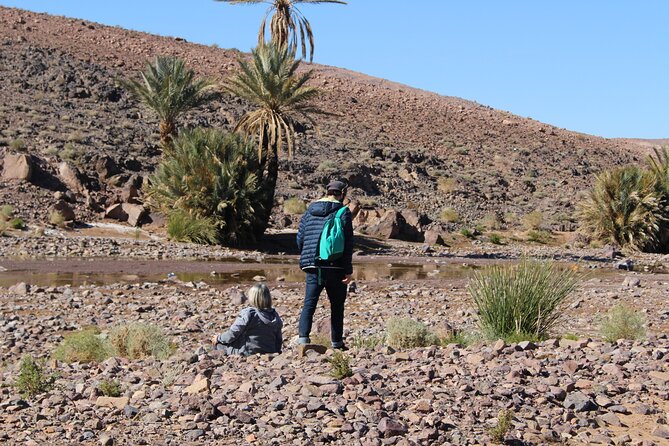
The ergs are more than attractive piles of sand. They have been part of the lives and movement routes of the people of the region, and the trek presents them in that human context. You get time to see how dunes change shape, how they meet harder ground, and how a route can pass from sand to plant-covered terrain.
I would not expect every hour to deliver a dramatic dune view. The charm of this part of Morocco lies in the transitions: a dry stretch, a low patch of vegetation, an animal trail, then a wide erg catching the changing light. The scenery rewards patience more than frantic photography.
The phrase long Draa Valley can sound grand, but the useful point is that the route reaches a part of the valley that is described as less frequented. That can mean more quiet and a stronger sense of distance from ordinary routines. It also means you should not expect the services of a resort or a fully equipped camp.
Camp meals, desert bread, and evenings by the fire
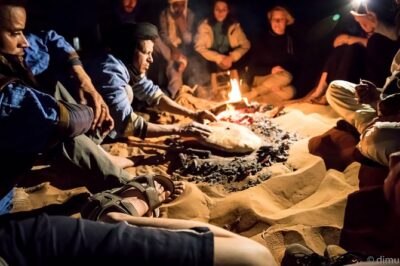
Eating and sleeping equipment is included, which adds real value to a five-day trip. You are not being asked to arrange the basic camp setup yourself. Meals are also part of the experience, with accounts of generous cooking, traditional food, and bread baked in the desert.
Bread preparation is a small but memorable detail. It turns a meal into a lesson in practical desert cooking, and it gives you a chance to watch a tradition rather than simply receive a plate. The food is not an optional extra here. It helps define the rhythm of the day and the connection with the people guiding you.
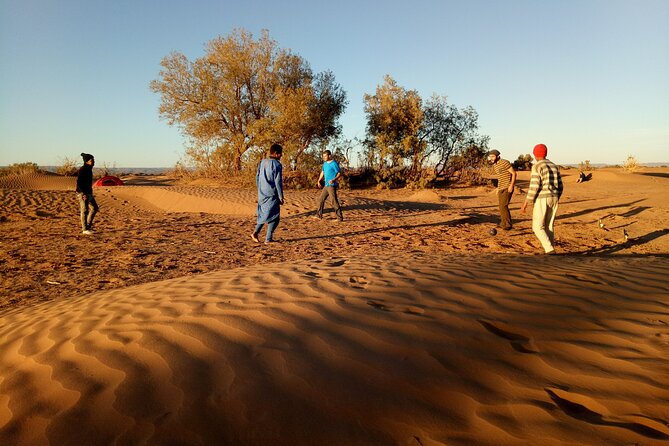
Evenings are described as a mix of fireside conversation, singing, dancing, and quiet under the stars. You may find the social side as rewarding as the walking, especially if you enjoy trips where the group spends time together without phones, laptops, or power outlets. One account specifically describes five days without those familiar connections, with the silence becoming part of the point.
That digital break is a benefit only if you want it. If you need regular charging, reliable communication, or a private room each night, this will feel basic. The information does not promise electricity, internet access, or individual sleeping arrangements. Bring the right expectations, and the simplicity becomes an asset rather than a surprise.
Same trailhead, a different route:
- Mt Toubkal Ascent Express Trek 2 Days 1 Nights
★ 4.7 · 962 reviews - Marrakesh: 2-Day Mt. Toubkal Trek with 1-Night Stay & Meals
★ 4.7 · 795 reviews - Marrakech: 2-Day Atlas Mountains Trek with Village Stay
★ 4.8 · 717 reviews - From Marrakech: 3-Day Mount Toubkal Climbing Trek
★ 4.7 · 597 reviews
Local guides Bakkar, Mohammed, and the wider team
The human side of the trek receives the strongest praise. Bakkar and Mohammed are specifically named in connection with a five-day Sahara walk, and the wider team is described as four professional nomads who share their customs and daily habits with visitors.
That distinction matters. You are not simply being led from one dune to another by a generic escort. The experience is built around people who know the area and can explain aspects of nomadic life from personal and cultural experience. Their role appears to include guiding, cooking, camp support, and helping you manage the practical side of the route.
The team is also described as attentive, humorous, generous, and respectful. I would treat those qualities as part of the trip’s value, not as decoration. On a long walk, a good team affects everything: how confident you feel on the route, how well meals are handled, and how comfortable the group becomes at camp.
Still, cultural exchange works best when you arrive with humility. You are visiting a living tradition, not entering a staged show. Listen, ask sensible questions, and let the guides set the pace of conversation. The best moments may be ordinary ones, such as preparing food, watching camp being arranged, or learning why a particular route passes through a certain patch of ground.
What the $581.62 price really covers
At $581.62 per person, this is not the cheapest way to see the Moroccan desert. It is also not priced like a simple half-day outing. You are paying for five days of guiding, camp support, food, sleeping equipment other than a sleeping bag, and the planning needed to move through a remote area.
The value improves if you want a genuine walking trip rather than a short camel or vehicle experience. Five days gives the valley time to reveal its less obvious details, and it lets you settle into a slower rhythm. The included eating and sleeping equipment also saves you from arranging the basic camp infrastructure independently.
The price does not include a sleeping bag or private transportation. Those exclusions can affect your real budget. You need to bring or rent a suitable sleeping bag, and you need to clarify how you will reach M’Hamid if your plans require a private vehicle. Pickup is offered, but the information does not specify the pickup area, price, or whether it applies to every arrival arrangement.
For a private trip, the cost may make more sense for a small group that values control over the pace and company. Only your group participates, so you are not automatically mixed with strangers. Ask how the rate changes with group size, since the value can look different for one person than for several friends sharing the experience.
Starting at 8:00 am in M’Hamid
The meeting point is in M’Hamid, Morocco, with an 8:00 am start. The activity ends back at the meeting point, which makes planning simpler if you are staying in or near M’Hamid before and after the trek.
Pickup is offered, and the area is near public transportation. Those facts help, but they do not answer every transport question. Private transportation is not included, so confirm the pickup terms, meeting instructions, and any transfer cost before departure. If you are arriving from elsewhere in Morocco, leave enough margin to avoid reaching M’Hamid at the last minute.
A morning departure is sensible in a hot, exposed region, but it also means you need to be ready early. Have water, sun protection, comfortable walking shoes, and your sleeping bag arranged before the start. The details do not state a packing list, so ask the operator what they recommend for clothing, personal water, and luggage.
Who should book this Draa Valley trek
I would recommend this trip to you if you want a quiet, physical connection with the desert and are happy to trade comfort for time outdoors. It suits people who enjoy walking, simple camps, local food, open skies, and long stretches without screens.
It is also a good fit if you care about cultural contact. The guides are central to the experience, and the chance to learn about nomadic customs gives the scenery more meaning. You are not just collecting dune photographs. You are seeing how people move, cook, rest, and work in a difficult environment.
I would be cautious about booking if you dislike repeated walking days, basic sleeping conditions, or uncertain phone access. The activity calls for moderate physical fitness, but the 13 to 17 kilometer daily distances suggest that you should be comfortable with sustained effort. A private tour does not make the walking easier. It only means your group has the experience to itself.
The trip is less suitable if you want a tightly itemized itinerary. The available details do not identify each night’s camp, exact stops, or daily route. That open quality may be part of the charm, but you should ask for practical details if you prefer a fixed plan.
Booking, timing, and cancellation details
Confirmation is normally provided at booking. If you book within two days of departure, confirmation may take up to 48 hours and remains subject to availability, so last-minute planning carries some risk.
The cancellation policy gives a full refund when you cancel at least six full days before the 8:00 am start time. Cancelling two to six full days ahead allows a 50 percent refund. Less than two full days before departure brings no refund, and changes inside those cutoffs are not accepted. The times are based on local time in Morocco.
Should you book with L’oiseau du désert?
Book this trek if you want the desert in its slower, more demanding form. The combination of long daily walks, varied Draa Valley terrain, local nomadic guides, traditional meals, campfire evenings, and five nights under open skies offers far more than a quick Sahara stop.
Before booking, confirm the apparent two-day versus five-day wording, the pickup arrangements, the route, and the sleeping bag requirements. If those points suit you, the $581.62 price can be fair for a private, fully supported trek with food and camp equipment included. If you want comfort, short walks, or a guaranteed detailed schedule, choose a shorter desert outing instead.
FAQ
How long is the Draa Valley trek?
The experience is sold as a five-day trek, lasting approximately five days. One description refers to two days, so confirm the exact duration with L’oiseau du désert before booking.
Where does the trek start and finish?
It starts in M’Hamid, Morocco, at 8:00 am, and ends back at the meeting point.
How far will I walk each day?
The available information indicates daily walking distances of about 13 to 17 kilometers.
Is transportation included?
Pickup is offered, but private transportation is not included. Confirm the pickup area and any related cost before departure.
Do I need to bring a sleeping bag?
Yes. Eating and sleeping equipment is included, but the sleeping bag is specifically excluded.
Is this a private activity?
Yes. Only your group participates in the activity.
Just added around Morocco
- Essaouira Beach Horse Rides &Treks for All Levels★ 5.0 · 13 reviews
- 4 days tour and trek from Fez to Marrakech via Sahara Desert★ 5.0 · 3 reviews
- 2 days trekking from Chefchaouen to Akchour★ 5.0 · 12 reviews
- 4 days trekking in the Rif mountains★ 5.0 · 9 reviews
- 3-Day Trekking from Chefchaouen – Rif Mountains Adventure★ 5.0 · 16 reviews
- Trekking in Morocco / Atlas Mountains and Sahara Trek (5days)★ 5.0 · 8 reviews
- 8-Day Morocco Adventure: Imperial Cities & Sahara Desert Trek★ 5.0 · 37 reviews
- Paradise Valley Trekking★ 5.0 · 5 reviews
MHamid Trekking Tours, compared.

From Zagora: 3-Desert Tour to Erg Chigaga Dunes & Caml Trek
Read our review →Browse the lists this trek appears in