
Review · COLOMBIA
Camino Real: Barichara-Guane Trekking Tour + Paleontological Museum
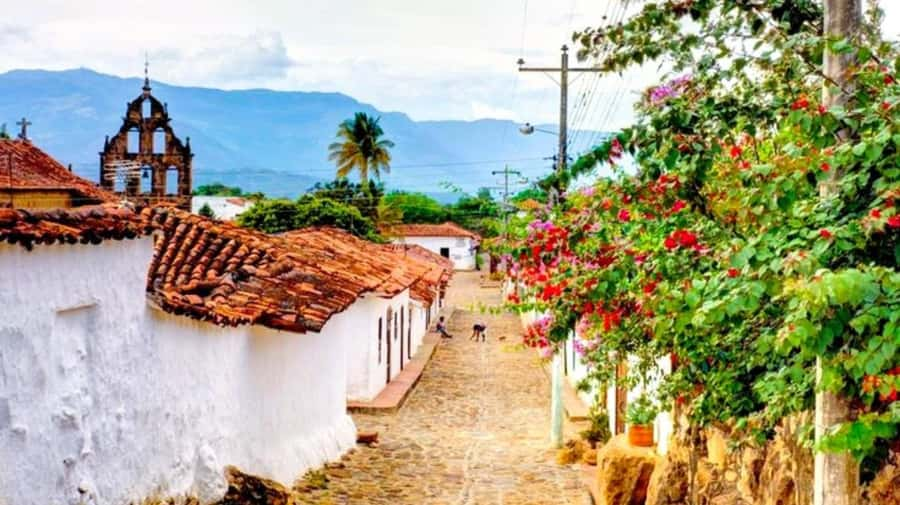
The most memorable part of this four-hour outing is the Camino Real Barichara to Guane, a stone route that links two of Santander’s most appealing villages. You walk through dry mountain country above the Río Suárez Canyon, then finish in Guane with fossils, Indigenous Guane artifacts, and the quiet Chapel of Santa Lucia.
I like the way the tour joins nature and local history instead of treating them as separate stops. I also like that the museum admission is included and that guides such as Miguel and Nico explain the region’s geology, geography, colonization, and Indigenous past. The main catch is the heat: the stony path is easier than it looks, but an afternoon start can be punishing.
Key points at a glance
- A historic stone road: Walk the old Camino Real, once used by the Guane people and later by Spanish colonizers.
- Big canyon views: The Mirador del Río Suárez gives you broad views across valleys, mountains, and the Río Suárez Canyon.
- A useful museum stop: Admission to Guane’s Paleontological and Anthropological Museum is included, including the stated 10,000 Colombian peso admission.
- A gentle but uneven route: The path goes more downhill than uphill, though loose and uneven stones call for proper shoes.
- Strong guiding: Guides such as Miguel and Nico provide context about geology, Indigenous life, Spanish colonization, and the area’s founding.
- Plan your return: Transportation back is not included, so arrange the optional return service or confirm your own plan before setting out.
Why the Barichara to Guane walk matters
The Camino Real is more than a pleasant country path. It is an old route with several layers of Santander’s past under your feet. The Guane people used these roads before Spanish control, and Spanish colonizers later traveled the same corridor. That gives the walk a useful human story: movement, trade, contact, resistance, and change all took place along routes like this one.
You begin at the start of the Barichara to Guane road, by the Simón Bolívar statue. This meeting point is practical because it puts you directly at the route rather than wasting time on a distant office or transfer. From there, your bilingual guide sets the tone with explanations of Barichara’s founding in the 18th century and the natural forces that shaped the surrounding country.
I like this approach because the scenery becomes easier to read. Instead of seeing only cliffs, plants, and distant ridges, you get an explanation of how the mountains and canyon were formed, how people used the route, and why Barichara and Guane developed as they did.
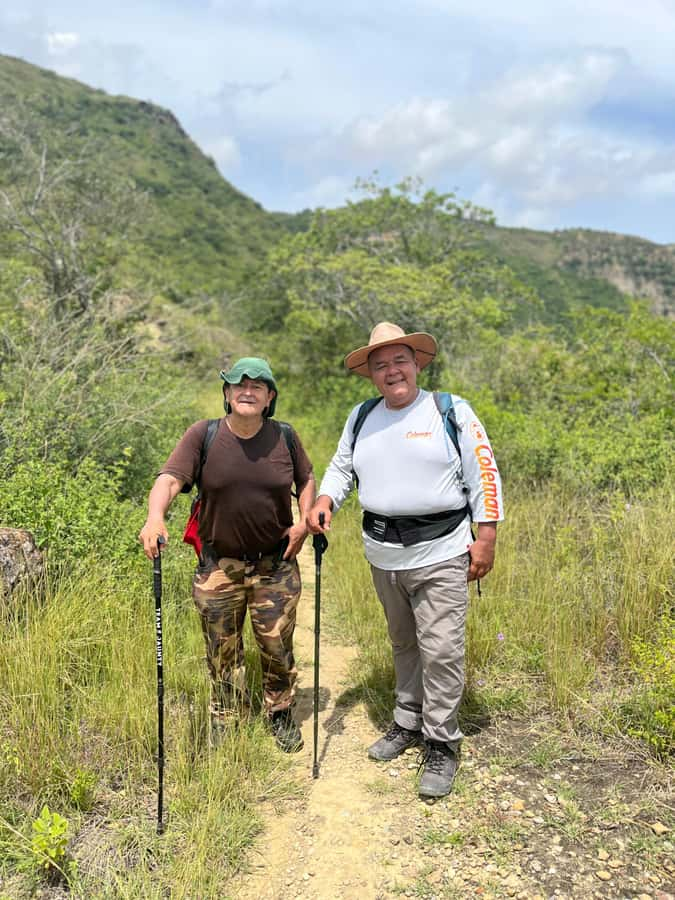
The walk is described as rocky, mostly downhill, and not especially difficult. That does not mean it is a smooth stroll. Uneven stones can be tiring, especially if you are wearing thin sandals or casual city shoes. Hiking shoes, long or sturdy hiking pants, and a bottle you can refill are sensible choices.
A few more treks around the world worth a look
- Kbal Spean Trekking Tour with Banteay Srei & Landmine Museum
★ 5.0 · 3 reviews
Leaving Barichara on an old stone road
Barichara provides an attractive beginning. The town is known for cobbled lanes and colonial buildings, and the opening part of the experience connects that preserved town setting with the countryside beyond it. The change is part of the appeal. You move from streets shaped by colonial settlement to an older route crossing open mountain terrain.
Your guide’s explanation is important here. The experience includes historical and geographical interpretation, not simply directions from one village to another. You can ask about the Guane people, the arrival of the Spanish, and the way the area changed after colonization.
The route also carries a quiet sense of time. The stones are not a modern walking surface designed for comfort. They are part of an old passage, and their uneven character is exactly what makes the walk feel connected to the past. At the same time, that authenticity creates the tour’s main physical limitation. Watch your footing and do not assume the downhill direction means no effort.
The path can feel warmer than expected. One guide’s practical advice is worth taking seriously: go in the morning. The afternoon may be very hot, especially on exposed sections. A sun hat, sunglasses, sunscreen, and plenty of water are not optional extras for most people.
Reading the Río Suárez Canyon from the lookout
The Mirador del Río Suárez is one of the route’s key pauses. From the viewpoint, you can look over valleys and canyon country surrounding the route. The view gives the walk a clear sense of scale, showing how the Río Suárez has helped shape the region.
This is a good place to slow down. The tour is only four hours, but it is not designed as a race from Barichara to Guane. Your guide can connect what you see with the geographical processes discussed earlier. You may find that the lookout is especially useful if you want more than a postcard photograph. It helps explain why the road follows its particular course and why the villages feel separated by rugged country despite their relatively close connection.
Bring sunglasses and a hat because the lookout may offer little shade. The supplied information does not promise facilities at the viewpoint, so carry your own water and use the stop as a chance to rest before continuing.
The canyon views are one of the strongest reasons to choose this experience over a simple transfer between the two towns. A vehicle can get you from place to place, but it cannot give you the same slow view of the road, rock, vegetation, and changing elevation. You also have time to ask questions rather than simply glance out a window.
Guane’s fossils and Indigenous past
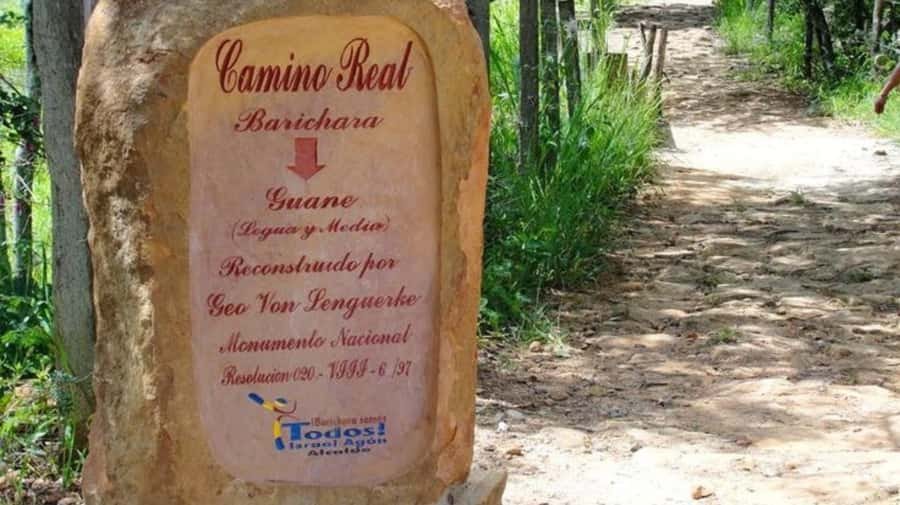
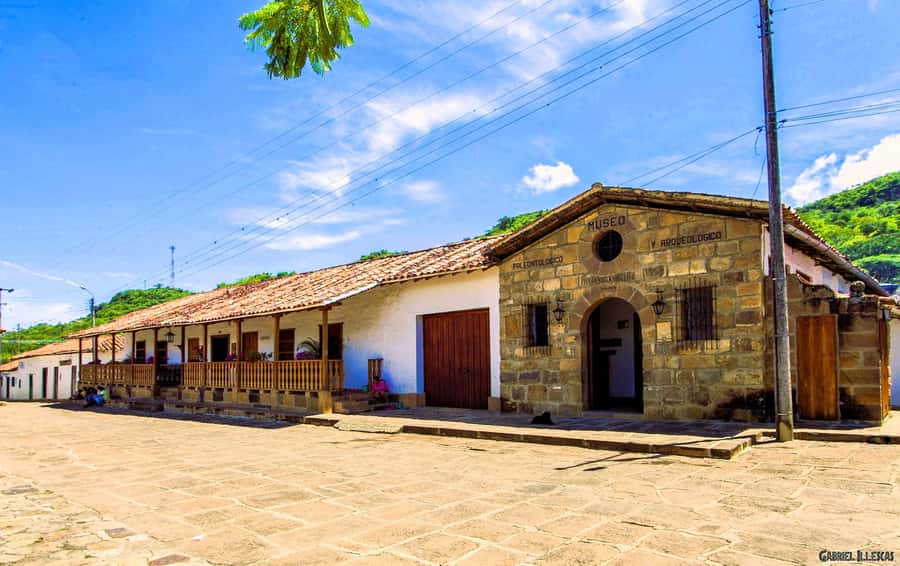
The route finishes in Guane, a much quieter settlement surrounded by mountain country. The village is not treated as a quick endpoint. The tour includes a guided visit to the Paleontological and Anthropological Museum, with admission included in the $35 price.
The museum brings together two subjects that make sense after the walk. The paleontological displays show fossils connected with the Earth’s long development. The anthropological material focuses on the Guane people, their customs, their cultural legacy, and the impact of Spanish colonization.
I value this stop because it broadens the experience beyond colonial architecture. Barichara often draws attention for its beautiful streets and buildings, but the museum points to an older and more complex story. The Guane people were not simply a footnote before Spanish arrival. Their presence, traditions, and struggle remain central to understanding the region.
The admission is listed as 10,000 Colombian pesos per person and is already included. That makes the museum a real part of the outing rather than an optional add-on you might skip to save money. A guide leads the museum visit, so you can ask for help connecting fossils, Indigenous culture, and the wider history of Santander.
Some museum content may be presented in its original language. Since the tour is offered in English and Spanish, confirm with your guide when you need clarification. The bilingual format is useful, but individual displays may not all have full English explanations.
Same trailhead, a different route:
- Mount Etna: Trek to 3000m with cable car and 4×4
★ 4.6 · 3,823 reviews - Bali: Mount Batur Sunrise Trek With Guide and Breakfast
★ 4.8 · 3,461 reviews - From Chania: Full-Day Samaria Gorge Trek Excursion & Guide
★ 4.6 · 3,191 reviews - Mount Etna: Summit Crater Trek with Cable Car
★ 4.8 · 1,875 reviews
Santa Lucia Chapel and the meeting of two worlds
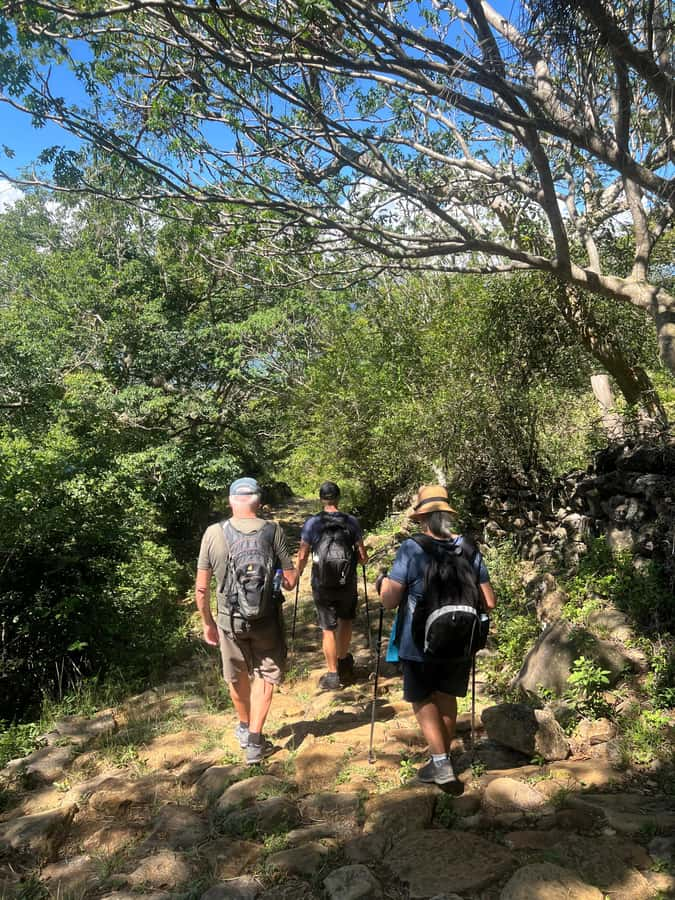
The Chapel of Santa Lucia adds another historical layer. It is described as a site connected with the first evangelization processes in the region, where Indigenous people and Spanish colonizers first encountered one another.
This is not a cheerful story in a simple sense. The chapel represents religious change and the meeting of two societies, but that meeting also involved colonization, pressure, and the disruption of Indigenous life. A good guide can help you consider both sides rather than presenting the chapel as only a picturesque old building.
The stop is also a calm way to close the cultural part of the visit. After the physical walk and the museum, the chapel offers a quieter setting for thinking about how the region changed. The exact amount of time here can depend on the guide and the pace of the group, but it is part of the planned route.
How hard is the trek?
The route is described as not particularly difficult, with more downhill walking than uphill walking. That makes it suitable for many reasonably active adults who can manage uneven ground for several hours.
Still, downhill walking has its own strain. Loose or irregular stones can work your knees and ankles, and the lack of smooth paving means you need steady shoes. This is not a wheelchair-accessible activity, and it is not suitable for children under seven or for pregnant women. People over 95 are also excluded from the activity, according to the stated requirements.
You should bring:
- Hiking or other secure walking shoes
- A reusable water bottle
- Sunscreen and sunglasses
- A sun hat
- Hiking pants
- Basic trekking gear
Alcohol, drugs, weapons, and sharp objects are not allowed. Baby carriages are also not suitable for the route, and nudity is prohibited. These rules are straightforward, but they reinforce the nature of the outing: this is a rural trek, not a paved town tour.
Why an early start makes sense
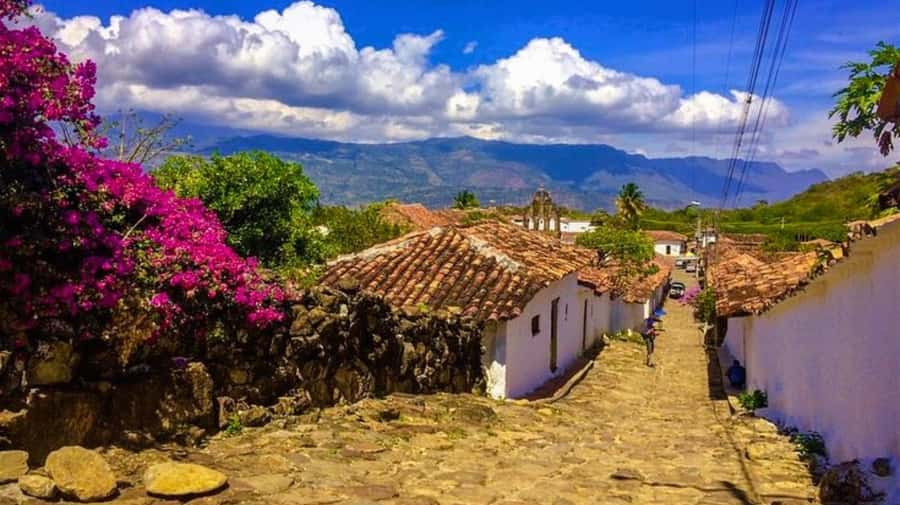
The timing matters more than the four-hour duration suggests. In the morning, you have a better chance of walking before the strongest heat. The route includes open sections, and afternoon temperatures can make the downhill path feel much harder.
An early departure also gives you a more comfortable pace for the viewpoints, museum, and chapel. You can stop for photographs and questions without feeling rushed by the heat. Check the available starting times before booking, then choose the earliest practical option.
Meals, drinks, and transportation are not included. Carry water and eat beforehand unless you have confirmed another arrangement. The tour ends in or near Guane, and return transportation is optional rather than part of the $35 price. That is the most important planning detail. You do not want to reach Guane and only then start wondering how you will get back.
Is $35 a fair price?
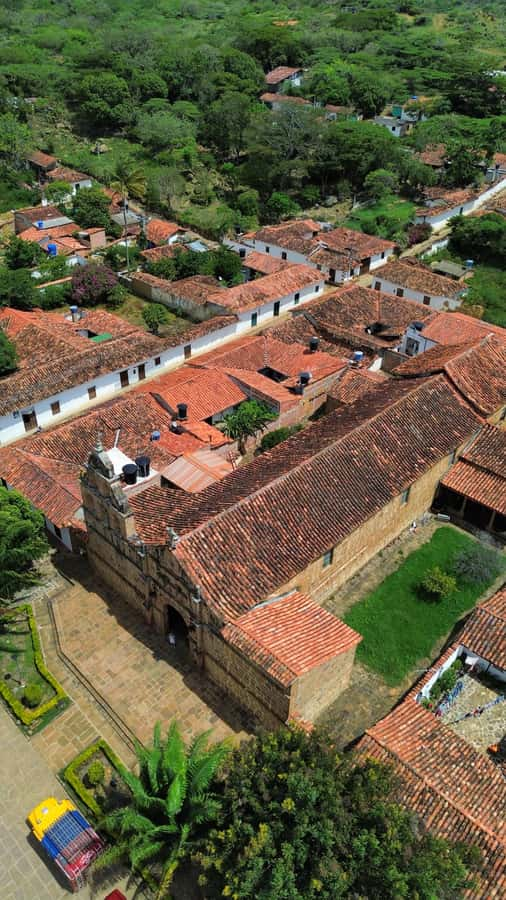
At $35 per person, the experience offers a fair package for a four-hour guided outing. You are paying for a bilingual local guide, route interpretation, the Barichara and Guane visits, the guided museum entry, and the main viewpoints. The museum’s stated 10,000 peso admission is already covered.
The value is strongest if you care about context. A person who only wants to walk the Camino Real can probably find the route without paying for a tour. But you would lose the explanations about the Guane people, geology, colonization, Barichara’s founding, and the meaning of the sites in Guane.
The price does not include meals, drinks, or the journey back. Add those costs before comparing it with a self-guided outing. I would also treat the included museum entry as a meaningful benefit, since it gives the day a stronger cultural finish than a walk alone.
The guides and the quality of explanation
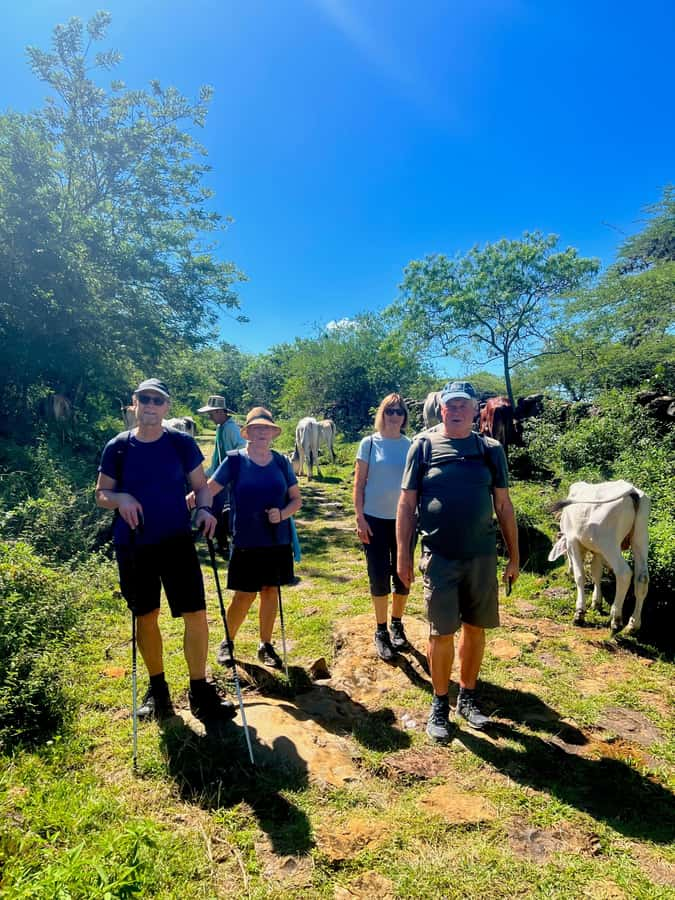
Guiding is the heart of this experience. The tour promises English and Spanish, with explanations of both historical and natural subjects. Guides named in connection with the experience include Miguel and Nico.
Miguel is described as a fun companion with strong local familiarity. Nico is noted for explaining history, geography, and the lives of Indigenous people in a way that adds useful detail to the walk. These are different strengths, but both point to the same advantage: your guide is not there only to keep you on the path.
Expect the quality of the day to depend partly on the questions you ask. If you want a better understanding of the Guane people, the Spanish arrival, fossils, or the canyon, speak up. A walking route gives you time for conversation, and this tour is best used that way.
The experience receives a perfect five-star score from two verified bookings, but the small number of ratings means you should not treat that score as a guarantee for every departure. The more reliable takeaway is that the guide and explanation are central to the tour’s appeal.
Who should book this experience?
I would choose this tour if you want a moderate outdoor walk with real historical content. It suits adults and older children over seven who can handle a rocky route, heat, and several hours on foot.
It is especially useful if you are staying in Barichara and want to see Guane without arranging every part yourself. The bilingual guide, museum entry, and cultural interpretation make the day easier for anyone who prefers a structured outing.
I would think twice if you dislike uneven ground, strong sun, or downhill walking. If you need wheelchair access, are pregnant, or are traveling with a baby carriage, this is not the right choice. I would also avoid booking a late start unless the heat is mild and you are comfortable hiking in exposed conditions.
Should you book the Barichara to Guane trek?
Book it if you want more than photographs of two attractive Santander villages. The Camino Real gives you a physical link between Barichara and Guane, while the viewpoint, museum, and Santa Lucia Chapel add geography, fossils, Indigenous culture, and colonial history.
The best plan is simple: choose a morning departure, wear real walking shoes, carry water, and settle your return transportation before you start. For $35, the tour offers good value when you want a guide to explain what you are seeing rather than merely lead you along the stones.
FAQ
How long does the Barichara to Guane tour last?
The tour lasts four hours.
Where does the tour begin?
It begins at the start of the Real Barichara to Guane road, by the Simón Bolívar statue.
Is the tour offered in English?
Yes. The tour is offered in English and Spanish, although some content may appear in its original language.
Is museum admission included?
Yes. Admission to the Paleontological and Anthropological Museum is included. The stated admission cost is 10,000 Colombian pesos per person.
Is return transportation included?
No. Return transportation is not included, though an optional return service is available.
What should I bring?
Bring comfortable or hiking shoes, sunglasses, a sun hat, sunscreen, hiking pants, a reusable water bottle, and trekking gear.
Is the trail difficult?
The path is rocky and is described as going more downhill than uphill. It is not considered particularly difficult, but you need to manage uneven ground.
Who cannot take this activity?
The activity is not suitable for children under seven, pregnant women, wheelchair users, or people over 95 years old.
Just added around the world
- Everest Base Camp Trek★ 5.0 · 3 reviews
- Everest Base Camp Trek★ 5.0 · 7 reviews
- 15 Days Private Everest Base Camp Trek★ 5.0 · 30 reviews
- 14 Days of Adventure Trekking to Everest Base Camp★ 5.0 · 2 reviews
- 14-Day Everest Base Camp Trek★ 5.0 · 20 reviews
- Everest Base Camp Trek★ 5.0 · 57 reviews
- From Kathmandu: Private 14-Day Everest Base Camp Trek★ 5.0 · 20 reviews
- 14 Days Everest Base Camp Trek★ 5.0 · 4 reviews
Colombia Trekking Tours, compared.
Trekking History and Indigenous Heritage in Minca + Cacao & Coffee + Waterfall
Read our review →
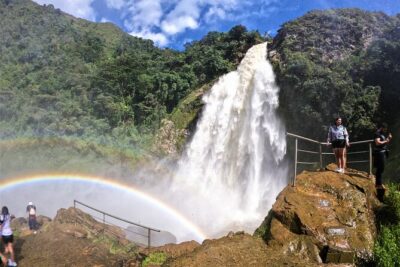
Aerial Hammocks, Zip and Waterfall Trek on Medellin Private Tour
Read our review →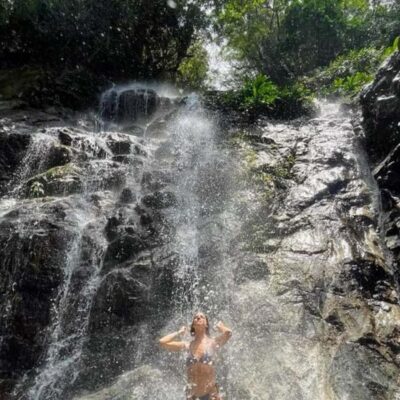
Santa Marta: Trekking in Minca Complete Waterfall Circuit
Read our review →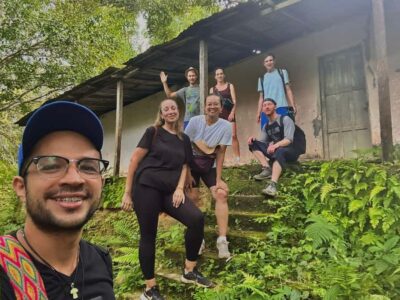
Coffee, Cocoa and Trekking Tour in Minca: Nature, Crops and Production
Read our review →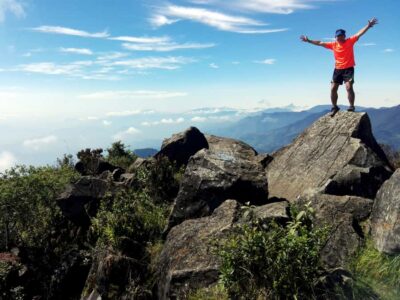
Cali: Pico de Loro Trekking Adventure – Farallones de Cali
Read our review →
Browse the lists this trek appears in