
Review · MOROCCO
Trekking in Morocco / Atlas Mountains and Sahara Trek (5days)
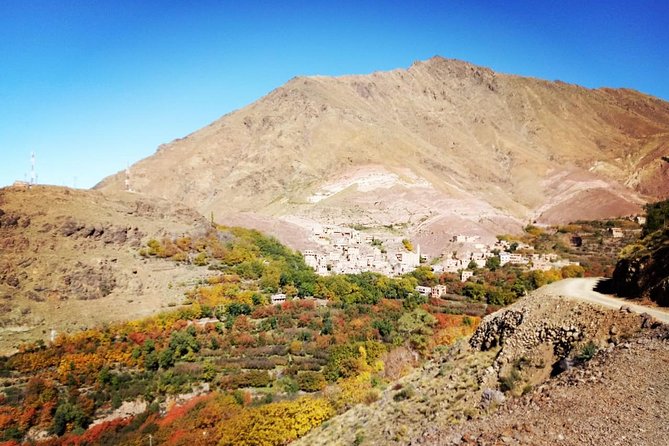
The unusual appeal here is the sharp change from Mount Toubkal at 4,167 meters to the Sahara’s Erg Chebbi dunes in one fast-moving trip. You begin among Berber villages and mountain trails, cross the Tichka Pass, then trade rocky peaks for camel tracks and a night beneath desert skies.
I like the way the trip links active walking with local stays, especially the overnight near the Neltner Refuge and the guesthouse in Ait Souka. I also like the practical setup: mules carry baggage and food, while transport connects the mountain trek with Ait Benhaddou, Todra Gorge, Dades Valley, and Merzouga.
The catch is the pace. Day two can mean 10 to 12 hours of walking, and the final drive from the desert back to Marrakech is long. You need moderate fitness, proper walking gear, and a willingness to accept simple accommodation and a tightly packed schedule.
Key points to know before booking
- Mount Toubkal is the physical high point: You climb North Africa’s highest mountain on day two, reaching 4,167 meters.
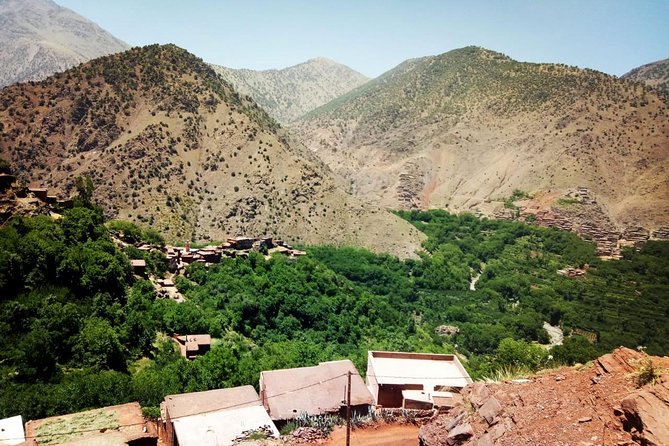
- Berber communities are part of the route: The first days pass through mountain settlements, with a local guesthouse stay in Ait Souka.
- The trip covers serious ground: Mountain trekking, road transfers, historic Ait Benhaddou, Dades Valley, Todra Gorge, and the Sahara all fit into five days.
- Erg Chebbi brings the desert drama: You ride camels for about 90 minutes at sunset and again after sunrise before returning to Marrakech.
- The group is capped at 15: That keeps the walking party reasonably manageable, though the exact group size may vary.
- Winter costs extra: From November through April, an additional €30 per person applies.
From Marrakech to Imlil and the High Atlas
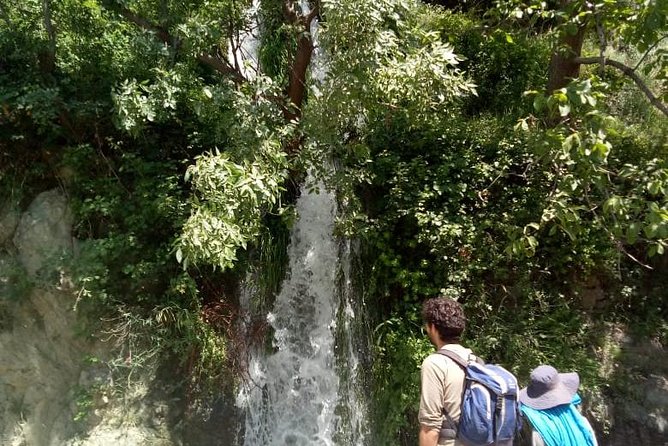
Your pickup begins in Marrakech at about 8:00 a.m., taking you to Imlil, the mountain starting point. Here you meet your guide and the mules that carry baggage and food, a useful arrangement because you can walk with a lighter pack.
The first trek takes roughly five hours toward the Neltner Refuge at 3,207 meters. Lunch comes along the route, and the night is spent either in the refuge or in a tent, depending on conditions. That wording matters: this is mountain travel, not a fixed hotel itinerary. Your sleeping arrangements can change with weather and local conditions.
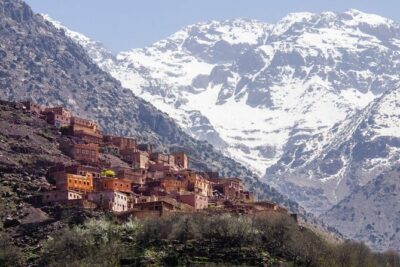
The route introduces you to the High Atlas at walking speed. You pass local settlements and Berber communities rather than simply viewing the mountains from a vehicle. The attraction is not only the scenery. You get a sense of how villages, paths, pack animals, and mountain shelters fit together.
Bring layers. The supplied packing advice calls for warm and light clothing, a jacket, hat, gloves, walking boots, sunglasses, sun cream, and a head torch. A sleeping bag is also requested. You should not treat the first night as a casual stroll followed by a comfortable city room.
More Atlas Mountains Treks in Morocco:
- Mt Toubkal Ascent Express Trek 2 Days 1 Nights
★ 4.7 · 962 reviews - Marrakesh: 2-Day Mt. Toubkal Trek with 1-Night Stay & Meals
★ 4.7 · 795 reviews - Marrakech: 2-Day Atlas Mountains Trek with Village Stay
★ 4.8 · 717 reviews
The Mount Toubkal climb at 4,167 meters
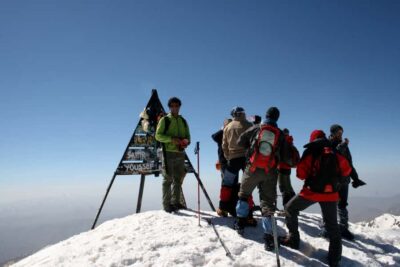
Day two is the hardest and most important day. You ascend Mount Toubkal, the highest peak in North Africa, at 4,167 meters. From the summit, the route description promises views extending toward the desert, giving you a striking sense of Morocco’s change from high mountain to dry interior.
The schedule allows 10 to 12 hours of walking. That is a serious day, even for fit hikers, and altitude adds another challenge. The tour asks for moderate physical fitness, but you should read that phrase conservatively. You need to be comfortable with a long mountain day, steep ascent and descent, uneven trails, and a very early or extended schedule if conditions require it.
After the summit, you return to the refuge for lunch, then continue to Ait Souka village. The overnight is in a local guesthouse. That change from high refuge to village lodging is one of the trip’s best features. You are not repeating the same type of night, and the village stay gives the mountain portion a human scale.
The guides are an important part of this section. Ibrahim is associated with the Atlas portion, while Mohamed is praised for prompt planning and organization. Abdrahim Gal is also named in connection with the operation and described as helpful and friendly. Since guide assignments can change, confirm who will lead your departure, but the operation clearly places weight on personal support rather than sending you onto the trail alone.
Ait Benhaddou and the long road through southern Morocco
Day three shifts from trekking to road travel. You transfer toward Ait Benhaddou, crossing the Tichka Pass and passing through Ouarzazate before reaching Dades Valley. You also have time to walk around Ait Benhaddou and stop for lunch.
Ait Benhaddou is a fortified settlement and a World Heritage site known for appearing in more than 20 films. Its earthen walls and compact form make it an easy place to explore on foot, and the stop breaks up what would otherwise be a long drive.
Do not mistake this day for another full hiking day. The main purpose is to connect the Atlas trek with the desert route. The Tichka Pass offers mountain views from the road, while Ouarzazate and Ait Benhaddou mark the transition into Morocco’s drier south.
You finish in Dades Valley, staying in the Dades Gorges area. The gorge is part of the visual change that makes this itinerary work: high peaks give way to bare rock, narrow valleys, and settlements spread along the route. The drawback is time. You see several major places in a short period, so this is a sampler rather than a slow study of southern Morocco.
Todra Gorge and the approach to Merzouga
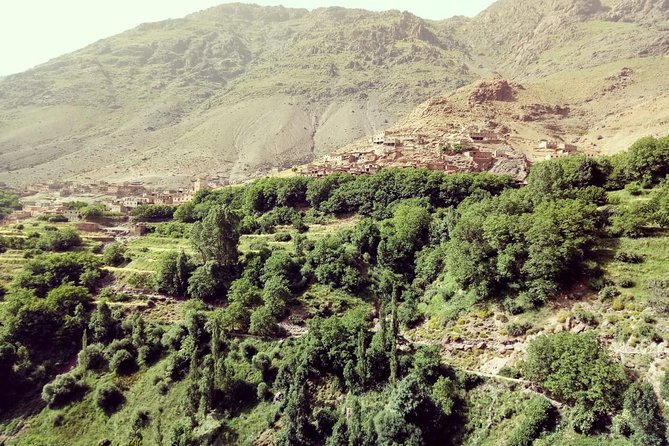
After breakfast at the hotel, you transfer to Todra Gorge. The gorge is described as a huge fault line cutting through the Atlas Mountains, with a narrow valley and rock walls rising to about 300 meters. Berber villages appear along the route, giving the stop more interest than a simple roadside photo break.
Lunch comes before you continue toward Merzouga. This is another long transport day, so keep water and sun protection close at hand. The tour includes transport during the southern portion, along with a driver, but it does not turn the road journey into a private, flexible sightseeing day. The fixed route is the price of fitting so much into five days.
Merzouga is the gateway to Erg Chebbi, Morocco’s tallest dune area. Here the trip changes mode again. You leave the vehicle, meet the camels, and ride for about an hour and a half at sunset toward the desert camp.
Camel riding is not the same as hiking. You sit high above the sand, and the motion can be uncomfortable for some people, particularly after two demanding mountain days and long road transfers. Still, the timing is well chosen. Sunset adds color and shadow to the dunes, and the ride gives you a clear sense of crossing into a place where roads and villages fall away.
At camp, a Berber meal is included, followed by a night under the stars. You do get to sleep, but this remains a basic desert experience rather than a luxury hotel night. Conditions can be cold, especially outside summer, which is why a sleeping bag and warm clothing are on the required list.
Khaled is associated with the Sahara portion, and the guide team is often singled out for friendliness, help, and conversation. That matters here. The camel ride itself is straightforward, but a good desert guide helps with timing, camp routines, and the practical details of an overnight far from town.
A few more treks around Morocco worth a look
- 5-day trek – In the Draa Valley
★ 5.0 · 14 reviews - Annapurna base camp trek 5 Days
★ 5.0 · 252 reviews - Kathmandu to Annapurna Base Camp (ABC) 5-Day Trek
★ 5.0 · 102 reviews - Machu Picchu: 5-Day Salkantay Trek with Panoramic Train
★ 5.0 · 79 reviews
Sunrise, a second camel ride, and the return to Marrakech
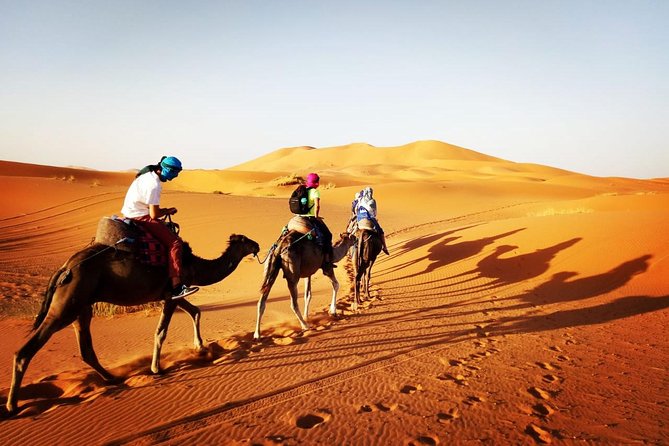
The final morning begins with desert sunrise views. You then ride the camels for another hour and a half along the dunes, meet your driver, and begin the long return to Marrakech.
The stated arrival time is around 5:00 p.m. This makes day five more than a gentle farewell. It is a full travel day after a night in camp, and the road distance from Merzouga back to Marrakech is substantial. If you have a flight, train, or important booking that evening, you should not build a tight connection around the stated arrival time.
The return is useful because it brings you back to Marrakech within the five-day plan, but it also reveals the main compromise of the itinerary. You get the mountains and Sahara without arranging separate trips, yet you spend many hours in a vehicle between them.
What the $576.88 price includes
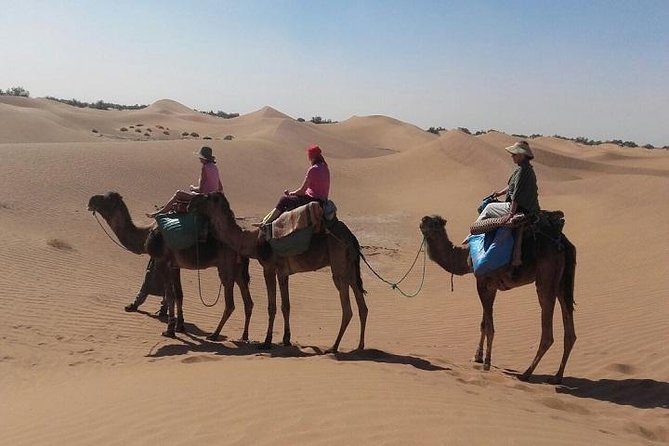
At $576.88 per person, this is not a budget day trip. It is a bundled five-day expedition with a mountain guide, mules, southern transport, driver, camels, accommodation, and several meals.
Included food is listed as four breakfasts, two lunches, and five dinners. The meal details need careful reading. Lunches during the desert trip are not included, so budget for those separately. Drinks are also excluded. The included dinners cover the mountain and desert nights, including the welcome Berber meal at camp.
The mules are more than a pleasant extra. They carry baggage and food during the trek, allowing you to avoid hauling a full load up to the refuge and Mount Toubkal. Transport between trekking sections also saves you from arranging several separate taxis, drivers, and transfers.
Value depends on how much of Morocco you want to cover. If your priority is a relaxed Atlas walking holiday, this schedule is too compressed. If you want one organized route combining a major summit, village stays, historic sites, gorges, and Erg Chebbi, the price covers a lot of moving parts.
The group limit is 15 people. That is small enough to keep the walking group from becoming unwieldy, though it is not a private tour. Ask about the expected group size if personal pacing matters to you.
Food, sleeping arrangements, and what to pack
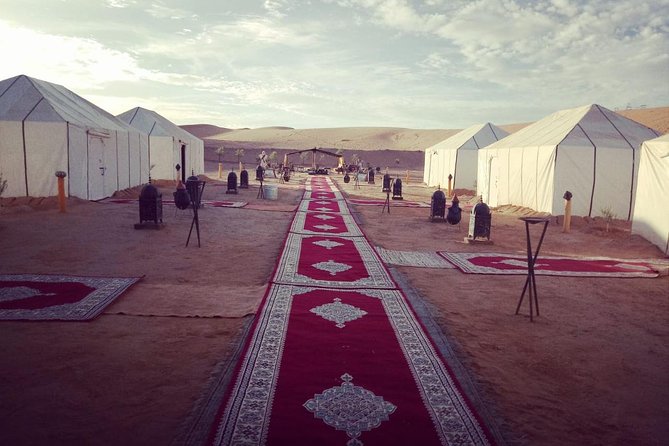
Accommodation changes from night to night. You may sleep in a refuge or tent near 3,207 meters, then in a local guesthouse at Ait Souka, a hotel in the Dades Gorges area, and a desert camp near Erg Chebbi. The variety is part of the appeal, but comfort will not be uniform.
Pack for two climates. Mountain nights require warm layers, gloves, and a sleeping bag. Desert days call for sun cream, sunglasses, a hat, and light clothing. Walking boots are essential for the trek, while a head torch is useful around the refuge, tent, or camp.
The supplied equipment advice specifically asks you to bring:
- Sleeping bag
- Walking boots
- Warm and light clothing
- Jacket
- Hat and gloves
- Sun cream and sunglasses
- Head torch
From November through April, an extra €30 per person applies. Winter also makes the warm clothing advice especially important. Conditions can affect whether the first night is in a refuge or tent, so pack for both rather than assuming a fixed arrangement.
Who will enjoy this five-day route
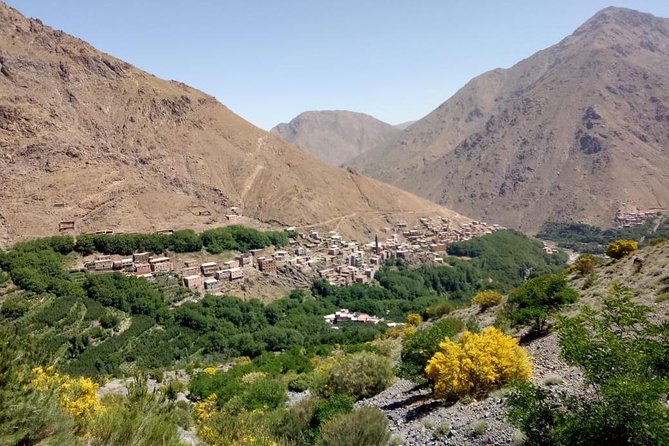
I would choose this trip if you want contrast more than depth. You get a proper mountain challenge, contact with Berber villages, a World Heritage stop, two major gorges, a camel ride, and a desert camp in one compact plan.
It suits active visitors who can handle long walking days and long drives. It also works for people who want support with the complicated parts: guides, mules, transport, meals, and camels are arranged in one package.
I would be cautious if you dislike early starts, shared arrangements, basic accommodation, or lengthy road journeys. The tour is also a poor fit if you want to spend several days slowly exploring one valley. Day two is demanding, and days three through five cover a great deal of ground.
The free cancellation rule allows a full refund when you cancel at least 24 hours before the start time. Changes or cancellations inside that window are not accepted for a refund, so check your plans before the deadline.
Should you book it?
Book this five-day Atlas Mountains and Sahara route if your ideal Morocco trip includes both a genuine summit day and a desert camp, and you are willing to trade leisurely pacing for variety. The strongest parts are the Mount Toubkal climb, the Berber village stays, the support of mules and guides, and the sunset camel ride into Erg Chebbi.
Skip it if you want a soft adventure or a carefully paced hiking holiday. The 10 to 12 hour Toubkal day and the long return drive are real demands. For fit visitors with limited time, though, this is an efficient way to connect Morocco’s high point with its Sahara dunes without arranging every transfer yourself.
FAQ
Where does the tour begin?
Pickup is offered from your accommodation in Marrakech. The listed start time is 8:00 a.m., and the first transfer takes you to Imlil in the High Atlas.
How long is the experience?
The tour lasts approximately five days.
How high is Mount Toubkal?
Mount Toubkal reaches 4,167 meters and is described as the highest peak in Northern Africa.
How much walking is required?
The first day includes about five hours of trekking. Day two includes approximately 10 to 12 hours of walking, including the ascent of Mount Toubkal.
Where do you sleep during the trip?
You may stay in a mountain refuge or tent near Neltner Refuge, then in a local guesthouse in Ait Souka, accommodation in the Dades Gorges area, and a desert camp near Erg Chebbi.
Are camel rides included?
Yes. Camels are included, with a ride of about one and a half hours at sunset and another ride of about one and a half hours after sunrise.
Are meals included?
Four breakfasts, two lunches, and five dinners are included. Drinks and lunches during the desert portion are not included.
What should I bring?
Bring a sleeping bag, walking boots, warm and light clothing, a jacket, hat, sun cream, sunglasses, gloves, and a head torch.
Is the tour suitable for everyone?
The tour requires a moderate level of physical fitness. The group can include up to 15 people, and winter departures from November through April cost an additional €30 per person.
Just added around Morocco
- Essaouira Beach Horse Rides &Treks for All Levels★ 5.0 · 13 reviews
- 4 days tour and trek from Fez to Marrakech via Sahara Desert★ 5.0 · 3 reviews
- 2 days trekking from Chefchaouen to Akchour★ 5.0 · 12 reviews
- 4 days trekking in the Rif mountains★ 5.0 · 9 reviews
- 3-Day Trekking from Chefchaouen – Rif Mountains Adventure★ 5.0 · 16 reviews
- 8-Day Morocco Adventure: Imperial Cities & Sahara Desert Trek★ 5.0 · 37 reviews
- Paradise Valley Trekking★ 5.0 · 5 reviews
- Mount Toubkal Trek 2 Days & 1 Night★ 4.5 · 26 reviews
Atlas Mountains Treks, compared.
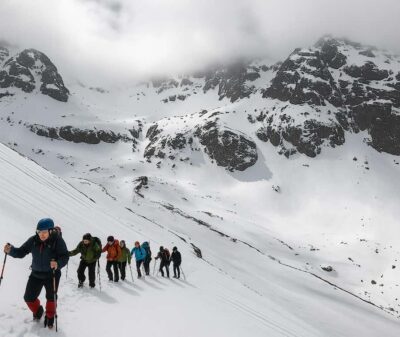
Mt Toubkal Ascent Express Trek 2 Days 1 Nights
Read our review →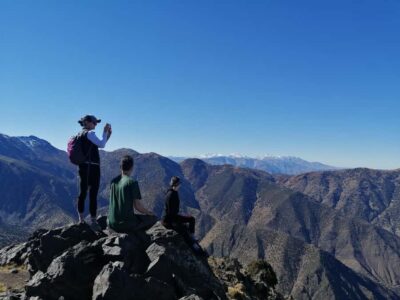
2-Day Mt. Toubkal Trek with 1-Night Stay & Meals
Read our review →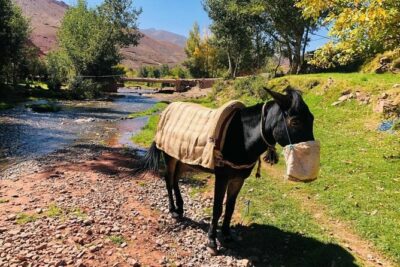
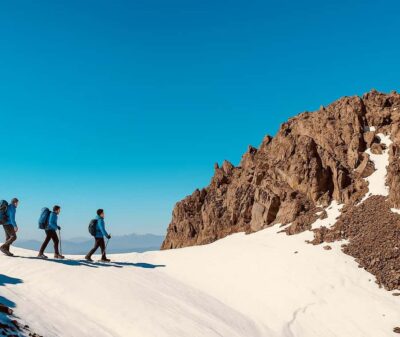
Summiting and Hiking the Atlas Mountains Day Trek from Marrakech
Read our review →
Browse the lists this trek appears in