Review · TREKKING
Dana to Petra Trek + Wadi Rum & the Dead Sea – 9 Days
The best part of this nine-day Jordan adventure is the way it reaches Petra on foot. You walk for four days through the Dana Nature Reserve, across Bedouin paths and dry mountain valleys, then arrive at Petra from above, near the Monastery, instead of joining the usual crowd at the main entrance. It feels like a journey, not just a sightseeing stop.
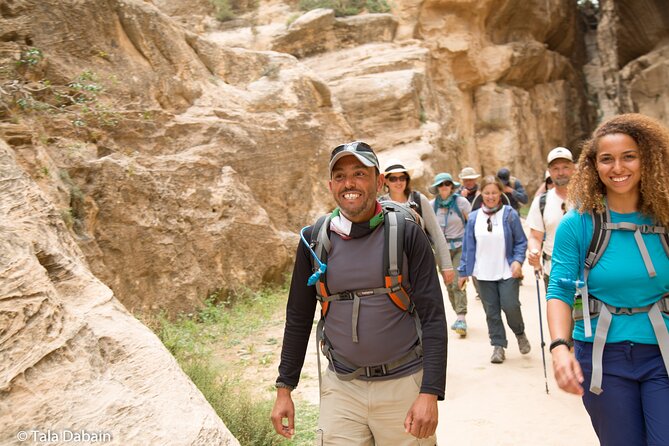
I like the small group, capped at 14 people, and the practical support on the trail. I also like the mix of remote camping, Little Petra, a Wadi Rum jeep trip, and a Dead Sea rest day. The main catch is simple: this is a serious trek. Daily walks reach 17 kilometers, with steep climbs, rough paths, and long descents.
Key points to know before booking
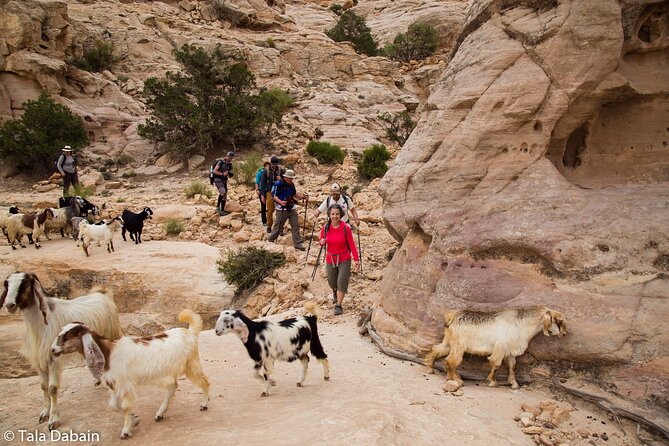
- Four demanding days on foot: The Dana to Petra section covers about 15 to 17 kilometers per day, with major climbs and descents.
- A quieter way into Petra: You approach the Monastery by a back route through Wadi Ghurab and sandstone mountains.
- Small-group support: The group is limited to 14, with an English-speaking guide, local hiking support, and a donkey for safety on days two through four.
- Remote camping is part of the deal: Three nights are listed as wilderness camping, followed by a night at or near Little Petra.
- The trip keeps going after Petra: You get a Wadi Rum jeep safari, Bedouin camp, Dead Sea time, and a final night in Amman.
- Much is included, but not everything: Hotels, camping, meals, transport, luggage transfers, and guiding are included. The Jordan Pass, flights, insurance, tips, gear, and airport transfers are extra.
Why this Dana to Petra route feels different
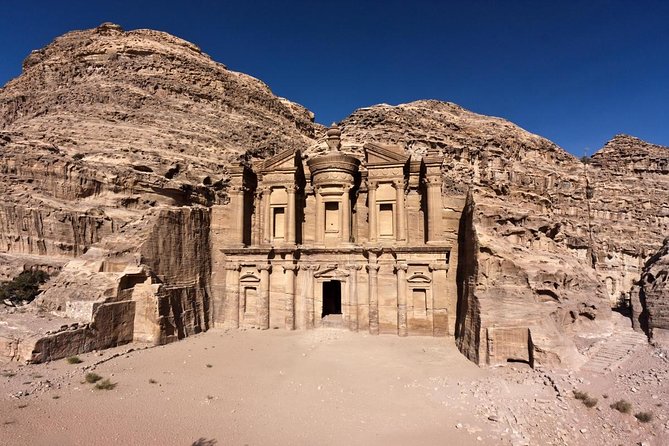
Most visits to Petra begin at the Siq, the famous narrow passage that leads to the Treasury. This trip takes a very different approach. You spend several days walking south through Jordan’s Dana Nature Reserve and the dry country around Wadi Araba before reaching Petra from the back.
That change matters. You see the Nabataean city as the end point of a long route, not as an isolated day tour. You also avoid much of the traffic at the main entrance. The final approach takes you toward the Monastery, one of Petra’s largest and most impressive monuments.
The route uses trails linked to old Bedouin shepherd paths. These are not polished park walkways. Underfoot conditions can vary, and the route includes steep steps, loose rock, exposed slopes, and narrow sections. Your guide is important here, not only for history and route-finding but also for pacing the group safely.
The listed price is $1,595 per person. That is a fair value if you want a guided trek with camping, meals, transport, luggage handling, Petra access, Wadi Rum, the Dead Sea, and eight nights of accommodation bundled together. It is less attractive if you mainly want to see Petra and Wadi Rum with only light walking.
A few more treks around the world worth a look
- Mount Etna: Trek to 3000m with cable car and 4×4
★ 4.6 · 3,823 reviews - Bali: Mount Batur Sunrise Trek With Guide and Breakfast
★ 4.8 · 3,461 reviews - From Chania: Full-Day Samaria Gorge Trek Excursion & Guide
★ 4.6 · 3,191 reviews
Day 1: A gentle start in downtown Amman
The first day is intentionally easy. You arrive in Amman, check into your hotel, and have time to settle in. Depending on your flight, you may have several hours to walk around Al Balad, the old downtown area, or simply rest.
Amman gives you a useful first taste of Jordan before the walking begins. It is an old city that has grown into a modern capital, yet its traditional hospitality remains part of daily life. Food is also an early highlight, with Jordanian dishes providing a good introduction to the country.
Do not treat this as a full sightseeing day. The next morning starts early, and the trek is the focus of the trip. Use the time to eat well, check your hiking gear, and prepare a small daypack.
Days 2 to 4: The hard, beautiful heart of the trek
After breakfast, pickup is scheduled at about 7:30 a.m. The drive from Amman to the trailhead takes roughly two and a half hours. This transfer gives you time to meet the group and see the scenery change from city to open country.
Day 2: Dana to Mansoura
The first walking day covers about 15 kilometers and takes five to seven hours. You begin in the Dana Biosphere Reserve, an area with several ecological zones and a wide range of plant and animal life.
The trail first follows mountain slopes above Dana Valley. Then it drops into Al Khashasha Valley. The figures give you a good sense of the day: about 260 meters of ascent and 690 meters of descent. The downhill work is substantial, so trekking poles can be useful, though hiking gear is not supplied.
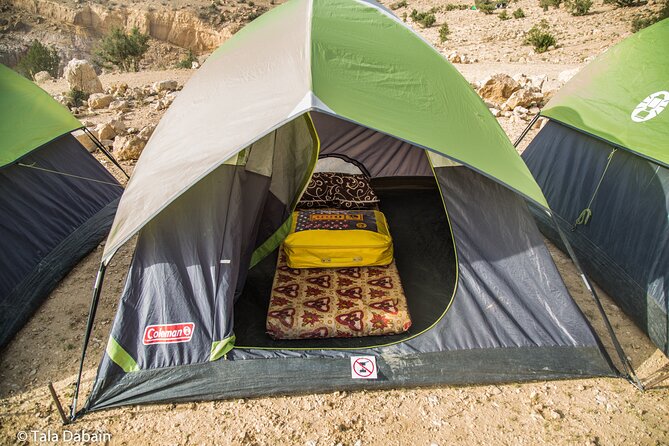
You spend the night at a wilderness camp near Mansoura. This is a basic outdoor night, not a hotel-style camp. The appeal is the quiet and the sense of distance from towns. The tradeoff is that you should be comfortable with simple tented accommodation and changing weather.
Same trailhead, a different route:
- Mount Etna: Summit Crater Trek with Cable Car
★ 4.8 · 1,875 reviews - La Palma: Tajogaite Volcano Guided Trek
★ 4.8 · 1,810 reviews - Skaftafell: Ice Cave Tour and Glacier Hike
★ 4.5 · 1,746 reviews - Etna: summit craters trekking with volcano guide 3350mt
★ 4.7 · 1,712 reviews
Day 3: The climb toward Furon
The second walking day is also around five to seven hours and covers roughly 16 kilometers. You leave camp early and climb for about an hour through the mountains. The reward is a broad view toward the Sharah Mountains and the Wadi Araba Desert.
There is about 563 meters of ascent and 170 meters of descent. Compared with day two, this is more of a climbing day. The route may feel demanding if you are not used to sustained uphill walking, but the open views give the effort a clear purpose.
The Furon campsite is a good place to slow down. Tea and dinner are part of the evening rhythm, and the remote setting makes this one of the trip’s more memorable nights. Bring a warm layer even if the daytime weather feels hot. Desert temperatures can change sharply after sunset.
Day 4: Rugged country around Ras Al-Feid
Day four is the most demanding section on paper. The route covers about 17.1 kilometers, with approximately 750 meters of ascent and 920 meters of descent. That is a full day on rough ground.
You pass Ras Al-Feid and continue toward Ghbour Whedat, following smaller Bedouin shepherd trails around the Sharah Mountains. The route includes bare black rock, steep canyon drops, and high views over the desert. Later, the rock forms become softer and more rounded, with mushroom-shaped formations near camp.
This is where the trip’s fitness requirement becomes real. You need to be able to walk for several hours, manage uneven ground, and keep going after a climb. A local hiking guide joins the group, with a donkey available as a safety measure on days two through four. That support is useful, but it does not turn the route into an easy hike.
Day 5: Little Petra and signs of older settlement
After three remote nights, day five brings more signs of human activity. You pass Bedouin camps, sheep pens, and small agricultural plots. These details give you a more grounded view of life in southern Jordan, beyond the major monuments.
The route also passes Nabataean remains, including wine and olive presses, aqueducts, and other water systems. In this dry country, ancient water management was not a minor detail. It was the basis for settlement, trade, and survival.
You then enter a canyon formed by soft sandstone. A narrow flight of steep steps leads down into Little Petra, also called Siq al-Barid. The site is thought to have served as a suburb or service area for Petra, with spaces linked to trade and hospitality.
Little Petra is smaller than its famous neighbor, but that is part of its appeal. The scale is easier to understand, and the cliffs create a more intimate setting. After several days of wilderness, it also marks a clear shift from remote trekking to archaeological touring.
The day’s exact walking time and distance are not specified in the supplied schedule, so expect another active day rather than a short visit. Your legs will already have four days of walking behind them. That makes the evening near Little Petra especially welcome.
Day 6: Entering Petra through the back route
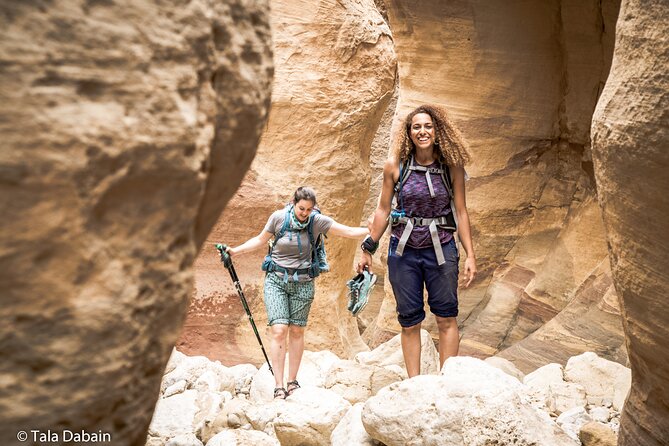
This is the payoff. After breakfast, you leave the Little Petra area and follow a route through Wadi Ghurab. The path descends between sandstone mountains before reaching the approaches to Petra.
The route follows an old Nabataean line out of the valley. In places, the path crosses a natural rock terrace that has been improved for walking. It narrows before reaching a high plateau above Wadi Siyyagh, so this is another section where sturdy shoes and careful footing matter.
Then the Monastery appears in the cliff face. The arrival is likely to feel more dramatic than a standard entrance because you have approached from the open country above. A Bedouin café near the Monastery offers a chance to stop for refreshments.
From the Monastery, Nabataean steps lead farther into Petra. The experience is not crowd-free, and the route still requires a long walk, but it avoids much of the usual approach traffic. You should also remember that Petra is a large site. Reaching the Monastery is not the end of the day’s walking.
One point needs checking before departure: the schedule does not clearly state whether the main Petra admission fee is fully covered, while the Jordan Pass and entrance fees are listed as exclusions. Ask the operator exactly what your pass or admission arrangement includes. The tour does include the guiding and transport arrangements described, but the Jordan Pass is your responsibility.
Day 7: Wadi Rum by jeep and on foot
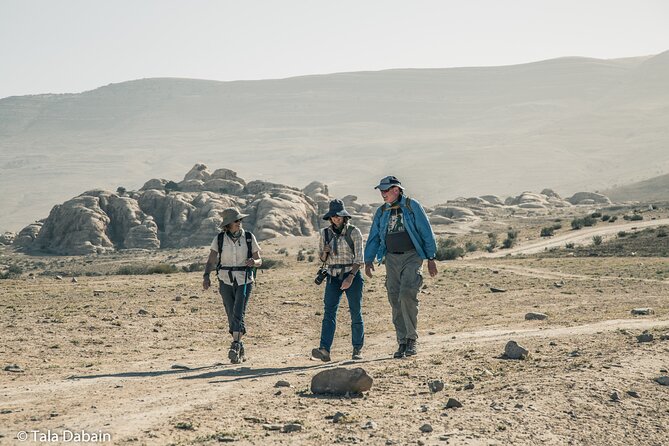
After breakfast, the trip shifts from sandstone canyons to the open desert of Wadi Rum. You meet Bedouin hosts and set out by 4×4 jeep.
The safari includes valleys, narrow gorges, ancient rock inscriptions, sand dunes, and rock bridges. You can get out to walk, scramble, and explore at your own pace. This is a welcome change after the fixed rhythm of the trek, though the five-hour activity still gives the day structure.
The sunset stop is followed by dinner at a Bedouin camp. Tea, conversation, and a night beneath the stars are part of the experience. The camp is not presented as a luxury resort, so set your expectations accordingly. Its value is the setting and the hospitality, not polished hotel service.
Wadi Rum also helps balance the trip. Petra gives you archaeology, Dana gives you long-distance walking, and Wadi Rum gives you a wide-open desert day with less pressure on tired legs.
Day 8: The Dead Sea is more than a quick photo stop
The final full day heads north to the Dead Sea, the lowest point on earth. After four hard hiking days, the timing is smart. You can float in the mineral-rich water, use the Dead Sea mud, relax by the pool, or pay for spa treatments.
Do not stay in the water too long, and protect your eyes from splashes. The high salt content makes floating easy but can sting cuts and irritated skin. You may find the Dead Sea either wonderfully soothing or a little harsh, depending on your skin and how tired you are.
Later in the afternoon, the bus returns to Amman by a long, winding road. You spend the final night at an Amman hotel. The day includes about five hours of activity, but much of that is transport and relaxation rather than hiking.
Meals, camping, luggage, and group size
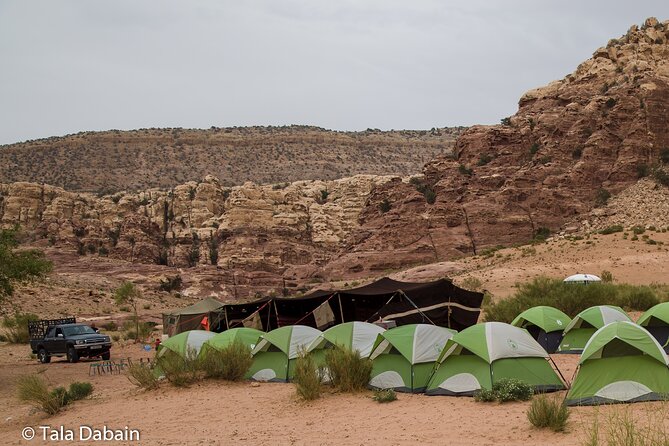
The package includes eight breakfasts, seven lunches, and six dinners. That covers the practical needs of the trek and means you do not have to shop for food in remote areas. The food is repeatedly singled out as an important part of the experience, which is useful to know if camp meals matter to you.
Accommodation covers eight nights. The schedule includes an Amman hotel on the first and final nights, wilderness camping on the central trekking nights, a Bedouin camp in Wadi Rum, and accommodation around the Petra area. Check the accommodation tab for the exact properties and tent arrangements before booking.
Luggage transfers are handled by pickup truck. You still need a daypack for water, layers, sunscreen, snacks, and personal items during each walk. Keep anything fragile or valuable with you rather than in transferred luggage.
The maximum group size is 14. That is large enough for a social atmosphere but small enough for the guide to keep track of the group. Several guides associated with this route, including Motaz Zghoul and Mutaz Jarrar, have been praised for care, humor, organization, and support. Your actual guide can vary, so confirm the guide assignment if that matters to you.
What the $1,595 price really buys
At $1,595, you are paying for more than a Petra entrance and a desert jeep ride. The price includes transport throughout the route, eight nights of accommodation, meals, an English-speaking licensed guide from days two through eight, local trail support, luggage transfers, the Petra approach, Wadi Rum, and Dead Sea access.
That is strong value for an active package, especially because arranging remote camps and moving luggage independently would be complicated. The cost becomes less appealing if you already have transport and accommodation arranged, or if you do not want four long hiking days.
Plan for extra spending on the Jordan Pass, tips, personal purchases, travel insurance, hiking gear, airfare, and airport transfers. The Jordan Pass is specifically excluded and should be sorted before arrival if it fits your entry and sightseeing plans.
Who should book this Jordan trek?
I would choose this trip if you want Jordan’s famous sights tied together by real walking. It suits hikers who enjoy long days, basic camps, changing scenery, and a group experience. It also works well for solo visitors who want company and built-in support without joining a huge coach tour.
You should think twice if you have limited hiking experience, dislike steep descents, or want comfortable hotels every night. The first six days are not a casual sightseeing program. Strong fitness is required, and weather can affect the schedule.
The cancellation terms are strict close to departure: full refunds require cancellation at least six full days before the start time, with partial refunds possible two to six days before. Poor weather or failure to reach the minimum group size can lead to a new date or a full refund.
Should you book this Dana to Petra experience?
Book it if the journey matters as much as the monuments. The combination of Dana’s mountain trails, Little Petra, the back route into Petra, Wadi Rum, and the Dead Sea gives you a well-shaped view of southern Jordan.
Skip it if your priority is comfort or if you want only a gentle introduction to the country. The price is justified by the support and logistics, but the walking is the central product. Bring proper shoes, train for long days, and accept a few basic nights. If that sounds appealing, this is one of the more rewarding ways to connect Jordan’s major sights.
FAQ
How long is the tour?
The tour lasts approximately nine days, including arrival and departure days.
Where does the tour start and end?
It starts in Amman, Jordan, and ends back at the Amman meeting point.
What time does the tour start?
The listed start time is 7:00 a.m. The day two hotel pickup is scheduled for 7:30 a.m. after breakfast.
How large is the group?
The group has a maximum of 14 travelers.
How physically difficult is the trek?
You should have a strong level of physical fitness. Hiking days cover about 15 to 17 kilometers, with substantial climbs and descents on uneven trails.
Is accommodation included?
Yes. The price includes eight nights of accommodation, including hotels, wilderness camping, and a Bedouin camp as described in the schedule.
Are meals included?
Yes. The package includes eight breakfasts, seven lunches, and six dinners.
Is the Jordan Pass included?
No. The Jordan Pass, including visa and entrance fees, is excluded. Flights, airport transfers, insurance, tips, personal expenses, and hiking gear are also not included.
Just added around the world
- Everest Base Camp Trek★ 5.0 · 3 reviews
- Everest Base Camp Trek★ 5.0 · 7 reviews
- 15 Days Private Everest Base Camp Trek★ 5.0 · 30 reviews
- 14-Day Everest Base Camp Trek★ 5.0 · 20 reviews
- Everest Base Camp Trek★ 5.0 · 57 reviews
- 14 Days of Adventure Trekking to Everest Base Camp★ 5.0 · 2 reviews
- From Kathmandu: Private 14-Day Everest Base Camp Trek★ 5.0 · 20 reviews
- 14 Days Everest Base Camp Trek★ 5.0 · 4 reviews
Trekking Tours, compared.
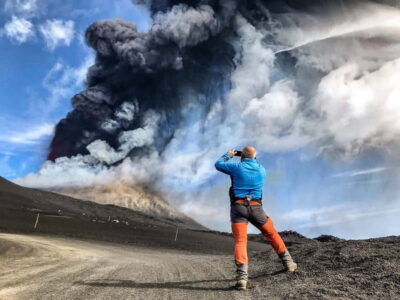
Mount Etna: Trek to 3000m with cable car and 4×4
Read our review →
Mount Batur Sunrise Trek With Guide and Breakfast
Read our review →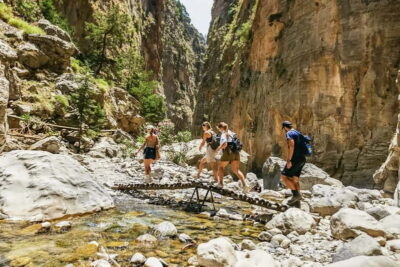
Full-Day Samaria Gorge Trek Excursion & Guide
Read our review →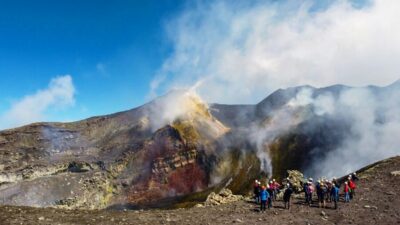
Mount Etna: Summit Crater Trek with Cable Car
Read our review →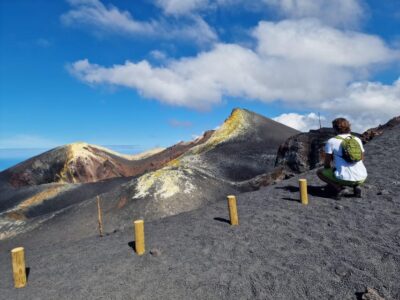
Etna: summit craters trekking with volcano guide 3350mt
Read our review →