
Review · HANOI
Sapa Trekking 3 Days 2 Nights by Bus – Homestay & Hotel
Sapa’s best moments come on foot, among steep rice terraces, bamboo forest, waterfalls, and villages reached by narrow mountain paths. This three-day trip gives you that experience without asking you to arrange buses, lodging, meals, and village guides separately.
I like the mix of one private hotel night and one local homestay, and I like that the route includes both famous Cat Cat Village and quieter Hmong and Giay communities. The main concern is coordination: the printed schedule has conflicting pickup times, and hotel, bus, and guide arrangements may not always communicate perfectly.
Key points to know before booking
- Three days, two nights from Hanoi: You travel by bus in both directions, with about two full days of walking in Sapa.
- Cat Cat comes first: The opening afternoon covers a 3-kilometer walk, a hydropower station, and Cat Cat Waterfall.
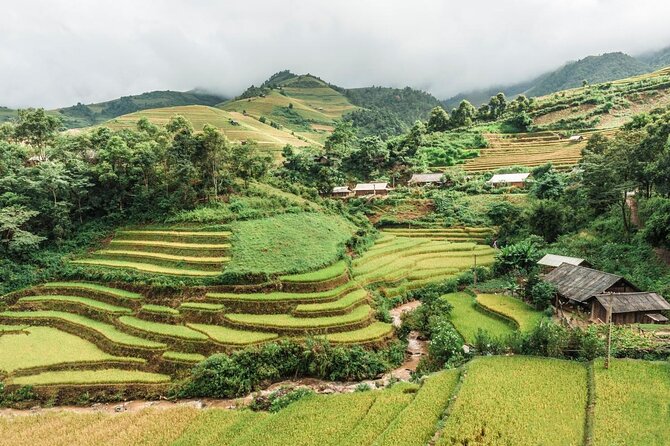
- The second day is the main trek: Y Linh Ho, Lao Chai, and Ta Van bring the most sustained walking and the finest terrace views.
- One night is in a shared homestay: You stay with a Giay family in Ta Van and join cooking and dinner.
- The price covers the big costs: At $165 per person, you get bus transport, a Sapa hotel, homestay, seven meals, guides, water, and hotel transfers.
- Pack for real mountain weather: Warm layers, sturdy trekking shoes, sun protection, insect repellent, medicine, and Vietnamese cash matter here.
From Hanoi to Sapa by bus
Your day begins early, with pickup between 6:30 and 7:00 in Hanoi’s Old Quarter or at the Vietnam Open Tour meeting point on Hang Huong Street. The bus follows the highway toward Lao Cai, with a comfort stop around 9:30 and another break in Lao Cai at about 11:00.
The trip is designed for convenience. You do not need to find a separate train, arrange a private car, or negotiate a taxi at the end of the road. An English-speaking tour leader accompanies the bus journey, and the package includes two bottles of water and tissues for each person on the round trip.
You should still allow for a long travel day. Arrival timing is listed around 12:30 to 1:00, and the supplied schedule contains a small mismatch: one part says pickup from the Sapa bus office at 12:30, while another says arrival at 1:00. Confirm the exact meeting instruction before departure, especially if you plan to meet the group at the bus office rather than ride from a Hanoi hotel.
The group is capped at 15 people. That is small enough for a guide to keep an eye on the walking pace, but it is not a private trek. If you want to stop often for photographs, tell the guide early so you understand how the group will handle the pace.
More Homestay Treks in Hanoi
- Hanoi – Sapa 2 Days 1 Night Overnight At Homestay
★ 5.0 · 899 reviews - From Hanoi: 2-Day Sapa Trekking Trip with Homestay & Meals
★ 4.8 · 704 reviews - 2-Day Sa Pa Ethnic Homestay Tour & Trek with Limousine Bus
★ 4.8 · 440 reviews
Your first afternoon at Cat Cat Village
After lunch and hotel check-in, the group leaves around 2:30 for Cat Cat and Shin Chai, a walk of roughly 3 kilometers downhill from Sapa. Cat Cat is a well-known Hmong village and was developed as a resort area during the French colonial period. It is also one of the more accessible places to see traditional costumes, village buildings, water power, and mountain scenery close to Sapa town.
The route includes Cat Cat’s hydropower station and waterfall. You will also have time to learn about Hmong culture and see the setting that made this area attractive to French officials in the early twentieth century.
The word downhill is important. The opening walk may sound gentle, but mountain paths and steps can make a short distance feel demanding. You also need to remember that what goes down must come back up, or you will later return by a different route or vehicle. Wear shoes with a firm grip, not casual sandals.
Cat Cat is popular, so this portion is less remote than the second day. I see that as a useful introduction rather than a flaw. You get a manageable first look at Sapa’s village routes before tackling the longer trek to Y Linh Ho, Lao Chai, and Ta Van.
Day two through Y Linh Ho and Lao Chai
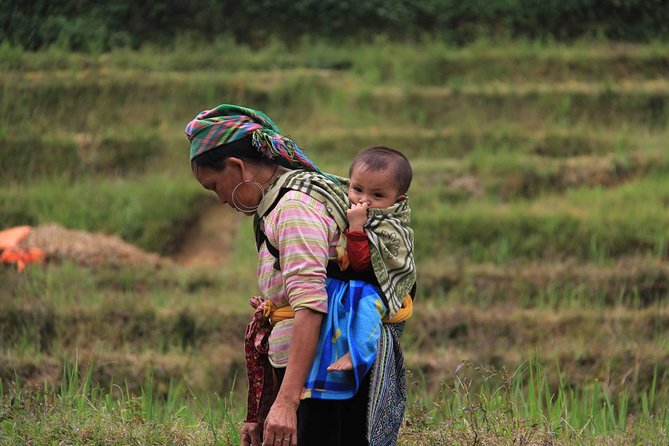
Breakfast comes before an 8:30 departure and check-out. The morning walk heads toward Y Linh Ho, a village inhabited by Hmong people. This is where the tour begins to feel more like a proper mountain trek, with views of rice terraces estimated at around a century old.
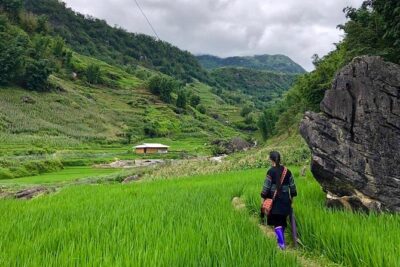
The terraces are the visual heart of the trip. Their stepped form follows the mountains rather than flattening them, and the changing light can make the same slope look quite different from one hour to the next. Your guide adds value here by explaining the villages, local communities, and farming patterns instead of leaving you to see only a series of scenic viewpoints.
From Y Linh Ho, the route continues to Lao Chai, a Hmong village where you stop for about an hour for lunch. This break divides the longest walking day into manageable sections. It is also a sensible point to check your feet, refill water, and adjust your clothing.
The total day is listed at roughly seven hours. That figure includes stops, lunch, and the time spent moving between villages, but you still need a moderate level of fitness. The route is not suitable for anyone who struggles with uneven paths, sustained walking, or mountain descents. The operator does not recommend it for children under nine or for people with disabilities.
Ta Van homestay and dinner with a Giay family
After Lao Chai, you continue to Ta Van, a village associated with both Hmong and Giay communities. The overnight stay is with a local Giay family, and the evening includes cooking and dinner together.
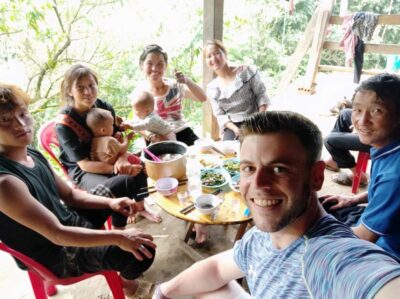
This is the most distinctive part of the trip. The hotel gives you a private room and a mountain view may be possible, but the homestay offers contact with daily village life that a standard Sapa room cannot provide. You are not simply visiting a village for an hour. You are spending the night there and sharing a meal in the family home.
The homestay is shared accommodation, so you should expect less privacy and fewer hotel-style comforts. The package does not describe the exact room setup, bathroom arrangement, or heating. If those details matter to you, ask before booking rather than assuming the homestay will match your Sapa hotel.
Bring a warm layer even if Hanoi feels mild. Sapa weather can change quickly, and the area is often cold from September through March. Fog and drizzle are especially possible in December, January, February, and March. A scarf, hat, cap, and dry change of clothes can make the homestay night much more comfortable.
Same trailhead, a different route:
- Sapa 3 Days 2 Nights Trekking Tour (1 Night In Ta Van Village, 1 Night In Hotel)
★ 5.0 · 699 reviews - 3-Day Trekking Adventure of Sapa from Hanoi – Stay Ta Van Village
★ 5.0 · 611 reviews - Hanoi – Sapa 3 Day 2 Night Trekking With Hotel & Homestay
★ 5.0 · 389 reviews - From Hanoi: 2-Day Sapa Trek Tour – Luxury Limousine Transfer
★ 4.1 · 249 reviews
Bamboo forest, Silk Waterfall, and Giang Ta Chai
Day three starts with breakfast at the homestay. The meal is described as pancakes with hot tea or coffee, served outdoors with views across the rice terraces. You then say goodbye to the family and continue through bamboo forest toward Silk Waterfall and Giang Ta Chai.
This section gives the trip a different rhythm. Day two focuses on large terrace views and village connections. The final trek adds trees, water, and a more enclosed forest path. After several hours, you stop for a picnic lunch with mountain views.
The day is again planned for about seven hours of activity. At the end, you walk back to the main road and take a car or minivan to Sapa town. The group should return around 2:00 in the afternoon, leaving time for a shower at the hotel before the return bus.
That shower is a small but valuable detail. You have been walking for two days, and the return journey to Hanoi is much more pleasant if you can wash and change first. At about 3:00, a shuttle takes you to the bus office. The operator also prepares sandwiches for the ride home.
What the $165 price really covers
At $165 per person, this is a practical package rather than a bare trekking ticket. The price includes:
- Return bus transport between Hanoi and Sapa
- Pickup and drop-off in Hanoi’s Old Quarter
- Bus tour leader and local Sapa guide
- Two nights of accommodation
- Two breakfasts, three lunches, and two dinners
- Two bottles of water and tissues per person for the bus journey
- The listed admission fees
- A Sapa shuttle and post-trek hotel shower
- A takeaway sandwich for the return trip
The accommodation arrangement is important. Your Sapa night is a private hotel room, shared by two, three, or possibly more depending on the selected arrangement. The homestay is shared. Meals are included according to the schedule, but drinks are not, so budget for tea, coffee, soft drinks, or extra water.
The value is strongest if you want an organized trip from Hanoi and would otherwise need to book a bus, two types of accommodation, village transport, meals, and a local guide. It is less attractive if you already have a Sapa hotel, prefer independent trekking, or want a private room every night.
Admission is included, but the schedule calls the Cat Cat visit free in the detailed section. I would still keep a little cash available for local purchases and unexpected charges. Banking systems in Sapa may not work reliably, and Vietnamese dong is the safest currency to carry. US dollars, euros, and Australian dollars are also accepted in Sapa according to the tour information, but small local payments are easier in dong.
Weather, clothing, and physical demands
Sapa’s altitude affects the feel of the trip. Fog, drizzle, and cold temperatures can arrive even when Hanoi is comfortable. The route can also become slippery in wet weather, and the operator reserves the right to change the schedule when conditions require it.
Pack:
- Trekking shoes with good grip
- Warm clothing and a waterproof layer
- Scarf, hat, or cap
- Sunglasses and sunscreen
- Insect repellent
- Personal medicine
- Vietnamese cash
- A small bag for a change of clothes
Do not pack as though this were only a sightseeing bus tour. You will walk for several hours on two consecutive days, with hills and uneven paths. Moderate fitness is required, and you should be comfortable walking in changing weather.
The tour is not recommended for children below nine or people with disabilities. The supplied information does not set out a detailed medical standard, so if you have a condition affected by altitude, cold, or long walks, get medical advice before booking.
The coordination question
The main weakness is not the route. It is the possibility of mixed messages between the bus office, hotel, and local guide. One account of the trip describes an accommodation team that did not understand the booked arrangements, leading to canceled excursions and guide problems.
You can reduce the risk by confirming three details before leaving Hanoi: the exact Sapa pickup point, the name and address of the hotel, and the start time for the day two trek. Keep the tour operator’s contact details handy, and do not assume that the hotel staff will know every part of your package.
The schedule itself has a small timing conflict on arrival in Sapa, so ask whether you should wait at the bus office or expect a pickup there. This is a minor issue when the system works, but a confusing one after a long bus ride.
The cancellation terms are generous if your plans change. You can receive a full refund when canceling at least 24 hours before the start time. Changes or cancellations inside that window are not accepted for a refund.
Who will enjoy this Sapa trek?
I would choose this trip if you are visiting Vietnam for the first time, want Sapa’s main village routes, and prefer one booking to cover transport, food, lodging, and guides. It also suits active couples and friends who like a real walk but do not want to plan a remote mountain trip alone.
It is a good first trek because the first afternoon at Cat Cat is shorter, while the longer village route comes on day two after you have already seen the terrain. The homestay adds a social and cultural element, and the return bus removes the need to solve transport from Sapa back to Hanoi.
I would think twice if you need a firm, highly polished schedule or private lodging throughout. The route can change with weather, the homestay is shared, and the communication between providers may require your attention.
Should you book it?
Book this Sapa tour if terrace walks, village life, and a shared homestay matter more to you than luxury or complete scheduling control. For $165, the combination of return transport, seven included meals, hotel lodging, local guiding, and two days of walking is fair value.
Before paying, confirm the Sapa arrival meeting point, room arrangement, and guide schedule. Pack for cold rain, bring Vietnamese cash, and be ready for seven-hour trekking days. If you do that, this trip offers a convenient and active introduction to Sapa, with enough local contact to feel like more than a quick mountain photo stop.
FAQ
How long is the Sapa trekking tour?
The tour lasts three days and two nights, including bus travel between Hanoi and Sapa.
Where does the tour start in Hanoi?
Pickup is offered from hotels in Hanoi’s Old Quarter. The listed meeting point is Vietnam Open Tour, 9 Ng. Hàng Hương, Hàng Mã, Hoàn Kiếm, Hanoi.
What transport is used between Hanoi and Sapa?
The tour uses a modern bus with experienced drivers for the return Hanoi to Sapa journey. A shuttle, car, or minivan is used for some local transfers in Sapa.
What accommodation is included?
You receive one night in a Sapa hotel in a private double, twin, or triple sharing room, plus one shared homestay night with a local Giay family in Ta Van.
Which meals are included?
The package includes two breakfasts, three lunches, and two dinners. Beverages are not included.
How difficult is the trekking?
The tour requires moderate physical fitness. The second and third days include around seven hours of walking, and the routes include mountain paths, hills, and uneven ground.
What should I bring?
Bring trekking shoes, warm clothes, a scarf, hat or cap, sunglasses, sunscreen, insect repellent, personal medicine, and Vietnamese cash. Weather can be cold, foggy, or wet, particularly from December through March.
Can I cancel for a full refund?
Yes. You must cancel at least 24 hours before the experience start time for a full refund. Cancellations or changes made less than 24 hours before the start are not accepted for a refund.
More 3-Day Experiences in Hanoi
- From Hanoi: Trek and Stay: 3-Day Sapa Highlands Adventure
★ 4.6 · 152 reviews - Sapa 3 Days 2 Nights Trekking Tour From Hanoi (2 Nights in Hotel)
★ 5.0 · 112 reviews - Sapa: 3-Day, 3-Night Trek and Hotel with Overnight Train
★ 4.2 · 64 reviews - From Hanoi: 3 Days Luxury Sapa Trek & Fansipan Peak with Dcar
★ 5.0 · 43 reviews
Just added around Hanoi
- 8-Days Hanoi, Sapa Trekking And Halong Bay Cruise★ 5.0 · 8 reviews
- From Hanoi : Sapa Moutain Trek – Halong bay Heritage★ 4.5 · 25 reviews
- Trekking around Ha Giang 5 days 4 nights★ 3.0 · 2 reviews
- Mai Chau – Pu Luong trekking 3 days 2 nights★ 4.5 · 7 reviews
- Trekking In Ha Giang 5 Days★ 5.0 · 4 reviews
- Hanoi: 3D2N Mu Cang Chai Visit All Attractions, Trek, Ethnic Life★ 5.0 · 3 reviews
- 2-Day Trekking in Sa Pa from Ha Noi by sleeping bus★ 5.0 · 4 reviews
- 2-Day SAPA Trekking – Villages-Homestay-Ethnic-Local Food-Market★ 5.0 · 2 reviews
Homestay & Village Treks, compared.
Number one top rated ethical cultural trekking and homestay by ETHOS
Read our review →
2-Day Sa Pa Ethnic Homestay Tour & Trek with Limousine Bus
Read our review →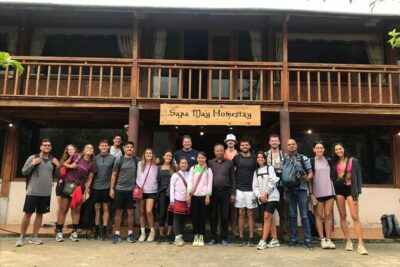
Sapa 3 Day 2 Night Trekking With Hotel & Homestay
Read our review →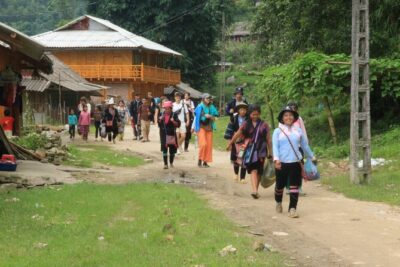
Sapa 2 Days 1 Night Overnight At Local Homestay
Read our review →
2-Day Trekking Trip with Ethnic Minority Homestay
Read our review →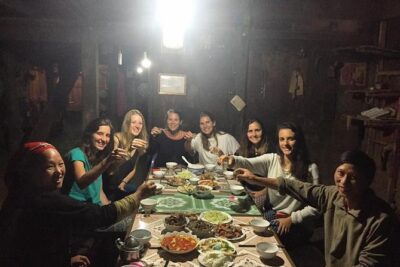
2-Day Trek & Heartwarming Homestay with an Ethnic Family
Read our review →Browse the lists this trek appears in