
Review · HANOI
Sapa: 3-Day, 3-Night Trek and Hotel with Overnight Train
Sapa’s best moments come on foot, among rice terraces, bamboo paths, village homes, and mountain fog. This three-day trek through Muong Hoa Valley gives you a useful mix of local life and scenery, with one night in a Zay homestay rather than three nights in town.
I like the practical setup: the overnight train saves a hotel night, and the itinerary includes both a Sapa hotel and a village homestay. I also like the small-group feel and the warm local guides, including Su Su, Ai, Mai, and Chu on various departures. The main drawback is the long travel schedule, plus persistent sellers who may follow you along parts of the walk.
Key points at a glance
- Overnight train from Hanoi: Sleep in a shared four-bed, air-conditioned cabin on the way to Lao Cai.
- Muong Hoa Valley walking route: Pass through Sin Chai, Y Linh Ho, Lao Chai, Ta Van, Giang Ta Chai, and Su Pan.
- One night with the Zay: The Ta Van homestay offers a closer look at village life than a standard hotel.
- Three kinds of mountain communities: Learn about the Hmong, Zay, and Red Zao peoples through village visits and your guide.
- Comfort between treks: Spend one night in a three-star hotel in central Sapa, with meals included as listed.
- Bring proper gear: The 9-kilometer walking day is demanding, and rain can make village paths slippery.
Why this Sapa trip works well
At $212 per person, this is not just a guided walk. The price covers the Hanoi to Lao Cai train, transfers, a Sapa hotel, a homestay, meals listed in the plan, a local English-speaking guide, and the return limousine bus to Hanoi.
That package is useful if you are starting in Hanoi and have only a few days for Sapa. You do not need to arrange the train, find a Lao Cai transfer, book a homestay, or work out which villages to visit. You also avoid losing a full daytime journey to transport.
The tradeoff is that this is a tightly packed trip. You leave Hanoi at night, start walking soon after reaching Sapa, trek again the next day, and return to Hanoi on the third afternoon. I see the value, but you should not expect a slow mountain holiday.
The activity has a rating of 4.2 from 64 ratings, and the strongest points are clear: well-organized transport, friendly local guides, good food, and a rewarding village stay. The weaker points concern the noisy overnight train, drinks costing extra, and some confusion over the final Hanoi transfer.
A few more treks around Hanoi worth a look
- Sa Pa Trekking 2 Days 3 Nights Homestay by Night Train
★ 4.5 · 11 reviews - Trekking Sapa – Bac Ha Market: Sleep on Train & Homestay
★ 4.5 · 7 reviews - Sapa Trekking Tour by Night Train from Hanoi 3 Nights – 2 days
★ 5.0 · 7 reviews
Night train from Hanoi to Lao Cai
The trip begins at Hanoi Railway Station. You are expected to meet staff and collect your tickets by about 9 PM, with the train leaving around 10 PM. Pickup from a hotel in Hanoi’s Old Quarter can be arranged, or you can make your own way to the station.
If you need help at the station, go to the elevator, take it to the second floor, and proceed to gate 2A. This is the sort of small instruction that matters when you are carrying luggage late at night in an unfamiliar station.
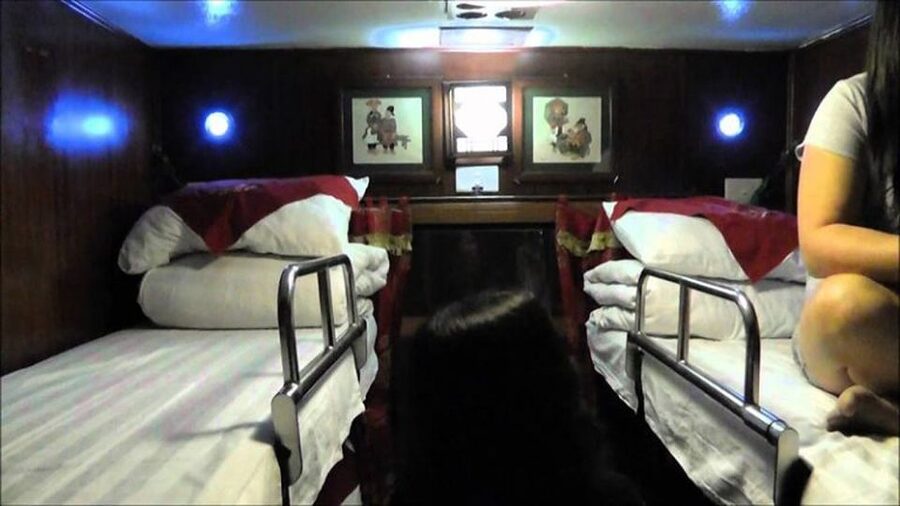
You sleep in a shared four-bed, air-conditioned cabin. The berths have soft bedding, but expect train noise and movement. The ride is part of the experience, not a luxury sleeper. Some people sleep well, while others find the bumps, noise, and shared toilet facilities tiring.
You do not choose your upper or lower berth in advance, so pack with that in mind. Keep water, medication, a light layer, and anything you need overnight in a small day bag rather than inside your main luggage.
The train reaches Lao Cai early the next morning. A shared minibus then takes you uphill to Sapa, where the cooler air and mountain setting feel very different from Hanoi.
Morning in Sapa and the short Sin Chai walk
You meet the guide at Lao Cai station and reach Sapa at about 6 AM. Your luggage is left at the Sapa hotel, followed by breakfast. Standard room check-in is at 2 PM, so do not count on having a room immediately after arrival. Early check-in is available only as an added option.
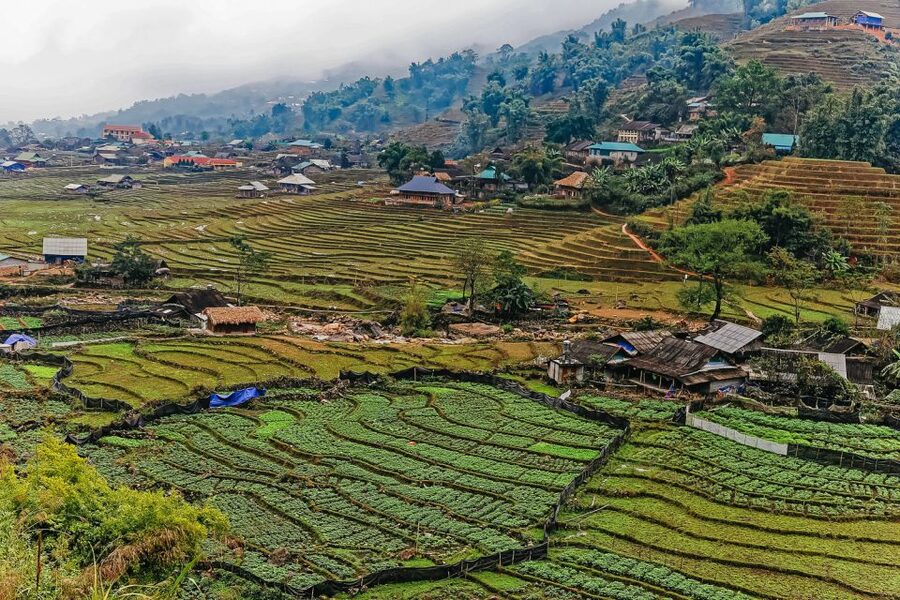
The first walk goes southwest of Sapa to Sin Chai, a Black Hmong village about two kilometers from town. It is a useful introduction because you begin with a relatively short route before tackling the longer valley trek.
Sin Chai is described as simple and rural, with a less polished feel than Sapa center. You see the basic shape of highland village life and begin learning how the Black Hmong communities live. Your guide is important here. A good guide can explain what you are seeing without turning every home or person into a photo stop.
After the morning walk, you return to the hotel for lunch and free time. This break is welcome because the overnight train and early start can catch up with you. Use the afternoon to rest, walk around central Sapa, or sort your gear for the next day.
Dinner is at about 6 PM. The evening is free, and Sapa has simple local snacks such as roasted corn and baked eggs cooked beside charcoal fires. You spend the night at a three-star hotel in the center.
That hotel night gives you a proper bed and a shower before the longer trek. It also means you are not sleeping in a homestay every night, which makes the trip more manageable for anyone who wants village contact without giving up all comfort.
Y Linh Ho and Lao Chai in the Muong Hoa Valley

The main walking day begins after breakfast. You follow the side of Muong Hoa Valley toward Y Linh Ho, a Black Hmong village, then continue to Lao Chai, another Hmong community.
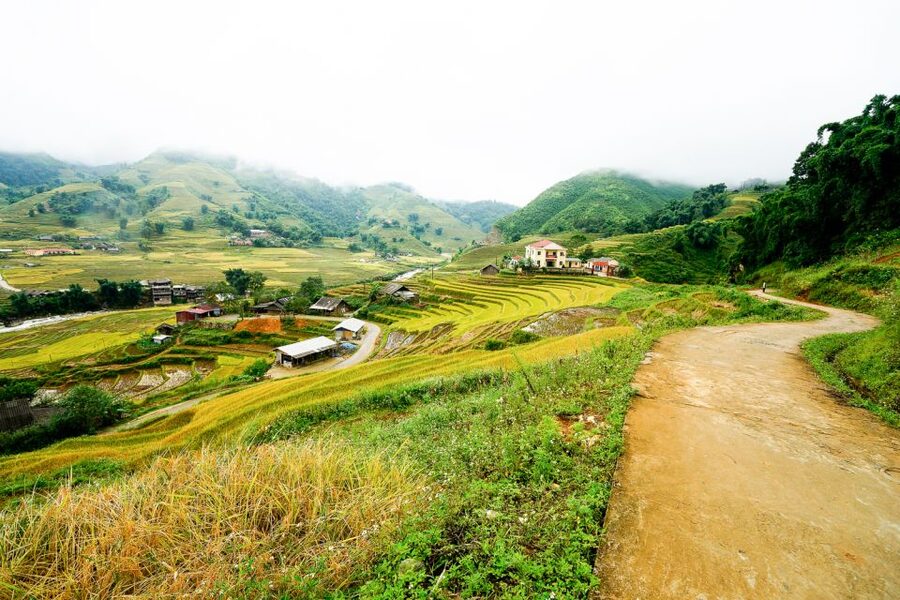
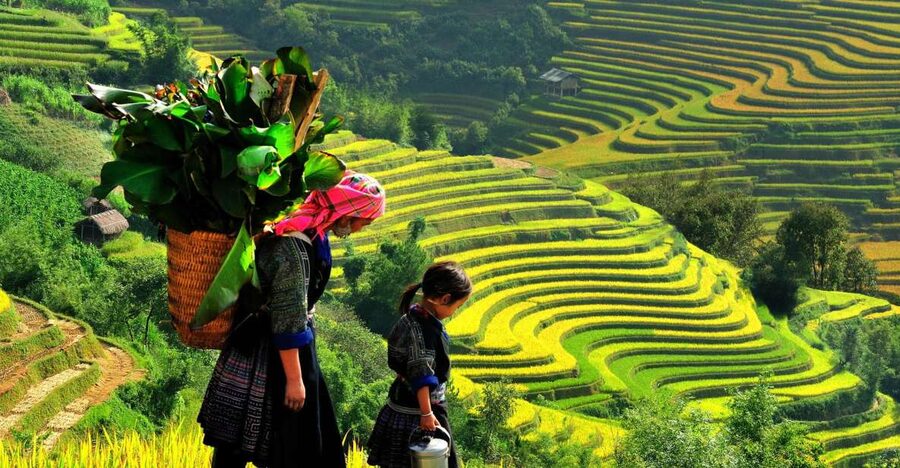
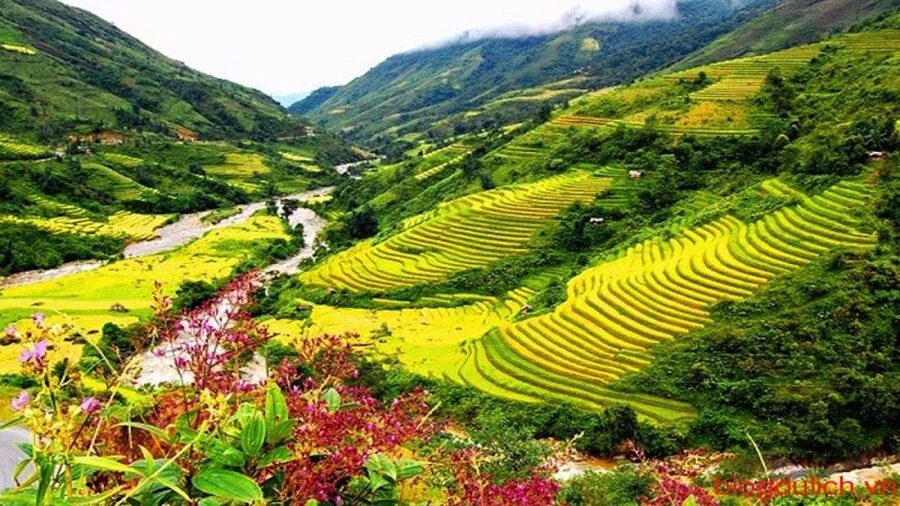
This is the day built around Sapa’s famous rice terraces and valley views. The walking route is more rural than the town approach, and the scenery becomes the reason for the effort. You pass fields, paths, and village areas rather than simply driving to a viewpoint.
The route is not a flat stroll. The full trek is listed at about 9 kilometers, and the combination of uneven paths, hills, heat, rain, and mud can make it feel longer. Comfortable shoes are essential. Trekking shoes, sun cream, sunglasses, insect repellent, and a small amount of water belong in your day pack.
Rain changes the character of this walk. On a dry day, you can focus on the terraces and mountain views. After heavy showers, the paths can be demanding, so allow your guide to set the pace. This trip is not suitable for people with mobility impairments, wheelchair users, or anyone who is not comfortable walking for several hours over uneven ground.
Lunch comes during the day, followed by a walk through the rice terraces to Ta Van. The slow transition from valley paths to the village makes this the most memorable section for many people. You are not simply checking off villages. You are moving through the setting that supports local farming and daily life.
Same trailhead, a different route:
- Hanoi – Sapa 2 Days 1 Night Overnight At Homestay
★ 5.0 · 899 reviews - From Hanoi: 2-Day Sapa Trekking Trip with Homestay & Meals
★ 4.8 · 704 reviews - Sapa 3 Days 2 Nights Trekking Tour (1 Night In Ta Van Village, 1 Night In Hotel)
★ 5.0 · 699 reviews - 3-Day Trekking Adventure of Sapa from Hanoi – Stay Ta Van Village
★ 5.0 · 611 reviews
Ta Van homestay with the Zay community

Ta Van is home to the Zay minority people and provides the overnight homestay. This is the heart of the trip if you want something more personal than a Sapa hotel.
The homestay is a chance to see how village accommodation differs from a commercial hotel. Expect a shared setting and a more basic arrangement than your room in Sapa. The stay is meant to connect you with local life, not to provide resort-style privacy.
The included dinner is part of the appeal. Food is included as listed in the itinerary, although drinks are not. You should bring Vietnamese dong for drinks, snacks, and personal purchases because card services in Sapa can be unreliable.
The homestay has received strong praise for being clean and welcoming. Still, it is sensible to pack earplugs, a light towel, and warm sleepwear. Sapa can feel cold from September through March, and the altitude means weather can shift quickly.
The local handicraft element is also worthwhile. Women gather at a handicraft center to exchange skills, giving you a window into textile work and shared community knowledge. Treat this as a cultural visit, not simply a shopping stop. If you buy something, agree on the price before handing over money.
Giang Ta Chai, Su Pan, and the return to Sapa
After breakfast in Ta Van, you continue toward Giang Ta Chai and Su Pan. The route includes villages associated with the Red Zao and Hmong peoples, along with a waterfall, a rattan bridge, and bamboo forest paths.
This final walking day offers variety. You get village scenery, water, forest, and more open views instead of repeating the same rice-terrace route. The rattan bridge and waterfall are specific stops to look forward to, though conditions can affect how easy the paths are to walk.
You eventually reach the main road and take a vehicle back to Sapa. The plan allows time to collect your things and prepare to leave at around 2 PM. From there, a limousine bus carries you toward Hanoi, with arrival expected around 8 or 9 PM.
The limousine bus is a strong part of the return journey. It is more comfortable than a basic minibus and may drop you at your Hanoi hotel, depending on the arrangement. However, confirm this point before booking. The stated plan includes Hanoi Old Quarter pickup and gives a Hanoi arrival time, while one departure did not include a return hotel transfer. If you arrive late without a confirmed drop-off, taxi drivers at the arrival point may quote inflated prices.
Guides, group size, and the local feel

The guide can make or break a Sapa trek. Guides such as Su Su, Ai, Mai, and Chu have led departures, and the strongest experiences involve guides who are friendly, talkative, and willing to stop for explanations and photos.
A small group is a good fit for this route. It lets you walk at a reasonable pace and ask questions without holding up a large busload of people. A private group is also available if you want more control over stops and timing.
Solo travelers need to pay attention to the room arrangement. A single supplement applies for two nights, covering the three-star hotel and private bungalow arrangement, with the exact amount confirmed at booking. Solo departures can also involve changing guides or meeting points, so get the next day’s plan clearly explained before the guide leaves you.
One unusual part of Sapa is the steady presence of local women and children selling goods. Some may walk alongside you or approach during stops. The tour provider advises you to ignore them and stay with the guide, but the situation is more complicated than that. Sellers are trying to earn a living, and a polite refusal is usually better than an argument.
You may prefer not to buy anything during the walk. If you do want a textile or small craft, compare prices and avoid buying under pressure. Do not blame the guide for the sellers’ presence, and do not assume every person walking near the group is part of the tour.
Weather, clothing, and physical effort
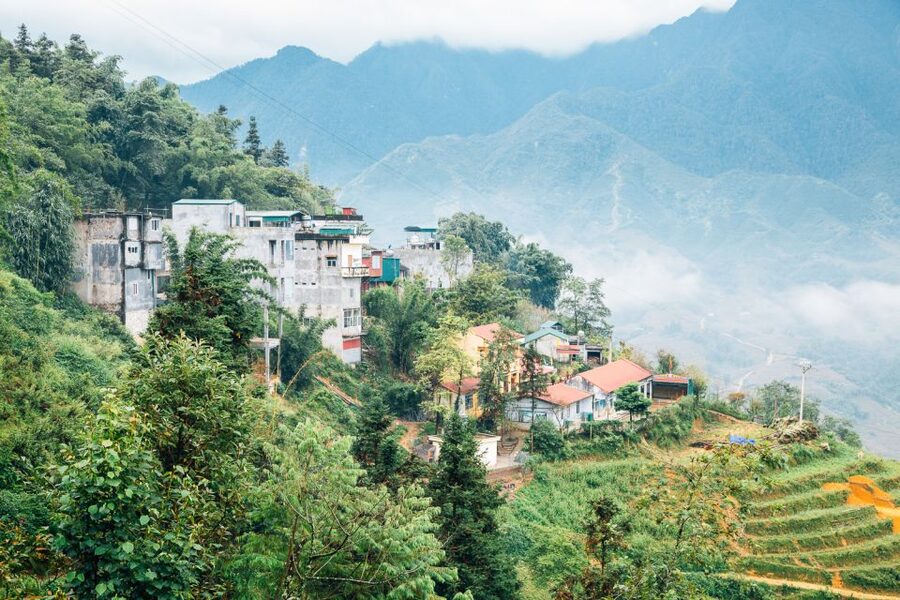
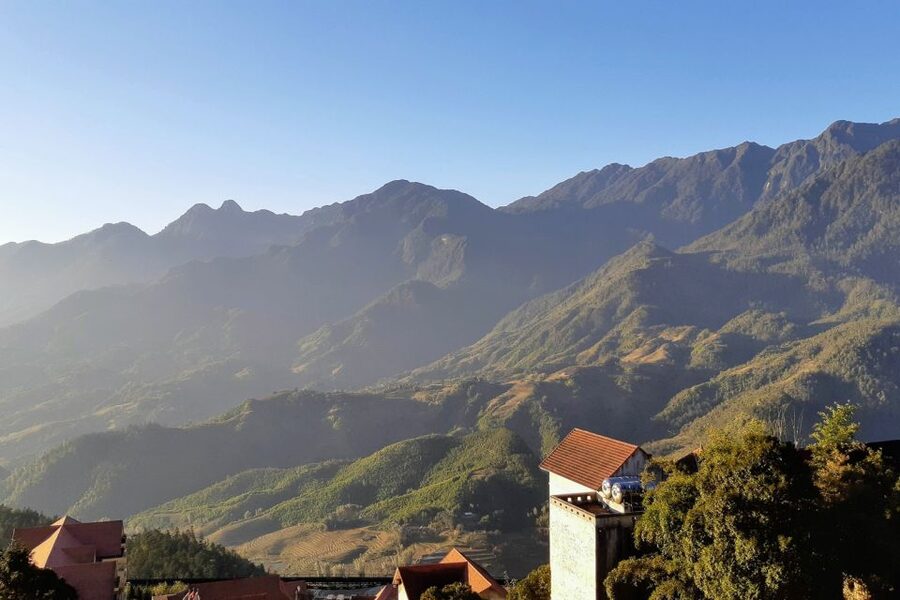
Sapa weather is unpredictable. From September through March, bring warm clothing, including a scarf and hat or cap. December through March can bring fog, which may hide the larger mountain views, but the mist can also make the villages feel quieter and more atmospheric.
Pack for both sun and rain. Your basic kit should include:
- Trekking shoes with good grip
- Warm layers and rain protection
- Sunglasses and sun cream
- Insect repellent
- Any personal medication
- Vietnamese dong for drinks and purchases
The 9-kilometer trek is not recommended for older visitors or children. The activity is also unsuitable for wheelchair users and people with mobility limitations. You do not need to be an expert trekker, but you should be comfortable walking uphill and downhill on uneven village paths.
The itinerary includes breakfast, lunch, and dinner on the listed days. Drinks are extra, so budget for them. At $212, the package offers solid value when you count the train, three nights of accommodation, transport, meals, and guiding. It is less attractive if you would rather choose your own hotels, restaurants, and train berths.
Who should book this Sapa trek?
I would choose this trip if you want to see rural Sapa without spending time on transport planning. It suits first-time visitors to northern Vietnam, active couples, friends, and solo visitors who like guided walking and do not mind shared arrangements.
It is also a good option if you want both comfort and local contact. The Sapa hotel gives you a proper base, while the Ta Van homestay adds the village experience. The overnight train makes the journey efficient, though not especially quiet.
I would look elsewhere if you need a slow pace, private rooms throughout, guaranteed lower train berths, or a very quiet cultural experience. You should also consider more time in Sapa if the schedule feels rushed. The trip gives you a strong sample of the Muong Hoa Valley, but it does not cover every village or allow much spare time.
Cancellation is free up to 24 hours before departure, and you can reserve now and pay later. Those terms help if your Vietnam plans are still moving, but the practical questions matter more: confirm the single supplement, early hotel check-in, train berth expectations, and final Hanoi drop-off.
Should you book it?
Book this Sapa trek if you want a well-arranged introduction to the Muong Hoa Valley, with village walking, one genuine homestay night, and transport from Hanoi included. The guides, food, local connections, and simple three-part accommodation plan give you good value for the price.
Skip it if you dislike overnight trains, shared cabins, demanding walks, or persistent souvenir sellers. For most fit visitors with limited time in northern Vietnam, though, this is a useful and rewarding way to see Sapa beyond the town center.
FAQ
How long does the Sapa trek last?
The activity lasts about three to three and a half days, including the overnight train from Hanoi to Lao Cai.
Where does the overnight train leave from?
The train leaves from Hanoi Railway Station at about 10 PM. You should meet the staff around 9 PM to collect your tickets, and the meeting instructions direct you to gate 2A on the second floor.
Where do I sleep during the trip?
You spend one night in a shared four-bed, air-conditioned train cabin, one night in a three-star hotel in central Sapa, and one night at a homestay in Ta Van Village.
Is the trek suitable for children or older visitors?
The 9-kilometer trek is not recommended for older visitors or children. The activity is also not suitable for people with mobility impairments or wheelchair users.
Are meals included?
Breakfast, lunch, and dinner are included where shown in the itinerary. Drinks and meals not listed are extra.
What should I bring for the Sapa weather?
Bring comfortable trekking shoes, warm clothing, a scarf, a hat or cap, sunglasses, sun cream, insect repellent, and any medication you may need. Sapa can be cold from September through March, and fog is possible from December through March.
More 3-Day Experiences in Hanoi
- Hanoi – Sapa 3 Day 2 Night Trekking With Hotel & Homestay
★ 5.0 · 389 reviews - From Hanoi: Trek and Stay: 3-Day Sapa Highlands Adventure
★ 4.6 · 152 reviews - Sapa 3 Days 2 Nights Trekking Tour From Hanoi (2 Nights in Hotel)
★ 5.0 · 112 reviews - From Hanoi: 3 Days Luxury Sapa Trek & Fansipan Peak with Dcar
★ 5.0 · 43 reviews
Just added around Hanoi
- 8-Days Hanoi, Sapa Trekking And Halong Bay Cruise★ 5.0 · 8 reviews
- From Hanoi : Sapa Moutain Trek – Halong bay Heritage★ 4.5 · 25 reviews
- Trekking around Ha Giang 5 days 4 nights★ 3.0 · 2 reviews
- Mai Chau – Pu Luong trekking 3 days 2 nights★ 4.5 · 7 reviews
- Trekking In Ha Giang 5 Days★ 5.0 · 4 reviews
- Hanoi: 3D2N Mu Cang Chai Visit All Attractions, Trek, Ethnic Life★ 5.0 · 3 reviews
- 2-Day Trekking in Sa Pa from Ha Noi by sleeping bus★ 5.0 · 4 reviews
- 2-Day SAPA Trekking – Villages-Homestay-Ethnic-Local Food-Market★ 5.0 · 2 reviews
Train Experiences, compared.

Machu Picchu 2-Day Inca Trail with Panoramic Train
Read our review →
Tour with the Mountain Train, Trek to Mystic Forest and Castle
Read our review →
Machu Picchu: 5-Day Salkantay Trek with Panoramic Train
Read our review →
4 Day Classic Inca Trail to Machu Picchu by 360° Train
Read our review →

Short Inca Trail 2 Day Hike to Machu Picchu with Permits & Train
Read our review →
Inca Trail 4 Day Adventure to Machu Picchu with Panoramic Train
Read our review →
4-Day Lares Trek to Machu Picchu with Panoramic Train
Read our review →Browse the lists this trek appears in