
Review · SAPA
Sapa: 1-Day Trek to Mountain, Local Villages & Rice Terraces
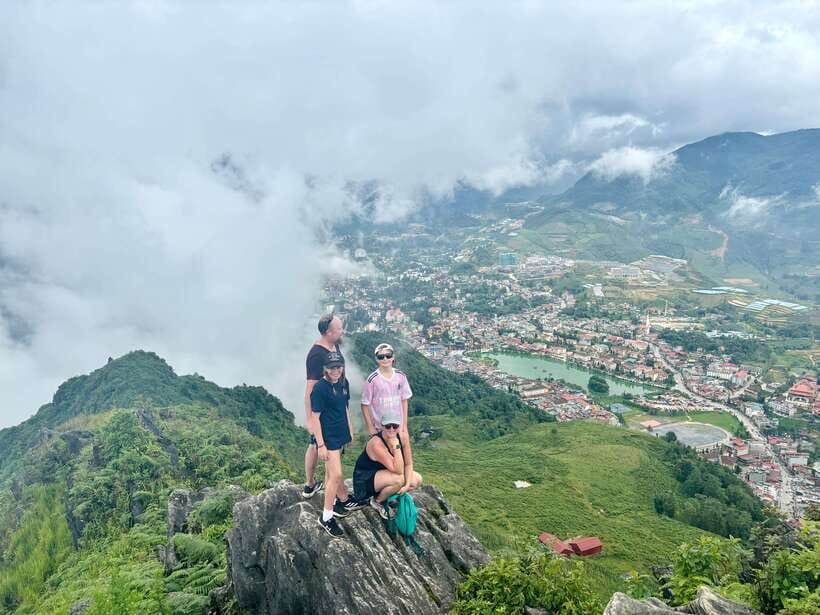
Sapa’s best views come after you leave its busy center, and this six-hour trek gets you high above the town quickly. The route reaches Dragon Jaw Mountain at 1,900 meters, then follows steep trails toward Black Hmong villages, rice terraces, and small bamboo forests.
I like the mix of mountain scenery and village life. You get a local lunch in Hang Da, then visit a museum in Ban Bo to learn about clothing, customs, and daily life. The main caution is the path itself: steep, slippery sections make this a moderate to challenging walk, especially after rain.
Key points to know before you book
- Dragon Jaw viewpoint: See Sapa, Muong Hoa Valley, cloud banks, and possibly Fansipan from a high ridge.
- A real mountain trek: The route uses narrow trails, corn fields, hills, and bamboo forest paths rather than easy paved roads.
- Black Hmong village life: Walk through Hang Da, see traditional homes, and watch for buffalo, cows, horses, and pigs along the way.
- Lunch in the mountains: A simple local meal is served in Hang Da, with water included.
- Culture beyond scenery: The Ban Bo museum visit covers traditional clothing, customs, and local culture.
- Guide quality matters: Guides named Nhu, Tung Jacob, and Keyni have led this outing, with particular praise for patience, encouragement, and route choices.
Why this Sapa trek is worth your time
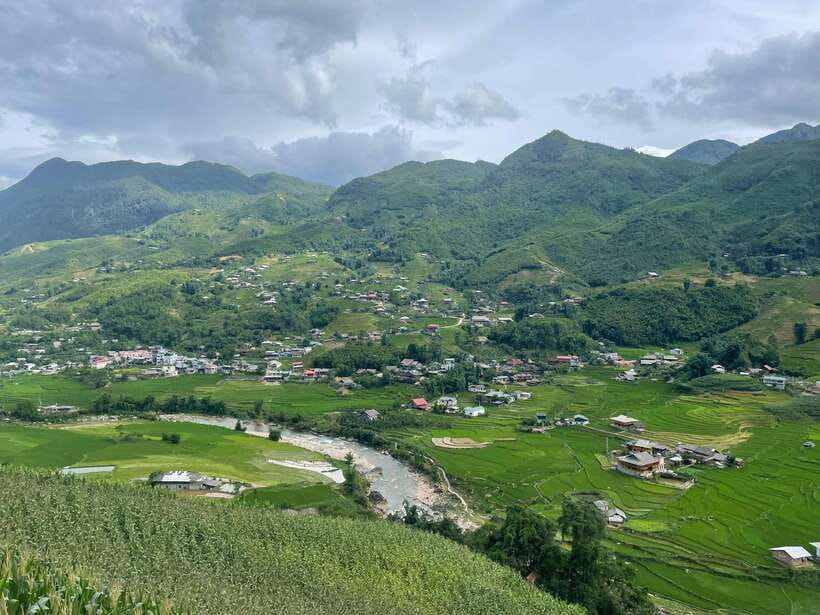
Sapa is famous for its rice terraces, but you do not really understand the area from a roadside viewpoint. This walk lets you see how the mountains fit together. You climb above town, look across Muong Hoa Valley, pass scattered homes, and descend toward villages connected by footpaths.
At $24 per person, the price is strong for a six-hour outing. It includes an English-speaking guide, lunch, bottled water, entrance fees, and transport back to Sapa or your accommodation. You are paying for more than a viewpoint. You get route-finding on rough trails, a village meal, and a cultural stop that would be difficult to arrange smoothly on your own.
The walk is not a gentle stroll. You should be comfortable with hills and uneven ground. Good grip on your shoes matters more than appearance here. One account of the route describes steep and slippery slopes throughout, while another calls the course quite challenging but praises the guide’s patience and encouragement.
More Rice Terrace Treks in Sapa
- Sa Pa: Muong Hoa Valley Trek and Local Ethnic Villages
★ 4.6 · 864 reviews - Explore Sapa by TrekkingAdventures, Mountain,Rice fields
★ 4.9 · 229 reviews - Sa Pa: 6-Hours Muong Hoa Valley Trek with Local Ethnic guide
★ 4.5 · 178 reviews
Starting at Sapa Church or your hotel
The day begins around 9:00am. If you are staying near Sapa Center, the guide can pick you up at your hotel. If you do not have a hotel arranged, meet at Sapa Church, the main church in the center of town.
Before setting off, the guide explains the plan. This is a useful moment to say how much difficulty you want. On a rainy day, guide Tung Jacob checked the group’s preference and offered a choice between an easier route and a harder one. The more demanding option was chosen, so the practical lesson is simple: tell your guide honestly about your fitness, confidence, and footwear.
Guides named Nhu, Tung Jacob, and Keyni have led this trek. Keyni received particular praise for being physically fit, patient, and encouraging on a difficult route. Nhu was praised for making the outing fun and for sharing useful information. Tung Jacob was described as easy to talk with and willing to adjust the walk to the group.
The cultural explanation may depend on the guide and on how many questions you ask. If local history and customs matter to you, ask directly as you walk. That can turn a scenic hike into a more informative look at life around Sapa.
Climbing through corn fields to Dragon Jaw Mountain
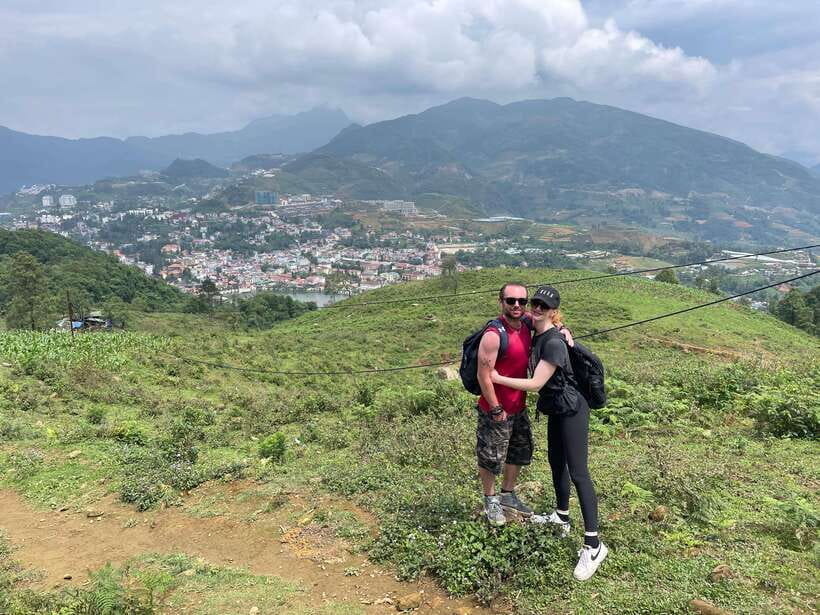
The first section leaves Sapa by a smaller trail that climbs through corn farms toward the mountain. After roughly an hour and a half, you reach Dragon Jaw Mountain, at about 1,900 meters above sea level.
This climb is the physical heart of the outing. You gain height early, so expect your legs to work before the views open fully. The path moves through hills and small forested areas, with a more natural feel than the roads around town.
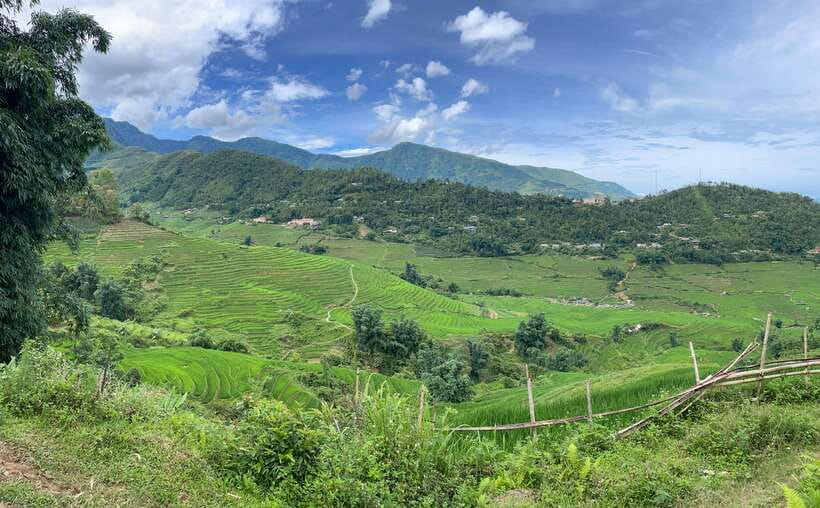
At the top, you can look back over Sapa and across Muong Hoa rice valley. The view is especially rewarding because you have walked up to it rather than simply stepped out of a vehicle. On clear days, you may see Fansipan, the highest mountain in Indochina, from the Dragon Jaw ridge.
Cloud conditions are part of the experience. If the weather cooperates, the hills can appear through a sea of clouds, creating the dramatic photographs this route is known for. But Sapa weather changes quickly. Warm clothing is wise even if the town feels mild at the start, and you should be ready for a cloudy or misty view rather than a guaranteed panorama.
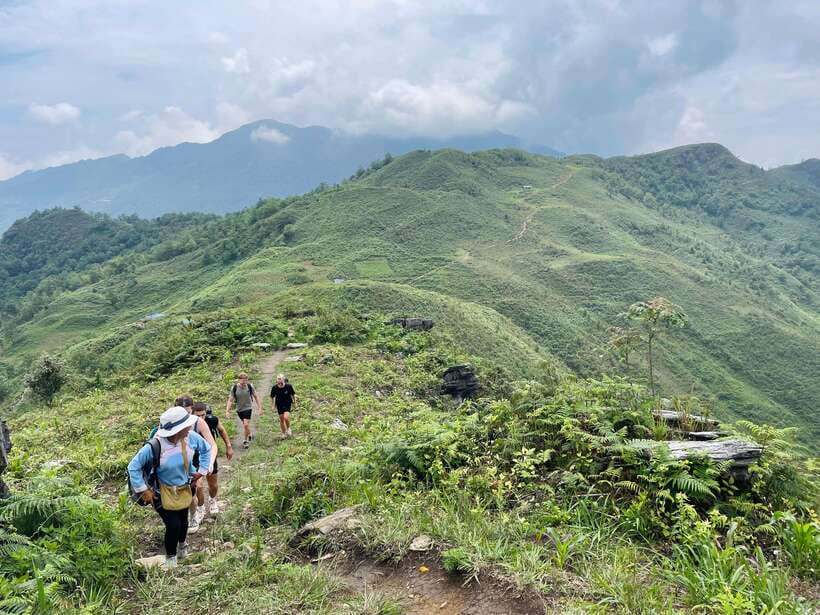
You get a short break here for photographs. Use it to catch your breath, not just to pose. The trail ahead continues along a narrow ridge described as being like a dinosaur’s spine, so steady footing becomes important as you begin the descent.
Along the ridge toward Hang Da village
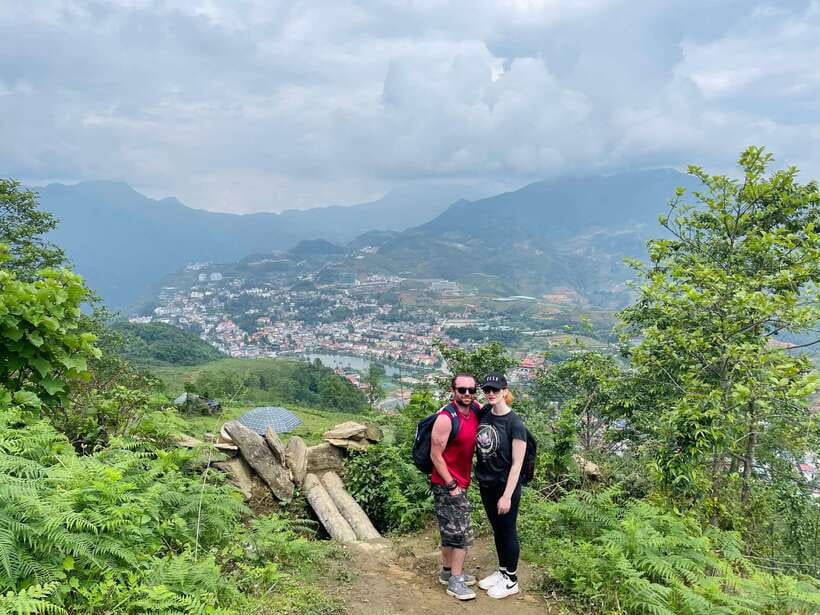
From Dragon Jaw, the route follows the high trail toward Hang Da, a village associated with the Black Hmong community. The descent gives you a different view of the area. Instead of looking across the valley from one high point, you begin to see homes scattered among the hills and terraces.
You may pass buffalo, cows, horses, and pigs along the way. These ordinary details are part of what makes the walk feel connected to village life. You are not only looking at rural scenery from a distance. You are moving through an active farming area.
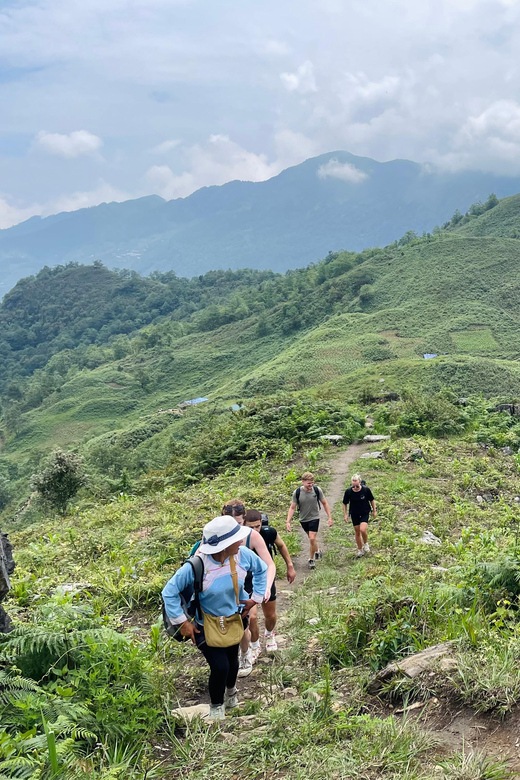
The trail can be narrow, steep, and slick. Rain makes the challenge greater, and the route is not suited to wheelchair users or people with heart problems. If your balance is uncertain, take your time and follow the guide’s pace. A walking pole could be useful, though one is not listed as included, so bring your own if you normally rely on one.
This is also the part of the trek where you may meet local people walking with the group for a while. On one outing, a Hmong woman followed along and offered small bits of information about the mountains. A purchase was expected by the end, so keep some money available if you welcome that kind of informal contact. If you prefer to walk without a sales interaction, make your wishes clear early and politely.
More Rice Terrace Treks in Vietnam
- Sapa Muong Hoa Valley & Ta Van Eco Village Scenic Tour (No Trek)
★ 5.0 · 144 reviews - Daily Tour: Sapa Trekking in Muong Hoa valley, Bamboo forest
★ 5.0 · 121 reviews - 1-Day Sapa Long Trek – Rice Field Terrace, Ethnic Culture
★ 4.9 · 62 reviews - Sapa: Muong Hoa Mountain Views and Villages Trek with Lunch
★ 4.3 · 28 reviews
Lunch and village life in Hang Da
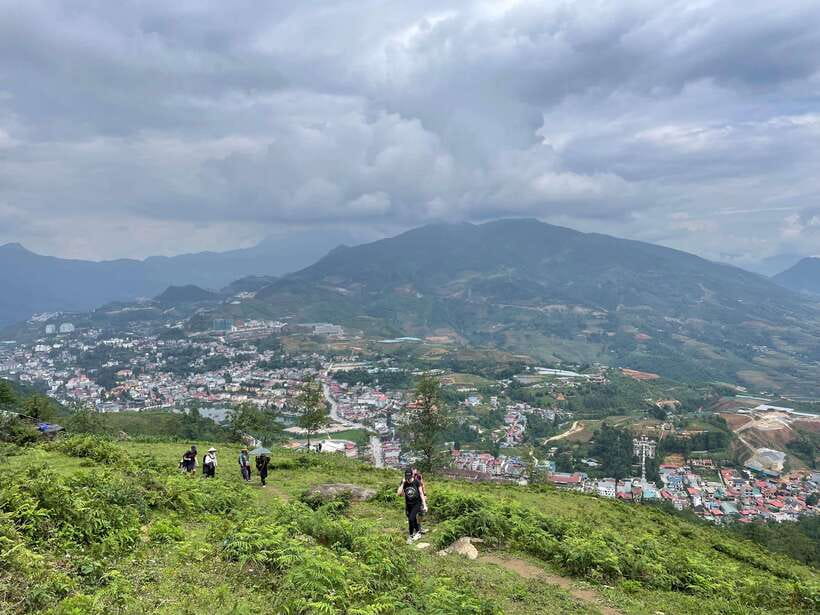
Hang Da is the main meal stop, with about an hour set aside for lunch. The food is described as local dishes, and one account specifically mentions simple fried noodles or fried rice. Water is provided.
Do not expect a long restaurant meal with a broad menu. Think of lunch as a practical mountain stop that refuels you before the second half of the walk. Inform the operator about dietary restrictions in advance, since the meal is arranged as part of the tour.
The break also gives you time to look at the village itself. You may see traditional houses and get a closer sense of how the Black Hmong community lives in the hills. The value here is not a staged performance. It is the chance to pause in a real village after approaching it on foot.
The meal is one of the tour’s better features for the price. Paying $24 and receiving lunch, water, admission, a guide, and a ride back to town leaves little need for extra spending during the trek. Personal purchases remain your responsibility, especially if you buy handicrafts or other items in the villages.
Bamboo trails, Hau Chu Ngai, and the valley below
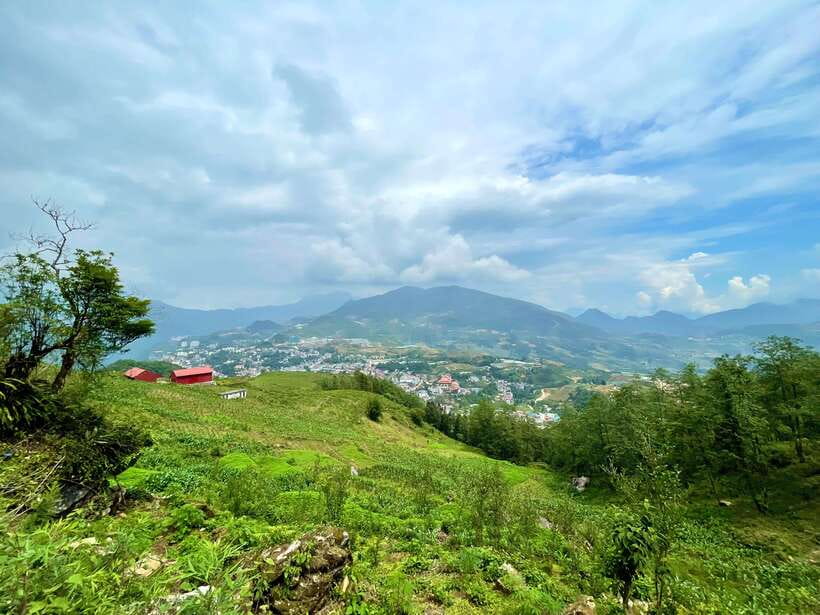
After lunch, the walk continues toward Hau Chu Ngai village on village roads and short bamboo forest trails. The bamboo sections add variety after the open mountain slopes. You move between small wooded paths and wider routes, with views opening toward homes and fields below.
The route description also uses the names Hau Thao Village, Giang Ta Chai, and Ban Pho for sections of the later walk. The exact sequence may vary with trail conditions and the guide’s choice. The consistent theme is a descent through rural paths, bamboo, scattered houses, and rice terraces before the final cultural stop.
This section is scenic but still active. It is not a relaxed drive between attractions. The downhill walk can be hard on knees, and wet ground may make the footing uncertain. If you want an easy day with only a few short walks, choose a different Sapa activity.
For you, the reward is a close view of the terraces from above. Rice fields in Sapa are shaped by the slope, so their pattern becomes clearer from the high trails than from town. Depending on the season and weather, the terraces may look green, brown, reflective, or partly covered by mist. The views are not identical every month, which is part of the appeal and part of the risk.
The Ban Bo museum and the final ride
The final cultural stop is a museum in Ban Bo village. Your guide shows traditional clothing and explains local customs and culture. This is a useful counterweight to the mountain scenery, particularly if you want some context for the communities you have passed through.
The museum visit is not presented as a long indoor program. It is a short, focused stop near the end of the route. Since the day already includes village walking and a meal, it works best as a final chance to connect what you saw with local traditions.
After the museum, transport takes you back to Sapa town or your accommodation. That return ride matters. You finish away from the center, tired from the descent, and do not need to find your own way back.
How difficult is the six-hour route?
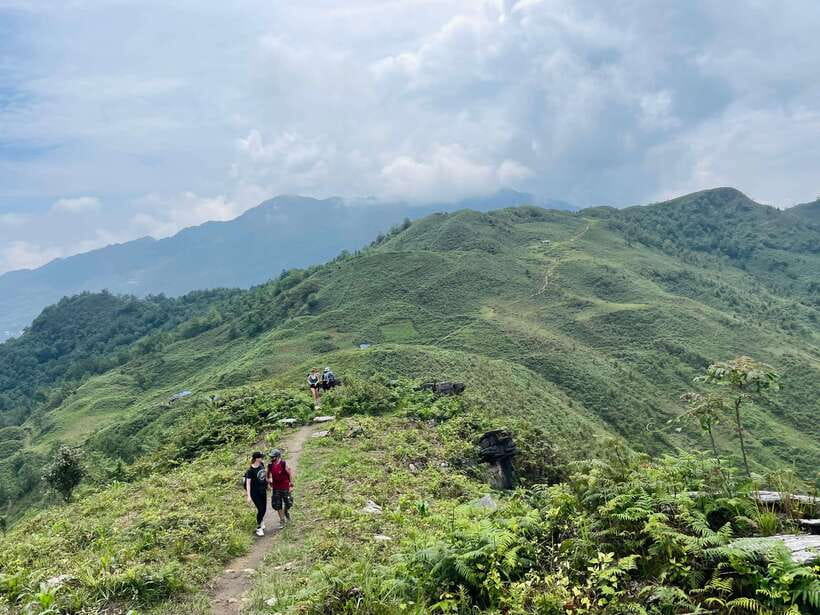
The duration is six hours, but the walking time is spread across climbs, breaks, lunch, sightseeing, and the museum visit. The route includes a climb of around 1.5 hours to Dragon Jaw, a ridge and descent toward Hang Da, then more walking through bamboo trails and villages.
I would rate it moderate to challenging rather than easy. The difficulty changes with weather, trail conditions, and your choice of route. Rain can make the slopes slippery, and the walk requires confidence on uneven ground.
Bring:
- Hiking shoes with strong grip
- Comfortable clothing
- A warm layer
- A camera
- Water if you prefer more than the included bottle
- Rain protection if the forecast looks uncertain
A poncho may be available when requested, but do not rely on that as your only wet-weather plan. Warm clothing is important because mountain weather can shift even when Sapa town feels comfortable.
What the $24 price really covers
The price is unusually reasonable for a guided day in Sapa. The package includes an English-speaking guide, lunch, bottled water, entrance fees, and transport back to town or your accommodation.
The biggest value is transport and route support. You do not need to organize a mountain pickup, find the village trails, arrange a meal, or solve the return journey. The guide also helps with pacing and route choices, which becomes more important on a wet or difficult day.
The tradeoff is that the lunch is simple, and the guide’s level of cultural explanation may vary. Tung Jacob’s English was described as communicable, with good conversation, but more historical and cultural detail was wanted. That does not make the outing poor, but you should ask questions instead of waiting for a formal lecture.
Free cancellation is available up to 24 hours before departure, and you can reserve without paying immediately. Those terms help if mountain weather is uncertain, though they do not change the physical demands of the route.
Who should book this trek?
Book it if you want a proper walk rather than a short photo stop. It suits people who enjoy hills, changing views, village paths, and the chance to see rural life at walking speed.
It is also a good fit if you want a lower-cost day with several elements built in: a high viewpoint, a local meal, village visits, a museum, and transport back to Sapa. Couples, solo visitors, and small groups can all get value from it, provided everyone is comfortable with the terrain.
You may want a different activity if your main goal is an easy cultural tour, a guaranteed clear view of Fansipan, or a route without steep slopes. People with heart problems and wheelchair users should not book this trek.
FAQ
Where does the Sapa trek begin?
The guide can pick you up from a hotel around Sapa Center. If you do not have hotel information or have not booked a hotel, meet at Sapa Church in central Sapa.
What time does the trek start?
The guide comes around 9:00am. You should check availability when booking because starting times may vary.
How long does the experience last?
The full activity lasts about six hours, including trekking, breaks, lunch, sightseeing, the museum visit, and transport back to Sapa.
Is lunch included?
Yes. Lunch is provided in Hang Da village, and one described meal included simple fried noodles or fried rice. Tell the operator about dietary restrictions in advance.
What level of fitness is needed?
You should be prepared for a moderate to challenging trek with steep and slippery sections. Comfortable hiking shoes with good grip are important.
What can I see from Dragon Jaw Mountain?
From Dragon Jaw Mountain, you can see Sapa town and Muong Hoa rice valley. In suitable weather, you may also see Fansipan and a sea of clouds.
What is included in the price?
The $24 price includes bottled water, an English-speaking guide, lunch, entrance fees, and transport back to Sapa town or your accommodation. Personal expenses and travel insurance are not included.
Should you book this Sapa trek?
Book this tour if you want Sapa’s scenery with real effort attached. The Dragon Jaw climb, ridge walk, bamboo trails, Hang Da lunch, and Ban Bo museum create a fuller day than a simple valley viewpoint visit.
Go with the right expectations. The route can be steep and slippery, the lunch is basic, and cultural explanations may depend on your guide and your questions. Wear serious hiking shoes, bring a warm layer, and tell the guide your preferred difficulty at the start.
For $24, the combination of mountain views, village paths, food, admission, and return transport is hard to beat. If your legs and footwear are ready for the hills, this is a practical way to see the countryside beyond Sapa town.
More 1-Day Tours in Sa Pa
- From Sapa: 1-Day Guided Trek to Lao Chai & Ta Van with Lunch
★ 4.9 · 416 reviews - Sapa 1 Day Long Trek: Trek to Hau Thao and Sa Seng Villages
★ 4.6 · 344 reviews - 1-day Authentik trek & Panorama valley views
★ 5.0 · 189 reviews - 1 day Fansipan Trekking
★ 5.0 · 180 reviews
More Rice Terrace Treks in Sa Pa
- Sapa: Muong Hoa Valley View & Villages Trek with Local Guide
★ 5.0 · 25 reviews - From Sapa: Muong Hoa Valley View & Village Trek 1-Day
★ 5.0 · 21 reviews - SAPA: 1-DAY TREKKING TOUR WITH LOCALS, LUNCH & RICE FIELDS
★ 4.7 · 18 reviews - From Sapa : 1 Day Amazing Sapa Trek To Terrace rice field
★ 4.6 · 17 reviews
Just added around Sa Pa
- Sapa: Private The Most Beautiful Terraced Fields Trekking★ 4.8 · 42 reviews
- Soob Sapa Trekking Tour★ 4.3 · 3 reviews
- Sapa Trekking – Waterfalls And H’mong Villages★ 5.0 · 2 reviews
- Sapa3D2N TrekkingAdventures,Valleys,Bambooforest,Waterfall★ 4.8 · 24 reviews
- Sapa: Trekking Through Terraced Rice Fields & Valley 1 Day★ 4.8 · 4 reviews
- Sapa: Trekking Sapa One Day With Group Tour★ 4.7 · 55 reviews
- Sapa Trekking Private Tour With Ethnic Female Tour Guide★ 4.9 · 24 reviews
- Sapa: Y Linh Ho – Lao Chai, and Ta Van Trekking Day Tour★ 5.0 · 25 reviews
Rice Terrace Treks, compared.
Muong Hoa Valley Trek and Local Ethnic Villages
Read our review →
Explore Sapa by TrekkingAdventures, Mountain,Rice fields
Read our review →
Selogriyo Temple and Trekking Java Rice Terraces, hidden waterfall -Nature Java
Read our review →
6-Hours Muong Hoa Valley Trek with Local Ethnic guide
Read our review →
Yogyakarta: Selogriyo Temple Tour & Java Rice Terrace Trek
Read our review →
Sapa Muong Hoa Valley & Ta Van Eco Village Scenic Tour (No Trek)
Read our review →
Daily Tour: Sapa Trekking in Muong Hoa valley, Bamboo forest
Read our review →
Rice Terrace, Holy Water Temple & Waterfalls Trek Tour
Read our review →Browse the lists this trek appears in