
Review · POKHARA
Kathmandu: 9-Day Annapurna Circuit Trek via Thorong La Pass
Crossing Thorong La Pass at 5,416 meters is the heart of this trek. You start among terraced hills and pine forests, then move into dry Tibetan-style valleys before making a pre-dawn climb to the pass. The route packs a great deal into nine days, with an acclimatization day in Manang and a final descent to sacred Muktinath.
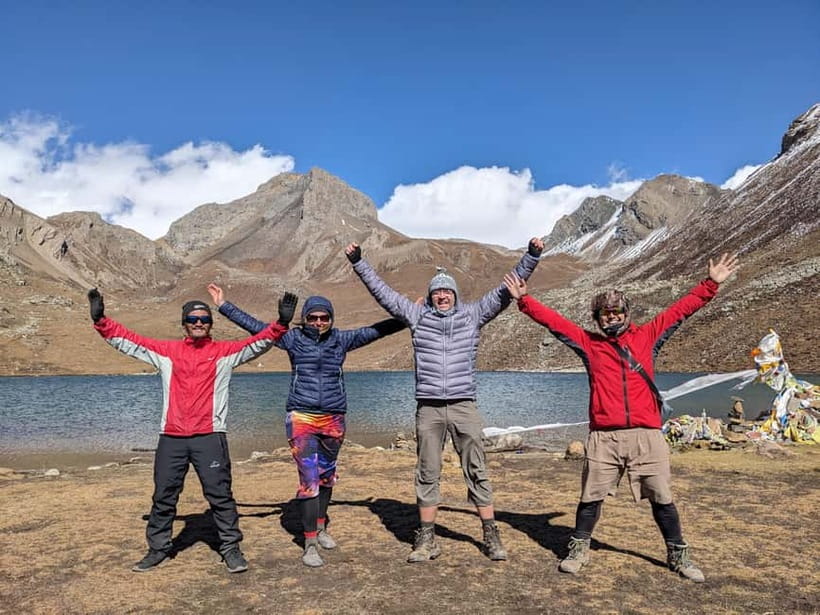
I like two things in particular: the mix of scenery and the strong guide support. You get Upper Pisang, Gangapurna Glacier Lake, high alpine pasture, prayer flags, and the pilgrimage site of Muktinath, while guides such as Sishir, Parkash, and Chakra have been praised for patient pacing and careful altitude checks. The main caution is simple: the pass day is very hard, and basic teahouse rooms can be cold, so bring a proper sleeping bag and take the fitness warning seriously.
Key points to know before booking
- Thorong La is the major test: You leave around 4:00 AM and climb to 5,416 meters before descending to Muktinath.
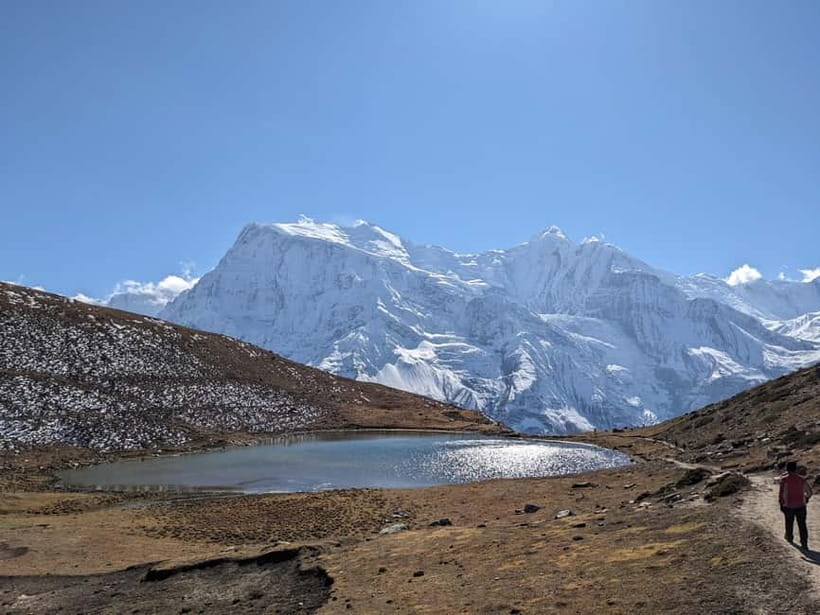
- Manang gives you a needed pause: The itinerary includes an acclimatization day, with an optional hike to Gangapurna Glacier Lake or nearby icefalls.
- The scenery changes quickly: Expect green valleys, forests, rocky high country, Tibetan-style villages, and wide views of Annapurna and Dhaulagiri.
- Upper Pisang is a highlight: The village offers fine mountain views and a chance to meet local people away from the road.
- Transport saves time: Buses and shared jeeps connect the road sections, allowing this version of the circuit to fit into nine days.
- The comforts are limited: Teahouses, simple meals, cold nights, and extra charges for water, showers, laundry, and personal items are part of the deal.
Why this nine-day route works
The Annapurna Circuit is famous because it changes character as you gain height. You begin with cultivated hills and river valleys, walk through stands of pine and oak, then reach a stark high-altitude zone where the air is thin and the villages feel distinctly Tibetan.
This version is not a leisurely walk. It is a compact schedule built around the highest point, Thorong La. You cover the key section from Dharapani to Muktinath, then continue by bus to Pokhara. The benefit is time: you see the pass and the classic villages without committing to a much longer trek.
The cost is not provided here, so I cannot judge the exact price. I can judge the package itself. It includes permits, TIMS fees, a guide, eight nights in teahouses, meals for full-package bookings, road transport, staff costs, luggage storage, and one night at Hotel Orchid in Pokhara. Those inclusions have real value in Nepal, especially the permits, guide insurance, and transport arrangements.
The trade-off is that this is a fixed nine-day plan. If you walk slowly, feel unwell, or lose time on the road, there is less spare room than on a longer itinerary. Ask clearly before booking whether your rate includes all trekking meals, since the information separates full-package bookings from other arrangements.
More Annapurna Treks in Pokhara
- Trekking in Annapurna/Langtang/Everest/Upper Mustang regions
★ 5.0 · 161 reviews - Pokhara: Annapurna Foothills Day Hike with Transfers
★ 5.0 · 100 reviews - Kathmandu/Pokhara: 5-Day Annapurna Base Camp (ABC) Trek
★ 4.9 · 72 reviews
Day 1: Kathmandu to Dharapani by bus and jeep
The first day is mostly about getting into the mountains. Pickup is arranged from your hotel in Thamel or nearby areas, and a briefing takes place the day before the trek. The route uses a public bus to Besisahar, followed by a shared local jeep to Dharapani.
The full transfer is listed as roughly seven to eight hours and about 175 kilometers. That sounds manageable on paper, but road travel in Nepal can feel long, especially when the route changes from broad valleys to mountain roads. Look out for terraced fields, scattered villages, rolling hills, and distant peaks.
You sleep in a teahouse at Dharapani. Do not expect a resort room. The appeal is being close to the trail and local communities, not private luxury. Keep a warm layer and your essential items within reach, since your larger luggage may be stored or carried separately.
Day 2: Dharapani to Chame through forest and village country
The first walking day covers about 13 kilometers in six hours, reaching Chame at 2,670 meters. You pass Bhote villages, pine and oak forest, streams, and open fields.
This is a good introduction because the route gives you time to settle into your walking rhythm before the highest sections. Chame also marks the point where the mountains begin to feel more present. The air is cooler, the forest changes, and you get your first strong sense that the circuit is moving into alpine country.
A guide is useful here not only for route finding but also for pacing. The strongest feedback about this trek centers on guide care. Sishir was praised for keeping people hydrated and rested, while Parkash was praised for checking in often and offering help with a heavy bag. Those details matter more than a fast pace on a high-altitude walk.
Day 3: Chame to Upper Pisang and the Bhratang Valley
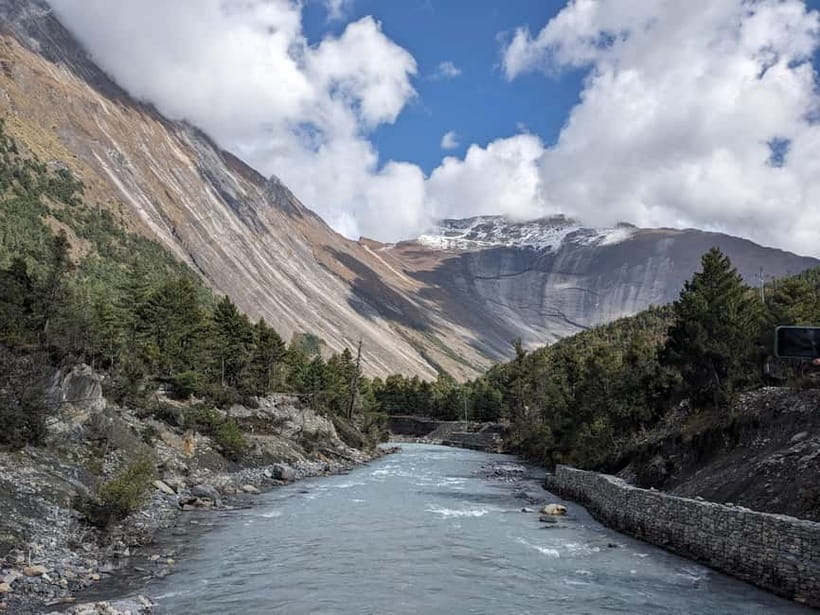
The walk to Upper Pisang takes about five to six hours and covers approximately 15 kilometers. You climb through the Bhratang Valley, with views toward Lamjung Himal and the surrounding peaks.
Upper Pisang is one of the most appealing stops on this route. It has a traditional village feel, strong mountain views, and a chance to meet local people. The setting changes from the wooded valleys below to a drier, more open high-country environment.
You should not rush this section. The road has changed parts of the Annapurna Circuit, so a guide can help you understand which paths and villages are being used on the day. The walk is not described as the hardest part of the trip, but the steady gain in height begins here. Eat regularly, drink water, and tell your guide early if you develop a headache or unusual fatigue.
Same trailhead, a different route:
- Poon hill Trek 3 days
★ 5.0 · 176 reviews - Pokhara: 4-Day Ghorepani, Poonhill & Ghandruk Mountain Trek
★ 5.0 · 132 reviews - Ghorepani – Poon Hill Trek 3N-4D
★ 5.0 · 125 reviews - Annapurna Panorama trek
★ 5.0 · 71 reviews
Day 4: Upper Pisang to Manang
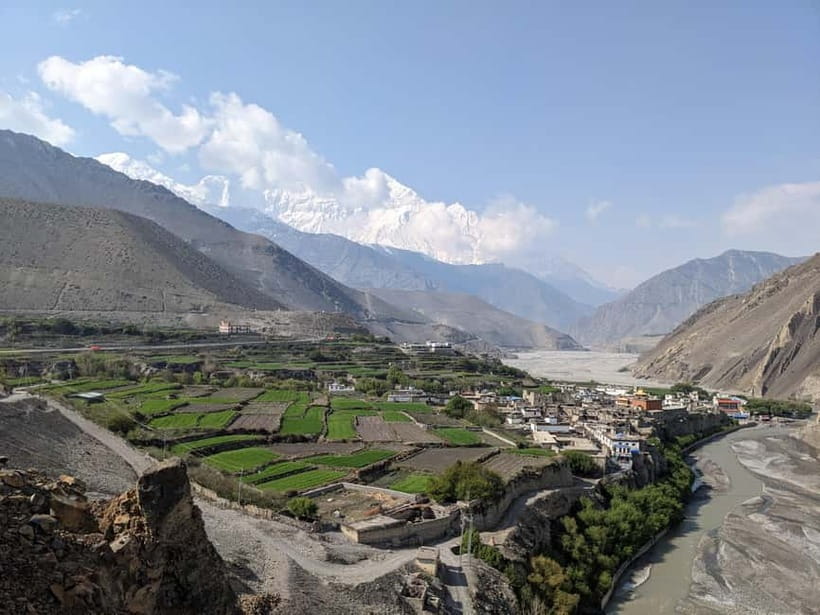
The route to Manang covers roughly 16 kilometers in five to six hours, reaching 3,540 meters. You continue through forests and valleys with views of Tilicho Peak, Annapurna III, and Annapurna IV.
Manang is a key stop because it gives your body time to adjust before Thorong La. It is also one of the places where the circuit feels most like a high Himalayan settlement rather than a simple mountain path. You stay in a teahouse and have time to rest.
The listed route mentions an optional hike to about 4,050 meters, including Gangapurna Glacier Lake or nearby icefalls. This is a useful choice, not an obligation. If you feel well, a short acclimatization walk can help your body adjust. If you feel sick, rest is the wiser choice. Do not treat the optional hike as a test of strength.
Day 5: Acclimatization in Manang
The Manang rest day is one of the best features of this itinerary. A nine-day crossing is quick, so a pause at this height is not wasted time. It reduces the temptation to race upward and gives your guide a chance to monitor how you are handling the altitude.
You can take the optional hike toward Gangapurna Glacier Lake or nearby icefalls for mountain views. You can also keep the day quiet and prepare for the next two nights above 4,000 meters.
The practical rule is to pay attention to symptoms. The trek is not suitable for people with altitude sickness or high blood pressure, and the stated fitness advice is worth taking seriously. A guide can help with pacing and rest, but no guide can remove the effects of thin air. Travel insurance that covers high-altitude trekking and rescue is essential, even though it is not included.
Day 6: Manang to Yak Kharka at 4,050 meters
This is a shorter walking day, about seven kilometers in four hours, but the altitude makes it important. You walk across alpine pasture with broad mountain views before reaching Yak Kharka.
The short distance lets you move slowly. That is exactly what you want at this point. Avoid turning the day into a race, even if the trail looks easy. Your body is working harder at 4,050 meters, and saving energy for Thorong La is sensible.
Yak Kharka is a basic teahouse stop. Simple rooms, shared facilities, and limited hot water are normal expectations for this part of the route. Nights can be very cold. A proper sleeping bag is not an optional luxury here, especially if you are trekking in late autumn, winter, or early spring.
Day 7: Yak Kharka to Thorong Phedi
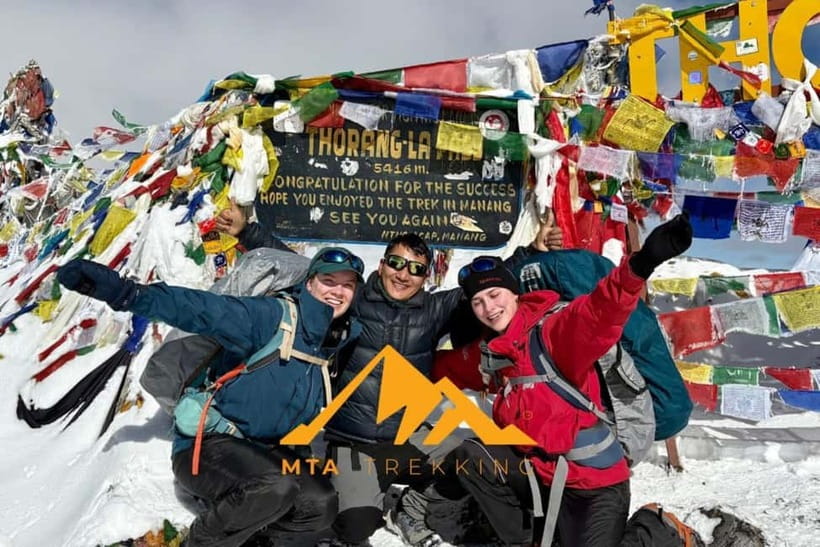
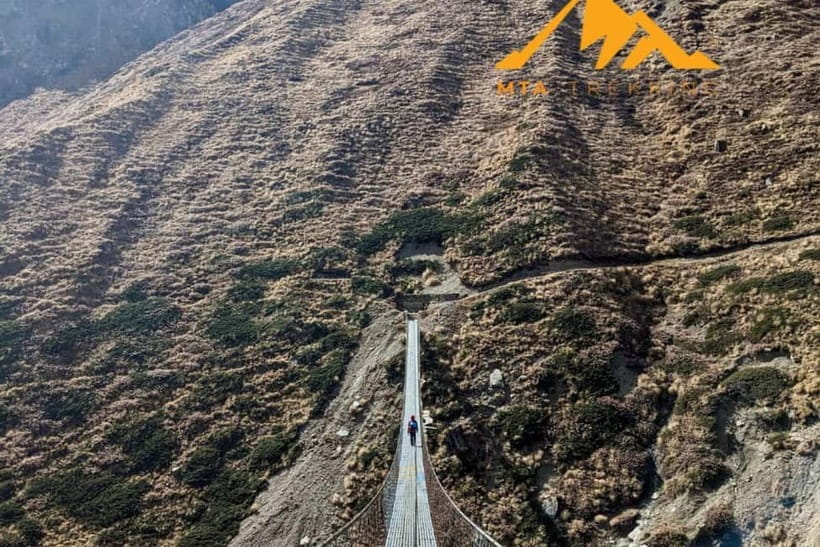
The walk to Thorong Phedi takes about four to five hours and covers approximately six kilometers. You cross rocky paths and suspension bridges while climbing to 4,450 meters.
The short mileage can be misleading. At this height, even a gradual climb takes effort. Thorong Phedi is the staging point for the pass, so the mood changes from sightseeing to preparation. Eat a proper dinner, organize your clothing, fill your water supply, and keep your headlamp and warm layers ready.
This is also the night to ask your guide about the morning plan. The departure is usually around 4:00 AM because wind conditions can worsen later in the day. A very early start means a cold, dark beginning, but it gives you the best chance of reaching the pass before the weather becomes more difficult.
Day 8: Thorong La to Muktinath
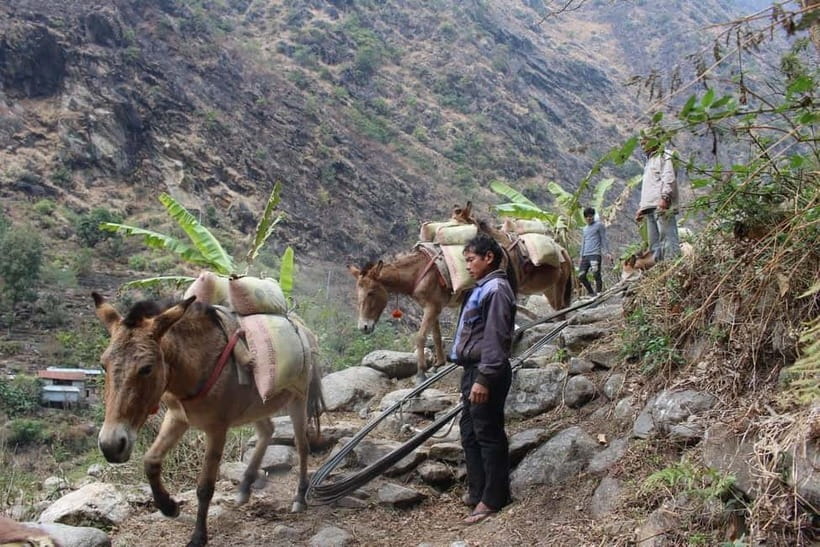
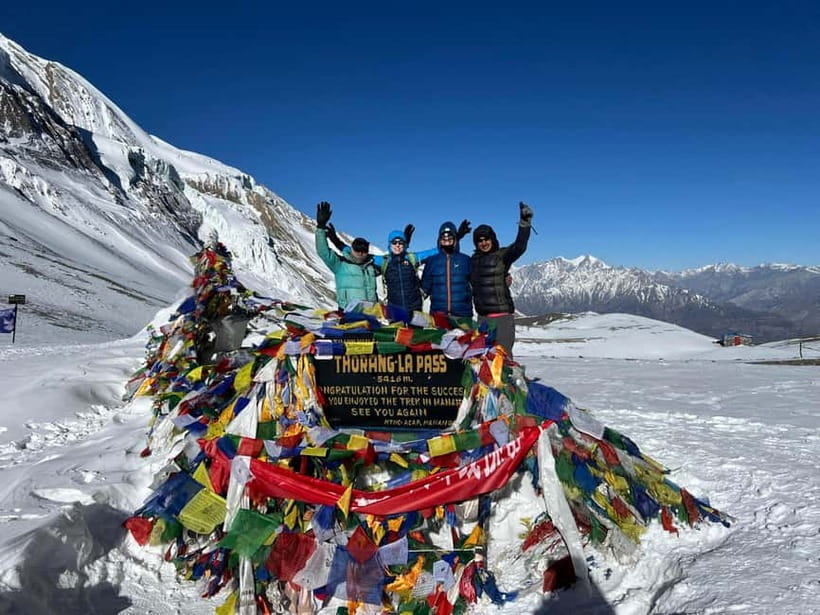
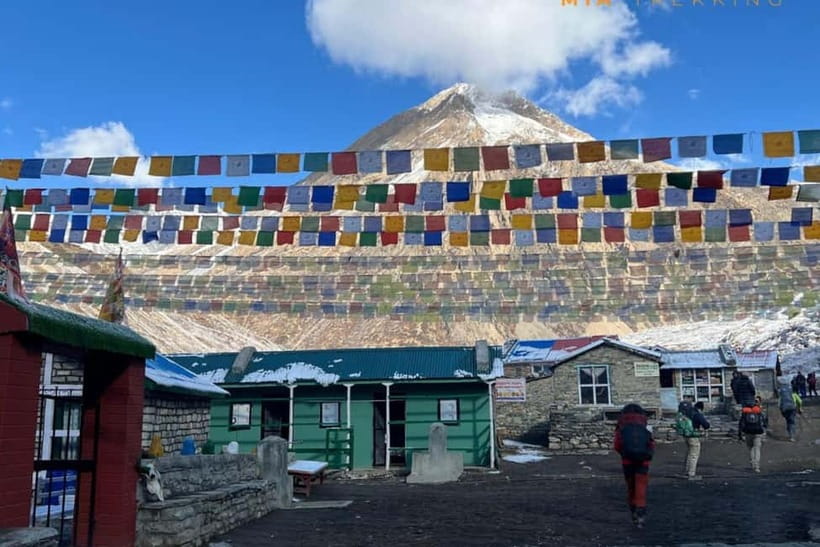
This is the defining day: seven to eight hours of walking from Thorong Phedi, across Thorong La, and down to Muktinath. The pass reaches 5,416 meters, making this a serious high-altitude crossing rather than a routine day hike.
The climb is slow and demanding. The prayer flags at the summit mark a powerful moment, but you should not underestimate the descent. One useful detail from the trip feedback is that going down can feel longer and tougher than expected. Your knees and feet take a beating, and the route does not become easy simply because you have passed the high point.
The reward is the huge Himalayan view and the feeling of completing the circuit’s main challenge. From the pass, you descend toward Muktinath, arriving around noon or early afternoon. That change from cold high pass to a sacred pilgrimage area gives the day a strong sense of contrast.
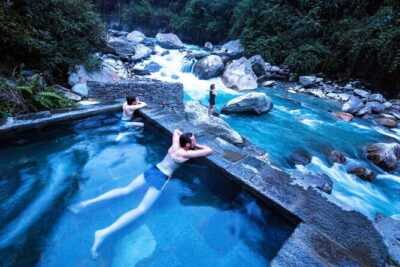
Muktinath matters to both Hindus and Buddhists. You have time to visit the temple area and spend the night. An optional taxi trip to Tatopani hot springs is available at an extra cost of about 50 US dollars, payable by participants. Confirm the plan with your guide before counting on it, since the pass day is already long and transport is not included.
Day 9: Muktinath to Pokhara by bus
The final day uses a bus from Muktinath toward Pokhara, listed at about five to six hours and approximately 110 kilometers. After the high pass, road travel may feel welcome, though mountain roads can still be tiring.
The package includes a night at Hotel Orchid in Pokhara, a tourist-standard luxury hotel, plus a farewell dinner with traditional Nepali food in Lakeside. That change of pace is valuable. After eight nights in teahouses, a proper hotel and a relaxed meal give you a place to recover.
The included transport also lists a luxury tourist air-conditioned sofa-seater bus from Pokhara to Kathmandu. This appears to apply after the Pokhara stay and is worth confirming when you book, especially if your trip begins in Kathmandu and your return plans are fixed.
Guides, group size, and support
This is a private-group experience, with an English or Hindi-speaking guide. The named guides in the feedback include Sishir, Parkash, Chakra, Ramit, Ghanashyam, Binod, and others, but your assigned guide will depend on availability.
The strongest part of the service is the personal attention described throughout the feedback. Sishir was praised for patience, local connections, hydration checks, and sensible acclimatization. Parkash was praised for offering to carry part of a bag on a difficult day. Chakra encouraged an extra acclimatization stop rather than allowing an overly ambitious eight-day plan.
A porter is available at an additional cost. The guide is covered by insurance, and staff expenses such as wages, food, accommodation, equipment, and transport are included. Ask about porter rates and luggage limits before departure, since personal porter costs are not included.
Food, rooms, and what to pack
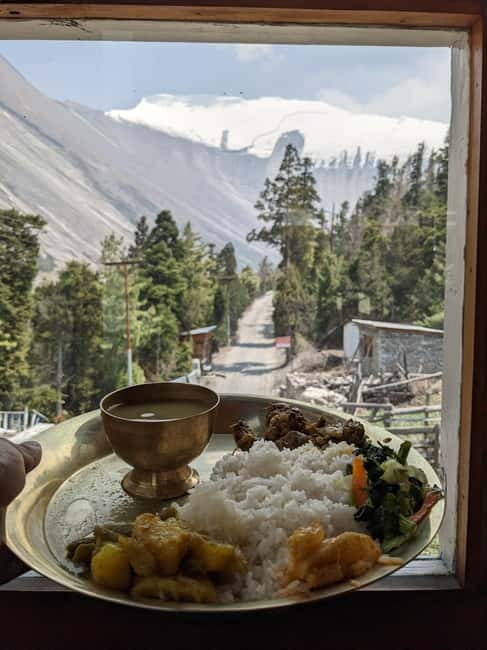
Meals are included for full-package bookings, with breakfast, lunch, and dinner during the trek. Expect simple teahouse food with similar choices from day to day. The food has been described as tasty, but variety is limited, so bring small snacks you already know you can eat at altitude.
Bring comfortable walking shoes or trekking boots, quick-dry clothing, sunglasses, a sun hat, sunscreen, a passport or accepted copy, and warm layers. A sleeping bag is especially important because the rooms can be cold.
You pay separately for soft and hard drinks, bottled or boiled water, showers, battery charging, laundry, phone calls, bar bills, and extra porters. Alcohol and drugs are not allowed. Keep cash available for these personal costs, but do not assume every teahouse will offer the same facilities.
Best months and who should choose this trek
Spring, from March through May, offers warmer conditions and blooming flowers. Autumn, from September through November, is the strongest period for clear skies and good mountain visibility. Those are the safest choices for most people who want reliable views.
Winter brings cold and possible snow, with some trail closures. The monsoon months from June through August can bring heavy rain and slippery paths, and the itinerary advises avoiding the trek then.
I would choose this trip if you have good fitness, can handle long walking days, and want the major Annapurna Circuit experience in a tight schedule. It suits someone who values a private group and guide support more than polished accommodation.
I would not choose it if you want gentle day walks, hotel comfort every night, or a flexible plan with spare days. Children under seven, pregnant women, people with altitude sickness, and people with high blood pressure should not take this trek.
Should you book the Annapurna Circuit via Thorong La?
Book it if crossing a 5,416-meter pass is the reason you are coming to Nepal. The itinerary gives you the core highlights: Upper Pisang, Manang, an acclimatization day, high alpine villages, Thorong La, Muktinath, and a comfortable finish in Pokhara.
Before paying, confirm the exact total price, meal coverage, porter cost, return transport to Kathmandu, and the plan if weather or altitude forces a change. If you prepare properly and accept cold teahouses and a punishing pass day, this is a strong-value way to see a remarkable range of Nepal in nine days. If you need a softer pace, choose a longer version of the circuit instead.
FAQ
How high is Thorong La Pass?
Thorong La Pass reaches 5,416 meters above sea level.
How long does the trek last?
The itinerary lasts nine days, including road transfers, walking days, an acclimatization day in Manang, and the return to Pokhara.
How early do you leave to cross Thorong La?
You usually begin around 4:00 AM to reach the pass before stronger winds develop later in the day.
Is an acclimatization day included?
Yes. Day 5 is an acclimatization day in Manang, with an optional hike to Gangapurna Glacier Lake or nearby icefalls.
Where do you sleep during the trek?
You spend eight nights in teahouse or lodge accommodation during the trekking portion.
Are meals included?
Breakfast, lunch, and dinner are included during the trek for full-package bookings. Drinks, bottled or boiled water, and personal snacks are not included.
Is a guide included?
Yes. The package includes an authorized English-speaking guide, and Hindi-speaking guide service is also available.
Can I hire a porter?
Yes. A porter can be arranged at an additional cost.
Is travel insurance included?
No. You must arrange your own travel and rescue insurance, and it should cover high-altitude trekking.
What happens after reaching Muktinath?
You spend the night in Muktinath and then travel by bus to Pokhara on Day 9. An optional taxi trip to Tatopani hot springs costs about 50 US dollars and is paid by participants.
Just added around Pokhara
- Pokhara: Sarangkot Sunrise & Panoramic Annapurna View Tour★ 4.8 · 10 reviews
- Pokhara: Majestic Mardi Base Camp Guided Trek with HotSpring★ 5.0 · 6 reviews
- Pokhara: Bungee Jumping Experience Near Annapurna★ 5.0 · 9 reviews
- Pokhara: Annapurna Day Hike with Panoramic Views★ 4.3 · 7 reviews
- Pokhara: 9-Day Annapurna Base Camp Trek with Poon Hill★ 5.0 · 6 reviews
- Pokhara: 7-Day Annapurna Base Camp Trek & Hot Spring★ 4.0 · 3 reviews
- Pokhara: 5-Day Ghorepani and Poon Hill Private Trek★ 5.0 · 4 reviews
- Pokhara: 5-Day Trek to Annapurna Base Camp and Hot Springs★ 5.0 · 4 reviews
Annapurna Base Camp Treks, compared.
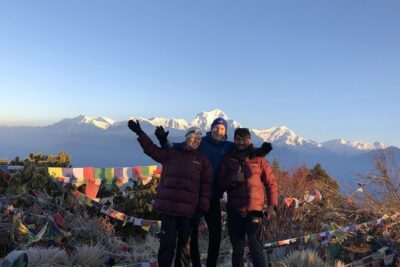
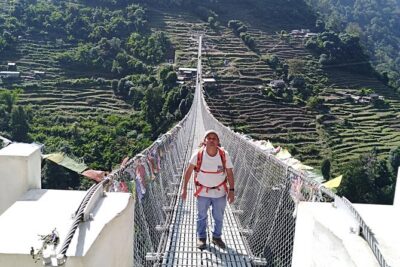
Trekking in Annapurna/Langtang/Everest/Upper Mustang regions
Read our review →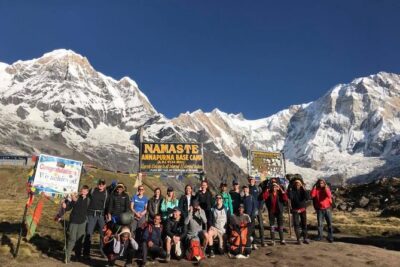
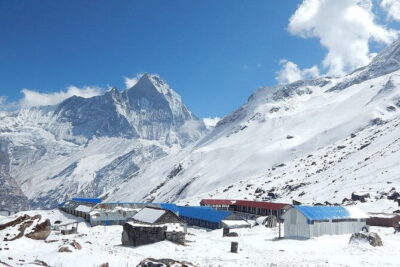
Kathmandu to Annapurna Base Camp (ABC) 5-Day Trek
Read our review →Browse the lists this trek appears in