
Review · POKHARA
Kathmandu: 11-Day Annapurna Circuit Guided Trek via Tilicho
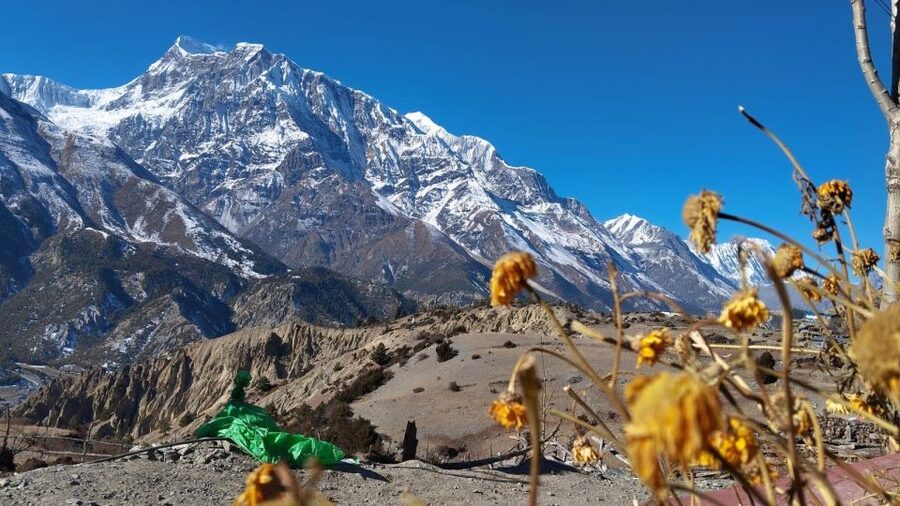
The real prize here is Tilicho Lake, reached on foot at roughly 5,050 meters, followed by the demanding crossing of Thorong La Pass at 5,416 meters. You move from green mountain valleys to dry Mustang country, with village life and changing scenery providing as much interest as the famous peaks.
I like the route’s strong mix of natural beauty and local culture, and I like that the guide can adjust the pace to your needs. Guides Bipin Rijal and Mahesh have been especially attentive and helpful on this route. The main drawback is the schedule: a 12-hour pass day, basic tea houses, long road transfers, and high altitude require solid fitness and sensible preparation.
Key points to know before booking
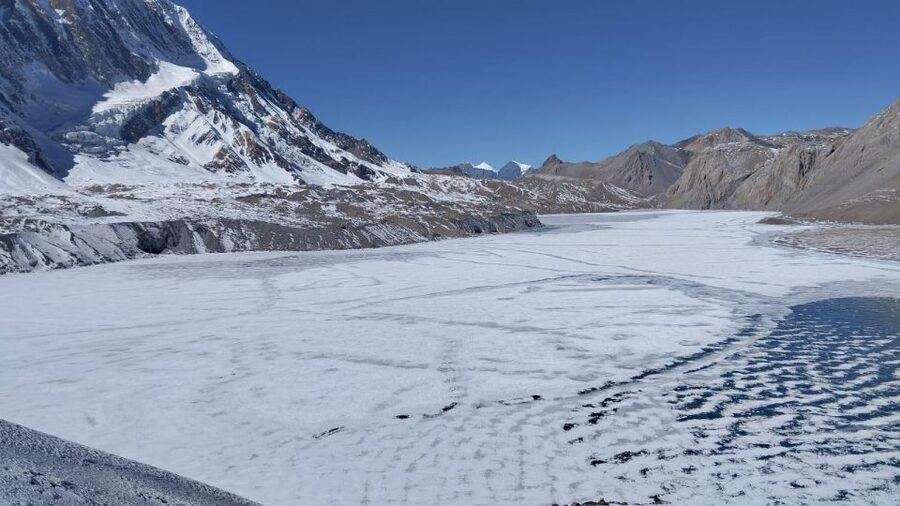
- Tilicho Lake adds the trip’s most memorable detour: You reach one of the world’s highest lakes before returning toward the main circuit.
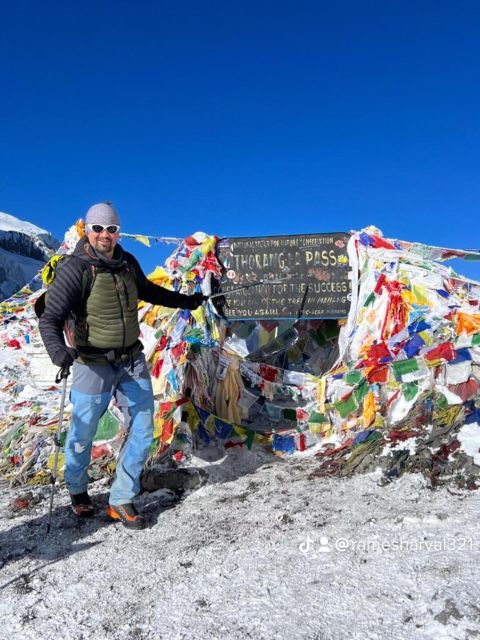
- Thorong La is the major test: The pass rises to 5,416 meters, with a long ascent and descent in a single day.
- The scenery changes sharply: Expect Himalayan valleys, high alpine country, sacred Muktinath, and the dry Mustang region.
- Guiding is a major strength: Bipin Rijal and Mahesh are noted for patient pacing, route support, and tea house arrangements.
- The $521 price covers a lot: Trekking permits, accommodation, guide services, transport, and meals on the full package are included.
- This is not a soft adventure: Warm layers, sturdy shoes, travel insurance with high-altitude cover, and training for steep climbs matter.
Why this Annapurna route is worth your time
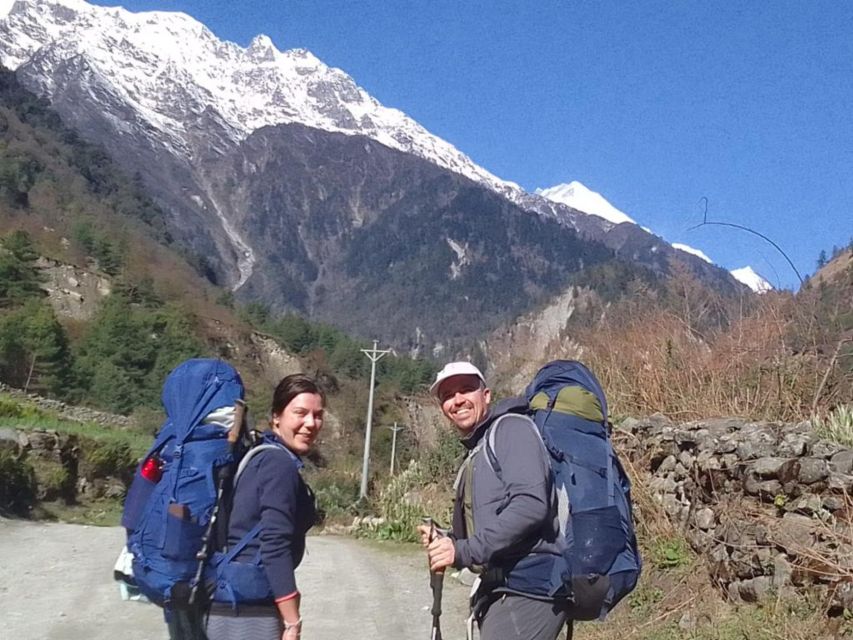
The Annapurna Circuit is appealing because the scenery keeps changing. You do not spend 11 days staring at the same type of mountain view. The route begins with a long road journey, then moves through pine country, high villages, alpine slopes, sacred sites, and the dry valleys around Jomsom.
Adding Tilicho Lake makes the trip more demanding, but it also gives the itinerary a clear point of difference. You leave the main route near Manang, climb toward Tilicho Base Camp, and make the high walk to the lake before returning to the circuit. That extra effort gives you a quiet high-altitude setting surrounded by mountains.
The other major reward is the cultural range. Upper Pisang, Ngawal, Manang, Muktinath, and Jomsom each feel different. You will see village traditions, Buddhist and Hindu sacred places, tea houses, and changing building styles as the route crosses from the Annapurna area toward Mustang.
The trip costs $521 per person. That is a useful value if you choose the full package, since the price includes accommodation, permits, government taxes, guide services, staff costs, and meals during the trek. It also includes the scheduled bus from Kathmandu to Besisahar, shared Jeep travel onward to Chame, and the bus from Jomsom to Pokhara.
The price does not cover drinks, bottled or boiled water, showers, laundry, battery charging, personal bills, extra porters, rescue insurance, or international travel. A private vehicle is available for an additional cost. That detail matters because the first and final transport days are long, and shared transport may not suit every trekking party.
More Annapurna Treks in Pokhara
- Trekking in Annapurna/Langtang/Everest/Upper Mustang regions
★ 5.0 · 161 reviews - Pokhara: Annapurna Foothills Day Hike with Transfers
★ 5.0 · 100 reviews - Kathmandu/Pokhara: 5-Day Annapurna Base Camp (ABC) Trek
★ 4.9 · 72 reviews
Day 1: Kathmandu to Chame by road
Your first day is mostly a transport day. You take a bus from Kathmandu to Besisahar, then continue by shared Jeep through Dharapani to Chame. The total road journey is listed at about 10 hours, so do not treat this as a gentle introduction.
The reward is the first look at the changing countryside, but comfort is limited by the road and the shared vehicle. The itinerary includes transport according to the number of people in your party, while a private vehicle costs extra. If you value more space or want greater control over stops, ask about that option before booking.
Chame sits at about 2,670 meters. Reaching this elevation on the first day means the trek begins with altitude already in the picture. Drink water, eat properly, and use the evening to rest rather than trying to do too much.
Day 2: Chame to Upper Pisang
The first proper trek takes about six hours and ends in Upper Pisang at 3,300 meters. This is where the experience begins to feel like a mountain journey rather than a road trip.
Upper Pisang is known for its mountain views and traditional village setting. You will have time to look around and see how daily life continues at altitude. The increase in height is noticeable, so keep your pace steady. A good guide should help you avoid the common mistake of racing early and struggling later.
The accommodation is in tea houses or guesthouses. Expect basic comforts rather than hotel service. That is part of the appeal, but it also means you should bring warm clothing, a sleeping bag, and patience with simple rooms.
Day 3: Upper Pisang to Ngawal
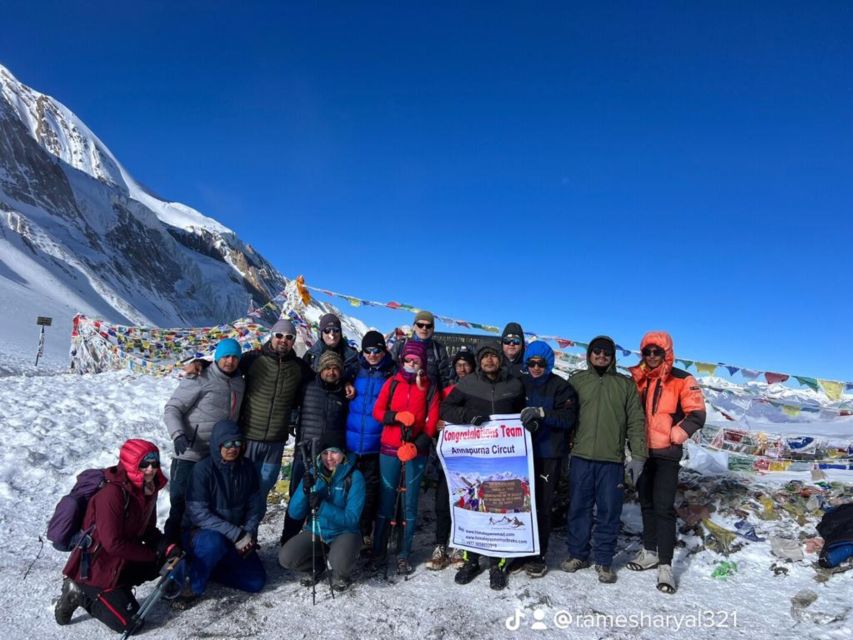
The walk to Ngawal takes about six hours and reaches 3,700 meters. The route gives you broad views toward Annapurna II, Annapurna III, and Gangapurna, along with steep valleys and high mountain surroundings.
Ngawal is a good place to notice the effect of altitude. You may feel fine while walking and then notice the height once you stop. Keep the day measured and report any serious discomfort to your guide.
This is one of the itinerary’s strongest scenic days, but the village’s hillside position also means inclines. Comfortable boots and trekking poles are useful here. The route is not designed as a casual stroll, and your legs will appreciate preparation before arriving in Nepal.
Same trailhead, a different route:
- Poon hill Trek 3 days
★ 5.0 · 176 reviews - Pokhara: 4-Day Ghorepani, Poonhill & Ghandruk Mountain Trek
★ 5.0 · 132 reviews - Ghorepani – Poon Hill Trek 3N-4D
★ 5.0 · 125 reviews - Annapurna Panorama trek
★ 5.0 · 71 reviews
Day 4: Ngawal to Manang and acclimatization
The trek to Manang reaches about 3,540 meters and includes time to explore a cave near Ngawal before settling into an acclimatization day in Manang. The schedule gives you a needed pause before the higher sections.
Manang is an important stop because the next few days take you above 4,000 meters. Use the time to walk around the village at an easy pace, enjoy the mountain views, and let your body adjust. The purpose is not to collect extra distance. It is to make the harder days safer and more manageable.
This is also a useful cultural stop. Manang gives you a chance to see a high mountain community before the route becomes more remote and alpine. Ask your guide about local customs, and follow the advice on pacing and hydration.
Day 5: Manang to Tilicho Base Camp
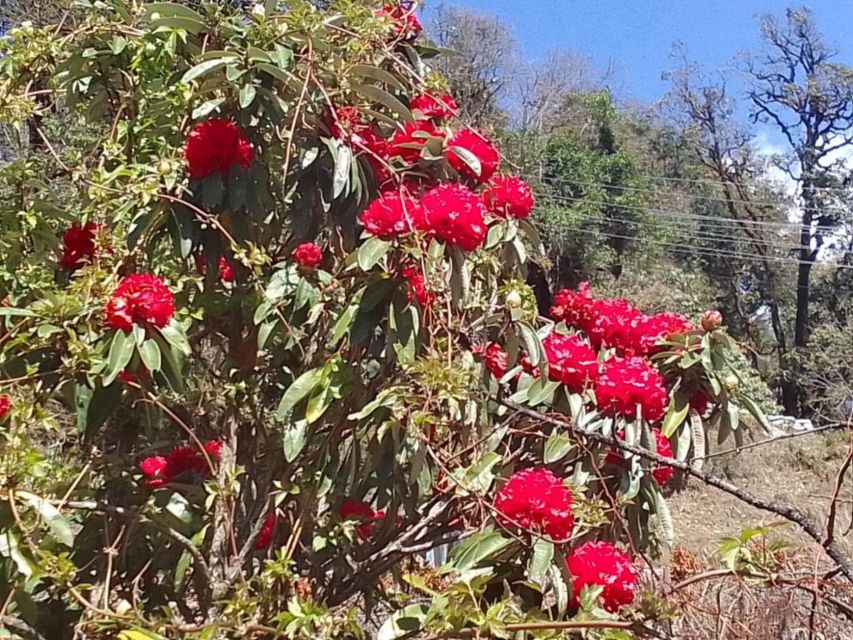
The six-hour trek to Tilicho Base Camp takes you to about 4,150 meters. The scenery becomes more spare and alpine, with fewer signs of settled village life and a stronger sense of open high country.
This is the point where the Tilicho addition earns its place in the itinerary. You are no longer just following the standard route toward Thorong La. You are moving toward a separate high lake, and the elevation gain begins to demand more from you.
Keep your expectations practical. The base camp is not a resort, and the accommodation remains simple. Food choices can be more limited at higher points, so take the included meals as fuel rather than expecting a restaurant menu.
Day 6: Tilicho Lake and Shri Kharka
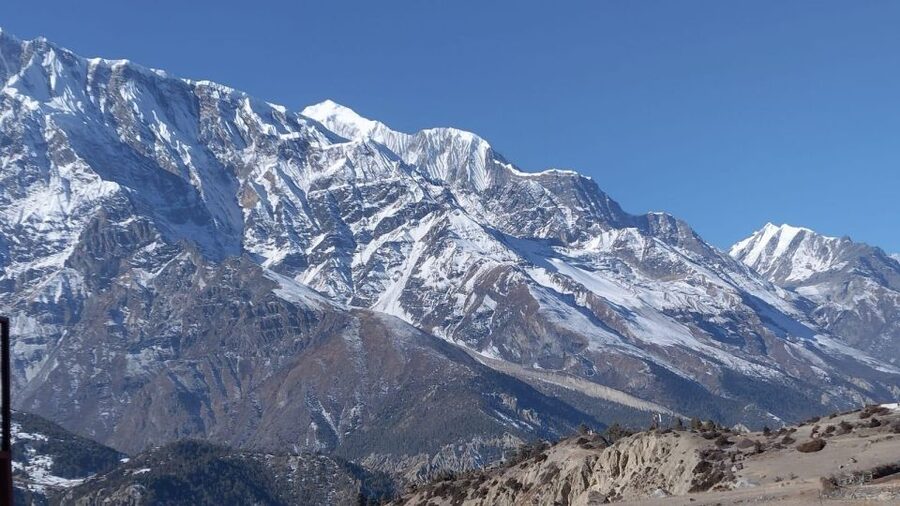
This is the trip’s signature day. From Tilicho Base Camp, you walk to Tilicho Lake at about 5,050 meters, then continue down to Shri Kharka at roughly 4,050 meters. The day is listed at around six hours, but the high altitude can make every uphill section feel longer.
Tilicho Lake is surrounded by high mountains and has a quiet, remote setting. Reaching it gives you a genuine sense of achievement without needing a separate expedition. The route includes both ascent and descent, so trekking poles can help with balance and tired knees.
The altitude deserves respect. You should not treat the lake as a quick photo stop reached by effort alone. Move slowly, tell your guide how you feel, and carry warm layers even if the lower valley was sunny. Mountain weather can shift quickly, with rain or snow possible.
The overnight at Shri Kharka also makes the next stages possible. Instead of trying to force the lake visit into a rushed side trip, the schedule gives it a full part of the journey.
Day 7: Shri Kharka to Yak Kharka
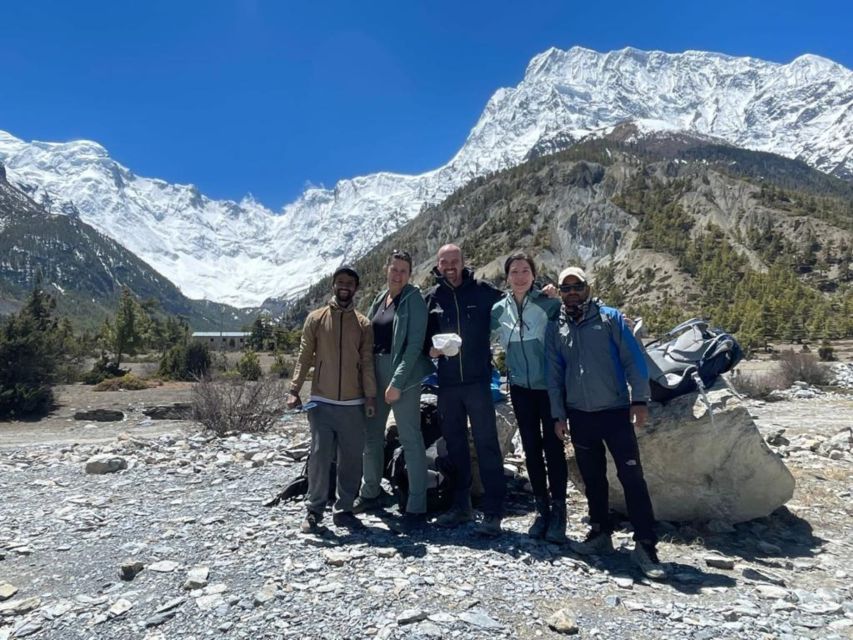
The route continues to Yak Kharka at about 4,050 meters, with approximately six hours of walking. By now, the rhythm is clear: slow steps, regular food, and attention to your breathing.
The setting remains high and open, with mountain views across the Manang and Annapurna areas. This day may feel less dramatic than the lake or the pass, but it is important preparation. You are positioning yourself for Thorong Phedi without adding a reckless amount of distance.
Your guide’s role is especially useful here. Mahesh has been praised for matching the walking pace to the party, while Bipin Rijal has been described as attentive and supportive without pressure. Those qualities matter more at altitude than a fast walking speed.
Day 8: Yak Kharka to Thorong Phedi
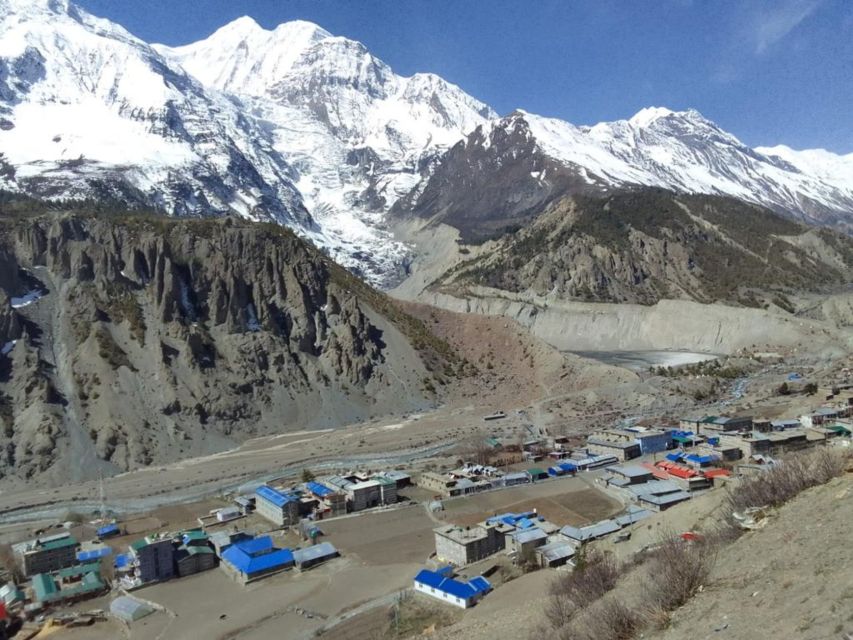
The six-hour walk to Thorong Phedi reaches about 4,450 meters. This is the staging point for the pass crossing, and the mood changes as you prepare for the most demanding day.
Thorong Phedi is not the place to ignore fatigue. Eat, organize your warm layers, check your headlamp, and follow your guide’s instructions about the early start. The pass day is long, so small preparations make a real difference.
The accommodation remains basic, and personal comfort is limited. You should bring a sleeping bag, warm clothes, sunglasses, sunscreen, and a jacket. A water bottle is also essential, since bottled or boiled water is a personal expense.
Day 9: Thorong La Pass to Muktinath
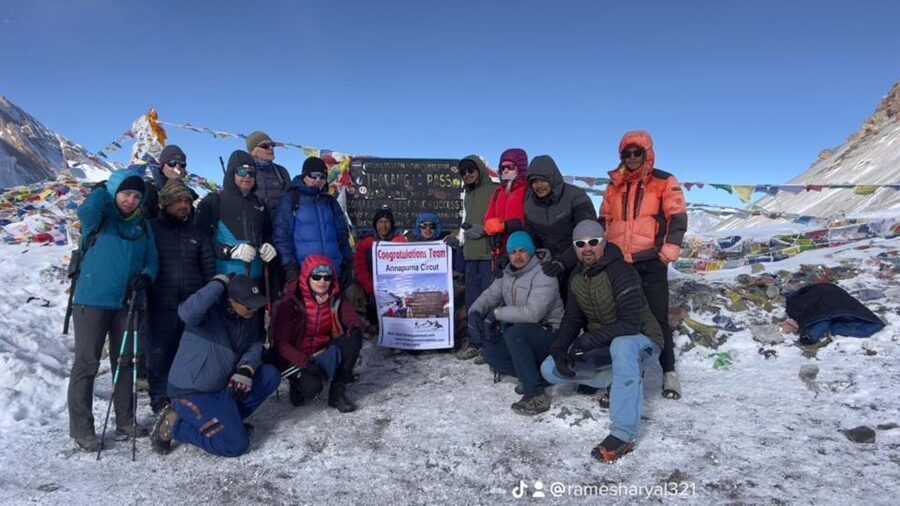
This is the hardest and most rewarding section: about 12 hours from Thorong Phedi to Muktinath via Thorong La at 5,416 meters. You start early, climb to the pass, take in the wide mountain views, and then descend to Muktinath at 3,800 meters.
The pass crossing is physically serious. The problem is not just the height. It is the combination of cold, a long day, a steep climb, and a major descent afterward. A guide who watches your pace and condition is a real asset.
Muktinath changes the mood of the trek. It is a sacred pilgrimage site for Hindus and Buddhists, and the village offers a strong cultural contrast to the high pass. Take time to appreciate the setting rather than treating the place as merely the end of a difficult walk.
You should also understand that reaching Muktinath after the pass is not a short victory lap. Twelve hours on foot can leave you exhausted. Plan for a quiet evening.
Day 10: Muktinath to Jomsom
The five-hour descent to Jomsom takes you to about 2,720 meters. The scenery shifts again as you enter the Mustang region, known here for its dry, desert-like surroundings and windy conditions.
This change is one of the route’s great strengths. After days of snowy peaks and high alpine terrain, Jomsom feels broader, drier, and more exposed. The town provides a useful place to recover before the final road journey.
Bring a layer that protects you from wind. The lower elevation does not mean the day will feel warm or easy, especially after the pass. You will have time to explore Jomsom, but rest should remain the priority.
Day 11: Jomsom to Pokhara
The final day is an approximately eight-hour bus journey to Pokhara. You continue to see mountain scenery, then finish in a city where you can relax after the trek.
This is a long ending, not a quick transfer. If you are hoping for a full afternoon of sightseeing in Pokhara, your arrival time may not leave much room. The advantage is that the scheduled route completes the journey without requiring an additional domestic flight.
The itinerary can be customized around individual preferences and walking pace. Still, changes should be discussed before departure, especially because the high sections need enough time for safe acclimatization.
Guides, meals, lodging, and practical support
The package includes an authorized English-speaking guide, with Hindi and Nepali also available. Porter service costs extra, so pack with that in mind or arrange porter support before setting out.
Guide services include insurance, meals, accommodation, equipment, salary, and transportation for the staff. That is important because the price is not simply paying for someone to lead the way. It also helps cover the support structure behind the trek.
The full package includes breakfast, lunch, and dinner during the trek. Dal bhat, lentils and rice, is a standard source of energy, with other food choices available. At higher tea houses, options can be simpler and more expensive, so keep expectations realistic.
Medical kit support is included, but you still need your own travel and rescue insurance with high-altitude coverage. International flights, the Nepalese visa, drinks, personal purchases, and emergency costs are not included.
The operator provides hotel pickup and drop-off, though pickup is optional. You should wait in your hotel lobby 10 minutes before the agreed time. The group type is private, but parts of the scheduled transport use a bus or shared Jeep.
What to pack for the high sections
Bring a passport or ID card, comfortable trekking shoes, warm clothing, sunglasses, sunscreen, a jacket, and a sleeping bag. I would also treat a headlamp, trekking poles, and a reusable water bottle as basic equipment for this route.
Layering is the smart approach. Mountain weather can be clear and sunny, then turn wet or snowy. Keep warm items easy to reach instead of burying them at the bottom of your bag.
You should be fit for sustained inclines. The itinerary includes several days around 4,000 meters, the climb to Tilicho Lake, and the Thorong La crossing. Training for long uphill walks will make the experience more enjoyable, but no training plan can remove the need to respect altitude.
Who should book this trek?
I would recommend this trip to an active trekker who wants a demanding Himalayan route with a guide and organized support. It suits someone who values village stays, changing scenery, and a real sense of progress more than private comfort.
It is also a good choice if you want Tilicho Lake without arranging a separate trek. The lake adds effort, but it is the feature that gives this route extra character.
I would think twice if you dislike long road transfers, basic tea houses, shared vehicles, or physically demanding days. Pregnant women should not book this activity, and anyone with concerns about high altitude should obtain medical advice and proper insurance before confirming.
Should you book the Annapurna Circuit via Tilicho?
Book it if you want a serious 11-day trek with two major goals: Tilicho Lake and Thorong La Pass. The $521 cost is strong value for the full package, provided you understand what is included and what remains your responsibility.
The best reasons to choose it are the varied scenery, the cultural stops, included meals and permits, and the support of a private guided group. The biggest warnings are the 12-hour pass day, basic lodging, long transport sections, and high-altitude conditions.
Ask about your guide, porter needs, private transport, and meal package before you pay. If the answers suit your comfort level, this is a demanding but rewarding way to see a broad slice of the Annapurna region.
FAQ
How long is the Annapurna Circuit via Tilicho trek?
The scheduled duration is 11 days, from Kathmandu to Pokhara.
What is the highest point on the trek?
The highest point is Thorong La Pass at 5,416 meters, or 17,769 feet.
How high is Tilicho Lake?
Tilicho Lake is listed at about 5,050 meters, or 16,568 feet.
Is accommodation included?
Yes. Accommodation during the trek is included, with tea houses or guesthouses offering basic comforts.
Are meals included?
Breakfast, lunch, and dinner are included during the trek for the full package.
What transport is included?
The scheduled transport includes a bus from Kathmandu to Besisahar, a shared Jeep from Besisahar to Chame, and a bus from Jomsom to Pokhara.
Is a guide included?
Yes. An authorized English-speaking guide is included. Hindi and Nepali are also available. Porter service costs extra.
Is travel insurance included?
No. Travel and rescue insurance are not included. High-altitude coverage is strongly recommended.
Just added around Pokhara
- Pokhara: Sarangkot Sunrise & Panoramic Annapurna View Tour★ 4.8 · 10 reviews
- Pokhara: Majestic Mardi Base Camp Guided Trek with HotSpring★ 5.0 · 6 reviews
- Pokhara: Bungee Jumping Experience Near Annapurna★ 5.0 · 9 reviews
- Pokhara: Annapurna Day Hike with Panoramic Views★ 4.3 · 7 reviews
- Pokhara: 9-Day Annapurna Base Camp Trek with Poon Hill★ 5.0 · 6 reviews
- Pokhara: 7-Day Annapurna Base Camp Trek & Hot Spring★ 4.0 · 3 reviews
- Pokhara: 5-Day Ghorepani and Poon Hill Private Trek★ 5.0 · 4 reviews
- Pokhara: 5-Day Trek to Annapurna Base Camp and Hot Springs★ 5.0 · 4 reviews
Annapurna Base Camp Treks, compared.
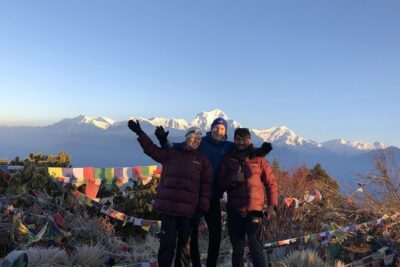
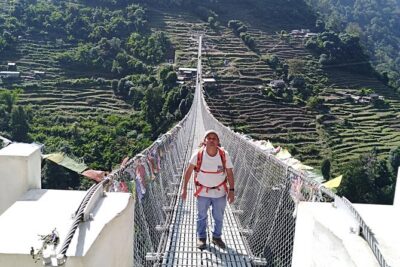
Trekking in Annapurna/Langtang/Everest/Upper Mustang regions
Read our review →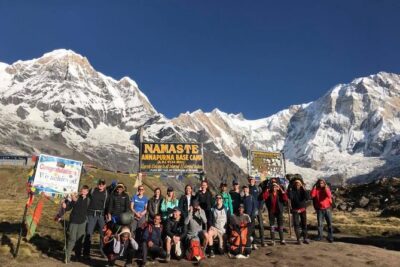
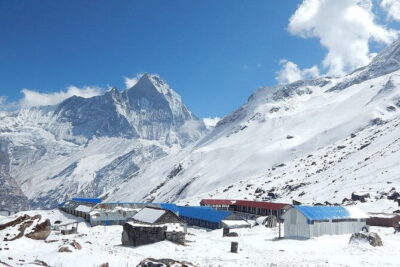
Kathmandu to Annapurna Base Camp (ABC) 5-Day Trek
Read our review →Browse the lists this trek appears in